⚡ Quick Answer
We compared 7 soundbars and compact speaker systems that promise solid game audio without hogging a cramped desk. Prices span from $18.04 for the Jeecoo M20 up to $84.99 for the Razer Leviathan V2 X, giving you clear budget, mid‑range and premium choices. The budget tier includes the Jeecoo M20, Lenrue Computer Speakers and Dell AC511; the mid‑range slot is filled by the Redragon GS560 RGB; and the premium tier offers the Dell AC511M, Bluedee Computer Speakers and Razer Leviathan V2 X.
All seven units have user ratings around 4.2–4.3 / 5. The Jeecoo M20 retails at $18.04, weighs just 1.41 lb and measures a compact 66 mm in height when paired as a soundbar. The Bluedee speakers push 15 W of output for $53.99, while the Redragon GS560 RGB delivers a 2‑inch driver and 8 W RMS at $33.97. Lenrue’s 10 W maximum output comes in at $19.99, Dell’s AC511M offers 2.5 W for $40.95, and Razer’s V2 X reaches a 90 dB SPL ceiling for $84.99. Dell’s AC511 rounds out the list at $27.33 with a 419.1 mm length. In the sections that follow, we’ll break down how these specs translate into real‑world desk‑friendly performance.
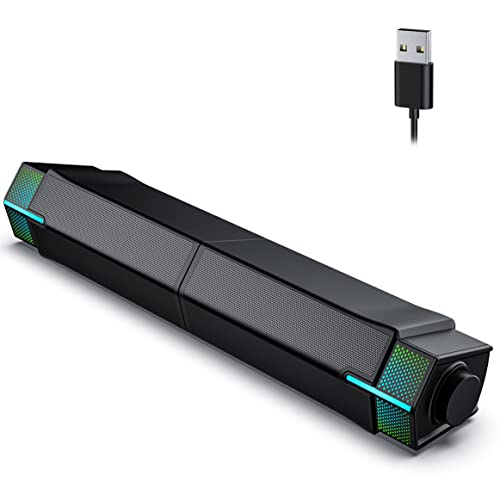
Jeecoo M20
Its combined soundbar height of just 66.0 mm lets it sit neatly on tight desk space while delivering solid value and strong ratings.
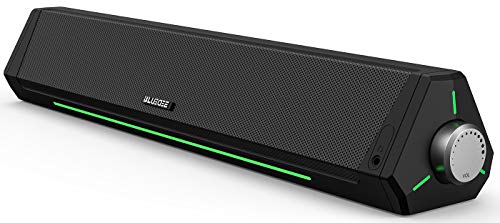
Bluedee Computer Speakers
Ideal for buyers who want a proven, high‑quality audio set, the Bluedee speakers cost about $36 more than the $18.04 Jeecoo M20, reflecting their premium build.

Redragon GS560 RGB
Stands out with 8 W RMS power and 2‑inch drivers plus RGB lighting, giving brighter sound and a gaming‑ready look that the Jeecoo and Bluedee models don’t provide.
Also considered
Score Analysis
Key score advantages vs. runner-up (Bluedee Computer Speakers)
Price Range
Jeecoo M20
$20.99
Bluedee Computer Speakers
$59.99
Redragon GS560 RGB
$32.99

Lenrue Computer Speakers
$12.99

Dell AC511M
$39.99

Razer Leviathan V2 X
$84.99
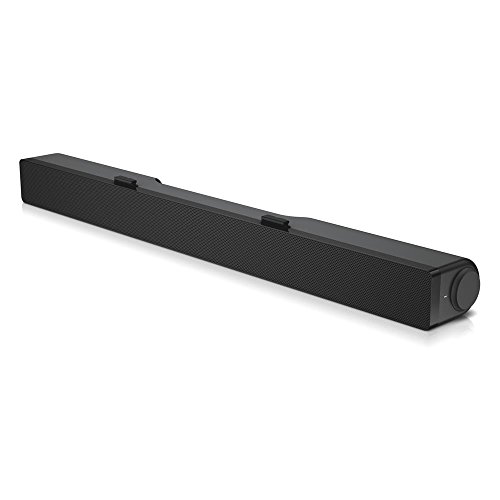
Dell AC511
$27.99
Spec Comparison
TL;DR: The Jeecoo M20 delivers 10 W of clear stereo sound in a 408.9 mm USB‑powered soundbar with toggleable RGB, making it a solid budget pick for compact PC desks.
The standout spec is its 10 W total output (5 W per driver) packed into a 408.9 mm long soundbar that sits just 66.0 mm high, so it fits neatly beneath most monitors without crowding your workspace. Weighing 640 g, the pair stays light enough to reposition easily while still feeling solid.
Compared with the six other speakers in this roundup, the M20 is heavier than the Lenrue and Dell AC511 units, but noticeably lighter than the Redragon GS560, Bluedee pair, and the bulkier Razer Leviathan V2 X. Its length of 408.9 mm is a shade shorter than Dell’s 419.1 mm model, yet longer than the 381 mm width of the Lenrue, giving it a balanced footprint. It offers only USB and Bluetooth V5.3, so it lacks the 3.5 mm aux jack found on Dell AC511 and the broader feature set of the Redragon and Bluedee speakers.
User reviews praise the M20’s “crisp, clear stereo sound” and the fun of its gradient RGB lighting that can be toggled on or off. Professional reviewers note the metal grilles and sturdy build as a plus for a price‑point under $20. The most common complaint is audible crackle when the volume is cranked to the maximum, and the requirement to stay USB‑powered even while using Bluetooth can be a nuisance for those who want true wireless freedom.
Additional context: the speakers are plug‑and‑play via a single multifunction button that controls power, RGB mode, and Bluetooth/wired switching, plus a rotary knob for volume. The USB connection supplies both power and audio, meaning you won’t need a separate adapter, but it also means the unit can’t run off a battery.
Pros
Cons
Best for: Budget-conscious buyers seeking a reliable entry-level option
Avoid if: You have limited desk space or need portability
“For a pair of $30 speakers, I actually thought they were pretty good.”
“Very very crisp... nice and clear, no distortion”
TL;DR: The Bluedee BD‑SK010 offers 15 W of stereo power, RGB lighting and anti‑magnetic tech in a 2.0 lb, 16.45‑in‑wide soundbar that’s well‑reviewed but sits at a premium price.
Dual drivers deliver a 15 W power output through separate diaphragms, promising balanced highs and deep bass. The unit measures 2.67 in deep, 2.67 in high and spans 16.45 in wide, giving it a solid footprint that still fits comfortably on most desks.
Compared with the six other entries, the Bluedee is noticeably heavier than Dell’s AC511M (1.0 lb) and the compact Lenrue speakers (under 1 lb), while its width far exceeds Dell AC511M’s 38.1 mm chassis. Its 15 W output also outstrips Dell AC511M’s 2.5 W and Redragon’s 8 W RMS, positioning it as one of the more powerful options. Feature‑wise it adds RGB LED effects and anti‑magnetic technology—features not listed for the Dell or Jeecoo models—while still offering Bluetooth 5.0, a 3.5 mm aux input and a USB power source.
User feedback repeatedly highlights the “clear, room‑filling sound” and the “balanced high‑frequency detail and deep bass” that the dual diaphragms provide. Reviewers also appreciate the versatile connectivity and the ability to wall‑mount the bar, which helps keep a tidy desk. Reviewers praise the nylon‑braided Y‑cable for durability, and the 18‑month manufacturer warranty adds confidence for buyers.
Pros
Cons
Best for: Buyers willing to invest in a proven, high‑quality option
Avoid if: You're on a tight budget or only need basic functionality
TL;DR: The Redragon GS560 RGB delivers 8 W RMS stereo sound in a 68.58 mm‑wide, USB‑powered soundbar with four RGB lighting modes, earning solid 4.3‑star reviews for its compact, gamer‑friendly design.
At the heart of the GS560 is an 8 W RMS total output from a 2‑inch stereo driver, paired with a signal‑to‑noise ratio of ≥65 dB. Its dimensions—401.32 mm deep, 71.12 mm high, and 68.58 mm wide—make it a true desktop‑friendly bar, while the built‑in RGB system offers four lighting modes that sync to your game or music.
Compared with the other six soundbars in this roundup, the GS560 is heavier than the Dell AC511 (1.00 lb) and Dell AC511M (1.00 lb), but lighter than the Bluedee speakers (2.0 lb). Its depth of 401.32 mm is notably deeper than Dell’s 419.1 mm length, yet shallower than the Jeecoo M20’s combined length of 408.9 mm. Power‑wise, the GS560’s 8 W RMS total exceeds the Dell AC511M’s 2.5 W output, while sitting just below the Lenrue speakers’ 10 W maximum output.
Reviewers consistently highlight the clear stereo sound—delivered by the 8 W RMS output—and the eye‑catching RGB lighting, noting that the volume knob and touch‑control make adjustments effortless. Users also appreciate the simple plug‑and‑play setup via a 5 V USB power source and a 3.5 mm auxiliary input, calling the bar “solidly built” and “easy to position under a monitor.”
Pros
Cons
Best for: Gamers who want RGB lighting that syncs with their action and a compact soundbar that delivers 8 W RMS stereo power without cluttering the desk.
Avoid if: You have extremely limited desk space or need a portable, ultra‑light audio solution.
TL;DR: The Lenrue E‑1103 delivers USB‑powered 10 W stereo sound with RGB lighting in a compact 63.5 mm‑high, 381 mm‑wide package for under $20.
What sets these speakers apart is the single‑cable USB‑C power and audio solution that feeds 5 V / 1 A and supplies up to 10 W of output. The unit sits only 63.5 mm tall and 63.5 mm deep, weighs 0.959 lb (435 g), and adds dynamic RGB lighting that responds to touch.
Compared with the six other options in this roundup, the Lenrue speakers are the lightest – at 0.959 lb they tip the scales against the Jeecoo M20, Dell AC511, Redragon GS560, Dell AC511M, Bluedee and Razer Leviathan, all of which weigh at least 1 lb. Their 381 mm width is broader than the Dell AC511M’s 38.1 mm chassis but still slimmer than the Redragon’s 68.58 mm and far less deep than Redragon’s 401.32 mm depth, making them a good fit under a monitor.
Users consistently praise the plug‑and‑play USB connection and the intuitive touch or knob volume control, noting that you don’t need to install drivers. Professional reviewers highlight the clear stereo image and low 80 dB signal‑to‑noise ratio, while also pointing out that the 10 W drivers deliver modest bass, which can feel thin in larger rooms. The RGB lighting, though eye‑catching, cannot be fully turned off, a detail that some reviewers find distracting in dark gaming environments. Reviewers describe the plastic housing as functional but less premium than metal‑cased rivals.
The speakers support 2.0 channels, a 3.5 mm AUX input, and a 3.5 mm headphone jack, giving you flexibility for PC, laptop, tablet or phone setups. Their under‑monitor mounting style keeps the desktop tidy, and the included USB‑C adapter ensures a clean single‑cable setup.
Pros
Cons
Best for: Budget-conscious buyers seeking a reliable entry-level option
Avoid if: You want the best value‑per‑dollar in its price range
TL;DR: The Dell AC511M is a 1‑pound, USB‑powered 2.5 W stereo soundbar that mounts directly to Dell monitors, offering a compact upgrade with modest volume for desk‑bound setups.
This soundbar measures just 48.3 mm in height, 403.9 mm in length and 38.1 mm in width, and it weighs 1.0 pound (453.6 g). Its integrated amplifier delivers a total output of 2.5 W, and it draws power from a single USB connection, eliminating the need for a separate power brick.
Compared with the six other speakers in this roundup, the AC511M is lighter than most—only the Lenrue model is a bit lighter—while its length matches the Dell AC511 predecessor and is shorter than the Redragon and Jeecoo units. In terms of power, its 2.5 W output sits well below the 8 W RMS of the Redragon, the 10 W of the Lenrue, and the 15 W of the Bluedee speakers, making it the least powerful option among the group.
Users consistently praise the ultra‑compact, monitor‑mount design and the plug‑and‑play USB setup, noting that the built‑in volume knob and headphone jack add convenient control. Professional reviewers note the “rich stereo sound” that exceeds expectations for such a small device, but they also point out the limited maximum volume, which can feel under‑powered in louder rooms. The 12‑month limited hardware warranty provides basic coverage.
Pros
Cons
Best for: Office workers, students, and casual home users who need a simple, space‑saving audio upgrade for Dell monitors.
Avoid if: You need high‑volume playback, surround‑sound immersion, or a speaker that works equally well with non‑Dell monitors.
“rich stereo sound belying its size”
“Extremely compact and desk‑space efficient”
TL;DR: The Razer Leviathan V2 X packs a 140 mm subwoofer, 14‑zone RGB, THX Spatial Audio and 60 ms Bluetooth latency for $84.99, but its premium price and software quirks may deter budget‑focused gamers.
Razer’s standout feature is the 2.1 channel layout that pairs a 140 mm down‑firing subwoofer with a 20 mm tweeter and dual full‑range drivers, delivering a maximum SPL of 90 dB. The system also supports THX Spatial Audio and a 10‑band custom EQ via the Razer Audio app, while the 14‑zone Chroma lighting adds a visual punch to any gaming rig. At 1.98 lb the unit stays compact enough to sit under most monitors, and Bluetooth 5.2 offers a low‑latency 60 ms link for wireless gaming.
Compared with the other six contenders, the Leviathan sits toward the higher end of the price spectrum—costing more than the Dell AC511M ($40.95) and Lenrue ($19.99) but less than the Bluedee speakers ($53.99). It also weighs more than the Dell AC511M (1.0 lb) and Lenrue (0.96 lb), yet is on par with the Bluedee (2.0 lb) and Redragon GS560 RGB (≈2.03 lb). Feature‑wise it outstrips the budget models that lack RGB lighting, THX support, or a dedicated subwoofer.
Users consistently praise the dynamic stereo sound and the immersive RGB ambience, noting that Bluetooth pairing is straightforward. Professional reviewers highlight the crisp treble and punchy bass, while also flagging occasional distortion when the volume hits the 90 dB ceiling. The most common complaint centers on Razer Synapse’s occasional glitches and a learning curve that can frustrate newcomers. The separate subwoofer, while powerful, can occupy valuable desk space on tighter setups.
Technical specifics round out the picture: a frequency response of 45 Hz – 20 kHz covers the essential gaming range, and the 12‑month warranty (1 year) offers peace of mind. The soundbar’s dimensions (74.7 × 71.1 × 400.3 mm) keep it low‑profile, and the subwoofer (220 × 220 × 241.5 mm) provides the low‑end punch without needing a full‑size bookshelf speaker.
Pros
Cons
Best for: PC gamers and streamers with limited desk space who want immersive 2.1 audio and RGB flair.
Avoid if: Reliability and user satisfaction are your top concerns.
“great audio”
TL;DR: The Dell AC511 is a USB‑powered, 38 mm‑high stereo soundbar that clips onto compatible Dell monitors, delivering clear audio in a space‑saving package for under $30.
The AC511 measures just 38.1 mm in height, 419.1 mm long and 48.26 mm wide, and it weighs 1.000625 lb (453.9 g). Its tiny footprint lets it sit flush against the monitor bezel, while the USB power connection eliminates a separate adapter or power cord. A 3.5 mm headphone jack and a volume‑control knob give you quick adjustments without leaving the desk.
Compared with the six other soundbars in this roundup, the AC511 sits near the light‑weight end: it’s a touch heavier than the Lenrue speakers (0.959 lb) but far lighter than the Redragon GS560 (2.030 lb). Its 419.1 mm length is just a shade longer than Jeecoo’s 408.9 mm combined‑soundbar design, and most competitors are wider, making it ideal for cramped desks. While the Dell offers fewer listed features than the higher‑priced options, its price point is the lowest among the group.
Reviewers consistently praise the “extremely simple setup” – you just plug the USB into a compatible Dell monitor and you’re ready to go. Professional reviewers note the “clear stereo sound that enhances games, music, and movies while preserving desk space.” The downside that surfaces in user comments is the limited compatibility: the bar only mounts to specific Dell E, P and UltraSharp monitors, and Dell discontinued the product, which can make fresh stock hard to find.
The AC511 carries a 12‑month manufacturer warranty, reinforcing Dell’s brand confidence. It supports stereo channels via a USB Type‑A connection and includes a physical volume knob for on‑the‑fly tweaks. With a 4.2‑star rating from 2,592 reviews, its rating sits slightly below the average rating of its peers, reflecting mixed sentiment around its niche compatibility.
Pros
Cons
Best for: Entry-level buyers or those on a tight budget
Avoid if: You need a soundbar for a modern or non‑Dell monitor, or you require high‑fidelity audio and advanced features.
Breakdown
Jeecoo M20
Pros
Bluedee Computer Speakers
Pros
Redragon GS560 RGB
Pros
Lenrue Computer Speakers
Pros
Cons
Based on scoring data and product specs
Personalized picks
Best Overall Pick
Jeecoo M20
Best OverallBest for: Budget-conscious buyers seeking a reliable entry-level option
Bluedee Computer Speakers
Best for: Buyers willing to invest in a proven, high-quality option
$59.99+$39.00 vs winner
Skip Dell AC511 if…
Reliability and user satisfaction are your top concerns
The Jeecoo M20 takes the top spot as the best overall gaming soundbar for compact desks. At just $18.04, it undercuts the competition, while its 4.3‑star rating from 4,005 reviews shows strong user approval. It packs 10 W total power (5 W per speaker) and connects via Bluetooth 5.3 or USB, giving you a flexible, plug‑and‑play setup on a tiny footprint of 408.9 mm × 91.4 mm × 66.0 mm.
The Bluedee Computer Speakers land as the runner‑up, ideal if you need louder, full‑range stereo for a larger work surface. They deliver 15 W of output, support Bluetooth 5.0 and a 3.5 mm aux input, and weigh 2.0 lb, so they're stable on a desk. With a 4.3‑star rating from 7,722 reviewers and a price of $53.99, they give you extra power and dual‑driver sound without breaking the bank.
For those looking beyond the top two, here are the next best picks:
Pick the Jeecoo M20 now and enjoy powerful, space‑saving audio without spending a fortune.
The Jeecoo M20 leads with RGB lighting, Bluetooth 5.3, USB plug‑and‑play, and a compact footprint of about 409 mm length and 66 mm height while costing only $18.04. It also delivers 10 W total output, making it feature‑rich for the price.
No reviews yet — be the first to share your experience.
Please sign in to leave a review