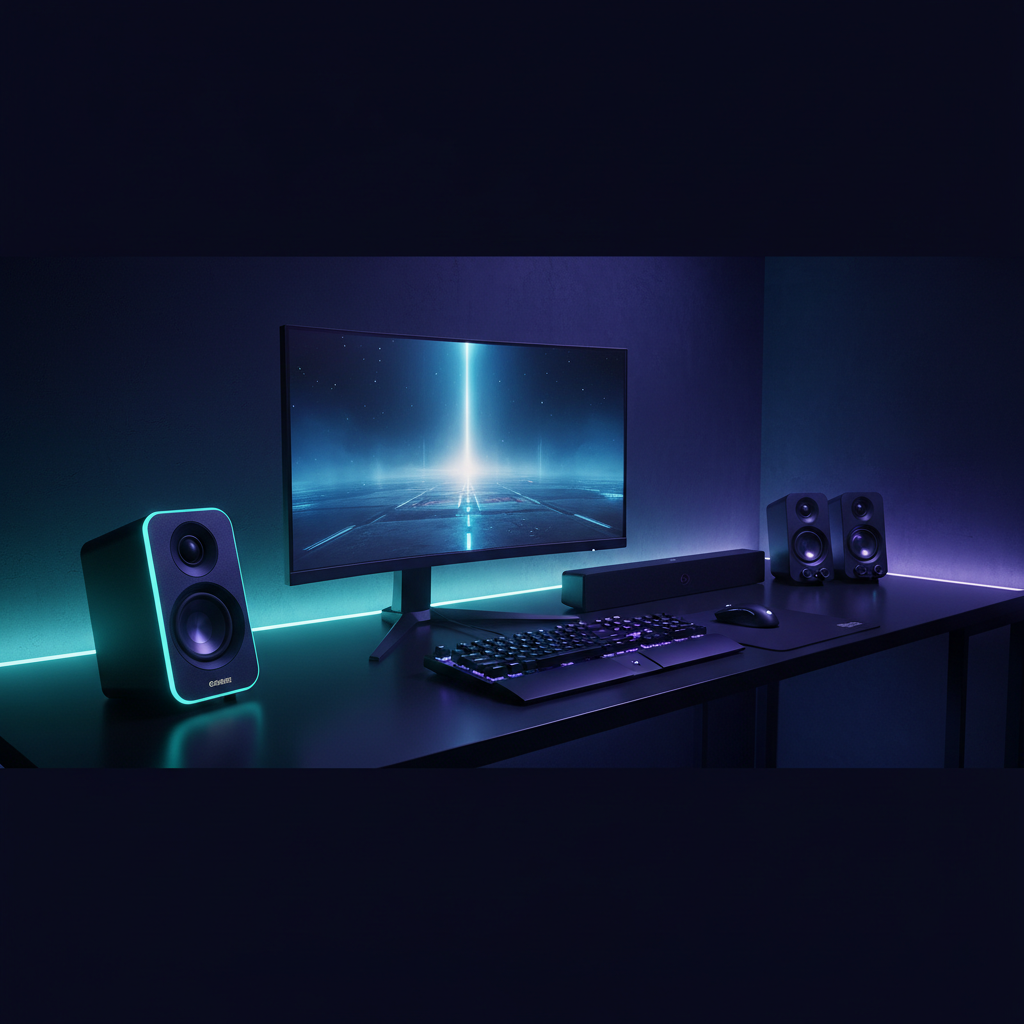
Choosing the right gaming speakers with RGB lighting can be a surprisingly nuanced decision, especially when you’ve got 15 options on the table. This roundup pulls together everything from $13.99 budget pairs to premium 5‑speaker rigs, grouping them into three price tiers that match common wallets: a budget camp (think Busp‑hyy E‑1062 at $13.99, 4.4/5), a mid‑range lane (Redragon GS560 Black at $28.49, 4.3/5), and a premium suite (Logitech G560 at $249.99, 4.3/5).
If your desk is a cramped apartment workstation, the Edifier G2000 features compact 70 mm drivers, 12 RGB presets and a 4.6/5 rating for just $99.99 – a sweet spot between size and power. For gamers who want richer sound without breaking the bank, the Redragon GS560 Black delivers 2‑inch drivers and solid 4.3/5 reviews at $28.49, making it the go‑to mid‑range pick. If you crave full‑blown immersion, the Logitech G560’s 240 W peak output and LIGHTSYNC lighting sync with game audio, earning it the premium champion at $249.99. The Edifier G2000 even adds a 10 m Bluetooth range for wireless flexibility.
Read on to see how each tier stacks up and which speaker will light up your next gaming session.
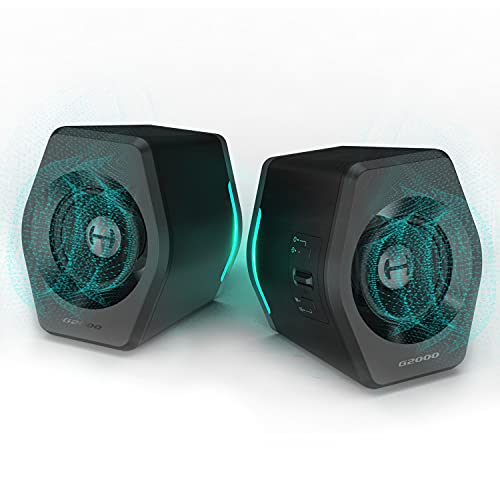
Edifier G2000
Its 70 mm drivers deliver fuller sound, giving you high‑quality audio without breaking the bank.

Busp-hyy E-1062
Ideal for entry‑level gamers on a tight budget, the E‑1062 costs just $13.99—about $86 less than the Edifier G2000.
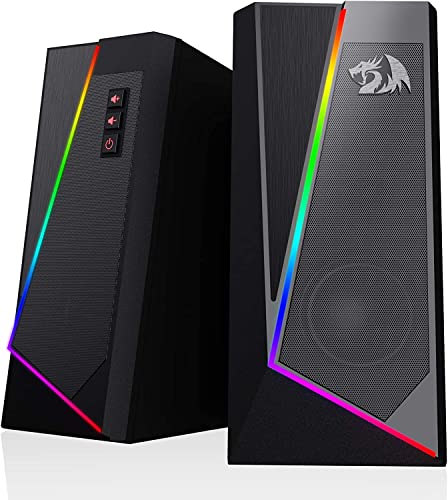
Redragon GS520
Stands out with a 20 kHz frequency response and compact 2‑inch drivers, delivering crisp highs that the larger‑driver Edifier and budget‑focused Busp lack.
Also considered
Score Analysis
Key score advantages vs. runner-up (Busp-hyy E-1062)
Price Range
Edifier G2000
$99.99
Busp-hyy E-1062
$13.99
Redragon GS520
$25.82
Jeecoo M20
$18.04

Redragon GS560 Black
$28.48

Logitech G560
$249.99

SteelSeries Arena 9
$543.99

Nylavee SK100
$53.99
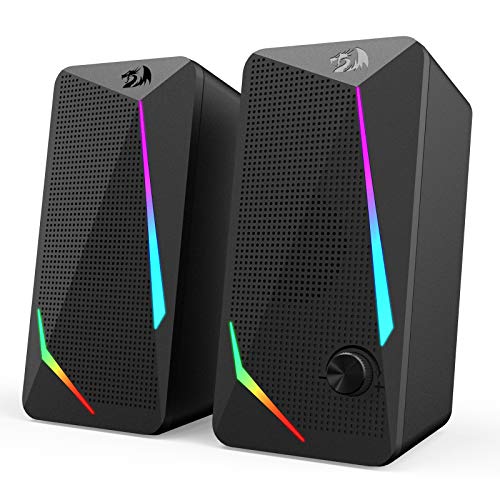
Redragon GS510
$24.99

Razer Leviathan V2 X
$84.99

Littoak GM03
$51.33

OROROW S201
$18.99

SteelSeries Arena 7
$299.99
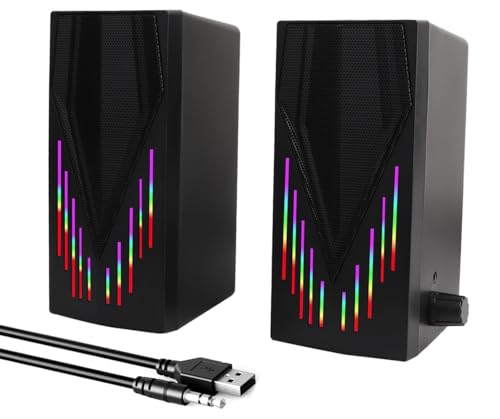
YXHDZ DN6012
$11.99

Fifine A22
$72.99
Spec Comparison
TL;DR: The Edifier G2000 packs a 70 mm driver, 12 RGB presets and 16 W RMS output into a compact, USB‑enabled desktop speaker pair for $99.99, earning a 4.6‑star rating from over 3 000 reviewers.
The standout feature is the 12 preset RGB lighting effects that sync to audio; a single button controls them, and they can be fully disabled for a low‑key setup.
Compared with the other speakers in this roundup, the G2000 is noticeably heavier than the Razer Leviathan V2 X (1.98 lb) and the Redragon GS560 (1.9510910187 lb), but lighter than the Fifine A22 (5.06 lb). Its driver size of 70 mm also exceeds the 48 mm drivers in the Razer and the 50.8 mm drivers in the Redragon GS560 and GS520, matching the Littoak GM03’s 70 mm driver. While the Fifine offers 18 music‑synchronized lighting modes, the G2000’s 12 presets are fewer but still provide ample customization.
Users consistently praise the balanced sound and surprisingly strong bass for a desktop pair, noting the angled cabinet fits small desks without crowding space. Professional reviewers highlight the solid build quality and the trio of EQ presets (Music, Game, Movie) as a practical way to tailor audio without external software. The most common complaints revolve around the fixed 180 cm inter‑speaker cable, which limits placement options, and the single‑button interface that some find cumbersome for switching lighting or EQ modes.
Technical details round out the package: Bluetooth connectivity reaches up to 10 m, the speakers sit 139 mm deep, 231 mm tall and 211 mm wide, and the enclosure volume is 0.65 L. An anti‑slip foot pad set keeps the units stable, and an RCA subwoofer output lets you add a sub if desired.
Pros
Cons
Best for: Buyers willing to invest in a proven, high‑quality option
Avoid if: You're on a tight budget or only need basic functionality
TL;DR: For $13.99, the Busp‑hyy E‑1062 delivers 6 W RMS stereo sound, six RGB lighting modes, and plug‑and‑play USB connectivity, making it a budget‑friendly choice for casual gamers seeking ambient lighting.
The standout spec is its total output power of 6 watts RMS across two 3‑watt drivers, paired with six RGB lighting modes that cycle through Symphony, Flowing, Breathing, and three solid colors. The speakers sit 80 cm apart and come with 100 cm AUX and USB cables, giving you plenty of reach for a typical desk setup.
At $13.99, the E‑1062 sits at the low‑end of the price spectrum, cheaper than many of the other 14 speakers in this roundup. Its 6 W RMS output matches the Redragon GS560’s 6 W RMS, but the Busp‑hyy’s footprint (80 mm depth, 155 mm height, 160 mm width) is more compact than the GS560’s larger dimensions. Compared with the YXHDZ DN6012, which ships with a 24‑inch (610 mm) cable, the Busp‑hyy’s 100 cm (1 m) cable offers noticeably more flexibility, while its unspecified weight suggests a lighter build than the YXHDZ’s listed 1.21 lb.
Users consistently praise the price‑to‑performance ratio and the easy USB‑powered plug‑and‑play setup; they note that the RGB lighting adds visual ambience to a gaming rig. However, several reviewers point out that the bass is thin and the plastic housing feels cheap, and because the speakers lack a volume‑memory function, settings reset when power is lost.
Technically, the speakers run on a 5 V DC USB power source, feature a rotary knob for volume control, and support a 2‑driver stereo configuration with a 16 kHz frequency response. The tabletop mounting type keeps them stable on most desks, and the 30‑day warranty provides a short‑term safety net.
Pros
Cons
Best for: Entry‑level buyers or those on a tight budget
Avoid if: You need powerful performance or professional‑grade features
“Great for the price”
“Perfect for gaming and music”
TL;DR: The Redragon GS520 delivers clear mids and highs with touch‑controlled 6‑mode RGB lighting for $25.83, though its bass is modest and it lacks Bluetooth.
The GS520 packs a 2 in (50.8 mm) dynamic driver in each unit and outputs 3 W RMS per speaker, drawing just 10 W total from a USB‑powered 5 V source. Its touch‑sensitive RGB panel offers six lighting modes, letting you sync the glow with your game’s ambience without extra software.
Compared with its Redragon siblings, the GS520 is heavier than the GS510’s 550 g chassis and the Jeecoo M20’s 640 g build, yet lighter than the GS560’s 1.951 pounds. Its 800 mm inter‑speaker cable is a bit shorter than the GS510’s 990 mm run, while the 1220 mm USB power cable outpaces the 100 cm cable found on the Busp‑hyy E‑1062. The six RGB modes also beat the GS510’s four‑mode LED setup.
Reviewers consistently praise the speaker’s “clear mids and highs” that make in‑game footsteps and dialogue pop. Professional reviewers note the solid build quality for the price point and the effective RGB lighting. The most common complaints revolve around a thin bass response, the absence of Bluetooth, and volume buttons that feel stiff or outdated. Users also mention occasional hiccups where the RGB sometimes shows the wrong color.
Beyond the audio, the GS520 supports a 3.5 mm auxiliary input and a mic/headset pass‑through jack, making it a straightforward plug‑and‑play solution for PC, laptop, TV, smartphone, or tablet. Its tabletop ABS body with brushed finish and aluminum accents fits neatly on a desk, measuring 88.9 mm deep, 177.8 mm high, and 101.6 mm wide. The manufacturer backs it with a 1‑year warranty.
Pros
Cons
Best for: Value‑conscious gamers and office users who want decent audio clarity and RGB flair at $25.83.
Avoid if: You need deep bass, Bluetooth connectivity, or a speaker system for large‑room or party environments.
“Sounded better than expected”
“RGB light won’t stay on selected color”
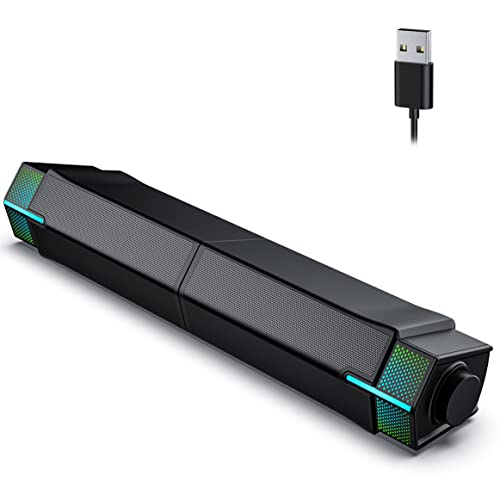
TL;DR: For $18.04, the Jeecoo M20 offers a compact 2‑speaker soundbar with Bluetooth 5.3, 10 W output and customizable RGB lighting, though its bass and high‑volume clarity are limited.
At just $18.04, the Jeecoo M20 packs a 10 W stereo output into a tiny 200 × 66 × 66 mm footprint. Its 50.8 mm dynamic drivers deliver clear mids, while Bluetooth 5.3 reaches up to 10 m. The unit weighs 1.4109584768 pounds and runs off a single 5 V USB cable, so you won’t need a wall adapter.
Compared with other budget picks in this roundup, the M20 is a bit heavier than the OROROW S201 (1.1904948 pounds) but lighter than the Redragon GS520 at around 1.8 pounds. Its driver size of 50.8 mm sits just below the OROROW’s 52 mm, yet it offers more extensive RGB control than the Busp‑hyy E‑1062, which lists six lighting modes. The M20 provides a richer spec sheet than the YXHDZ DN6012, which lists fewer dimensions and features.
Users consistently praise the easy USB‑powered setup and the eye‑catching gradient lighting, noting the mids stay clear even at moderate volumes. Professional reviewers note the dynamic 10 W drivers give a balanced soundstage, but they also warn that bass thins out and distortion appears once you crank the volume. A recurring complaint is that the LEDs sometimes flicker, breaking the visual sync with games or movies.
The M20’s modular design lets you slide the two speakers together for a single soundbar or separate them on a tabletop, and control is handled by a touch‑sensitive button plus a rotary knob. It supports Bluetooth 5.3 with smartphones, tablets and iPads, while wired mode works via USB on PCs, laptops and monitors. Note that the speakers aren’t compatible with Xbox consoles and there’s no 3.5 mm AUX input.
Pros
Cons
Best for: Budget-conscious buyers seeking a reliable entry-level option
Avoid if: You need deep bass, high‑volume room‑filling sound, or console gaming support such as Xbox
“Perfect for my small desk—love that I can separate the speakers!”
“Sound is clear for YouTube, Zoom calls, and music.”
TL;DR: The Redragon GS560 offers 6 W RMS stereo sound, dual 2‑inch drivers, and RGB lighting for $28.49, making it a compact, plug‑and‑play option for tight desks.
The GS560’s most eye‑catching spec is its dual 2‑inch (50.8 mm) full‑range drivers delivering a total RMS output of 6 W, with a signal‑to‑noise ratio of ≥65 dB and a frequency range of 150 Hz – 20 kHz. Its RGB lighting provides 4–6 preset modes that can react to audio, adding a visual punch to any gaming rig.
Compared with other speakers in this roundup, the GS560 is heavier than the Jeecoo M20 (1.95 lb vs 1.41 lb) but shares the same driver size as the Redragon GS520. Its total RMS power of 6 W sits below the 10 W RMS of the Redragon GS510, positioning it as a mid‑range power option while still out‑performing many budget models that list fewer specs.
Users consistently praise the clear, distortion‑free audio at moderate volumes and the hassle‑free plug‑and‑play setup via a USB‑A power cable (5 V) and a 3.5 mm audio jack. Professional reviewers note the crisp stereo cues that help locate in‑game sounds, though both experts and everyday users flag weak bass and occasional dimming of the RGB sync as drawbacks.
Pros
Cons
Best for: Budget‑conscious PC gamers, office workers, students, or anyone with limited desk space who wants stereo sound and RGB flair.
Avoid if: You need deep bass, Bluetooth or wireless connectivity, or a subwoofer for music‑centric listening.
“Great sound for the price”
“Fits perfectly under my monitor”
TL;DR: The Logitech G560 delivers 120 W RMS audio, DTS:X Ultra virtual 7.1 surround, and 16.8 million‑color LIGHTSYNC RGB lighting across four zones, but its $249.99 price and non‑disableable subwoofer may limit its appeal for quiet spaces.
The standout spec is the 120 W RMS output, backed by a 60 W RMS subwoofer and two 30 W RMS satellite speakers, all housed in a system that reaches a SPL max of 97 dB @ 1 m. Coupled with a frequency response from 40 Hz to 18 kHz, the speakers can fill a room with clear mids, highs, and deep bass while the LIGHTSYNC engine paints the desk in approximately 16.8 million colors across four distinct zones.
Compared with other speakers in this roundup, the G560 sits in the middle of the weight spectrum at 12.1 lb—lighter than the 23.95102 lb SteelSeries Arena 7 but heavier than the 4.2108292042 lb Edifier G2000 and the 1.9 lb Nylavee SK100. Its RMS power of 120 W trails the Arena 7’s 150 W RMS but outpaces the 150 W peak‑only claims of many budget options. Bluetooth connectivity reaches 25 m, comfortably exceeding the 10 m range of the Edifier and the 5 m range of the SteelSeries, while the G560’s Bluetooth 4.1 still supports reliable pairing with Windows PCs, smartphones, and tablets.
User sentiment highlights the system’s booming bass and the immersive feel of the LIGHTSYNC lighting, with many reviewers praising how the RGB reacts to in‑game audio and screen content. Professional reviewers note the “booming sound and high power output” and commend the Logitech G Hub software for fine‑tuning both audio and lighting. However, common complaints focus on the subwoofer’s inability to be turned off, which can cause unwanted vibrations in shared or quiet rooms, and the screen‑sampling lighting mode can be overly aggressive for some users.
Pros
Cons
Best for: Buyers willing to invest in a proven, high-quality option
Avoid if: You're shopping on a tight budget — it's priced at $249.99
“solid for gaming”
“great for use when not using a headset”
TL;DR: The SteelSeries Arena 9 delivers true 5.1 wireless surround with 300 W RMS power and 100 dB peak SPL, but its $543.99 price and large 33.2 pound footprint make it a premium‑only choice.
The Arena 9’s headline spec is its 300 W total RMS output combined with a maximum SPL of 100 dB, giving you a room‑filling soundstage that can handle explosions and orchestral scores alike. It also packs a 19.05 mm tweeter and a 69.85 mm woofer in each front speaker, while the subwoofer uses a 165.1 mm driver for deep bass response.
At $543.99, the system sits well above the price of the Logitech G560 and Edifier G2000, and its 33.2 pound weight makes it noticeably heavier than the Logitech’s 12.1 pound package. It also offers more lighting flexibility than the Razer Leviathan V2 X, with 4 RGB zones and 16.8 million color options, though those effects sync only on PC via SteelSeries GG.
Reviewers repeatedly praise the wireless rear speakers for cutting down cable clutter and the OLED control pod for intuitive, tactile adjustments. The system is noted for its “substantial speaker build quality” and “excellent spatial accuracy” in games. Users, however, point out that the RGB lighting is limited to the front speakers and doesn’t work on consoles, and the system’s size can dominate a small desk.
Pros
Cons
Best for: Those prioritizing quality and willing to pay for premium performance
Avoid if: You have a very small desk or room, rely on console‑only gaming, or need high‑resolution Bluetooth audio codecs
“The sound is bombastic and pleasing, with strong mids and highs ideal for gaming and music.”
“The system’s substantial speaker build and immersive soundstage really set it apart.”
TL;DR: The Nylavee SK100 offers a compact USB‑powered 2.0 soundbar with 4‑RGB lighting modes, Bluetooth 5.0, and balanced 5 W output, making it a solid mid‑range option for desktop gaming.
The SK100 packs four full‑range drivers, two independent bass diaphragms, and a 2‑inch tweeter into a tabletop‑friendly chassis that measures just 2.36 in deep, 2.75 in high and 2.7 in wide. It runs off a 5 V USB source, draws 5 W RMS total output, and offers Bluetooth 5.0 with a 33 ft (10,058 mm) range and 40 ms audio latency. Four dynamic RGB lighting modes (rainbow, breathing, flowing, rhythm) let you sync color effects to your game ambience.
Compared with other speakers in this roundup, the SK100 is lighter than the Littoak GM03 (4.2 lb) but roughly on par with the Redragon GS560 (about 1.95 lb). It provides fewer RGB options than Littoak’s six customizable modes, yet matches the Redragon GS510’s four LED modes. Its 5 W RMS power sits below the 10 W total output of the Fifine A22, positioning it as a modest‑power desktop solution rather than a room‑filling system.
Reviewers consistently praise the plug‑and‑play USB setup and the clear, balanced mids that make dialogue and game cues easy to hear. Professional reviewers note the “crystal‑clear sound” and credit the premium driver materials for the crisp highs. Common complaints focus on the modest bass depth and occasional Bluetooth pairing hiccups, especially when trying to stream from multiple devices.
Beyond the RGB flair, the SK100 delivers a 20 kHz frequency response and a 72 dB signal‑to‑noise ratio, which provides adequate performance for most desktop gaming and video‑call scenarios. A built‑in microphone and a 3.5 mm headphone jack add flexibility for voice chat and private listening, while the single‑knob touch control simplifies volume and mode adjustments.
Pros
Cons
Best for: Desktop gamers and remote workers who want clear stereo sound with RGB flair on a modest budget.
Avoid if: You need booming bass, a full‑range subwoofer, or a speaker system for large open spaces.
TL;DR: The Redragon GS510 offers RGB backlit tabletop speakers with 10 W RMS power, compact dimensions and a plug‑and‑play USB connection for just $24.99.
The standout feature is its RGB backlight with four selectable modes, giving a visual boost to any desk without extra accessories. Each 2‑in (51 mm) driver delivers 5 W RMS per channel, totaling 10 W RMS, it's enough to fill a small room. The speakers also include touch‑sensitive controls and a full‑range crossover for simple operation.
At 550 g, the GS510's lighter than the Redragon GS520’s 1.8 pounds and the GS560 Black’s 1.9510910187 pounds, making it easier to reposition. Its 990 mm inter‑speaker cable is longer than the GS520’s 800 mm cable, giving more flexibility in placement. With a total RMS power of 10 W, it outpaces the GS560’s 6 W RMS, while still staying under the weight of the Jeecoo M20 (1.4109584768 pounds), OROROW S201 (1.1904948 pounds) and YXHDZ DN6012 (1.21033781838 pounds).
Users consistently praise the low price and the eye‑catching RGB lighting, noting the plug‑and‑play USB power and compact tabletop footprint. However, a common thread in reviews is a tinny sound signature, weak bass response and occasional distortion when the volume is cranked up. Some owners also mention a plasticky build that feels less sturdy than higher‑priced rivals.
Technically, the GS510 uses a dynamic driver with a full‑range crossover and a frequency response of 160 Hz – 20 kHz. The manufacturer lists the signal‑to‑noise ratio at ≥60 dB, and the unit runs on 5 V USB power, eliminating the need for a separate wall adapter. The 4‑inch depth (185 mm) and 4.33 in height (110 mm) keep it unobtrusive on a desk.
Pros
Cons
Best for: Budget-conscious buyers seeking a reliable entry-level option
Avoid if: You want the best value‑per‑dollar in its price range
“great for the price.”
“unit shorting out and nearly causing a fire”
TL;DR: The Razer Leviathan V2 X packs a 2.0‑in full‑range driver, 16‑zone RGB lighting and THX Spatial Audio into a compact 1.98‑lb soundbar for $84.99, delivering bass‑heavy gaming sound with a Windows‑only software lock.
What really stands out is the 16‑zone downward‑facing RGB strip that can sync to your game’s lighting, plus a dedicated 5.5‑in subwoofer driver that pushes up to 90 dB SPL. The soundbar itself measures 15.76 in long, 2.80 in wide and 2.94 in high, weighing just 1.98 lb, so it fits neatly on a desk without crowding your space.
Compared with the other 14 speakers in this roundup, the Leviathan V2 X weighs a bit more than the Redragon GS560 (which tips the scales at about 1.95 lb) but less than the Littoak GM03’s 4.2‑lb chassis. Its 2.0‑in full‑range driver is smaller than Littoak’s 2.75‑in unit, while the subwoofer’s 6.61‑lb weight exceeds many compact 2‑channel options such as the Nylavee SK100 (1.9 lb). In price, it sits above budget‑oriented models like the Redragon GS520, yet remains below premium‑tier offerings such as the Edifier G2000.
Professional reviewers praise the Leviathan’s “full, crisp sound with thunderous bass” and note that its THX Spatial Audio adds a convincing surround feel for PC games. Users love the eye‑catching lighting and the plug‑and‑play USB‑C connection, but they frequently mention the lack of a 3.5 mm or optical input and that Razer Synapse gates all advanced features behind Windows. Bluetooth 5.0 works, though some report noticeable latency when gaming wirelessly.
Pros
Cons
Best for: PC gamers who want immersive audio, THX Spatial Audio, and synchronized RGB lighting on a compact desk setup.
Avoid if: You need versatile analog inputs, macOS support, or a fully independent software solution.
TL;DR: The Littoak GM03 packs 30 W RMS stereo power, a 2.75‑inch driver and six RGB lighting modes into a compact desktop pair for gamers who want bright looks and preset sound profiles.
The standout spec is the 30 W total RMS output, split into 15 W per channel, driven by 2.75 in (70 mm) full‑range drivers. Coupled with an 80 dB signal‑to‑noise ratio and 6 Ω impedance, the speakers deliver clear, loud audio that fills a typical desk space. The front panel’s touch‑sensitive controls and six customizable RGB lighting modes add a modern flair to any gaming rig.
At $51.33, the GM03 sits above the Redragon GS560, which is priced at $28.49, and the Redragon GS520 at $25.83, but it offers far more power (30 W versus the GS560’s 6 W RMS). It also weighs 4.2 lb, so it's heavier than the Nylavee SK100’s 1.9 lb and the Redragon GS560’s roughly 1.95 lb, reflecting its larger cabinet (12.0 in wide, 8.3 in high, 5.8 in deep). While its six RGB modes outshine the Nylavee SK100, which lists no lighting, they are fewer than the Fifine A22’s 18 music‑synchronized modes.
Users consistently praise the GM03 for delivering “clear, loud sound” and “eye‑catching RGB lighting” straight out of the box, noting that the three EQ presets—including a Gaming mode—help sharpen spatial cues during competitive play. Professional reviewers highlight the versatile connectivity (Bluetooth, 3.5 mm AUX, USB) and the sleek ABS‑plastic design that blends with monitor setups. Common complaints focus on the lack of a dedicated subwoofer, limited lighting customization (no app or color picker), and touch controls that can feel overly sensitive.
Pros
Cons
Best for: Gamers on a budget who want built‑in lighting and preset sound profiles.
Avoid if: You need deep bass, extensive lighting customization, or a highly portable speaker solution.
“Excellent sound quality for the price”
“RGB looks amazing on my desk”
TL;DR: The OROROW S201 delivers 10 W RMS stereo sound in a compact tabletop package, with 52 mm drivers, 50 dB channel separation, and vibrant RGB lighting for budget‑friendly gaming rigs.
The S201 packs a total output power of 10 W RMS (5 W per channel) and a 52 mm dynamic driver, giving clear mids and highs for desktop gaming. Its 50 dB channel separation helps keep left‑right audio distinct, while the built‑in RGB fans add visual flair without extra accessories.
Compared with other speakers in this roundup, the S201 is lighter than the Jeecoo M20 (1.1904948 lb vs 1.4109584768 lb) and sports a slightly larger driver (52 mm vs 50.8 mm). It matches the 10 W total output of the Redragon GS510, yet stays more compact with a depth of 29.46 mm and a tabletop‑only mounting design.
Users appreciate the plug‑and‑play setup—just connect the USB power cable and the 3.5 mm AUX line—and praise the price‑to‑performance ratio. However, several reviewers note that the speakers can feel low‑volume when powered from a USB port that supplies less than the recommended ≥1 A, and a faint buzzing may appear if the same source powers both the PC and the speakers.
Technical details include a 4 Ohm impedance, a frequency response spanning 50 Hz to 60,000 Hz, and a signal‑to‑noise ratio of 60 dB. The system runs on 5 V USB power and comes with two speakers, an AUX‑in cable, a USB power cable, two RGB fans, and a user manual.
Pros
Cons
Best for: Entry‑level buyers or those on a tight budget
Avoid if: You need powerful performance or professional‑grade features
“Great for the price”
“Easy to set up”
TL;DR: The SteelSeries Arena 7 delivers 150 W RMS power, a 6.5‑inch subwoofer and 4‑zone PrismSync RGB, but its premium price and software‑dependent setup may not suit every gamer.
The standout spec is the 150 watts RMS of total power paired with a 6.5‑inch down‑firing subwoofer, giving a frequency response that stretches from 35 Hz up to 20 000 Hz. That range, combined with organic‑fiber woofers and a silk‑dome tweeter, aims to keep mids and highs clear while the bass stays punchy.
At 23.95102 pounds, the Arena 7 is noticeably heavier than the Logitech G560 (12.1 pounds) and far heftier than the Edifier G2000 (about 4.21 pounds). It's also at a higher price tier, which makes it a premium option among the fifteen speakers in this roundup.
Reviewers praise the immersive PrismSync lighting that reacts to on‑screen action, music and system audio, and they appreciate the 10‑band parametric equalizer accessible through SteelSeries Sonar. However, users frequently mention the need to install Sonar for full RGB and audio control, occasional power‑button mishits on the right satellite, and the lack of official Xbox Series X/S support, which can cause connection hiccups.
Beyond the power and lighting, the system offers Bluetooth 5.0 with a 5‑meter range, a 2 m speaker‑to‑subwoofer cable and a 1.98 m subwoofer‑to‑power cable, plus analog, optical and USB‑C/A inputs, making it flexible for PC, PlayStation and mobile devices.
Pros
Cons
Best for: Those prioritizing quality and willing to pay for premium performance
Avoid if: Reliability and user satisfaction are your top concerns
“The sound is bombastic and pleasing, with strong mids and highs ideal for gaming and music.”
“The system’s substantial speaker build and immersive soundstage really set it apart.”
TL;DR: The YXHDZ DN6012 offers budget‑friendly 2.0‑channel sound with multiple RGB lighting modes, a compact 2.8‑inch depth, and a handy USB‑C adapter for easy PC hookup.
What really stands out is the RGB lighting that cycles through several modes, letting you match the speakers to any gaming rig’s aesthetic. At just 1.21033781838 pounds, the pair is lightweight enough to sit on a desk without wobbling, and the total footprint—2.8 inches deep, 5.9 inches high, and 2.9 inches wide—keeps the setup tidy. The included USB‑C adapter means you can plug directly into modern laptops or desktops without hunting for a separate dongle.
When you line it up against the other fourteen speakers in this roundup, the DN6012 lands on the low‑price end of the spectrum, making it cheaper than most of its peers. Its weight is roughly on par with the OROROW S201 (which tips the scales at about 1.1904948 pounds) but noticeably lighter than the Redragon GS560 Black, which weighs close to 1.9510910187 pounds. The 24‑inch cable is shorter than the 100‑cm (about 39 inches) cables found on the Busb‑hyy E‑1062, so you’ll need to keep the speakers relatively close to your PC. On the other hand, the DN6012’s 2.8‑inch depth is shallower than the Busb‑hyy’s 80‑mm (about 3.15 inches) chassis, giving it a slimmer profile.
Customer feedback aggregates to a 4.3‑star rating from 135 reviews, indicating most owners are pleased with the value they receive. Reviewers often highlight the attractive RGB lighting and the low entry price as major pluses. The rating, while solid, sits a notch below the highest‑scoring models in the set, suggesting that power and feature depth may not satisfy power‑hungry gamers.
The speaker system delivers stereo (2.0‑channel) audio and includes a 3.5 mm headphone jack for private listening. With a cable length of 24 inches, you have enough reach for typical desk setups, and the manufacturer backs the unit with a two‑year warranty for peace of mind.
Pros
Cons
Best for: Entry-level buyers or those on a tight budget
Avoid if: You need powerful performance or professional‑grade features
TL;DR: The Fifine A22 delivers 10 W of 2.1‑channel sound with a 4.5‑inch subwoofer, 18 kHz frequency response and 18 RGB lighting modes, making it a visually striking, bass‑heavy desktop set for gamers on a modest budget.
The standout hardware is the 4.5‑inch (114.3 mm) subwoofer paired with a total output of 10 Watts RMS, giving the system enough punch for immersive game explosions and movie effects. Its frequency response reaches up to 18 kHz, and the satellites sit at 3.8 in × 4.72 in × 3.14 in, keeping the footprint desktop‑friendly. Touch controls on the subwoofer let you toggle volume, track navigation and RGB lighting without reaching for a remote.
Compared with many of the other 14 speakers in this roundup, the A22 is noticeably heavier than ultra‑compact options like the Nylavee SK100 or the Redragon GS560, but it compensates with richer bass and far more lighting flair—18 music‑synchronized RGB modes versus the six customizable modes on the Littoak GM03. Connectivity is also broader: Bluetooth, a 3.5 mm AUX jack, an optical input (cable sold separately) and OTG direct‑PC wiring give it flexibility that several peers lack.
Everyday users rave about the deep bass and stable Bluetooth pairing, describing the setup as plug‑and‑play and perfect for small rooms or dorm desks. Professional reviewers note the “strong and immersive audio output with clear treble and deep bass,” while also pointing out the confusing long‑press track‑skip behavior and the absence of an HDMI or IR remote. Those minor annoyances are outweighed for most gamers who prioritize sound impact and eye‑catching lighting.
Pros
Cons
Best for: College students in dorms, budget‑conscious gamers, and home‑office users who need richer audio than laptop speakers.
Avoid if: You require portable speakers with a built‑in battery, HDMI/IR remote control, or extensive real‑world feedback from a long‑standing product line.
Breakdown
Edifier G2000
Pros
Busp-hyy E-1062
Pros
Redragon GS520
Pros
Cons
Jeecoo M20
Pros
Cons
Based on scoring data and product specs
Personalized picks
Best Overall Pick
Edifier G2000
Best ValueBest for: Buyers willing to invest in a proven, high-quality option
Busp-hyy E-1062
Best for: Entry-level buyers or those on a tight budget
$13.99-$86.00 vs winner
Skip Fifine A22 if…
You prefer products with extensive real-world feedback and proven track records
Edifier’s G2000 takes the top spot with a solid 4.6‑star rating from 3,393 reviewers and a generous 12‑preset RGB lighting library. Its 70 mm dynamic drivers cover a wide 75 – 20,000 Hz frequency range, while the 16 W RMS (32 W peak) output delivers clear game‑audio punch. The included USB sound card and 180 cm speaker cable keep setup simple, and the unit remembers your last volume and lighting settings for hassle‑free use.
The Busp‑hyy E‑1062 lands as the runner‑up, especially if you need a compact, USB‑powered desktop pair for a tight budget. At just $13.99 it draws 5 V DC and puts out a modest 6 W total (3 W per driver), enough for close‑range gaming. Its 155 mm height and tabletop mounting keep the desk tidy, and six RGB lighting modes add a splash of color without breaking the bank.
For shoppers eyeing other price tiers, here are the best picks from the per‑budget alternatives:
Pick the Edifier G2000 today for the best blend of sound, lighting, and value in RGB gaming speakers.
The Jeecoo M20’s soundbar design measures just 200 mm × 66 mm × 66 mm (L×W×H) and can be mounted on a desk edge, making it the smallest footprint of the group. It still delivers up to 10 W of power and offers gradient RGB lighting that can be turned off if you prefer a minimalist look.
Please sign in to leave a review
No reviews yet. Be the first to review!
