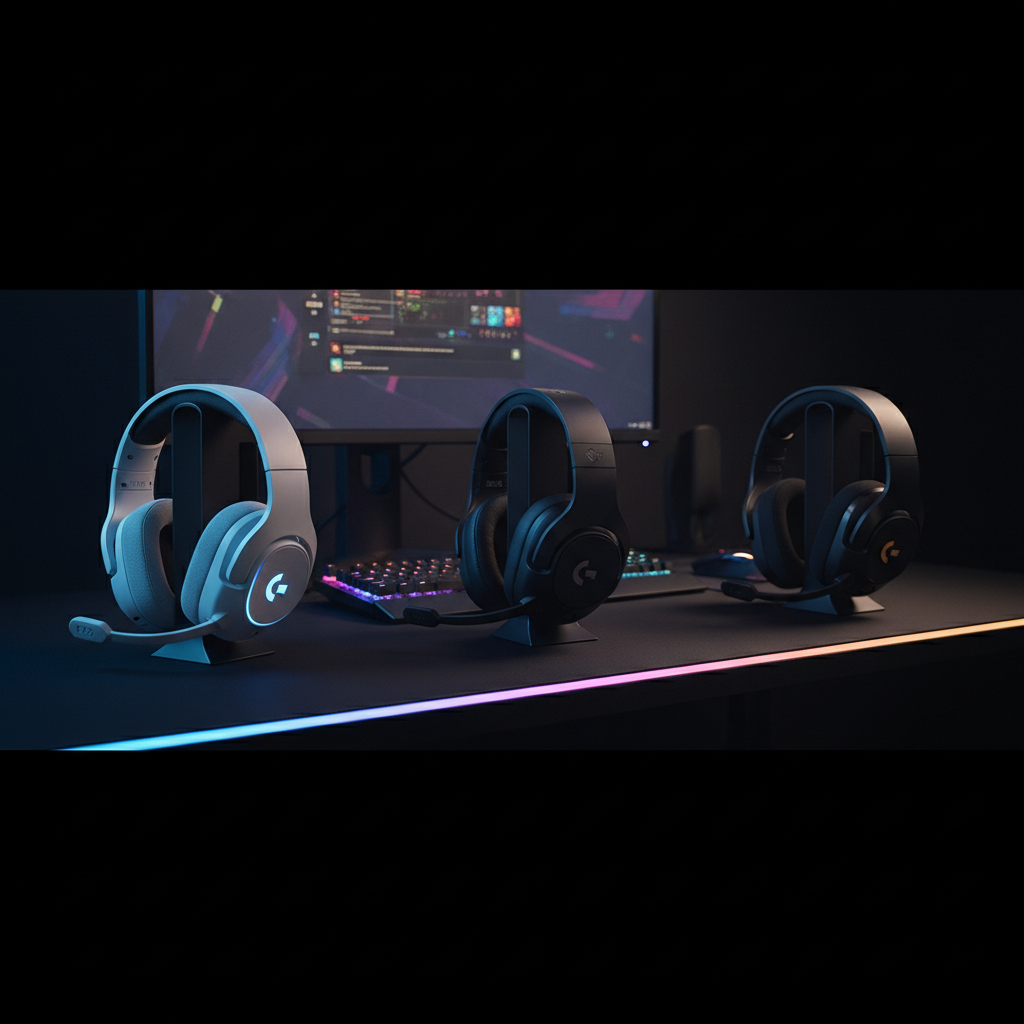
Choosing a wireless headset that balances sound, comfort and battery life is tricky, so eight popular models were compared. The list covers the budget tier (Razer Kraken Kitty V2 at $69.99, Razer BlackShark V3 X and BlackShark V2), the mid‑range tier (Logitech G733 at $99.99 and Razer BlackShark V3) and the premium tier (Logitech G935 at $125.99, Razer Kraken V4 and Logitech G522).
The Logitech G733 leads the pack with up to 29 hours of battery life, a lightweight 0.61288508836 lb frame and a 4.3/5 rating from more than 19 000 reviews, making it the “top pick” choice. For style‑focused gamers on a budget, the Razer Kraken Kitty V2 offers 60 hours of playback (RGB off) at $69.99 and a 4.2/5 rating, earning the “best value” title. Competitive players who need ultra‑low latency can turn to the Razer BlackShark V3’s 10 ms latency and 70 hour battery, while the premium Logitech G935 adds 50 mm drivers and DTS Headphone:X 2.0 surround for an arena‑level experience.
Below you’ll see how each model performs across sound quality, comfort and connectivity, so you can match the right headset to your play style.
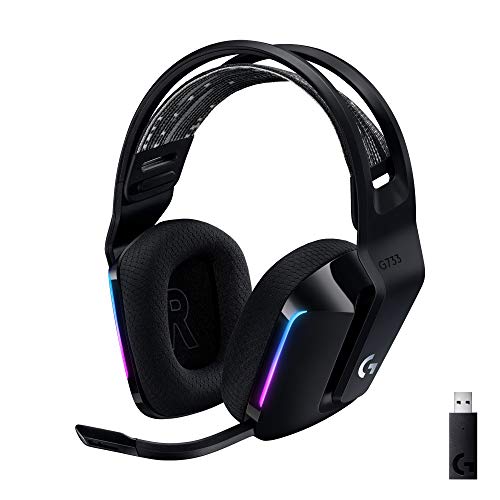
Logitech G733
Its 20 ms audio latency delivers responsive sound, and the 40 mm drivers give solid bass, making it a reliable mainstream choice.
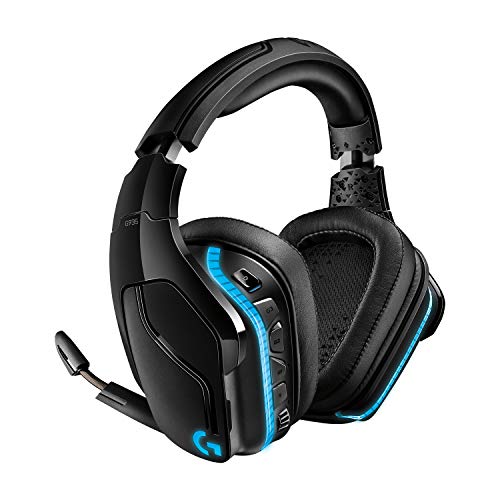
Logitech G G935
Designed for audiophiles and enthusiasts craving premium sound, it adds advanced features at $26 more than the G733.

Logitech G G522
With a 97 dB SPL sensitivity at 1 kHz, it offers clearer detail, setting it apart from the G733 and G935 despite a higher $159.99 price tag.
Also considered
Score Analysis
Key score advantages vs. runner-up (Logitech G G935)
Price Range
Logitech G733
$117.98
Logitech G G935
$121.59
Logitech G G522
$129.99
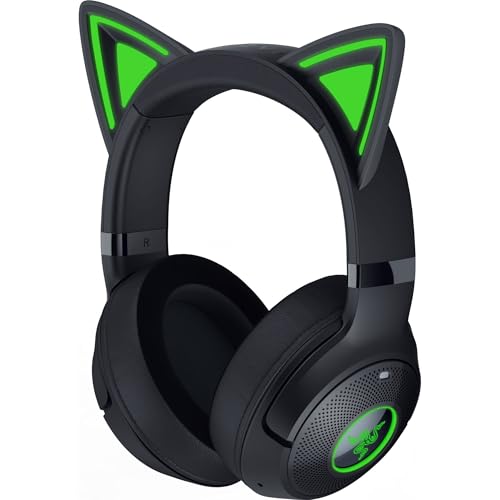
Razer Kraken Kitty V2
$69.99

Razer BlackShark V3 X
$74.99

Razer BlackShark V3
$119.99

Razer BlackShark V2
$69.99

Razer Kraken V4
$149.00
Spec Comparison
TL;DR: The Logitech G733 offers 40 mm drivers, up to 29 hours of battery life, and LIGHTSYNC RGB at a lightweight 0.61 lb price, making it a solid all‑round wireless gaming headset.
The headset’s standout spec is its 40 mm PRO‑G drivers paired with a 20 ms audio latency, which keeps sound in sync with fast‑paced games. Battery endurance tops out at 29 hours when the LEDs are off and the volume sits at 50 %, so you can marathon sessions without hunting for an outlet. At 0.61288508836 pounds (278 g), it feels almost weightless on the head, and the 20‑meter wireless range gives you plenty of freedom to move around your gaming space.
Compared with the other seven contenders, the G733 is lighter than the Logitech G935 (1.586875 lb) and far lighter than the Razer Kraken Kitty V2 (1.6093745126 lb). Its driver size of 40 mm is smaller than the 50 mm units found in the Razer BlackShark V3, V2, and V3 X, and its passive impedance of 39 Ω sits just above the 32 Ω of those Razer models. The headset’s 20‑meter range outstrips the 10.1‑meter Bluetooth range of the BlackShark V2, while its 29‑hour battery life is shorter than the 70‑hour claim of the BlackShark V3 but still beats the 12‑hour runtime of the G935 when RGB is active.
Reviewers consistently praise the G733’s comfort, noting the dual‑layer memory‑foam ear pads and the reversible headband that stays snug for hours. The Blue VO!CE mic software earns kudos for cleaning up voice chat, and users love the 16.8 million‑color LIGHTSYNC RGB that can be customized via G Hub. On the flip side, the mesh ear pads provide limited passive noise isolation, and the LEDs shave roughly nine hours off battery life when you leave them on. Console gamers should note that PlayStation disables DTS Headphone:X and other PC‑only features, which some users see as a drawback.
Pros
Cons
Best for: Most users looking for a well‑reviewed, reliable mainstream option
Avoid if: You need strong passive noise isolation, primarily PlayStation gaming, or a wired connection
“the most comfortable wireless headset I’ve worn.”
“I charge it once a week with daily 6‑hour use.”
TL;DR: The Logitech G935 offers 50 mm Pro‑G drivers, DTS Headphone:X 2.0 virtual 7.1 surround, and LIGHTSYNC RGB, but its battery lasts only 8 hours with lighting on.
At the core of the G935 sits a 50 mm Pro‑G dynamic driver paired with a 6 mm diaphragm, delivering a sensitivity of 93 ±3 dB and an active impedance of 5 kOhms (passive 39 Ohms). The headset clocks a wireless latency of 20 ms on its 2.4 GHz link and reaches up to 20 meters with Bluetooth, giving you freedom to move around your gaming area.
Compared with the Razer BlackShark V3, which also uses a 50 mm driver but features a higher sensitivity of 106 dB and a 70‑hour battery, the G935’s 12‑hour (no RGB) or 8‑hour (with RGB) runtime is considerably shorter. Its 20 ms latency is double the BlackShark V3’s 10 ms, and while the G935’s 87 mm depth and 188 mm height make it more compact than the BlackShark V3’s 119 mm depth and 283 mm height, the G935 is heavier at 1.586875Pounds versus the BlackShark V3’s 270 g. Against the Logitech G733, the G935 offers larger 50 mm drivers versus the G733’s 40 mm, but the G733’s battery can stretch to 20 hours with LEDs off, outlasting the G935’s 12‑hour baseline. The Razer Kraken V4 provides a 70‑hour battery and a 40 mm driver, yet it weighs 789 g, making the G935’s 720 g a lighter option. Similarly, the Razer BlackShark V2 shares a 50 mm driver and a 0.62Pounds weight, so the G935 feels bulkier. The Razer Kraken Kitty V2 matches the G935’s weight (730 g) but still eclipses its battery life with 60 hours when lighting is disabled.
Reviewers consistently praise the headset’s rich, cinematic sound and precise positional cues, crediting the 50 mm Pro‑G drivers and DTS Headphone:X 2.0 virtual 7.1 surround for an immersive experience. Streamers appreciate the three programmable G‑keys and LIGHTSYNC RGB lighting, though many note that the G HUB software can feel daunting for newcomers. The flip‑to‑mute mic with LED indicator frequently receives highlights as a handy feature for quick muting during calls.
The G935’s battery recharges in just 2 hours via the included 2 m Micro‑USB cable, and the headset supports wired play while charging, so you won’t miss a session. With a total weight of 1.586875Pounds (720 g) and dimensions of 87 mm depth, 188 mm height, and 109 mm width, it balances solid build quality with comfort for marathon gaming. Its impedance of 5 kOhms (active) and 39 Ohms (passive) aligns with typical gaming headsets, and the 93 ±3 dB sensitivity ensures clear audio across platforms, from PC to consoles.
Pros
Cons
Best for: PC and console gamers seeking immersive, positional audio; streamers and content creators who need a feature‑rich headset with customizable lighting and programmable controls.
Avoid if: You need long battery life with lighting on, require Dolby Atmos or Windows Sonic, or prefer a simpler setup without dedicated software.
“provides an immersive listening experience”
TL;DR: The Logitech G G522 offers 40 mm drivers, 97 dB SPL sensitivity, up to 90 hours of battery life with RGB off, and lightweight 290 g construction, but its $159.99 price is premium.
The headset’s standout spec is its 90‑hour battery life when you turn off RGB lighting, dropping to 38 hours with lighting enabled. It pairs a 40 mm dynamic PRO‑G driver with 97 dB SPL sensitivity and a 38–39 Ω impedance, delivering clear, low‑distortion sound. Connectivity is tri‑mode: Logitech’s LIGHTSPEED 2.4 GHz link, Bluetooth 5.3 (30 m range), and a USB‑C wired option, while the RGB system can display 16.8 million colors across eight zones.
Compared with the seven other headsets in this roundup, the G522 is lighter than the Razer Kraken V4 and Logitech G935, but a bit heavier than the Razer BlackShark V3, Logitech G733, and the BlackShark V2/X series, which sit around 270 g. Its 90‑hour off‑RGB battery outlasts the Kraken V4’s 70 hours and the BlackShark V3’s 70 hours, and it eclipses the G935’s 12‑hour runtime. Sensitivity at 97 dB SPL is higher than the Kraken V4’s ≥60 dB and the G733’s 87.5 dB, though it trails the BlackShark V3’s 106 dB. The 40 mm drivers match the Kraken V4 and G733, while the BlackShark line uses larger 50 mm units.
User sentiment highlights the headset’s comfort thanks to dual‑layer memory‑foam ear cups and a washable suspension band, and reviewers consistently praise the BLUE VO!CE detachable microphone for broadcast‑quality clarity. However, several users note a looser fit on smaller heads, the absence of a 3.5 mm analog jack, and the fact that RGB lighting can halve battery endurance. Xbox owners will also be disappointed, as the headset doesn't support that platform.
Additional technical notes include DTS Headphone:X spatial audio support, Logitech G HUB and G Mobile app customization, and a USB‑C charging port with Logitech planning a replaceable battery after more than 300 charge cycles. The headset’s 81 mm depth, 201.1 mm height, and 184.4 mm width keep the profile compact for most gaming setups.
Pros
Cons
Best for: Audiophiles and enthusiasts seeking premium sound quality and advanced features
Avoid if: You're shopping on a tight budget — it's priced at $159.99
“So light and comfortable”
“Sound is excellent”
TL;DR: The Razer Kraken Kitty V2 offers a 40 mm TriForce driver, 60 hours of battery life and vibrant RGB at a $69.99 price, but its mic struggles with background noise.
What really sets this headset apart is the Customized Dynamic 40 mm (TriForce) driver paired with a sensitivity of 92.5 dB SPL/mW @ 1 kHz and a 32 Ω impedance. Those numbers give you a clear, punchy sound profile that most reviewers describe as “sculpted” and suitable for both gaming and streaming.
At 1.6093745126 Pounds (730 g), the Kitty V2 is noticeably heavier than the 270 g Razer BlackShark V3 X and the similarly light Logitech G733, yet it’s still lighter than the Razer Kraken V4’s 1.73944724718 Pounds. Its 40 mm drivers match the size of the G733 and Kraken V4 but are smaller than the 50 mm drivers found in the BlackShark V3 X and V2. Battery‑wise, the headset delivers 60 hours with RGB disabled (40 hours with lighting on), which is a few hours shy of the BlackShark V3 X’s 70‑hour claim but far outpaces the Logitech G G935’s 12‑hour runtime. The Bluetooth range sits at 10.1 m, identical to the BlackShark V2 and shorter than the 30‑meter range of the Logitech G G522.
User sentiment highlights the headset’s comfort – the hybrid fabric and plush leatherette ear cups feel gentle during marathon streams – and the eye‑catching pink kitty ears with 16.8 million RGB colors. However, many users note that the omnidirectional microphone picks up background chatter and that the lack of EQ controls in Razer’s software limits fine‑tuning. Professional reviewers also point out the fixed pink design as a trade‑off for its playful aesthetic.
Pros
Cons
Best for: Streamers and casual gamers who want a fun, budget‑friendly headset with long battery life and vibrant RGB.
Avoid if: You need professional‑grade mic clarity or a neutral color scheme for competitive esports.
TL;DR: The Razer BlackShark V3 X delivers ultra‑low 10 ms latency, up to 70 hours of wireless playtime and THX 7.1.4 spatial audio in a lightweight 270 g package for under $75.
The headline feature is its ultra‑low latency of as low as 10 ms, which Razer markets for competitive shooters. Coupled with a massive 70‑hour battery life on the 2.4 GHz HyperSpeed link, you can game for days without hunting for a charger. The headset also supports simultaneous 2.4 GHz gaming audio and Bluetooth playback, letting you hear teammates while a phone call comes in.
Compared with the other seven headsets, the V3 X sits in the mid‑weight range: its 270 g chassis is roughly comparable to the BlackShark V2’s listed 0.62 pounds, yet considerably lighter than the Kraken Kitty V2 at over 1.6 pounds. All three Razer models share the same 50 mm driver size, while the Logitech G733 uses a smaller 40 mm driver. Battery endurance matches the BlackShark V2’s 70‑hour claim, outlasting the Kraken Kitty V2’s 60‑hour (RGB‑off) runtime and the Logitech G733’s roughly 28‑hour range. The V3 X’s Bluetooth version is 5.3, whereas Bluetooth specifics aren’t listed for the peers.
User feedback repeatedly praises the marathon battery and the headset’s light, memory‑foam ear pads that stay comfortable during long sessions. Reviewers also like the detachable HyperClear mic for clear voice chat. On the downside, several users note that the treble can sound sharp out of the box and that the mic sometimes captures sibilant keyboard clicks. Some note the lack of active noise cancellation as a missing premium feature.
Technically, the V3 X uses Razer’s TriForce Titanium (Gen‑2) 50 mm drivers with a frequency response of 12 Hz – 28 kHz. Its impedance sits at ≈32 Ω, typical for gaming headsets, and the sensitivity is rated at 106 dB, ensuring loud, detailed sound. The detachable 9.9 mm HyperClear Super Wideband mic follows a cardioid pickup pattern for focused voice capture.
Pros
Cons
Best for: Competitive FPS gamers and multi‑platform players who value ultra‑low latency, long battery life, and lightweight comfort.
Avoid if: You need active noise cancellation, a neutral studio‑grade sound signature, or the absolute best value‑per‑dollar in this segment.
TL;DR: The Razer BlackShark V3 offers 50 mm drivers, 10 ms ultra‑low latency, 70 hours of battery life and a lightweight 270 g design for $119.99, making it a solid mid‑range gaming headset.
The headset’s standout spec is its 10 ms wireless latency, which professional reviewers call “industry‑leading” for competitive shooters. Coupled with 50 mm TriForce Titanium drivers and THX Spatial Audio 7.1.4, it delivers clear, positional sound. Its 106 dB sensitivity and 70‑hour battery life (with a 15‑minute fast charge giving 6 hours of play) round out the high‑performance package.
Compared with the other seven headsets in this roundup, the BlackShark V3 is lighter than most – noticeably lighter than the Logitech G G935, Razer Kraken V4 and Kraken Kitty V2, and about on par with the Logitech G733. Its 70‑hour battery matches the top‑end Razer Kraken V4 (RGB off) and exceeds the Logitech G G935’s 12‑hour runtime and the G733’s 28‑hour claim. The 10 ms latency also undercuts the 20 ms latency listed for both the G G935 and G733, giving it an edge for fast‑paced FPS titles.
Users frequently highlight the headset’s comfort: the fabric‑covered headband, memory‑foam ear pads and 270 g weight make long sessions feel easy. Reviewers also note the handy tactile controls and the ability to blend game audio with Bluetooth music or calls. Critics often point to the lack of active noise cancellation, a microphone that feels “thin” for streamers, and the USB‑C to USB‑A charging cable, which limits modern port flexibility.
Pros
Cons
Best for: Competitive FPS gamers who need precise positional audio, ultra‑low latency and a comfortable, long‑lasting headset.
Avoid if: You're shopping on a tight budget — it's priced at $119.99.
TL;DR: The Razer BlackShark V2 offers 70 hours of HyperSpeed wireless playtime, a 50 mm driver, and a broadcast‑quality mic at a budget‑friendly $76 price point.
The headset’s standout spec is its 70‑hour battery life on the HyperSpeed 2.4 GHz dongle, plus a fast‑charge feature that gives you six hours of playback after just 15 minutes on the charger. Coupled with a 50 mm custom‑tuned TriForce Titanium driver and a 32 Ω impedance, it promises detailed sound and low latency for competitive gaming.
Compared with the other seven headsets, the BlackShark V2 is a touch heavier than the Logitech G733 (0.62 lb vs 0.613 lb) but still lighter than the Razer Kraken Kitty V2, which tips the scales at over 1.6 lb. Its driver size matches the Razer BlackShark V3 X and V3 (both 50 mm) and exceeds the 40 mm drivers found in the G733 and Kraken V4. Battery life ties with the V3 X and V3 at 70 hours, outlasting the Logitech G733’s 28‑hour run time.
Users consistently praise the headset’s clear, broadcast‑quality microphone and the comfort of its ultra‑soft memory‑foam ear cushions during marathon sessions. Professional reviewers also highlight the fast‑charging convenience and the detailed soundstage that THX Spatial Audio provides on Windows. The main criticisms focus on the plastic frame and imitation‑leather pads, which feel less premium, and the lack of active noise cancellation or multipoint Bluetooth support.
Pros
Cons
Best for: Entry-level buyers or those on a tight budget
Avoid if: You want the best value‑per‑dollar in its price range
TL;DR: The Razer Kraken V4 delivers detailed 40 mm sound, 9‑zone RGB, and up to 70 hours of battery life, but its premium $148.99 price and modest rating may give budget‑focused gamers pause.
Razer’s newest wireless headset focuses on a 40 mm TriForce Titanium driver and offers nine RGB zones per earcup, letting you splash 16.8 million colors across the headset. Battery endurance tops out at 70 hours when the lighting is off and 35 hours with RGB active, so marathon sessions won’t drain the pack quickly.
At 789 g (about 1.74 lb), the Kraken V4 feels sturdier than ultra‑light options like the Logitech G G522 or Razer BlackShark V3, yet it’s lighter than the bulkier Logitech G G935. Its depth of 89 mm and width of 210 mm give it a solid presence on the head, while the adjustable padded headband and breathable memory‑foam ear cushions keep comfort high during long play.
Users consistently praise the headset’s comfort and the visual punch of its Chroma lighting, especially when you turn off the RGB to stretch battery life. Professional reviewers note the clear, detailed mids and highs, but they also flag a weak bass response and a microphone that can sound muffled or require tweaking. The retractable HyperClear mic samples at 32,000 Hz and provides a signal‑to‑noise ratio of ≥60 dB, though real‑world mic quality varies.
The 32 Ω impedance pairs with the 40 mm drivers for a balanced sound signature that leans toward clarity rather than heavy bass. Razer Synapse lets you store four custom audio profiles and tweak the RGB zones, while the SmartSwitch button lets you toggle between 2.4 GHz HyperSpeed and Bluetooth 5.3 on the fly.
Pros
Cons
Best for: Those prioritizing audio detail, extensive RGB customization, and long battery life, and who don’t mind a higher price tag.
Avoid if: You’re on a tight budget, need deep bass, or require reliable microphone performance for podcasting or streaming.
Breakdown
Logitech G733
Pros
Logitech G G935
Pros
Logitech G G522
Pros
Cons
Razer Kraken Kitty V2
Pros
Based on scoring data and product specs
Personalized picks
Best Overall Pick
Logitech G733
Best OverallBest for: Most users looking for a well-reviewed, reliable mainstream option
Logitech G G935
Best for: Audiophiles and enthusiasts seeking premium sound quality and advanced features
$121.59+$3.61 vs winner
Skip Razer Kraken V4 if…
You're on a tight budget or only need basic functionality
We crown the Logitech G733 as the clear winner. Its 4.3‑star rating from 19,211 reviewers shows strong user approval, while the 29‑hour battery life (LEDs off, volume at 50 %) lets you game for days without a recharge. A 20‑meter (65.6 ft) LIGHTSPEED range and a lightweight 0.61288508836 lb design keep you untethered and comfortable for marathon sessions.
The Logitech G G935 earns the runner‑up spot for gamers who crave immersive virtual surround and RGB flair. It delivers DTS Headphone:X 2.0 virtual 7.1 sound, a 50 mm Pro‑G driver and customizable LIGHTSYNC lighting, and includes a solid 2‑year limited hardware warranty. Even with RGB active, you still get up to 8 hours of playtime, and the included 3.5 mm cable lets you charge while you game.
For those on a tighter budget, the Razer Kraken Kitty V2 shines as the best‑value pick, offering solid performance at $69.99. If you’re looking for a mid‑range option, the Razer BlackShark V3 X provides a balanced feature set for $74.99. And for a premium experience without breaking the bank, the Logitech G G522 delivers top‑tier audio and comfort at $159.99.
Grab the Logitech G733 today and level up your gaming audio.
The Logitech G522 lists a 30‑meter range for both its LIGHTSPEED 2.4 GHz and Bluetooth connections, which is the highest range among the models. The Logitech G733 and G935 both specify 20 meters, while the Razer Kraken Kitty V2 is limited to about 10 meters.
Please sign in to leave a review
No reviews yet. Be the first to review!
