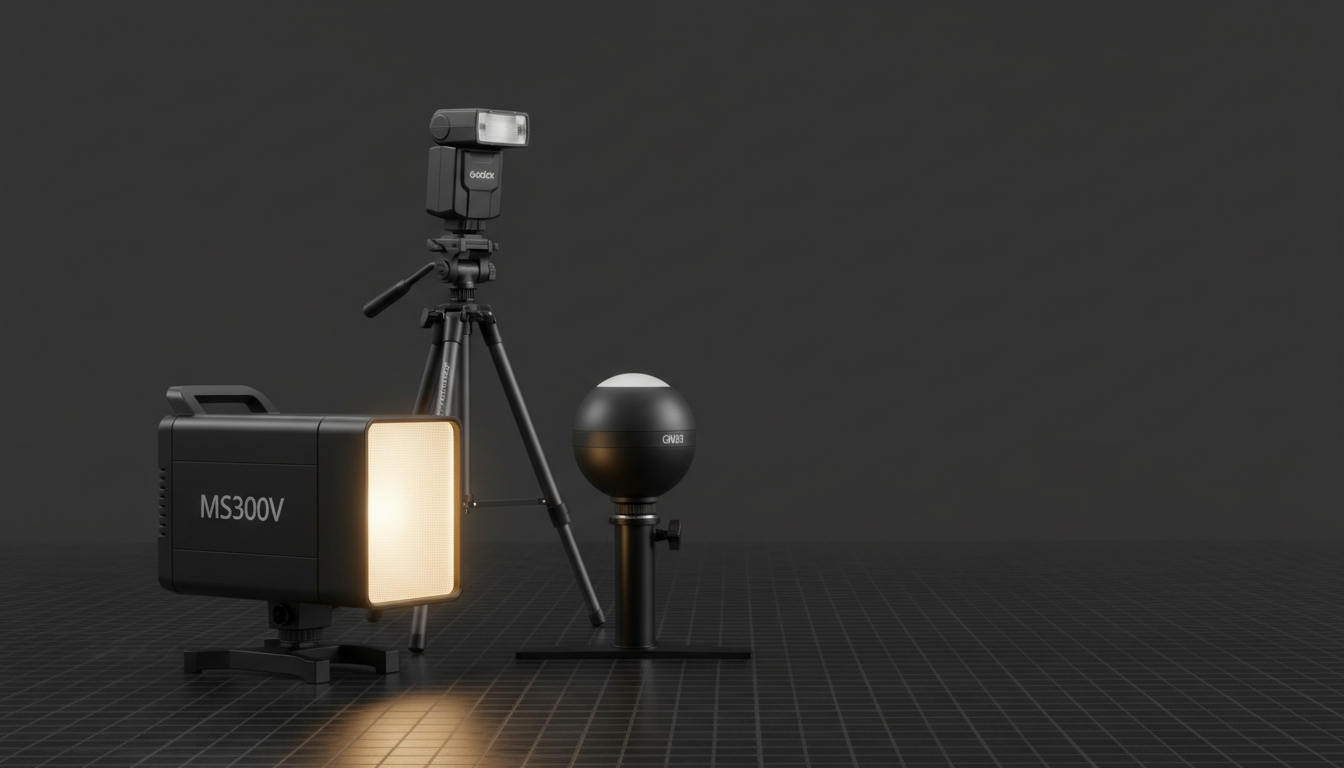
⚡ Quick Answer
Choosing the right flash can feel like a maze, especially with Godox’s sprawling lineup. In this roundup we compare six models, spanning a price range from $30.90 for the iM30 up to $259.00 for the AD100Pro. The three budget picks – iM30 ($30.90, 4.3/5) and iT20F ($39.90, 4.4/5) – keep the entry price low, while the mid‑range GN33 ($48.60, 4.5/5) and TT600 ($65.00, 4.6/5) add more power and wireless features. At the premium end, the MS300V ($129.00, 4.7/5) and AD100Pro ($259.00, 4.5/5) deliver studio‑grade output and battery freedom.
Key specs help you cut through the noise. The TT600’s GN60 reaches roughly twice the distance of the GN33’s GN33, while the MS300V’s 300 Ws output suits small‑studio portraits. For on‑camera speed, the iT20F weighs just 45 g and recycles in 1.5 seconds; the iM30 adds S1/S2 optical triggering for flexible remote use. Battery life varies: the AD100Pro’s 2600 mAh pack promises up to 700 full‑power flashes, whereas the GN33’s four AA cells deliver about 400 flashes per charge.
Below we break down each model’s strengths, so you can match the flash that fits your shooting style and budget.

Godox MS300V
Its 126 mm diameter fits a compact body and delivers quality at a $129 price.

Godox GN33
Ideal for budget‑conscious hobbyists, the GN33 comes in at $48.60—roughly $80 cheaper than the MS300V—while still offering reliable 433 MHz wireless control.

Godox TT600
The TT600 provides an ≈100 m transmission range, letting you trigger the flash from across a studio without the bulk of the larger MS300V.
Also considered
Score Analysis
Key score advantages vs. runner-up (Godox GN33)
Price Range
Godox MS300V
$129.00
Godox GN33
$54.00
Godox TT600
$65.00

Godox AD100Pro
$259.00

Godox iT20F
$39.90

Godox iM30
$30.90
Spec Comparison
TL;DR: The Godox MS300V delivers 300 Ws of mains‑powered output in a 5.51‑lb, ultra‑compact body with a 58 m guide number and a dimmable 10 W LED modeling lamp, ideal for tight studio spaces.
The standout spec is the 300 Ws max power paired with a guide number of 58 m (190 ft) at ISO 100, giving you studio‑level illumination from a unit that fits in a 336 mm‑long case. Its 5.51155655‑pound weight and 126 mm diameter make it one of the smallest wired strobes on the market, and the built‑in 2.4 GHz receiver works with Godox X‑series triggers across 32 channels and 16 groups.
Compared with the other five flashes in this roundup, the MS300V is heavier than the TT600 (1.1 lb) and the AD100Pro (≈1.16 lb) but lighter than a typical studio monolight that weighs several kilograms. Its guide number of 58 m outpaces the GN33’s 33 m and the iT20F’s 15 m, while still being comparable to the TT600’s 60 m. Wirelessly, the MS300V shares the 2.4 GHz band with the AD100Pro, whereas the GN33 uses 433 MHz and the iM30 relies on no built‑in radio at all.
Professional reviewers praise the ultra‑compact dimensions for tight‑studio or travel kits, and users consistently mention the quick recycle (0.1–1.8 s) and bright, adjustable LED modeling lamp as daily workhorses. Fans laud the fanless design for its silent operation, though some users note occasional overheating during prolonged high‑power bursts. The lack of a battery option and the absence of high‑speed sync (HSS) are common trade‑offs for photographers who need on‑location mobility or ultra‑fast shutter sync.
Pros
Cons
Best for: Entry‑level to enthusiast photographers who value studio‑grade power, compact size, and reliable wireless integration.
Avoid if: You need battery‑powered mobility, high‑speed sync for fast action, or a lower‑cost flash with fewer advanced features.
TL;DR: The Godox GN33 offers a 33 m guide number, 433 MHz wireless triggering on 16 channels, and a quick 1.8 s recycle time for just $48.60, making it a solid mid‑range flash for most DSLR users.
The flash’s standout spec is its 433 MHz wireless frequency paired with 16 selectable channels, reviewers say it delivers dependable sync across a studio or on‑location shoot. Its guide number of 33 m (ISO 100) and eight power levels—from 1/128 to full power—let you fine‑tune exposure without swapping gels. A recycle time of 1.8 seconds keeps you moving between shots, and the built‑in 20 m indoor / 30 m outdoor wireless range covers most indoor spaces and modest outdoor setups.
Compared with the other five flashes in this roundup, the GN33 sits in the middle of the power spectrum: its 33 m guide number is higher than the iT20F’s 15 m but lower than the TT600’s 60 m. The RT‑16 transmitter itself weighs only 31 g, making it lighter than the iT20F’s overall 45 g weight, while the flash’s 7.5 in height is larger than the ultra‑compact iM30. It also offers more power‑level granularity than the iM30’s three optical trigger modes.
Users highlight the flash’s reliable wireless triggering and the convenience of up to 400 full‑power flashes per charge using four AA NiMH cells. Reviewers appreciate the compact 2.36 in × 1.65 in × 1.18 in transmitter size, which fits easily on a camera hot‑shoe. A common criticism is the reliance on AA batteries rather than a built‑in lithium pack, meaning you’ll need to carry spares for longer shoots. The flash’s 1/510 s to 1/31000 s flash duration range also satisfies most fast‑action needs.
Pros
Cons
Best for: Most users looking for a well‑reviewed, reliable mainstream option
Avoid if: You need advanced features or professional‑grade performance
TL;DR: The Godox TT600 delivers a solid GN60 output, built‑in 2.4 GHz wireless X control and high‑speed sync in a lightweight 500 g body for about $65, making it a strong manual flash option.
The TT600’s standout spec is its 60 m guide number at ISO 100, which provides sufficient illumination for indoor shoots and outdoor fill. It also offers a flash duration from 1/300 s to 1/20 000 s and supports high‑speed sync, letting you freeze fast motion even at wide apertures. Its built‑in 2.4 GHz Godox X wireless system reaches roughly 100 m, and the unit runs on four AA batteries delivering about 230 full‑power flashes per charge.
In the six‑product lineup, the TT600 is heavier than the iT20F (45 g) and the iM30 (78 g) but only marginally lighter than the AD100Pro (524 g) and far lighter than the MS300V, which tips the scales at over 5 lb. Its guide number of 60 m exceeds the GN33’s 33 m and the iT20F’s 15 m, giving it a clear power advantage over those compact units. While the TT600’s price sits at $65, it is pricier than the GN33 and iT20F, yet still below the premium AD100Pro and MS300V.
Reviewers consistently praise the flash’s portability and the convenience of its wireless range, noting that the 100 m transmission makes off‑camera positioning easy on a studio or location shoot. The most common complaints focus on the reliance on AA batteries, which can require frequent swaps during long sessions, and the lack of TTL auto‑exposure, meaning you’ll need to set flash power manually.
Additional technical details include a tilt range of –7° to 90°, a zoom range of 24‑200 mm (14 mm with the wide panel), and a recycle time between 0.1 and 2.6 seconds, which helps keep you moving between shots. The flash’s weight of 500 g (including batteries) keeps it portable without sacrificing the solid build you expect from a mid‑tier speedlite.
Pros
Cons
Best for: Budget‑conscious photographers who need a reliable manual flash with solid power and wireless control.
Avoid if: You rely on TTL auto‑exposure, need Sony camera compatibility, or prefer a built‑in rechargeable battery.
TL;DR: The Godox AD100Pro packs 100 Ws of power into a pocket‑sized, battery‑driven monolight with an OLED touchscreen, fast 0.01 s recycle, and 2.4 GHz wireless, but it’s a premium price tag.
The standout spec is its 100 Ws power output combined with a 2600 mAh battery, giving you a truly portable flash that can still light a small studio or an outdoor portrait. An OLED touchscreen lets you tweak TTL, manual or stroboscopic settings without a separate controller, and the unit shuts off automatically after 30 minutes of inactivity.
Compared with the other five Godox flashes, the AD100Pro is lighter than the MS300V’s 1300 g body but heavier than the iT20F (45 g) and iM30 (78 g). Its depth of 76 mm matches the TT600, while the TT600’s weight of 500 g is just a shade lighter than the AD100Pro’s 524 g. Wireless‑wise, the AD100Pro’s 2.4 GHz radio and 100 m range outpace the GN33’s 433 MHz link, and it offers 32 channels and 16 groups versus the TT600’s 5 groups.
Users consistently praise the flash’s compact size—often likened to a 24‑70 mm lens—and its reliable TTL and high‑speed sync (1/8000 s). Professionals note the ultra‑fast 0.01 s minimum recycle time and the fluid OLED menu. The most common complaints focus on the lack of a built‑in hot shoe, forcing an external trigger, and the relatively low full‑power flash count of about 360, which can limit very high‑volume shooting.
Pros
Cons
Best for: Run‑and‑gun photographers, event and wedding shooters, travel videographers, and portrait artists who need portable, TTL‑compatible power.
Avoid if: You need on‑camera speedlight mounting, high‑volume studio shooting, or maximum full‑power flash counts.
“The smallest, lightest... packs a lot more power”
“perfect off‑camera flash”
TL;DR: At $39.90 the Godox iT20F is a 45 g, shoe‑mounted flash with a 300 mAh lithium battery that delivers up to 700 flashes, a 15 m guide number and a 1.5 s recycle time.
The iT20F’s standout spec is its built‑in 300 mAh lithium cell, which powers up to 700 full‑power flashes on a single charge and recharges in about 70 minutes. Its recycle time of 1.5 s means you can keep shooting without long pauses, and the flash offers a guide number of 15 m (ISO 100) from a compact 41.5 mm × 41 mm × 32 mm body.
Compared with the other five flashes in this roundup, the iT20F is exceptionally light at 45 g, lighter than the iM30’s 78 g and far more pocket‑sized than the GN33’s 7.5‑in height. Its guide number of 15 m matches the iM30’s ≈15 m but is lower than the GN33’s 33 m and the TT600’s 60 m. The 1.5 s recycle beats the GN33’s 1.8 s and the iM30’s ≈3.6 s. Unlike the GN33 and iM30, which rely on replaceable AA/AAA cells, the iT20F’s built‑in lithium pack eliminates the need for spare batteries.
Professional reviewers note the flash’s feather‑light feel and the solid 700‑flash endurance, praising its magnetic diffuser system for quick light shaping. Everyday users echo that the high‑definition display and one‑touch M/TTL mode make it easy to use on the go. The most common complaints focus on the modest GN 15 reach for larger venues and the absence of a zoom head, which limits flexibility for distant subjects.
Additional technical details include a tilt range of 0‑90°, a hot‑shoe mount with a magnetic accessory slot, and operation from –10 °C to +50 °C. The flash carries a 10‑year warranty, underscoring Godox’s confidence in durability.
Pros
Cons
Best for: Entry-level buyers or those on a tight budget
Avoid if: You want the best value‑per‑dollar in its price range
TL;DR: The Godox iM30 is a pocket‑sized, fully manual flash with a 15 m guide number, 3.6‑second recycle and a 78 g weight, ideal for travel‑light shooting at a budget‑friendly price.
The iM30 measures 75.96 mm tall, 71.5 mm wide and 205.99 mm long, and it tips the scales at 78 g. Its guide number of ≈15 m (≈4921 ft at ISO 100) and a recycle time of ≈3.6 seconds give you enough power for most on‑camera fill situations, and it's quick enough for street bursts.
Compared with the iT20F, the iM30 is noticeably larger and heavier (the iT20F is 45 g and only 41.5 mm long), yet it remains far lighter than the TT600’s 1.1 lb and the AD100Pro’s 524 g. It also sits shorter than the GN33’s 7.5‑inch height, so it still feels very portable despite its bigger footprint.
Professional reviewers say the iM30 is “the most compact flash we have ever reviewed,” noting its intuitive controls and retro styling. Everyday users love slipping it into a jacket pocket for travel or street work, though they’ve repeatedly mentioned the fixed front‑facing head limits bounce or diffusion. The flash runs on two AAA alkaline or NiMH cells, offers S1 and S2 optical trigger modes, and can deliver about 230 full‑power flashes per rechargeable charge, operating from –10 °C to +50 °C.
Pros
Cons
Best for: Travel and street photographers who need a lightweight, budget‑friendly flash that slots into a pocket.
Avoid if: You require strong fill power in bright sunlight, need bounce or swivel capability, or are shooting large indoor events that demand higher output.
Breakdown
Godox MS300V
Pros
Godox GN33
Pros
Godox TT600
Pros
Cons
Godox AD100Pro
Pros
Cons
Based on scoring data and product specs
Personalized picks
Best Overall Pick
Godox MS300V
Best ValueBest for: Those prioritizing quality and willing to pay for premium performance
Godox GN33
Best for: Most users looking for a well-reviewed, reliable mainstream option
$54.00-$75.00 vs winner
Skip Godox iM30 if…
You have limited desk space or need portability
Godox MS300V takes the top spot as the best value flash, thanks to its solid 4.7/5 rating from 228 reviewers, a high guide number of 58 (190 ft / 58 m) and a rapid recycle window of 0.1‑1.8 s. Its built‑in 2.4 GHz receiver works with X1, X2, XT16, XPro and FT‑16, and the fanless design keeps it quiet on set—all for $129.00.
The runner‑up, Godox GN33, shines when you need a lightweight, battery‑powered unit for on‑location shoots. It runs on four AA NiMH cells (or LR6 alkaline) and can fire up to 400 full‑power flashes per charge, while delivering a guide number of 33 and flash durations from 1/510 s to 1/31 000 s. At $48.60 and a 4.5/5 rating from 671 reviews, it’s a practical, affordable choice for freelancers and hobbyists.
Pick the Godox MS300V today and get reliable power without breaking the bank.
The MS300V costs about $129 versus $48.60 for the GN33, so it’s roughly $80 more expensive. It compensates with a higher guide number of 58 m, 32 wireless channels, 16 groups, a fan‑less design and an adjustable LED modeling lamp, giving a clear quality advantage for its price tier.
No reviews yet — be the first to share your experience.
Please sign in to leave a review