⚡ Quick Answer
If you think the most expensive coffee maker automatically wins the love of coffee fans, the data says otherwise. The $14.99 Bodum Brazil Black is the cheapest option in our 12‑product lineup, yet it holds a solid 4.4‑star rating. By contrast, the premium‑priced Bunn GRB Velocity Brew costs $130.00 and only nudges ahead at 4.6 stars.
Our roundup spans three price tiers. Budget‑friendly picks include the Bodum Brazil Black, OXO Brew Single Serve ($19.97, 4.7 stars), Bodum Pour Over Coffee Maker and the Black+Decker 5‑Cup Coffeemaker. Mid‑range options are the Black+Decker Digital 12‑Cup ($34.99, 4.3 stars) and the Chemex Pour‑Over ($48.93, 4.8 stars). Premium contenders such as the Black+Decker Thermal Programmable 12‑Cup ($62.99, 4.2 stars), Ninja Fresh Brew ($99.99, 4.4 stars), Cuisinart DCC‑3200 ($119.95, 4.4 stars) and the Bunn GRB Velocity Brew round out the field.
Below we break down each model’s strengths, capacity and unique features so you’ll match a coffee maker to your kitchen size, brewing habits and budget. Keep reading to see which machines excel at convenience, flavor consistency or space‑saving design.
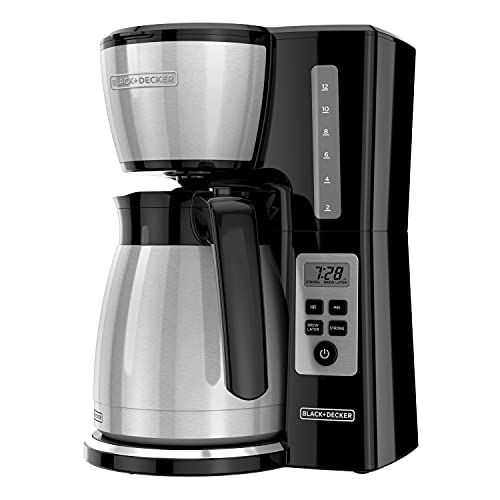
Black+Decker Thermal Programmable 12-Cup Coffee Maker
Keeps brewed coffee at 154°F, helping it stay hot longer without extra equipment.
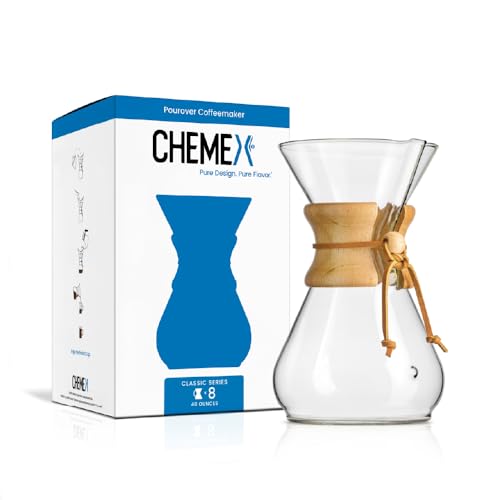
Chemex Pour-Over
Ideal for coffee purists who love manual brewing; at $48.93 it's about $14 less than the Black+Decker, offering high‑rated simplicity.

Bunn GRB Velocity Brew
Stands 14.8 in tall and weighs 8.0 lb, delivering commercial‑grade speed and durability that the smaller Black+Decker and Chemex can't match.
Score Analysis
Key score advantages vs. runner-up (Chemex Pour-Over)
Price Range
Black+Decker Thermal Programmable 12-Cup Coffee Maker
$62.99
Chemex Pour-Over
$48.95
Bunn GRB Velocity Brew
$130.00

OXO Brew Single Serve
$19.95

Ninja Fresh Brew
$119.99

Cuisinart DCC-3200
$89.95

Black+Decker Digital 12-Cup Coffee Maker
$34.99

Black+Decker 5-Cup Coffeemaker
$26.99

Bodum Brazil Black
$19.83

Bodum Pour Over Coffee Maker
$19.99

Hamilton Beach Programmable Coffee Maker
$53.70

Primula Classic
$16.99
Spec Comparison
TL;DR: The Black+Decker CM2046S delivers 12 cups of coffee in a stainless‑steel thermal carafe that stays hot for up to 2 hours, with programmable timing and a three‑level brew strength selector.
This model’s standout feature is its 4‑layer vacuum‑sealed stainless‑steel carafe, rated to retain heat at 154 °F for 2 hours, eliminating the need for a warming plate. It brews at 177.4 °F and uses Black+Decker’s exclusive Vortex Technology showerhead to saturate grounds evenly, while the removable washable basket lets you skip paper filters.
In size, the unit measures 13.2 in H × 9.4 in W × 9 in D, making it more compact than the Hamilton Beach competitor (12.9 in depth) but slightly wider. At 5.95 pounds, it's a touch heavier than Hamilton Beach’s 5.0‑pound model and noticeably lighter than the Ninja Fresh Brew’s 7.05 pounds. Pricing sits above the Hamilton Beach and Chemex options, reflecting its thermal‑carafe technology.
User sentiment frequently praises the reliable heat retention, the spill‑free pour spout, and the intuitive digital LCD with seven buttons for programming. Professional reviewers note the clear LCD interface and the consistent 177.4 °F brew temperature, while also pointing out the absence of a pre‑infusion feature. The machine requires a 57‑minute descaling cycle and carries a 4.2‑star rating from over 31 k reviews, indicating solid but not top‑tier satisfaction. It comes with a 2‑year limited warranty.
Pros
Cons
Best for: Households or small offices that need a programmable 12‑cup coffee maker with a thermal carafe for hot coffee that lasts.
Avoid if: You rely on single‑serve pods, demand pre‑infusion or other advanced brewing features, or prioritize the highest possible user rating above all else.
TL;DR: The Chemex Pour‑Over delivers a clean, sediment‑free cup in an elegant glass hourglass, but its manual brew and separate filter requirement make it best for coffee enthusiasts willing to invest time and $48.93.
The Chemex Classic Series uses non‑porous borosilicate glass for a pure tasting brew, and its 64‑ounce (8‑cup) capacity lets you serve a small group without refilling. At just 1.3 pounds, the unit stays light enough to move around the kitchen, while its 9.6‑inch depth and 6.4‑inch width give it a compact footprint on a countertop.
Compared with the electric models in this roundup, the Chemex is noticeably lighter than the Hamilton Beach and Black+Decker options, which tip the scales at several pounds each. It also sits above the ultra‑budget Bodum pour‑over in price, but offers a larger brew volume than the 5‑cup Black+Decker model, making it a middle‑ground choice between low‑cost plastic brewers and heavier, feature‑rich machines.
Professional reviewers praise the Chemex for its “pure coffee flavor” and “timeless hourglass silhouette,” noting that the thick, bonded paper filters keep sediment out for a smoother mouthfeel. Users echo this sentiment, highlighting the clean taste and stylish look, while also mentioning the learning curve of manual pouring and the need to buy Chemex‑specific filters separately. Many admire the glass body for its odor‑free brewing, though many point out that it requires careful handling to avoid breakage.
The brewer operates entirely by hand—no electricity needed—so you control every pour and can follow the recommended 1 tablespoon per 5 oz cup ratio for consistent results. The exclusive wood and leather collar adds a touch of sophistication, and the clear glass lets you watch the brew develop from start to finish.
Pros
Cons
Best for: Coffee enthusiasts who value precise manual brewing, a sleek aesthetic, and a well‑reviewed, reliable pour‑over experience.
Avoid if: You're shopping on a tight budget — it costs $48.93.
“I am very happy with this pour over coffee maker”
“Helpful and positive”
TL;DR: The Bunn GRB Velocity Brew delivers commercial‑grade 10‑cup coffee in just three minutes, offering a stainless‑steel tank, drip‑free carafe, and precise 200 °F brewing at a premium $130 price.
This model brews up to 10 cups (50 oz) in about three minutes, using a 200 °F brewing temperature and a 70 oz water reservoir. The internal stainless‑steel tank and exclusive drip‑free glass carafe showcase durable, professional‑grade features.
At 8.0 pounds, the Velocity Brew is heavier than the Ninja Fresh Brew (7.05 pounds) but lighter than the Cuisinart DCC‑3200 (9 pounds). Its 70 oz reservoir outpaces the 60 fl oz tanks found in the Black+Decker Digital and Hamilton Beach models, while the 50 oz carafe holds less than the 112 fl oz capacity of the Cuisinart.
Reviewers repeatedly praise the lightning‑fast three‑minute brew and the café‑quality flavor it produces. Professional reviewers note the commercial‑grade spray‑head design and the precise 200 °F temperature as key reasons for the consistent extraction.
Technically, the brewer draws 7.5 A at 120 V/60 Hz and delivers 900 watts of power, feeding an even‑extraction spray head and a switch‑activated warming plate. It uses flat coffee filters and a stainless‑steel faceplate, reinforcing its durability.
Pros
Cons
Best for: Buyers willing to invest in a proven, high‑quality option
Avoid if: You're shopping on a tight budget — it's priced at $130.00
“brews a full pot in less than half the time of other top-selling home coffee makers”
TL;DR: The OXO Brew Single Serve pours a consistent 12‑oz cup from a compact 5.25‑inch, 0.48‑lb unit, but its single‑serve limit and lack of temperature control may frustrate multi‑cup drinkers.
What sets this brewer apart is the engineered water‑tank hole pattern that spreads water evenly over the coffee grounds, helping beginners hit a reliable 1:18 coffee‑to‑water ratio. The whole unit measures just 5.25 inches on each side and weighs 0.48 pounds, so it slips into a kitchen drawer or backpack without a struggle.
At $19.97 it sits in the same price bracket as the Primula Classic ($19.99) but feels substantially heavier than Primula’s 0.05‑pound body and the Bodum Brazil’s 0.22‑pound frame. It’s still far lighter than the Black+Decker 5‑Cup model, which tips the scales at 2.5 pounds. Capacity‑wise, OXO delivers a single 12‑oz (355 ml) brew, matching the Bodum Brazil’s 12‑oz limit while falling short of the Bodum Pour Over’s 34‑oz reservoir and the Black+Decker 5‑Cup’s 25‑oz output. In short, OXO targets solo servings rather than family‑size pots.
Everyday users rave about the hassle‑free setup: the heat‑retaining lid doubles as a drip tray, and the included 10 #2 cone paper filters keep cleanup quick. Professional reviewers note the auto‑drip tank removes the guesswork of a gooseneck kettle and delivers barista‑like consistency for novices. The main complaints circle back to the single‑serve design—multiple brews are needed for more than one cup—and the absence of built‑in temperature control, which some coffee enthusiasts see as a missed opportunity for fine‑tuning.
Additional technical touches include clear measurement markings for 8‑oz, 10‑oz, and 12‑oz pours, a dishwasher‑safe Tritan body, and compatibility with mugs up to 3.5 inches in diameter. The OXO Better Guarantee backs the unit with repair or replacement support, adding a layer of confidence for budget‑conscious buyers.
Pros
Cons
Best for: Coffee beginners, solo drinkers, travelers, and small‑space users who want pour‑over quality without a bulky setup.
Avoid if: You want the best value‑per‑dollar in its price range or need a brewer that can serve multiple cups at once.
“perfect for beginners”
“simple for one‑cup brewing with clear directions and 1:18 ratio guidance”
TL;DR: The Ninja Fresh Brew delivers 14‑cup, 70‑oz coffee with Thermal Flavor Extraction, a 24‑hour timer and a removable reservoir, all for $99.99, earning a solid 4.4‑star rating from over 19 k reviewers.
The standout feature is Ninja’s Thermal Flavor Extraction technology, delivering smooth, non‑bitter coffee in batches from 1‑4 cups up to a full 14‑cup (70 fl oz) carafe. A 24‑hour programmable delay brew lets you set the machine the night before, and the mid‑brew pause lets you pour a cup before the cycle finishes.
At 7.05 lb, the Fresh Brew sits in the middle of the weight range: it’s lighter than the Cuisinart DCC‑3200 (9 lb) and Bunn GRB Velocity Brew (8 lb) but heavier than the Black+Decker Digital 12‑Cup (4.5 lb) and Hamilton Beach model (5 lb). Its 12‑in cord is notably shorter than Cuisinart’s 30‑in cord, making it easier to tuck away on a crowded countertop. With a 14‑cup capacity it outpaces most peers—Bunn tops out at 10 cups, Black+Decker Thermal at 12 cups, and Chemex at 8 cups—while its 1100 W power rating exceeds the 1050 W of Cuisinart and the 975 W of Black+Decker Digital.
Reviewers praise the consistent flavor and the convenience of the removable 70‑oz water reservoir, noting that the low 65 dB max noise level keeps the kitchen quiet. Professional reviewers highlight the reliable drip‑free pour and the three‑setting warming plate that keeps coffee hot for up to 4 hours. Common complaints note occasional carafe spillage when pouring and the need to measure water precisely for small‑batch brews to avoid dilution; the machine also lacks a built‑in grinder, so you’ll need pre‑ground beans.
Technical details include a 10‑minute brew cycle and hand‑washable parts for easy maintenance. The 9.16 A current draw and 120 V voltage match typical U.S. kitchen outlets, and the permanent reusable filter (compatible with #4 paper filters) reduces waste.
Pros
Cons
Best for: Families, offices, and entertainers who need flexible batch sizes and appreciate a quiet, feature‑rich drip coffee maker.
Avoid if: You're shopping on a tight budget — it's priced at $99.99.
“A YouTube review (2025) emphasizes straightforward programming, 10‑minute full brews, and hassle‑free reservoir, deeming it a strong value despite minor spills.”
“Tom's Guide highlights the drip‑free pour, huge 70‑oz. reservoir for families, and low noise (65 dB max), calling it easy for beginners with a well‑written manual.”
TL;DR: The Cuisinart DCC‑3200 delivers a 14‑cup, 112 fl oz glass carafe with precise temperature control and a 24‑hour timer, but its premium $119.95 price and slower small‑batch brew may deter budget‑focused users.
The standout spec is the 112 fl oz (14‑cup) easy‑pour glass carafe, paired with a 1050 W heating element that lets you set keep‑warm temperatures low, medium, or high for up to 4 hours. The built‑in 24‑hour programmable timer and 60‑second power‑loss reset give you confidence coffee’ll be ready when you need it, even after a brief outage.
Compared with the other eleven models, the DCC‑3200 is heavier than the Ninja Fresh Brew’s 7.05 lb unit and the Black+Decker Thermal’s 5.95 lb model, yet lighter than the Bunn Velocity Brew’s 8.0 lb design. Its 30‑inch cord outpaces Ninja’s 12‑inch cord, giving you more flexibility on the countertop. While many rivals cap at 12 cups, this Cuisinart pushes 14 cups, offering more volume than the Black+Decker Digital’s 12‑cup capacity and the Hamilton Beach’s 12‑cup limit.
Professional reviewers highlight the precise temperature control that yields hotter, richer coffee, and everyday users praise the consistent bold flavor and durability for daily use. Common complaints focus on the slower brew time for small batches and a carafe that can spill when poured, as well as the lack of an audible finish alert. The included charcoal water filter and permanent gold‑tone filter, plus a decalcify alert and self‑clean function, address maintenance concerns that users often mention.
Pros
Cons
Best for: Buyers willing to invest in a proven, high‑quality option
Avoid if: You're shopping on a tight budget — it's priced at $119.95
“Brews perfect bold dark brews every time”
“works flawlessly”
TL;DR: The Black+Decker Digital 12‑Cup Coffee Maker offers a 60 fl oz (1.8 L) brew capacity, 24‑hour programmable timer and a 975 W heater at a budget‑friendly $34.99, making it a solid family‑size option.
At 4.5 lb and measuring 11.0 in × 12.25 in × 8.25 in, this model fits comfortably on most countertops while still delivering a generous 12‑cup (60 fl oz) brew volume. The 975 W heating element brings water to brewing temperature quickly, which professional reviewers note helps shorten morning prep time.
Compared with the Black+Decker 5‑Cup Coffeemaker, which weighs only 2.5 lb and sits under 5 in tall, the 12‑cup version is noticeably larger and heavier—but it also serves four times the cups. Its 60 fl oz capacity matches the 12‑cup Hamilton Beach model, while the Chemex Pour‑Over provides 64 oz but uses a completely different brewing method. The Bodum Pour‑Over holds 34 oz, making the Black+Decker a clear leader for batch brewing needs.
User feedback repeatedly praises the easy‑to‑use digital timer and the “Sneak‑A‑Cup” feature that lets you pour a cup before the full brew finishes. Reviewers also like the non‑stick keep‑warm plate and the two‑hour auto shut‑off for safety. On the downside, several users mention the lack of brew‑strength control and the all‑plastic housing, which feels less premium than metal‑framed rivals.
Additional technical touches include a water‑level window for quick refills, built‑in cord storage to keep the countertop tidy, and a 24‑hour programmable timer with QuickTouch buttons. The machine ships with a glass Duralife carafe and a washable basket filter, and it’s backed by a two‑year limited warranty.
Pros
Cons
Best for: Most users looking for a well‑reviewed, reliable mainstream option
Avoid if: You need advanced features or professional‑grade performance
TL;DR: The Black+Decker 5‑Cup Coffeemaker offers a compact 5‑cup (25 oz) capacity, one‑touch brewing, and a durable Duralife glass carafe, making it a solid choice for small spaces despite a modest 4.3‑star rating.
This model brews up to 5 cups (25 oz) and fits on a countertop with a depth of just 2.85 in, a height of 4.23 in and a width of 3.84 in. The Duralife reinforced glass carafe holds coffee and includes clear water‑level markings, while the permanent, dishwasher‑safe filter basket lets you skip paper filters.
Compared with the other eleven machines, it’s markedly smaller than the Black+Decker Digital 12‑Cup Coffee Maker, which measures 8.25 in deep, 11.0 in tall and weighs 4.5 lb. It’s also lighter than that 12‑cup model but heavier than the ultra‑light Primula Classic at 0.05 lb and the Bodum Brazil Black at 0.22 lb. Capacity‑wise, it serves fewer cups than the Bodum Pour Over’s 34‑oz (1 L) carafe, but its footprint is far tighter than most pour‑over options.
Users consistently praise the tiny footprint for dorms, apartments or RV kitchens, and users call the one‑touch button “reliable and user‑friendly.” Professional reviewers note the simple, low‑cost engineering and the sturdy Duralife glass as strong points, while also pointing out the basic overflow‑prevention system that can sometimes spill. A common complaint is occasional leaking and the fact that the unit lacks programmable timers or a thermal carafe, which more advanced drinkers might miss. The built‑in temperature sensor, 1‑hour keep‑hot plate and automatic shut‑off add safety and convenience, and the 2‑year limited warranty covers manufacturing defects.
Pros
Cons
Best for: Solo users, couples, or small households needing 1‑5 cups of coffee in apartments, dorms, or RVs.
Avoid if: You need advanced programming, a thermal carafe, or professional‑grade performance.
“Compact size, easy brewing, durable carafe”
TL;DR: The Bodum Brazil Black French press offers a 12‑oz borosilicate‑glass brew at 95 °C for under five minutes, weighs just 0.22 lb, and comes in at a budget‑friendly $14.99.
This model holds 0.35 L (12 oz) of coffee and heats water to a precise 95 °C, giving you a full‑flavored cup in a 3–4 minute steep. The glass carafe is 86 mm tall, 183 mm long and 107 mm wide, and the whole unit tips the scales at 0.22 pounds, making it easy to lift and store.
Compared with the other eleven entries, the Brazil Black is among the lightest—only the Primula Classic (0.05 lb) is lighter, while the OXO Brew Single Serve (0.48 lb) and all the Black+Decker models (2.5 lb and up) are noticeably heavier. Its compact footprint also beats the larger Bodum Pour Over (549 g) and Chemex (1.3 lb), so it fits comfortably on tight countertops. At $14.99 it's in the budget tier, undercutting pricier electric brewers without sacrificing the core French‑press experience.
Reviewers consistently praise the sleek, colorful frame and the heat‑resistant borosilicate glass for durability at brewing temperatures. Users love the simplicity of a single‑serve design and the fact that no paper filters are needed, which cuts waste. The most common gripe is that removing the metal filter can splash grounds, and many note that the actual liquid yield often falls short of the advertised 12 oz, which can be disappointing for those expecting a full cup.
From a technical standpoint, the press calls for 20 g of coarsely ground coffee per brew, aligning with standard French‑press ratios. The ergonomic stainless‑steel handle and safety lid make pouring safe, while the one‑year limited warranty offers basic peace of mind.
Pros
Cons
Best for: Solo drinkers, travelers, or anyone with limited counter space who wants an inexpensive, stylish French press.
Avoid if: You need to brew multiple cups at once or prioritize a high yield over compact size.
TL;DR: The Bodum 34 oz Pour‑Over Coffee Maker brews a full pot in about 4 minutes, uses a reusable stainless‑steel mesh filter, and costs $19.99, making it a solid manual option for small households.
The standout feature is its 34 oz (1.0 L) capacity that yields eight 4‑oz cups in roughly 4 minutes. It pours into a single‑wall, high‑heat borosilicate glass carafe that is both BPA‑free and dishwasher‑safe, and the permanent stainless‑steel mesh filter lets you skip paper filters while preserving coffee oils.
At 1.21 lb (549 g) the Bodum sits heavier than the ultra‑light Primula Classic (0.05 lb), the OXO Brew Single Serve (0.48 lb), and the Bodum Brazil Black (0.22 lb), yet it’s lighter than the Black+Decker 5‑Cup model (2.5 lb), the Black+Decker Digital 12‑Cup (4.5 lb), and the Chemex (1.3 lb). Its 34 oz capacity outstrips the OXO Brew’s 12‑oz limit and the Brazil’s 12‑oz brew size, matches the Black+Decker 5‑Cup’s 25‑oz offering, but is smaller than the Digital 12‑Cup’s 60‑oz reservoir and the Chemex’s 64‑oz capacity.
Reviewers consistently praise the rich, full‑bodied coffee that the stainless‑steel filter delivers, noting the eco‑friendly aspect of reusing the filter and the included Bodum scoop. Professional reviewers highlight the durable borosilicate glass and the cool‑touch cork grip as design wins. Common complaints focus on the single‑wall glass heating up during brewing, the “8‑cup” label being misleading because each cup is only 4 oz, and occasional fine sediment slipping through the permanent filter.
Additional technical context: the unit is manual—requires no electricity—so you can brew anywhere with hot water. It’s compatible with standard 4‑cup paper filters for those who still prefer paper, and the dishwasher safely cleans all removable parts (carafe, lid, filter). The included scoop matches the 4‑oz cup size, giving you a convenient way to measure grounds.
Pros
Cons
Best for: Small families, groups of 3‑4, or anyone who enjoys manual pour‑over brewing and wants an eco‑friendly, budget‑friendly option.
Avoid if: You need a larger capacity brewer, prefer paper‑filtered coffee exclusively, or are sensitive to glass heating up during brewing.
TL;DR: The Hamilton Beach 12‑cup programmable coffee maker offers a 60‑oz glass carafe, front‑fill access, and a 24‑hour timer for $49.99, but its glass carafe cools fast and it lacks pod support.
This model brews up to 12 cups (60 ounces total volume) and features a front‑fill water reservoir that lets you add grounds without moving the machine. The programmable timer lets you set brew start up to 24 hours in advance—it's handy for busy mornings.
At 5.0 pounds, it's heavier than the Chemex Pour‑Over (1.3 pounds) and lighter than the Black+Decker Thermal Programmable model (about 5.95 pounds). Its depth of 12.9 inches exceeds the Chemex’s 9.6 inches and the Black+Decker Digital’s 8.25 inches, while the height of 13.9 inches is comparable to the Thermal’s 13.2 inches but taller than most rivals. This makes it a solid mid‑range choice for kitchens that can accommodate a slightly larger footprint.
Reviewers consistently praise the FrontFill design for easy cabinet placement and the convenience of the programmable timer. Professional reviewers highlight the auto‑pause & pour function and the 2‑hour auto‑shutoff as safety and convenience wins. On the downside, users note that the glass carafe loses heat quickly, and the lack of pod compatibility limits flexibility for those who prefer single‑serve options.
Under the hood, the unit draws 900 watts, runs a non‑stick hot plate to keep the carafe from sticking, and includes a brew‑strength selector (regular, bold, 1‑4 cups). A cleaning‑cycle reminder after 30 brews helps maintain performance, and the water‑view window lets you see reservoir levels at a glance.
Pros
Cons
Best for: Most users seeking a balanced, mainstream option
Avoid if: Reliability and user satisfaction are your top concerns
TL;DR: The Primula Classic stovetop espresso maker delivers six espresso‑size cups for $19.99, with a durable cast‑aluminum body, reusable filter, and a compact 161 mm depth that fits most small kitchens.
The standout spec is its 6‑cup (espresso‑size) capacity, letting you pull up to six strong shots in a single brew cycle. Its dimensions—161 mm depth, 190 mm height, and 103 mm width—make it one of the more space‑saving moka pots in the lineup, ideal for cramped countertops or dorm rooms.
Compared with the other eleven entries, the Primula Classic sits at the lower end of the price band, matching the Bodum Pour Over’s $19.99 tag while offering a stovetop‑only experience instead of a pour‑over system. It’s considerably lighter than the Bodum Pour Over (1.21 lb) and the OXO Brew Single Serve (0.48 lb), which can matter if you travel with it. In contrast, larger electric models like the Black+Decker Digital 12‑Cup sit higher on the weight and size scale, so the Primula feels more portable.
Reviewers consistently praise the rich, smooth coffee that the cast‑aluminum construction produces, noting that the heat‑resistant knob and handle stay manageable during brewing. The reusable filter earns points for sustainability, and the flip‑top lid adds convenience. Some users do mention that the aluminum can react with very acidic beans, and the handle can feel uncomfortable when the pot is hot—common trade‑offs for this material.
Pros
Cons
Best for: Budget‑conscious coffee lovers who want an authentic stovetop espresso experience without taking up much space.
Avoid if: You need a high‑volume brewer, prefer non‑aluminum construction, or require advanced electric features.
Breakdown
Black+Decker Thermal Programmable 12-Cup Coffee Maker
Pros
Cons
Chemex Pour-Over
Pros
Cons
Bunn GRB Velocity Brew
Pros
Cons
OXO Brew Single Serve
Pros
Cons
Based on scoring data and product specs
Personalized picks
Best Overall Pick
Black+Decker Thermal Programmable 12-Cup Coffee Maker
Best ValueBest for: Those prioritizing quality and willing to pay for premium performance
Chemex Pour-Over
Best for: Most users looking for a well-reviewed, reliable mainstream option
$48.95-$14.04 vs winner
Skip Primula Classic if…
You need advanced features or professional-grade performance
We’re calling the Black+Decker Thermal Programmable 12‑Cup Coffee Maker the clear winner. It holds 12 cups (60 oz) and keeps coffee hot at 154 °F for up to 2 hours, so you can brew a full pot and have it stay warm for the whole morning. The 24‑hour programmable timer and three brew‑strength settings add flexibility, while the $62.99 price (down from $77.99) gives you a solid value. With a 4.2‑star rating from 31,713 reviewers, it’s a proven choice for everyday coffee drinkers.
The runner‑up is the Chemex Pour‑Over, perfect if you prefer a hands‑on brewing ritual and want a clean, bright cup for small gatherings. Its 8‑cup (64 oz) capacity fits a modest crowd, and the non‑porous borosilicate glass design ensures durability without electricity. Priced at $48.93 and boasting a 4.8‑star rating from 8,640 reviewers, it delivers a pour‑over experience rated 4.8 stars for those who enjoy the ritual of manual brewing.
For tighter budgets, the Bodum Brazil Black (at $14.99) offers a no‑frills, compact design that’s easy on the wallet. The Chemex Pour‑Over also serves as the best mid‑range pick, balancing price and manual‑brew quality. If you’re chasing a premium, feature‑rich machine, the Bunn GRB Velocity Brew stands out at $130.00 with its high‑capacity, fast‑brew performance.
Pick the Black+Decker Thermal Programmable model today and enjoy reliable, hot coffee without breaking the bank.
The Chemex Pour‑Over is ideal for outdoor use because it’s a manual, electricity‑free system that lets you brew directly into a glass carafe. Weighing just 1.3 lb and made of non‑porous borosilicate glass, it’s lightweight and easy to transport.
No reviews yet — be the first to share your experience.
Please sign in to leave a review
Also considered
$48.95