⚡ Quick Answer
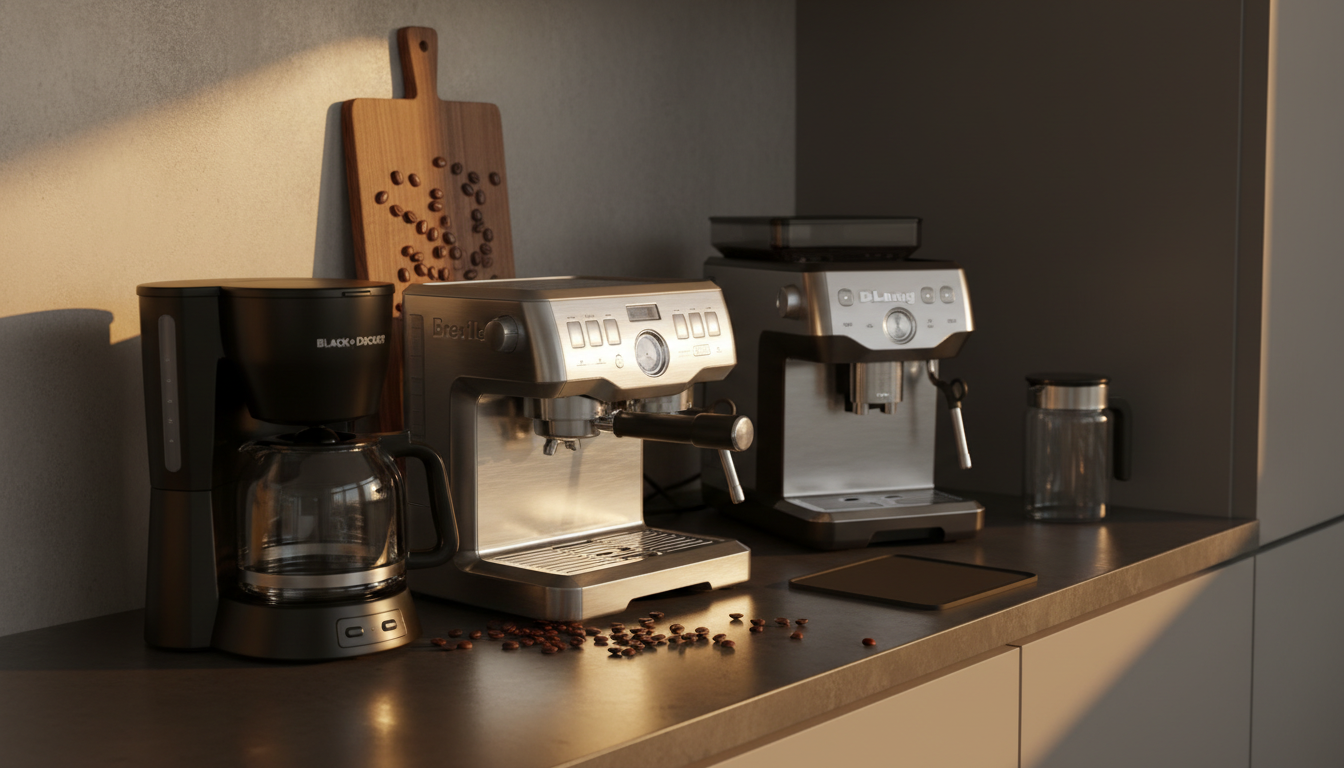
Choosing a coffee maker that grinds and brews in one unit can feel overwhelming, especially when the market offers everything from the $89.99 Black+Decker Mill & Brew 12‑Cup with a 4.2‑star rating to the $899.95 De'Longhi La Specialista Opera that carries a 4.2‑star score. In this roundup we’ve compared 10 models that span three price tiers – budget options like the Black+Decker and Cuisinart Single‑Serve, mid‑range choices such as the Philips 2200 Series, and premium contenders including the Breville Barista Express Impress at $649.95.
If you need a reliable daily pot for a family of four, the 12‑cup capacity and 12‑minute brew time of the Black+Decker makes programming a breeze. Espresso purists who appreciate assisted tamping and a 22‑lb pressure‑assisted tamping system may gravitate toward the Breville, which also weighs 23.7 lb and offers a 250 g bean hopper. For kitchens that demand flexibility, the Ninja Luxe Café Pro’s 8‑inch maximum cup height and 68‑oz water reservoir let you switch between drip coffee, cold brew and latte‑style drinks without swapping machines.
Next, we'll break down each model’s grind settings, brew options and cleaning ease so you can match the right integrated grinder to your coffee routine.
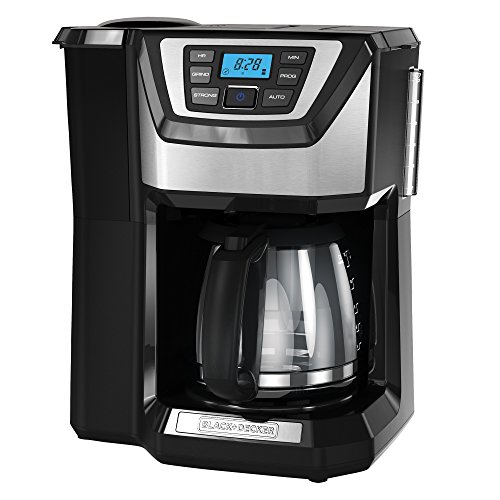
Black+Decker Mill and Brew 12-Cup
Its shallow 10 in depth keeps the countertop clear, adding value to this model.

Breville Barista Express Impress
Ideal for coffee enthusiasts ready to invest in a proven, high‑quality machine, even though it costs roughly $560 more than the budget pick.

De'Longhi Magnifica Start
Its wider 240 mm footprint accommodates a larger bean hopper, delivering the premium performance many buyers favor.
Score Analysis
Key score advantages vs. runner-up (Breville Barista Express)
Price Range
Black+Decker Mill and Brew 12-Cup
$89.99
Breville Barista Express Impress
$649.95
De'Longhi Magnifica Start
$499.95

Philips 2200 Series
$451.44

Ninja Luxe Café Pro
$749.99

Philips 1200 Series
$349.00

Philips 3200 Series
$539.00

Cuisinart Single-Serve DGB-2
$99.95
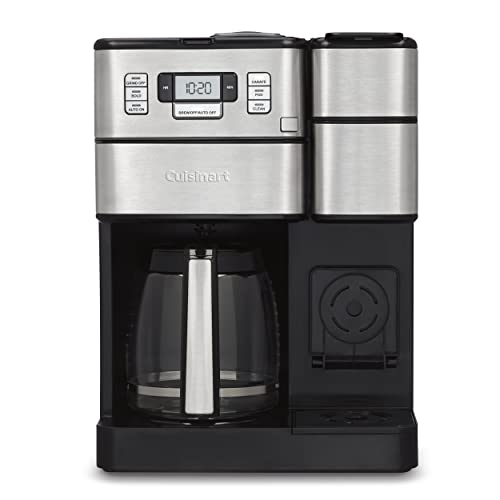
Cuisinart Coffee Center Grind and Brew Plus
$268.78

De'Longhi La Specialista Opera
$699.95
Spec Comparison
TL;DR: The Black+Decker Mill & Brew 12‑Cup blends a built‑in grinder, 24‑hour timer and permanent bronze filter for fresh coffee at a budget‑friendly $89.99 price point.
The standout feature is the integrated grinder with five preset grind options—4, 6, 8, 10 or 12 cups—or you can turn it off entirely. Coupled with a 12‑cup, 1.77 L glass carafe and a 24‑hour QuickTouch timer that allows a delay of up to 2 hours, it lets you wake up to freshly ground coffee without a separate appliance.
At 9.5 pounds, it’s heavier than the Cuisinart Single‑Serve DGB‑2 (weighing 1.0 pound) but lighter than the Philips 1200 Series, which tips the scales at 15.43 pounds. Its depth of 10 in matches the Cuisinart Coffee Center’s 10.75 in, while its 13.5 in width exceeds the Philips 2200 Series’ 244 mm width, giving it a broader footprint than many competitors.
Professional reviewers highlight the 24‑hour QuickTouch programming and auto‑shutoff as convenient scheduling tools, and everyday users love the “Sneak‑A‑Cup” pause‑brew function for a mid‑brew pour. The permanent bronze‑tone filter eliminates paper‑filter waste, but reviewers note that the limited grind‑setting granularity and the subtle difference between regular, strong and bold brew strengths can be disappointing for coffee purists.
The dustbin holds 325 ml of grounds, and a full 12‑cup brew takes roughly ≈12 minutes on the regular setting and ≈14‑17 minutes on the bold setting. The clear‑view water window lets you monitor fill level, and the stainless‑steel and glass construction adds a sleek look to any countertop.
Pros
Cons
Best for: Entry‑level buyers or those on a tight budget
Avoid if: You need powerful performance or professional‑grade features
“set grinder to cup count like 12 for full pot”
“straightforward grinding/brewing makes coffee quickly”
TL;DR: The Breville Barista Express Impress delivers café‑level espresso with a built‑in conical burr grinder, 22‑lb assisted tamping, and rapid PID heating, but its single boiler and premium price may limit high‑volume use.
What really sets this machine apart is the 22‑lb assisted tamping pressure combined with a thermocoil heating system that uses PID control to hold a 200°F target. The 2 L water tank and 25‑step conical burr grinder give you plenty of flexibility for single‑serve or double shots, while the backlit LCD lets you program 1/2‑cup presets.
At 23.7 lb, the Impress is heavier than the De'Longhi Magnifica Start but lighter than the Ninja Luxe Café Pro. Its 12.5‑in depth makes it more compact than the Magnifica Start and Ninja, yet deeper than the Philips 3200 Series. Bean‑hopper capacity matches the Magnifica Start at 250 g but falls short of the Ninja’s 340 g and Philips models’ 275 g.
Reviewers praise the quiet operation and the quick heat‑up, noting that the assisted dosing and tamping help beginners hit consistent shot volumes. Everyday users echo this, saying the auto‑purge dry puck and programmable shot control simplify daily use. The manual steam wand, however, brings a learning curve, and the single‑boiler design forces a pause between brewing and steaming.
Pros
Cons
Best for: Buyers willing to invest in a proven, high‑quality option
Avoid if: You're on a tight budget or only need basic functionality
“all smiles”
TL;DR: The De'Longhi Magnifica Start packs a 13‑setting conical burr grinder, 15 bar pump and 1.8 L water tank into a 19.62‑pound, compact unit that delivers solid espresso for small spaces, though its plastic build and limited drink menu keep it from the top tier.
What really stands out is the 13‑setting conical burr grinder paired with a 15 bar pump, letting you dial in grind size and extract espresso with professional‑grade pressure. The 250 g bean container and 1.8 L water tank give you enough beans and water for several drinks before refilling, while the 1450 W power draw ensures quick heating. Soft‑touch buttons and a manual frother round out the user interface.
At 19.62 pounds, the Magnifica Start is lighter than the Breville Barista Express Impress (23.7 pounds) but heavier than the Philips 2200 Series (3.75 pounds). Its 440 mm depth exceeds the Philips 3200 Series (254 mm) and the Ninja Luxe Café Pro (339.7 mm), meaning it'll need a bit more countertop real‑estate than those rivals. The 250 g bean hopper matches the Breville’s 250 g capacity, yet is smaller than the Philips 3200’s 275 g hopper and the Ninja’s 340 g hopper. Water‑tank capacity sits at 1.8 L, equal to the Philips 1200 Series and the Philips 2200 Series, but less than the Breville’s 2 L tank.
Professional reviewers note the fast 5‑7.5 second grind time and the machine’s value for a mid‑range super‑automatic. Everyday users praise the consistent coffee quality and the compact height of roughly 35 cm, which fits snugly on a small kitchen counter. However, many mention the noticeable grinding noise, the need to manually froth milk, and a plastic‑heavy exterior that doesn't feel as premium as stainless‑steel competitors.
Pros
Cons
Best for: Those who want solid espresso quality, a built‑in grinder and a compact machine for a small kitchen.
Avoid if: You need a wide variety of automated drink recipes, a built‑in milk system or a more premium‑feeling build.
“great coffee and espresso”
“excellent midranged superautomatic”
TL;DR: The Philips 2200 Series offers a 12‑setting ceramic grinder, 1.8 L water tank and a compact footprint for under $430, but its manual milk frother and limited drink menu may deter power users.
The standout spec is the 12‑setting ceramic flat‑burr grinder paired with a 15 bar pump, delivering consistent grind quality for espresso and coffee. The machine also includes Philips’ AquaClean filter, which lets you skip descaling for up to 5,000 cups, and a 1.8 L water tank that matches many mid‑range competitors.
At 3.75 pounds, the 2200 Series is heavier than the ultra‑light Cuisinart Single‑Serve DGB‑2 (1.0 lb) but considerably lighter than the De'Longhi Magnifica Start (19.62 lb). Its footprint (371 mm × 432 mm × 244 mm) is deeper than the Philips 3200 Series (254 mm depth) while staying narrower than that model’s 432 mm width. Bean capacity (275 g) and water‑tank size (1.8 L) line up with the Philips 1200 and 3200 series, placing it squarely in the middle of the lineup’s size and capacity spectrum.
Reviewers praise the intuitive touch‑screen interface and the durability of the ceramic grinder, noting that fresh beans consistently produce good espresso. However, the manual Classic Milk Frother frequently proves tricky to master, and the limited menu—just espresso, coffee and hot water—leaves latte lovers wanting more. The 3.8/5 star average from 26,095 reviews reflects this mixed sentiment. Philips highlights an A‑class energy rating, Eco Mode and >95 % recycled materials, which appeal to environmentally conscious buyers.
Pros
Cons
Best for: Coffee beginners, single‑person households or couples who want a straightforward bean‑to‑cup machine with solid grind quality.
Avoid if: You’re a heavy milk‑drink enthusiast, an advanced home barista, or need multiple automated milk‑based drinks.
“good espresso for starters”
“delicious milk froth”
TL;DR: The Ninja Luxe Café Pro delivers a 4‑in‑1 espresso, drip, cold brew, and hot‑water system with a 25‑setting conical burr grinder, built‑in scale, and dual frother, but its $749.99 price tags it as a premium choice.
This machine’s standout feature is the Barista Assist technology that guides grind, dosing, and brew adjustments, paired with a built‑in scale for weight‑based dosing. It houses a stainless‑steel conical burr grinder offering 25 grind settings and a 340 g bean hopper, enough for several brewing cycles without refilling.
At 27.07 pounds, the Luxe Café Pro is heavier than the Breville Barista Express Impress (23.7 lb) and the De'Longhi Magnifica Start (19.62 lb), yet a shade lighter than the De'Longhi La Specialista Opera (28.11 lb). Its 68 oz water reservoir outpaces many competitors that list smaller tanks, and the dual‑froth system with five presets adds a level of latte‑making convenience that single‑function espresso units lack.
User feedback praises the versatility of four beverage styles and the guided grind experience, calling it a “Barista Express killer” for home use. Professional reviewers note the dedicated hot‑water tap and Americano button with a 2:1 water‑to‑espresso ratio as a strong point. The main drawbacks include no pre‑infusion, a maximum brew size limited to 18 oz, and the premium price tag.
Pros
Cons
Best for: Those prioritizing quality and willing to pay for premium performance
Avoid if: You're shopping on a tight budget — it's priced at $749.99
TL;DR: The Philips 1200 Series EP1220/04 packs a 12‑step ceramic grinder, 15 bar pump and 1.8 L water tank into a compact 15.43 lb machine, but its plastic build and manual frother keep it in the entry‑level camp.
What really stands out is the 12‑setting ceramic grinder, which professional reviewers praise for quiet operation and consistent grind size. Coupled with a 15 bar pump, the machine can deliver the pressure needed for a solid espresso shot, and the 30 min auto shut‑off helps save energy when you forget to turn it off.
At 15.43 lb, the Philips 1200 is heavier than the Cuisinart Coffee Center (12 lb) and the Philips 2200 (3.75 lb), yet lighter than the De'Longhi Magnifica Start (19.62 lb) and the Black+Decker Mill and Brew (9.5 lb). It also sits above the budget‑friendly Black+Decker in price, while remaining below premium options like the Breville Barista Express Impress. Its 1.8 L water tank matches the capacity of several rivals, and the 275 g bean hopper gives you enough beans for multiple drinks without frequent refills.
Everyday users love the one‑touch simplicity and the reliable coffee quality the 12‑step grinder provides. However, many note that the classic steam wand requires a bit of practice to froth milk, and you'll find the predominantly plastic chassis feels less premium over time. The front‑access design for the drip tray and water tank makes cleaning straightforward, and the machine’s compatibility with AquaClean filters can extend descaling intervals—both consumers and experts highlight this point.
Additional technical perks include ECO mode for lower power draw, a reusable filter, and an A‑class energy label. Philips backs the unit with a 2‑year warranty, and the packaging advertises over 95 % recyclable, it's a greener kitchen setup.
Pros
Cons
Best for: Entry-level buyers or those on a tight budget
Avoid if: You want the best value‑per‑dollar in its price range
TL;DR: The Philips 3200 Series packs a 15‑bar pump, 12‑step ceramic grinder and a 260 ml LatteGo milk system into a compact, one‑touch machine, but its price and blocky design may deter some buyers.
What really sets this model apart is the integrated LatteGo 2‑part milk system, which holds 260 ml of milk and cleans itself in just 15 seconds. Combined with a 15 bar pump and 12 grind settings on a ceramic flat‑burr grinder, it can brew five coffee styles plus hot water with a single touch. The 275 g bean hopper and 1 800 ml water tank give you enough beans and water for multiple drinks before refilling.
At 21.06 pounds, the Philips 3200's heavier than the De'Longhi Magnifica Start (19.62 pounds) and considerably heftier than the Philips 2200 Series (3.75 pounds). Its footprint—254 mm deep, 381 mm high and 432 mm wide—is larger than the 2200’s 371 mm depth, yet it matches the 1200 Series in bean‑hopper capacity (275 g) and water‑tank size (1.8 L). Compared with the Breville Barista Express Impress, the 3200 offers fewer grind‑adjustment steps, and its design appears slightly blockier than the sleek stainless‑steel look of some competitors.
Everyday users praise the straightforward one‑touch interface and the consistent, silky froth the LatteGo system produces. Professional reviewers highlight the intuitive touch display and the front‑mounted water tank that makes refilling easy without moving the machine. On the downside, reviewers find the 12‑level grinder less granular than higher‑end models, and some buyers think the blocky silhouette looks less appealing on a kitchen countertop.
Beyond the core brewing functions, the Philips 3200 includes an AquaClean water filter that promises 5 000 cups before replacement, a waste‑container that holds 12 servings, and an adjustable spout height ranging from 85 mm to 145 mm. It runs on 1500 W of power at 120 V and 60 Hz, delivering reliable performance for daily use.
Pros
Cons
Best for: Most users seeking a balanced, mainstream option
Avoid if: Reliability and user satisfaction are your top concerns
“the fastest to clean milk system ever”
TL;DR: The Cuisinart DGB‑2 blends a fixed stainless‑steel conical burr grinder with a compact 48‑oz reservoir, delivering 8‑12 oz single‑serve brews from 100 g of beans, all for $158.83.
The standout feature is the built‑in stainless‑steel conical burr grinder that grinds whole beans directly into the brew chamber. The bean hopper holds 3.5 oz (100 g) of beans, while the removable water reservoir stores 48 oz (1.4 L), enough for several cups before refilling. At 11.02 in depth, 12.67 in height and a slim 7.28 in width, the unit weighs just 1.0 pound, making it one of the most space‑saving single‑serve coffee stations on the market. Push‑button controls keep operation straightforward, and the charcoal water filter adds a touch of convenience.
When you line it up against the nine other machines in this roundup, the DGB‑2 is dramatically lighter than the Black+Decker Mill and Brew (9.5 pounds) and the Cuisinart Coffee Center Grind and Brew Plus (12 pounds). It’s also lighter than the Philips 1200 Series (15.43 pounds) and far lighter than the high‑end Breville Barista Express Impress (23.7 pounds). In terms of depth, its 11.02 in footprint sits just above Black+Decker’s 10 in depth but below Breville’s 12.5 in depth, so it fits comfortably on most countertops. The 48‑oz water reservoir is smaller than Black+Decker’s 60‑oz tank and the 1.8 L (≈60 oz) tanks found in the Philips models, while the 100 g bean hopper is modest compared with the 275 g hoppers of the Philips 1200, 2200 and 3200 series. This makes the Cuisinart a true “single‑serve” solution rather than a full‑carafe brewer.
Reviewers consistently praise the convenience of having grinder and brewer in one compact box. Professional reviewers note the “space‑saving integration” and the ability to use whole beans, pre‑ground coffee, or single‑use pods. Everyday users love the fresh‑ground flavor and the removable drip tray that simplifies cleanup. The most common criticisms focus on the fixed grind setting, which prevents fine‑tuning for specialty beans, and the lack of temperature or brew‑strength controls. Some owners also report occasional water‑level sensor hiccups that pause brewing.
Technical details round out the picture: the machine draws 120 W of power at 120 V, keeping energy use modest. The removable reservoir and drip tray make maintenance easy, and the charcoal filter helps improve water taste. Cuisinart backs the unit with a limited three‑year warranty, adding a layer of confidence for budget‑conscious shoppers.
Pros
Cons
Best for: Entry-level buyers or those on a tight budget
Avoid if: Reliability and user satisfaction are your top concerns
“perfect for one”
“generous”
TL;DR: The Cuisinart Coffee Center Grind and Brew Plus blends a 12‑cup drip brewer with a built‑in blade grinder and pod compatibility, offering fast brewing and a 61‑oz carafe for $279.95.
This model’s most distinctive spec is its dual‑brew capability: a 61‑oz carafe for full‑pot drip coffee plus a 40‑oz single‑serve reservoir that accepts K‑Cup‑style pods. The built‑in blade grinder lets you grind beans right before brewing, and the brew‑strength control lets you dial in a stronger or milder cup.
At 12 lbs, the Cuisinart is lighter than the Philips 1200 Series’ 15.43 lb unit but considerably heavier than the single‑serve Cuisinart DGB‑2, which weighs just 1 lb. Its depth of 10.75 in is deeper than the Black+Decker Mill and Brew’s 10‑in footprint, while its height of 15.93 in matches Black+Decker’s 15.5‑in height and is shorter than the Philips 1200 Series’ 371 mm height. Power‑wise, the 1200 W heating element sits between the 120 W consumption of the single‑serve DGB‑2 and the 1500 W draw of the Philips 1200 Series, delivering solid heat without the higher draw of premium models.
Reviewers consistently praise the machine’s speed – professional testers note a first‑cup brew that’s up to 25 % faster than comparable units. Families like the ability to switch from a full pot to a single cup without swapping machines. However, many users flag the brew temperature as falling short of the optimal 195 °F range, which can affect flavor extraction. Critics note the blade grinder produces a less uniform grind compared with burr‑type alternatives, and the 12‑lb weight can make countertop moves a bit of a chore.
Pros
Cons
Best for: Households that want a full‑pot drip coffee maker with the convenience of single‑serve pod brewing.
Avoid if: Precise brewing temperature or burr‑grind consistency is a priority.
“set grinder to cup count like 12 for full pot”
“straightforward grinding/brewing makes coffee quickly”
TL;DR: The De'Longhi La Specialista Opera packs a 15‑setting conical burr grinder, 19‑bar pump and a 2 L water tank into a stainless‑steel body, delivering barista‑level espresso at a premium price.
What really sets this machine apart is its integrated Italian‑engineered conical burr grinder with 15 distinct settings, letting you grind beans fresh for every shot. Coupled with a 19‑bar pump (though reviewers note effective extraction around 9 bar) and a 2 L water reservoir, the Opera can pull a solid espresso and even run a cold‑brew cycle in under five minutes. The commercial‑style steam wand heats up quickly for micro‑foam, and the smart tamping lever promises consistent tamp pressure without the mess.
In this ten‑product roundup, the Opera sits at the top end of the price spectrum and is the heaviest unit, weighing 28.11 pounds. It’s heavier than the Ninja Luxe Café Pro (27.07 pounds) and noticeably bulkier than the Breville Barista Express Impress (23.7 pounds). While the De'Longhi Magnifica Start tips the scales at 19.62 pounds, the Opera still outweighs it by a good margin. Its dimensions of 380 × 370 × 445 mm also give it a larger footprint than many of its peers, which could be a concern for compact kitchens.
Consumer feedback highlights the convenience of the one‑touch five beverage presets and the rapid cold‑brew function, with users praising the quality of the milk micro‑foam produced by the steam wand. Professional reviewers commend the smart tamping lever for reducing user error, and reviewers laud the integrated grinder for delivering consistent dosing. On the flip side, several users mention that 15 grind settings feel limiting for light‑roast beans, and the machine’s size and weight make placement a challenge. Some also point out that the advertised 19‑bar pressure feels more like a marketing claim than a practical advantage.
Beyond the grinder, the Opera offers three temperature settings, a passive stainless‑steel cup warmer and a body built from 40 % stainless steel, 35 % plastic and 15 % aluminum. Its 1550 W input power ensures quick heat‑up, and the 120 mm maximum cup height accommodates most standard mugs. The machine earned the “Best Espresso Machine of 2025” award from CNN, underscoring its premium positioning.
Pros
Cons
Best for: Intermediate home baristas who want a semi‑automatic machine with built‑in grinding, tamping and cold‑brew capability.
Avoid if: You have limited counter space, need a lightweight unit, or prefer extensive grind‑setting flexibility.
Breakdown
Black+Decker Mill and Brew 12-Cup
Pros
Breville Barista Express Impress
Pros
De'Longhi Magnifica Start
Pros
Philips 2200 Series
Pros
Cons
Based on scoring data and product specs
Personalized picks
Best Overall Pick
Black+Decker Mill and Brew 12-Cup
Best Budget PickBest for: Entry-level buyers or those on a tight budget
Breville Barista Express Impress
Best for: Buyers willing to invest in a proven, high-quality option
$649.95+$559.96 vs winner
Skip De'Longhi La Specialista Opera if…
You're on a tight budget or only need basic functionality
Black+Decker’s Mill and Brew 12‑Cup takes the top spot as the best budget ground‑coffee maker. It pours a full 12‑cup (1.77 L) pot for just $89.99, and its 4.2‑star rating from 6,562 reviews shows strong user approval. The built‑in grinder offers five cup‑size settings, and the unit weighs a manageable 9.5 lb, making it easy to fit on most countertops.
The runner‑up, Breville Barista Express Impress, shines if you crave espresso‑level control at home. It features 25 grind settings, a 250 g bean hopper and a 2 L water tank, plus 15 bar pump pressure and a 1750–1850 W heating system for consistent extraction. At 23.7 lb, it’s a solid countertop presence, and its 4.3‑star rating from 1,345 reviewers reflects its premium feel.
For those who want a step up, the Philips 2200 Series offers solid performance at the mid‑range price of $429.95, earning the “Best Mid‑Range” label. If premium features are your priority, the De'Longhi La Specialista Opera stands out as the top‑tier choice at $899.95, carrying the “Best Premium Pick” badge.
Pick the Black+Decker Mill and Brew now and enjoy quality coffee without breaking the bank.
The Black+Decker Mill and Brew 12‑Cup has a compact footprint at just 10 in deep, 13.5 in wide and 15.5 in high, weighing only 5.49 kg. Its dimensions are smaller than most of the other models, making it a strong choice for tight countertops.
No reviews yet — be the first to share your experience.
Please sign in to leave a review
Also considered
$649.95