⚡ Quick Answer

🏆 Best Overall
DEWALT DCD996B
$259.00
If you need a drill that can handle demanding masonry without compromising on size, the DEWALT DCD996B catches the eye. It carries a 4.7‑star rating from 7,171 reviewers, packs a 70‑lumen three‑mode LED, and delivers up to 8,500 BPM hammer action—all while fitting into an 8‑by‑4‑by‑10‑inch frame and weighing just 4.0 lb. At $239 it sits at the top of our price spectrum, but its brushless motor and bright light make it a solid contender for pros and serious DIYers alike.
Our roundup spans 10 models across three price tiers. Budget options like the BLACK+DECKER BEHD201 ($54) and SKIL HD182001 ($64.99) keep weight low and hammer rates high (48,000 BPM), while mid‑range choices such as the Milwaukee M12 Fuel ($99.99) and Eneacro ($109.98) offer compact cordless power and 4,200 BPM impact. Premium selections—including the Bosch HD18‑2, Makita XRH04Z, Ryobi ONE+, and the DEWALT—bring higher torque, specialized SDS‑PLUS chucks, and longer drilling capacities for concrete.
Below we break down each tool’s strengths, ergonomics, and where they shine, so you can match the right hammer drill to your projects.
DEWALT DCD996B
Its 8.0 inches height keeps the drill compact for tight spaces while delivering DEWALT’s proven performance.

Milwaukee M12 Fuel Hammer Drill
Ideal for DIYers who want a reliable tool without breaking the bank, it comes in at $99.99—about $139 cheaper than the DEWALT Best Overall.

Makita XRH04Z
Stands out with an SDS‑PLUS chuck and 1.9 J impact energy, delivering stronger blows for concrete work that the other two models don’t emphasize.
Also considered
TL;DR: The DEWALT DCD996B packs a brushless 20 V motor, 2,100 in‑lbs torque and a bright 70‑lumens LED into a compact 8‑inch hammer drill, earning top marks despite its $239 price.
The DCD996B’s brushless motor delivers a maximum torque of 2,100 in‑lbs and a peak hammer rate of 38,250 BPM, while the 3‑Mode LED shines at 70 lumens and automatically shuts off after 20 minutes. Its 1/2‑inch metal ratcheting chuck with carbide inserts adds durability for tough masonry work.
At 4.0 pounds, the drill is heavier than the Makita XRH04Z’s 1.0‑pound unit but lighter than the Eneacro’s 12.6‑pound model. Its 8.0‑inch height matches the Bosch HD18‑2’s 8.5‑inch profile and is shorter than the Makita’s 9.0‑inch height, while the 4.0‑inch length is far more compact than Makita’s 16.38‑inch overall length. Runtime reaches up to 275 holes per charge, offering 75% more runtime than older 18 V NiCad brushed motors, a clear advantage over many peers.
Users consistently praise the drill’s power and reliability, noting the anti‑rotation kickback control and variable‑speed trigger make it feel safe and responsive in tight spaces. Reviewers also highlight the bright LED and long runtime as daily work boosters. The main trade‑off mentioned is the tool‑only configuration, which requires a separate battery purchase, and the weight can feel substantial when paired with high‑capacity packs.
Pros
Cons
Best for: Buyers willing to invest in a proven, high-quality option — the DEWALT DCD996B offers Height: 8.0 inches
Avoid if: You're shopping on a tight budget — it's priced at $239.00
TL;DR: The Eneacro ENRH3201 packs a 13 A, 1500 W motor delivering 7.4 J impact energy and 4,200 BPM, but its 12.6 lb weight and 2 m cord keep it firmly in the corded, mid‑range camp.
The standout spec is its 13 Amp, 1500 W motor that produces 7.4 J of impact energy and a 4,200 BPM impact rate, letting you drill up to 32 mm in concrete, metal, and wood. With a no‑load speed of 820 RPM and a maximum torque of 66 in‑lbs, the drill feels powerful enough for occasional heavy‑duty tasks while staying within a manageable 12.6 lb total weight.
Compared with the other nine tools in this roundup, the Eneacro is noticeably heavier than the Milwaukee M12 Fuel (about 2.2 lb) and the Berserker model (9.5 lb), and only a shade heavier than Aoben’s 12 lb unit. Its 4,200 BPM impact rate ties with the Berserker, but the Milwaukee’s cordless design eliminates the 2 m cord that limits the Eneacro’s mobility. The Bosch and SKIL options are lighter, while the Black+DECKER and Makita models are dramatically lighter still, underscoring the trade‑off between raw power and portability.
Reviewers consistently praise the drill’s ability to punch through asphalt and concrete when doing tasks like bollard replacement. Professional observers highlight the dual‑switch design, safety clutch, and double‑layer anti‑vibration system as durability boosters that protect the operator. The most common complaints focus on the 2 m cord restricting reach and the 12.6 lb weight causing fatigue during prolonged handheld work.
Technical details round out the package: a 31.75 mm SDS‑Plus chuck accepts a range of bits, and the 360° adjustable auxiliary handle lets you find a comfortable grip. The housing is built from magnesium‑aluminum alloy, the motor windings use heat‑resistant copper wire, and replaceable carbon brushes extend service life. Four selectable functions—rotary hammer, rotational drilling, chisel‑only, and chisel‑adjust—make the tool versatile for concrete, metal, and wood applications.
Pros
Cons
Best for: Most users looking for a well‑reviewed, reliable mainstream option — the Eneacro Rotary Hammer Drill offers Impact Energy: 7.4 J
Avoid if: You're shopping on a tight budget — it's priced at $109.98
“removed 1.5 ft deep sections in 3 days”
“cheapest chipping hammer worth testing for bollard replacement”
TL;DR: The Ryobi ONE+ SDS‑Plus Rotary Hammer packs 1.3 J of impact energy, four operating modes and an LED work light into a 1.65 kg, 12.2‑in‑long cordless tool, but its SDS‑Plus only chuck and premium price limit it to light‑duty projects.
What really sets this hammer apart is the combination of 1.3 J impact energy and a selectable 0 – 5000 BPM impact rate, all driven by an 18 V brushed motor. With a no‑load speed range of 0 – 1300 RPM and a torque rating of 15 Nm, it can handle typical masonry holes up to 16 mm (0.63 in) without feeling under‑powered for its class.
Compared with the other nine tools in the roundup, the Ryobi sits toward the heavier end of the cordless segment at 3.97 lb, heavier than the 1.0‑lb Makita XRH04Z but a shade lighter than the DEWALT DCD996B’s 4.0 lb. It’s noticeably lighter than the corded Bosch HD18‑2 (5.8 lb) and far lighter than the 12‑plus‑pound Eneacro and Aoben models. In length, its 12.2 in. body is shorter than Makita’s 16‑3/8 in. overall length and Bosch’s 13.4 in. length, making it easier to maneuver in tight spaces.
Users repeatedly praise the quick‑switch 4‑mode selector (rotary hammer, rotational drilling, chisel‑only, chisel‑adjust) and the integrated LED work light for dim work areas. Professional reviewers note the overmold GripZone handle adds comfort during extended use, while everyday owners appreciate the tool’s ability to drill through exterior brick where standard drills stall. The main criticisms focus on the exclusive SDS‑Plus chuck, which limits bit choice, and the modest 1.3 J impact energy that falls short for heavy demolition tasks.
Pros
Cons
Best for: Buyers willing to invest in a proven, high-quality option — the Ryobi ONE+ SDS Plus Rotary Hammer offers Impact Energy: 1.3 J
Avoid if: You're on a tight budget or only need basic functionality
“Handles stone/brick/concrete well for DIY (e.g., installing cornices)”
“Needs special SDS bits (not versatile for all drilling)”
TL;DR: The Milwaukee M12 Fuel 1/2" Hammer Drill packs 22,500 impacts per minute and 400 in‑lb torque into a 6‑inch, 2.2‑lb body, offering brushless power and a high‑rating user base for portable drilling tasks.
The standout spec is its 22,500 impacts per minute paired with a peak torque of 400 in‑lb, all driven by a POWERSTATE brushless motor. At just 6.0 inches long, 7.8 inches tall and weighing 2.2 lb, it slips into tight spaces where larger hammers can’t reach.
Compared with the other nine tools in this roundup, the M12 is markedly lighter and more compact than the bulkier 12‑lb rotary hammers and the longer‑than‑8‑inch models. While many competitors rely on corded power or higher‑voltage platforms, this unit stays in the 12 V class, delivering a surprisingly high impact rate for its size.
Users consistently praise its portability and low fatigue, noting that the all‑metal keyless 1/2" chuck and 17+ clutch positions give precise control in wood, metal and light masonry. Professional reviewers call it the most capable 12 V hammer drill on the market, but they also point out that the clutch dial can require careful tweaking and that the 12 V platform doesn’t match the raw torque of 18 V or 20 V tools for heavy‑duty concrete work.
Additional technical highlights include an integrated LED, a pistol‑grip handle, an all‑metal gearcase for durability, a reversible trigger with variable speed, and two speed settings that let you dial in the right power for the job.
Pros
Cons
Best for: Professionals and tradespeople who need a lightweight, well‑reviewed hammer drill with a 1/2 inch chuck for versatile, on‑the‑go jobs.
Avoid if: You regularly tackle heavy‑duty concrete drilling that demands the maximum torque of higher‑voltage tools.
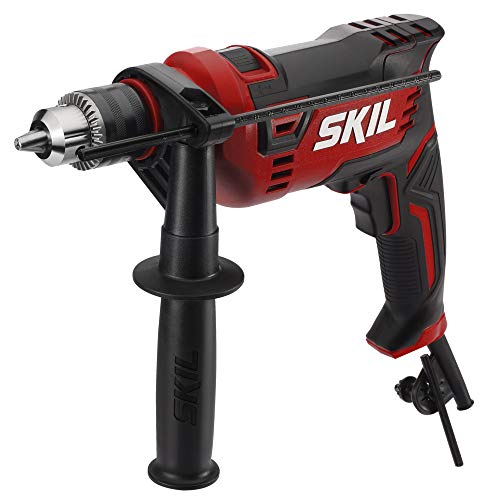
TL;DR: The SKIL HD182001 packs a 7.5‑amp motor, 1,400 in‑lbs of torque and 48,000 BPM impact rate into a 5.34‑lb, cord‑powered drill that’s comfortable for DIY projects but may feel less rugged over time.
The headline spec is its 48,000 BPM impact rate combined with a 0‑3,000 RPM variable‑speed range, giving you plenty of power for drilling into wood, metal and light concrete. Its 1,400 in‑lbs of torque, driven by a 7.5 A motor, means the tool can handle demanding fasteners without stalling. The 1/2‑inch keyed chuck and side‑assist soft‑grip handle round out a design focused on control and comfort.
Compared with the other nine drills in this roundup, the SKIL is notably lighter than the Berserker Rotary Hammer (9.5 lb) and far lighter than the Aoben Rotary Hammer (12 lb), yet heavier than the ultra‑light Milwaukee M12 Fuel (2.2 lb) and the Makita XRH04Z (1.0 lb). Its BPM rating outstrips the Berserker’s 4,200 BPM but sits just below the Bosch HD18‑2’s high‑speed 51,000 BPM. The 1/2‑inch chuck matches the Black+Decker BEHD201, while its overall length of 12.68 inches is longer than the Black+Decker’s 10.5 inches but shorter than the Berserker’s 14.57 inches.
Reviewers consistently praise the tool’s versatility – the 2‑in‑1 drill/hammer mode and variable‑speed trigger make quick swaps between tasks feel seamless. The soft‑grip handle and lock‑on button get kudos for reducing fatigue during longer jobs. However, several owners flag durability concerns, noting that some units develop issues after only a few months of regular use. Professional reviewers echo the comfort points but caution that the budget‑tier construction may not hold up under heavy‑duty, daily professional use.
Technically, the drill runs on a standard 120‑volt corded supply, eliminating worries about battery life but tying you to an outlet. The keyed chuck provides a secure grip on bits, and the side‑assist handle adds stability when hammering into tougher materials. With a height of 8.87 inches and a width of 3 inches, the tool fits comfortably in most workspaces without feeling cramped.
Pros
Cons
Best for: Budget‑conscious buyers seeking a reliable entry‑level option — the SKIL HD182001 offers Chuck Size: 1/2 Inch
Avoid if: Reliability and user satisfaction are your top concerns
“kicked the bucket later on”
“being cheap didn't pay in this case”
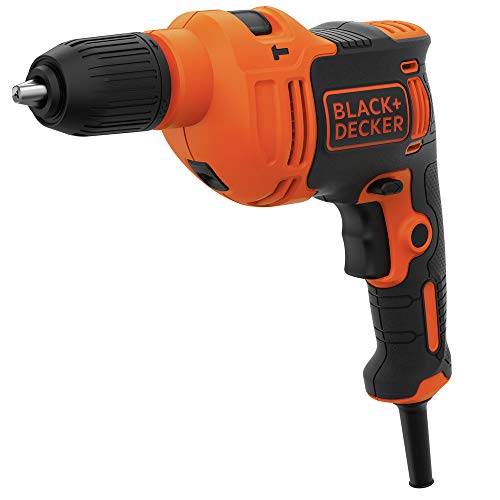
TL;DR: The BLACK+DECKER BEHD201 delivers 48,000 BPM hammer action, a 6.5‑amp motor, and a 1/2‑inch keyless chuck for $54, making it a solid, budget‑friendly choice for DIY masonry work.
The standout spec is the 0‑48,000 BPM impact rate paired with a 0‑2,800 RPM no‑load speed, giving you fast drilling into concrete, stone or brick. Its 6.5 amps draw from a 120 V corded source ensures constant power without the drop‑off you sometimes see in cordless tools.
Compared with the other nine drills in this roundup, the BEHD201 matches the SKIL HD182001’s 48,000 BPM but is lighter than the SKIL’s 5.34 lb and the Berserker’s 9.5 lb. It’s heavier than the Milwaukee M12 Fuel at about 2.2 lb and the Makita XRH04Z at 1.0 lb, yet its 10.5‑in length sits between the Milwaukee’s compact 6.0 in and the Berserker’s longer 14.57 in. The cord length of 6 feet gives more reach than the Eneacro’s 2 m cable, while still being shorter than a typical cordless run‑time limitation.
Professional reviewers praise the unlimited runtime of the corded design and the ergonomic 3‑position side handle, noting it reduces fatigue during extended use. Users echo this, highlighting the fast hammer action for masonry, but some mention the 4.1 lb weight can become tiring on long projects. The brushed motor is noted as less efficient than newer brushless designs, a trade‑off for the lower price point.
Technical details round out the picture: a keyless 1/2‑inch (13 mm) chuck simplifies bit changes, and the drill can handle up to 1‑1/4 in (31.7 mm) in hard wood, 1‑1/2 in (38.1 mm) in soft wood, and 1/2 in (12.7 mm) in steel. The side handle offers three adjustable positions, and the tool ships with a single‑sleeve keyless chuck and a 6‑foot power cord.
Pros
Cons
Best for: Budget-conscious buyers seeking a reliable entry-level option — the BLACK+DECKER BEHD201 offers Amperage: 6.5 amps
Avoid if: Reliability and user satisfaction are your top concerns
TL;DR: The Aoben Rotary Hammer Drill packs a 13 Amp, 1500 W motor into a 12‑pound corded unit, offering three modes and a 1‑¼‑inch concrete capacity at a budget‑friendly $79.99.
At the heart of this tool is a 13 Amp, 1500 W motor paired with 13 speed settings, letting you tackle concrete up to 1‑¼ inches and metal up to ½ inch. The SDS‑Plus chuck accepts a 32 mm (1.26 in) shank, and the side‑handle is ergonomically rubberized for better grip during demanding jobs.
Weighing in at 12 pounds, the Aoben is heavier than the Berserker (9.5 pounds) and far heftier than the Milwaukee M12 Fuel (≈2.2 pounds) or Black+Decker model (≈4.1 pounds). Its concrete drilling capacity of 1‑¼ inches also exceeds the Berserker’s 1‑1/8 inches, while its weight rivals the Eneacro’s 12.6 pounds. In short, it sits toward the heavier, more powerful end of the lineup.
Professional reviewers note the robust motor and precision bearings as key strengths, and they praise the easy mode‑switching mechanism for moving between hammer‑only, hammer‑drill, and drill‑only functions. Users who have tried the unit appreciate the included auxiliary handle, dust guard, and lubricant, though the corded design and 12‑pound mass can lead to fatigue on longer projects.
Pros
Cons
Best for: Budget-conscious buyers seeking a reliable entry-level option — the Aoben Rotary Hammer Drill offers Amperage: 13 Amps
Avoid if: You have limited desk space or need portability
TL;DR: The Makita XRH04Z is an 18 V cordless SDS‑PLUS rotary hammer with 3‑mode operation, 1.4 ft·lb impact energy and a 7/8 in concrete capacity, packaged in a compact 1.0 lb tool‑only design.
What really stands out is the 7/8 in (0.87 in) maximum concrete drilling capacity combined with a 0‑4,000 BPM blow rate and 1.4 ft·lb impact energy, giving you enough punch for most light‑to‑medium masonry jobs while staying under the 30‑minute battery‑charge time.
At just 1.0 lb without the battery, the XRH04Z is the lightest tool in this ten‑item lineup, though its fully loaded weight of 7.0 lb puts it in the mid‑range compared with battery‑included rivals that range from about 2 lb to over 12 lb. Its 16‑3/8 in overall length and 9.0 in height also make it shorter than many competitors, helping you reach tight spots that bulkier models can’t.
Professional reviewers praise the three‑mode selector (rotation only, hammer‑only, and hammer‑with‑rotation) and the torque‑limiting clutch that disengages on bit bind, while the shock‑absorbent handle and Star Protection controls aim to keep fatigue and overload at bay. The brushed motor is noted as a trade‑off, offering less efficiency and a shorter lifespan than brushless alternatives.
Pros
Cons
Best for: Buyers willing to invest in a proven, high‑quality option — the Makita XRH04Z offers Impact Energy: 1.4 ft·lb.
Avoid if: You're on a tight budget, need a brushless motor, or require heavy‑duty demolition power beyond a 7/8 in concrete capacity.
TL;DR: The Berserker 1‑1/8″ SDS‑Plus rotary hammer packs a 9 Amp motor, 3.3 ft‑lbs impact energy and three operating modes for under $80, but its corded design and 9.5 lb weight keep it in the budget‑tier camp.
The standout spec is the 9 Amp motor that drives 4,200 BPM and delivers 3.3 ft‑lbs (4.5 J) of impact energy. Coupled with a 1.13‑inch SDS‑Plus chuck and three selectable modes—hammering with rotation, rotation‑only, and hammer‑only—the drill can tackle concrete, metal and wood without swapping tools. Its maximum rotational speed of 1,050 RPM and 120 V power source round out the core performance package.
Compared with the other nine tools in this roundup, the Berserker sits in the middle of the weight spectrum: at 9.5 lb it’s heavier than the SKIL HD182001 (about 5.2 lb) but noticeably lighter than the Aoben model (around 12 lb). Its 4,200 BPM rate is modest next to SKIL’s 48,000 BPM, yet it still outpaces the Milwaukee M12’s 22,500 impacts per minute, showing that impact frequency varies widely across the class. Price‑wise it lands in the budget tier, offering more power than the Black+Decker BEHD201 while staying below the premium price of the DEWALT DCD996B that dominates the top of the list.
User feedback repeatedly highlights the robust 9 Amp motor and the built‑in safety clutch that helps prevent kick‑back during heavy masonry work. Reviewers also appreciate the tool‑free bit‑change system, noting that swapping chisels or drill bits is quick and hassle‑free. On the downside, several users mention that the 9.5 lb mass can cause fatigue during prolonged overhead drilling, and the corded power source limits mobility on sites without easy access to outlets.
Technical details reinforce its niche: it can bore up to 1‑1/8 in in concrete, 1/2 in in metal and 1‑1/4 in in wood, making it versatile for most DIY renovation tasks. The aluminum‑alloy housing adds durability without adding excessive bulk, and the included accessories—three drill bits, flat and point chisels, and a carrying case—help you get started right out of the box.
Pros
Cons
Best for: Budget-conscious buyers seeking a reliable entry‑level option — the Berserker Rotary Hammer Drill offers Impact Energy: 3.3 ft‑lbs (4.5 J).
Avoid if: You want the best value‑per‑dollar in its price range.
TL;DR: The Bosch HD18-2 packs an 8.5 Amp motor with up to 51,000 BPM, a keyed 1/2‑inch chuck and two‑speed hammer action, delivering pro‑grade power for demanding masonry at $149.
The standout spec is its 8.5 Amp motor that can reach 0‑51,000 BPM and a no‑load speed of up to 3,200 RPM, giving it the torque needed for heavy concrete drilling. It offers two speed settings and a rotation‑only mode, so you can switch between drilling wood (1‑1/2 in) and masonry (3/4 in) without changing tools.
At 5.8 lbs, the HD18‑2 is heavier than the Makita XRH04Z (1.0 lb) and Milwaukee M12 Fuel (2.2 lb) but lighter than the Eneacro Rotary Hammer (12.6 lb) and Berserker Rotary Hammer (9.5 lb). Its $149 price sits above the Milwaukee model ($99.99) and below the DEWALT DCD996B ($239.00), positioning it in the premium‑tier segment of this roundup.
Customers consistently praise the robust metal gear housing and the integral slip clutch for durability on the job site, while professional reviewers highlight the high impact rate as a key advantage. The main criticism is the corded design, which limits mobility compared with battery‑powered rivals, and the 5.8‑lb weight that some users find bulkier than newer cordless options.
Additional technical touches include a keyed three‑jaw 1/2‑inch chuck, a 360° auxiliary handle with built‑in depth gauge, and a soft‑grip pistol‑style handle. These features together make the drill versatile for both rotation‑only tasks and hammer‑drilling in concrete, wood, or metal.
Pros
Cons
Best for: Those prioritizing quality and willing to pay for premium performance — the Bosch HD18-2 offers Amperage: 8.5 Amp
Breakdown
DEWALT DCD996B
Pros
Cons
Milwaukee M12 Fuel Hammer Drill
Pros
Makita XRH04Z
Pros

Eneacro Rotary Hammer Drill
Pros
Cons
Based on scoring data and product specs
Personalized picks
Best Overall Pick
DEWALT DCD996B
Best OverallBest for: Buyers willing to invest in a proven, high-quality option — the DEWALT DCD996B offers Height: 8.0 inches
Milwaukee M12 Fuel Hammer Drill
Best for: Most users looking for a well-reviewed, reliable mainstream option — the Milwaukee M12 Fuel Hammer Drill offers Chuck Size: 1/2 inch
$95.00-$164.00 vs winner
Skip Aoben Rotary Hammer Drill if…
You have limited desk space or need portability
We’re naming the DEWALT DCD996B the clear winner. It boasts a professional‑grade 2,100 in‑lb of max torque, a brushless motor for consistent power, and a 4.7‑star rating from 7,171 reviewers. At 4.0 lb it’s sturdy enough for tough jobs while still manageable, and its 70‑lumen, three‑mode LED keeps the work area illuminated.
The Milwaukee M12 Fuel Hammer Drill lands as runner‑up, perfect if you need a lightweight, battery‑driven tool for tight spaces. Weighing just 2.2 lb (battery excluded) and delivering 22,500 impacts per minute with 400 in‑lb of peak torque, it offers the convenience of a 12 V system without sacrificing core hammer‑drill performance.
For tighter budgets, the BLACK+DECKER BEHD201 shines as the best value at $54.00, delivering solid performance for occasional DIY tasks. If you sit in the middle, the Milwaukee M12 Fuel (already highlighted) remains the top mid‑range choice, balancing price, portability, and power. And for those willing to stretch a bit more, the Ryobi ONE+ SDS Plus Rotary Hammer stands out as the premium pick at $205.57, offering higher‑end features for demanding applications.
Pick the DEWALT DCD996B for the most capable, durable hammer drill you’ll use on any project.
The DEWALT DCD996B is priced at $239.00 and packs a brushless motor, 2,100 in‑lbs of max torque, and an integrated hammer mode for masonry. It also offers a 70‑lumens LED with three modes and up to 275 holes per charge, which the data list as a runtime advantage. Those specs give it professional‑grade power and durability that many lower‑priced models lack.
No reviews yet — be the first to share your experience.
Please sign in to leave a review