⚡ Quick Answer
Handheld Windows gaming PCs have finally caught up with the demand for portable AAA play, and we compared five models that span the budget, mid‑range, and premium segments. Prices run from $29.90 for the entry‑level One‑Netbook OnexPlayer up to $1749.99 for the top‑tier Lanruo GPD Win Mini 2025, giving you a clear sense of what each tier offers.
If you want a full‑keyboard clamshell that still fits in a jacket pocket, the GPD Win Mini at $1029.95 packs a 7‑inch 120 Hz touchscreen, 44.24 Wh battery and up to 1 TB SSD, earning a solid 4.0/5 rating from six reviewers. The Asus ROG Xbox Ally 16GB, priced at $939.99, pushes a 60 Wh battery and a 500‑nit display while scoring the highest user rating of 4.4/5 across 141 reviews. Premium choices like the OneXFly F1 Pro bring a 144 Hz OLED panel and 48.5 Wh battery for $1489.99, whereas the Lanruo version ups the RAM to 32 GB for $1749.99.
Below we break down each handheld’s strengths, screen quality, and battery life so you’ll match the device to your travel habits and gaming ambitions.

GPD WIN Mini
Its 65 W charging power lets the 44.24 Wh battery recharge quickly, giving you more playtime between plugs.

Asus ROG Xbox Ally 16GB
Ideal for entry‑level gamers on a tight budget, it costs about $90 less than the GPD WIN Mini.

Onexfly F1 PRO
Stands out with a 12,600 mAh battery delivering 48.5 Wh for marathon sessions, catering to users who value extended unplugged play.
Also considered
Score Analysis
Key score advantages vs. runner-up (Asus ROG Xbox)
Price Range
GPD WIN Mini
$1,029.95
Asus ROG Xbox Ally 16GB
$939.99
Onexfly F1 PRO
$1,489.99
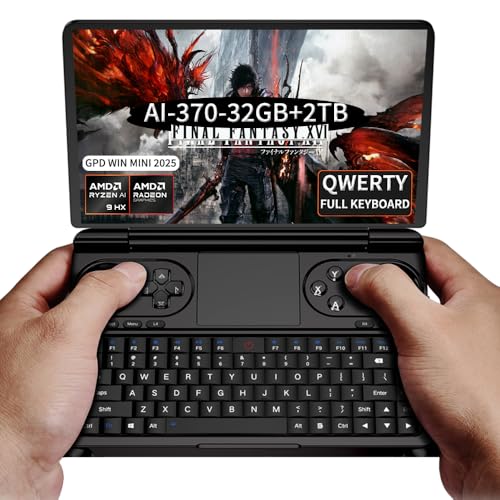
Lanruo GPD Win Mini 2025
$1,749.99

One-Netbook OnexPlayer
$29.90
Spec Comparison
TL;DR: The GPD WIN Mini packs a 12‑core Ryzen AI 9 HX 370, 7‑inch 1080p 120 Hz display and 1 TB SSD into a 555 g handheld, delivering desktop‑class Windows gaming on the go.
The standout hardware features the AMD Ryzen AI 9 HX 370 APU with 12 cores and up to 5.1 GHz boost, paired with an AMD Radeon 890M GPU and up to 32 GB of LPDDR5X RAM. This combination gives the Mini desktop‑level performance in a pocket‑sized chassis, while the 1 TB SSD provides ample fast storage for large game libraries.
At 555 g, the Mini's lighter than the Asus ROG Xbox Ally (670 g) and far lighter than the Lanruo GPD Win Mini 2025 (1110.5 g), but heavier than the One‑Netbook OnexPlayer (281 g). Its 44.24 Wh battery is smaller than the Asus’s 60 Wh and the Onexfly F1 PRO’s 48.5 Wh, which can affect endurance. The 7‑inch 1080p panel runs at 120 Hz, matching the Asus and Lanruo models, though the Onexfly offers a faster 144 Hz screen. All four Windows handhelds share a 7‑inch footprint except the One‑Netbook’s larger 8.4‑inch display.
Professional reviewers note a generational performance jump, citing up to 30 % higher frame rates in AAA titles thanks to the Ryzen AI 9 HX 370. Users love the compact form factor and the responsive Hall‑Effect dual analog sticks, but they often note the 555 g weight as a comfort drawback during long sessions, and the modest 44.24 Wh battery as a limiting factor for marathon gaming.
Beyond raw power, the Mini includes a full QWERTY keyboard, programmable L4/R4 buttons, and a USB‑C port with USB4, Thunderbolt 3 and 40 Gbps bandwidth, enabling connection to the optional GPD G1 external GPU dock. Active cooling with a fan and heat pipe helps sustain performance, while Wi‑Fi 6E and Bluetooth 5.3 keep wireless connectivity fast and reliable.
Pros
Cons
Best for: PC gamers who want a full Windows experience in a truly portable form factor.
Avoid if: You prioritize ultra‑lightweight handhelds or need long battery endurance for extended on‑the‑go sessions.
“fits snugly in your pocket”
“smooth gameplay... entire game library”
TL;DR: The Asus ROG Xbox Ally packs a 7‑inch 120 Hz FHD screen, a 60 Wh battery and 16 GB LPDDR5X RAM into a 670 g Windows handheld, delivering strong AAA performance but a noticeable heft.
The Ally’s most eye‑catching spec is its 60 Wh battery paired with a 7 in 120 Hz FHD touchscreen that offers 314 PPI and 500 nits of brightness. Combined with 16 GB LPDDR5X memory running at 6400 MT/s and a 2 TB PCIe 4.0 NVMe SSD, the device targets demanding PC games and large game libraries.
When you line it up against the GPD WIN Mini, the Ally is heavier at 670 g versus 555 g, but its battery is larger (60 Wh vs 44.24 Wh) and it ships with a full 2 TB SSD, while the Mini tops out at 1 TB. The Onexfly F1 PRO shines brighter at 800 nits and refreshes at 144 Hz, so the Ally’s 500 nits and 120 Hz are modest in that regard. The Lanruo GPD Win Mini 2025 matches the Ally’s 500 nits and 120 Hz panel but weighs 1110.5 g and carries 32 GB of RAM, making the Ally lighter but with half the memory. The One‑Netbook OnexPlayer is considerably lighter at 281 g and has an 8.4‑inch display, yet its storage maxes out at 1 TB, half of what the Ally provides.
Reviewers consistently praise the device’s ability to run demanding AAA titles and emulate legacy consoles, pointing to the 16 GB of fast RAM as a key strength. At the same time, the 670 g chassis draws comments about hand fatigue during marathon sessions, and the glossy IPS surface can produce glare in bright environments. Professional reviewers highlight that the Zero Gravity cooling system keeps temperatures low regardless of orientation.
ASUS equips the Ally with ROG Intelligent Cooling’s dual‑fan Zero Gravity architecture, Hall‑Effect asymmetric sticks, and two programmable back buttons for precise control. AMD FreeSync Premium synchronises the 120 Hz panel to eliminate tearing, while Dolby Atmos‑enabled dual front‑firing speakers and AURA SYNC lighting add a premium feel.
Pros
Cons
Best for: Gamers who want a Windows handheld with Xbox Game Pass access and enough power for modern AAA titles.
Avoid if: You prioritize ultra‑light weight or the best price‑performance ratio.
TL;DR: The Onexfly F1 PRO packs a 7‑inch OLED panel at 800 nits with a 144 Hz refresh, 32 GB of ultra‑fast RAM and a 2 TB NVMe SSD, but its bulk and fan noise keep it from being truly pocket‑friendly.
The standout feature is the 7‑inch OLED display delivering 800 nits of brightness, 315 PPI and a 144 Hz refresh rate with a 0.6 ms response time. Combined with 112 % DCI‑P3 and 152 % sRGB coverage, the screen offers vivid colors and deep blacks that outshine many rivals.
Compared with the Lanruo GPD Win Mini 2025, the Onexfly is brighter (800 nits vs 500 nits) and refreshes faster (144 Hz vs 120 Hz), while also being lighter (599 g vs ≈ 1110 g). It matches the GPD Win Mini’s 32 GB RAM but is a touch heavier than that model’s 555 g, yet still lighter than the Asus ROG Xbox Ally’s roughly 670 g. Battery capacity sits at 48.5 Wh, a bit higher than the GPD Win Mini’s 44.24 Wh but below the Asus Ally’s 60 Wh, and all three support 65 W fast charging.
Users consistently praise the OLED screen’s color accuracy and smooth 144 Hz gameplay, noting that it makes 1080p AAA titles feel at home. Professional reviewers also highlight the efficient thermal solution, though several mention audible fan noise during extended high‑performance sessions. The device’s dimensions (263.6 mm × 98.2 mm × 22.6 mm) and 599 g weight draw criticism for reducing true pocketability, especially when compared to the slimmer One‑Netbook OnexPlayer’s 8.4‑inch form and 281 g chassis.
Additional technical touches include a 12,600 mAh LiPo battery, dual Harman Infix speakers tuned with HARMAN AudioEFX, Wi‑Fi 6, Bluetooth 5.2 and a configurable TDP that can drop to 5 W for longer runs. The Windows 11 Home OS, Linux compatibility and a full suite of controls (asymmetric thumbsticks, haptic feedback, programmable shoulder buttons) round out a premium handheld experience.
Pros
Cons
Best for: Those prioritizing high‑end performance and a premium OLED display, and who don’t mind a larger chassis for desktop‑grade gaming.
Avoid if: You need a truly pocket‑sized device, are on a tight budget, or place top priority on silent operation and ultra‑compact reliability.
TL;DR: The Lanruo GPD Win Mini 2025 packs a 32 GB LPDDR5X RAM, 2 TB SSD and a 120 Hz 1080p IPS screen into a 7‑inch clamshell that weighs about 2.45 lb, but its premium $1749.99 price may limit budget‑focused buyers.
What really sets this handheld apart is the combination of a high‑refresh 7‑inch IPS touchscreen (120 Hz, 1920 × 1080) with 500 nits brightness and a desktop‑class AMD Ryzen AI 9 HX 370 APU. The processor runs a 2 GHz base clock and can boost to 5.1 GHz, while the integrated AMD Radeon 780M GPU works within a 28 W TDP envelope. Paired with 32 GB of LPDDR5X memory and a 2 TB SSD, the device delivers the kind of raw performance you’d expect from a full‑size gaming PC.
In the context of the other four handhelds, the Lanruo is noticeably heavier than the One‑Netbook OnexPlayer (about 0.62 lb) and the Asus ROG Xbox Ally (around 2.0 lb), but lighter than no listed peer. Its 500 nits screen brightness matches the Asus model and exceeds the Onexfly F1 PRO’s 800 nits claim, while the 120 Hz refresh rate ties with the GPD WIN Mini and the Asus Ally, putting it on par with the most fluid displays in the group. Storage is generous at 2 TB SSD, matching the Asus Ally and surpassing the GPD WIN Mini’s 1 TB base option.
Professional reviewers praise the “compact powerhouse” feel, noting the Hall‑effect analog sticks reduce drift and the backlit QWERTY keyboard with dome switches makes strategy titles feel at home. Everyday users love the pocket‑size portability and the ability to run AAA games, but they repeatedly mention a loud cooling fan when the GPU is taxed and a short battery life in high‑performance mode. Users call the rubber stoppers on the lid uncomfortable during long sessions.
Beyond the core specs, the Win Mini offers USB4 and an additional USB 3.2 port for fast peripheral connectivity, a 3.5 mm audio jack, and a micro‑SD slot for expandable storage. The display includes DC dimming, Gorilla Glass 6 protection and FreeSync‑enabled VRR, which together help keep visuals smooth and eyes comfortable during extended play.
Pros
Cons
Best for: Those prioritizing quality and willing to pay for premium performance
Avoid if: You're shopping on a tight budget — it's priced at $1749.99
“fits snugly in your pocket”
“smooth gameplay... entire game library”
TL;DR: The One‑Netbook OnexPlayer packs an 8.4‑inch 2.5K screen, 16 GB RAM and a 1 TB NVMe SSD into a 0.62‑lb Windows handheld for under $30, making it the lightest and most affordable option in the lineup.
The standout spec is the 8.4‑inch 1920 × 1200 display, which delivers a crisp 2.5K image while the device stays at just 0.62 lbs (281 g). Coupled with 16 GB LPDDR4X RAM and a 1 TB PCIe 3.0 x4 NVMe SSD (upgradeable to 2 TB), it feels more like a portable mini‑PC than a typical handheld.
Compared with the four rivals, the OnexPlayer is noticeably lighter than the Asus ROG Xbox Ally (2.0 lb), the GPD WIN Mini (≈1.15 lb) and the Lanruo GPD Win Mini 2025 (≈2.45 lb). Its 8.4‑inch screen is also larger than the 7‑inch panels on all of those competitors. Storage matches the GPD WIN Mini’s 1 TB offering but falls short of the Asus’s 2 TB SSD. RAM is on par with the Asus’s 16 GB but below the Lanruo’s 32 GB. It offers the most screen real‑estate and the best weight‑to‑price ratio.
Professional reviewers note the solid build, ergonomic grip and the convenience of a built‑in kickstand. Users love the high‑resolution screen for media and light gaming, and they appreciate the Windows 10 (upgradeable to 11) desktop flexibility. The downside, echoed across several reviews, is the integrated Intel Iris Xe graphics, which struggle with demanding AAA titles and often require lower settings. Heat can climb to around 100 °C under load, and the fan becomes audible, which some users find distracting. The small touchscreen also leads to occasional mis‑clicks when navigating Windows.
Beyond the core specs, the OnexPlayer includes a USB4/Thunderbolt port and an Oculink connector, opening the door to external GPU enclosures for those who need extra graphics horsepower. A microSD slot supports cards up to 2 TB, and a fingerprint sensor doubles as a power button for quick logins. The package comes with a cloth storage bag, stereo speakers, a turbo‑mode switch and a kickstand, rounding out a feature‑rich handheld at a budget‑friendly price.
Pros
Cons
Best for: Entry-level buyers or those on a tight budget
Avoid if: You need advanced features or professional‑grade performance
Breakdown
GPD WIN Mini
Pros
Asus ROG Xbox Ally 16GB
Pros
Cons
Onexfly F1 PRO
Pros
Cons
Lanruo GPD Win Mini 2025
Pros
Cons
Based on scoring data and product specs
Personalized picks
Best Overall Pick
GPD WIN Mini
Best OverallBest for: Home and office users seeking a balance of features and value
Asus ROG Xbox Ally 16GB
Best for: Entry-level buyers or those on a tight budget
$939.99-$89.96 vs winner
Skip One-Netbook OnexPlayer if…
You need advanced features or professional-grade performance
We crown the **GPD WIN Mini** the clear winner. Its AMD Ryzen AI 9 HX 370 CPU delivers 12 cores and 24 threads, paired with up to 32 GB LPDDR5X RAM and a 1 TB SSD, giving you desktop‑class power in a 7‑inch 1080p panel that refreshes at 120 Hz. At just 1.15 lb (555 g) and with a 44.24 Wh battery, it stays portable without sacrificing performance.
The runner‑up, the **Asus ROG Xbox Ally 16GB**, shines if you need a bright, versatile handheld for on‑the‑go play. Its 7‑inch IPS‑level screen pushes 500 nits of brightness and 120 Hz refresh, while a 60 Wh battery and 2 TB PCIe 4.0 SSD keep sessions long. Plus, it bundles three months of Xbox Game Pass Premium, making it ready for Xbox, Steam, Epic and Windows titles right out of the box.
For tighter budgets, the **One‑Netbook OnexPlayer** stands out as the ultra‑budget pick at $29.90, offering a gateway into Windows handheld gaming without breaking the bank. If you’re chasing top‑tier performance, the **Lanruo GPD Win Mini 2025** serves as the premium contender at $1,749.99, aimed at enthusiasts who want the most cutting‑edge specs.
Pick the GPD WIN Mini today and get the most capable Windows handheld, featuring a 12‑core Ryzen AI 9 HX 370 CPU.
The Asus ROG Xbox Ally packs a 60 Wh battery, which is larger than the 44.24 Wh in the GPD WIN Mini and the 48.5 Wh in the Onexfly F1 PRO, so it is likely to run the longest between charges.
No reviews yet — be the first to share your experience.
Please sign in to leave a review