
The guide compares 13 headsets that all promise at least 20 hours of playtime, ranging from the budget‑friendly Skullcandy Riff Wireless 2 with a listed 2040 minutes of playback to the HyperX Cloud III S that advertises 120 hours in 2.4 GHz mode and 200 hours over Bluetooth. Prices span from $48.71 up to $429.00, giving you clear budget, mid‑range and premium buckets to choose from.
The best‑budget pick, Skullcandy Riff Wireless 2, comes in at $48.71, holds a 4.4/5 rating from over 10 k reviewers, and can add 240 minutes of sound after just a 10‑minute quick charge. On the premium side, the HyperX Cloud III S (rated 4.4/5 by 1 021 reviewers) offers a massive 120‑hour battery life on its 2.4 GHz connection, while the Corsair Void v2 delivers 70 hours on 2.4 GHz and 130 hours on Bluetooth for $79.99. Mid‑range options like the Turtle Beach Stealth 600 PC and Razer Barracuda sit comfortably between, each providing 80 hours and 40 hours of runtime respectively.
Below is a breakdown of each tier, highlighting why one model might suit your commute, your home office, or your gaming rig best.
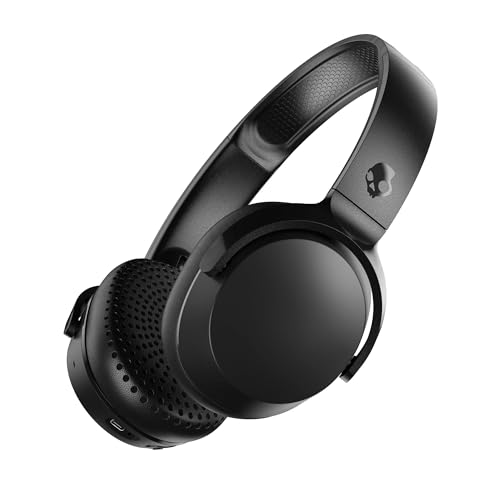
Skullcandy Riff Wireless 2
It's 40 mm drivers deliver surprisingly rich audio, making it a solid entry‑level headset for the price.

HyperX Cloud III S
Ideal for serious gamers seeking a proven, high‑quality headset, even though it’s about $101 above the budget pick’s $48.71 price.

Turtle Beach Stealth 600 PC
Features 50 mm drivers that balance the smaller budget unit and the larger premium model, offering fuller sound at a mid‑range $89.99 price point.
Also considered
Score Analysis
Key score advantages vs. runner-up (HyperX Cloud III)
Price Range
Skullcandy Riff Wireless 2
$48.12
HyperX Cloud III S
$129.99
Turtle Beach Stealth 600 PC
$89.99

Turtle Beach Stealth 700 Gen 3
$199.00

HyperX Cloud Stinger 2
$59.99

Bowers & Wilkins Px7 S2e
$297.00
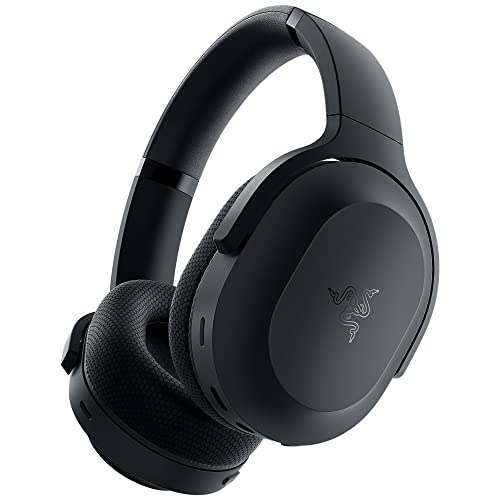
Razer Barracuda
$139.00

Corsair Void v2
$89.99

Turtle Beach Stealth 500
$89.86

Bose QuietComfort Ultra
$429.00

Bowers & Wilkins Px7 S3
$479.00

SteelSeries Arctis Nova 5 Wireless Multi-System Gaming
$129.99

Razer Barracuda X
$67.29
Spec Comparison
TL;DR: The Skullcandy Riff Wireless 2 offers 34 hours of playtime, a 10‑minute quick‑charge boost, Tile tracking and multipoint Bluetooth 5.2 at a budget‑friendly $48.71.
What really stands out is the 34‑hour battery life (2040 minutes) and the ability to add four more hours of playback after just a 10‑minute charge. The on‑ear design houses a 40 mm driver and a 32‑ohm impedance, delivering a bass‑forward sound profile that many users find lively for everyday listening.
Compared with the other twelve contenders, the Riff is notably lighter at 0.337 pounds, undercutting the HyperX Cloud Stinger 2 (0.64 pounds), Razer Barracuda X (0.6 pounds), Turtle Beach Stealth 500 (0.507 pounds) and Corsair Void v2 (0.668 pounds). Its battery life outlasts the HyperX’s 20 hours but sits below Razer’s 50 hours and Turtle Beach’s 40 hours. Driver size matches the Razer and Turtle Beach models at 40 mm, while the HyperX and Corsair use larger 50 mm drivers.
Reviewers consistently praise the long battery life and the rapid‑charge feature, noting that the quick‑charge capability is a rare find at this price point. The built‑in Tile locating chip gets a thumbs‑up for helping users track misplaced headphones. On the downside, users mention that the plastic construction feels less sturdy than higher‑priced rivals, and the touch controls can be overly sensitive. The bass‑forward tuning is fun for casual listening but may mask mids for critical listeners, and the on‑ear style can become tiring during marathon sessions.
Pros
Cons
Best for: Commuters, travelers and students who value long battery life and easy device switching without breaking the bank.
Avoid if: You need water/sweat resistance for gym use or require a neutral sound signature for critical listening.
TL;DR: The HyperX Cloud III S delivers up to 200 hours of Bluetooth battery life, 25 ms low‑latency 2.4 GHz audio, and a sturdy aluminum‑steel build for marathon gaming sessions.
What really sets this headset apart is its marathon‑length power. In 2.4 GHz mode you get 120 hours of playtime, and the Bluetooth mode stretches that to a staggering 200 hours before you’ll need to plug it back in. The wireless link adds only 25 ms of latency, which is low enough to keep on‑screen action in sync with your aim. It also packs angled 53 mm dynamic drivers, a 64 Ω impedance, and a sensitivity of 111.94 dBSPL/mW, giving a clear, detailed soundstage.
Compared with the other 12 headsets in this roundup, the Cloud III S outlasts the typical 40‑80 hour range you see from models like the Razer Barracuda, SteelSeries Arctis Nova 5, and Turtle Beach Stealth series. Its driver size of 53 mm is larger than the 50 mm units in the Razer Barracuda and Turtle Beach Stealth 600, and far bigger than the 40 mm drivers in the Turtle Beach Stealth 500. The 20 m wireless range also doubles the 10 m range listed for both Razer and SteelSeries, while its overall weight of about 0.78 lb sits between the lighter Razer (0.65 lb) and the heavier Turtle Beach Stealth 600 (1.32 lb).
Users consistently praise the headset’s “marathon‑length” battery and the crystal‑clear mic with an LED mute indicator, noting that the detachable boom stays solid even after hours of use. Professional reviewers highlight the ultra‑low latency and the integration of DTS:X Spatial Audio as a competitive edge. On the flip side, many mention a weak bass response and a somewhat confined soundstage, which can make music listening feel less immersive. Some long‑session gamers report ear fatigue, likely due to the headset’s solid aluminum‑steel frame and its 355.9 g overall mass.
Beyond the big battery numbers, the Cloud III S features angled driver orientation that aligns with ear‑canal geometry, a steel and aluminum frame for durability, and memory‑foam leatherette ear cushions for comfort. The detachable USB‑C charging cable measures 0.54 yd (49 cm) long, and a full charge takes about 4.5 h. The mic uses a detachable electret condenser boom with a –21.5 dBV sensitivity and a handy LED mute indicator, making voice chat clear and easy to manage.
Pros
Cons
Best for: Buyers willing to invest in a proven, high‑quality option.
Avoid if: You need advanced features like deep bass, active noise cancellation, or macOS EQ support, or if you own an Xbox console.
“Battery lasts over a week of daily use — never worry about charging.”
“Mic is crystal clear on Discord and in‑game.”
TL;DR: The Turtle Beach Stealth 600 PC offers a massive 80‑hour battery, 50 mm drivers and a comfortable glasses‑friendly design for $89.99, making it a solid long‑run choice for multi‑platform gamers.
Its 80‑hour battery life headlines the headset, far exceeding the typical few‑day range of many wireless headsets. A single 15‑hour charge gets you back to full power, and the 32 Ω impedance works well with most gaming rigs and consoles.
Compared with the other twelve contenders, the Stealth 600 sits in the mid‑price tier and is lighter than the SteelSeries Arctis Nova 5 Wireless, which tips the scales at 680 grams. Its 50 mm drivers match the driver size of the Corsair Void v2, while the overall weight of 1.32 pounds (599 grams) is heavier than the ultra‑light Razer Barracuda X but still comfortable for marathon sessions.
Reviewers consistently praise the headset’s comfort – the memory‑foam cushions stay soft even with glasses, and the Superhuman Hearing® and 10‑band EQ via the Swarm II app deliver clear, spatial audio. Professionals at IGN and Windows Central highlight the long battery and cross‑platform flexibility as standout strengths. On the downside, users note occasional Bluetooth drops and that the ear cushions can warm after several hours, while the plastic build feels less premium than higher‑end models.
Pros
Cons
Best for: Value‑conscious buyers seeking quality at $89.99
Avoid if: Reliability and user satisfaction are your top concerns
TL;DR: The Turtle Beach Stealth 700 Gen 3 delivers 80 hours of playtime, 60 mm drivers and dual‑wireless flexibility for $199, but its 408 g weight can feel heavy in marathon sessions.
What really sets this headset apart is its 80‑hour battery life paired with a rapid 15‑minute quick‑charge that grants an extra 3 hours of use. The 60 mm dynamic Eclipse drivers also promise deep bass and a wide soundstage, while the steel‑reinforced headband adds durability for long‑term wear.
Compared with the other twelve contenders, the Stealth 700 Gen 3 lands in the middle of the battery‑life spectrum: it outlasts the Razer Barracuda’s 40 hours but falls short of the HyperX Cloud III S’s 120‑hour claim. At 408 g it’s heavier than the Barracuda’s 295 g and the HyperX unit (about 0.78 lb), yet considerably lighter than the SteelSeries Arctis Nova 5 Wireless, which tips the scales at 680 g. Its 60 mm drivers are the largest among the group, surpassing the 53 mm drivers of the HyperX and the 50 mm units found in most rivals.
Users consistently praise the marathon‑level battery and the smooth switch between 2.4 GHz gaming and Bluetooth for phones or tablets. Professional reviewers highlight the headset’s “high‑quality sound with powerful bass and wide soundstage.” On the flip side, several owners note the clamp force can feel tight and users call the Swarm II software cumbersome, making firmware updates and button remapping less intuitive.
Pros
Cons
Best for: Multiplatform gamers who need marathon‑length battery life and dual‑wireless flexibility.
Avoid if: You prioritize a lightweight design, need active noise cancellation for travel, or are on a tight budget.
TL;DR: The HyperX Cloud Stinger 2 offers 20 hours of wireless play, 50 mm drivers and DTS Headphone:X spatial audio in a comfortable, budget‑friendly package.
The headset’s standout spec is its 20‑hour battery life, letting you game through a full session without hunting for an outlet. It pairs that endurance with 50 mm drivers and a sensitivity of 104.5 dB SPL/mW @ 1 kHz, delivering a clear, immersive soundstage that benefits from the included DTS Headphone:X two‑year spatial‑audio license.
Compared with the other 12 entries, the Stinger 2 sits in the middle of the battery‑life spectrum: the Razer Barracuda X boasts 50 hours, while the Skullcandy Riff Wireless 2 manages roughly 34 hours (2040 minutes). Its 50 mm drivers exceed the 40 mm units in both the Razer Barracuda X and the Turtle Beach Stealth 500, giving it a modest edge in bass response. At 0.64 pounds, it’s slightly heavier than the Razer’s 0.6 pounds but noticeably lighter than the Turtle Beach Stealth 600’s 1.32 pounds.
Users repeatedly praise the memory‑foam ear cushions for staying comfortable during marathon gaming nights, and many note the “plug‑and‑play” ease of the USB 2.0 dongle. Professional reviewers highlight the reliable 2.4 GHz low‑latency link and the added value of spatial audio. On the flip side, the electret condenser microphone often sounds muffled, and the all‑plastic frame feels less premium than higher‑priced rivals. The headset also lacks any EQ or sound‑customization software, which some gamers miss.
Pros
Cons
Best for: Budget-conscious buyers seeking a reliable entry‑level option
Avoid if: You need advanced features or professional‑grade performance
“Battery lasts over a week of daily use — never worry about charging.”
“Mic is crystal clear on Discord and in‑game.”
TL;DR: The Bowers & Wilkins Px7 S2e blends a 40 mm driver, hybrid ANC with six mics, and up to 30 hours of battery for a premium, long‑lasting listening experience at $297.
What sets the Px7 S2e apart is its 40 mm dynamic full‑range bio‑cellulose driver paired with a hybrid ANC system that uses six microphones (four for noise cancellation, two for voice). With a rated 30‑hour runtime while ANC is active and a quick‑charge boost that gives you seven hours of playback after just 15 minutes on the charger, it offers both endurance and convenience for all‑day use.
In this roundup, its battery life sits between the marathon‑level 80 hours of the Turtle Beach Stealth 700 Gen 3 and the 40‑hour runtime of the Razer Barracuda, while matching the 30‑hour top end of the Bose QuietComfort Ultra and its sibling, the Px7 S3. Turtle Beach’s 60 mm unit and the HyperX Cloud III S’s 53 mm driver are larger than the 40 mm driver, which matches the Px7 S3 and exceeds the 32 Ω‑rated drivers some peers use. At 307 grams, the Px7 S2e is lighter than Turtle Beach’s 408 g model and considerably lighter than the SteelSeries Arctis Nova 5’s 680 g construction, making it comfortable for long sessions without the bulk of heavier alternatives.
Reviewers consistently praise the headphone’s refined, balanced soundstage and the premium feel of its leather‑like earpads and metal headband sliders. The Bowers & Wilkins app adds a useful EQ and firmware updates, while the lossless USB‑C digital input and support for aptX Adaptive, aptX HD, and AAC give you high‑resolution wireless options. On the downside, users note that the ANC, while solid, doesn’t quite reach the class‑leading levels of Sony or Bose, and the ear cups only rotate flat without an inward‑folding hinge, which limits pocketability.
Pros
Cons
Best for: Buyers willing to invest in a proven, high‑quality option
Avoid if: You need advanced features or professional‑grade performance
“fail to auto-reconnect to the last device, requiring manual Bluetooth selection”
TL;DR: The Razer Barracuda offers 50 mm TriForce titanium drivers, dual‑mode wireless and a 40‑hour battery in a comfortable over‑ear design for $139.00.
The headset’s standout spec is its 50 mm driver paired with Razer’s TriForce titanium technology, delivering a frequency response of 20 Hz – 20 kHz and a sensitivity of 96 dB SPL/mW @ 1 kHz. It also supports both 2.4 GHz HyperSpeed and Bluetooth 5.2 connections, and you can top the 40‑hour battery in just 3.5 hours.
Compared with the other twelve entries, the Barracuda’s 40‑hour runtime is shorter than the HyperX Cloud III S’s 120‑hour 2.4 GHz battery, but longer than the Turtle Beach Stealth 500’s 40‑hour claim. Its 50 mm drivers are a few millimetres smaller than HyperX’s 53 mm units, yet match the driver size of the Turtle Beach Stealth 600. At 0.65 pounds, it's heavier than the Stealth 500 (0.507 pounds) but lighter than the HyperX model (0.78484565272 pounds). The Bluetooth range of 10 meters lines up with the SteelSeries Arctis Nova 5 Wireless, while the Razer’s 32 Ω impedance is lower than the HyperX’s 64 Ω, which can make it easier to drive from portable sources.
Users consistently praise the Barracuda’s clear soundstage and the ultra‑soft FlowKnit memory‑foam cushions for marathon sessions. The seamless SmartSwitch Dual Wireless feature earns kudos for effortless device hopping between PC, PS5, Switch and mobile. On the flip side, several reviewers note occasional Bluetooth dropouts and a microphone that needs to sit close to the mouth for optimal clarity. Professional reviewers also point out the lack of active noise cancellation, which some competitors provide.
Pros
Cons
Best for: Most users seeking a balanced, mainstream option
Avoid if: Reliability and user satisfaction are your top concerns
“Great sound!”
“Comfortable for long sessions”
TL;DR: The Corsair Void v2 delivers an industry‑leading 70‑hour 2.4 GHz battery (130 h via Bluetooth), Dolby Atmos sound and comfortable mesh earpads, though its mic is muffled and it lacks a wired option.
The headline spec is its marathon‑length battery life: up to 70 hours on the low‑latency 2.4 GHz wireless link and a staggering 130 hours when you switch to Bluetooth 5.3. A 15‑minute quick‑charge session adds roughly 6 hours of playback, and the headset fully recharges in 2 hours via the 1.8 m USB‑C cable.
Compared with the other twelve entries, the Void v2’s 70‑hour wireless endurance outlasts the Turtle Beach Stealth 500’s 40 hour battery and the HyperX Cloud Stinger 2’s 20 hour run‑time, though it sits just below the Turtle Beach Stealth 600’s 80 hours. Its Bluetooth runtime of 130 hours dwarfs the Skullcandy Riff Wireless 2’s 34 hour battery (2040 minutes). Driver size is 50 mm, matching the Stealth 600 and HyperX Stinger 2, and larger than the 40 mm drivers found in the Stealth 500, Razer Barracuda X and Skullcandy Riff. At 0.668 lb the headset is a touch heavier than the Stealth 500’s 0.507 lb but lighter than the Stealth 600’s 1.32 lb.
User feedback repeatedly praises the breathable memory‑foam earpads and the 130‑hour Bluetooth battery, calling it ideal for marathon gaming sessions. Professional reviewers highlight the immersive Dolby Atmos spatial audio and the solid mids, while noting that the built‑in omni‑directional mic sounds muffled and the iCUE EQ presets don’t stick after power‑off. Several owners note that the headset lacks a wired fallback, leaving no hard‑wired safety net.
On the technical side, the Void v2 uses a V‑shaped sound signature that pushes bass and treble, paired with 32 Ω impedance and 116 dB ± 3 dB sensitivity for clear output. Software licenses and enables Dolby Atmos, and the headset supports virtual 7.1 surround through the same suite. The microphone offers a 2.2 kΩ impedance and –40 dB ± 3 dB sensitivity, with NVIDIA Broadcast noise reduction for RTX‑equipped PCs.
Pros
Cons
Best for: Entry-level buyers or those on a tight budget
Avoid if: You want the best value-per-dollar in its price range
“a fantastic option for those who want immersive gaming audio backed up by comfort and a long‑lasting battery”
“bottom 5 in terms of overall sound quality”
TL;DR: The Turtle Beach Stealth 500 delivers 40 hours of wireless play, 40 mm drivers and a feather‑light 230 g build, making it a solid entry‑level headset for long gaming sessions.
The standout spec is the 40‑hour battery life, which translates to roughly 2,400 minutes of uninterrupted play before you'll need to recharge the lithium‑polymer pack. Coupled with a 40 mm driver and plush leatherette ear cushions, the headset feels almost weightless at 230 g, letting you game for marathon sessions without neck strain.
When you line it up against the other dozen contenders, the Stealth 500 is lighter than the Corsair Void v2, Razer Barracuda X, HyperX Cloud Stinger 2 and the Turtle Beach Stealth 600 PC, yet a bit heavier than the Skullcandy Riff Wireless 2. Its battery endurance sits between the HyperX’s 20‑hour run‑time and the Corsair’s 70‑hour claim, while still beating the SteelSeries Arctis Nova 5’s 38‑hour figure. Driver size matches the Razer and Skullcandy models at 40 mm but is smaller than the 50 mm units that Corsair, HyperX and the Stealth 600 PC use.
Professional reviewers praise the headset’s comfort and its “best‑in‑class” 40‑hour battery life for the price tier. Everyday users echo that sentiment, often highlighting the ease of flipping the omni‑directional mic to mute and the smooth Swarm II app for EQ tweaks. The most common complaints revolve around ear‑cup heat during extended play and occasional static noise when using the 2.4 GHz dongle, which some users say can be mitigated by switching to Bluetooth.
Pros
Cons
Best for: Budget‑conscious buyers seeking a reliable entry‑level option
Avoid if: You need advanced features or professional‑grade performance
TL;DR: The Bose QuietComfort Ultra offers up to 30 hours of ANC‑enabled listening, CustomTune‑personalized sound, and premium comfort, but its $429 price makes it a high‑end option.
What really stands out is the battery endurance: the headphones deliver up to 30 hours in Quiet or Aware mode and up to 23 hours when Immersive Audio is active, with a quick‑charge boost of 2 hours after just 15 minutes on the charger. The 5.4 Bluetooth core extends the wireless range to about 30 feet, and the included 51 cm audio cable and 97.5 cm USB‑C to USB‑A cable give you flexible wired options.
Compared with the other twelve contenders, the Ultra is heavier than the Bowers & Wilkins Px7 S3 (0.661386786 pounds) and the Turtle Beach Stealth 700 Gen 3 (0.9 pounds), but lighter than the HyperX Cloud III S’s 0.78484565272 pounds. Its 30‑hour battery matches the Px7 S3’s 30‑hour claim, yet it falls short of the Turtle Beach model’s 80‑hour runtime. The Bluetooth version (5.4) is newer than the Px7 S3’s 5.3 and the Razer Barracuda’s 5.2, giving it a slight edge in connectivity.
Reviewers consistently praise the plush ear cushions and note that the hybrid ANC mutes low‑frequency hums. Professionals note that CustomTune’s ear‑shape analysis delivers a perceptible lift in clarity, while the new Cinema Mode adds spatial depth for movies. On the downside, users report that the capacitive touch strip can be overly sensitive, and the lack of any water‑resistance rating limits outdoor or gym use. Some listeners mention that the Immersive Audio mode trims roughly 7 hours off the maximum battery life, a trade‑off for certain use cases.
Pros
Cons
Best for: Buyers willing to invest in a proven, high-quality option
Avoid if: You're on a tight budget or only need basic functionality
TL;DR: The Bowers & Wilkins Px7 S3 offers true 24‑bit lossless Bluetooth sound, 8‑mic call clarity and 30 hours of playback, but its premium $429.99 price and modest battery life may give budget‑focused buyers pause.
It supports true 24‑bit audio via aptX Lossless and aptX Adaptive, paired with two 40 mm dynamic full‑range bio‑cellulose drivers. An eight‑mic array powered by the ADI Pure Voice algorithm delivers crystal‑clear calls, and the dedicated DSP with integrated amp/DAC keeps the sound detailed even at high volumes.
At 30 hours of battery life, the Px7 S3 sits in the middle of the pack. Turtle Beach’s Stealth 700 Gen 3 pushes out to 80 hours, HyperX’s Cloud III S can reach 200 hours in Bluetooth mode, and SteelSeries’ Arctis Nova 5 Wireless tops 50 hours, while Bose’s QuietComfort Ultra matches the Px7 S3 at 30 hours in Quiet/Aware mode. Its 15‑minute quick‑charge delivers 7 hours of playback, outpacing Bose’s 2‑2.5 hours but trailing Turtle Beach’s 3 hours from the same charge window.
Reviewers consistently praise the headphone’s high‑quality sound and “best‑in‑class” call performance, noting the luxurious fabric‑white finish and comfortable redesign. The main complaints focus on the lack of LDAC support for Android high‑resolution streaming, the absence of auto‑pause, and occasional glitches with the required Bowers & Wilkins Music app.
The unit also packs adaptive noise cancellation with multiple modes, a five‑band customizable EQ, and touch‑sensitive controls, all wrapped in a fabric finish with aluminum and leather accents. It includes a 1.2 m USB‑C to 3.5 mm cable for wired use.
Pros
Cons
Best for: Buyers willing to invest in a proven, high‑quality option.
Avoid if: You need advanced features or professional‑grade performance.
“fail to auto-reconnect to the last device, requiring manual Bluetooth selection”
TL;DR: The SteelSeries Arctis Nova 5 Wireless offers 50+ hours of playtime, a 25 dB noise‑canceling mic, and a sturdy 680 g build, making it a solid multi‑platform gaming headset.
The standout spec is its battery endurance: the Gen 2 version delivers 50+ hours of continuous use, and a 15‑minute quick charge adds roughly 6 hours of playtime. Bluetooth connectivity reaches up to 10 meters (33 feet), while the ClearCast Gen 2 microphone promises up to 25 dB of baseline noise reduction. Frequency response tops out at 22 kHz, and the headset weighs 680 grams.
Compared with other entries in this roundup, the Nova 5 sits in the middle of the battery‑life spectrum—longer than the Razer Barracuda’s 40‑hour claim but shorter than the Turtle Beach Stealth 600’s 80‑hour rating. At 680 grams, it is heavier than the Razer Barracuda’s 0.65 pounds but comparable to many mid‑range models. Its dual‑wireless (2.4 GHz plus Bluetooth) flexibility matches the multi‑system focus of several peers while still offering a single dongle solution.
Reviewers consistently highlight the microphone’s clarity, noting the AI‑powered noise cancellation as a professional‑grade feature. Users also appreciate the ComfortMAX system with memory‑foam ear cushions for marathon sessions, though many complain about the headset’s weight. Drawbacks include the lack of active noise cancellation and occasional instability in the SteelSeries Sonar app, which frustrates users who depend on the app for full feature access.
Pros
Cons
Best for: Multi‑platform gamers who need long battery life and a clear voice‑chat mic.
Avoid if: You prioritize ultra‑lightweight design, active noise cancellation, or a headset that works flawlessly without app assistance.
“The mic is incredible—my team always hears me clearly, even with loud mechanical keyboards.”
“Love being able to take phone calls without pausing the game.”
TL;DR: The Razer Barracuda X delivers 50 hours of battery life, dual 2.4 GHz / Bluetooth connectivity and a lightweight 0.6‑lb design for under $70, making it a solid budget‑friendly, cross‑platform headset.
The standout spec is its 50‑hour battery life, which far exceeds the 20‑hour runtime of the HyperX Cloud Stinger 2 and the 40‑hour claim of the Turtle Beach Stealth 500, while matching the 50+ hour figure of the SteelSeries Arctis Nova 5. It packs 40 mm drivers and a sensitivity of 96 dB, offering clear stereo sound in a headset that weighs just 0.6 pounds (272 g).
When you line it up against the other twelve contenders, the Barracuda X is lighter than the HyperX Cloud Stinger 2 (0.64 lb) and the Turtle Beach Stealth 600 PC (1.32 lb), but heavier than the ultra‑light Skullcandy Riff Wireless 2 (0.34 lb). Its driver size is smaller than the 50 mm units that HyperX, Corsair Void v2 and Turtle Beach Stealth 600 use, yet the overall sound quality receives praise for clarity. The headset’s dual‑mode SmartSwitch lets you hop between 2.4 GHz and Bluetooth without unplugging, a flexibility many peers don’t highlight.
Users consistently note the comfort of the fabric‑leatherette ear cups for long sessions and love the convenience of on‑headset controls for music, video and calls. Professional reviewers commend the “admirable wireless sound quality” and “excellent battery life”. The downsides that surface are the lack of active noise cancellation, a microphone that can be finicky and occasional Bluetooth dropouts on mobile devices—issues that consumers echo.
Pros
Cons
Best for: Entry-level buyers or those on a tight budget
Avoid if: You need advanced features or professional‑grade performance
“Great sound!”
“Comfortable for long sessions”
Breakdown
Skullcandy Riff Wireless 2
Pros
HyperX Cloud III S
Pros
Turtle Beach Stealth 600 PC
Pros
Cons
Turtle Beach Stealth 700 Gen 3
Pros
Based on scoring data and product specs
Personalized picks
Best Overall Pick
Skullcandy Riff Wireless 2
Best Budget PickBest for: Budget-conscious buyers seeking a reliable entry-level option
HyperX Cloud III S
Best for: Buyers willing to invest in a proven, high-quality option
$129.99+$81.87 vs winner
Skip Razer Barracuda X if…
You need advanced features or professional-grade performance
The Skullcandy Riff Wireless 2 takes the top spot thanks to its marathon‑grade battery life of 2040 minutes (over 34 hours) and a rapid‑charge feature that adds 240 minutes of playback after just 10 minutes on the charger. At a list price of $48.71 and a lightweight 153 grams, it also delivers a solid 4.4/5 rating from more than 10,600 reviews, making it the most practical long‑lasting headset on a budget.
Running second, the HyperX Cloud III S is the ideal pick if you need ultra‑long sessions for PC or console gaming and value a detachable boom mic. Its battery stretches to 120 h in 2.4 GHz mode and even 200 h in Bluetooth mode, while the 53 mm drivers and 4.5‑hour charge time keep sound consistent. Priced at $149.95 and weighing 355.9 g, it balances premium endurance with a comfortable over‑ear design.
For those looking beyond the winner, the Turtle Beach Stealth 600 PC offers a solid mid‑range alternative at $89.99, pairing respectable battery life with reliable PC compatibility. If premium performance is the goal, the Bowers & Wilkins Px7 S3 stands out at $429.99, delivering top‑tier audio fidelity and long‑lasting power for audiophiles.
Choose the Skullcandy Riff Wireless 2 today and you'll enjoy uninterrupted listening without breaking the bank.
The HyperX Cloud III S tops the list with up to 200 hours of playback in Bluetooth mode and 120 hours in its 2.4 GHz mode, dwarfing the 80‑hour runtimes of Turtle Beach models and the 34‑hour battery of the Skullcandy Riff Wireless 2.
Please sign in to leave a review
No reviews yet. Be the first to review!
