⚡ Quick Answer
When you need a screen that stays vivid even in daylight, you’re looking at projectors that push past 3,000 ANSI lumens. Our comparison of 11 models spans everything from the $69.99 FUDONI unit to the $2,249.99 ViewSonic LS901‑4K, with the brightest claim at 5,500 ANSI lumens. The Epson Pro EX9270, for example, delivers a solid 4,100 lumens for $899.99, while the BenQ TH575 offers 3,800 ANSI lumens at $679.00, giving you plenty of options for large‑format presentations or home‑theater setups.
We grouped the lineup into three price tiers so you can match budget to expectations. Budget picks—FUDONI, Roconia, Optoma HD146X, and ViewSonic PA503HD—still hit the 3,600–4,000 ANSI lumen mark, enough for dim‑to‑moderately lit rooms. Mid‑range choices like the BenQ TH575 and Epson Home Cinema 980 bring 3,800–4,000 lumens plus lower input lag or extra connectivity for gamers and movie fans. Premium selections—Epson Pro EX9270, ViewSonic PX749‑4K, Hisense C2 Ultra, and ViewSonic LS901‑4K—push brightness to 4,100–5,500 lumens and add wireless streaming, laser sources, or advanced optics.
Next, you’ll see each model’s strengths, helping you choose the projector that fits your space, lighting conditions, and budget.

Epson Pro EX9270
Its quiet operation at just 28 dB in quiet mode delivers cinema‑like viewing without distraction.
BenQ TH575
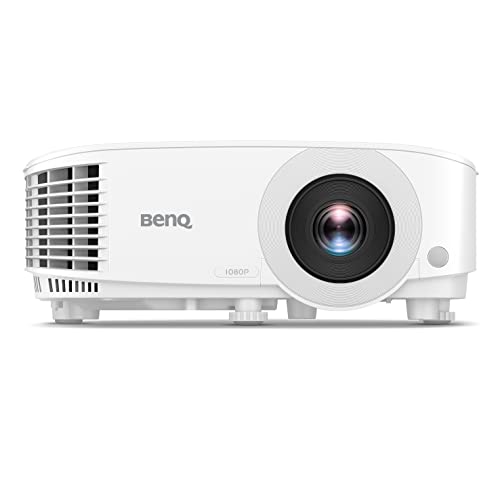
Ideal for casual movie nights in small rooms, the BenQ TH575 costs $679, about $221 less than the Epson Pro EX9270, making it a budget‑friendly choice for mainstream users.

Epson Home Cinema 980
Stands out with a compact 4.2‑inch height, letting the Epson Home Cinema 980 fit tight shelves while still delivering high‑brightness performance at $699.99.
Also considered
Score Analysis
Key score advantages vs. runner-up (BenQ TH575)
Price Range
Epson Pro EX9270
$999.99
BenQ TH575
$649.00
Epson Home Cinema 980
$739.99
FUDONI Projector
$69.98

ViewSonic PA503HD
$598.00

ViewSonic PX749-4K
$1,199.99

Hisense C2 Ultra
$2,497.97

Roconia Home Theater Projector
$189.98

ViewSonic LS901-4K
$2,254.99

Optoma HD146X
$599.00

Optoma HD28HDR
$899.00
Spec Comparison
TL;DR: The Epson Pro EX9270 delivers 4,100 lumens of brightness, Full HD 3LCD imaging and built‑in wireless streaming, but its 37 dB fan noise and lamp‑based light source keep it from silent, laser‑only competitors.
The standout specification delivers 4,100 lumens of brightness (listed without an ANSI label), paired with a 16,000:1 contrast ratio and a native 1920 × 1080‑pixel resolution. Epson’s 3‑chip 3LCD engine reproduces 1.07 billion colors, and the projector packs a 16 W built‑in speaker, which is notably louder than the 3 W or 10 W speakers found in many peers.
At 6.8 pounds, the EX9270 is lighter than the Optoma HD28HDR (8.54 lb) and the Optoma HD146X (8.2 lb), yet comparable to the Epson Home Cinema 980 (also 6.8 lb). Its brightness outpaces the BenQ TH575 (3,800 lumens) and ViewSonic PA503HD (4,000 lumens), putting it near the top of the 3,000‑plus ANSI‑lumens segment. While the ViewSonic PX749‑4K matches the 4,000‑lumens range, the EX9270’s 16 W speaker and 1.6× optical zoom give it a richer feature set than many of the other ten models.
Users consistently praise the projector’s ability to fill a classroom or conference room with a clear image up to 304 inches, even when the lights are on. Professional reviewers highlight the auto‑vertical keystone (±30°) and picture‑skew sensor as time‑savers during setup. Consumer feedback often notes the audible fan at 37 dB in normal mode, which can be distracting in quiet settings. The lamp‑based illumination also means the UHE bulb will need replacement after the rated 5,500‑hour (normal) or 12,000‑hour (ECO) lifespan, a drawback compared with laser‑powered rivals.
Additional technical details include a focal length range of 18.2 mm – 29.2 mm, an F‑number of 1.51 – 1.77, and a zoom ratio of 1 – 1.62 (1.6× optical zoom). Power consumption peaks at 349 W in normal mode, drops to 187 W in ECO mode, and falls to 0.3 W in standby, aligning with typical office‑room usage patterns. Wireless connectivity covers Apple AirPlay, Miracast, and major streaming platforms (Amazon Fire, Apple TV, Roku, Chromecast), making it a versatile choice for hybrid workspaces.
Pros
Cons
Best for: Professionals who need a bright, large‑format display in well‑lit conference rooms or classrooms and value built‑in wireless streaming.
Avoid if: You need silent operation, native 4K resolution, or a laser light source with longer lamp life.
TL;DR: The BenQ TH575 delivers 3800 ANSI lumens, 16.7 ms input lag and a 15,000:1 contrast ratio in a compact 7.65‑lb package, making it a bright, low‑lag choice for gamers and casual home‑theater fans.
What really stands out is the 3800 ANSI lumens output paired with a 15,000:1 contrast ratio, which lets the TH575 punch through moderate ambient light while still rendering deep blacks. Its 8‑bit (30‑bit, 1.07 billion colors) panel covers 88 % of both DCI‑P3 and Rec.709 gamuts, and ProjectorCentral praises the 0.65″ DMD DLP chip for delivering solid dark‑detail performance. The ultra‑low 16.7 ms input lag makes fast‑paced gaming feel responsive, and the auto‑vertical keystone of ±40° simplifies setup on a desk or shelf.
Compared with the other ten contenders, the TH575 sits in the middle of the brightness range: it’s a notch below the Epson Home Cinema 980’s 4,000 lumens and the ViewSonic PA503HD’s 4,000 ANSI lumens, but it outshines the Optoma HD146X and HD28HDR models at 3,600 ANSI lumens. At 7.65 lb it’s heavier than the Epson Home Cinema 980 (6.8 lb) and ViewSonic PA503HD (6.0 lb) but lighter than Optoma’s HD28HDR (8.54 lb). Its built‑in 10 W mono speaker also provides more power than Epson’s 2 W and ViewSonic’s 3 W solutions, though reviewers note it still lacks depth.
User feedback consistently highlights the bright, vivid image and the smooth gaming experience, especially the “under‑1‑frame” impact of the auto‑keystone that B&H Photo called practically invisible. However, many owners mention the fan’s 34 dB normal noise level can be heard in quiet rooms, and the lack of lens shift or horizontal keystone limits placement flexibility. The lamp life of 6,000 hours in normal mode (15,000 hours in eco) and a rated power draw of 280 W are typical for this brightness class, but the lamp‑type metal‑halide bulb may require periodic replacement.
Pros
Cons
Best for: Budget‑conscious gamers and casual home‑theater enthusiasts who need a bright projector that handles moderate room light.
Avoid if: You require ultra‑short‑throw placement, immersive surround sound, or built‑in smart streaming capabilities.
“bright, vivid 1080p images in living rooms/daylight”
TL;DR: The Epson Home Cinema 980 delivers 4,000 lumens of brightness, 1080p resolution, and a massive 337‑inch image size in a compact 6.8‑lb package for $699.99.
Its 4,000 lumens of brightness (specified without the ANSI label) lets you project a clear picture even in a sun‑lit living room. With a native 1920 × 1080 resolution, the projector can fill walls with images ranging from 34 inches up to 337 inches, making it ideal for large‑screen home‑theater setups.
At 6.8 lb, the Home Cinema 980 is lighter than the BenQ TH575 (7.65 lb) and comparable to the ViewSonic PA503HD (6.0 lb). Its 4,000‑lumen output also outshines the Optoma HD146X’s 3,600 lumens and matches the ViewSonic PA503HD’s 4,000 lumens, placing it near the top of the brightness tier in this roundup.
Users consistently praise the projector’s brightness and the ease of setup, especially the auto‑vertical keystone of ±30° and manual horizontal keystone of ±30°. Professional reviewers highlight the 3LCD, 3‑chip system for accurate colors and note the 1.07 billion‑color gamut and 16,000:1 contrast ratio as strong points for sports and gaming. The downside that keeps popping up is the 37 dB fan noise in normal mode, which audibly intrudes during quiet movie scenes, and the modest 2 W internal speaker many find it's insufficient for immersive audio.
Beyond the headline numbers, the projector runs on a 230 W UHE lamp with 6,000‑hour normal life (12,000 hours in ECO mode). Power draw sits at 349 W in normal operation, dropping to 241 W in ECO and just 0.3 W in energy‑saving mode. Connectivity includes two HDMI ports, a 3.5 mm audio out, and both USB‑A and USB‑B inputs, giving you flexibility for media sources and external speakers.
Pros
Cons
Best for: Value‑conscious buyers seeking quality at $699.99
Avoid if: You need advanced features or professional‑grade performance
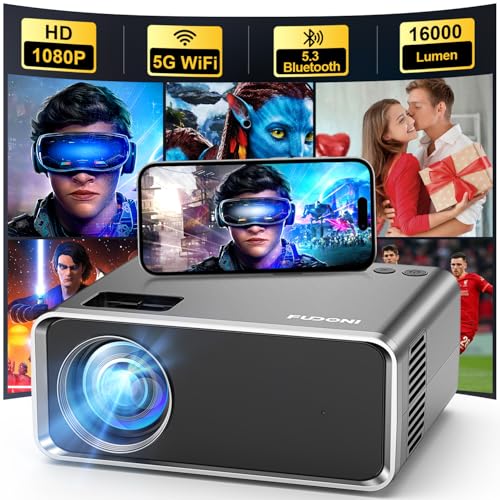
TL;DR: The FUDONI Projector offers native 1080p resolution, a claimed 25,000‑lumens output and Wi‑Fi 6 connectivity for just $69.99, making it a lightweight, budget‑friendly option for dim‑room home theater.
At the heart of the FUDONI GC666 is its advertised 25,000 lumens brightness (with an alternative claim of 15,000 lumens) and a true‑HD 1920 x 1080 native resolution. The LED/LCD Pro engine delivers a contrast ratio of 10000:1, and the unit can project up to a 300‑inch screen thanks to a 2.0:1 throw ratio. It's compact chassis measures 3.58 inches high, 8.15 inches long and 6.65 inches wide, and it weighs only 2.42 pounds.
Compared with the other ten projectors in this roundup, the FUDONI is dramatically lighter than the 6‑ to 8‑pound models such as the Optoma HD146X, ViewSonic PA503HD, BenQ TH575, Epson Home Cinema 980 and Optoma HD28HDR. Its advertised lumen figure far exceeds the 15,000 lumens listed for the Roconia Home Theater Projector and the 3,600–4,000 ANSI lumens of most peers, although its ANSI rating is 800 lumens. The price point of $69.99 also puts it well below the budget tier of the competition.
Users appreciate the straightforward setup, the crisp 1080p picture even at the maximum 300‑inch size, and the dual‑band Wi‑Fi 6 plus Bluetooth 5.3 that enable wireless streaming and audio. Professional reviewers note the “crystal‑clear LCD Pro image quality” and “low‑latency Wi‑Fi 6 connectivity.” However, several reviewers warn that the luminous claims likely overstate the brightness, leading to dimmer images in well‑lit rooms, and the lack of an internal battery means you’ll need an outlet or external power source for true portability.
Pros
Cons
Best for: Shoppers on a tight budget who want the most for their money
Avoid if: Reliability and user satisfaction are your top concerns
“native 1080P full HD with no ugly pixelated look up to 300"”
“the best budget video projector of 2023”
TL;DR: The ViewSonic PA503HD delivers 4,000 ANSI lumens of brightness, Full HD 1080p resolution, and a 22,000:1 contrast ratio in a compact 6‑lb package, making it a solid bright‑room projector.
What really stands out is the 4,000 ANSI lumens output paired with a native 1920 × 1080 resolution and a 22,000:1 dynamic contrast ratio. The 10‑bit color depth (1.07 billion colors) gives decent color fidelity, while a 16 ms input latency and 120 Hz refresh rate keep motion smooth for casual gaming or presentations.
At 6.0 pounds, the PA503HD's lighter than the Optoma HD146X (8.2 pounds) and the BenQ TH575 (7.65 pounds), though the shipping weight of 8.4 lb is comparable to those models’ shipping weights. Its 4,000 ANSI lumens beats the 3,600 ANSI lumens of both the Optoma HD146X and Optoma HD28HDR, and matches the Epson Home Cinema 980’s 4,000‑lumens rating. Speaker power sits at 3 W, the same as Optoma’s 3 W mono speakers but well below BenQ’s 10 W and Epson Pro EX9270’s 16 W, so external audio may be preferable for larger rooms.
Reviewers frequently praise the projector’s ability to produce clear images even in well‑lit environments, thanks to that high lumen count. The long lamp life—15,000 hours in SuperEco mode—also earns positive remarks for low maintenance. A common critique is the modest built‑in speaker, which many users note doesn't provide enough sound for full‑room coverage without a separate system.
Additional technical details include vertical keystone correction of ±40° with auto‑keystone, a 1.1× optical zoom, and digital zoom ranging from 0.8× to 2.0×. The lamp is a 240 W DLP source, and the projector works with a throw ratio of 1.48–1.62 across a 1–10 m distance, giving flexibility for both small classrooms and home theater setups.
Pros
Cons
Best for: Budget-conscious buyers seeking a reliable entry-level option
Avoid if: You need advanced features or professional‑grade performance
TL;DR: The ViewSonic PX749-4K delivers 4000 ANSI lumens and a blister‑fast 4.2 ms input lag, making it a bright, low‑lag choice for gamers willing to invest in premium performance.
The official specs list 4000 ANSI lumens brightness and an ultra‑low 4.2 ms input lag as the standout numbers. Coupled with a native 3840×2160 resolution, HDR/HLG support, and a 240 Hz refresh rate, the projector promises vivid images even when the room isn’t dark.
At 6.6 pounds, it’s a touch lighter than the Epson Pro EX9270 (6.8 pounds) and noticeably lighter than the Optoma HD28HDR (8.54 pounds). Its normal‑mode fan noise measures 33 dB, making it quieter than Epson’s 37 dB but a bit louder than Optoma’s 26 dB quiet mode. The built‑in 10 W mono Harman‑tuned speaker outpowers Optoma’s 3 W driver, though it falls short of Epson’s 16 W unit. Brightness‑wise, it matches the ViewSonic PA503HD’s 4000 ANSI lumens and exceeds BenQ’s 3800 ANSI lumens.
User reviews repeatedly highlight the projector’s bright output and its 4.2 ms lag responsiveness, especially for Xbox and other console gaming. Common complaints point to the 33 dB fan noise during movies and the need to replace the lamp after roughly 4000 hours of normal use. Professionals also note that the 12000:1 contrast ratio can fall short of the deep blacks dark‑room cinephiles demand.
Beyond the headline specs, the lamp’s SuperEco mode offers up to 20000 hours of life, and the unit draws 310 W in normal operation while staying under 0.5 W on standby. An optical zoom of 1.3× and a throw ratio of 1.13‑1.47 give flexibility for rooms ranging from 30″ to 300″ diagonal, and keystone correction of ±40° eases installation.
Pros
Cons
Best for: Xbox and console gamers who need ultra‑low lag and bright images in well‑lit living spaces, and are comfortable with a premium‑tier price.
Avoid if: You prioritize dark‑room cinema performance, want a laser‑based low‑maintenance projector, or are highly sensitive to fan noise.
TL;DR: The Hisense C2 Ultra delivers 3000 ANSI lumens of laser‑bright 4K‑UHD (pixel‑shifted) images, a 360° swivel gimbal and JBL 2.1 speakers, but its 13.9‑lb body pushes its portability.
The standout spec is its 3000 ANSI lumens brightness combined with a dynamic contrast ratio of 2,000,000:1 and a 110% BT.2020 color gamut, which lets you project vivid colors even in well‑lit rooms. The triple‑laser engine lasts 25,000 hours, and the built‑in JBL 2.1‑channel system puts out 40 W of sound, so you’ll enjoy cinema‑grade picture and audio from a single unit.
Compared with the other ten projectors, the C2 Ultra weighs more than the ViewSonic PX749‑4K (6.6 lb), Epson Home Cinema 980 (6.8 lb) and Optoma HD28HDR (8.54 lb), and even exceeds the 10.69 lb weight of the ViewSonic LS901‑4K. Its 3000 ANSI lumens also sit below the 5500 ANSI lumens of the LS901‑4K and the 4000‑plus lumens offered by the ViewSonic PX749‑4K, Epson Pro EX9270 (4100 lumens), Epson Home Cinema 980 (4000 lumens) and BenQ TH575 (3800 lumens). So while it isn’t the brightest option, it balances output with a compact laser design.
Users consistently praise the bright, vibrant picture and the hassle‑free setup enabled by the 360° swivel gimbal, 135° vertical tilt and Auto Magic AI that handles keystone correction, focus and object avoidance automatically. Professional reviewers highlight the IMAX Enhanced certification and support for Dolby Vision, HDR10+, HLG and HDR10 as premium HDR capabilities. The most common criticisms focus on the 13.9‑lb weight, which makes frequent travel harder, and the pixel‑shift approach to 4K, which can appear less sharp on very large screens. The projector also lacks a built‑in battery, so it needs a power outlet.
The C2 Ultra offers a 1.67× optical zoom and a throw ratio of 0.9–1.5:1, letting you place it close to the screen for a 65″ image or farther away for up to a 300″ display. Power consumption sits at 180 W during use and drops below 0.5 W in standby, keeping energy draw modest for a laser system.
Pros
Cons
Best for: Those prioritizing quality and willing to pay for premium performance
Avoid if: You're shopping on a tight budget — it's priced at $1997.97
“fantastic! bright, vibrant”
“Heavy at 14 lbs, not ideal for frequent travel”
TL;DR: At $159.98, the Roconia Q6 delivers a bright 15000‑lumen, 300‑inch image with 1080p resolution and 100000‑hour lamp life, but its built‑in speakers are underwhelming.
The standout spec is its 15000 lumens brightness (listed as plain lumens, not ANSI) paired with a maximum 300‑inch screen size and native 1920 × 1080 pixel resolution. It also offers 4K upscaling, a 10000:1 contrast ratio, and a 7‑layer glass lens that together aim for vivid colors even in moderately lit rooms.
Compared with the other ten projectors, Roconia’s lamp life of 100000 hours dwarfs the 15,000‑hour dynamic‑mode life of the Optoma HD28HDR and the 4,000‑hour lamps of the Optoma HD146X, ViewSonic PA503HD, BenQ TH575, and Epson Home Cinema 980. While its brightness figure is higher than the 3,600 ANSI lumens of the Optoma HD146X, the units differ, so direct lumen‑for‑lumens comparison isn’t exact. The specs don’t list weight, so you can’t tell if it’s lighter than the 2.42‑lb FUDONI or heavier than the 8.2‑lb Optoma HD146X. It does include two HDMI ports, two USB ports, a VGA input and AV input, matching the connectivity breadth of many peers.
User reviews repeatedly praise the projector’s ability to fill a wall with a large, bright picture that stays visible when the lights are on, and they love the built‑in Wi‑Fi (5 GHz dual‑band) and Bluetooth 5.0 for wireless streaming and speaker pairing. The same reviewers note that the dual HiFi stereo speakers sound thin, and the best picture quality still appears in darker environments despite the 15000‑lumen rating. Professional reviewers also highlight the convenient keystone correction and eye‑protection mode for longer viewing sessions.
Additional technical touches include LED light source, screen‑mirroring support, and eye‑protection mode that reduces blue‑light strain. The projector ships with a 3‑year warranty and even includes a screen, making it a fairly complete package for casual home‑theater setups.
Pros
Cons
Best for: Budget‑conscious buyers seeking a reliable entry‑level option
Avoid if: You need advanced features or professional‑grade performance
TL;DR: The ViewSonic LS901‑4K delivers 5,500 ANSI lumens of true 4K brightness, ultra‑low 4.2 ms input lag, and a 300‑inch screen capability, but its $2,249.99 price tags it as a premium‑tier projector.
What really stands out is the 5,500 ANSI lumens brightness paired with a native 3840 × 2160 resolution and 1.07 billion‑color depth. Professional reviewers highlight that this combination produces vivid, detailed images even in well‑lit large venues, while the 6000‑lumens center brightness keeps the picture punchy across the middle of the screen.
Compared with the other ten models in the roundup, the LS901‑4K is brighter than every listed competitor—its 5,500 ANSI lumens tops the Hisense C2 Ultra’s 3,000 ANSI lumens and the Optoma HD28HDR’s 3,600 ANSI lumens. It also matches the PX749‑4K’s 240 Hz refresh rate, outpaces the 60 Hz of the Hisense and the 30‑40 Hz range of the budget options, and offers a far lower 4.2 ms input lag versus the 8.4 ms of the Optoma and the 16.7 ms of the BenQ TH575. At 10.69 pounds, it sits heavier than the PX749‑4K, Epson Pro EX9270, Optoma HD28HDR and BenQ TH575, yet lighter than the Hisense C2 Ultra.
User feedback repeatedly praises the projector’s ability to fill large rooms—up to a 300‑inch screen—with bright, sharp images, and notes the quiet 25 dB eco mode provides a welcome feature for conference settings. Reviewers also point out the flexible installation options, such as 360° projection, 4‑corner adjustment, and a vertical lens shift range of 0 % to –21 %, which simplify ceiling mounting. On the downside, the 245 W normal‑mode power draw can increase operating costs, and the limited vertical lens shift may require more precise placement in tight spaces.
Pros
Cons
Best for: Large‑venue installations where brightness, true 4K detail, and low input lag are top priorities.
Avoid if: You're shopping on a tight budget — it's priced at $2249.99.
TL;DR: The Optoma HD146X delivers 3,600 ANSI lumens, 25,000:1 contrast and low‑lag gaming modes in a compact 8.2‑lb package, making it a bright, budget‑friendly option for casual home theaters.
At its core, the HD146X shines with a 3,600 ANSI lumens lamp and a 25,000:1 dynamic contrast ratio, giving you vivid colors and deep blacks on a native 1920 × 1080 (1080p) panel. The DLP engine supports 10‑bit color depth and a 1.07 billion‑color gamut, while the built‑in 3 W mono speaker adds a basic audio track for small rooms.
Compared with the other ten entries, the HD146X sits a bit heavier than the ViewSonic PA503HD (6.0 lb) and the BenQ TH575 (7.65 lb), yet it’s lighter than the Optoma HD28HDR (8.54 lb). Its 3,600 ANSI lumens match the HD28HDR but fall short of the 4,000 ANSI lumens offered by the ViewSonic PA503HD, BenQ TH575, and Epson Home Cinema 980. Speaker power is on par with ViewSonic’s 3 W but lower than BenQ’s 10 W mono driver.
Professional reviewers praise the projector’s bright output for moderately lit rooms and note the fan runs at just 26 dB minimum and 28 dB maximum, keeping movies and games quiet. Users echo this, highlighting the low‑input‑lag Enhanced Gaming Mode for responsive play. Common complaints focus on the modest built‑in speaker volume, the inevitable lamp replacement (the lamp lasts 15,000 hours in Dynamic mode, 10,000 hours in Eco mode, and 4,000 hours at full brightness), and the lack of HDR support for newer content.
Technical extras include a vertical keystone range of ±40°, 0.8–2.0× digital zoom, 1.1× manual zoom, and a throw‑ratio span of 1.47:1–1.62:1, giving you flexibility in placement. Power draw peaks at 325 W, with a minimum of 205 W, and the unit ships at 8.38 lb (3.8 kg).
Pros
Cons
Best for: Budget‑conscious gamers and movie enthusiasts who need a reliable entry‑level option with strong brightness for moderately lit spaces.
Avoid if: You need HDR, laser longevity, high‑output audio, or professional‑grade performance.
TL;DR: The Optoma HD28HDR delivers 3,600 ANSI lumens and an ultra‑low 8.4 ms input lag, making it a bright, gaming‑focused projector, though its 3 W speaker and short lamp warranty limit its all‑in‑one appeal.
What really sets the HD28HDR apart is its 8.4 ms input lag at 1080p/120 Hz, a figure that professional reviewers call “lightning‑fast” for competitive gaming. Combined with HDR10/HLG support and a contrast ratio of 50,000:1 dynamic, it can show vivid, high‑contrast images on screens up to 301 in.
Compared with the other ten models in this high‑brightness roundup, the HD28HDR’s 3,600 ANSI lumens is a notch below the 4,000‑plus lumens listed for the Epson Pro EX9270, Epson Home Cinema 980, ViewSonic PA503HD and the ViewSonic PX749‑4K, but it matches the Optoma HD146X. Its 8.54‑lb weight makes it heavier than the Epson units (6.8 lb) and the ViewSonic PA503HD (6.0 lb), yet it’s in the same ballpark as the HD146X (8.2 lb). On the latency front, the 8.4 ms lag beats the BenQ TH575’s 16.7 ms and the ViewSonic PA503HD’s 16 ms, giving it a clear edge for fast‑paced games.
User feedback highlights the projector’s bright output and responsive gaming performance as major wins, while many note the built‑in 3 W mono speaker feels under‑powered for movies, prompting a recommendation for external speakers. Reviewers also point out the short 90‑day lamp warranty and the lack of lens shift, which can make ceiling‑mount installations trickier. Still, reviewers frequently praise the quiet 26 dB fan operation and the 15,000‑hour lamp life in dynamic mode.
Pros
Cons
Best for: Competitive gamers who need sub‑10 ms lag at 120 Hz and movie lovers who want a bright HDR projector.
Avoid if: You need advanced features like lens shift, stronger built‑in sound, or a longer lamp warranty.
“unrivaled detail up to 301 inches”
“low lag for fast‑paced play”
Breakdown
Epson Pro EX9270
Pros
BenQ TH575
Pros
Epson Home Cinema 980
Pros
FUDONI Projector
Pros
Cons
Based on scoring data and product specs
Personalized picks
Best Overall Pick
Epson Pro EX9270
Best ValueBest for: Those prioritizing quality and willing to pay for premium performance
BenQ TH575
Best for: Most users seeking a balanced, mainstream option
$649.00-$350.99 vs winner
Skip Optoma HD28HDR if…
You need advanced features or professional-grade performance
The Epson Pro EX9270 clinches the top spot thanks to its 4,100 lumens of color and white brightness, a 16,000:1 contrast ratio, and a quiet‑mode noise level of just 28 dB. At $899.99 it offers a solid 4.4/5 rating from 219 reviewers, and its 1.07‑billion‑color 3LCD engine delivers vivid images without breaking the bank.
The BenQ TH575 earns runner‑up status if you need low‑input‑lag gaming or 3D movie nights; its 16.7 ms input lag and full‑HD 3D support keep fast action smooth, while 3,800 ANSI lumens ensure a bright picture even in ambient light. Priced at $679.00 and carrying a 4.5/5 rating from 223 reviews, it balances performance and affordability.
For tighter budgets, the FUDONI Projector at $69.99 offers a starter‑friendly price point. If you want a solid mid‑range option, the BenQ TH575’s $679.00 price and strong specs make it a reliable choice. Enthusiasts seeking premium features can look to the ViewSonic LS901‑4K at $2,249.99 for 4K resolution and top‑tier performance.
Pick the Epson Pro EX9270 now for its 4,100 lumens output and quiet‑mode noise level of just 28 dB, delivering a vivid and low‑noise home‑theater experience.
The Epson Pro EX9270 delivers a strong 4,100 ANSI lumens, which helps combat ambient light, but it isn’t specifically outdoor‑rated. The FUDONI projector is marketed as outdoor‑rated, is very lightweight at 2.42 lb, and lists a claimed 800 ANSI lumens (with higher marketing‑claimed lumens), making it a more convenient choice for true backyard setups despite lower measured brightness.
No reviews yet — be the first to share your experience.
Please sign in to leave a review