⚡ Quick Answer
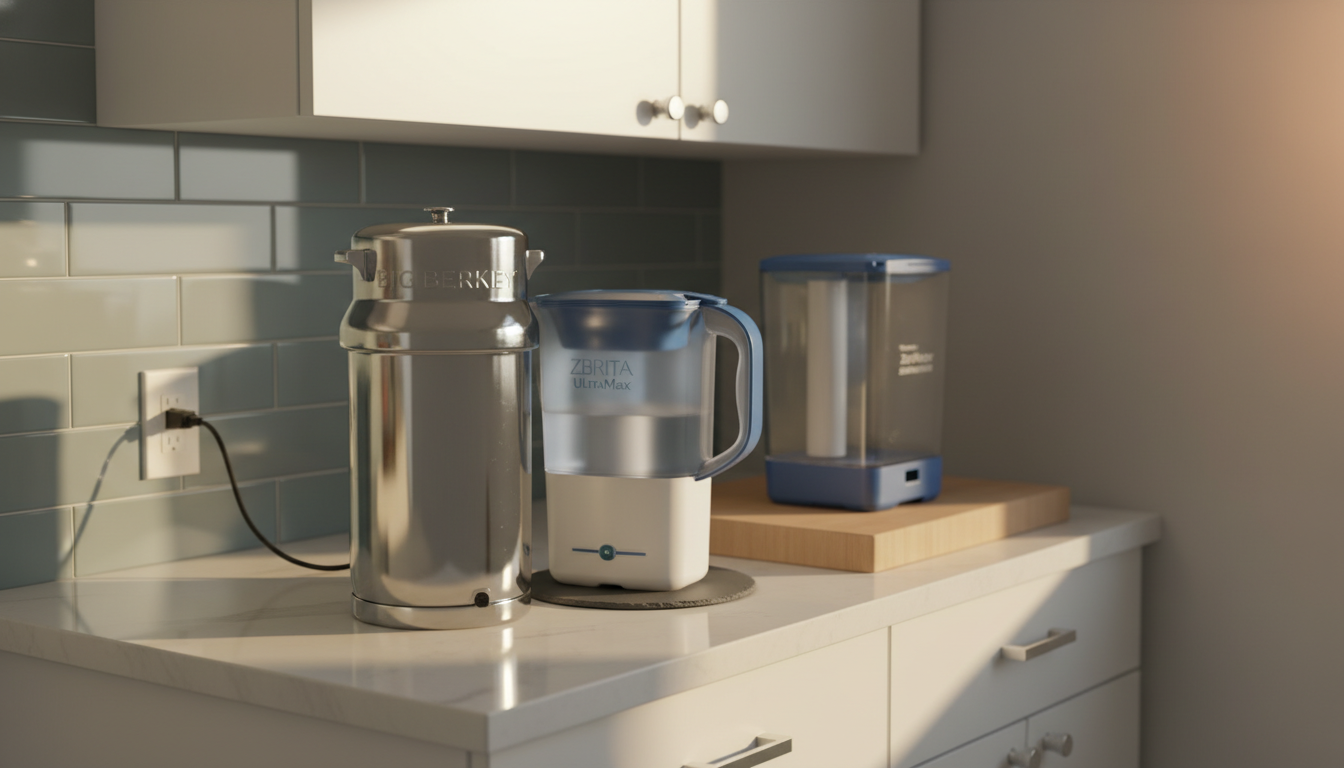
If you prize pure water without plugging in a socket, the Big Berkey 2.25 gallon unit is hard to ignore. Its gravity‑fed carbon filter removes over 200 contaminants, delivers 3.5 gallons per hour, and holds 2.25 gallons in a stainless‑steel housing that measures 8.5 inches wide, deep and 21 inches tall. Priced at $367.00 and backed by a 4.6‑star rating from more than 4,000 reviewers, it lands in the premium tier of our nine‑product roundup.
The lineup spans every budget. On the low end you’ll find the PUR PLUS 30‑cup dispenser ($26.49), the ZeroWater 32‑cup model ($40.99) and the Culligan ZeroWater 32‑cup unit ($31.49). Mid‑range options include the PUR XL 44‑cup ($42.97), ZeroWater 52‑cup ($45.49) and Brita UltraMax White ($49.99). The premium segment rounds out the set with the Invigorated Water pH Recharge ($120.00) and Culligan MaxClear ($199.99). Capacities range from 1.9 gallons up to 3 gallons, and all units are countertop‑ready with no power required.
Below we break down how each filter stacks up on capacity, contaminant removal, convenience and value, so you can match the right system to your kitchen and lifestyle.

Big Berkey 2.25 Gallon
Offers an 8.5‑inch diameter, fitting comfortably on most countertops while delivering 2.25‑gallon capacity.

Brita UltraMax White
Perfect for renters or small kitchens needing a reliable filter; priced at $49.99, it’s about $317 less than the $367 Big Berkey.
ZeroWater 32-Cup Dispenser
Features a five‑stage ion‑exchange system that removes 99.9 % of TDS, delivering premium purity that the larger models don’t emphasize.
Also considered
TL;DR: The Brita UltraMax White delivers 27 cups of filtered water in a compact 5.24‑in depth, lightweight design, backed by a 4.6‑star rating from over 16 k users.
What really sets this dispenser apart is its 27‑cup (6.3 gallon) reservoir, which is nearly double the capacity of typical countertop pitchers. The unit weighs just 2.78 lb and measures 5.24 in deep, 10.47 in high, 14.37 in long and 5.67 in wide, making it one of the slimmest options in the lineup.
Compared with its peers, the UltraMax is significantly lighter than the ZeroWater 52‑Cup (≈7.94 lb) and the PUR XL (≈8.75 lb), and it also has a shallower depth than the ZeroWater 32‑Cup (≈14.2 in) and the Culligan MaxClear (≈9.4 in). Its footprint is comparable to the PUR PLUS 30‑Cup, which lists a similar depth of 5.3 in, but the UltraMax offers a larger overall capacity.
Professional reviewers praise the fast 9.22 ml/s flow and noticeable taste improvement, while everyday users love the convenience of a high‑volume filter that can replace up to 300 bottles per filter. The main complaints focus on the thin plastic walls, which feel less robust than metal‑based alternatives, and the 5.24 in depth that can be a tight fit for some refrigerator doors.
In addition to removing chlorine, mercury, copper, zinc, cadmium, asbestos, benzene and lead, the BritaPlus filter lasts about 2 months or 40 gallons before needing replacement, and the unit requires no power or electricity to operate.
Pros
Cons
Best for: Most users looking for a well‑reviewed, reliable mainstream option — the Brita UltraMax White offers Depth: 5.24 in
Avoid if: You need advanced features or professional‑grade performance
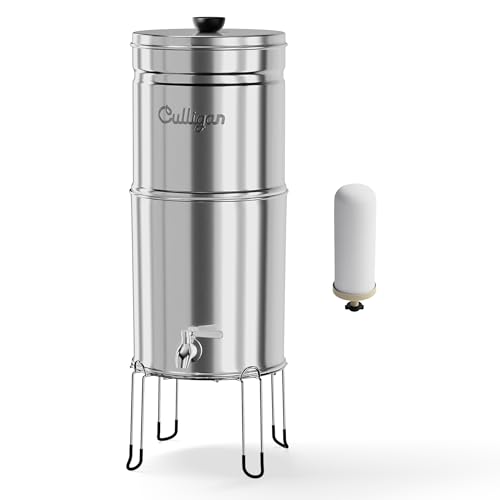
TL;DR: The Big Berkey 2.25 gallon countertop filter holds 2.25 gal of water, removes 200+ contaminants with gravity‑fed carbon, and costs $367.00, making it a premium but highly reliable choice for off‑grid and emergency use.
This unit’s standout spec is its 2.25 gallon capacity housed in a polished AISI 304 surgical‑grade stainless‑steel body that measures 8.5 inches in diameter and 21 inches tall when in use. It runs completely off gravity, so you never need electricity, and each Black Berkey element is rated for a lifespan of 3,000–6,000 months.
Compared with the other eight countertop filters in this roundup, the Big Berkey is heavier than the Brita UltraMax White (2.78 pounds) and ZeroWater 52‑Cup (7.94 pounds) but lighter than the Culligan MaxClear Countertop (11.27 pounds). Its stainless‑steel construction also feels more robust than the plastic bodies of the Brita, ZeroWater, and PUR models. While most competitors sit under $200, the Big Berkey’s $367.00 price tag places it at the high end of the price spectrum.
Users consistently award it a 4.6‑star rating across 4,134 reviews, praising the system’s reliability, long filter life, and the fact that it can purify tap, well, or even river water without a plug. Professional reviewers note that it exceeds NSF/ANSI Standard 53 in EPA‑accredited lab tests and that its stainless‑steel housing resists corrosion. The most common complaints revolve around a slow filtration flow—about 0.75 gallons per hour in a fully loaded configuration—and a priming process that some find fiddly. A handful of users also point out that the assembled system lacks an official NSF certification, even though the filters themselves are lab‑tested.
Technical details reinforce its premium status: the filter reduces more than 200 contaminants, including bacteria, viruses, and heavy metals like uranium. With a flow rate of 3.5 gallons per hour when using just the two Black Berkey elements, it can still supply a small household (1–4 people) with fresh water throughout the day. The included spigot is BPA‑free, and the unit is nestable for easier storage when not in use.
Pros
Cons
Best for: Buyers willing to invest in a proven, high‑quality option — the Big Berkey 2.25 gallon offers Capacity: 2.25 gallons
Avoid if: You're shopping on a tight budget — it's priced at $367.00
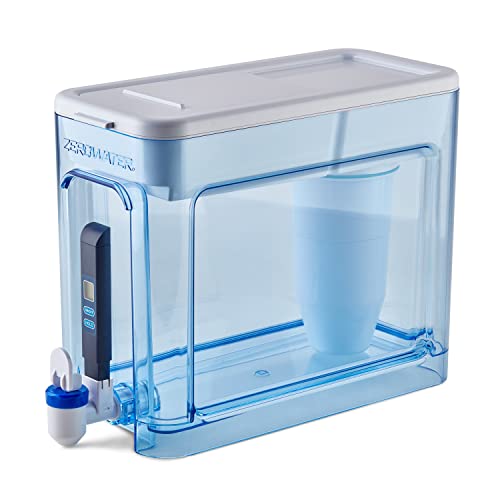
TL;DR: The ZeroWater 32‑Cup Dispenser uses a 5‑stage ion‑exchange system to strip 99.9 % of TDS, delivers up to 32 cups of filtered water, and includes a handy TDS meter for real‑time monitoring.
The standout spec is its 99.9 % total dissolved solids (TDS) removal rate, achieved through a 5‑stage ion‑exchange filter that also cuts lead by 98 % and PFAS by 99 %. With a 32‑cup (2.0 gallon) capacity, the unit fits comfortably on most countertops at 10.375 in tall, 13.125 in long and 6.0 in wide, and weighs just 4.07 lb.
Compared with the other eight contenders, this dispenser is lighter than the PUR XL 44‑Cup (about 8.75 lb) and the ZeroWater 52‑Cup (about 7.94 lb), yet heavier than the Brita UltraMax (2.78 lb) and PUR PLUS (3.99 lb). Its height matches the ZeroWater 52‑Cup’s 10.37 in and is only a fraction of the PUR XL’s 17 in. Lengthwise it sits between the PUR XL’s 12.5 in and the Culligan 32‑Cup’s 14.8 in, while its 6.0 in width aligns with Culligan’s model and is narrower than the ZeroWater 52‑Cup’s 9.38 in.
Reviewers consistently praise the dispenser for noticeably cleaner‑tasting water and the convenience of a large 32‑cup reservoir. The snap‑on TDS meter is highlighted as a useful way to see water quality at a glance. On the downside, users note that water takes time to pass through all five stages, so refilling can feel slow, and the filter needs replacing regularly, adding to ongoing costs.
Technically, the unit is IAPMO‑certified, BPA‑free, and operates entirely by gravity—no electricity or batteries are required for filtration. The sliding, sealed lid and no‑drip spout help keep the countertop tidy, while the 5‑stage ion‑exchange process tackles lead, cadmium, chromium, mercury, chlorine and PFAS, delivering a broad contaminant reduction profile.
Pros
Cons
Best for: Buyers in the budget price range seeking the best quality at that price point — the ZeroWater 32‑Cup Dispenser offers Capacity: 32 cups
Avoid if: You want the best value‑per‑dollar in its price range or need instant, high‑speed dispensing without waiting.
TL;DR: The PUR PLUS 30‑Cup Water Filter Dispenser costs $26.49, offers WQA‑certified lead reduction, NSF‑certified microplastic removal, and a 1.9‑gallon capacity, making it a solid budget choice for families.
This dispenser’s standout feature is its certified contaminant reduction. It holds up to 30 cups (1.9 gallons) of water, weighs 3.99 pounds, and uses a 3‑in‑1 granulated activated carbon/ion‑exchange filter that reduces over 20 chemicals, including lead (WQA certified) and microplastics (NSF certified). The filter lasts about 2 months or 40 gallons, and a built‑in change indicator reminds you when it’s time.
At $26.49, the PUR unit is cheaper than the Culligan ZeroWater 32‑Cup model, which lists a price of $31.49. It’s also lighter than Culligan ZeroWater’s 5.61‑pound weight and the ZeroWater 32‑Cup’s 4.07 pounds, yet a bit heavier than the Brita UltraMax at 2.78 pounds. Capacity-wise, it sits just below Culligan ZeroWater’s 32‑cup claim but well above Brita’s 18‑cup offering. Compared with the larger PUR XL 44‑Cup (8.75 pounds), the PLUS model is far more portable for a typical kitchen countertop.
Professional reviewers praise its “impressive build quality and filtration performance,” noting the 3‑stage system delivers more contaminant removal than many standard pitchers. Users appreciate the convenient carrying handle and leak‑proof spout, but they also point out that the filter itself isn’t dishwasher safe and that the system doesn’t address microbes or bacteria. The 2‑month filter lifespan means you’ll need to budget for regular replacements.
Pros
Cons
Best for: Shoppers on a tight budget who want the most for their money — the PUR PLUS 30‑Cup Water Filter Dispenser is available at $26.49
Avoid if: You need microbial filtration or prefer a smaller, single‑serving pitcher
TL;DR: The Invigorated Water pH Recharge Dispenser delivers 8.5 L of NSF‑certified alkaline water at pH 9+, housed in a sleek borosilicate glass and bamboo design, but its premium price and glass tank add weight and care considerations.
The standout spec is its 8.5 L (2.25 gallon) capacity, which lets a busy family keep a full jug of high‑pH water on the counter without frequent refills. The unit stands 17 inches tall, 10.9 inches wide and 11.1 inches deep, and weighs 8.4 pounds, all within a premium borosilicate glass and bamboo housing that’s NSF‑certified and BPA‑free.
Compared with the other eight contenders, the pH Recharge is heavier than the Brita UltraMax (2.78 pounds) and the ZeroWater 52‑Cup (about 7.94 pounds), yet similar in weight to the PUR XL (around 8.75 pounds). Its 17‑inch height is shorter than the Big Berkey’s 21‑inch standing height, but taller than most plastic dispensers like the Brita UltraMax (10.47 inches). The glass construction also makes it bulkier than the compact PUR PLUS, which measures just over 10 inches in height.
Professional reviewers note the NSF‑certified alkaline filter reliably pushes water pH above 9, while the five‑stage media—micro net, granular carbon, ion‑exchange resin, ORP/Maifan/Tourmaline balls, and a zeolite/PP layer—removes heavy metals and microplastics and adds selenium, zinc, iron and magnesium. Users appreciate the premium look, but the glass tank isn’t dishwasher safe and must be hand‑washed, and the filter needs a 10‑15 minute pre‑soak before first use.
The filter’s lifespan is rated for 12 months, handling up to 363 L per replacement and a total lifetime of 1,000 L. With a 4.0‑star rating from 2,468 reviewers, the unit scores solidly on performance, though the rating sits below some rivals.
Pros
Cons
Best for: Those prioritizing quality and willing to pay for premium performance — the Invigorated Water pH Recharge Dispenser offers Capacity: 8.5 L
TL;DR: The Culligan ZeroWater 32‑Cup Dispenser filters out 99.9% of TDS and 25+ contaminants, holds 32 cups, and costs $31.49, making it a solid mid‑range choice for families who value water purity over speed.
This unit’s headline spec is its 99.9% total dissolved solids reduction, achieved through a five‑stage ion‑exchange process. The built‑in TDS meter lets you verify that the water you pour is virtually free of lead, PFAS, mercury, fluoride, chlorine, sediment and pesticides—all listed under its “25+ contaminants” claim.
Compared with the eight other dispensers in this roundup, the Culligan sits in the middle of the price band: it’s pricier than the entry‑level PUR PLUS 30‑Cup model but cheaper than the larger PUR XL 44‑Cup and ZeroWater 52‑Cup options. At 5.61 pounds, it’s lighter than the heavyweight PUR XL 44‑Cup unit and the Culligan MaxClear system, yet heavier than the ultra‑light Brita UltraMax. Its 10.5‑inch height and 6.0‑inch width give it a compact countertop footprint that rivals the slimmer PUR PLUS design.
Reviewers consistently praise the water quality, noting a noticeable improvement in taste and clarity after the first few fills. Professional reviewers highlight that the 99.9% TDS cut matches reverse‑osmosis performance without the flat, boiled flavor. The trade‑offs include a slower gravity‑fed flow and the need to replace filters more often, which some users flag as a cost concern over time.
Pros
Cons
Best for: Users with specific technical requirements or compatibility needs — the Culligan ZeroWater 32‑Cup Water Filter Dispenser offers Contaminants Reduced: 25+ (including Lead, PFAS, Mercury, Fluoride, Chlorine, Sediment, Pesticides)
Avoid if: You want the best value‑per‑dollar in its price range
TL;DR: The ZeroWater 52‑Cup dispenser delivers 5‑stage ion‑exchange filtration that removes 99.65% of dissolved solids, holds 3.25 gallons, and includes a real‑time TDS meter for transparent, family‑size drinking water.
This model’s standout spec is its 5‑stage ion‑exchange system, which the manufacturer claims reduces total dissolved solids by 99.65% and strips lead, chromium, mercury, PFOA/PFOS, chlorine, and a host of other contaminants. At 52 cups (3.25 gallons) of capacity, it outpaces most countertop rivals, and the integrated TDS meter lets you see water quality instantly. The unit weighs 7.94 pounds and measures 14.2 inches deep, 10.37 inches high, and 9.38 inches wide, giving it a solid countertop presence without needing electricity.
Compared with the other eight filters in this roundup, the ZeroWater 52‑Cup sits between the lighter, more compact Brita UltraMax (about 2.78 pounds) and the heavier PUR XL (around 8.75 pounds). Its depth of 14.2 inches is taller than Brita’s 5.24‑inch depth and deeper than the Culligan MaxClear’s 9.4‑inch depth, while its 52‑cup capacity eclipses the PUR XL’s 44‑cup and the ZeroWater 32‑Cup’s 32‑cup offerings. In terms of price, it is generally pricier than budget‑oriented models like the PUR PLUS 30‑Cup, but it offers more capacity and a higher filtration stage count than many of its peers.
User feedback highlights the convenience of the slide‑opening lid and the spigot, with reviewers repeatedly praising the accuracy of the built‑in TDS meter. Professional reviewers note the IAPMO certification as third‑party validation of its contaminant‑reduction claims, and they appreciate the inclusion of two replacement filters, which helps maintain consistent flow. The most common complaint concerns filter lifespan—users with heavily contaminated tap water report needing replacements more often than the advertised 15‑month interval.
The dispenser requires no power, relies solely on gravity, and signals filter changes when the TDS meter reads “006.” Its five‑stage ion‑exchange design, combined with a claimed 99.65% TDS reduction, makes it a strong contender for households that prioritize comprehensive contaminant removal without the complexity of electric systems.
Pros
Cons
Best for: Families or small offices that need a high‑capacity, contaminant‑heavy filtration solution—offers a depth of 14.2 inches and a 5‑stage system.
Avoid if: You have limited countertop space, need a portable solution, or strictly prefer distillation‑based purification.
“The TDS meter functioned as advertised, displaying accurate readings of tap water (67–69 PPM) and filtered water”
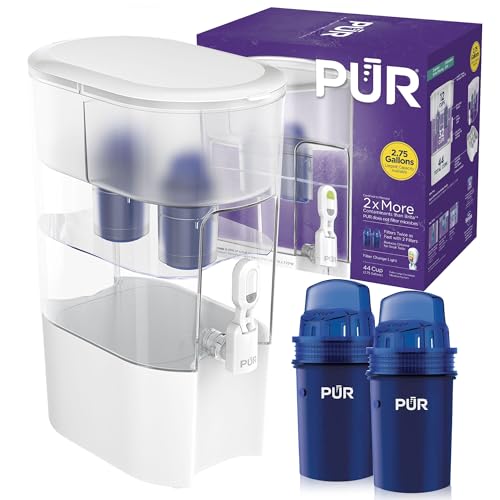
TL;DR: The PUR XL 44‑Cup Water Filter Dispenser offers a roomy 44‑cup capacity, NSF‑certified dual‑stage carbon/ion‑exchange filtration, and a convenient filter‑indicator, making it a solid mid‑range choice for households that want less frequent refills.
This dispenser holds 44 cups (2.75 gallons / 151 liters) of water, stands 17 inches tall, and weighs 8.75 pounds. Its two‑stage activated carbon and ion‑exchange filters are rated to remove chlorine, mercury, copper, zinc, and more than 15 other substances. Each filter lasts about 40 gallons (roughly two months of regular use), and the unit includes a green‑to‑yellow‑to‑red indicator that lets you know when it’s time for a change.
Compared with the eight other countertop filters in this roundup, the PUR XL is taller than the compact pitchers such as the ZeroWater 32‑Cup and the Brita UltraMax, yet it is shorter than the taller Culligan MaxClear model. Its 44‑cup reservoir sits between the 32‑cup units and the larger 52‑cup ZeroWater, giving it a middle‑ground capacity. At 8.75 pounds, it is heavier than most of the smaller pitchers but lighter than the MaxClear, which tops the weight chart.
Reviewers frequently praise the dual‑filter design for delivering faster flow than single‑filter pitchers, and they appreciate the large reservoir that cuts down on refilling trips. However, users also note that the system does not remove fluoride and offers no microbiological protection, so it isn’t a full‑scale purification solution. The filter lifespan of about two months means you’ll need to keep spare cartridges on hand, a point that some buyers mention as a recurring cost.
Pros
Cons
Best for: Most users seeking a balanced, mainstream option — the PUR XL 44‑Cup Water Filter Dispenser offers Capacity: 44 cups (2.75 gallons / 151 liters)
Avoid if: Reliability and user satisfaction are your top concerns
TL;DR: Culligan MaxClear offers certified removal of lead, microplastics and PFAS in a sturdy stainless‑steel, gravity‑fed unit, but its slow 0.3 GPH flow and $199 price make it a premium choice for health‑focused households.
The MaxClear’s headline numbers are its contaminant‑reduction claims: it removes 99% of lead, 96% of microplastics and 99% of total PFAS, all backed by NSF/ANSI‑42, 53, 401, 372 and IAPMO certifications. The system holds a 3‑gallon chamber and needs roughly eight hours to filter a full load, thanks to its 0.3 gallon‑per‑hour gravity flow.
Compared with the eight other filters in this roundup, the MaxClear sits at the higher end of the price spectrum and carries a 4.1/5 star rating, which trails the 4.6/5 rating of the Brita UltraMax and the 4.2/5 rating of the ZeroWater 52‑Cup. At 11.27 lb it is heavier than the 2.78‑lb Brita UltraMax and the 5.61‑lb ZeroWater 32‑Cup, yet lighter than the Big Berkey when filled (about 25 lb). Its 27.6‑inch height makes it taller than most countertop models—Brita UltraMax is 10.47 in tall and the ZeroWater 32‑Cup is 10.5 in—while its 9.4‑inch depth and width keep the footprint modest. Capacity-wise it matches the ZeroWater 52‑Cup’s 3.25‑gallon volume and exceeds the Big Berkey’s 2.25‑gallon rating, but its 0.3 GPH flow is slower than the faster‑flowing Brita UltraMax.
Professional reviewers praise the MaxClear for being the only gravity filter with dual certifications covering microplastics, lead and total PFAS, and for retaining beneficial minerals like calcium and magnesium. Consumer sentiment echoes this health focus, but repeatedly flags the eight‑hour filter cycle as a pain point and notes the $1.20‑$1.58 per‑gallon operating cost as steep. The system’s three‑stage ceramic, activated‑carbon and carbon‑block design, a 50‑month filter lifespan and completely electricity‑free operation round out its technical appeal.
Pros
Cons
Best for: Those prioritizing quality and willing to pay for premium performance — the Culligan MaxClear Countertop Water Filter offers Depth: 9.4 inches
Avoid if: You need rapid water delivery or are on a tight budget, as the slow flow and higher cost per gallon can be limiting.
Breakdown
Big Berkey 2.25 Gallon
Pros
Cons
Brita UltraMax White
Pros
ZeroWater 32-Cup Dispenser
Pros
Cons

PUR PLUS 30-Cup Water Filter Dispenser
Cons
Based on scoring data and product specs
Personalized picks
Best Overall Pick
Big Berkey 2.25 Gallon
Best OverallBest for: Buyers willing to invest in a proven, high-quality option — the Big Berkey 2.25 Gallon offers Capacity: 2.25 gallons
Brita UltraMax White
Best for: Most users looking for a well-reviewed, reliable mainstream option — the Brita UltraMax White offers Depth: 5.24 in
$36.49-$330.51 vs winner
Skip Culligan MaxClear Countertop Water Filter if…
You need advanced features or professional-grade performance
The Big Berkey 2.25 Gallon takes the top spot thanks to its massive 2.25‑gallon capacity, gravity‑fed carbon filtration that tackles 200+ contaminants, and a solid 3.5 gallons‑per‑hour flow rate—all without needing electricity. Its stainless‑steel housing and 7‑pound weight give it a sturdy countertop presence.
The Brita UltraMax White lands as the runner‑up, perfect for a small family or office where space is at a premium. It holds 6.3 gallons, delivers a steady 1.74 gallons‑per‑hour flow, and reduces chlorine, mercury, copper, zinc, cadmium, asbestos, benzene and lead, all in a lightweight 2.78‑pound plastic unit.
For shoppers with different budgets, here are the next best picks:
Pick the Big Berkey if you want the most powerful, long‑lasting countertop filter on the market.
It uses a gravity‑fed carbon system that removes 200+ contaminants and delivers a flow rate of 3.5 gallons per hour. The stainless‑steel housing holds 2.25 gallons, and its Black Berkey elements last 3,000–6,000 months, so you rarely replace filters. Although it costs $367.00, the long‑term savings and robust construction give it a clear edge.
No reviews yet — be the first to share your experience.
Please sign in to leave a review