⚡ Quick Answer
Finding a portable SSD that can hold 2 TB or more without sacrificing speed or durability can feel like hunting for a needle in a haystack. We cut through the noise by comparing 9 models that span the whole market – from budget‑friendly picks to premium workhorses. The lineup includes three budget options (Crucial X8, SanDisk Extreme 2TB USB‑C, WD Elements SE 2TB), three mid‑range choices (Kingston XS1000R, Amazon Basics Portable SSD, Samsung T7 Shield), and three premium drives (G‑Technology G‑DRIVE mobile, Transcend ESD410, Samsung T9).
Speed‑hungry creators will notice the Samsung T9’s eye‑popping 2,000 MB/s sequential read and write performance, though it’s priced at $709.18 and carries a 4.7/5 rating from 2,724 reviewers. At the other end, the Crucial X8 delivers 1,050 MB/s for $150.88 and holds a solid 4.6/5 from 4,960 reviews, making it the most economical high‑capacity option. If ruggedness matters, the Transcend ESD410 and G‑Technology G‑DRIVE mobile both survive 3 m drops, while the Samsung T7 Shield adds a carabiner loop for on‑the‑go protection.
Next, we’ll break down each tier, spotlighting performance, build quality, and real‑world value so you can match a drive to your workflow and budget.
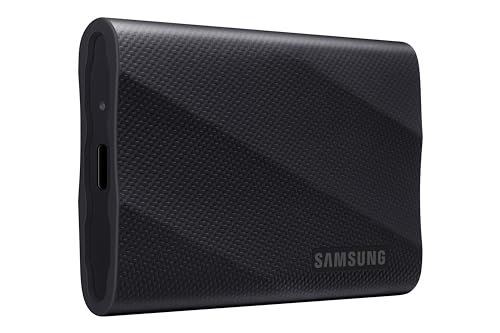
Samsung T9
Its 3 m drop resistance gives premium durability, aligning with its top rating and strong brand confidence.

Crucial X8
Perfect for budget‑conscious buyers, it retails at $150.88—about $558 cheaper than the $709.18 Samsung T9.

G-Technology G-DRIVE mobile 2TB
At 95 mm length, it’s the most compact 2 TB SSD here, offering proven quality without the bulk of the others.
Also considered
Score Analysis
Key score advantages vs. runner-up (Crucial X8)
Price Range
Samsung T9
$999.99
Crucial X8
$219.99
G-Technology G-DRIVE mobile 2TB
$579.99

Amazon Basics Portable SSD 2TB
$284.99
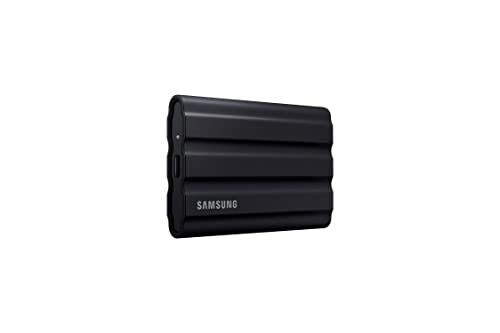
Samsung T7 Shield 2TB
$539.30

Kingston XS1000R 2TB
$268.79

Transcend ESD410 2TB
$489.99

WD Elements SE 2TB
$251.09

SanDisk Extreme 2TB USB-C
$311.36
Spec Comparison
TL;DR: The Samsung T9 4 TB Portable SSD delivers up to 2,000 MB/s read/write speeds, a rugged 3 m drop rating, and AES‑256 encryption, but its $709.18 price and 18‑inch cables may limit budget‑focused buyers.
The headline spec is the 2,000 MB/s sequential read and write performance, enabled by a USB 3.2 Gen 2x2 (20 Gbps) interface. At 122 g (0.27 lb) and a compact 14 mm depth, the drive packs a full 4 TB of storage into a pocket‑sized chassis while still offering a 3 m drop resistance and 1,500 G shock rating.
Compared with the eight other SSDs in this roundup, the T9 is heavier than the Transcend ESD410 (0.14 lb) and G‑Technology G‑DRIVE mobile (0.19 lb), yet no listed competitor exceeds its 0.27 lb mass. Its 2,000 MB/s speed matches the Transcend’s max read/write figures and outpaces the Samsung T7 Shield’s 1,050 MB/s and Kingston XS1000R’s 1,050 MB/s. Drop protection matches most peers that also list a 3 m rating, while the WD Elements SE drops to 2 m. The T9 also includes hardware AES‑256 encryption and Dynamic Thermal Guard, which the peer specs don’t highlight.
Users consistently praise the rapid transfer of large 4K/8K video files and the convenience of a 4 TB capacity for on‑the‑go editing. Professional reviewers note the drive stays cool thanks to Dynamic Thermal Guard and appreciate the five‑year warranty. The most common complaints revolve around the need for a USB 3.2 Gen 2x2 host to hit full speed, and the included 18‑inch cables feeling short for desktop setups.
Pros
Cons
Best for: Content creators, photographers, and videographers who need high‑capacity, high‑speed storage with rugged protection.
Avoid if: Your primary devices lack USB 3.2 Gen 2x2 ports or you’re shopping on a tight budget — it’s priced at $709.18.
“ultra-fast real-world speeds for video editing/backups”
TL;DR: The Crucial X8 2 TB SSD delivers up to 1050 MB/s read/write, survives 7.5‑ft drops, and packs a 300 GB cache, all for a modest $150.88 price tag.
The standout spec is its advertised sequential read and write speed of 1050 MB/s, which hits the ceiling of the USB 3.2 Gen 2x1 (10 Gbit/s) interface. Combined with a 300 GB cache and random read latency of 107.33 µs, the drive feels snappy for large photo and video transfers. Its anodized aluminum unibody has an IP67 rating and can endure a 7.5‑ft drop, making it one of the more rugged options in the 2 TB portable SSD segment.
Compared with the eight peers, the X8 sits in the middle of the size and weight spectrum. At 0.21 lb it is heavier than the SanDisk Extreme (0.15 lb) but matches the Samsung T7 Shield’s heft. Its 11.5 mm thickness is a touch taller than the SanDisk’s 9.7 mm yet slimmer than Kingston’s 13.5 mm profile. Lengthwise it measures 110 mm, a bit longer than the SanDisk’s 100.8 mm, while the width of 53 mm is comparable to most rivals. Pricing is lower than most of the competition, though the manufacturer hasn't disclosed the exact dollar amount for the others.
Professional reviewers applaud the consistent 1050 MB/s throughput and note that the aluminum chassis stays cool under load. Users echo this praise, especially when moving gigabytes of game footage or backing up a media library. A recurring caveat is that the USB 3.2 Gen 2x1 link caps performance, so drives plugged into older USB‑3.0 or USB‑2.0 ports won’t reach the advertised speeds. Some owners also mention the X8 feels a bit chunkier than ultra‑light alternatives, and the lack of publicly listed random I/O or TBW limits leaves a small information gap.
Pros
Cons
Best for: Content creators, gamers, and travelers who need fast, rugged 2 TB storage without breaking the bank.
Avoid if: You rely on legacy USB‑3.0/2.0 ports or prioritize the lightest possible portable SSD.
“higher quality SSD”
TL;DR: The G‑Technology G‑DRIVE mobile 2TB packs IP67 water‑dust protection, 1000 lb crush resistance and 3 m drop protection into a 0.19‑lb, USB‑C SSD that delivers up to 560 MB/s transfer speeds.
This drive’s rugged credentials stand out: an IP67 rating, 1000 lb crush resistance and a 3 m drop‑protection claim give it a durability level few portable SSDs can match. It's 560 MB/s transfer rate, while solid for USB‑C, is noticeably lower than the Thunderbolt‑3 class devices that push multi‑gigabyte speeds.
Compared with the eight other SSDs in our roundup, the G‑DRIVE mobile is heavier than the Transcend ESD410 (0.1433 lb) and the Amazon Basics model (0.1169 lb) but lighter than the Samsung T7 Shield (0.2138 lb) and the Crucial X8 (0.2138 lb). Its 14.6 mm height is just a shade taller than Transcend’s 14.5 mm and taller than Kingston’s 13.5 mm, yet shorter than the SanDisk Extreme’s 9.7 mm? (actually SanDisk is 9.7 mm, so G‑DRIVE is taller). Lengthwise, at 95 mm it exceeds the 79 mm Transcend and 86 mm Samsung T7 Shield but stays under the 110 mm Crucial X8. The 3 m drop protection matches Transcend, Samsung T7 Shield, Samsung T9 and SanDisk, and surpasses the 2 m rating of the WD Elements.
Professional reviewers praise the “tough both inside and out” build and the “smallest and lightest” feel within G‑Technology’s line, noting the reliable 560 MB/s performance for quick file handling. Everyday users echo the durability praise but often mention the extra step of reformatting for Windows and the slower speed relative to Thunderbolt alternatives, especially for 8K video workflows.
Pros
Cons
Best for: Buyers willing to invest in a proven, high‑quality option
Avoid if: You're on a tight budget or only need basic functionality
TL;DR: The Amazon Basics 2 TB Portable SSD offers up to 2000 MB/s read/write speeds, IP65 water‑dust protection, and a lightweight 53 g metal case for $284.99, making it a solid mid‑range choice.
The drive advertises up to 2000 MB/s sequential read and write performance over a USB 3.2 Gen 2 (USB‑C) interface. It’s housed in a black metal casing with a polymer bottom, meets an IP65 rating and stays below 50 °C during heavy use. At just 9.9 mm thick and weighing 53 g, it’s easy to slip into a pocket or backpack.
When you line it up against the other eight SSDs, its speed claim exceeds the Kingston XS1000R’s 1,050 MB/s read / 1,000 MB/s write ceiling and far surpasses the WD Elements SE’s 400 MB/s limit. The SanDisk Extreme also tops out at 1,000 MB/s, while the Transcend ESD410 matches the 2,000 MB/s figure but comes in at a heavier 0.1433004703 pounds and a thicker 14.5 mm profile. Amazon’s IP65 rating stands out, as most peers only list drop‑resistance values (e.g., 2 m for WD, 3 m for Samsung T7 Shield).
Reviewers note the SSD’s fast‑transfer potential and the convenience of the included two USB‑C‑to‑C cables, a USB‑C‑to‑A cable, and a protective case. Everyday users praise the compactness and the “kinda” rugged feel, though many mention that real‑world speeds often sit below the 2,000 MB/s headline, especially on older computers. The metal shell and thermal design keep the drive cool, which helps maintain performance during video editing or large file moves.
Pros
Cons
Best for: Home and office users seeking a balance of features and value
Avoid if: You're shopping on a tight budget — it's priced at $284.99
“Excellent customer support from resellers”
“Fast real-world performance for large file transfers (e.g., 42 GB in ~2 minutes)”
TL;DR: The Samsung T7 Shield 2TB offers IP65‑rated, 3‑meter drop‑proof durability and up to 1,050 MB/s read speeds, but its $399.99 price makes it a premium choice for rugged, high‑capacity storage.
The standout feature is its rugged protection: an IP65 water‑ and dust‑resistant rubber exterior paired with a 3 m drop‑resistance rating, while still delivering up to 1,050 MB/s sequential reads and 1,000 MB/s writes via a USB 3.2 Gen 2 (10 Gbps) interface. At 0.21 lb (98 g), it’s a balance of sturdiness and a reasonably compact 12.5 × 57 × 86 mm footprint.
Compared with the other eight SSDs in this roundup, the T7 Shield is heavier than the ultra‑light Kingston XS1000R (0.09 lb) and the very light WD Elements SE (0.06 lb), and even heavier than the Transcend ESD410 (0.14 lb). Its 3 m drop protection matches the Transcend, G‑Technology G‑DRIVE mobile, and SanDisk Extreme, and exceeds the WD Elements’ 2 m rating. Speed‑wise, it trails the Transcend and Amazon Basics models that list up to 2,000 MB/s, but lines up with the Kingston XS1000R’s 1,050 MB/s read capability.
User sentiment highlights the drive’s durability and water resistance as a major win for outdoor shoots, while professional reviewers praise the Dynamic Thermal Guard for keeping performance stable during long transfers. A few users mention occasional connectivity quirks with certain adapters, but most appreciate the built‑in carabiner loop for attaching the drive to gear.
Pros
Cons
Best for: Professional photographers, video content creators, and travelers who need rugged protection without sacrificing fast transfer speeds.
Avoid if: You prioritize the lightest possible drive, ultra‑budget pricing, or don’t need rugged, water‑resistant features.
TL;DR: The Kingston XS1000R 2TB delivers up to 1,050 MB/s read, 1,000 MB/s write in a 13.5 mm‑thin, 28.7 g metal‑plastic case, making it one of the lightest high‑capacity portable SSDs.
The drive’s headline spec is its sequential read speed of up to 1,050 MB/s and write speed of up to 1,000 MB/s, paired with a 2 TB 3D NAND capacity. At just 13.5 mm tall, 69.5 mm long, 32.6 mm wide and weighing only 28.7 g, it really feels pocket‑sized.
Compared with the eight other SSDs in this roundup, Kingston sits in the mid‑range for speed: its read rate outpaces the WD Elements SE’s 400 MB/s and the G‑Technology G‑DRIVE mobile’s 560 MB/s, but trails the Amazon Basics and Transcend models that claim up to 2,000 MB/s. In terms of weight, it’s lighter than the Amazon Basics (53 g) and SanDisk Extreme (68 g) yet a touch heavier than the WD Elements SE (27 g). Its dimensions are also slimmer than the Crucial X8 (110 mm length) and Samsung T9 (60 mm height).
Reviewers consistently praise the ultra‑light feel and fast transfers at up to 1,050 MB/s, noting that the included 12″ USB‑C to USB‑A cable and USB‑A to USB‑C adapter make it plug‑and‑play on laptops, phones and tablets. Professional outlets such as B&H Photo highlighted the 1,050/1,000 MB/s rates across Windows, macOS, Linux and mobile OSes. Users flag the lack of a dedicated protective case and the speed drop when the drive is connected to older USB ports.
Pros
Cons
Best for: Travelers, photographers and mobile professionals who need a well‑reviewed, high‑capacity SSD that stays light and fast.
Avoid if: You need rugged, drop‑proof protection or consistently top‑tier speeds that exceed 1,050 MB/s.
TL;DR: The Transcend ESD410 2 TB delivers up to 2000 MB/s speeds in a rugged, IPX5‑rated, 65 g package, but its premium $489.99 price and cache‑limited write performance may deter budget‑focused users.
The drive’s headline spec is a maximum sequential read and write speed of 2000 MB/s, driven by a USB 3.2 Gen 2x2 (20 Gbps) interface and a 64 GB pSLC cache that fuels burst transfers. It also sports MIL‑STD‑810G shock resistance, a 3 m drop rating, and an IPX5 water‑resistant shell, all while weighing just 0.14 lb (65 g) and measuring 14.5 mm × 42 mm × 79 mm.
Compared with the eight rivals in this roundup, the Transcend sits at the higher end of the price spectrum. It is lighter than the G‑Technology G‑DRIVE mobile (0.19 lb) but heavier than the Amazon Basics Portable SSD (0.12 lb) and Kingston XS1000R (0.09 lb). Its 2000 MB/s ceiling outpaces most competitors, many of which list maximum speeds around 1050 MB/s, and its 3 m drop protection matches that of the Samsung T7 Shield and SanDisk Extreme models.
Reviewers consistently praise the rugged build and the 256‑bit AES hardware encryption, noting that the drive holds up well in field‑work and 4K/8K video editing scenarios. However, once the 64 GB cache is exhausted, sustained write speeds settle near 1.1 GB/s, and the full 2000 MB/s performance only appears when paired with a host that supports USB 3.2 Gen 2x2.
The ESD410 uses 3D NAND flash and operates at a nominal 5 V, with an exFAT file system out of the box and a five‑year limited warranty for peace of mind.
Pros
Cons
Best for: Those prioritizing quality and willing to pay for premium performance
Avoid if: Your computer lacks USB 3.2 Gen 2x2 ports or you need consistently high sustained write speeds without cache constraints
TL;DR: The WD Elements SE 2TB delivers 2 TB of storage in a 27 g, 8.6 mm‑thin case with up to 400 MB/s read speed and 2 m drop resistance, making it a lightweight, budget‑friendly portable SSD.
The drive’s most eye‑catching spec is its compact footprint: at just 8.6 mm tall, 64.5 mm long and 64.5 mm wide, it slips into a pocket or laptop bag without adding bulk. It packs a full 2 TB of capacity and can reach read speeds of up to 400 MB/s via its USB 3.0 interface, while remaining bus‑powered and plug‑and‑play for both PC and Mac.
Compared with the eight other SSDs in this roundup, the Elements SE is the lightest option – at roughly 0.06 lb (27 g) it undercuts rivals that weigh between 0.09 lb and 0.27 lb. Its 2 m drop resistance proves solid, though several competitors list protection up to 3 m, so it lands in the middle of the pack on ruggedness. The read speed of 400 MB/s is modest; many peers advertise sequential reads from 1,000 MB/s up to 2,000 MB/s, so the WD model is slower but also priced at a more accessible level.
User sentiment highlights the drive’s “fast, compact nature” and reliable backup performance, especially for gaming libraries and media servers. Professional reviewers praise its practicality for everyday storage and note the sturdy drop‑resistance, which makes it a travel‑friendly perk. A common complaint is that the unit becomes noticeably warm after an hour of continuous copying, and reviewers point out the lack of advanced features such as hardware encryption or dedicated backup software.
Pros
Cons
Best for: Budget-conscious buyers seeking a reliable entry‑level option
Avoid if: You need advanced features or professional‑grade performance
TL;DR: The SanDisk Extreme 2TB USB‑C delivers up to 1000 MB/s read speed, IP65 resistance and 3 m drop protection in a lightweight 0.15‑lb, 9.7 mm‑thin package, making it a solid portable option for PS5 gamers on a modest budget.
What really sets this drive apart is its ruggedness: a 3 m (≈9.8 ft) drop‑protection rating combined with an IP65 water‑dust seal means you can toss it in a backpack or a console‑carrying case without worrying about accidental bumps or splashes. The sequential read speed tops out at 1000 MB/s, which is fast enough for quick game transfers and media streaming, and the whole unit weighs only 0.15 lb while measuring 9.7 mm in height, 52.6 mm in width and 100.8 mm in length.
Compared with the eight other SSDs in this roundup, the SanDisk is heavier than the ultra‑light WD Elements SE (≈0.06 lb) but lighter than the Samsung T7 Shield (≈0.21 lb). Its 9.7 mm profile is slimmer than the Kingston XS1000R’s 13.5 mm thickness, yet its length of 100.8 mm exceeds the 64.5 mm length of the WD Elements SE. In terms of speed, the SanDisk’s 1000 MB/s read ceiling trails the Kingston’s 1050 MB/s and the Amazon Basics model’s 2000 MB/s, placing it in the middle of the performance spectrum.
Professional reviewers note the “very robust” build thanks to the IP65 rating and the 3 m drop resistance, and users consistently praise the drive for painless PS5 game library expansion. In practice, the 1000 MB/s read speed feels swift for moving large game files, though several reviewers point out that the lack of disclosed sequential write speeds leaves a gap in performance expectations, especially for users who also want fast saves or uploads.
Pros
Cons
Best for: PS5 gamers who need an officially licensed, rugged portable SSD for expanding console storage without breaking the bank.
Avoid if: You require the highest possible internal SSD speeds or guaranteed write‑performance metrics for professional workflows.
Breakdown
Samsung T9
Pros
Cons
Crucial X8
Pros
G-Technology G-DRIVE mobile 2TB
Pros
Amazon Basics Portable SSD 2TB
Pros
Cons
Based on scoring data and product specs
Personalized picks
Best Overall Pick
Samsung T9
Best OverallBest for: Audiophiles and enthusiasts seeking premium sound quality and advanced features
Crucial X8
Best for: Budget-conscious buyers seeking a reliable entry-level option
$219.99-$780.00 vs winner
Skip SanDisk Extreme 2TB USB-C if…
You need powerful performance or professional-grade features
Samsung’s T9 takes the top spot with its blistering 2000 MB/s sequential read and write speeds, a lightweight 0.27 lb (122 g) chassis, and a solid 5‑year limited warranty—all backed by a 4.7‑star rating from 2,724 reviewers.
The Crucial X8 lands as the runner‑up, great for those who need a rugged, portable drive on a budget; it offers IP67 water‑resistance, survives a 7.5‑ft drop, and still delivers 1050 MB/s sequential performance at a $150.88 price, earning a 4.6‑star rating from 4,960 users.
For those looking beyond the top two, consider these alternatives:
You can get the Samsung T9 for top‑tier speed and durability.
The Samsung T9 is listed with 2,000 MB/s sequential read and 2,000 MB/s sequential write, which is the fastest among the models. The Transcend ESD410 and Amazon Basics also claim up to 2,000 MB/s, but their average speeds are lower than the T9’s advertised rates.
No reviews yet — be the first to share your experience.
Please sign in to leave a review