⚡ Quick Answer
When you need a portable SSD that holds at least 2 TB of data, the market can feel overwhelming. We’ve trimmed the field down to 11 options, each offering a different blend of speed, durability, and price. From the $150.88 Crucial X8 with a 4.6‑star rating and 1050 MB/s sequential read/write, up to the $709.18 Samsung T9 that pushes 2000 MB/s and carries a 4.7‑star rating, the lineup spans entry‑level to premium builds.
To make sense of the spread, we grouped the drives into three price tiers. The budget tier includes the Crucial X8, Corsair EX400U, WD Elements SE, and Amazon Basics models—solid choices for everyday backups. Mid‑range picks like the Samsung T7 and Sabrent Rocket XTRM Plus add higher speeds without breaking the bank. The premium tier features the Samsung T7 Touch, Crucial X10 4TB, Transcend ESD410, and Samsung T9, delivering top‑tier performance and extra ruggedness for professionals on the move.
Below we’ll walk through each tier, spotlight the specs that matter most, and help you pinpoint the SSD that fits your workflow and budget.

Crucial X8
Its compact 11.5 mm height keeps it pocket‑friendly while staying affordable.
Crucial X10 4TB
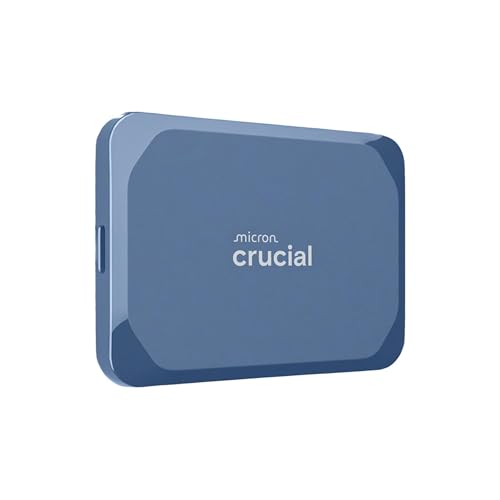
Ideal for power users needing 4 TB storage, even though it costs about $274 more than the Crucial X8.
Samsung T7 2TB
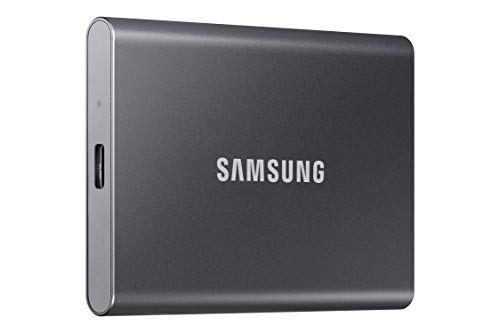
Stands out with 2 m drop resistance, offering extra durability that the X8 and X10 lack.
Also considered
Score Analysis
Key score advantages vs. runner-up (Crucial X10 4TB)
Price Range
Crucial X8
$273.00
Crucial X10 4TB
$427.99
Samsung T7 2TB
$331.78
Samsung T9
$975.98

Samsung T7 Touch
$394.65

Amazon Basics Portable SSD 2TB
$284.99

WD Elements SE 2TB
$249.80

Corsair EX400U 2TB
$299.99

Transcend ESD410 2TB
$487.04

Sabrent Rocket XTRM Plus
Out of Stock
Verbatim Vx500 2TB
Out of Stock
Spec Comparison
TL;DR: The Crucial X8 offers 2 TB of storage with 1050 MB/s read/write speeds, an IP67‑rated aluminum body, and 2.29 m drop resistance, all for a budget‑friendly $150.88.
The headline spec is its 1050 MB/s sequential read and write performance, which sits comfortably above the 500 MB/s of the Verbatim Vx500 and the 400 MB/s of the WD Elements SE, yet below the 4000 MB/s advertised by the Corsair EX400U. Coupled with a 300 GB cache and random read latency of 107.33 µs, the drive delivers fast transfers for large photo and video files.
At 100 g, the X8 weighs more than the ultra‑light Verbatim Vx500 (29 g) and WD Elements (27 g), but less than the Sabrent Rocket XTRM Plus (120 g). Its 11.5 mm height and 53 mm width compare to the Amazon Basics Portable SSD (9.9 mm × 59.2 mm) and are slimmer than the Corsair’s 12 mm × 64 mm footprint. Speed‑wise, it outpaces the Amazon Basics (up to 2000 MB/s) in consistency, though it can’t reach the Thunderbolt‑class 2700 MB/s of the Sabrent when used over USB.
Reviewers consistently praise the X8’s rugged anodized aluminum chassis and its IP67 rating, noting it survives drops of up to 2.29 m (7.5 ft) and extreme temperatures. Users also highlight the included USB‑C to USB‑A and USB‑C to USB‑C adapters, which make it ready for most laptops and consoles straight out of the box. However, professional testers point out that the USB 3.2 Gen 2x1 interface caps the maximum throughput, so older USB‑3.0 or USB‑2.0 ports won’t unlock the full 1050 MB/s.
Pros
Cons
Best for: Budget-conscious buyers seeking a reliable entry-level option
Avoid if: You need the lightest possible portable drive, or you have only USB‑3.0/2.0 ports that cannot exploit the full 1050 MB/s speed
“higher quality SSD”
TL;DR: The Crucial X10 4TB delivers 4 TB of storage in a 10 mm‑thin, 38 g body with up to 2100 MB/s reads, IP65 protection, and a solid 4.6‑star rating.
The X10’s standout spec is its 4 TB capacity packed into a 10 mm‑high, 65 mm‑long, 50 mm‑wide shell that weighs just 0.07 lb (38 g). It pushes sequential reads up to 2100 MB/s and writes up to 2000 MB/s over a USB‑C 3.2 Gen 2x2 (20 Gbps) interface.
Compared with the other ten SSDs in this roundup, the X10 offers more than double the storage of the Samsung T7 Touch, Samsung T7, Amazon Basics, and WD Elements SE, all of which top out at 2 TB. Its read speed eclipses the 1050 MB/s of the Samsung models and the 1941 MB/s average of the Transcend ESD410, while staying ahead of the 2000 MB/s ceiling of the Amazon Basics unit. At 0.07 lb it’s lighter than the Samsung T7 Touch (0.13 lb) and the Sabrent Rocket XTRM Plus (0.26 lb), though a bit heavier than the ultra‑light WD Elements SE (0.06 lb). The X10 also outperforms the WD Elements SE’s modest 400 MB/s read rate.
Reviewers praise the pocket‑friendly dimensions—often described as “ultra‑compact” and “ideal for travel”—and the massive 4 TB space for creators on the go. Professional outlets point out the IP65 dust‑water rating and 3 m drop resistance as clear durability cues, but they also note the shift to a plastic enclosure, which feels less premium than earlier metal‑cased models. Users have reported that real‑world speeds can dip below the advertised 2100/2000 MB/s on hosts that don’t support USB 3.2 Gen 2x2, and the warranty length sometimes varies across listings.
Beyond speed and capacity, the drive runs solely on USB power, supports Windows, macOS, Linux, Android, iPadOS, Xbox, and PlayStation, and ships with three months of Mylio Photos Plus plus Acronis True Image for backup. It operates between 0 °C and 40 °C and carries a 3‑year limited warranty.
Pros
Cons
Best for: Content creators, photographers, videographers, gamers, and frequent travelers who need massive, fast, and rugged portable storage.
Avoid if: You're on a tight budget, only need basic storage, or require built‑in hardware encryption.
TL;DR: The Samsung T7 2TB delivers 1,050 MB/s reads, 1,000 MB/s writes, a rugged 2 m drop rating, and a feather‑light 58 g aluminum body, making it a solid, well‑reviewed portable SSD for demanding mobile workflows.
The standout spec is its sequential performance: up to 1,050 MB/s read and 1,000 MB/s write via USB 3.2 Gen 2, paired with a 2 m (6.5 ft) drop‑resistance rating. At just 0.13 lb (58 g) and measuring 85 mm × 57 mm × 8 mm, the drive feels almost weightless in a pocket or laptop bag.
Compared with the other ten SSDs in this roundup, the T7 sits in the middle of the speed spectrum—faster than the WD Elements SE (400 MB/s) and Verbatim Vx500 (500 MB/s), but slower than the Amazon Basics Portable SSD (up to 2,000 MB/s) and the Corsair EX400U (up to 4,000 MB/s). It is lighter than the Sabrent Rocket XTRM Plus (0.264 lb) and the Corsair EX400U (0.203 lb), yet heavier than the ultra‑light WD Elements (0.060 lb) and Amazon Basics (0.117 lb). Its dimensions match the Samsung T7 Touch, but the Touch carries a higher price tag.
User feedback highlights the drive’s pocket‑sized convenience and the peace of mind from AES‑256‑bit hardware encryption. Reviewers also note that the Dynamic Thermal Guard keeps temperatures in check during long transfers. A recurring theme is that real‑world transfer speeds can fall short of the 1,050 MB/s claim when using non‑included cables, and the lack of an IP rating means it isn’t protected against water or dust.
Technically, the T7 uses a PCIe NVMe controller behind a USB 3.2 Gen 2 (10 Gbps) interface and draws power from the bus via the included USB‑C to Type‑A cable. Samsung’s Magician software provides drive health monitoring, and the unit ships with a three‑year limited warranty for added confidence.
Pros
Cons
Best for: Most users looking for a well‑reviewed, reliable mainstream option
Avoid if: You need advanced features or professional‑grade performance
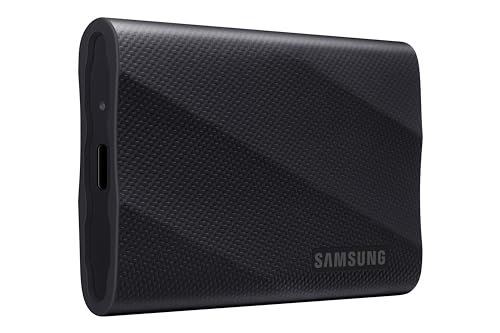
TL;DR: The Samsung T9 packs 4 TB of storage, 2000 MB/s read/write speeds, and a rugged 3 m drop rating into a 0.27‑lb, 14 mm‑thin body, but it carries a premium price tag.
The standout spec is the 2000 MB/s sequential read and write performance across the full 4 TB capacity, delivered via a USB 3.2 Gen 2x2 (20 Gbps) interface. Combined with a 5‑year limited warranty, AES‑256 hardware encryption, and Dynamic Thermal Guard, professionals use the drive for fast, secure transfers without overheating.
In the 11‑product lineup, the T9 is heavier than the Crucial X10 (0.07 lb), Samsung T7 Touch (0.13 lb), Samsung T7 (0.13 lb), Transcend ESD410 (0.14 lb), and Amazon Basics (0.12 lb), and only slightly heavier than the Sabrent Rocket XTRM Plus (0.26 lb). Its 14 mm depth is slimmer than the Samsung T7 Touch (8 mm depth but taller at 85 mm) and much shorter than the 85 mm height of the T7 Touch, yet taller than the 10 mm height of the Crucial X10. Speed‑wise, the T9 matches the top‑end 2000 MB/s read/write figures of the Transcend ESD410 and exceeds the 1050 MB/s of the Samsung T7 Touch, placing it among the fastest in the set. However, its $709.18 price point sits at the premium end of the range.
Reviewers consistently praise the drive’s ability to shift large 4K/8K video files quickly, noting the “consistent 2,000 MB/s read/write performance across the 4 TB capacity.” The rugged rubberized shell with 3 m drop protection earns marks for on‑location shooting, while the Dynamic Thermal Guard keeps temperatures in check during sustained writes. On the downside, users report that the included 18‑inch cables feel short for desktop setups and that speeds drop to around 1,000 MB/s on hosts lacking USB 3.2 Gen 2x2 ports.
Beyond speed, the T9’s hardware AES‑256 encryption adds a layer of data security that’s valuable for field work, and the 5‑year warranty signals confidence in durability. The drive’s compact 122 g (0.27 lb) chassis fits easily in a pocket, and the blue LED indicator provides a subtle status cue without being distracting.
Pros
Cons
Best for: Buyers willing to invest in a proven, high-quality option
Avoid if: You're shopping on a tight budget — it's priced at $709.18
“ultra-fast real-world speeds for video editing/backups”
TL;DR: The Samsung T7 Touch 2 TB SSD packs a fingerprint‑secured, aluminum case with 1,050 MB/s reads, 1,000 MB/s writes, and a rugged 1.8 m drop rating in a pocket‑sized 58 g package.
What really sets the T7 Touch apart is its built‑in fingerprint scanner paired with AES‑256‑bit hardware encryption, letting you lock your data with a single touch. The drive delivers up to 1,050 MB/s sequential reads and 1,000 MB/s writes through a USB 3.2 Gen 2 (10 Gbps) Type‑C connection, all inside an 85 × 57 × 8 mm aluminum shell that weighs just 0.125 lb (58 g).
Compared with the other ten SSDs in this roundup, the T7 Touch sits in the middle of the pack on weight: it’s lighter than the Sabrent Rocket XTRM Plus at 0.2645 lb and heavier than the ultra‑light WD Elements SE at 0.0595 lb. Its 1.8 m drop resistance exceeds the Samsung T7’s 2 m rating but falls short of the 3 m protection that the Crucial X10 and Transcend ESD410 provide. Speed‑wise, the T7 Touch matches the standard Samsung T7 but trails the Crucial X10’s 2,200 MB/s reads and the Amazon Basics’ 2,000 MB/s reads, while still outpacing the WD Elements’ 400 MB/s ceiling.
Reviewers consistently praise the drive’s lightning‑fast transfers and the convenience of biometric unlocking, noting that the compact size fits easily into a pocket or laptop bag. Some users mention that performance can dip on computers lacking USB 3.2 Gen 2 or UASP support, and a few have had to reformat the drive for certain operating systems. The lack of an official IP rating presents a recurring drawback for those who need dust‑ or water‑proof protection. Professional reviewers highlight the Dynamic Thermal Guard and the 1,500 G shock rating as reassuring safeguards for on‑the‑go use.
Beyond speed and security, the T7 Touch includes Dynamic Thermal Guard to keep temperatures in check, a motion‑LED indicator for quick status checks, and a three‑year limited warranty. It operates from 0 °C to 60 °C (storage –40 °C to 85 °C) and can survive vibrations up to 2,000 Hz at 20 G, making it a sturdy companion for travel or field work.
Pros
Cons
Best for: Buyers willing to invest in a proven, high‑quality option
Avoid if: You need advanced features or professional‑grade performance
TL;DR: The Amazon Basics 2 TB Portable SSD packs up to 2000 MB/s read/write speeds into a 9.9 mm‑thin, IP65‑rated metal case that weighs just 53 g, making it a solid budget choice for everyday storage.
Amazon’s 2 TB model offers the highest advertised transfer rate in the group – up to 2000 MB/s for both reads and writes – and it does so from a compact 9.9 mm height, 59.2 mm square footprint. The drive’s metal casing with a polymer bottom carries an IP65 rating for water and dust resistance, and the unit stays below 50 °C even under heavy use. At 53 g (about 0.12 lb) it’s one of the lightest options, and the included USB‑C to‑C, USB‑C to‑A cables and a protective case let you start transferring right away.
Compared with the other ten SSDs, this Amazon Basics model is lighter than the Samsung T7 (0.13 lb) and the Samsung T7 Touch (0.13 lb), while the WD Elements SE is a bit lighter at roughly 0.06 lb. In terms of speed, its 2000 MB/s claim outpaces the Samsung T7’s 1,050 MB/s read and 1,000 MB/s write, the WD Elements’ 400 MB/s, the Sabrent Rocket XTRM Plus’s 900 MB/s USB speed, and the Verbatim Vx500’s 500 MB/s sequential read. Only the Corsair EX400U lists a higher sequential read speed (up to 4,000 MB/s), placing the Amazon drive near the top of the performance spectrum without needing Thunderbolt.
Reviewers appreciate the drive’s fast‑feeling transfers – moving 42 GB in about two minutes – and the convenience of the bundled accessories. However, professional testers note that real‑world speeds often sit between 858 MB/s and 1,135 MB/s, falling short of the 2000 MB/s headline. Reviewers describe the build quality as “kinda” rugged, offering solid protection but not the premium feel of higher‑priced metal unibody drives. Users also mention that performance can vary noticeably depending on the host computer, especially older Macs or PCs.
Technical details round out the picture: the SSD measures roughly 2.33 × 2.33 × 0.39 inches and operates via a USB 3.2 Gen 2 (USB‑C) interface. Its 2 TB capacity translates to about 2000 GB of storage, enough for large media libraries or backup sets. The device’s operating temperature max of 50 °C and its IP65 rating make it suitable for travel and occasional outdoor use.
Pros
Cons
Best for: Most users looking for a well‑reviewed, reliable mainstream option
Avoid if: You need Thunderbolt‑level speeds, consistently peak performance above 2000 MB/s, or a premium‑grade rugged chassis
“Excellent customer support from resellers”
“Fast real-world performance for large file transfers (e.g., 42 GB in ~2 minutes)”
TL;DR: The WD Elements SE 2TB delivers 2 TB of storage in a pocket‑sized, drop‑resistant case with up to 400 MB/s read speeds, making it a solid budget‑friendly portable SSD.
The drive’s most notable spec is its read speed of up to 400 MB/s, which, while not class‑leading, comfortably handles everyday file transfers and game library moves. Its compact dimensions—8.6 mm height and 64.5 mm square footprint—mean it slips into a laptop sleeve without adding bulk, and the 27 g weight (≈0.06 lb) keeps it lighter than most rivals in the roundup.
Compared with the other ten SSDs, the Elements SE sits in the budget tier: its $251.09 price point is lower than many premium models, and its speed lags behind high‑performance options that tout 1 GB/s‑plus reads. It is also lighter than most competitors, only marginally heavier than the Verbatim Vx500, while offering a longer drop‑resistance rating of up to 2 m—a level matched by only a few others.
Professional reviewers praise the drive’s practicality for basic backups and gaming libraries; they note the plug‑and‑play USB‑3.0 interface and bus‑powered operation eliminate the need for extra adapters. Users consistently highlight the reliable 2 TB capacity and the rugged 2 m drop resistance, but many mention the unit gets noticeably warm after extended copying sessions, and the 400 MB/s ceiling feels modest against faster alternatives. Editors also note the lack of hardware encryption or bundled backup software.
The SSD connects via USB 3.0 and works with both PC and Mac platforms straight out of the box. Its included USB cable and drop‑resistant chassis make it a convenient travel companion for photographers, gamers, or anyone needing quick, on‑the‑go storage without worrying about power bricks.
Pros
Cons
Best for: Budget-conscious buyers seeking a reliable entry-level option
Avoid if: You need advanced features or professional‑grade performance
TL;DR: The Corsair EX400U 2 TB USB4 SSD packs up to 4,000 MB/s reads, 3,600 MB/s writes and a ultra‑compact 12 mm‑thick chassis for $199.99, making it a fast yet portable option for creators on a budget.
What really sets the EX400U apart is its USB4 interface delivering 40 Gbps bandwidth, which translates to sequential read speeds of up to 4,000 MB/s and write speeds of up to 3,600 MB/s. At 2 TB (2,000 GB) capacity, it offers a solid amount of space for large media libraries while staying bus‑powered, so you won’t need an external adapter.
Compared with the other ten SSDs in this roundup, the EX400U is heavier than the feather‑light Verbatim Vx500 (0.06 lb) but lighter than the Crucial X8 (0.21 lb). Its 12 mm height is taller than Verbatim’s 9 mm but slimmer than the 11.5 mm height of the Crucial X8. Its 4,000 MB/s read speed outpaces the Verbatim Vx500’s 500 MB/s and the Crucial X8’s 1,050 MB/s, and it also exceeds the 2,000 MB/s reads listed for the Amazon Basics SSD and the 1,050 MB/s of the Samsung T7.
Reviewers consistently note the plug‑and‑play convenience of the included 30 cm USB‑C‑to‑USB‑C 40 Gbps cable and the white LED that signals activity. Users appreciate the compact 12 mm‑thick, 64 mm‑wide, 64.3 mm‑long form factor for on‑the‑go editing. On the downside, several buyers point out that the $199.99 price tag feels steep compared with slower rivals, and the 4.0‑star rating from 133 reviews is lower than many competing models.
Additional technical details include a 60 W power delivery, a 1,500 G shock rating, and operating temperatures from 0 °C to 70 °C, making it resilient enough for typical field work. It also supports MagSafe compatibility with iPhone 15 and later, and the aluminum‑top construction adds a premium feel.
Pros
Cons
Best for: Content creators, video editors and Mac/iPad users who need very fast portable storage without breaking the bank.
Avoid if: You require a rugged, IP‑rated case for extreme environments or prioritize the lowest possible price above speed.
TL;DR: The Transcend ESD410 2 TB SSD delivers up to 2000 MB/s read/write speeds, a rugged MIL‑STD‑810G body with 3 m drop protection, and 256‑bit AES encryption, but its premium $489.99 price limits its appeal to users who need that extra durability.
What really stands out is the advertised maximum throughput of 2000 MB/s for both reads and writes, backed by a USB 3.2 Gen 2x2 (20 Gbps) interface and a 64 GB pSLC cache that fuels those burst speeds. The drive’s chassis measures 79 mm × 42 mm × 14.5 mm and weighs about 0.14 lb (65 g), yet it meets MIL‑STD‑810G shock standards and survives drops from 3 m onto concrete, plus it carries an IPX5 water‑resistance rating.
Compared with the other ten entries, the ESD410’s 2000 MB/s ceiling matches the Amazon Basics Portable SSD’s advertised limit while surpassing the Samsung T7 Touch and Samsung T7, which top out at 1,050 MB/s read and 1,000 MB/s write. It also offers a larger 2 TB capacity than the Samsung T7 Touch’s 2 TB but with a sturdier build; the Crucial X10 4 TB's lighter at 38 g and thinner at 10 mm, but it lacks the MIL‑STD‑810G and IPX5 protections. The Sabrent Rocket XTRM Plus focuses on Thunderbolt performance rather than ruggedness, and the Samsung T9, while offering 4 TB and similar 3 m drop resistance, it's considerably heavier at 122 g. In short, the Transcend sits at the high‑end of durability and speed, albeit at a higher price point.
User feedback repeatedly praises the “instant‑large‑file transfers” enabled by the 2000 MB/s burst capability and the peace of mind from the military‑grade chassis. Professional reviewers note the drive’s suitability for 4K/8K video editing and iPhone 15 Pro ProRes recording, thanks to its fast interface. The main complaint is that once the 64 GB cache is exhausted, sustained writes settle around 1.1 GB/s, and the advertised speeds only materialize when paired with a host that supports USB 3.2 Gen 2x2.
Under the hood, the SSD uses 3D NAND flash and runs on a 5 V operating voltage. It ships with exFAT formatting, 256‑bit AES hardware encryption, and a five‑year limited warranty, giving long‑term confidence for field work or travel.
Pros
Cons
Best for: Outdoor photographers, travelers, videographers, and content creators who need rugged, high‑speed storage.
Avoid if: You need a drive that performs at full speed on older USB ports or are looking for a lower‑cost option without military‑grade durability.
TL;DR: The Sabrent Rocket XTRM Plus 2 TB delivers up to 2700 MB/s Thunderbolt 3 speeds in a rugged aluminum case, but its USB fallback slows to 900 MB/s and it’s priced at a premium.
What really sets this drive apart is the Thunderbolt 3 interface that pushes read and write performance to 2700 MB/s, a level most portable SSDs in the roundup can’t reach. It packs 2 TB of storage (2 000 GB) into a compact aluminum shell measuring 4.13 in × 1.77 in × 0.55 in and weighing about 0.26 lb (4.37 oz).
Compared with its peers, the Rocket XTRM Plus is heavier than the Samsung T7 series, Amazon Basics, and WD Elements, and it’s at the higher end of the price spectrum. Its Thunderbolt speed outpaces the 1 050 MB/s of the Samsung T7 and the 2 100 MB/s of the Crucial X10, while the USB‑C fallback at 900 MB/s trails behind the USB‑only drives that list up to 2 000 MB/s.
Professional reviewers highlight the sustained 2700 MB/s throughput for video editing and large data transfers, and users appreciate the removable silicone sleeve that adds impact protection. The built‑in temperature and health monitoring gives peace of mind during intensive workloads, but many reviewers note the steep drop to 900 MB/s when the drive reverts to USB, and some wish for independent benchmark verification.
Pros
Cons
Best for: Professionals and creators who need ultra‑fast Thunderbolt transfers and robust protection for on‑the‑go editing.
Avoid if: You rely mainly on USB‑C without Thunderbolt support, or you need the lightest, most budget‑friendly portable SSD.
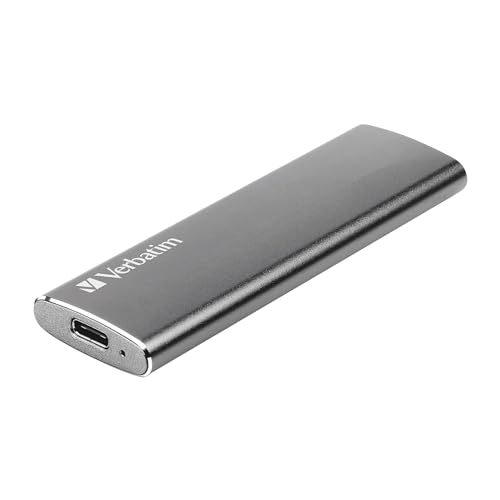
TL;TD: The Verbatim Vx500 2 TB SSD packs 2 TB (2048 GB) into a 92 mm × 29 mm × 9 mm aluminum shell, weighing just 29 g and delivering up to 500 MB/s sequential reads.
The drive’s most eye‑catching spec is its ultra‑compact size—just 92 mm long, 29 mm wide and 9 mm thick—and a feather‑light 29 g (0.06 lb) aluminum enclosure. It offers 2 TB of storage and sequential read/write speeds of up to 500 MB/s and 440 MB/s respectively, which is plenty for moving large video files or photo libraries.
Compared with the other ten SSDs in this roundup, the Vx500 is lighter than most. It’s only a gram heavier than the WD Elements SE (27 g) but considerably lighter than the Corsair EX400U (92 g), Crucial X8 (100 g), Amazon Basics (53 g), Samsung T7 (58 g) and Sabrent Rocket XTRM Plus (120 g). Its sequential speeds are modest; high‑end peers like the Corsair and Samsung top 1,000 MB/s, while the WD Elements reaches 400 MB/s, so the Vx500 sits in the budget‑tier performance band.
Professional reviewers note the drive’s solid aluminum build and the convenience of the included USB‑C and USB‑A cables plus Nero Backup Software for Windows. Users appreciate the portability for ultrabooks and MacBooks. However, the random 4 KB read speed of just 24.80 MB/s can feel sluggish when handling many small files, and the >300 GB pSLC cache means sustained writes may slow once the cache is filled. Some reviewers also observed the drive defaulting to USB 3.2 Gen 1 in certain rigs, capping throughput below the advertised 10 Gb/s.
Additional technical context: the Vx500 is bus‑powered via its USB cable, eliminating the need for an external power brick. It works with Windows 11/10/8+ and macOS 10.4+, but to hit the full 500 MB/s read speed you’ll need a USB 3.2 Gen 2 or Thunderbolt 3 host.
Pros
Cons
Best for: Ultrabook and MacBook owners who need portable 2 TB expansion for large files.
Avoid if: Your primary tasks involve heavy random I/O, such as database servers or software development with many small files.
Breakdown
Crucial X8
Pros
Crucial X10 4TB
Pros
Samsung T7 2TB
Pros
Samsung T9
Pros
Cons
Based on scoring data and product specs
Personalized picks
Best Overall Pick
Crucial X8
Best Budget PickBest for: Budget-conscious buyers seeking a reliable entry-level option
Crucial X10 4TB
Best for: Buyers willing to invest in a proven, high-quality option
$427.99+$154.99 vs winner
Skip Verbatim Vx500 2TB if…
You need advanced features or professional-grade performance
We’ve crowned the Crucial X8 as the winner of the high‑capacity portable SSD roundup. At just $150.88 it undercuts every other 2 TB+ drive, while still pulling a solid 4.6‑star rating from 4,960 reviewers. Its listed sequential read and write speeds of 1,050 MB/s and an IP67 rating plus 7.5 ft drop resistance make it a surprisingly rugged and fast option for everyday use.
The runner‑up is the Crucial X10 4TB, which shines when you need a larger vault for media libraries or 4K video projects. It offers 4 TB of space, blazing sequential reads of 2,100 MB/s and writes of 2,000 MB/s, and it weighs only about 0.07 lb, so it stays portable despite the extra capacity. At $425.00 it’s a premium upgrade for power users.
For shoppers looking beyond the winner, the Samsung T7 2TB serves as the best mid‑range pick, delivering reliable performance at a moderate $309.17 price point. If you want top‑tier speed and future‑proofing, the Samsung T9 stands out as the premium alternative, priced at $709.18 and offering the highest‑end specs among the alternatives.
Pick the Crucial X8 today for the best blend of price, performance, and durability.
At $150.88 it costs far less than any other 2 TB model while still offering a solid 1050 MB/s sequential read and write speed, IP67 water resistance, and a 7.5‑ft (≈2.3 m) drop rating. Its anodized aluminum unibody and three‑year warranty give it a quality‑at‑tier advantage that outpaces the competition for the price.
No reviews yet — be the first to share your experience.
Please sign in to leave a review