⚡ Quick Answer
We compared 11 space heaters that span the whole price spectrum—from the $25.19 Amazon Basics Ceramic model up to the $680.09 Klarstein Thermaxx. Review scores range from a solid 4.0/5 on the Dr. Infrared DR966 to a high‑flying 4.6/5 on the Dreo Atom One, which also boasts a massive 28,235‑review base. The lineup is neatly split into budget, mid‑range and premium tiers, giving you options whether you’re hunting for a portable desk‑side boost or a wall‑mounted unit that can heat an entire garage.
Coverage areas vary widely: the Cadet Energy Plus and Dreo each claim 200 sq ft of heating, while the Dr. Infrared DR966 pushes that to 700 sq ft with a 6000‑watt draw and a 20,472 BTU output. Safety isn’t an afterthought—Cadet offers a high‑temp limit switch, over‑voltage protection and a five‑year warranty, whereas Dreo adds tip‑over, overheat and auto‑off safeguards plus a 12‑year warranty. Noise levels also differ, with Dreo whispering at 34 dB and the Amazon Basics unit humming at 43 dB. Mounting options range from portable (Amazon Basics, Comfort Zone) to wall‑mount (Cadet Energy Plus, Heat Storm Sedona) and even ceiling‑mount (Heat Storm Tradesman).
Below we break down each model’s heating power, safety features, noise footprint and value, so you can match the right heater to your space and budget.

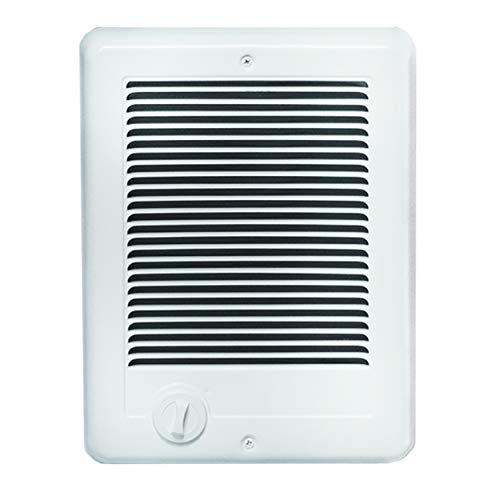
Cadet Energy Plus
Its wide temperature range of 40°F to 86°F lets you fine‑tune comfort across seasons.
Dreo Space Heater
Ideal for cost‑conscious renters, it delivers solid performance at $44.97—about $171 cheaper than the Cadet Energy Plus.

Amazon Basics Ceramic Space Heater
Stands out with a compact 7.52‑inch depth, perfect for tight spaces where the larger Cadet and Dreo units won’t fit.
Also considered
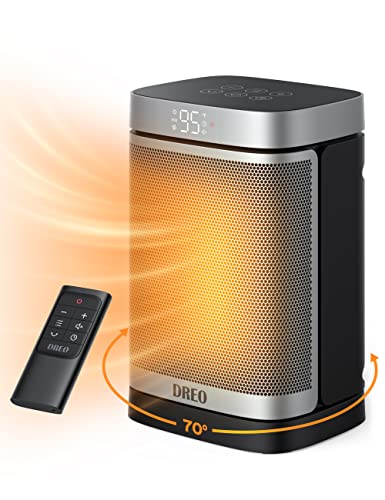
TL;DR: The Dreo Atom One heats up to 200 sq ft in just 2 seconds, runs at a whisper‑quiet 34 dB, and saves up to 40 % energy, all for $44.97.
The standout spec is its 5118 BTU max output paired with a 2‑second instant‑heat claim, meaning the room warms almost the moment you turn it on. It also offers a wide thermostat range of 41‑95 °F and five heat settings, so you can fine‑tune comfort without juggling multiple devices.
Compared with the other ten heaters in this roundup, the Dreo is lighter than the Comfort Zone Baseboard Heater (4.0 lb) but heavier than the Amazon Basics model (2.14 lb). Its 5.51 in depth and 6.69 in width make it more compact than the Comfort Zone’s 6.1 in depth and the Amazon Basics’ 7.52 in depth, while still delivering a coverage area of 200 sq ft—matching the Cadet Com‑Pak’s advertised reach. The 6‑ft cord is shorter than the Heat Storm’s 8‑ft lead, which can be a plus for tighter spaces.
Users consistently praise the rapid 2‑second heat boost and the ultra‑quiet operation at 34 dB, calling it ideal for bedrooms and home offices. Professional reviewers note the Hyperamics technology and the ECO mode that can cut power use by up to 40 %. The remote control, 9‑blade fan, and 70° horizontal oscillation add convenience, though a few owners miss a built‑in carrying handle and wish for a cool‑touch housing to reduce burn risk.
Pros
Cons
Best for: Budget‑conscious buyers seeking a reliable entry‑level option — the Dreo Space Heater offers Thermostat Range: 41‑95 °F.
Avoid if: You need to heat spaces larger than 200 sq ft or require a built‑in handle for easy portability.
TL;DR: The Amazon Basics Ceramic Space Heater delivers 1500 W of focused warmth in a lightweight 2.14‑lb, compact package for under $26, making it a solid entry‑level choice for small rooms.
This heater packs a 1500 W high‑power ceramic element that can warm up to 150 sq ft, yet it fits on a desk thanks to its 7.52 in depth, 9.45 in height and 6.34 in width. At just 2.14 lb, it’s easy to carry, and the 43 dB fan noise stays low enough for office or bedroom use. Safety isn’t an afterthought: tip‑over and overheat protection automatically shut the unit off after 50 seconds if the grille reaches unsafe temperatures (up to 175 °F).
Compared with the other ten heaters in our roundup, the Amazon Basics model is lighter than the Dreo Space Heater (about 3.8 lb) and the Cadet Com‑Pak (7 lb). Its depth of 7.52 in is deeper than Dreo’s 5.51 in, but still far smaller than the bulkier Heat Storm Tradesman, which measures 38.5 in deep. Unlike Dreo, this unit does not oscillate or offer a programmable timer, and it provides fewer adjustable features than the Comfort Zone Baseboard Heater, which lists a digital thermostat range.
Reviewers consistently praise the heater’s quick warm‑up and reliable safety switches, noting that the fan‑only mode is handy for circulating air on milder days. Professional reviewers highlight the tiny footprint and the fact that the adjustable thermostat works, but they also point out that the dial behaves more like a low‑medium‑high selector, making precise temperature control tricky. In everyday use, users report an average room temperature rise of about 5.3 °F, which is adequate for personal comfort zones but falls short in larger or drafty spaces.
Pros
Cons
Best for: Budget-conscious buyers seeking a reliable entry-level option — the Amazon Basics Ceramic Space Heater offers Depth: 7.52 inches
Avoid if: You have limited desk space or need portability
“It heats large rooms slower than small ones but with consistent wattage efficiency”
“Ideal for offices and small spaces with stable 500W output and solid build”
TL;DR: The Comfort Zone Baseboard Heater delivers 1500‑watt, 5120 BTU convection heat for rooms up to 200 sq ft, with a silent 0 dB operation, digital thermostat and three safety features, all for a budget‑friendly price.
This unit’s most distinctive spec is its 5120 BTU output combined with a full‑range digital thermostat that spans 35°F – 95°F, letting you fine‑tune comfort in a medium‑sized space. The heater also offers two heat settings (750 W low / 1500 W high) and a 12‑hour programmable timer, so you can set it and forget it.
Compared with the other ten heaters in our roundup, the Comfort Zone is lighter than most wall‑mounted or tower models – only the Amazon Basics Ceramic heater is lighter at about 2.14 lb, while the Dr. Infrared Ecoheat and Heat Storm Tradesman tip the scales at 8.5 lb and 8.0 lb respectively. Its 6.1‑inch depth sits between the ultra‑slim Dreo (5.51 in) and the deeper Amazon Basics (7.52 in), giving it a low‑profile look that won’t dominate a bedroom wall. Width-wise, it’s considerably wider at 35.75 in, which is typical for baseboard styles but far exceeds the narrow footprints of tower units.
Professional reviewers praise the heater’s whisper‑quiet convection – the spec lists 0 dB noise – and its precise digital control, noting that users appreciate the ability to set temperatures in one‑degree increments. Consumer comments echo this, highlighting the quiet operation and ease of use, especially in home offices and small bedrooms. The most common criticism is the limited coverage; at 200 sq ft it can feel under‑powered in larger living rooms or colder climates. A few owners also mention that the lightweight 4.0 lb construction, while portable, makes the tip‑over switch an essential safety feature.
Pros
Cons
Best for: Entry‑level buyers or those on a tight budget — the Comfort Zone Baseboard Heater offers Depth: 6.1 inches
Avoid if: You need powerful performance or professional‑grade features
TL;DR: The Cadet Com‑Pak White wall heater costs $115.99, weighs 7.0 lb, and delivers up to 6825 BTU across 100–300 sq ft, making it a solid mid‑range choice for supplemental heating.
What sets the Com‑Pak apart is its integrated thermostat and fan‑forced heating element that can output 6825 BTU (high‑wattage 2000 W) or 5120 BTU (1500 W) depending on the model. With a compact depth of 5.25 in, a height of 9.5 in and a width of 14.0 in, it fits neatly into standard wall openings while still covering rooms from 100 to 300 sq ft. The unit is UL Listed and can operate up to 10,000 ft elevation, so it’s ready for most residential settings.
Compared with the other ten heaters in this roundup, the Com‑Pak is lighter than the Heat Storm Tradesman (8.0 lb) but heavier than the Dreo Space Heater (about 3.8 lb). Its depth of 5.25 in is far shallower than the Tradesman’s 38.5 in depth, yet a bit deeper than the Cadet Register Series White’s 4 in profile. Width‑wise it matches the Register’s 14 in but is narrower than the Heat Storm Sedona’s 19.0 in. In short, the Com‑Pak sits in a sweet spot between bulkier wall units and ultra‑compact tabletop heaters.
Reviewers consistently praise the precise temperature control offered by the built‑in thermostat and the sleek, flush‑mount design that blends into a bathroom or bedroom wall. Professional reviewers highlight the “quiet fan” and “fast heating” claims as useful for quick comfort. On the downside, users note that installation demands adult assistance and that no mounting tools are included, adding a small hurdle. Several comments mention that the heater is best suited for supplemental warmth; it may feel under‑powered in larger living rooms or open‑plan spaces.
Beyond the basics, the Com‑Pak runs on 240/208 V and features a safety shutoff that cuts power if the unit overheats. Its fan‑forced airflow helps distribute heat evenly across the rated coverage area, and the metal heating element promises durability. With a 1‑year limited warranty, Cadet backs the product with a modest service promise.
Pros
Cons
Best for: Most users looking for a well‑reviewed, reliable mainstream option — the Cadet Com‑Pak White offers Depth: 5.25 inches
TL;DR: The Cadet Energy Plus delivers 1600 W of heat for up to 200 sq ft, with a digital thermostat, multi‑volt flexibility and industrial‑grade safety, but its vertical‑mount design and premium price keep it niche.
The standout spec is its 1600‑watt output paired with a 200‑sq‑ft heating coverage area and a BTU output of 5,459 BTU, all managed by a built‑in digital thermostat that stays accurate within one degree. High‑temp limit switch, over‑voltage protection and a thermal safeguard round out its safety suite.
Compared with the other ten heaters, the Energy Plus sits in the premium‑price tier and is lighter than the 25‑pound Dr. Infrared Heater DR966 but a touch heavier than the 7.72‑pound Heat Storm Sedona. Its BTU rating of 5,459 BTU/h is modest next to the DR966’s 20,472 BTU/h, yet it matches the Cadet Register Series’s 200 sq ft coverage while weighing less than that model’s 8.8 lb.
Reviewers consistently praise the unit’s energy‑efficiency claim of up to 30 % less consumption than standard wall heaters and the convenience of automatic voltage detection for 120 V, 208 V or 240 V circuits. The main criticism centers on the vertical‑mount‑only requirement, which limits placement options, and the fact that the built‑in thermostat cannot be swapped for an external wall control.
The heater runs on 18–44 CFM fan speed, draws 6.7 A at 120 V (up to 8.3 A at 240 V), and comes with a five‑year warranty, ETL listing and ADA compliance, making it a robust choice for long‑term use.
Pros
Cons
Best for: Those prioritizing quality and willing to pay for premium performance — the Cadet Energy Plus offers Wattage: 1000 W (120 V), 1500 W (208 V), 1600 W (240 V).
Avoid if: You're on a tight budget, only need basic functionality, or require horizontal, ceiling, or floor installation.
TL;DR: The Heat Storm Tradesman delivers 1500‑watt infrared heat with 5200 BTU output, mounts to ceiling or wall, and covers up to 100 sq ft for $83.08, though it needs a 72‑inch clearance.
The standout spec is its 1500‑watt carbon‑fiber quartz element, which translates to a solid 5200 BTU/hour and lets the unit heat a primary area of up to 100 sq ft. Its 8‑ft power cord and 0 dB silent operation make it a discreet addition to a garage or workshop, while the cULus certification adds peace of mind for indoor and covered‑outdoor use.
Compared with the ten other heaters in this roundup, the Tradesman sits in the mid‑price tier: it’s pricier than the Amazon Basics ceramic heater and the Dreo Space Heater, yet less costly than the Cadet Register Series. In terms of weight, it’s heavier than the Dreo model but lighter than the Cadet Register, making ceiling mounting manageable without a heavy‑duty bracket. Its 38.5‑inch depth and 14‑inch height are larger than many portable units, reinforcing its design for fixed installation rather than tabletop placement.
Reviewers repeatedly praise the telescoping ceiling mount that adjusts 17‑23 inches from the ceiling, calling it “space‑saving” and ideal for low‑clearance workshops. Professional reviewers highlight the solid build and the quiet, flame‑free infrared heat. On the downside, users note the 100 sq ft primary coverage can feel cramped in larger rooms, and the required minimum mounting height of 72 inches (US) or 98 inches (Canada) rules out low‑ceiling spaces. The unit’s single heat setting and lack of a remote control also limit flexibility for some households.
Pros
Cons
Best for: Value-conscious buyers seeking quality at $83.08 — the Heat Storm Tradesman offers BTU Output: 5200 BTU/hour
Avoid if: Reliability and user satisfaction are your top concerns
TL;DR: The Dr. Infrared Heater Ecoheat delivers 5200 BTU, up to 400 sq ft coverage, and smart Wi‑Fi control for $81.71, making it a compact, budget‑friendly option for small indoor spaces.
The Ecoheat’s standout feature is its dual‑system heating: a PTC/quartz infrared element works with a high‑velocity blower, giving three modes—ECO, Low (1000 W) and High (1500 W). Its thermostat swings between 50 °F and 86 °F, and a 720‑minute timer lets you set it and forget it. At just 8.5 pounds and with dimensions of 287.78 mm depth, 382.78 mm height and 160.78 mm width, the unit stays out of the way while still covering up to 400 sq ft.
Compared with the other ten heaters in this roundup, the Ecoheat is slightly heavier than the Heat Storm Tradesman’s 8.0‑pound unit, yet lighter than the Cadet Register Series at 8.8 pounds. Its depth of 287.78 mm is far shallower than the Tradesman’s 38.5‑inch depth, meaning it fits better on tight shelves or wall mounts. While its price sits in the budget tier, it offers more power settings than the Amazon Basics Ceramic model, which only lists a single high/low option.
Reviewers appreciate the quiet operation and the light‑sensing night mode that dims the display and adjusts output when the room darkens. Professional notes highlight the ECO mode’s automatic alternation between 1500 W and 1000 W for energy efficiency. The main drawback mentioned is the 400 sq ft coverage limit, which can leave larger open‑plan rooms feeling chilly. Safety‑focused users also like the tip‑over switch, overheat protection and cool‑to‑the‑touch exterior.
Pros
Cons
Best for: Entry‑level buyers or those on a tight budget — the Dr. Infrared Heater Ecoheat offers Depth: 287.78 mm
Avoid if: You need powerful performance or professional‑grade features for large rooms exceeding 400 sq ft
TL;DR: The Heat Storm Sedona is a Wi‑Fi‑enabled 1500‑watt infrared wall heater that covers up to 150 sq ft, weighs 7.72 lb, and packs a digital thermostat with safe‑to‑touch grill.
What really sets the Sedona apart is its dual‑power setting: low at 750 W and high at 1500 W, delivering a maximum of 5200 BTU. The unit measures 4.75 in deep, 13.25 in high and 19.0 in wide, so it fits comfortably on a wall without crowding a small bathroom or bedroom. Its built‑in fan mode and remote‑plus‑app control let you fine‑tune temperature from your phone, while the safe‑to‑touch grill and overheat protection keep kids and pets secure.
Compared with the other ten heaters in this roundup, the Sedona sits in the premium price tier. It’s lighter than the Cadet Register Series (8.8 lb) but a touch heavier than the Cadet Com‑Pak (7.0 lb). Its wall‑mount design mirrors the Heat Storm Tradesman, yet the Tradesman’s depth is far greater at 38.5 in, making the Sedona a more compact choice. In terms of coverage, the Cadet Energy Plus reaches 200 sq ft, edging out the Sedona’s 150 sq ft primary area, while the Dr. Infrared DR966 targets 600‑700 sq ft, far beyond the Sedona’s scope.
User sentiment highlights the convenience of Wi‑Fi scheduling and the “Eco/Auto” mode that throttles power once the room is within 2 °F of the set point. Professional reviewers praise the thermostat’s accuracy, noting it often outperforms central HVAC controls. The main criticism is the conflicting heating‑area claim—some users see the supplemental 750 sq ft figure as optimistic, especially in larger rooms. A stable Wi‑Fi connection is also required for full app functionality.
Pros
Cons
Best for: Those prioritizing quality and willing to pay for premium performance — the Heat Storm Sedona offers BTU Output: 5200 BTU.
Avoid if: You need advanced features or professional‑grade performance, or you lack a stable Wi‑Fi connection.
TL;DR: The Klarstein Thermaxx delivers 2.5 kW of oil‑filled heat, covers up to 538 sq ft, and adds remote control and low‑noise operation, but its premium $680 price may be a hurdle.
The standout feature is its MX‑ThermalFin design with 12 ribs that promises up to 65 % more heating power than conventional radiators. Paired with a 2500 W nominal output and a digital thermostat that spans 5–35 °C, the unit can warm rooms between 25 m² and 50 m² (538 sq ft). A 24‑hour timer and an included remote let you schedule heat without leaving the couch.
Compared with other heaters in this roundup, the Thermaxx is heavier than the Cadet Energy Plus (7.4 lb) but lighter than the Dr. Infrared Heater (25.0 lb). Its coverage of 538 sq ft far exceeds the 200 sq ft rating of the Cadet Energy Plus and the 150 sq ft primary area of the Heat Storm Sedona, putting it at the top end of room‑size capability. However, it also carries a higher price tag than the budget‑friendly Cadet Com‑Pak (7.0 lb) and Heat Storm Tradesman (8.0 lb).
Professional reviewers note the rapid heat‑up thanks to the ribbed design and praise the quiet operation—thanks to low‑air turbulence and a low‑noise fan‑less system. Users appreciate the safety suite, which includes overheat protection and a toggle circuit breaker, and the convenience of castor wheels for easy relocation. The main trade‑off is the 2500 W draw, which can raise electricity costs in poorly insulated spaces, and the unit’s 66.5 cm height may limit placement in tighter spots.
Pros
Cons
Best for: Those prioritizing quality and willing to pay for premium performance — the Klarstein Thermaxx offers Heating Levels: 3
Avoid if: You're shopping on a tight budget — it's priced at $680.09
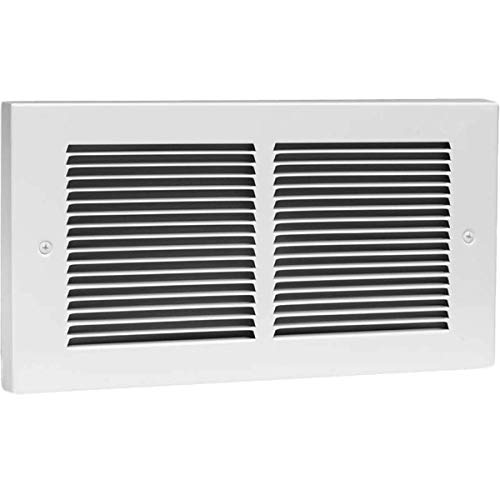
TL;DR: The Cadet Register Series White is a hard‑wired, in‑wall fan‑forced heater that delivers 1500 W (5120 BTU) for up to 200 sq ft, but its $149.79 price tag makes it a premium choice.
This unit’s standout feature is its selectable 1500‑watt output paired with a high‑temp safety shutoff, giving you 5120 BTU of heat while protecting against overheating. At just 4 in deep, 7.4 in high and 14 in wide, it fits neatly into a wall register slot and covers a solid 200 sq ft of space.
Compared with the other ten heaters in our roundup, the Cadet Register is heavier than the Heat Storm Sedona (7.72 lb) yet slimmer than that model’s 4.75‑inch depth. Its BTU rating sits just below the Heat Storm Tradesman’s 5200 BTU, and its 8.8‑lb weight is a bit more than the Cadet Energy Plus (7.4 lb). While the price sits higher than budget‑friendly options like the Tradesman, it offers a more integrated, in‑wall design that many freestanding units lack.
Reviewers appreciate the “complete unit” feel – the grille, wall can and wiring come together for a tidy installation that looks like a standard floor register. Homeowners like the compact footprint for bedroom or office supplement heating, and the high‑temp shutoff earns frequent praise for safety. The 4.1‑star rating from 65 reviews hints at a mixed reception, with some buyers calling the price premium for the feature set.
Pros
Cons
Best for: Most users seeking a balanced, mainstream option — the Cadet Register Series White offers Depth: 4 in
Avoid if: You need advanced features or professional‑grade performance
TL;DR: The Dr. Infrared Heater DR966 delivers industrial‑grade heat with 20,472 BTU/h output, dual 3000 W/6000 W settings, and UL/CUL safety, but requires a hardwired 240 V installation and weighs 25 lb.
This unit’s headline spec is its 20,472 BTU/h heating capacity, backed by a 6000 W high setting and a 3000 W low setting. The adjustable thermostat spans 37–104 °F, letting you fine‑tune comfort across a 600–700 sq ft coverage area. Its 8‑inch fan and spiral steel heating element keep air moving evenly while staying quiet.
Compared with the other ten heaters in this roundup, the DR966 is substantially heavier—at 25 lb it dwarfs the Cadet Energy Plus (7.4 lb) and Heat Storm Sedona (7.72 lb). Its BTU output also eclipses the Cadet Energy Plus’s 3,412–5,459 BTU/hr and the Heat Storm models’ 5,200 BTU/hr, making it the most powerful option for large spaces. The required 35 amp dual‑pole, 240 V circuit is a step above the low‑voltage needs of most peers, so the price point sits at the premium end of the group.
Professional reviewers note the dual‑power modes as a practical way to balance energy use and heat output, while users appreciate the low‑noise operation and permanent motor lubrication that reduces maintenance. However, the hardwired installation and dedicated 35 amp breaker mean you’ll likely need an electrician, and the 25‑lb weight makes the unit far from portable.
The heater’s construction is commercial‑grade: a spiral steel metal‑sheath element, a totally enclosed, thermally protected ball‑bearing motor, and UL/CUL certification for safety. Wall or ceiling mounting brackets are included, and the adjustable louvers give five‑way airflow control. The unit’s dimensions—14.5 inches deep, 14.5 inches high, and 13.0 inches wide—fit most ceiling or wall mounts in garages or workshops.
Pros
Cons
Best for: Commercial and industrial spaces such as factories, stores, warehouses, and workshops — the Dr. Infrared Heater DR966 offers BTU Output: 20,472 BTU/h
Avoid if: You're on a tight budget or only need basic functionality
Breakdown
Cadet Energy Plus
Pros
Dreo Space Heater
Pros
Amazon Basics Ceramic Space Heater
Pros

Heat Storm Sedona
Pros
Based on scoring data and product specs
Personalized picks
Dreo Space Heater
Budget-conscious buyers seeking a reliable entry-level option — the Dreo Space Heater offers Thermostat Range: 41-95°F
Best Overall Pick
Cadet Energy Plus
Best OverallBest for: Those prioritizing quality and willing to pay for premium performance — the Cadet Energy Plus offers Wattage: 1000W (120V), 1500W (208V), 1600W (240V)
Dreo Space Heater
Best for: Budget-conscious buyers seeking a reliable entry-level option — the Dreo Space Heater offers Thermostat Range: 41-95°F
$44.96-$200.03 vs winner
Skip Cadet Register Series White if…
You need advanced features or professional-grade performance
The Cadet Energy Plus earns the top spot thanks to its industrial‑grade output and comprehensive safety suite. It covers up to 200 sq ft, delivers a peak 5,459 BTU (1,600 watts) and runs on a multi‑volt system, so it can be wired for 120V, 208V or 240V. A built‑in digital thermostat keeps temperature within one degree, while high‑temp limit switch, over‑voltage protection and a thermal safeguard give you peace of mind. Plus, the five‑year warranty backs the whole wall‑mount package.
The Dreo Space Heater is the runner‑up and shines when you need a portable, low‑noise solution for a bedroom or office. Weighing just 3.8 lb and equipped with a 6‑ft cord, it’s easy to move and place. Its brushless DC motor and 34 dB sound level let you work or sleep undisturbed. You get five heat settings, tip‑over, overheat and auto‑off safety features, a 12‑hour timer, remote control and 70° oscillation for even distribution – all powered at 1,500 watts.
For tighter budgets, the Amazon Basics Ceramic Space Heater offers a no‑frills, ultra‑affordable option. If you prefer a mid‑range wall‑mount without the premium price, the Cadet Com‑Pak White balances performance and cost. And for those willing to splurge, the Klarstein Thermaxx delivers high‑end features and premium build quality.
Choose the Cadet Energy Plus for reliable, powerful heating that outperforms the competition.
The Cadet Energy Plus costs $216.33, while the Dreo Space Heater is $44.97, making Cadet considerably more expensive. Cadet delivers 1600 watts of power, a built‑in digital thermostat, and industrial‑grade safety features like a high‑temp limit switch, over‑voltage protection, and a thermal safeguard, plus a 5‑year warranty. Its 200 sq ft coverage and 5459 BTU output also edge out Dreo’s 1500‑watt, 5118 BTU unit.
No reviews yet — be the first to share your experience.
Please sign in to leave a review
$44.96