💚 Best Value
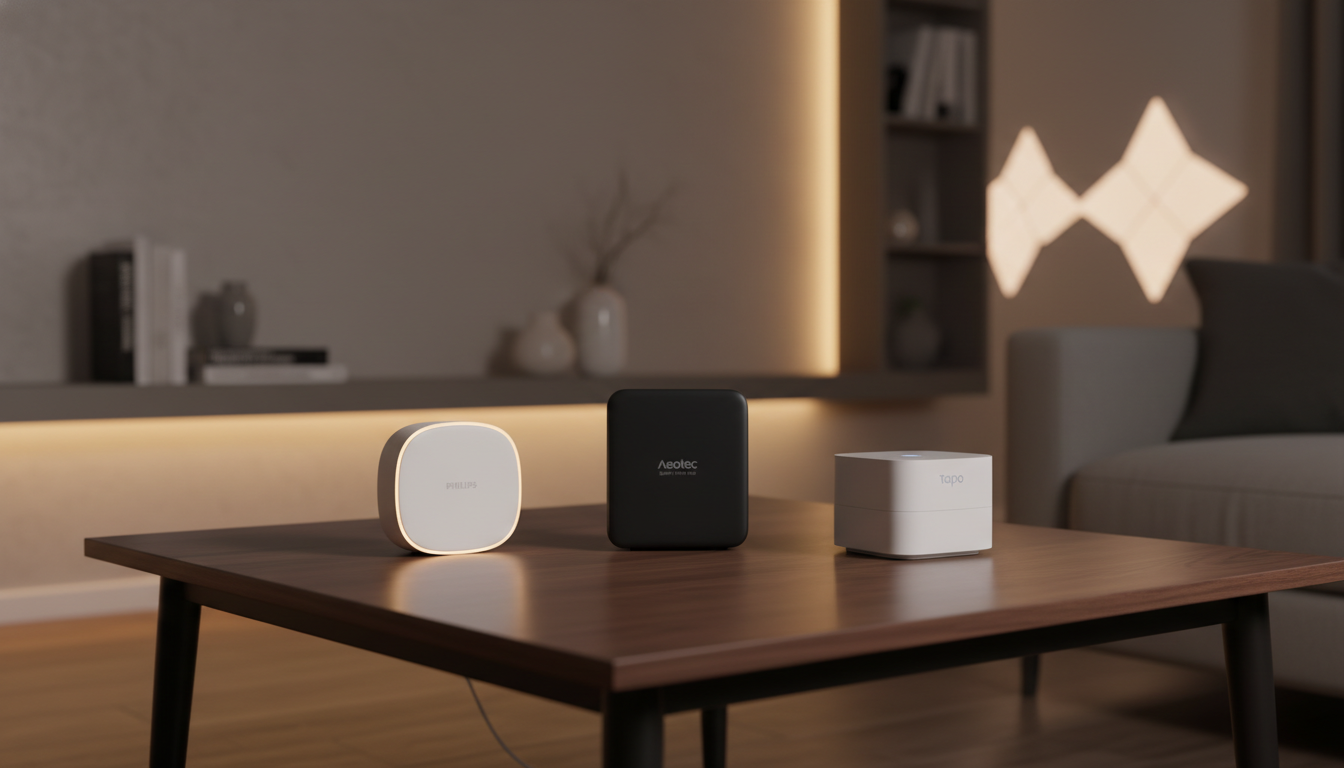
Novostella Smart Wireless Mesh Hub
$19.99
If you’re ready to turn a handful of smart bulbs, sensors or cameras into a unified system, you’ve come to the right place. We compared 7 home‑automation hubs that span the whole price spectrum, from the $19.99 Novostella Smart Wireless Mesh Hub up to the $199.69 eufy Smart Display E10. All seven sit between $19.99 and $199.69, so you’ll find something that fits both your budget and your feature checklist.
The lineup splits into three clear tiers. On the budget side you’ll see the $19.99 Novostella hub, the $32.99 Dongfxk Smart Hub and the $41.02 Philips Hue Bridge, each carrying a solid 4.5‑ or 3.2‑star rating from dozens to thousands of reviewers. The mid‑range contender is the $129.97 Tapo Smart Home Central Hub H500, which has earned a 4.1‑star rating and a 1.64‑lb build. Premium options include the $149.99 Aeotec Smart Home Hub (4.2 stars, 1.1 lb), the $179.99 Amazon Echo Hub (4.0 stars, 0.81 lb) and the $199.69 eufy Smart Display E10 (4.1 stars, 2.45 lb), all offering richer protocol support or a built‑in screen.
Below we’ll break down how each hub stacks up on connectivity, expandability and day‑to‑day convenience, so you can decide which one matches your home’s needs.
Philips Hue Bridge
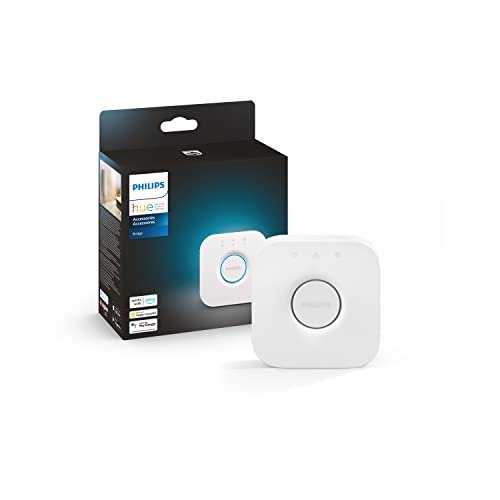
Its compact depth of 90.6 mm makes it easy to fit behind routers or in tight spaces, delivering reliable entry‑level control without clutter.

Tapo Smart Home Central Hub H500
Ideal for users who want a mainstream hub with stronger alerts, it costs $129.97—about $89 more than the $41.02 Philips Hue Bridge.
Aeotec Smart Home Hub
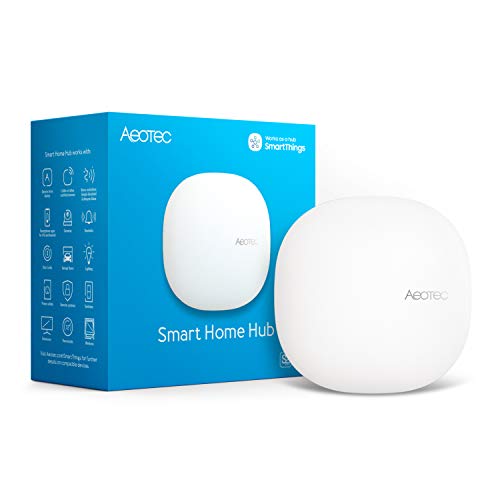
Stands out with a 30 m Z‑Wave range, letting you control devices across larger homes where the Hue Bridge and Tapo hub may struggle.
Also considered
Score Analysis
Key score advantages vs. runner-up (Tapo Smart Home)
Price Range
Philips Hue Bridge
$43.57
Tapo Smart Home Central Hub H500
$129.97
Aeotec Smart Home Hub
$149.99
Novostella Smart Wireless Mesh Hub
$19.99

Amazon Echo Hub
$179.99

eufy Smart Display E10
$199.69

Dongfxk Smart Hub
$32.99
Spec Comparison
TL;DR: The Philips Hue Bridge costs $41.02, supports up to 50 Hue lights, offers Matter and voice‑assistant integration, and runs on a tiny 0.1 lb unit that plugs into your router.
The Bridge’s standout spec is its capacity: it can manage up to 50 bulbs and 10 accessories, all through Zigbee on the 2400‑2483.5 MHz band. It draws just 0.1 W in standby and runs on a 5 V DC 600 mA adapter, keeping power use minimal. Its compact chassis measures 90.6 mm deep, 26 mm high and 90.9 mm wide, and the whole unit weighs only 0.1 lb (280 g).
At $41.02, the Hue Bridge sits in the middle of the price range: it’s pricier than the $19.99 Novostella hub but considerably cheaper than the $129.97 Tapo hub and the $149.99 Aeotec hub. In weight, it’s heavier than the ultra‑light Novostella (2.27 g) yet lighter than the bulkier Tapo hub (1.64 lb) and Aeotec hub (1.1 lb). Unlike the Dongfxk hub, which offers Wi‑Fi only, the Hue Bridge relies on a wired Ethernet connection, limiting placement flexibility but ensuring a stable local link.
Reviewers consistently praise the Bridge for its rock‑solid local control – lights stay on even if the internet drops – and for the straightforward setup that gets most users online in minutes. Professional reviewers note the Bridge’s Matter support and its seamless integration with Alexa, Google Assistant and Siri. The most common complaint is the mandatory Ethernet cable, which some users find restrictive, and the 50‑light ceiling can feel limiting for large‑scale installations.
Additional technical context includes an IP20 rating, a synthetic housing for desktop or wall mounting, and a single RJ45 Ethernet port. The device comes with a 2‑year warranty and operates in temperatures from 0 °C to 40 °C with humidity up to 80 % non‑condensing.
Pros
Cons
Best for: Budget-conscious buyers seeking a reliable entry-level option
Avoid if: You have limited desk space or need portability
TL;DR: The Tapo H500 bundles up to 16 cameras, 64 sensors and 16 TB expandable storage into a 1.64‑pound hub with HDMI output and a 110 dB siren, ideal for Tapo‑centric homes.
The standout spec is the ability to attach an external 2.5" SATA HDD or SSD for up to 16 TB of local storage, letting you ditch cloud subscription fees. The hub also supports a 110 dB siren, two‑way audio and AI facial recognition, all packed into a 1.64‑pound (744 g) white unit that measures 90.9 mm × 172.9 mm × 104.9 mm.
Compared with the six other hubs in this roundup, the H500 is heavier than the Aeotec Smart Home Hub (1.1 lb) and the Amazon Echo Hub (0.81 lb) but lighter than the eufy Smart Display E10 (2.45 lb). It is also taller than the Philips Hue Bridge’s 26 mm height, while offering HDMI and USB‑C ports that many peers lack. Unlike the Dongfxk Smart Hub, which lists only a 2.4 GHz Wi‑Fi band, the H500 handles both 2.4 GHz and 5 GHz Wi‑Fi and adds Sub‑1 GHz frequencies for Tapo sensors.
Reviewers love how the hub centralizes up to 16 Tapo cameras and 64 Sub‑G sensors, turning a TV into a live‑feed monitor via HDMI. The AI facial recognition and 3D dashboard receive repeated praise for reducing false alerts. Users most often gripe about the extra cost and effort of buying and installing a separate HDD or SSD, and note that the system works best within the Tapo ecosystem despite Matter compatibility.
Pros
Cons
Best for: Tapo‑heavy smart‑home users who need to manage many cameras and sensors while keeping video locally.
Avoid if: You prefer a plug‑and‑play hub without buying an extra hard drive or you rely mostly on non‑Tapo smart‑home products.
“2TB HDD is the sweet spot for 10+ cameras, but you have to buy the drive separately – it costs around £60‑70.”
TL;DR: The Aeotec Smart Home Hub blends Zigbee 3.0, Z‑Wave Plus, Thread, Matter and dual‑band Wi‑Fi in a compact white box, but its indoor radio range may require extra repeaters in larger homes.
The hub’s standout spec is its five‑protocol support, including Thread and Matter, all backed by a 528 MHz ARM Cortex‑A7 CPU and 256 MB DDR memory. It offers a wired Ethernet port for reliable connectivity and advertises a 30 m (100 ft) Z‑Wave range and a 12 m (40 ft) Zigbee range.
At 1.1 pounds, the Aeotec hub is lighter than the Tapo Smart Home Central Hub (1.64 pounds) but heavier than the Amazon Echo Hub (0.81 pounds) and the ultra‑light Philips Hue Bridge (0.1 pounds). Its 5.0‑inch square footprint is larger than the Echo Hub’s 0.6‑inch depth, giving it a more substantial presence on a shelf. Unlike several peers, it combines Ethernet, dual‑band Wi‑Fi (2.4 GHz + 5 GHz a/b/g/n/ac) and a 10/100 Mbps port, reducing reliance on a purely wireless link.
Professional reviewers praise the hub’s seamless integration across protocols and its future‑proof Matter and Thread support. Users love the ability to control over 5,000 devices through the SmartThings app, yet many note the indoor Z‑Wave and Zigbee ranges feel short for bigger floor plans, prompting the purchase of additional repeaters. The hub also depends on an active internet connection, a point that surfaces in several consumer comments.
Under the hood, the hub runs on a 528 MHz ARM Cortex‑A7 processor with 256 MB DDR memory, operates between 0 °C and 60 °C, and carries FCC, IC and CE certifications. It ships with a 1‑year manufacturer warranty and draws 0.4 A max input current from a 100‑240 V AC source, delivering 5 V DC at 2 A via a 5.5 × 2.1 mm barrel jack.
Pros
Cons
Best for: Beginners and existing SmartThings users who want a single hub that supports Zigbee, Z‑Wave, Thread and Matter.
Avoid if: You have a large residence where the limited radio range would demand many repeaters, or you’re on a tight budget.
“2TB HDD is the sweet spot for 10+ cameras, but you have to buy the drive separately – it costs around £60‑70.”
TL;DR: The Novostella Smart Wireless Mesh Hub costs $19.99, weighs just 0.005 lb, supports up to 128 devices, and adds cloud scheduling and Alexa/Google Assistant control to Novostella flood lights.
This hub’s standout spec is its Bluetooth Mesh support combined with 2.4 GHz Wi‑Fi, letting you manage up to 128 flood lights from the Smart Life app. At only 0.005 pounds (2.27 g), it’s the lightest device in the lineup, making placement virtually invisible on a shelf or wall.
When you line it up against the six peers, the Novostella hub costs markedly less and weighs dramatically less than the Aeotec Smart Home Hub, Tapo Smart Home Central Hub H500, and Amazon Echo Hub. While those competitors list multiple connectivity options and larger form factors, Novostella keeps the feature set tight—cloud and local control, plug‑and‑play setup, and built‑in repeater functionality—yet still offers Alexa and Google Assistant integration.
Users consistently praise how the hub transforms otherwise Bluetooth‑only flood lights into remotely controllable fixtures with scheduling and voice commands. Reviewers note the setup feels truly plug‑and‑play and the price feels like a bargain. Professional reviewers highlight that the dedicated bridge offloads Bluetooth traffic from your main router, which can improve network performance. The main downside mentioned is that the hub essentially requires you to have it for any remote or scheduled control, and a few owners have run into occasional software hiccups that affect timing.
Pros
Cons
Best for: Entry-level buyers or those on a tight budget
Avoid if: You need powerful performance or professional‑grade features
“the game changer”
“a must”
TL;DR: The Amazon Echo Hub is an 8‑inch Alexa‑enabled wall‑mountable panel (0.81 lb, $179.99) that centralises control of 140,000+ smart devices via Matter, Zigbee and Thread, but lacks built‑in speakers.
The standout hardware feature is an 8‑inch capacitive touchscreen with a 1280×800 pixel resolution, delivering sharp visuals for routine dashboards and camera feeds. At just 0.6 inches deep and 5.4 inches tall, it sits flush on the wall while weighing only 0.81 lb, which makes it one of the slimmest hubs in the lineup.
Compared with the six other hubs, the Echo Hub weighs less than the eufy Smart Display E10, Aeotec Smart Home Hub and Tapo Smart Home Central Hub, but weighs more than the Philips Hue Bridge and the ultra‑light Novostella Smart Wireless Mesh Hub. It also carries a premium price tag relative to the budget‑oriented options in this round‑up. Regarding connectivity, Echo Hub supports Matter, Thread, Zigbee, Bluetooth Low Energy and dual‑band 802.11a/b/g/n/ac Wi‑Fi, offering a broader protocol mix than most peers, which often list only Zigbee or Wi‑Fi.
User sentiment highlights the convenience of a single wall‑mounted screen for managing lights, locks, cameras and family schedules, with many praising the clear touchscreen and easy Alexa voice control. Professional reviewers note the customisable widget layout as highly usable and applaud the mic‑off button plus voice‑recording deletion for privacy. The most common complaints revolve around the absence of built‑in speakers, forcing a Bluetooth‑paired speaker for music, and occasional Wi‑Fi setup hiccups.
Technical details include a 12.5 W power adapter attached to a 6 ft cord, Bluetooth A2DP for external audio, and sustainability touches such as 27 % recycled materials and 100 % wood‑fiber packaging. The device also offers Ring arm/disarm integration for home security and a physical microphone‑off button.
Pros
Cons
Best for: Alexa‑centric households that want a dedicated wall‑mounted control panel with broad protocol support and strong privacy features.
Avoid if: You need built‑in audio, battery‑operated portability, or rely on non‑Alexa voice assistants.
“lights, cameras, thermostats at a glance”
“have to pair Bluetooth every time”
TL;DR: The eufy Smart Display E10 packs an 8‑inch IPS touchscreen, 4,050 mAh battery that lasts about a week, and up to 512 GB local storage, but its $199.69 price and limited ecosystem integration may deter budget‑focused buyers.
The standout spec is its 4,050 mAh rechargeable battery, which reviewers say delivers roughly seven days of continuous use. Combined with an 8‑inch IPS LCD (1280 × 800 pixels) and four built‑in microphones, the unit works as a truly portable hub you can place anywhere without hunting for an outlet.
Weighing 2.45 lb, the E10 is noticeably heavier than the Amazon Echo Hub (0.81 lb) and the Philips Hue Bridge (0.1 lb), and its 201 mm length exceeds the compact dimensions of the Aeotec (5.0 in) and Dongfxk (5 in) hubs. It offers a speaker, unlike the Echo Hub, but it lacks Bluetooth and broader smart‑home protocol support that the Aeotec and Tapo hubs provide.
Users praise the ease of pulling up live feeds from multiple eufy cameras with a single tap and appreciate the local storage option that avoids monthly cloud fees. Common complaints revolve around occasional missed notifications and that the device works only within the eufy ecosystem, limiting its appeal for households that rely on Alexa, Google Home, or Zigbee/Z‑Wave devices.
Pros
Cons
Best for: eufy Security users who want a portable, no‑fee hub for multi‑camera monitoring—ideal for families with several eufy cameras.
Avoid if: You're shopping on a tight budget — it’s priced at $199.69.
TL;DR: The Dongfxk Smart Hub is a compact black bridge that runs on 2.4 GHz Wi‑Fi, costs $32.99, and lets you control Tuya‑compatible blinds via Alexa or Google Home, though its 3.2‑star rating suggests mixed reliability.
The hub’s most tangible spec is its size – a 5‑inch length and a slim 0.8‑inch width make it one of the smallest bridges in this lineup. It connects to your network on a single 2.4 GHz band and you manage it through the Tuya Smart app, which handles opening and closing actions automatically. Voice control works with both Amazon Alexa and Google Home, so you can command your blinds without touching a phone.
At $32.99, the Dongfxk sits below the price points of the Tapo Smart Home Central Hub and the Aeotec Smart Home Hub, yet it's pricier than the Novostella Mesh Hub. Its footprint measures tighter than the Philips Hue Bridge, whose dimensions are listed in millimetres, and it lacks a disclosed weight while most competitors provide that figure. Like Novostella, it only supports 2.4 GHz Wi‑Fi and does not include Bluetooth mesh or RF protocols found in some other hubs.
User feedback highlights the ease of initial setup via the Tuya app and the convenience of voice commands, especially for motorized blinds that already belong to the Tuya ecosystem. However, reviewers frequently mention Wi‑Fi or app connection drops, and some report that the hub occasionally fails to respond to voice assistants, leaving blinds stuck in an open or closed state. The hub launched on November 23, 2023 and operates in an automatic mode, which suits users who want hands‑free blind control.
Pros
Cons
Best for: Entry-level buyers or those on a tight budget who already own Tuya‑compatible motorized blinds.
Avoid if: Reliability and user satisfaction are your top concerns.
Breakdown
Philips Hue Bridge
Pros
Tapo Smart Home Central Hub H500
Pros
Aeotec Smart Home Hub
Pros
Novostella Smart Wireless Mesh Hub
Pros
Based on scoring data and product specs
Personalized picks
Best Overall Pick
Philips Hue Bridge
Best OverallBest for: Budget-conscious buyers seeking a reliable entry-level option
Tapo Smart Home Central Hub H500
Best for: Most users seeking a balanced, mainstream option
$129.97+$86.40 vs winner
Skip Dongfxk Smart Hub if…
Reliability and user satisfaction are your top concerns
The Philips Hue Bridge takes the top spot as the best home‑automation hub. It’s priced at $41.02, yet it earned a strong 4.5‑star rating from 11,293 reviewers. The bridge supports Matter, remote out‑of‑home control, and voice assistants like Alexa, Google Assistant and Siri, and it can manage up to 50 bulbs across 10 accessories.
The runner‑up is the Tapo Smart Home Central Hub H500, which shines if you need a hub that also doubles as a security‑camera manager and audio alert system. At $129.97 it holds a 4.1‑star rating from 437 reviews, supports up to 16 cameras and 64 sensors, includes a 110 dB siren and two‑way audio, and offers 16 GB of built‑in storage that can be expanded to 16 TB.
For tighter budgets, the Novostella Smart Wireless Mesh Hub provides basic mesh connectivity at just $19.99, making it the most affordable entry point. In the mid‑range, the Tapo H500 (already highlighted) gives you camera and storage capabilities for $129.97. If you prefer a premium experience, the eufy Smart Display E10 sits at $199.69, positioning it as the high‑end alternative.
Pick the Philips Hue Bridge today and start building your smart home with confidence.
The Philips Hue Bridge can directly control up to 50 bulbs and is dedicated to Zigbee, making it simple for a pure Hue setup. The Aeotec Hub also supports Zigbee 3.0 but adds Z‑Wave, Thread and Matter, though its Zigbee range is listed as 12 m, so you may need repeaters for a very large home.
No reviews yet — be the first to share your experience.
Please sign in to leave a review