⚡ Quick Answer
We lined up 11 home security cameras that span the whole price spectrum—from the $21.99 TP‑Link Tapo C110 all the way up to the $629.99 Reolink Argus PT Ultra—so you can see how budget, mid‑range and premium options differ in real‑world features. The lineup is split into three clear tiers: a handful of wallet‑friendly picks, a couple of solid mid‑range models, and four premium contenders that push the envelope on resolution and flexibility.
At the sweet spot of price and performance sits the Reolink RLC‑520A, priced at $89.24 and carrying a strong 4.6‑star rating from 724 reviewers. Its 5MP sensor delivers crisp detail, while an 80° field of view and 30‑meter IR night vision keep the driveway and backyard in clear sight after dark. Wired Power over Ethernet simplifies setup, the IP66 rating means it can brave the elements, and built‑in smart detection plus two‑way audio work without any subscription fees.
Below we’ll break down how each tier stacks up on connectivity, storage, night‑vision and smart‑home integration, so you can match a camera to your home’s unique security needs.

Reolink RLC-520A
Offers a smooth 30 fps main stream and an 80° view, delivering reliable entry‑level performance.

Arlo Pro 2K HDR
Ideal for users who prioritize high‑resolution coverage, the Arlo Pro 2K HDR’s 160° field of view comes at $219.99, about $130 more than the Reolink.
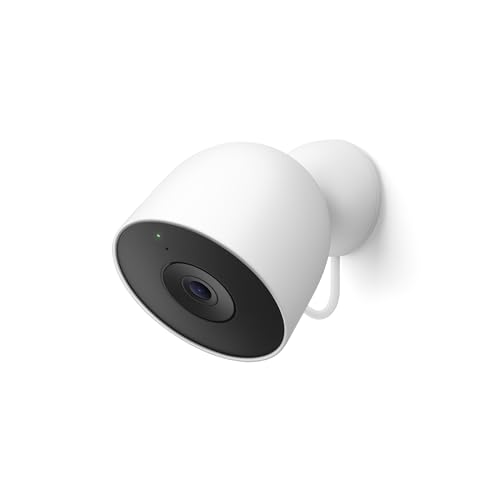
Google Nest Cam Outdoor (2nd Gen)
Features HDR video and cloud‑based storage, plus a 152° diagonal view, setting it apart from the Reolink and Arlo options.
Also considered
TL;DR: The TP‑Link Tapo C110 delivers 2K indoor video, 30‑ft night vision and two‑way audio for just $21.99, making it a compact, budget‑friendly security option.
At the heart of the C110 is a 2K (3 MP) sensor paired with a 3.83 mm lens and an F/2.4 aperture, producing clear 2304 × 1296‑pixel video. Night vision reaches 30 ft (9 m) thanks to an 850 nm IR LED, and the camera records at a steady 15 fps. Weighing only 0.15 lb and measuring 54.6 mm × 98.8 mm × 67.6 mm, it’s small enough to sit discreetly on a shelf or mount in a corner.
Compared with the other ten cameras in this roundup, the C110 is markedly cheaper than the Arlo Essential 2K and the Reolink RLC‑520A, and it’s lighter than the Reolink model, which tips the scales at several pounds. Its footprint is also more compact than the bulkier Wyze Floodlight Camera v2 and Google Nest Cam Outdoor, which both have larger dimensions. While it lacks the HDR support found on the Arlo Essential, the C110 still offers a solid set of features for its price tier.
Customers consistently note the crisp 2K picture and the reliability of the built‑in siren and two‑way audio, calling the setup “quick” and the push notifications “helpful.” Professional reviewers echo this sentiment, highlighting the camera’s effective night vision and budget‑friendly price. The most common criticism points to the 2.4 GHz‑only Wi‑Fi band, which can limit bandwidth in crowded networks, and the fixed 15 fps frame rate, which feels less smooth than higher‑rate rivals. Additionally, the device does not include advanced AI person detection or a spotlight.
Beyond video, the C110 supports smart detection and activity zones, stores footage locally on a microSD card up to 256 GB or via Tapo Care’s 30‑day cloud history, and encrypts traffic with WPA/WPA2‑PSK and 128‑bit AES. It integrates with Alexa and Google Assistant, letting you view live streams through voice commands. Video compression uses H.264 to keep bandwidth modest, and the wired 5 V DC power source ensures continuous operation without battery concerns.
Pros
Cons
Best for: Budget-conscious buyers seeking a reliable entry‑level option — the TP‑Link Tapo C110 offers Frame Rate: 15 fps
Avoid if: You need advanced AI detection, 5 GHz Wi‑Fi, or professional‑grade performance
TL;DR: The Aosu Security Camera delivers 2K QHD video, a 166° ultra‑wide view and up to a year of battery life on low activity, all without a monthly subscription.
The kit’s headline spec is its true 2K QHD resolution paired with a 166° field of view, captured through a seven‑lens ultra‑clear array. Each camera runs on a 5200 mAh rechargeable battery that can stretch to 240‑360 days when activity is low, and the system stores footage locally on a 32 GB encrypted HomeBase.
Compared with the other ten models, Aosu’s field of view is wider than the Google Nest Cam Outdoor’s 152° diagonal and the Arlo Essential’s 130°. Its 2K video matches the Nest and Arlo units, though it sits below the Reolink RLC‑520A’s 5‑megapixel sensor. The price point sits above the Wyze Floodlight Camera v2 but below the higher‑priced Reolink TrackMix, while the two‑camera setup gives more coverage than many single‑camera competitors.
Reviewers consistently praise the crisp 2K picture and the full‑color spotlight that turns night scenes into identifiable color video. Users also like the subscription‑free model and the ease of setting up activity zones. On the downside, the system relies on 2.4 GHz Wi‑Fi, which some find limiting in larger homes, and heavy motion or frequent live‑view checks can shorten the battery run‑time. A few owners have mentioned occasional app hiccups when syncing multiple cameras.
Pros
Cons
Best for: Most users looking for a well‑reviewed, reliable mainstream option — the Aosu Security Camera offers Field of View: 166°
Avoid if: You need constant 24/7 recording in high‑traffic areas or require 5 GHz Wi‑Fi connectivity
“Battery lasts months”
“Clear 2K color night vision lights up intruders”
TL;DR: The Wyze Floodlight Camera v2 delivers 2K HD video, 2800‑lumens adjustable floodlights, a 160° field of view, and up to 256 GB local storage for $99.98, making it a solid budget‑friendly outdoor security option.
The standout spec is its 2K HD camera paired with a 160° field of view and color night vision, letting you see details even after dark. The unit packs two LED panels that can output 2800 lm at a 5000 K color temperature, and the adjustable heads let you direct light across a 270° motion‑activated coverage area.
At $99.98 it sits in the mid‑range of this eleven‑product lineup—pricier than the ultra‑budget TP‑Link Tapo C110 but cheaper than the Reolink TrackMix. It weighs 1252 g (about 2.76 lb), making it lighter than the Reolink RLC‑520A (≈3.59 lb) yet noticeably heavier than the feather‑light Tapo C110 (≈0.15 lb). With IP65 protection, hardwired 110‑120 V AC power, and Wi‑Fi 2.4 GHz connectivity, it offers more ruggedness and feature depth than many battery‑run rivals.
Professional reviewers highlight the crisp 2K resolution and the convenience of up to 256 GB local recording, which avoids monthly fees. Everyday users appreciate the app‑driven customization, but several note that the floodlights feel dimmer than the advertised 2800 lm, especially compared to older Wyze models. The PIR‑only motion sensor can occasionally miss close‑range movement, leading to occasional false or missed alerts.
Beyond the core camera, the unit includes a 105 dB siren and two‑way talk microphone for real‑time deterrence, ambient light mode that activates low‑level lighting when it gets dark, and dusk‑to‑dawn automation that turns the floodlights on at sunset and off at sunrise. Smart‑assistant compatibility with Alexa and Google Assistant adds voice‑control convenience.
Pros
Cons
Best for: Budget-conscious buyers seeking a reliable entry-level option — the Wyze Floodlight Camera v2 offers Field of View: 160°
Avoid if: You want the best value-per-dollar in its price range
TL;DR: The Reolink TrackMix delivers 4K video, a 355° pan, 90° tilt, and 190 ft night vision for $189.99, making it a solid mid‑range PTZ camera with robust smart features.
This camera packs a 4K UHD sensor and streams at 25 fps, so you get crisp detail even when the lens zooms. Its dual‑lens design swings a full 355° horizontally and 90° vertically, while the built‑in spotlight and siren add active deterrence. The infrared plus color night vision reaches up to 190 ft, and the unit weighs about 4.3 lb, giving it a sturdy feel for outdoor mounting.
Compared with other picks in this roundup, TrackMix is heavier than the Google Nest Cam Outdoor (≈1.9 lb) but offers a far wider field of view than the Arlo Pro 2K HDR’s 160°. It also includes a built‑in spotlight and siren that the Arlo model lacks, and its PoE wiring avoids the battery‑life concerns of battery‑only cameras like the Aosu Security Camera.
Professional reviewers praise the smooth 25 fps high‑resolution stream and note that the unboxing and setup feel straightforward thanks to the wired PoE connection. Users appreciate the smart detection of people, vehicles and pets, as well as the ability to set activity zones in the Reolink app. The camera’s IP66 rating means it can handle rain and dust without a fuss.
Pros
Cons
Best for: Most users looking for a well‑reviewed, reliable mainstream option — the Reolink TrackMix offers Frame Rate: 25 fps
Avoid if: You're shopping on a tight budget — it's priced at $189.99
TL;DR: The Reolink RLC‑520A delivers 5 MP video at 30 fps with 100‑foot IR night vision for $89, offering solid DIY PoE setup and reliable indoor/outdoor coverage.
What really stands out is the 5 MP (2560×1920) sensor paired with a main‑stream frame rate of 30 fps, giving you crisp, fluid footage. The camera’s 18 IR LEDs illuminate up to 100 feet (0 lux with IR), so you can see clear detail even in total darkness.
Compared with other models in this roundup, the RLC‑520A’s 80° horizontal view is narrower than the Wyze Floodlight Camera v2’s 160° and the Arlo Essential 2K’s 130°, but it’s also heavier than Wyze’s 1252 g body. It lacks the HDR support that the Arlo Essential boasts, and its fixed dome design means you can’t pan or tilt after installation, unlike the TrackMix which offers a 355° pan range. On the flip side, its 30 fps main stream outpaces the TP‑Link Tapo C110’s 15 fps and its IR range far exceeds the Tapo’s 30‑foot claim.
Users consistently praise the straightforward PoE plug‑and‑play installation and the detailed night‑vision performance, noting that the camera “just works” once the Ethernet cable is in place. Professional reviewers point out the benefit of 3D DNR and digital WDR for balanced exposure, and they commend the ONVIF v2.1 compatibility for integration with other smart‑home hubs. The main trade‑off highlighted by the community is the lack of Wi‑Fi, which limits placement flexibility for those who prefer wireless setups.
Pros
Cons
Best for: Budget-conscious buyers seeking a reliable entry‑level option — the Reolink RLC‑520A offers Frame Rate: Main stream: 30fps; Sub stream: 7fps
Avoid if: You want the best value‑per‑dollar in its price range
TL;DR: The Reolink Argus PT Ultra delivers 4K detail, 355° pan, 140° tilt, and solar‑ready wireless power for $629.99, but its 15 fps limit and mid‑range rating keep it from being a flawless pick.
What really stands out is the 355° pan and 140° tilt range, letting you sweep a large outdoor area without moving the unit. Coupled with a 6.0‑inch cubic form factor (6.0 in × 6.0 in × 6.0 in) and a lightweight 335 g body, the camera is easy to mount on a wall or pole and still covers most angles you’ll need.
In the 11‑camera lineup, the Argus PT Ultra is considerably lighter than the Reolink RLK8‑800PT4, which tips the scales at 15.6 pounds, and it offers a broader tilt angle than the TrackMix’s 90°. Its pan range matches the RLK8‑800PT4’s 355°, giving it comparable coverage while staying far more portable.
User chatter highlights the crisp 4K footage and the convenience of solar‑powered, wireless installation. Reviewers love the built‑in spotlight and siren that add deterrence without a subscription, but a few note occasional Wi‑Fi drops in weak signal zones and wish the 15 fps frame rate were smoother. Professional reviewers also point out the solid H.265 compression that keeps file sizes manageable.
Pros
Cons
Best for: Those prioritizing quality and willing to pay for premium performance — the Reolink Argus PT Ultra offers Frame Rate: 15fps
Avoid if: Reliability and user satisfaction are your top concerns
TL;DR: The Google Nest Cam Outdoor (2nd Gen) delivers 2K HDR video, 152° FoV and 20 ft night‑vision for $144.97, but its cloud‑storage subscription can add to the cost.
The standout spec is its 2K (2560×1440) HDR video at 30 FPS, paired with a 152° diagonal field of view and 6× digital zoom. Night‑vision is handled by two 850 nm infrared LEDs that see up to 20 ft (6.1 m) in total darkness, giving you clear footage around the clock.
At roughly 1.90 lb, the Nest Cam is lighter than the Aosu Security Camera (2.67 lb) and considerably lighter than the Reolink TrackMix (over 4 lb). Its 152° view is narrower than Aosu’s 166° and Wyze Floodlight Camera v2’s 160°, but it’s wider than the Arlo Essential 2K’s 130° and far broader than the Reolink RLC‑520A’s 80° view. Price‑wise it sits above the budget‑focused Reolink RLC‑520A and below the premium Arlo Pro 2K HDR, placing it solidly in the mid‑range tier.
Reviewers consistently praise the camera’s crisp 2K footage and the ease of setting up the wired unit. Users love the AI‑driven alerts for people, vehicles and animals, and the activity‑zone feature that reduces false alarms. The main complaint is the reliance on a subscription for any extended video history beyond the free 6 hours of event clips, which some owners find limiting.
From a technical standpoint, the cam needs a minimum network speed of 3.3 Mbps and secures streams with 128‑bit AES encryption plus TLS/SSL. It runs on a 12 V, 0.75 A wired connection with an 18‑ft (5.5 m) cable, and its housing contains 26 % recycled materials while meeting an IP65 weather‑resistance rating. Activity zones and on‑device AI keep alerts relevant, and it integrates with Google Home and Alexa for voice‑assistant control.
Pros
Cons
Best for: Most users seeking a balanced, mainstream option — the Google Nest Cam Outdoor (2nd Gen) offers Field of View: 152° diagonal.
Avoid if: You're shopping on a tight budget — it's priced at $144.97 and relies on a subscription for full video history.
TL;DR: The Arlo Pro 2K HDR delivers 2K HDR video with a 160° field of view and a swappable battery that lasts 345 600 minutes, but its premium price and required subscription may deter budget‑focused buyers.
The camera’s standout spec is its 160° field of view, paired with a 2560 × 1440 pixel 2K HDR sensor that records crisp video day and night. Its battery is rated for 345 600 minutes per charge, and the swappable design lets you replace it without tools.
Compared with other models in this roundup, the Arlo’s 160° view exceeds the 152° diagonal view of the Google Nest Cam Outdoor and the 80° horizontal angle of the Reolink RLC‑520A, giving you broader coverage per mount. Resolution-wise it matches the Nest Cam’s 2K output, while many budget options list narrower angles or lower resolutions.
Professional reviewers note the camera maintains sharp HDR quality across its wide view and praise the dual night‑vision modes for low‑light reliability. Users appreciate the eight‑month‑ish battery endurance and the convenience of a tool‑free battery swap. However, the need for an Arlo Secure subscription to unlock AI detections, video history and emergency response is a common complaint, and the price sits at the higher end of the segment.
The unit connects via dual‑band Wi‑Fi, supports two‑way audio, and includes a built‑in siren for deterrence. AI intelligence provides person detection, custom alerts, geofencing and event captions, while low‑power mode helps stretch battery life even further.
Pros
Cons
Best for: Those prioritizing quality and willing to pay for premium performance — the Arlo Pro 2K HDR offers Field of View: 160°.
Avoid if: You have a tight budget, need local storage without a subscription, or prefer a lower‑priced entry‑level camera.
TL;DR: The Arlo Essential 2K delivers crisp 2K HDR video and a 130° field of view at a budget‑friendly price, but it leans on a subscription for cloud storage.
What really stands out is the 2K (2560×1440) HDR video paired with a built‑in spotlight and color night vision, letting you see clear detail around the clock. The camera’s 130° field of view captures more of the room than many entry‑level rivals, and the wired power source means you won’t have to worry about dead batteries during a night‑time alert.
When you line it up against the other ten cameras in this roundup, the Arlo Essential 2K is more affordable than the Reolink RLC‑520A, yet it offers a wider 130° view compared with Reolink’s 80° angle. Its 2K resolution also outstrips the lower‑resolution TP‑Link Tapo C110, while the Wyze Floodlight Camera v2 provides a broader 160° view—so you trade a bit of coverage for sharper detail. Compared with the Aosu Security Camera’s 166° view, the Arlo is a bit narrower, but it keeps the price modest.
Users consistently praise the camera’s sharp daytime footage and the convenience of smart detection that flags people, vehicles, pets and packages. Reviewers also like the activity‑zone feature that lets you focus alerts on specific areas. On the downside, the system requires a subscription for cloud video history, and several owners report that the app can feel glitchy and that video quality suffers on weak Wi‑Fi connections. Professional reviewers echo the praise for HDR clarity but note the same subscription hurdle.
The Arlo Essential 2K runs on dual‑band Wi‑Fi (2.4 GHz and 5 GHz), supports HDR, and stores up to 60 Days of video in the cloud. Smart detection, activity zones, and an integrated spotlight round out a feature set that feels robust for a camera that ships in a 2‑camera package.
Pros
Cons
Best for: Entry‑level buyers or those on a tight budget — the Arlo Essential 2K offers a 130° field of view and 2K HDR clarity without a high price tag.
Avoid if: You need advanced smart‑home integration, a fully subscription‑free solution, or the widest possible field of view.
TL;DR: The Reolink RLK8-800PT4 delivers 4K 8MP video, 355° pan and 50° tilt, AI‑driven tracking and up to 16 TB storage for $689.99, but its premium price may deter budget‑focused buyers.
What sets this system apart is its 4K 8MP (3840 × 2160 pixels) resolution paired with a 355° pan and 50° tilt range, giving you almost full‑circle coverage from each of the four PTZ cameras. The lenses are fixed at 4 mm with an F1.6 aperture, and the built‑in 3000K spotlight adds color night vision, keeping details clear even after dark.
Compared with the other ten entries, the RLK8‑800PT4 sits at the higher end of the price spectrum, outpricing the Reolink Argus PT Ultra and the Aosu Security Camera. It matches the Arlo Ultra 4K HDR’s 8 MP sensor but adds eight PTZ channels and 64 preset points, which most competitors lack. While the Google Nest Cam Outdoor offers a compact design, the RLK8‑800PT4’s 13.4‑inch height, 15.9‑inch length and 15.6‑pound weight make it a more substantial, wired installation.
Users repeatedly praise the auto‑tracking AI that follows people, vehicles and animals, calling it a reliable “outdoor guardian.” Professional reviewers highlight the system’s ability to maintain crisp 4K imagery in low‑light conditions thanks to the spotlight and IR/color night vision blend. The only recurring complaint is the higher upfront cost relative to lower‑resolution, battery‑powered alternatives.
Pros
Cons
Best for: Those prioritizing quality and willing to pay for premium performance — the Reolink RLK8-800PT4 offers Resolution: 4K 8MP (3840 × 2160 pixels)
Avoid if: You're on a tight budget or only need basic functionality
“like an outdoor Guardian keeping an eye over you”
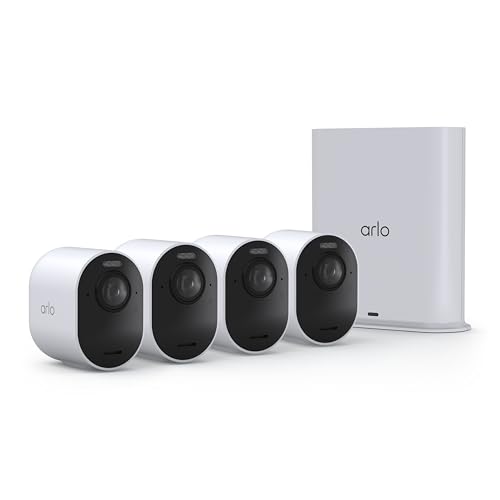
TL;DR: The Arlo Ultra 4K HDR delivers true 4K HDR video at 24 fps with a 180° field of view and built‑in spotlight, but its $499.99 price and subscription‑locked cloud storage make it a premium‑only choice.
What really sets this kit apart is the 3840 × 2160 (4K HDR) sensor paired with an 8 MP sensor and a 24 fps frame rate, giving you crystal‑clear detail even in challenging lighting. The ultra‑wide 180° field of view captures more of a scene than the 125° diagonal view of the Reolink Argus PT Ultra, while the 12× digital zoom and auto‑zoom tracking add a level of precision you rarely see in wireless cameras.
At $499.99, the Ultra is cheaper than the Reolink Argus PT Ultra ($629.99) and the Reolink RLK8‑800PT4 ($689.99), yet it sits above budget‑friendly options like the Google Nest Cam Outdoor ($144.97). Its 4.1/5 star rating trails the 4.5/5 rating of the Nest Cam, but it outpaces the 4.0/5 rating of the Argus PT Ultra in raw resolution and field‑of‑view breadth. Compared with the Arlo Pro 2K HDR, the Ultra adds true 4K HDR, a wider view, and a built‑in spotlight while keeping a similar wireless, battery‑powered design.
Users consistently praise the vivid 4K footage and the ease of setting up the Arlo Secure app, noting that the 180° view makes it simple to monitor large outdoor areas. Professional reviewers highlight the auto‑zoom and tracking as a breakthrough for wire‑free 4K cameras, and the dual‑band 2.4 GHz/5 GHz Wi‑Fi plus SmartHub integration are called reliable for low‑latency streaming. On the downside, many owners mention that the rechargeable battery drains noticeably when the spotlight and 4K recording run together, and the full‑resolution cloud storage plus advanced smart alerts stay behind a $17.99/month subscription after the one‑month trial.
The Ultra also earns points for its IP65 weather rating, built‑in spotlight, two‑way audio, smart detection of people, vehicles and packages, and activity‑zone configuration. HDR support and color night vision extend detail into low‑light conditions, while the required SmartHub provides local storage for those who prefer to keep footage on‑premises.
Pros
Cons
Best for: Tech‑savvy homeowners and small businesses that need premium, wire‑free 4K coverage – the Arlo Ultra 4K HDR offers Frame Rate: 24 fps
Avoid if: You're shopping on a tight budget – it's priced at $499.99
“Crystal-clear 4K video, wide FOV reducing blind spots, reliable motion alerts, and easy setup with app.”
Breakdown
Reolink RLC-520A
Pros
Cons
Arlo Pro 2K HDR
Pros
Google Nest Cam Outdoor (2nd Gen)
Pros
Cons
Arlo Ultra 4K HDR
Pros
Cons
Based on scoring data and product specs
Personalized picks
Best Overall Pick
Reolink RLC-520A
Best OverallBest for: Budget-conscious buyers seeking a reliable entry-level option — the Reolink RLC-520A offers Frame Rate: Main stream: 30fps; Sub stream: 7fps
Arlo Pro 2K HDR
Best for: Those prioritizing quality and willing to pay for premium performance — the Arlo Pro 2K HDR offers Field of View: 160°
$219.99+$115.00 vs winner
Skip Reolink RLK8-800PT4 if…
You're on a tight budget or only need basic functionality
We’ve crowned the Reolink RLC‑520A as the top home‑security camera. Its 5 MP sensor delivers crisp 2560 × 1920 video, while the 80° field of view covers a wide area. The dome‑style unit is IP66‑rated for weather resistance, offers 30 meters of IR night vision, and includes true two‑way audio and smart detection without any subscription fees. At $89.24 it also carries a solid 4.6‑star rating from 724 reviewers.
The runner‑up is the Arlo Pro 2K HDR, which shines when you need a wireless, HDR‑capable solution for a larger yard. Its 160° field of view and 2560 × 1440 (2K) resolution capture detail from any angle, and the built‑in spotlight plus siren add extra deterrence. Powered by a swappable battery that lasts up to 345 600 minutes, it stays online without running cables, making it ideal for flexible outdoor placement.
For tighter budgets, the TP‑Link Tapo C110 delivers basic indoor coverage at just $21.99. If you prefer a solid mid‑range pick, the Google Nest Cam Outdoor (2nd Gen) at $144.97 offers reliable outdoor performance. And for a premium, feature‑rich system, the Reolink RLK8‑800PT4 at $689.99 provides high‑end PTZ capabilities for expansive property monitoring.
Pick the Reolink RLC‑520A today and secure your home with confidence.
The Reolink RLC‑520A costs $89.24, while the Arlo Pro 2K HDR is $219.99, a difference of about $130.75. Reolink delivers a 5 MP resolution and 30‑meter IR night vision without a subscription, whereas Arlo’s HDR and color night vision require a paid plan. For a wired, DIY‑friendly setup, Reolink gives premium‑grade video at a fraction of the price.
No reviews yet — be the first to share your experience.
Please sign in to leave a review


