⚡ Quick Answer
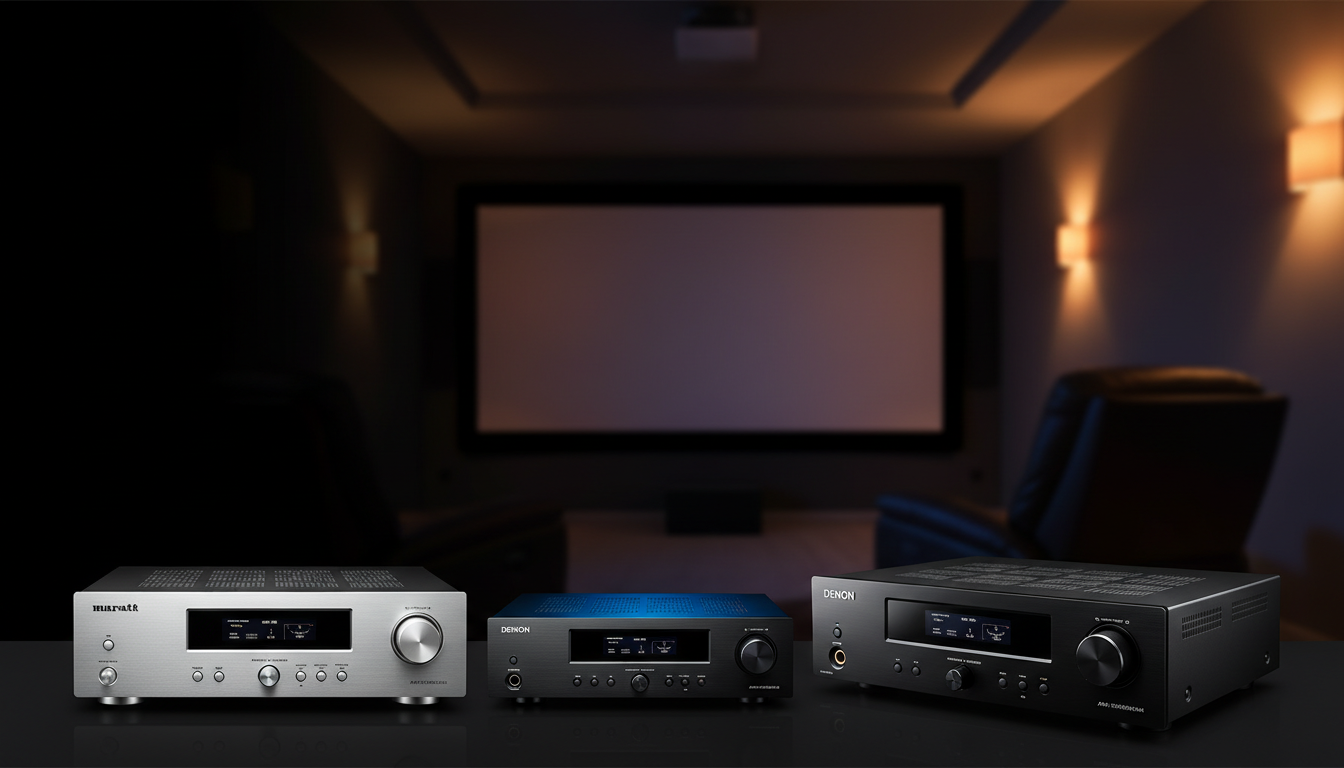
Choosing a home‑theater receiver with built‑in HEOS can feel overwhelming, so we narrowed it down to six options that span the whole market. At the budget end you’ll find the Denon AVR‑S670H for $599.00 and the ultra‑slim Marantz NR1510 Black at $700.00. The mid‑range tier includes the Denon AVR‑X1800H at $849.00 and the Marantz STEREO 70s, while the premium camp includes the Marantz Cinema 60 for $1,800.00 and the top‑priced Marantz Cinema 50 at $2,800.00.
All six models support HEOS multi‑room streaming, but they differ in power and feature sets. The Cinema 50 delivers 110 W per channel and carries a 4.4/5 rating from 41 reviewers, suitable for larger rooms. Meanwhile, the Denon AVR‑X1800H offers 80 W per channel and a 4.3/5 score from 1,086 reviews, appealing to gamers who need HDMI 2.1 video support. If space is at a premium, the Marantz NR1510 Black delivers 85 W per channel in a half‑height chassis while still earning a 4.4/5 rating from 304 reviewers.
Below is a breakdown of each receiver’s strengths, connectivity, and ideal room size to help match the right model to your listening environment.

Marantz Cinema 50
Its compact 404 mm depth packs premium sound and advanced HEOS features into a sleek chassis.

Denon AVR-X1800H
Ideal for mainstream users who want reliable performance, it costs $849—about $1,951 less than the Marantz Cinema 50, delivering strong value without sacrificing core features.

Denon AVR-S670H
With its 13.3‑inch depth you can fit a full‑feature receiver into tight spaces, and at $599 it offers entry‑level HEOS streaming without the larger chassis of the higher‑priced models.
Also considered
Score Analysis
Key score advantages vs. runner-up (Denon AVR-X1800H)
Price Range
Marantz Cinema 50
$2,800.00
Denon AVR-X1800H
$849.00
Denon AVR-S670H
$549.00

Marantz NR1510 Black
$700.00

Marantz Cinema 60
$1,800.00

Marantz STEREO 70s
$1,200.00
Spec Comparison
TL;DR: The Marantz Cinema 50 delivers 110 W per channel, 9.4‑channel surround, 8K video, and built‑in HEOS streaming, but its $2,800 price tags it as a premium‑tier home‑theater receiver.
This receiver packs 110 W per channel into 8 Ω (0.08% THD) and offers four independent subwoofer outputs, seven HDMI inputs and three HDMI outputs, plus Audyssey MultEQ XT32 calibration for a detailed, immersive soundstage.
Compared with the other five receivers in the roundup, the Cinema 50 is pricier than the Marantz Cinema 60 and the Denon AVR‑X1800H, and it weighs more than the Denon AVR‑X1800H (23.05 lb) and the Marantz STEREO 70s (24 lb). Its depth (404 mm) and height (165 mm) are more compact than the Cinema 60’s 440 mm depth and 300 mm height, while its width (442 mm) is narrower than the Cinema 60’s 550 mm chassis.
Reviewers consistently praise the HDAM circuitry for delivering “high detail and dynamic range” in music, and gamers appreciate the 8K/60 Hz video support with VRR, ALLM and QFT. The main complaints focus on the lack of composite or component video inputs and the relatively limited five analog audio inputs.
Under the hood, the unit uses a Class A/B amplifier with assignable bi‑amp drive, Gold‑plated RCA connectors, and a Clock Jitter Reducer. Network‑wise, it includes built‑in HEOS, AirPlay 2, Wi‑Fi and Bluetooth, making multi‑room streaming straightforward.
Pros
Cons
Best for: Audiophiles and enthusiasts seeking premium sound quality and advanced features
Avoid if: You're shopping on a tight budget — it's priced at $2,800.00
TL;DR: The Denon AVR‑X1800H packs 7.2‑channel Dolby Atmos, HDMI 2.1 (8K/60 Hz, 4K/120 Hz) and built‑in HEOS streaming into a 23.05‑lb chassis for about $850.
The standout spec is its HDMI 2.1 capability: six inputs, with three supporting 8K / 60 Hz and 4K / 120 Hz pass‑through, plus an eARC‑enabled output. Coupled with 80 W per channel into 8 Ω (two channels driven) and Audyssey MultEQ XT room calibration, it delivers a full‑featured 7.2‑channel platform that also handles high‑resolution FLAC, ALAC, WAV and DSD up to 5.6 MHz.
Compared with the other five receivers, the X1800H is heavier than the Marantz NR1510’s 17.99‑lb chassis and the Denon AVR‑S670H’s 20.69 lb body, yet lighter than the Marantz STEREO 70s at 24.0 lb. Its depth of 13.3 in (338 mm) is shallower than the Marantz Cinema 60’s 440 mm and Cinema 50’s 404 mm, while the width of 17.1 in (434 mm) is narrower than those models’ 550 mm and 442 mm frames. Power‑wise, 80 W per channel sits below the NR1510’s 85 W (6 Ω) and the Cinema 60/50’s 100‑110 W ratings, but it edges out the AVR‑S670H’s 75 W per channel.
Users consistently praise the seamless HEOS multi‑room streaming, the easy Audyssey setup, and the ability to add height virtualization without extra speakers. Professional reviewers highlight the discrete high‑current amplifiers and the future‑proof HDMI 2.1 suite, while also noting that power drops noticeably when the receiver drives all seven channels and that only three HDMI ports deliver the full 8K/60 Hz bandwidth, limiting flexibility for a heavily‑connected setup.
Beyond video, the receiver supports HDR10+, Dolby Vision, HLG, BT.2020 wide color gamut and 4:4:4 chroma subsampling. Gaming features like VRR, QFT and ALLM reduce latency, and voice control works with Alexa, Google Assistant, Siri and Josh.ai. Dual subwoofer outputs and a front‑panel headphone jack round out the connectivity options.
Pros
Cons
Best for: Budget‑conscious home‑theater enthusiasts with small‑to‑medium rooms who want a well‑reviewed, feature‑rich AV receiver.
Avoid if: You need professional‑grade power for large rooms, fully powered Zone 2 speaker outputs, or more HDMI ports with full 8K bandwidth.
TL;DR: The Denon AVR‑S670H packs 75 W per channel, 5.2‑channel sound and 8K UHD video passthrough into a compact 13.3‑inch‑deep chassis, making it a solid entry‑level hub for small‑to‑medium rooms.
The standout feature is the 8K UHD video passthrough paired with 75 watts per channel into 8 Ω and a 5.2‑channel amplifier configuration. Audyssey MultEQ auto‑setup handles room calibration, while built‑in Wi‑Fi, AirPlay and Bluetooth let you stream HEOS, Spotify or TIDAL without extra gear. The unit measures 13.3 inches deep, 6.0 inches high and 17.1 inches wide, weighing 20.69 pounds.
Compared to the other five receivers in this roundup, the S670H is heavier than the Marantz NR1510, but shares the same depth and width as the higher‑priced Denon AVR‑X1800H. Its 75 W per channel is a touch lower than the X1800H’s 80 W, and the 5.2‑channel layout offers fewer speakers than the X1800H’s 7.2‑channel system. The Marantz STEREO 70s tips the scales at 24 pounds, making the Denon a more manageable size for tight spaces.
Users consistently praise the receiver’s straightforward setup and the convenience of the HEOS app, noting that the mobile remote makes integration painless. Professional reviewers highlight the reliable 8K/3D‑audio performance and the effectiveness of Audyssey calibration in modest‑sized rooms. The most common criticism focuses on the 75 W power rating, which some say falls short for large rooms or bass‑heavy speakers, and the limited channel count that blocks a full Dolby Atmos expansion.
The S670H supports Dolby TrueHD, DTS HD Master Audio, Dolby Digital, DTS, DTS 96/24 and high‑resolution PCM up to 192 kHz / 24‑bit. It also includes two optical and one coaxial digital inputs, a USB port, and voice‑control compatibility with Alexa and other major agents, giving you a well‑rounded feature set without the clutter of extra HDMI ports that aren’t listed.
Pros
Cons
Best for: Budget-conscious buyers seeking a reliable entry-level option
Avoid if: You need a large‑room system or full 7.1/9.1 Atmos expansion
TL;DR: The Marantz NR1510 offers an ultra‑slim 5.2‑channel receiver with 6 HDMI inputs, HEOS streaming and 85 W per channel power in a compact 104 mm tall chassis for $700.
The NR1510’s most eye‑catching spec is its ultra‑slim half‑height design – a depth of 368 mm, a height of just 104 mm and a weight of 17.99 lb, making it easy to fit into shallow racks while still housing a 5‑channel discrete amplifier that delivers 85 W (single‑channel) and 100 W at 10 % THD.
Compared with the other five receivers in this roundup, the NR1510 is lighter than the Denon AVR‑S670H (20.69 lb) and the Denon AVR‑X1800H (23.05 lb), and its height sits noticeably lower than the Denons’ 6.0 inches. Its depth of 368 mm is a bit deeper than the Denons’ 13.3 inches, but it still beats the taller Marantz Cinema 60 (300 mm) and Cinema 50 (165 mm). Power‑wise, the NR1510’s 85 W single‑channel output tops the Denon AVR‑S670H’s 75 W and the AVR‑X1800H’s 80 W per channel, though its 50 W per channel into 8 Ω on 2‑channel mode is lower than the Denon’s 75 W figure.
User feedback averages 4.4 / 5 stars from 304 reviews, with owners praising the compact chassis, the full set of modern connections and the built‑in HEOS multi‑room streaming. A recurring theme is that the 50 W per channel into 8 Ω can feel modest in larger rooms, and the 5.2‑channel layout limits expansion to 7.1 or higher surround formats.
Beyond the size, the NR1510 packs dual‑band Wi‑Fi (2.4 GHz / 5 GHz), AirPlay 2, Alexa/Google/Apple voice control, and support for DSD up to DSD5.6 MHz. Video‑side, it handles 4K UHD, HDR (including Dolby Vision), and eARC. Power consumption stays low with 0.2 W standby, 0.5 W CEC standby and 3.7 W network control, while the signal‑to‑noise ratio sits at 98 dB.
Pros
Cons
Best for: Apartment or condo owners who want a full‑featured AV receiver that fits a shallow rack.
Avoid if: You need 7.1‑channel surround or higher per‑channel power for a large listening space.
TL;DR: The Marantz Cinema 60 packs 100 W per channel, HDMI 2.1 support for 8K/60 Hz and 4K/120 Hz, and built‑in Audyssey MultEQ XT, making it a strong premium AV receiver for medium‑size home theaters.
The Cinema 60 delivers 100 W per channel into 8 Ω and powers seven channels, giving you a solid 5.1.2 Dolby Atmos or DTS:X setup. Its HDMI matrix includes six inputs and two outputs, all HDMI 2.1, so you can pass through 8K @ 60 Hz video and 4K @ 120 Hz gaming signals. Two independent subwoofer outputs and a detachable C17 power cable round out the connectivity, while Audyssey MultEQ XT handles room correction.
Compared with the Marantz Stereo 70s, which also lists 100 W per channel but only drives two channels, the Cinema 60 adds seven powered channels and a full HDMI 2.1 suite. It’s noticeably wider than the Stereo 70s’s 17.4‑inch width and deeper than the Denon AVR‑X1800H’s 13.3‑inch (338 mm) depth. Its 100 W per channel also exceeds the 80 W per channel of the Denon AVR‑X1800H, while the higher‑output Marantz Cinema 50 pushes 150 W but sits in a higher price tier.
Professional reviewers praise the “sweet‑spot performance for 5.1.2 Atmos” and note the full-featured HDMI 2.1 matrix as a gaming advantage, with ALLM, VRR and QFT support. Users appreciate the HEOS integration and the ability to power a stereo Zone 2 for whole‑home audio. The most common criticism is the seven‑channel power limit, which prevents 7.1.4 or larger Atmos configurations, and the lack of a dedicated 7.1 multichannel input.
Pros
Cons
Best for: Home‑theater enthusiasts with medium‑sized rooms who want premium sound, robust HDMI 2.1 features, and integrated multi‑room streaming.
Avoid if: You need more than seven powered channels, a dedicated 7.1 input, or are working with a very tight budget.
TL;DR: The Marantz STEREO 70s delivers 75 W per channel into 8 Ω with a discrete Class A/B amp, six HDMI inputs and built‑in HEOS, but its $1,200 price and 2‑channel focus may limit home‑theater ambitions.
The standout spec is the 75 W RMS power into 8 Ω paired with a mere 0.08 % THD, coming from a discrete Class A/B architecture that professional reviewers applaud for clean, high‑power stereo performance. An OLED front panel shows source and status at a glance, while the receiver supports 192 kHz DAC sample rates and DSD up to 5.6 MHz, covering most high‑resolution formats.
At 24.0 pounds, the STEREO 70s is heavier than the Denon AVR‑X1800H (23.05 lb) and the Marantz NR1510 (≈18 lb), yet lighter than the high‑end Marantz Cinema 50 (≈29.8 lb). Its 15.2‑inch depth and 4.3‑inch height make it slimmer than many 6‑inch‑high Denon models, while the 17.4‑inch width matches the typical rack‑mount footprint of its peers. Power‑wise, it equals the Denon AVR‑S670H’s 75 W per channel, exceeds the NR1510’s 60 W into 8 Ω, but falls short of the Denon X1800H’s 80 W per channel.
User feedback repeatedly mentions the convenience of six HDMI inputs—three of them 8K‑ready—plus two dedicated subwoofer outputs and a moving‑magnet phono stage for vinyl lovers. Reviewers also note the integrated HEOS platform, Wi‑Fi and Bluetooth as modern touches that simplify multi‑room streaming. The included RC‑052SR remote and on‑screen setup assistant help beginners get up and running without a steep learning curve.
Pros
Cons
Best for: Listeners with limited cabinet space who prioritize high‑quality two‑channel music playback, especially those who value vinyl and multi‑room streaming.
Avoid if: You need advanced surround‑sound features, a lower‑priced entry point, or professional‑grade performance for large‑room home‑theater installations.
Breakdown
Marantz Cinema 50
Pros
Cons
Denon AVR-X1800H
Pros
Denon AVR-S670H
Pros
Marantz NR1510 Black
Pros
Cons
Based on scoring data and product specs
Personalized picks
Best Overall Pick
Marantz Cinema 50
Best OverallBest for: Audiophiles and enthusiasts seeking premium sound quality and advanced features
Denon AVR-X1800H
Best for: Most users looking for a well-reviewed, reliable mainstream option
$849.00-$1,951.00 vs winner
Skip Marantz STEREO 70s if…
You need advanced features or professional-grade performance
Marantz’s Cinema 50 takes the top spot with a blend of power and precision: it delivers 150 W per channel into 6 Ω, supports nine powered channels, and offers four independent subwoofer outputs. Audyssey MultEQ XT32 room correction and built‑in HEOS streaming round out the feature set, while a 4.4‑star rating from 41 reviewers and a five‑year warranty underline its reliability.
The Denon AVR‑X1800H lands as the runner‑up, perfect if you need a gaming‑ready hub. It handles 4K @ 120 Hz and 8K @ 60 Hz pass‑through, and includes VRR, QFT and ALLM for smooth play, all backed by 7.2‑channel support and 80 W per channel into 8 Ω. Its 4.3‑star rating from 1,086 reviews and a $849.00 price make it a strong, affordable alternative.
For tighter budgets, the Denon AVR‑S670H at $599.00 offers essential HEOS multi‑room streaming and solid performance at entry‑level pricing. If you want a mid‑range option that still packs advanced video features, the AVR‑X1800H (already highlighted) provides the best balance of gaming capabilities and future‑proof HDMI support.
Choose the Marantz Cinema 50 for a highly capable home‑theater receiver.
The Marantz Cinema 50 supports 8K @ 60 Hz and 4K @ 120 Hz video pass‑through and can upscale lower‑resolution content to 8K, giving it the most advanced video pipeline in the lineup. The Denon AVR‑X1800H also passes 8K @ 60 Hz and 4K @ 120 Hz but lacks the dedicated upscaling engine, so the Cinema 50 leads on video capabilities.
No reviews yet — be the first to share your experience.
Please sign in to leave a review