⚡ Quick Answer
We compared 11 home‑theater systems that bundle a wireless subwoofer or rear speakers, spanning a price range from $149.99 for the TCL Alto 5+ up to $2,698.00 for the Sony BRAVIA Theater Quad. Every model carries a 4‑plus star rating, with the TCL and Polk Signa S4 both sitting at 4.4 / 5 from more than 9,000 and 24,000 reviews respectively, indicating broad consumer approval.
The lineup splits neatly into three price tiers. Budget‑focused options include the $149.99 TCL Alto 5+, the $179.99 Hisense HS5100, the $196.99 LG S40TR, and the $259.99 Hisense AX3120Q, each offering a wireless subwoofer and high ratings. Mid‑range picks such as the $356.04 Polk Signa S4 (with a 5.9‑in subwoofer driver) and the $379.95 JBL Bar 2.1 Deep Bass MK2 deliver stronger bass and higher‑fidelity soundbars. Premium choices – the $499.00 Klipsch Flexus CORE 210, the $769.00 Polk MagniFi Max AX SR, the $899.95 JBL Bar 1000, and the $2,698.00 Sony BRAVIA Theater Quad – bring expansive driver arrays, higher power outputs and advanced Dolby Atmos or DTS:X processing.
Next, we’ll break down each system’s strengths, driver configurations and connectivity so you can match the right package to your living‑room size and listening habits.
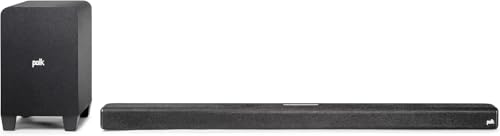
Polk Audio Signa S4
Its 2.6‑in elevation driver delivers immersive soundstage, underpinning its strong value, rating, and feature set that resonated with most users.

TCL Alto 5+
Ideal for budget‑conscious buyers, it's $149.99—about $206 cheaper than the Best Overall model, while still offering solid value and features.

Polk Audio MagniFi Max AX SR
It's equipped with a 76 mm mid‑woofer, delivering deeper bass that the other picks lack, positioning it for buyers ready to invest in premium home‑theater performance.
Also considered
Score Analysis
Key score advantages vs. runner-up (TCL Alto 5+)
Price Range
Polk Audio Signa S4
$449.00
TCL Alto 5+
$149.99
Polk Audio MagniFi Max AX SR
$769.00
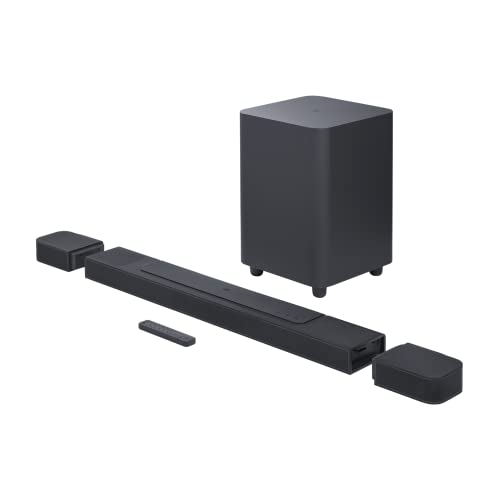
JBL Bar 1000
$699.00
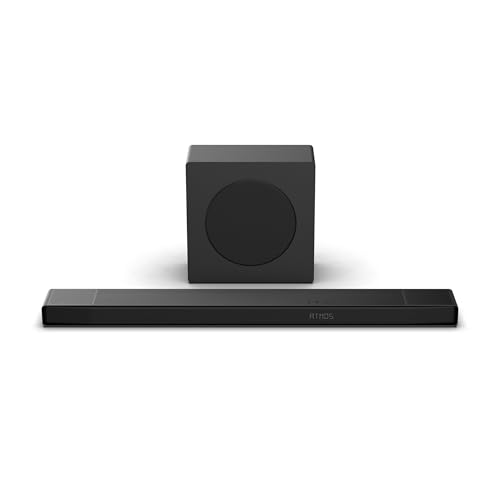
Hisense AX3120Q
$259.99

JBL Bar 2.1 Deep Bass MK2
$379.95
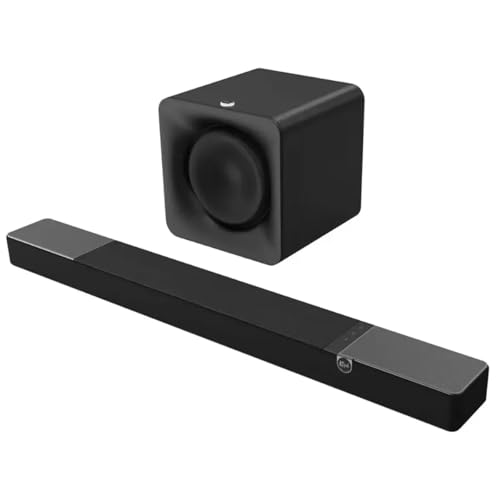
Klipsch Flexus CORE 210
$499.00

Sony BRAVIA Theater Quad
$2,698.00

LG S40TR
$226.99

Hisense HS5100
$169.99
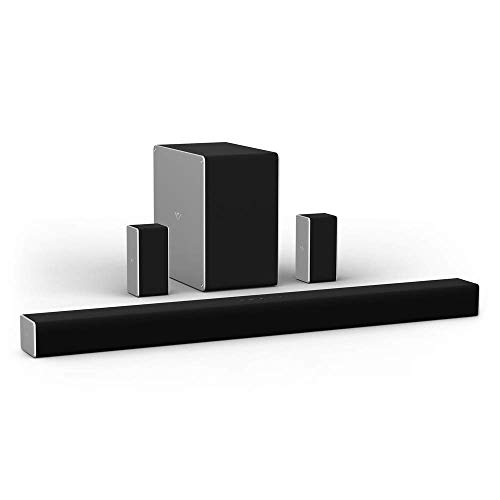
Vizio SB36514-G6
$349.99
Spec Comparison
TL;DR: The Polk Audio Signa S4 delivers Dolby Atmos immersion with a 410 W output, a 15000 mm subwoofer driver and wireless sub, all for $356.04, though it lacks a standard HDMI input.
The Signa S4 packs a seven‑driver array—including a 1 in center driver, 2.6 in elevation drivers and a 5.9 in (15000 mm) subwoofer driver—into a slim 3.7‑in deep bar that weighs 19.0 lb. Its total power output of 410 W and Dolby Atmos support give it a six‑channel sound experience that fills a typical living‑room.
Compared with its peers, the Signa S4 is lighter than the JBL Bar 2.1 Deep Bass MK2 (22.0 lb) but a touch heavier than the Hisense AX3120Q (18.3 lb). Its subwoofer driver is a bit smaller than the 6.5‑in drivers used by JBL and Hisense models, yet still larger than many ultra‑compact bars, and the sub itself weighs 13.2 lb.
Users praise the wireless sub’s “room‑shaking” bass and the VoiceAdjust feature that lifts dialogue clarity, especially for movies and sports. Professional reviewers note the strong bass power and clear highs from the PEI dome tweeters, while also pointing out that the lack of a regular HDMI input can limit direct 4K Blu‑ray connections. The BassAdjust control helps tame the strong low‑end, but some owners find the subwoofer’s weight makes placement a bit of a chore, and some users report Bluetooth dropouts.
Pros
Cons
Best for: Budget‑conscious viewers with 40‑55″ TVs in apartments or bedrooms who want Dolby Atmos immersion.
Avoid if: You have limited desk space, need a lightweight subwoofer, or require a dedicated HDMI input for 4K Blu‑ray playback.
“huge soundstage”
“powerful bass that rumbles behind couch”
TL;DR: The TCL Alto 5+ pairs a 31.5‑in wide soundbar with a wireless 5‑in subwoofer for solid bass at a $149.99 price, though the bass can get a bit boomy at high volumes.
The standout spec features a 5 in subwoofer driver and a compact soundbar measuring 31.5 in wide, 2.6 in high and 3.3 in deep. Weighing 9.5 lb, the system is sturdy enough for a TV stand yet still portable for a quick room rearrange. The package includes a wall‑mount kit and Roku TV integration, letting you upgrade audio without extra hardware.
Compared with the other ten entries, the Alto 5+ is heavier than the Hisense HS5100 (which tips the scales at about 3.5 lb) but lighter than the LG S40TR’s 12.9 lb build. At $149.99, it lands in the budget tier, making it less expensive than higher‑priced options like the Polk Audio Signa S4 or JBL Bar 2.1 Deep Bass MK2, while still offering a wireless subwoofer that many rivals lack.
Professional reviewers note the “strong bass presence” from the 5‑in subwoofer, especially for movie explosions and music low‑end, and they praise the hassle‑free setup thanks to the included cables and wall‑mount kit. However, both experts and users report that the bass can become “very boomy and cluttered” and that compression artifacts appear when the volume is cranked to max, which can mask dialogue.
Pros
Cons
Best for: Budget‑conscious buyers seeking a reliable entry‑level option
Avoid if: You need precise dialogue clarity, a neutral sound signature for news or talk shows, or an audiophile‑grade experience
TL;DR: The Polk Audio MagniFi Max AX SR delivers a full‑featured 7.1.2 home‑theater experience with an 11‑driver soundbar, wireless subwoofer and rear surrounds for a premium price.
The system’s most distinctive hardware spec is its 11‑driver soundbar, which packs two 64 mm height drivers, six 76 mm mid‑woofer drivers and three 19 mm tweeters into a sleek 118 mm‑high, 72 mm‑deep chassis. This driver array enables true 7.1.2 channel playback and supports Dolby Atmos, DTS:X and other immersive formats straight out of the box.
Weighing 13.0 pounds, the MagniFi Max AX SR feels noticeably lighter than the JBL Bar 1000’s 41.5‑pound package and the JBL Bar 2.1 Deep Bass MK2’s 22.0‑pound weight, but it’s heavier than the ultra‑light Vizio SB36514‑G6, which lists a weight of only 0.000625 pounds. Its 72 mm soundbar depth is shallower than the Klipsch Flexus CORE 210’s 78 mm depth, giving it a more discreet wall‑mount profile while still offering more drivers than the Polk Signa S4’s single‑driver bar.
User feedback highlights the wireless 10‑inch subwoofer (subwoofer driver size not listed in available specs) for delivering “deep, punchy bass” that fills larger rooms without a messy cable run. Reviewers also praise the built‑in VoiceAdjust dialogue boost and the suite of streaming options—including Apple AirPlay 2, Chromecast, Spotify Connect and Alexa integration—making the system feel modern and easy to control. Some owners note the lack of an Ethernet port, which limits wired network stability for those who prefer it.
Pros
Cons
Best for: Buyers willing to invest in a proven, high‑quality option
Avoid if: You're on a tight budget or only need basic functionality
“huge soundstage”
“powerful bass that rumbles behind couch”
TL;DR: The JBL Bar 1000 delivers a 7.1.4‑channel, 880 W system with detachable wireless surrounds and Dolby Atmos, but its large subwoofer and premium price make it best for dedicated home theaters.
The Bar 1000 packs a 7.1.4‑channel layout, five 46×90 mm racetrack drivers, three 20 mm tweeters and two 70 mm up‑firing drivers, all powered by a 440 W soundbar amplifier for a total system output of 880 W. Detachable wireless surround speakers add flexibility, and the wireless subwoofer contributes 300 W of bass power.
Compared with other entries in the roundup, the JBL’s 880 W total puts it well above the Klipsch Flexus CORE 210’s 185 W RMS output, while its 41.5‑pound weight makes it noticeably heavier than the Polk Audio MagniFi Max AX SR, which weighs 13.0 pounds. The 7.1.4 channel count also exceeds many entry‑level models that list fewer specifications, giving it a richer immersion envelope than typical soundbars.
Reviewers frequently praise the system’s clear dialogue and the way Dolby Atmos and DTS:X fill a room during sports or movie scenes. One recurring comment notes the subwoofer’s 305 mm depth and 440.4 mm height can be a challenge in tight spaces, so placement planning is advisable. The wireless frequency range of 2406–2474 MHz and a low‑power <10 dBm transmission keep the connection stable, while built‑in AirPlay, Alexa Multi‑Room, Chromecast and Wi‑Fi add plenty of streaming options.
Pros
Cons
Best for: Those prioritizing quality and willing to pay for premium performance
Avoid if: You're on a tight budget or only need basic functionality
“Positive experiences watching sports content, noting clarity in dialogue reproduction.”
TL;DR: The Hisense AX3120Q delivers six‑channel Dolby Atmos sound with 440 W RMS power, a 1650 mm wireless subwoofer and AI EQ, all for $259.99, making it a solid budget home‑theater option.
The standout spec is the 440 W RMS output, which powers eight full‑range speakers and four tweeters for a wide soundstage. Its wireless subwoofer uses a driver listed as 1650 mm (approximately 65 in), far larger than the 165 mm driver found in the JBL Bar 2.1 Deep Bass MK2. Bluetooth 5.3 lets you stream from phones, while the soundbar itself weighs 8.3 kg and the whole system comes in at 18.3 lb.
Compared with the other models in the roundup, the AX3120Q is heavier than the LG S40TR (12.9 lb) and the TCL Alto 5+ (9.5 lb), but a touch lighter than the Polk Audio Signa S4 (19.0 lb). It also offers a six‑channel layout, out‑numbering the LG’s 4.1‑channel system. While peers such as the LG and TCL list basic accessories, only the Hisense includes a remote with AAA batteries and a quick‑start guide. Bluetooth version and RMS power aren’t listed for the competitors, so the AX3120Q’s 5.3 Bluetooth and 440 W RMS give it a clear technical edge.
Reviewers appreciate the immersive height effects from Dolby Atmos and DTS:X, noting that the wireless subwoofer can be placed anywhere in the room for flexible bass placement. Reviewers praise AI EQ and Hi‑Concerto for automatically tuning the sound to the room and keeping dialogue clear. On the downside, users point out the lack of Wi‑Fi streaming and the limited input selection—only HDMI eARC/ARC and optical are provided, with no AUX or coaxial ports.
Pros
Cons
Best for: Budget-conscious buyers seeking a reliable entry-level option
Avoid if: You have limited desk space or need portability
“immersive audio that surrounds you" with "rich sound and deep bass”
TL;DR: The JBL Bar 2.1 Deep Bass MK2 packs 300 W total power, a 165 mm wireless subwoofer and a slim 38‑inch soundbar into a 22‑pound package, delivering strong bass for budget‑friendly home theater upgrades.
The standout spec is the 300 W total system power, split between a 100 W soundbar and a 200 W wireless subwoofer. The subwoofer’s 165 mm driver (6.5 in) delivers deep, cinema‑like bass while the soundbar stays low‑profile at just 56 mm tall and 965 mm wide, making it easy to fit under most TVs.
Compared with the other ten entries, the JBL system is heavier than most. At 22.0 Pounds it outweighs the Polk Audio Signa S4 (19.0 Pounds) and the Hisense AX3120Q (18.3 Pounds), and it’s considerably heftier than the ultra‑light Vizio SB36514‑G6, which lists a weight of 0.000625 pounds. Its subwoofer driver size matches the 6.5‑inch unit in the Hisense AX3120Q, exceeds Polk’s 5.9‑inch driver, but is smaller than the 10‑inch driver found in the Klipsch Flexus CORE 210.
User feedback frequently praises the “deep, thrilling bass” that the 200 W subwoofer delivers, and many reviewers note the convenience of the wireless design for flexible placement. Professional reviewers highlight the precise dimensions and compact footprint, calling them ideal for apartments or small‑room setups. The system supports Dolby Digital decoding and offers virtual surround, but users also point out that the 2.1‑channel layout lacks true surround or height effects, which can feel limiting for dedicated home‑theater enthusiasts.
Pros
Cons
Best for: Most users seeking a balanced, mainstream option
Avoid if: You need advanced features or professional‑grade performance
“Positive experiences watching sports content, noting clarity in dialogue reproduction.”
TL;DR: The Klipsch Flexus CORE 210 delivers 185 W RMS power, a massive 25400 mm subwoofer driver and Dolby Atmos 3.1.2 channels, offering cinematic sound for medium rooms at $499.
What really stands out is the 185 W RMS power output paired with a 10‑inch (25400 mm) subwoofer driver, giving the system plenty of headroom for loud, distortion‑free playback. The bar also packs two 2.25‑inch elevation drivers and a dedicated center‑channel tweeter, while the overall chassis measures 78 mm deep, 1118 mm high and 125 mm wide.
Compared with other options in this roundup, the Flexus CORE 210 is heavier than the JBL Bar 2.1 Deep Bass MK2 (22.0 lb) and deeper than its 85 mm soundbar depth, but it offers a far larger subwoofer driver than JBL’s 6.5‑inch (165 mm) unit. It also weighs more than the Vizio SB36514‑G6, whose listed weight is a fraction of a pound, highlighting its more substantial build.
Professional reviewers praise the horn‑loaded tweeters for crystal‑clear dialogue and the elevation drivers for creating an “Atmos bubble” that outshines standard 3.1 bars. Everyday users love the punchy bass and the convenience of Bluetooth streaming via the Klipsch Connect Plus app, though some note the signature Klipsch sound can feel overly energetic for softer content. The lack of built‑in rear speakers means you’ll need optional surrounds for a full surround experience.
Pros
Cons
Best for: Those prioritizing quality and willing to pay for premium performance
Avoid if: You're on a tight budget or only need basic functionality
TL;DR: Sony’s BRAVIA Theater Quad delivers 8‑channel wireless surround sound with 16 drivers, Dolby Atmos and 360 ° spatial mapping, but its $2,698.00 price places it in the premium tier.
The system packs 16 drivers across four speakers, each with a 60 mm midrange driver and a 19 mm tweeter, and it uses four calibration microphones to perform 360 Spatial Sound Mapping. With a 4.0.4 channel layout (equating to an 8‑channel immersive experience) it supports both Dolby Atmos and DTS:X, giving height‑channel depth that most soundbars lack.
At just 1.00089866948 pounds for the main unit, the BRAVIA Quad is far lighter than the JBL Bar 1000’s 41.5 pounds and the Polk Audio MagniFi Max AX SR’s 13.0 pounds, yet it is heavier than the Vizio SB36514‑G6’s listed 0.000625 pounds. Compared with the other ten entries, it also ranks as the most expensive option, making it a premium alternative rather than a budget pick.
Reviewers consistently praise the immersive cinema feel and the seamless room‑calibration process, noting that the height speakers create a true “theater‑like” atmosphere. The main trade‑off highlighted by users is the high price, and you have to buy the optional subwoofer separately if you want deeper bass. Power draw stays modest at about 13 W for the control box, 20 W per speaker, and roughly 80 W for the whole system, which many users find acceptable for a high‑end setup.
Pros
Cons
Best for: Those prioritizing quality and willing to pay for premium performance
Avoid if: You're shopping on a tight budget — it's priced at $2,698.00
TL;DR: The LG S40TR offers a 4.1‑channel soundbar with wireless rear speakers and subwoofer, Dolby Atmos support, and a lightweight 28.4‑inch bar for under $200, though it lacks detailed power specs.
What sets the S40TR apart is its fully wireless surround package: the rear speakers and the 9.3‑lb subwoofer connect without cables, and the soundbar itself measures just 28.4" × 2.5" × 3.4" and weighs 3.6 lb. With Dolby Digital, DTS Digital and Dolby Atmos built‑in, it aims to fill a 40‑inch‑plus TV room with immersive audio while staying compact.
Compared with the other ten entries, the LG sits in the middle of the weight range. At 12.9 lb it’s heavier than the Hisense HS5100 (≈3.5 lb) and the TCL Alto 5+ (9.5 lb), but lighter than the Hisense AX3120Q (≈18.3 lb), Polk Signa S4 (≈19 lb) and the JBL Bar 2.1 Deep Bass MK2 (≈22 lb). The Vizio SB36514‑G6 is markedly lighter, but its specs are otherwise sparse.
Users appreciate the clutter‑free setup that the wireless rear speakers and subwoofer provide, and several reviewers note the convenience of Auto Power, Night Time Mode and SIMPLINK control via the iOS/Android app. However, the lack of published RMS power or frequency response numbers makes it hard to gauge raw output, and the limited number of professional reviews leaves some buyers uneasy.
Beyond the wireless design, the S40TR includes Dolby Audio, the WOW Interface and WOW Orchestra for enhanced music playback, and it ships with AAA batteries, an optical cable and a rear‑speaker cable. The 1‑year parts‑and‑labor warranty rounds out the offering for first‑time soundbar owners.
Pros
Cons
Best for: Entry-level buyers or those on a tight budget
Avoid if: You want the best value‑per‑dollar in its price range
TL;DR: At $179.99 the Hisense HS5100 scores 3.9/5 from 3,749 reviewers, delivering an immersive surround‑sound experience that’s easy on the wallet but can suffer from occasional subwoofer drop‑outs.
Hisense’s HS5100 lands near the bottom of our eleven‑product lineup, priced at $179.99 and carrying a 3.9‑star rating from thousands of users. The brand’s reputation for offering affordable home‑entertainment gear shows in this entry’s modest price point.
Buyers repeatedly praise the system’s ability to fill a medium‑sized room with clear, cinematic audio, especially noting the dedicated sound modes for movies and games. Reviewers highlight the wireless subwoofer for its deep bass, while the compact, lightweight soundbar fits easily under most TVs. On the downside, several owners report the subwoofer cutting out during playback and note that owners must wire the rear speakers to the subwoofer, reducing the promised wireless convenience. The lack of built‑in Wi‑Fi and an HDMI input also limits connectivity options.
The HS5100 provides a solid entry‑level option for those who want a full surround‑sound feel without breaking the bank. Its lower rating compared with higher‑priced rivals suggests you may encounter reliability quirks, but the value remains attractive for budget‑conscious shoppers.
Pros
Cons
Best for: Entry‑level buyers or those on a tight budget
“this will be the last purchase with this company”
TL;DR: The Vizio SB36514‑G6 costs $399.99, holds a 3.8‑star rating from 218 reviews, and is praised for immersive Atmos sound and easy setup, though its remote and limited sound‑mode options draw criticism.
Vizio prices the SB36514‑G6 at $399.99, placing it near the bottom of the 11‑product ranking with a 3.8‑star rating from 218 user reviews. It sits among competitors ranging from budget‑friendly to premium options.
Reviewers consistently highlight the system’s rich, detailed audio and strong Atmos immersion, noting that the wireless subwoofer delivers deep, impactful bass. The inclusion of Chromecast, Wi‑Fi and Bluetooth makes streaming straightforward, and the bundled cables and wall‑mount brackets simplify installation. On the downside, users point out that the remote’s LCD lacks backlighting, making it hard to read in low light, and the system offers only a few sound‑mode presets, limiting customization. Reviewers describe the front soundstage as narrower than larger bars, which can be a drawback in bigger rooms.
Given its price and rating, the SB36514‑G6 occupies a middle ground: it provides a full Atmos experience without the higher cost of larger models, yet it doesn’t match the higher ratings of some rivals. Buyers looking for a compact, all‑in‑one solution will find it attractive, while those seeking extensive tuning options may look elsewhere.
Pros
Cons
Best for: Most users seeking a balanced, mainstream option
Breakdown
Polk Audio Signa S4
Pros
TCL Alto 5+
Pros
Polk Audio MagniFi Max AX SR
Pros
JBL Bar 1000
Pros
Based on scoring data and product specs
Personalized picks
Best Overall Pick
Polk Audio Signa S4
Best OverallBest for: Most users looking for a well-reviewed, reliable mainstream option
TCL Alto 5+
Best for: Budget-conscious buyers seeking a reliable entry-level option
$149.99-$299.01 vs winner
Skip Vizio SB36514-G6 if…
You have limited desk space or need portability
We’re naming the Polk Audio Signa S4 the clear winner. It ships with a 410 W total power output, supports Dolby Atmos, and features seven drivers—including a 5.9‑in subwoofer driver and up‑firing height drivers—so you get immersive sound without a separate receiver. The system also scores a 4.4 / 5 rating from 24,973 reviewers and costs $356.04, offering premium features at a mid‑range price.
The TCL Alto 5+ takes the runner‑up spot, especially if you need a compact, budget‑friendly 2.1‑channel setup for a small living room or bedroom. It offers a 5‑in subwoofer driver, a slim 3.3‑in depth bar, and a 4.4 / 5 rating from 9,019 users, all for $149.99, making it an easy fit for tight spaces.
Looking at the per‑budget alternatives:
Pick the Polk Audio Signa S4 now and enjoy immersive, wireless home theater sound without compromise.
The Polk Audio Signa S4 is a compact option at just 3.7 in depth and 8.8 lb weight, and its wireless subwoofer auto‑connects without extra cables. It also offers Dolby Atmos and up‑firing height drivers, giving immersive sound without taking up much floor space.
No reviews yet — be the first to share your experience.
Please sign in to leave a review