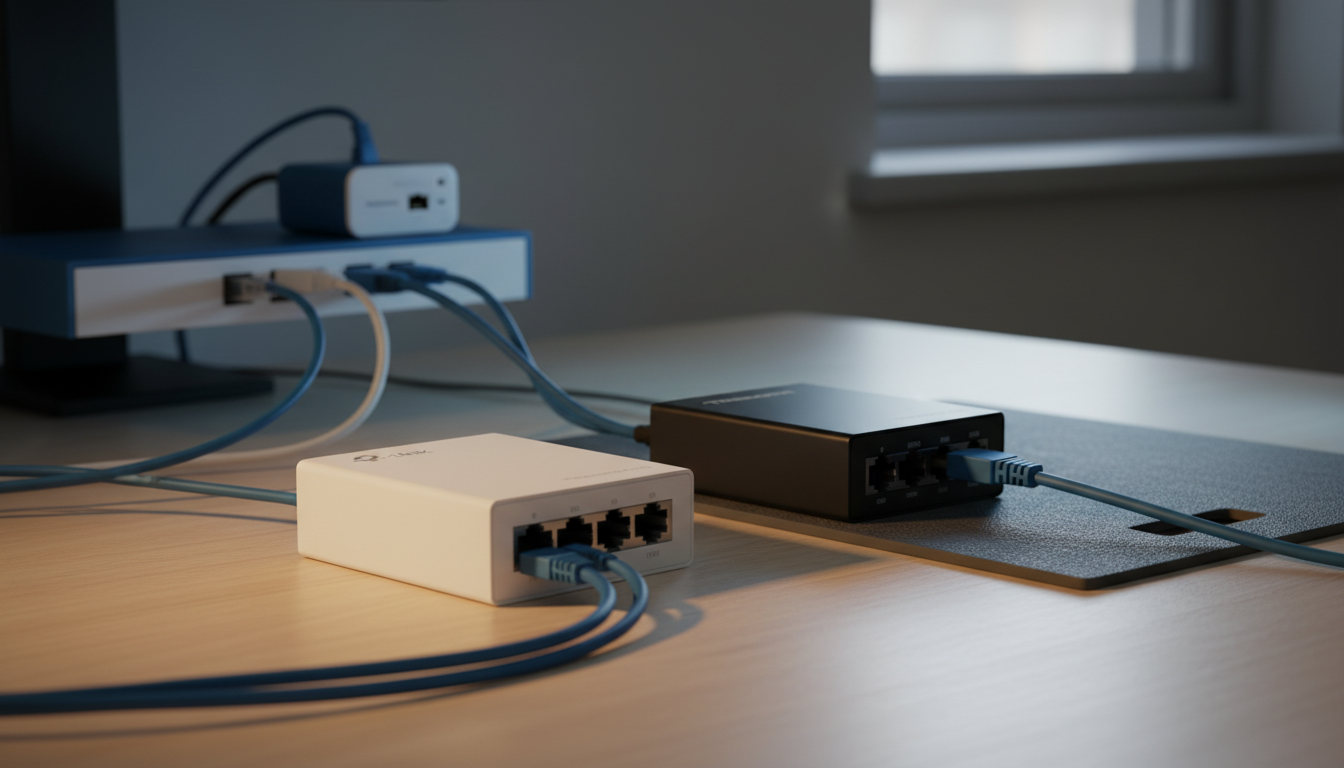
HomePlug AV powerline adapters let you turn any wall outlet into a wired Ethernet link, sidestepping Wi‑Fi dead zones without drilling. For this roundup, the review compared four adapters that span a price range from $45.00 for the TP‑Link AV500 up to $119.99 for the Brite‑View kit, and grouped them into budget (TP‑Link and TRENDnet) and premium (Netgear and Brite‑View) tiers.
The TP‑Link model carries a 4.0‑star rating from 719 reviewers and promises up to 500 Mbps over existing wiring, while the TRENDnet unit, priced at $69.99, scores 3.6 stars, offers a 500 Mbps powerline link and a 2 Gbps full‑duplex Ethernet port. Netgear’s Powerline 200 sits at $99.99 with a 3.0‑star average and a maximum 200 Mbps transfer rate, and the Brite‑View kit, at $119.99, matches the 4.0‑star rating of TP‑Link and also delivers up to 500 Mbps. Whether you’re streaming a 4K movie or plugging in a gaming console, the right adapter can keep latency low and connection steady. The guide breaks down how these specs translate to real‑world use cases and helps you decide which tier fits your home.

TP-Link AV500 Powerline
Its compact 3.3‑inch height lets it blend into any outlet while delivering strong performance, earning top marks for value, rating and popularity.
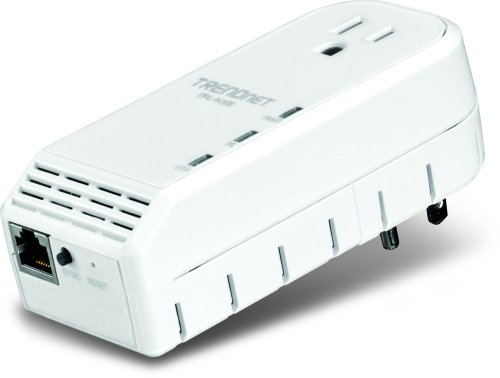
TRENDnet Powerline AV 500
Ideal for users needing 128‑bit AES encryption or specific compatibility, it costs $24.99 more than the top pick at $69.99.

Netgear Powerline 200
With a 210.8 mm height, it offers a sturdier build for those willing to spend $99.99 on premium performance, a step up from the entry‑level models.
Score Analysis
Key score advantages vs. runner-up (TRENDnet Powerline AV)
Price Range
TP-Link AV500 Powerline
$45.00
TRENDnet Powerline AV 500
$69.99
Netgear Powerline 200
$99.99

Brite-View Powerline
$119.99
Spec Comparison
TL;DR: The TP‑Link AV500 Powerline kit delivers up to 500 Mbps over existing wiring, packs into a 28.5 mm‑thin nano plug, and costs $45, making it a solid entry‑level choice for basic wired extensions.
This adapter’s standout spec is the “up to 500 Mbps” Powerline data rate while staying under a modest 0.6 pounds weight. Its 28.5 mm thickness lets it sit flush against an outlet without blocking neighboring sockets, and the built‑in pair button promises a truly plug‑and‑play experience.
Compared with the other three kits, the TP‑Link sits between them on size and power. It’s heavier than the TRENDnet model, which weighs 0.41 pounds, but considerably lighter than the Netgear unit at 1.4 pounds. Ethernet speed is another differentiator: the TP‑Link offers a single 100 Mbps port, whereas the TRENDnet advertises up to 2 Gbps full‑duplex. On the efficiency front, TP‑Link’s standby draw is 0.44 W, lower than TRENDnet’s 0.72 W, and its typical consumption is 2.13 W versus TRENDnet’s 5 W active draw. The Brite‑View kit lists no weight or power numbers, so a direct comparison isn’t possible.
Users consistently praise the tiny form factor and the hassle‑free setup – the pair button and quick‑install guide make it easy for non‑technical folks. Professional reviewers note that the 100 Mbps Ethernet limit and older HomePlug AV standard keep real‑world throughput below the advertised 500 Mbps, especially on older or noisy wiring. Nonetheless, most apartment‑dwelling customers find the speed ample for HD streaming and casual gaming, while complaining about occasional pairing hiccups and the single‑port restriction.
Technical details round out the picture: the kit follows HomePlug AV and IEEE 802.3/802.3u standards, uses OFDM modulation, and can span up to 300 meters through a home’s electrical circuit. Power consumption peaks at 2.30 W, and the unit operates comfortably between 0 °C and 40 °C. Compatibility spans Windows 8/7/Vista/XP/2000, macOS, and Linux, and the package includes two adapters, an RJ‑45 cable, and a quick‑installation guide.
Pros
Cons
Best for: Entry-level buyers or those on a tight budget
Avoid if: You need powerful performance or professional‑grade features
“blends completely into the outlet”
“plug in and works instantly”
TL;DR: The TRENDnet TPL‑402E gives you Gigabit Ethernet (up to 2 Gbps), a built‑in pass‑through outlet and up to 300 m of coverage for $69.99, though it draws more power than some rivals.
What really sets this adapter apart is the combination of a 2 Gbps full‑duplex Ethernet port and a 300 m coverage claim, letting you run a fast wired link through any room that has a power socket. The unit also includes a 128‑bit AES encryption engine and a power‑save mode that cuts standby draw down to 0.72 W, an 80 % reduction from its 5 W active consumption.
Compared with the other three adapters in this roundup, the TRENDnet is the lightest of the lot at 0.41 pounds, while the TP‑Link model weighs 0.6 pounds and the Netgear unit tips the scales at 1.4 pounds. In raw speed, TRENDnet’s Ethernet capability (2 Gbps) dwarfs TP‑Link’s 100 Mbps port and matches none of the peers, which don’t list a gigabit option. All three adapters claim a 500 Mbps powerline rate except Netgear, which tops out at 200 Mbps, so TRENDnet keeps pace there. The trade‑off is power draw: TRENDnet uses 5 W when active, noticeably higher than TP‑Link’s 2.30 W, though standby consumption is low.
Users consistently praise the plug‑and‑play experience – the Sync button pairs the unit in seconds and the built‑in pass‑through outlet means you don’t lose a wall socket. Reviewers also note the solid LED indicators that show power, link and sync status. The downside that shows up repeatedly is performance loss when the home wiring is noisy or when the adapter spans different electrical phases; several users report throughput dropping well below the advertised 500 Mbps in those conditions.
Technical details include a single Gigabit RJ‑45 port, support for IEEE 1901/HomePlug AV standards, up to 64 nodes (16 recommended), and a pair of LEDs for power, powerline, Ethernet and sync. The device also offers a Reset button for factory defaults and runs on 100‑240 V AC.
Pros
Cons
Best for: Users who need a quick wired extension to rooms with poor Wi‑Fi and want to keep the wall outlet functional.
Avoid if: You live in a high‑noise electrical environment, need professional‑grade performance, or want the lowest possible power consumption.
“100% kickass”
“Easy plug-and-play installation with no configuration needed for basic use.”
TL;DR: The Netgear Powerline 200 delivers up to 200 Mbps over HomePlug AV wiring, offers push‑button security and auto power‑down, but its speed ceiling and lack of Wi‑Fi may feel dated for high‑bandwidth homes.
This adapter tops out at a maximum data transfer rate of 200 Mbps and weighs 1.4 Pounds (635 g). Its compact footprint—210.8 mm high, 170.2 mm long and 81.3 mm wide—fits easily behind a TV or in a home office. Features like auto power‑down, LED disable, and a one‑touch push‑button security button aim to keep setup simple and power use low, while the packaging contains at least 95 % recycled materials.
Compared with the other three adapters in this roundup, the Netgear unit is larger and heavier than the TRENDnet Powerline AV 500 (which weighs 0.41 Pounds) and the TP‑Link AV500 (0.6 Pounds). Its 200 Mbps ceiling is also slower than the 500 Mbps rates listed for both the Brite‑View and TRENDnet models. The Brite‑View adapter measures a slimmer 31 mm height, while the TRENDnet unit lists encryption (128‑bit AES) that Netgear doesn’t specify. In short, the Netgear model trades raw speed and some advanced features for a straightforward, plug‑and‑play design.
User feedback frequently praises the ease of installation—thanks to the push‑button security and the included 2 m Ethernet cable—and the modest power‑saving features. Professional reviewers highlight the compact design and the eco‑friendly packaging as strong points. However, many consumers note that the 200 Mbps limit feels outdated for modern streaming or gaming, and the absence of any Wi‑Fi capability can be confusing for buyers expecting a wireless hotspot.
Pros
Cons
Best for: Users who value a simple, eco‑friendly Powerline solution and don’t need gigabit‑class speeds.
Avoid if: You require high‑speed (gigabit) throughput, multiple simultaneous streams, or built‑in Wi‑Fi functionality.
“perfect for connecting HDTVs, Blu-ray players, DVRs, PCs and game consoles”
TL;DR: The Brite-View Powerline kit offers a compact HomePlug AV design with 500 Mbps theoretical speed, 128‑bit AES encryption and QoS, but its premium price and speed drop on power strips may limit its appeal.
The standout spec is the ultra‑compact adapter depth of 56 mm, allowing the unit to sit flush against a wall outlet without blocking adjacent sockets. Combined with an overall depth of 107.95 mm, height of 88.9 mm and width of 76.2 mm, the design makes it one of the smallest in this group.
Compared with the three other adapters in the roundup, Brite-View sits at the higher end of the price spectrum. Its 500 Mbps maximum data transfer rate matches the TRENDnet and TP‑Link models, but exceeds the Netgear 200’s 200 Mbit/s rate. In size, the 56 mm adapter depth is noticeably slimmer than the bulkier dimensions of the Netgear and TRENDnet kits, while its overall footprint is comparable to the TP‑Link unit.
Professional reviewers praise the plug‑and‑play setup that requires no manual IP configuration, and they note the built‑in QoS helps keep video streams and VoIP stable. Users echo the appreciation for the tiny form factor and easy installation, but many report a sharp speed drop when the adapters sit on power strips or older wiring. The HomePlug AV standard also limits future‑proofing for gigabit‑class networks, and real‑world throughput often falls below the advertised 500 Mbps.
Pros
Cons
Best for: Small homes or apartments where a discreet, plug‑and‑play Ethernet extension is needed and you’re willing to invest in a premium‑priced kit.
Avoid if: You rely on power strips, have multi‑phase wiring, or need guaranteed gigabit performance for high‑bandwidth tasks like 4K streaming.
Breakdown
TP-Link AV500 Powerline
Pros
TRENDnet Powerline AV 500
Pros
Cons
Netgear Powerline 200
Pros
Cons
Brite-View Powerline
Pros
Cons
Based on scoring data and product specs
Personalized picks
Best Overall Pick
TP-Link AV500 Powerline
Best OverallBest for: Entry-level buyers or those on a tight budget
TRENDnet Powerline AV 500
Best for: Users with specific technical requirements or compatibility needs
$69.99+$24.99 vs winner
Skip Brite-View Powerline if…
You need advanced features or professional-grade performance
TP‑Link’s AV500 Powerline takes the top spot thanks to its solid 4.0‑star rating from 719 reviewers, a budget‑friendly $45.00 list price, and a guaranteed 2‑year warranty. It pushes up to 500 Mbps over the electrical wiring, comes with two adapters plus an RJ‑45 Ethernet cable, and stays light at 0.6 lb, making it easy to slip into any outlet without crowding the space.
The TRENDnet Powerline AV 500 lands as the runner‑up, especially if you need a built‑in power outlet and stronger network security. It offers a 3‑year limited warranty, 128‑bit AES encryption, and a pass‑through outlet that keeps a device powered while the adapter is in use. Its gigabit Ethernet port and power‑save mode that cuts standby draw by 80 % round out a feature set aimed at power‑conscious homes.
Shoppers looking beyond the winner often pick the TRENDnet model for its extra security and outlet convenience, while the premium slot goes to the Brite‑View Powerline at $119.99, which targets users ready to invest for top‑tier performance.
Pick the TP‑Link AV500 today and get reliable, fast powerline networking without breaking the bank.
The TP‑Link AV500 Powerline, priced at $45, delivers up to 500 Mbps powerline speed, a 100 Mbps Ethernet port, and a 2‑year warranty, making it the most cost‑effective option compared with the pricier models.
No reviews yet — be the first to share your experience.
Please sign in to leave a review
