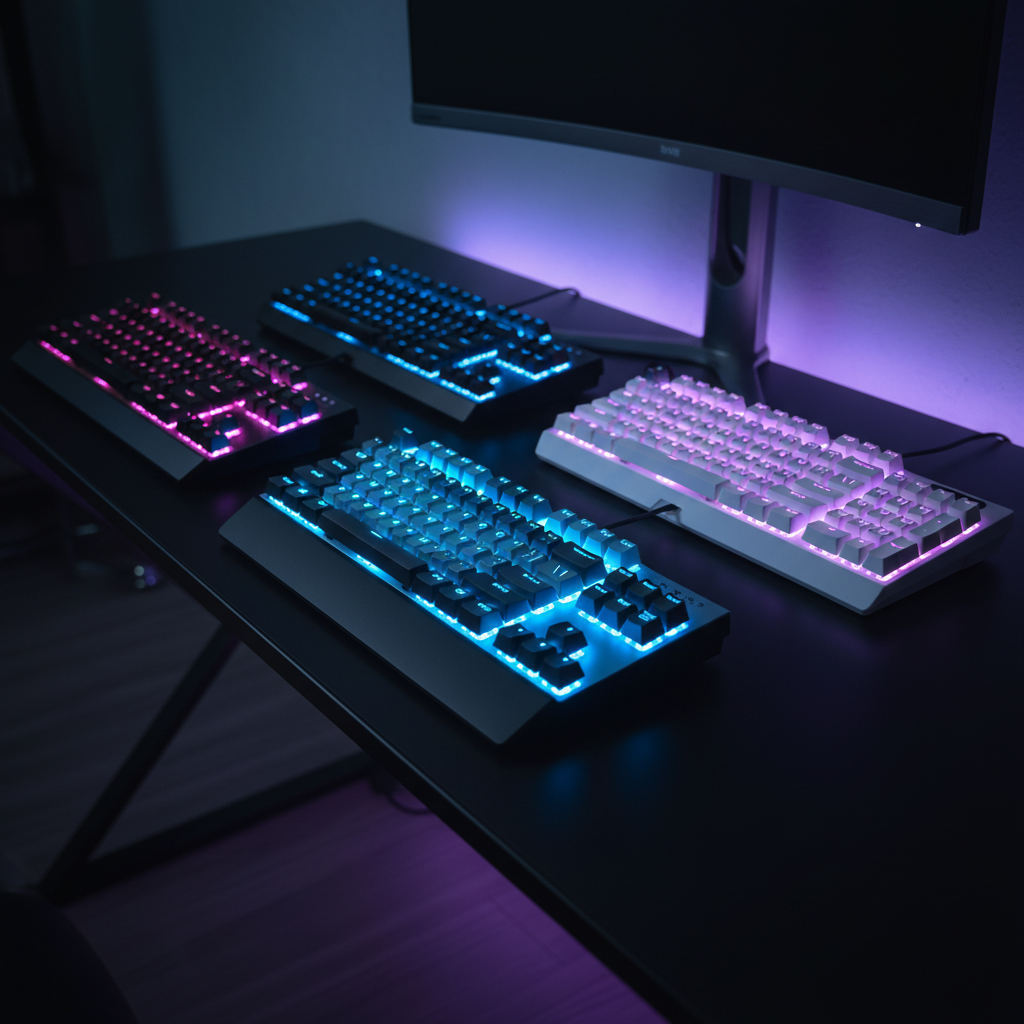
Choosing a hot‑swappable keyboard can feel like hunting for a needle in a sea of specs. In this roundup we’ve lined up 13 options, spanning the $29.99 budget entry point up to premium builds that push $100+. The selections fall into three clear buckets: a budget tier (Redragon K617, Redragon K585 DITI, Royal Kludge RK61, Boyi 61 Mini), a mid‑range tier (RK Royal Kludge R75, RK Royal Kludge RK61) and a premium tier (Redragon K745 PRO, Royal Kludge R98 Pro, Royal Kludge S98, SteelSeries Apex 9 TKL). All of them share a common 4.6/5 average rating from thousands of reviewers, so you know you’re looking at crowd‑approved choices.
If you want a full‑size board with a number pad, the Redragon K745 PRO packs a 4000 mAh battery, 16.8 million‑color RGB and 1.9400679056 pounds of weight for $59.99, plus hot‑swap sockets for both 3‑pin and 5‑pin switches. For the speed‑hungry competitive player, the SteelSeries Apex 9 TKL offers up to 8000 Hz polling, a 2.3‑pound chassis and ~45 g actuation force, though it sits at $104.99. Below we’ll break down each model’s strengths, so you can match the keyboard to your play style and desk real‑estate.
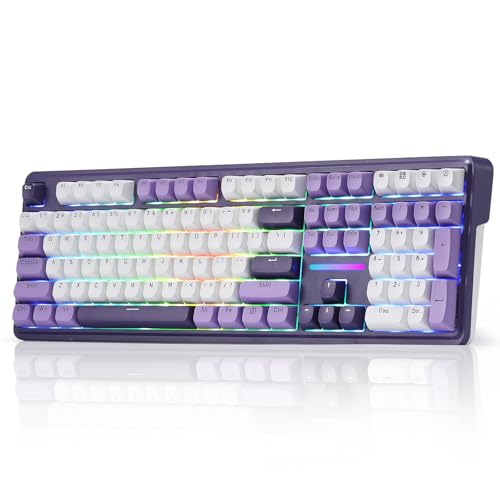
Redragon K745 PRO
Its 4000 mAh Li‑Polymer battery delivers long wireless playtime, supporting extended gaming sessions.

Royal Kludge S98
Gamers craving extra lighting options will appreciate the S98’s 20 RGB preset modes, though it sits about $20 pricier than the Redragon K745 PRO.

RK Royal Kludge R75
Its 1.6 m detachable cable offers reliable wired performance for users preferring no‑latency play at a lower $47.99 price point.
Also considered
Score Analysis
Key score advantages vs. runner-up (Royal Kludge S98)
Price Range
Redragon K745 PRO
$59.99
Royal Kludge S98
$75.99
RK Royal Kludge R75
$47.99

SteelSeries Apex 9 TKL
$139.99
Royal Kludge RK61
$39.99
Redragon K617
$29.99

Boyi 61 Mini
$69.99
RK Royal Kludge RK61
$49.99

Royal Kludge R98 Pro
$69.84
Redragon K585 DITI
$32.99

Royal Kludge R65
$47.99
Redragon K556
$46.99

ASUS ROG Azoth
$209.99
Spec Comparison
TL;DR: The Redragon K745 PRO delivers a full‑size, gasket‑mounted keyboard with 4000 mAh wireless power, hot‑swappable switches and 16.8 million RGB colors for $59.99, earning a 4.6‑star rating.
The K745 PRO stands out with tri‑mode connectivity—a USB‑C wired link, Bluetooth 5.0 and a 2.4 GHz wireless dongle—you toggle them with a rear physical switch. Its 4000 mAh Li‑Polymer battery lets you game or work unplugged for long stretches, and the hot‑swappable sockets accept both 3‑pin and 5‑pin switches, letting you customise the feel without soldering. The pre‑installed Mint Mambo linear switches register at 40 gf actuation force with a 2.0 mm travel and a 3.60 mm total travel.
Compared with the other twelve keyboards, the K745 PRO is heavier than the RK61 (560 g) and the RK65 (1.4109 lb), but lighter than the S98’s 3.0‑pound chassis. Its full‑size 108‑key layout exceeds the 61‑key RK61, 66‑key R65 and 81‑key R75, giving you dedicated navigation and number‑pad keys that compact boards lack. The 4000 mAh battery also tops the S98’s 3750 mAh pack, promising a longer wireless runtime. While the R98 Pro offers a similar RGB experience, the K745 PRO’s 16.8 million color range and south‑facing LEDs provide vivid lighting without needing a separate software suite.
Users consistently praise the vivid RGB spectrum and the quiet, smooth feel of the linear switches, noting the convenience of swapping switches on the fly. Professional reviewers highlight the premium gasket‑mounted construction and the five‑layer sound‑dampening stack that yields a satisfying “thock” out of the box. The most common criticisms focus on the flip‑feet, which many describe as flimsy and prone to collapsing under pressure, and a hollow echo on the spacebar due to stabiliser chatter. The proprietary Redragon software also draws remarks for lacking the openness of VIA or QMK.
Pros
Cons
Best for: First‑time mechanical keyboard owners, students and office workers who need a full‑size board with wireless flexibility.
Avoid if: Competitive esports players seeking the lowest possible latency or users who require open‑source firmware.
TL;DR: The RK Royal Kludge S98 packs a 1.47‑inch TFT smart display, 98‑key 96% layout and 20 RGB modes into a wireless, hot‑swappable keyboard that scores 4.6 / 5 stars from over a thousand reviewers.
The standout feature is the 1.47‑inch TFT color screen that can show custom GIFs, date/time, battery level and connection mode, turning a keyboard into a tiny status hub. Coupled with a metal rotary knob that controls volume, brightness, RGB cycles and Bluetooth switching, the S98 offers more on‑board interaction than most compact boards.
At 3.0 pounds, the S98 is heavier than the R98 Pro (≈1.76 lb), the Redragon K745 PRO (≈1.94 lb) and the RK61 (≈1.23 lb), yet lighter than the SteelSeries Apex 9 TKL (≈2.3 lb). It also out‑keys the RK61 (61 keys), R65 (66 keys) and R75 (81 keys) while keeping a compact 96% (98‑key) footprint. The keyboard supports up to three Bluetooth devices, a 2.4 GHz dongle and a USB‑C data/charging port, giving it more connectivity options than many peers that only offer wired or single‑mode wireless.
User sentiment highlights the creamy acoustic feel from the 80 % hollow‑sound reduction and 40 % total noise reduction, thanks to four sound‑dampening layers. Reviewers love the smart display and knob, but note that the ABS plastic case feels less premium than metal alternatives and that the bundled software can be clunky on some platforms. Users also report Bluetooth drop‑outs during device switching as a common annoyance.
Technical extras include a 3750 mAh battery that delivers up to 200 hours of use with the backlight off and 30 hours with RGB on, recharging in 6.5 hours via 12 W USB‑C. The hot‑swappable 3‑pin and 5‑pin switch sockets let you swap between RK Blue, Brown or Chartreuse switches, and most units ship with double‑shot PBT keycaps (some variants use ABS). A downstream USB‑A hub port adds a handy peripheral connection.
Pros
Cons
Best for: Buyers willing to invest in a proven, high‑quality option
Avoid if: You're on a tight budget or only need basic functionality
“The sound profile is creamy and satisfying, especially for a mechanical keyboard.”
“The smart display is fun and a great conversation starter.”
TL;DR: The RK Royal Kludge R75 offers an 81‑key 75% layout, gasket‑mount with multi‑layer foam, hot‑swappable switches and vibrant RGB for $47.99, earning a strong 4.6‑star rating.
What really stands out is the R75’s premium build: a gasket‑mounted chassis paired with four to five internal foam layers, a CNC‑machined aluminum volume knob, and double‑shot PBT MDA keycaps. The keyboard ships with a 4.0 mm travel distance and a 45 g actuation force on the Silver linear switches, while the RGB system provides 18 dynamic modes, eight monochrome modes and five brightness levels.
Compared with the other twelve keyboards in this roundup, the R75’s 81‑key count gives you more dedicated keys than the 66‑key R65 and the 61‑key RK61 models. Its weight of 680 g makes it heavier than the RK61’s roughly 1.23 lb (≈560 g) but lighter than the Redragon K556 at about 2.20 lb. While the R75’s wired connection doesn’t list a polling rate, both the RK61 and the R65 explicitly note a 1000 Hz rate, a common benchmark for fast gaming response. Price‑wise, the R75 sits at $47.99, matching the R65’s list price but above the Boyi 61 Mini’s $39.99 entry.
Reviewers consistently praise the “thocky” typing feel that the foam stack and pre‑lubed stabilizers deliver, and many highlight the removable volume knob as a productivity boost. Reviewers frequently mention the RGB system’s 18 dynamic modes, eight monochrome modes and five brightness levels for its customization options. On the downside, users have reported occasional space‑bar wobble and note that the plastic case, while sturdy, feels less premium than an all‑metal alternative. Switch availability can also be hit‑or‑miss, especially for the Cream linear option.
Pros
Cons
Best for: Gamers and typists who want a compact, well‑reviewed keyboard with hot‑swap flexibility, solid build quality and vibrant RGB without breaking the bank.
Avoid if: You’re shopping on a tight budget — it’s priced at $47.99.
“The sound profile is creamy and satisfying, especially for a mechanical keyboard.”
“The smart display is fun and a great conversation starter.”
TL;DR: The SteelSeries Apex 9 TKL packs hot‑swappable optical switches, dual actuation points and a 0.2 ms response time into a sturdy 2.3‑lb tenkeyless chassis for $104.99.
What really sets this keyboard apart is the combination of hot‑swappable OptiPoint optical switches and a two‑point actuation system—1.0 mm for gaming and 1.5 mm for typing—plus an ultra‑fast 0.2 ms response time. The 8000 Hz polling rate means every keystroke is registered almost instantly, and the 45 g actuation force feels light enough for rapid repeats without sacrificing control.
Compared with the other twelve entries, the Apex 9 TKL sits at the higher end of the price spectrum—pricier than the Royal Kludge S98 at $79.89 and the Redragon K745 PRO at $59.99. It also weighs more than the Royal Kludge R98 Pro (1.76 lb) and the RK61 (1.23 lb), but its aircraft‑grade Series 5000 aluminum frame feels more premium than the plastic builds of those rivals. With 87 keys, it offers a larger layout than the 61‑key RK61 and the 66‑key R65, yet remains more compact than full‑size boards. Its 8000 Hz polling outpaces the 1000 Hz wired rate listed for the RK61, giving it a clear advantage for competitive play.
Users consistently praise the keyboard’s “tank‑like” durability and vivid per‑key RGB lighting, noting that the double‑shot PBT keycaps stay crisp even after heavy use. Professional reviewers highlight the dual actuation system as a genuine speed booster for FPS and MOBA titles. On the downside, several owners mention that only SteelSeries‑branded optical switches fit the hot‑swap sockets, and the lack of dedicated media controls or an OLED screen feels like a step back from higher‑end models. A few also report occasional hiccups with the SteelSeries GG software.
Pros
Cons
Best for: Competitive gamers who value ultra‑fast response, customizable switches and a compact tenkeyless layout.
Avoid if: You're shopping on a tight budget—the keyboard is priced at $104.99 and lacks media controls that cheaper alternatives provide.
“feels like a tank”
“very solidly built with no wobble or flex”
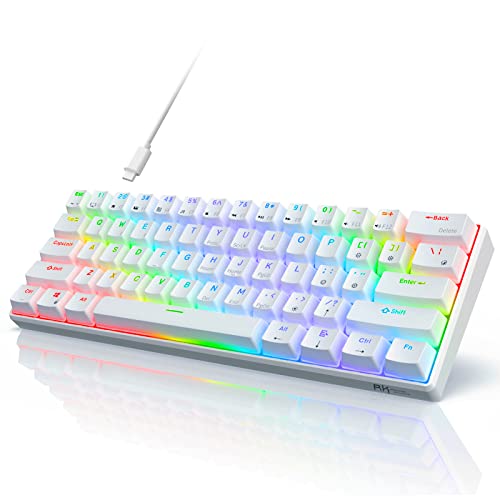
TL;DR: The RK61 offers a 60% layout with hot‑swappable switches, 18 RGB modes, 1000 Hz polling, and dual wired/wireless connectivity for just $39.99, earning a 4.6‑star rating from over 6 k reviewers.
The standout feature is its hot‑swap PCB that supports both 3‑pin and 5‑pin switches, letting you swap out any of the RK Red, Blue, Brown or optional Gateron switches without soldering. With a compact 61‑key ANSI layout, a 2.0 mm actuation distance and a 4.0 mm total travel, the keyboard feels responsive for both gaming and typing.
Compared with the Boyi 61 Mini, which weighs 820 g and offers only 10 lighting presets, the RK61 is lighter at 560 g and provides 18 RGB modes plus 8 monochrome options. The Redragon K585 DITI is similar in weight (590 g) but its RGB system is limited to 5 preset modes, while the RK61 adds full‑key anti‑ghosting and a 1000 Hz polling rate that matches the Royal Kludge R65’s polling but comes in a smaller 60% form factor. Even the RK75 shares the same 18 RGB modes, yet it is larger and heavier, making the RK61 the most portable choice among the peers.
Users consistently praise the hot‑swap capability and the keyboard’s bright RGB lighting, noting that the ability to customize switches is a major value add for a budget build. Professional reviewers highlight the solid feel despite the ABS case and commend the responsive 1000 Hz polling for fast games. Some owners mention that the ABS double‑shot keycaps can develop a shine over time, and the battery’s 1450 mAh capacity is modest for extended wireless sessions.
Additional technical details include Bluetooth 5.1 and a 2.4 GHz dongle for flexible connectivity, a detachable USB‑C cable, and support for up to three Bluetooth devices. The keyboard runs on the RK ROYAL KLUDGE software for RGB customization and works with QMK/VIA on select models, giving enthusiasts a decent amount of configurability at the $39.99 price point.
Pros
Cons
Best for: Budget‑conscious gamers, programmers, students, and keyboard newcomers who want a compact, hot‑swappable mechanical keyboard.
Avoid if: You need premium build quality, extensive ergonomic features, or a long‑lasting wireless battery.
“The sound profile is creamy and satisfying, especially for a mechanical keyboard.”
“The smart display is fun and a great conversation starter.”
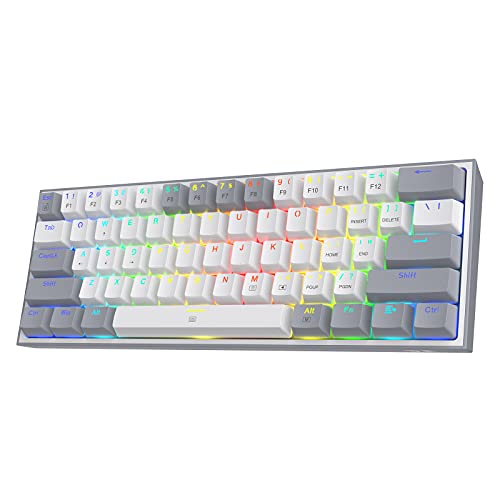
TL;DR: The Redragon K617 delivers a 60% hot‑swappable mechanical keyboard with full RGB, 1000 Hz polling, and a $29.99 price tag, making it a solid budget pick for gamers.
The standout feature is its hot‑swappable socket that accepts both 3‑pin and 5‑pin switches, letting you change the linear Redragon Mechanical Red switches without soldering. At a listed price of $29.99, the board also offers full N‑key rollover, a 1000 Hz polling rate, and 20 onboard RGB modes, all packed into a 61‑key 60% layout.
In the context of the roundup, the K617 is noticeably lighter than the Redragon K585 DITI (which weighs 1.3 pounds) and the Royal Kludge RK61 (around 1.23 pounds). Its 40 mm height matches the Royal Kludge R65’s 40.64 mm, while its 310 mm depth and 135 mm width give it a bit more surface area than the RK61’s 289 mm length and 103 mm width, yet it remains far more compact than full‑size options.
Users praise the keyboard’s affordability, vibrant lighting, and responsiveness in fast‑paced games. Reviewers consistently note the convenience of the detachable USB‑C cable and the included switch and keycap pullers plus four spare switches. Common complaints focus on the lack of dedicated media or volume keys, the absence of a traditional arrow cluster (requiring Fn combos), and limited macOS software support, while the Otemu‑style switches make third‑party upgrades less common.
Pros
Cons
Best for: Budget-conscious buyers seeking a reliable entry‑level option
Avoid if: You need dedicated media keys, a full‑size layout, or extensive macOS software integration
“Perfect keyboard for FPS games”
“Very good for the price”
TL;DR: The Boyi 61 Mini delivers genuine Cherry MX switches, PBT keycaps, and a detachable 1800 mm USB‑C cable in a compact 61‑key layout for $39.99, earning a 4.6‑star rating.
The Boyi 61 Mini packs a full set of Cherry MX switches into a 60% (61‑key) US‑ANSI layout, all behind a detachable 1800 mm braided USB‑C cable with an aluminum alloy connector. At just 30 mm tall and weighing 820 g, it stays low‑profile yet sturdy, and the 85% PBT double‑shot keycaps receive oil‑resistant and abrasion‑resistant treatment. The board supports full anti‑ghosting, 100 % NKRO, and 10 preset RGB lighting modes plus a music‑rhythm mode.
At $39.99, the Boyi matches the Royal Kludge RK61’s price point, but it is heavier than the RK61’s 1.2345886672 pounds and lacks the RK61’s listed 1000 Hz polling rate. The RK61 offers 18 RGB modes and 8 monochrome options, whereas the Boyi provides 10 preset modes and a music‑rhythm mode. Compared with the Royal Kludge R65’s 66‑key layout and 1.4109584768 pounds weight, the Boyi stays more compact with its 30 mm height and 100 mm width.
Users consistently praise the tactile feel of the genuine Cherry MX switches and the durability of the PBT caps, noting that the oil‑resistant treatment keeps the keys from developing shine. The compact form factor works well for desk‑constrained setups, but several reviewers mention the loud click of the MX Blue variant and the learning curve required to master the function‑layer shortcuts that replace dedicated arrows and F‑keys.
Technical notes include full NKRO, onboard memory for saved profiles, and fully programmable keys via software. Some versions feature hot‑swappable sockets, letting you change between Cherry MX Blue, Brown, or Red switches without soldering. The keyboard also features 2 adjustable feet levels that give a 4° natural tilt, enhancing ergonomics during long sessions.
Pros
Cons
Best for: Budget-conscious buyers seeking a reliable entry-level option
Avoid if: You want the best value-per-dollar in its price range
TL;DR: The RK Royal Kludge RK61 packs a 61‑key 60% layout, hot‑swappable switches, 1000 Hz polling, and triple‑mode connectivity into a $49.99, 1.2345886672 lb keyboard that’s praised for its compactness and value.
The RK61’s standout feature is its hot‑swappable design that accepts both 3‑pin and 5‑pin switches, letting you swap out the RK Blue clicky switches (50–60 g operating force, >50 million keystrokes) without soldering. It also offers a 1000 Hz wired polling rate, ensuring fast input for games, and a 1450 mAh battery that powers the 18 RGB, 8 monochrome, and 1 full‑color lighting modes.
Compared with its peers, the RK61 is lighter than the Redragon K556 (2.20462262 pounds) and the Royal Kludge R65 (1.4109584768 pounds), yet roughly the same weight as the sibling RK61 model listed elsewhere. Its 11.4 in length and 4.0 in width make it shorter and narrower than the R65’s 12.6 in length and 4.6 in width, and it carries fewer keys than the R65’s 66‑key layout or the R75’s 81‑key layout. The R75’s height of 323 mm also exceeds the RK61’s 1.6 in (40.6 mm) profile, highlighting the RK61’s ultra‑low‑profile design.
Users consistently praise the tiny footprint, noting that the 60% (61‑key) layout fits comfortably on cramped desks and travels well. The hot‑swap capability receives frequent mentions for enabling easy switch experimentation. Professional reviewers highlight the clean ABS plastic case and the responsive clicky feel of the RK Blue switches. On the downside, several owners report that the ABS keycaps become glossy with heavy use, the keyboard lacks adjustable feet or tilt legs, and Bluetooth pairing can be finicky on older firmware versions. The 1450 mAh battery, while adequate for short sessions, is modest compared with larger‑capacity rivals.
Beyond the basics, the RK61 supports QMK/VIA and proprietary configuration software, giving you full control over keymaps and lighting. Its tray‑mount style and ABS double‑shot (shine‑through) keycaps round out a feature set that offers strong value for the $49.99 price point.
Pros
Cons
Best for: Most users looking for a well‑reviewed, reliable mainstream option
Avoid if: You have limited desk space or need portability
“The sound profile is creamy and satisfying, especially for a mechanical keyboard.”
“The smart display is fun and a great conversation starter.”
TL;DR: The RK Royal Kludge R98 Pro is a 98‑key, gasket‑mounted mechanical keyboard with hot‑swappable pre‑lubed switches, double‑shot PBT MDA caps and over 20 RGB modes, priced at $69.84.
At 15.3150 in long, 5.5118 in wide and 1.6063 in tall, the R98 Pro packs a compact full‑size (96%) layout into a footprint that still accommodates a numpad. It weighs 1.763698096 pounds and features a gasket‑mount with five layers of sound‑absorbing foam, delivering a “creamy” acoustic feel. The board supports hot‑swapping for both 3‑pin and 5‑pin switches and ships with pre‑lubed Linear Cream or Tactile Beige switches. Double‑shot PBT keycaps in an MDA profile give a matte, durable surface, and it’s equipped with a detachable aluminum CNC volume knob that adds a handy media control.
Compared with the other twelve keyboards, the R98 Pro sits at a higher price point than the Redragon K745 PRO, which lists at $59.99, but it’s lighter than that model’s 1.9400679056‑pound chassis. It’s heavier than the RK Royal Kludge RK61 (1.2345886672 pounds) and the Royal Kludge R65 (1.4109584768 pounds). In terms of key count, the R98 Pro’s 98 keys outsize the RK61’s 61 keys, the R65’s 66 keys and the RK Royal Kludge R75’s 81 keys, giving you a full numpad without the bulk of a traditional full‑size board.
Reviewers consistently praise the premium sound from the gasket mount and foam, calling it comparable to higher‑end custom keyboards. Users love the comfortable MDA caps and the detachable volume knob for quick adjustments. The most common criticisms focus on the non‑standard 1u Delete, 1u Numpad 0 and 1u bottom‑row modifiers, which can make finding replacement keycaps tricky, and on the modest stock RGB brightness. Professional reviewers also note that the switch palette is limited to the two pre‑lubed options supplied.
Pros
Cons
Best for: Buyers wanting a compact full‑size layout with premium sound, hot‑swap flexibility and solid RGB lighting.
Avoid if: You need wireless connectivity, ultra‑quiet silent switches, or strictly standard keycap spacing.
“The sound profile is creamy and satisfying, especially for a mechanical keyboard.”
“The smart display is fun and a great conversation starter.”
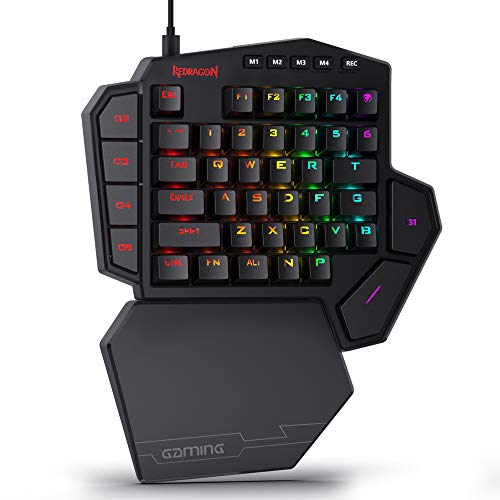
TL;DR: The Redragon K585 DITI packs 42 hot‑swappable keys, 7 programmable G‑keys and full RGB into a 1.3‑pound, 279 mm‑long wired keypad for under $33, making it a solid budget‑friendly option for macro‑heavy gamers.
The standout feature is its hot‑swappable socket system, letting you swap Redragon Brown, Red or Blue switches without soldering. With 42 keys, full anti‑ghosting and N‑key rollover, you still get a full mechanical feel in a tiny footprint. The keypad also offers 7 onboard G‑keys that store up to 28 macros across 4 profiles, and RGB lighting with 16.8 million colors plus 5 preset modes.
Compared with the other twelve entries, the K585 sits in the middle of the size and weight spectrum. It weighs 1.3 pounds, heavier than the 0.6‑pound Redragon K617 but lighter than the 2.2046‑pound Redragon K556. Its 279.4 mm length is shorter than the K617’s 310 mm depth, yet longer than the 289 mm length of the Royal Kludge RK61. While peers such as the K617 and RK61 list a 1000 Hz polling rate, the K585’s specs don’t list a polling rate, so you can’t verify an ultra‑fast response.
User feedback repeatedly praises the compact layout and the ease of swapping switches, noting that the detachable magnetic wrist rest adds optional comfort for short sessions. Professional reviewers echo the macro strength, calling the seven G‑keys “ideal for MMOs and streaming.” However, several users flag the wrist‑rest magnets as weak, and the fixed‑angle design without tilt legs can become uncomfortable during long play.
Additional technical context includes a wired USB 2.0 connection via a detachable USB‑C cable, a built‑in USB 2.0 pass‑through port for mouse or headset, and driver‑free basic operation on Windows, macOS and Linux. The keypad draws power directly from USB, so there’s no internal battery to manage.
Pros
Cons
Best for: Gamers who need a compact, macro‑rich keypad on a tight budget and don’t require a full‑size keyboard.
Avoid if: You prioritize extensive ergonomic adjustment, need a guaranteed 1000 Hz polling rate, or rely on a full‑size layout for typing.
“Great for small desks – saves so much space.”
“RGB lighting is vibrant and fun to customize.”
TL;DR: The RK Royal Kludge R65 is a $47.99 wired 65% mechanical keyboard with a gasket‑mount, hot‑swappable pre‑lubed switches, 20+ RGB modes, and solid QMK/VIA programmability, earning 4.6‑star praise from over 1,500 users.
The R65’s standout feature is its five‑layer gasket‑mount, which combines sound‑dampening foam and a metal plate to give a “thocky” feel that rivals pricier custom builds. It houses 66 keys, supports 3‑pin and 5‑pin hot‑swappable switches—including pre‑lubed Cream linear switches—and runs at a 1000 Hz polling rate for responsive gaming. The keyboard weighs 1.4109584768 pounds and measures 1.6 in × 12.6 in × 4.6 in, making it compact yet sturdy.
Compared with the other 12 keyboards in this roundup, the R65 sits in the mid‑price range, is priced similarly to the RK R75 and offers fewer keys (66 vs. 81). It’s lighter than the Redragon K556’s 2.20462262 pounds yet a touch heavier than the RK61’s 1.2345886672 pounds. While the RK61 and RK R75 both list RGB lighting, the R65 provides 20+ built‑in lighting modes and per‑key RGB customization via QMK/VIA, giving it a richer lighting toolbox than many wired peers.
Reviewers consistently highlight the satisfying typing experience, noting the gasket‑mount’s premium sound and the handy CNC‑aluminum volume knob that adds a tactile control rarely seen at this price point. Users also appreciate the double‑shot PBT keycaps with an MDA profile for durability. On the downside, the lack of any wireless option and occasional reports of overly bright RGB defaults are common complaints. Some newcomers find the QMK/VIA firmware intimidating, but seasoned enthusiasts enjoy the deep programmability.
Pros
Cons
Best for: Gamers, programmers, writers, and keyboard enthusiasts who want a compact, well‑reviewed mechanical keyboard with premium sound and deep customization.
Avoid if: You need wireless connectivity, an integrated wrist rest, or prefer a plug‑and‑play experience without learning QMK/VIA.
“The sound profile is creamy and satisfying, especially for a mechanical keyboard.”
“The smart display is fun and a great conversation starter.”
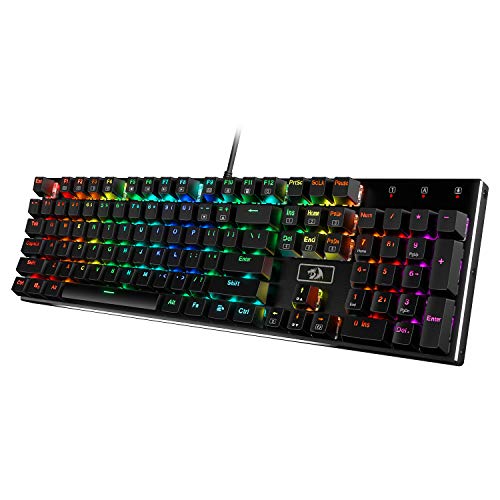
TL;DR: The Redragon K556 offers a full‑size 104‑key layout, hot‑swappable Outemu switches and solid metal build for $46.99, earning a 4.6‑star rating from over 8 000 users.
The standout feature is its hot‑swappable switch design, letting you change any of the 104 keys without soldering; the box even includes eight spare switches (two each of red, blue, brown, and black). Coupled with a full metal frame and double‑shot ABS keycaps, the keyboard feels sturdy enough for aggressive gaming sessions.
At 2.20462262 pounds, the K556 weighs more than the 1.2345886672‑pound Royal Kludge RK61 and the 1.4109584768‑pound R65, yet it stays lighter than some full‑size rivals that tip the scales above 2 pounds. Its 104‑key layout also outnumbers the 61‑key RK61, the 66‑key R65, and the 81‑key R75, giving you a dedicated numpad that many compact keyboards lack. While the K556’s polling rate isn’t listed, competitors such as the R65 and wired RK61 explicitly note a 1000 Hz rate, highlighting a data gap for this model.
Users consistently praise the keyboard’s build quality and the convenience of swapping switches on the fly. Professional reviewers commend the “meaty” metal chassis and note that including spare switches is rare for a budget board. Common complaints focus on the front metal edge scratching desks, thin keycap walls, and the lack of per‑key RGB customization that higher‑end models provide.
Pros
Cons
Best for: Gamers and DIY enthusiasts who want a durable full‑size board with interchangeable switches at a budget price.
Avoid if: You need per‑key lighting control, ultra‑light weight for travel, or the absolute best value‑per‑dollar in this segment.
“best keyboard I’ve ever owned”
TL;DR: The ASUS ROG Azoth packs a 2‑inch OLED screen, hot‑swappable ROG NX switches and 130‑hour backlight‑on battery life into a premium 75% layout, but it comes at a $239.99 price tag.
The standout feature is the built‑in 2 inch OLED display that shows system info, animations and battery status, a rarity in gaming keyboards. Combined with hot‑swappable ROG NX Snow Linear switches (pre‑lubed) and a 1000 Hz polling rate, the Azoth delivers both visual flair and sub‑millisecond response for competitive play.
At 2.6 pounds, the Azoth is slightly heavier than the SteelSeries Apex 9 TKL, which weighs 2.3 pounds, and its 1000 Hz polling rate is lower than the Apex 9’s up to 8000 Hz. However, its 130 hours of backlight‑on battery life exceeds the Royal Kludge S98’s 30 hours with RGB on, and it supports three simultaneous Bluetooth devices—more than many wired‑only rivals. The 75% form factor (68 keys) keeps the board compact while retaining a full function row.
Reviewers consistently praise the “soft, bouncy, and acoustically rich” typing feel that comes from the gasket‑mounted metal top plate and three‑layer foam dampening. The OLED screen and easy switch swapping earn frequent compliments. On the downside, users note that Armoury Crate software feels bloated and intrusive, the mid‑height PBT keycaps feel slippery, and the Delete key placement feels awkward for some users. These points line up with professional observations about software bloat and premium pricing.
Pros
Cons
Best for: Buyers willing to invest in a proven, high‑quality option
Avoid if: You're on a tight budget or only need basic functionality
“Best typing experience I’ve ever had on a pre‑built keyboard.”
“Armoury Crate is terrible—slow, buggy, and hard to use.”
Breakdown
Redragon K745 PRO
Pros
Royal Kludge S98
Pros
RK Royal Kludge R75
Pros
Cons
SteelSeries Apex 9 TKL
Pros
Cons
Based on scoring data and product specs
Personalized picks
Best Overall Pick
Redragon K745 PRO
Best OverallBest for: Buyers willing to invest in a proven, high-quality option
Royal Kludge S98
Best for: Buyers willing to invest in a proven, high-quality option
$75.99+$16.00 vs winner
Skip ASUS ROG Azoth if…
You're on a tight budget or only need basic functionality
Redragon’s K745 PRO takes the top spot with a 4.6‑star rating from 2,046 reviewers, a massive 4000 mAh Li‑Polymer battery and full‑size 108‑key layout, plus 104‑key rollover for flawless gaming input. Its tri‑mode connectivity—USB‑C wired, Bluetooth 5.0 and a 2.4 GHz dongle—covers every play style, while the gasket‑mounted design and five‑layer sound‑dampening give a quieter, smoother feel.
The runner‑up, Royal Kludge’s S98, shines if you crave a compact 96% (98‑key) board with an integrated 1.47‑inch TFT screen and a metal knob for volume, brightness and RGB control. It supports up to three Bluetooth devices, offers 20 preset RGB modes and a 3750 mAh battery that lasts up to 200 hours with the backlight off, making it ideal for a desk‑bound setup that also doubles as a portable workstation.
For tighter budgets, the Redragon K617 delivers solid performance at just $29.99, while the RK Royal Kludge R75 at $47.99 provides a balanced mid‑range option with hot‑swappable switches. If premium features are your priority, ASUS ROG Azoth stands out at $239.99, offering high‑end specs and a sleek aesthetic for serious gamers.
Pick the Redragon K745 PRO today and you'll enjoy a versatile, high‑quality keyboard that covers every gaming scenario.
The Redragon K745 PRO stands out with a price of $59.99, tri‑mode connectivity (wired, Bluetooth 5.0, and 2.4 GHz dongle), a full‑size 108‑key layout, and a five‑layer sound‑dampening system, delivering strong performance without breaking the bank.
Please sign in to leave a review
No reviews yet. Be the first to review!
