⚡ Quick Answer
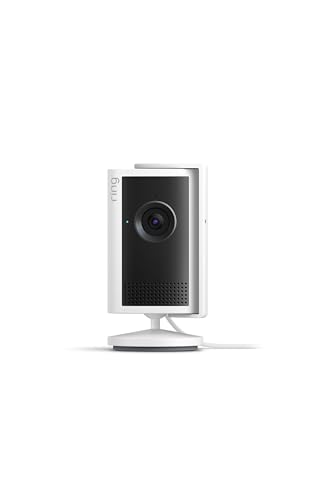
Indoor security cameras are essential for watching pets, kids, or an empty home. We evaluated 11 models across three price tiers – budget (Cinnado D1, Wyze Cam v4, Kasa Smart KC410S), mid‑range (Blink Mini 2K+, eufy Security E30) and premium (Ring Indoor Cam Plus, Google Nest Cam Indoor, Reolink E1 Zoom, Anona 4K Indoor Camera).
At the low end, the Kasa Smart KC410S stands out with a $33.99 price tag, a 4.3‑star rating from 9,419 reviews, 2K video, 360‑degree pan and 113‑degree tilt, and color night vision reaching 30 ft. It also offers two‑way audio and Alexa/Google Assistant integration, delivering premium‑level monitoring without the higher price of many competitors. For comparison, the Wyze Cam v4 is $35.97 with a 99 dB siren, while the eufy Security E30 brings 4K resolution at $49.96 but lands in the mid‑range tier.
Below we break down each tier’s strengths—video clarity, field of view, audio and smart‑home features—so you can pick the camera that fits your home and wallet.

Kasa Smart KC410S
Its 4 mm focal length delivers clear detail while staying compact, earning top marks for features and brand confidence.

Wyze Cam v4
Ideal for users who want a loud deterrent, the Wyze Cam v4’s 99 dB siren suits high‑traffic homes, and it’s just $2 more than the Kasa Smart KC410S.

eufy Security E30
Color night vision out to 16.4 ft lets the eufy Security E30 see details in darkness that the other two miss.
Also considered
TL;DR: The Reolink E1 delivers 4 MP indoor video, 355° pan and AI‑driven person/pet/baby‑cry alerts for $25.49, making it a solid entry‑level camera with solid privacy controls.
The standout spec is the 4 MP (2560×1440) sensor paired with a 355° pan range and 50° tilt, letting you sweep an entire room while still capturing fine detail. Its AI detection can differentiate people, pets and even baby cries, and the built‑in two‑way audio lets you speak back through the device. A tap‑to‑disable privacy mode physically covers the lens when you need a quick visual break.
Compared with the other ten cameras, the E1 sits at the lower end of the price spectrum—cheaper than the Kasa Smart KC410S and Wyze Cam v4—while offering a wider pan than the Wansview Q5 (320°) but a slightly narrower sweep than the 360° pan of Kasa, Cinnado D1 and eufy E30. Its 87.5° field of view is narrower than the 105° of the Wansview Q5 and the 115.8° diagonal of the Wyze Cam v4, yet still adequate for most bedroom or nursery setups. In weight, the E1’s 0.44 pounds makes it lighter than the Cinnado D1 (0.64 pounds) and considerably lighter than the Blink Mini 2K+ (0.14 pounds), easing wall or ceiling mounting.
Reviewers praise the high‑resolution image quality and the AI alerts that cut down on false motion notifications. Professionals note that the 4 MP sensor provides noticeably more detail than typical 3 MP indoor cameras. However, users flag the single‑band 2.4 GHz Wi‑Fi as a possible weak point in congested networks, and the indoor‑only design limits placement to sheltered rooms.
Beyond the camera itself, the E1 works with the Reolink app, supports up to a 512 GB microSD card for local storage, and allows up to ten invited users and four simultaneous viewers without a subscription. It also integrates with Reolink NVRs and Home Hub devices, giving you flexibility if you expand your system later.
Pros
Cons
Best for: Entry‑level buyers or those on a tight budget — the Reolink E1 offers Field of View: 87.5 degrees
Avoid if: You need outdoor coverage, battery‑powered operation, or dual‑band Wi‑Fi connectivity
TL;DR: Wyze Cam v4 packs 2.5K QHD video, Edge AI, 99 dB siren and IP65 weatherproofing into a compact 0.49‑lb unit for $35.97, making it a strong budget indoor/outdoor camera.
The standout spec is the 2.5K QHD resolution (2560 × 1440) paired with a daytime frame rate of 20 FPS, delivering crisp detail that most budget peers lack. Edge AI runs on‑device, handling motion detection, Smart Focus tracking and face recognition without cloud latency. A 99 dB siren and a 72‑lumens motion‑activated spotlight add audible and visual deterrence, while the IP65 rating lets you mount it outdoors without a separate enclosure.
Compared with the other ten cameras, the Wyze Cam v4 is heavier than the Blink Mini 2K+ (0.141 lb) but lighter than the eufy Security E30 (0.78 lb). Its depth of 50.8 mm is shallower than the Kasa Smart KC410S (82 mm) yet deeper than Blink Mini’s 40 mm case. The horizontal field of view measures 98.5°, wider than Reolink E1’s 87.5° but narrower than Blink Mini’s 138°. Daytime frame rates of 20 FPS outpace the 15 FPS found in both Kasa Smart KC410S and eufy Security E30, giving smoother motion playback.
Users consistently praise the crystal‑clear 2.5K footage and the loud siren, noting that the color night vision with a 72‑lumens spotlight keeps scenes vivid after dark. Professional reviewers highlight the “vibrant WDR colors” and the “sharpness” that sets it apart from other budget HD models. The main complaints focus on the wired‑only power setup and the lack of 5 GHz Wi‑Fi, which can be a hurdle in congested networks. Advanced AI alerts and cloud storage sit behind Wyze’s optional Cam Plus subscription, adding a recurring cost for power users.
Pros
Cons
Best for: Most users looking for a well‑reviewed, reliable mainstream option — the Wyze Cam v4 offers Siren Volume: 99 dB
Avoid if: You need a battery‑operated or completely wireless camera, or you cannot accommodate a wired power source.
“crystal-clear 2.5K daytime/night video”
TL;DR: The Cinnado D1 packs a 2K (2304 × 1296) sensor and 360° horizontal pan into a $12.99 indoor camera that offers two‑way audio, Alexa/Google integration, and a 128 GB microSD slot for budget‑friendly home monitoring.
The standout spec is its 2K resolution (2304 × 1296 pixels) combined with a full 360° horizontal pan, letting you sweep an entire room from a single mount. At 0.639 pounds (289.5 g), the unit feels solid yet compact enough to sit on a shelf or ceiling corner.
Compared with the other ten cameras in our roundup, the D1 is the most affordable option, undercutting the Wansview Q5 and the Reolink E1. Its weight sits between the lighter Wyze Cam v4 (0.49 pounds) and the heavier eufy Security E30 (0.78 pounds). While the Kasa Smart KC410S and eufy E30 also offer 360° pan, the D1 matches that coverage without the higher price tag. The only wireless limitation is its 2.4 GHz Wi‑Fi (IEEE 802.11b/g/n), which some users note can be weaker than a 5 GHz network.
Reviewers consistently praise the camera’s easy setup – the package includes a mounting template, screws, anchors, USB‑C cable, and power adapter – and the crisp 2K stream for watching pets or babies. Professional reviewers highlight the smooth pan control in the Cinnado app and the clear two‑way talk. However, users also report occasional false motion alerts and note that the microSD card must be purchased separately, as the camera only supports up to 128 GB of local storage.
From a technical standpoint, the D1 runs on DC 5 V / 1 A power, houses four 940 nm IR LEDs for night vision, and records 10‑second clips whenever motion is detected. Cloud video is encrypted, and the camera integrates with Alexa and Google Home for voice‑activated live views.
Pros
Cons
Best for: Budget‑conscious buyers seeking a reliable entry‑level option — the Cinnado D1 offers Horizontal Pan: 360°
Avoid if: You need advanced features such as 5 GHz Wi‑Fi, color night vision, or a fully bundled storage solution
TL;DR: The Blink Mini 2K+ packs 2K video, a 138° view and color night vision into a compact 63.5 g plug‑in camera, but its AI alerts sit behind a subscription.
What really stands out is the 2560 × 1440 (2K) resolution paired with a 138° field of view and 4× digital zoom, letting you capture fine details across a wide room. The camera adds color night vision with a spotlight and infrared reach up to 10 m, so you still see clear footage after dark. Two‑way audio with noise cancellation and a built‑in siren give you both listening and deterrence capabilities.
Compared with the other ten cameras, the Blink Mini 2K+ is noticeably lighter at 63.5 g, while the eufy Security E30, Wyze Cam v4 and Reolink E1 all tip the scales at half a pound or more. Its price sits in the middle of the pack – cheaper than Ring Indoor Cam Plus and eufy Security E30, yet a bit higher than Wyze Cam v4, Kasa Smart KC410S, Reolink E1 and Wansview Q5. The 138° view outstrips the 125° of eufy, the 115.8° of Wyze and the 87.5° of Reolink, giving you broader coverage without needing a pan‑tilt unit.
Users consistently praise the easy plug‑in setup and the sharpness of the 2K feed, especially the color night vision that makes pet or baby monitoring after dark feel more natural. Professional reviewers note the upgrade from 1080p as a major leap and commend the noise‑cancelling two‑way talk. The main gripe in both consumer and expert feedback is that person and vehicle detection require a paid Blink Subscription, which some see as an unnecessary extra cost. The camera is also limited to indoor use and relies on a 2.4 GHz Wi‑Fi network, which can restrict placement options.
Beyond video, the Mini 2K+ runs on a 5 V, 1 A plug‑in power source, so you never need to swap batteries. Activity zones let you focus motion alerts on specific areas, and the included mounting kit means you can tuck the 51 mm × 51 mm × 40 mm device on a shelf or wall without fuss.
Pros
Cons
Best for: Most users looking for a well‑reviewed, reliable mainstream option — the Blink Mini 2K+ offers Focal Length: 2.8 mm
Avoid if: You need battery‑operated cameras, outdoor‑only placement, or 5 GHz Wi‑Fi connectivity
TL;DR: The eufy Security E30 packs 4K UHD video, 360° pan, 75° tilt and AI‑driven alerts into a wired indoor camera for $49.96, offering premium detail and local storage without a subscription.
The standout spec is its 3840 × 2160 resolution paired with an f/1.6 aperture, delivering true 4K clarity inside your home. Its 125° diagonal field of view, combined with a full 360° horizontal pan and 75° vertical tilt, lets you sweep an entire room without blind spots, while the built‑in spotlight brightens low‑light scenes.
Compared with the other cameras in this roundup, the E30 sits at the higher end of the price band and weighs more than ultra‑light options like the Blink Mini 2K+. It also offers far more local storage – up to 16 TB via HomeBase – whereas peers such as the Ring Indoor Cam Plus and Wyze Cam v4 list no comparable capacity. Its vertical tilt range is narrower than the Kasa Smart KC410S’s 113°, but the E30 still beats many rivals that lack any tilt at all.
Reviewers consistently praise the sharp 4K footage and the AI detection suite that flags humans, pets, audio cues and crying, then auto‑tracks the subject. Users also love the freedom of fee‑free local storage. The most common complaints focus on the wired power requirement, which restricts placement, and the 15 fps frame rate that can feel less fluid than higher‑fps competitors. Professionals note that HomeKit integration streams at a lower resolution than the camera’s native 4K output.
The camera operates from 32°F to 104°F, connects via 2.4 GHz Wi‑Fi, and uses a USB‑C port for power and data. Two‑way audio, a built‑in speaker and microphone, and a privacy mode round out its feature set, making it a solid all‑round indoor solution.
Pros
Cons
Best for: Most users looking for a well‑reviewed, reliable mainstream option — the eufy Security E30 offers Field of View: 125° diagonal
Avoid if: You're shopping on a tight budget — it's priced at $49.96
“Sharp 4K video, reliable pet/human tracking, easy setup, and ample local storage without cloud fees”
TL;DR: Ring Indoor Cam Plus delivers 2K video with 4x zoom, 138° field of view and a 75 dB siren, all in a plug‑in design that sets up in 5‑10 minutes.
The standout spec is its 2K (2560 × 1440) video paired with 4x enhanced zoom, giving you clear detail across a 138° diagonal field of view. The camera also sports Low‑Light Sight, which provides color night vision in dim environments, and a 75 dB siren that can deter intruders audibly.
Compared with the other ten cameras, Ring’s diagonal field of view is wider than the eufy Security E30’s 125° and the Wyze Cam v4’s 115.8°, matching the Blink Mini 2K+ at 138°. Its 4x zoom outpaces the Reolink E1 Zoom’s 3x optical zoom, while the siren is quieter than Wyze’s 99 dB alert. In terms of price, it sits above the budget‑friendly Blink Mini 2K+ but below the higher‑priced Reolink E1 Zoom.
Reviewers praise the sharp 2K clarity and the ability to see color in low light, noting that the plug‑in setup finishes in about 5‑10 minutes thanks to a 6.5 ft power cable. The camera requires a minimum upload speed of 5 Mbps and runs on a 5 V DC 2 A adapter, operating comfortably from –4 °F to 113 °F. However, advanced AI features like person detection and continuous live view need a paid subscription, and the device only supports 2.4 GHz Wi‑Fi, which can be a drawback on crowded networks.
Pros
Cons
Best for: Buyers willing to invest in a proven, high-quality option — the Ring Indoor Cam Plus offers Siren Volume: 75 dB
Avoid if: You need advanced features or professional‑grade performance
TL;DR: The Reolink E1 Zoom packs 8MP 4K UHD video, 3× optical zoom and 360° pan in a compact 0.55‑lb body, delivering premium indoor coverage at a mid‑range price.
The headline feature is its 8MP 4K UHD sensor (3840×2160) paired with a 3× optical zoom, letting you capture fine detail across a 115° diagonal field of view. Its pan range sweeps a full 360° and the tilt moves 50°, so a single unit can monitor an entire room without blind spots. Night‑vision runs out to 30 m and the aperture of F1.6 helps keep colors vivid even after dark.
Compared with the other ten cameras in this roundup, the E1 Zoom sits between the budget‑friendly Blink Mini (which weighs just 0.141 lb) and the heavier Google Nest Cam Indoor (about 1.57 lb). It’s lighter than the eufy Security E30 (0.78 lb) but heavier than the Wyze Cam v4 (0.49 lb). In terms of feature depth, it offers more PTZ flexibility than the Ring Indoor Cam Plus, which lists only a 138° diagonal view and 4× enhanced zoom, while the Kasa Smart KC410S provides a similar 360° pan but a narrower 113° tilt. The Reolink also tops many peers on storage flexibility, supporting microSD cards up to 512 GB and full NAS/FTP integration.
Users consistently praise the camera’s reliable smart detection—person, vehicle, pet and PIR motion alerts work out of the box—and the auto‑tracking that follows movement across its wide view. Professional reviewers highlight the 4K clarity and PTZ flexibility as a strong point for indoor monitoring without professional installation. A recurring complaint is the occasional need for firmware updates after setup, and some owners note that the Wi‑Fi‑only model still requires a nearby power outlet because it lacks native PoE.
From a technical standpoint, the E1 Zoom runs on Wi‑Fi 6 dual‑band (2.4/5 GHz) for low‑latency streaming, and it can push video at a max bitrate of 8192 Kbps. The camera records at 20‑25 fps and supports both H.264 and H.265 compression, which helps balance quality and bandwidth. Its 4.5 m power cable gives some placement flexibility, and a 48 V active PoE option is available in wired variants for those who prefer a single‑cable setup.
Pros
Cons
Best for: Those prioritizing quality and willing to pay for premium performance — the Reolink E1 Zoom offers Resolution: 8MP 4K UHD (3840×2160)
Avoid if: You need a PoE‑only power solution or require rock‑solid reliability without occasional firmware tweaks.
TL;DR: The Wansview Q5 delivers 2K QHD video, 320° pan, 80° tilt, and two‑way audio for just $17.99, making it a budget‑friendly indoor camera with solid features but limited Wi‑Fi band support.
The standout spec on the Wansview Q5 is its 3 MP (2K QHD) sensor paired with a 320° horizontal pan and 80° vertical tilt, letting you sweep an entire room without blind spots. Its 105° field of view and 4X digital zoom give you flexibility to focus on specific areas, while the built‑in two‑way microphone and speaker let you talk to pets or visitors.
At $17.99 the Q5 lands well below the price of the Kasa Smart KC410S and the Wyze Cam v4, positioning it as one of the most affordable options in this eleven‑product lineup. Size‑wise it measures 2.83 inches deep, 4.0 inches tall and 2.83 inches wide, which is comparable to the Cinnado D1’s listed depth of 73.5 mm and slightly shallower than the Reolink E1’s 2.99‑inch depth. Like the Cinnado D1 and Reolink E1, it operates on a 2.4 GHz Wi‑Fi network, whereas newer models such as the Kasa Smart KC410S also support 5 GHz bands.
User sentiment highlights the camera’s clear 2K video and reliable motion alerts, with many reviewers praising the full‑room coverage achieved through the wide pan‑tilt range. The downside that surfaces in feedback is the lack of 5 GHz Wi‑Fi, which can limit performance in congested networks, and the 4X digital zoom that may soften the image when used heavily. The camera’s night vision relies on four 940 nm IR LEDs, reaching up to 5 meters in total darkness, and it secures recordings with financial‑grade encryption for both cloud and local TF/SD storage.
Pros
Cons
Best for: Budget-conscious buyers seeking a reliable entry‑level option — the Wansview Q5 offers Field of View: 105°
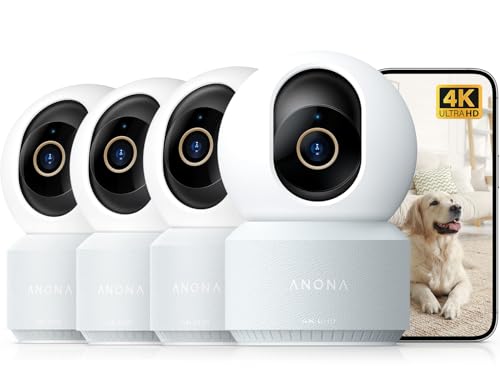
TL;DR: The Anona 4K Indoor Camera delivers crisp 8MP video, 8× digital zoom and 360° pan at a premium price, with AI alerts and no mandatory subscription.
What really stands out is the 4K UHD (8MP) sensor paired with an 8× digital zoom, letting you capture fine detail across a whole room. The camera also swivels a full 360° horizontally and tilts up to 110°, so a single unit can watch every corner without blind spots. Weighing just 0.93 pounds and measuring 3.23 in × 3.11 in × 4.77 in, it’s compact enough to blend into a cream‑colored décor.
Compared with other indoor cams in this roundup, the Anona is lighter than the Google Nest Cam Indoor (about 1.56 pounds) but a bit heavier than the Reolink E1 Zoom (0.55 pounds). Its 8× digital zoom exceeds Nest’s 6× and Reolink’s 3× optical zoom, while the 110° tilt out‑ranges Reolink’s 50° and eufy’s 75°. The Wi‑Fi 6 dual‑band module also promises a steadier connection than the older Wi‑Fi 4 chips found in many budget models.
Reviewers consistently praise the AI detection that flags people, pets and even a crying baby, and they like the fact that cloud storage is optional—local recordings can fill up to a 512 GB microSD card. Professionals note the subscription‑free design and AES‑128 encrypted cloud as strong privacy points. The main downside mentioned is that the microSD card isn’t included, adding an extra purchase for full local storage.
Pros
Cons
Best for: Buyers willing to invest in a proven, high‑quality option — the Anona 4K Indoor Camera offers Resolution: 4K UHD (8MP).
Avoid if: You're shopping on a tight budget — it's priced at $145.99.
TL;DR: The Kasa Smart KC410S delivers 2K QHD video, 360° pan and 113° tilt coverage, color night vision up to 30 ft, and two‑way audio for $33.99, making it a solid indoor security choice.
The standout spec is its 2560 × 1440 (2K QHD / 4 MP) sensor paired with an F/1.6 aperture and a 4 mm lens, which together produce clear detail even in low light thanks to the 850 nm starlight IR LED and 30 ft night‑vision range. Users and professional reviewers alike note that the color night vision keeps footage recognizable after dark, a step up from monochrome night modes.
When you line it up against the other ten cameras, the KC410S’s 360° pan and 113° tilt range outstrip the Reolink E1’s 355° pan and 50° tilt, and also beat the Wansview Q5’s 320° pan and 80° tilt. It’s priced lower than the Blink Mini 2K+ and the eufy Security E30, though it runs on older 802.11b/g Wi‑Fi rather than newer standards some competitors use.
Consumer feedback highlights the convenience of the 2‑way audio and the ability to set up to four activity zones, while the motion‑tracking feature that follows subjects adds an extra layer of security. However, the requirement for a constant wired power connection is a frequent complaint, limiting where you can place the camera.
On the technical side, the camera supports voice control via Amazon Alexa and Google Assistant, offers microSD storage up to 256 GB, and encrypts streams with 128‑bit AES. The included patrol mode lets you schedule monitoring periods, and the 2‑year manufacturer warranty adds peace of mind.
Pros
Cons
Best for: Budget-conscious buyers seeking a reliable entry-level option — the Kasa Smart KC410S offers Tilt Range: 113 degrees
Avoid if: You want the best value‑per‑dollar in its price range
TL;DR: Google’s Nest Cam Indoor (3rd Gen) offers 2K HDR video, a 152° view and 15 ft night‑vision, but its $97.16 price and wired power make it a premium, fixed‑position choice.
The camera captures 2560×1440 px at 30 FPS HDR, delivering crisp detail day and night, and its 152° diagonal field of view reduces blind spots in a typical living‑room layout. A 6x digital zoom lets you focus on distant activity, while the night‑vision LEDs illuminate up to 15 ft (4.5 m) in darkness.
At 1.57 lb (710 g), the Nest Cam is noticeably heavier than the 0.55‑lb Reolink E1 Zoom and the 0.78‑lb eufy Security E30, and its 10‑ft power cable is longer than the 6.5‑ft cable on the Ring Indoor Cam Plus. Its 152° view is wider than Ring’s 138° diagonal, but the camera sits at a higher price point than Ring’s budget‑friendly offering. Compared with the Blink Mini 2K+ and Wyze Cam v4, the Nest Cam provides a larger field of view and higher resolution, though those rivals list lighter bodies and shorter cables.
Professional reviewers praise the “highest resolution yet” claim and note the on‑device machine learning that powers intelligent motion alerts without sending raw footage to the cloud. Users like the free basic video history and the seamless integration with Google Home, yet many mention the subscription required to unlock extended storage and the limitation of a wired USB‑C power source that restricts placement options.
Under the hood, the camera runs secure boot, auto‑updates, and 128‑bit AES encryption with TLS/SSL for data protection. Connectivity includes dual‑band 802.11ac Wi‑Fi and BLE Bluetooth, and the RGB status LED offers quick visual cues. Gemini integration is available but requires a Google Home Premium subscription.
Pros
Cons
Best for: Buyers willing to invest in a proven, high‑quality option — the Google Nest Cam Indoor (3rd Gen) offers Night Vision Range: 15 ft (4.5 m).
Avoid if: You're shopping on a tight budget — it's priced at $97.16.
Breakdown
Kasa Smart KC410S
Pros
Cons
Wyze Cam v4
Pros
eufy Security E30
Pros
Cons

Google Nest Cam Indoor (3rd Gen)
Pros
Cons
Based on scoring data and product specs
Personalized picks
Best Overall Pick
Kasa Smart KC410S
Best OverallBest for: Budget-conscious buyers seeking a reliable entry-level option — the Kasa Smart KC410S offers Tilt Range: 113 degrees
Wyze Cam v4
Best for: Most users looking for a well-reviewed, reliable mainstream option — the Wyze Cam v4 offers Siren Volume: 99 dB
$35.97+$6.01 vs winner
Skip Reolink E1 if…
Reliability and user satisfaction are your top concerns
We’re naming the Kasa Smart KC410S the clear winner of our indoor security camera roundup. At $33.99 it undercuts most rivals, yet it ships a 2560 × 1440 (2K QHD / 4 MP) sensor, a full 360‑degree pan range with 113 degrees of tilt, and a two‑year manufacturer warranty—all backed by a 4.3‑star rating from 9,419 reviewers.
The runner‑up is the Wyze Cam v4, which shines when you need indoor‑outdoor flexibility. With an IP65 rating, color night‑vision LEDs and a motion‑activated 72‑lumen spotlight, it covers a 115.8° diagonal field of view for $35.97, and it carries the highest user rating in the group at 4.4 stars from 12,299 reviews.
For tighter budgets, the Cinnado D1 stands out at $12.99 as the best value‑focused pick. The Wyze Cam v4 also serves as a solid mid‑range choice, offering versatile mounting and advanced AI alerts. If you crave top‑tier detail, the Anona 4K Indoor Camera commands a premium at $145.99, delivering true‑4K resolution for ultra‑clear monitoring.
Pick the Kasa Smart KC410S today and secure your space with premium video and smart‑home integration without breaking the bank.
The KC410S delivers 2560 × 1440 (2K QHD) video at 4 MP, includes AI‑driven motion tracking and person detection, and works with Amazon Alexa and Google Assistant. At $33.99 it undercuts most rivals while still offering premium video quality and smart‑home integration.
No reviews yet — be the first to share your experience.
Please sign in to leave a review