⚡ Quick Answer
Keyless entry locks have become a go‑to upgrade for anyone looking to ditch the jangling bunch of keys at the front door. In this roundup we examined 7 models, from the $49.99 Nice Digi Smart Lock up to the $229.00 Schlage Encode Matte Black, and we kept an eye on real‑world factors like user ratings, price and the range of unlock methods each device offers.
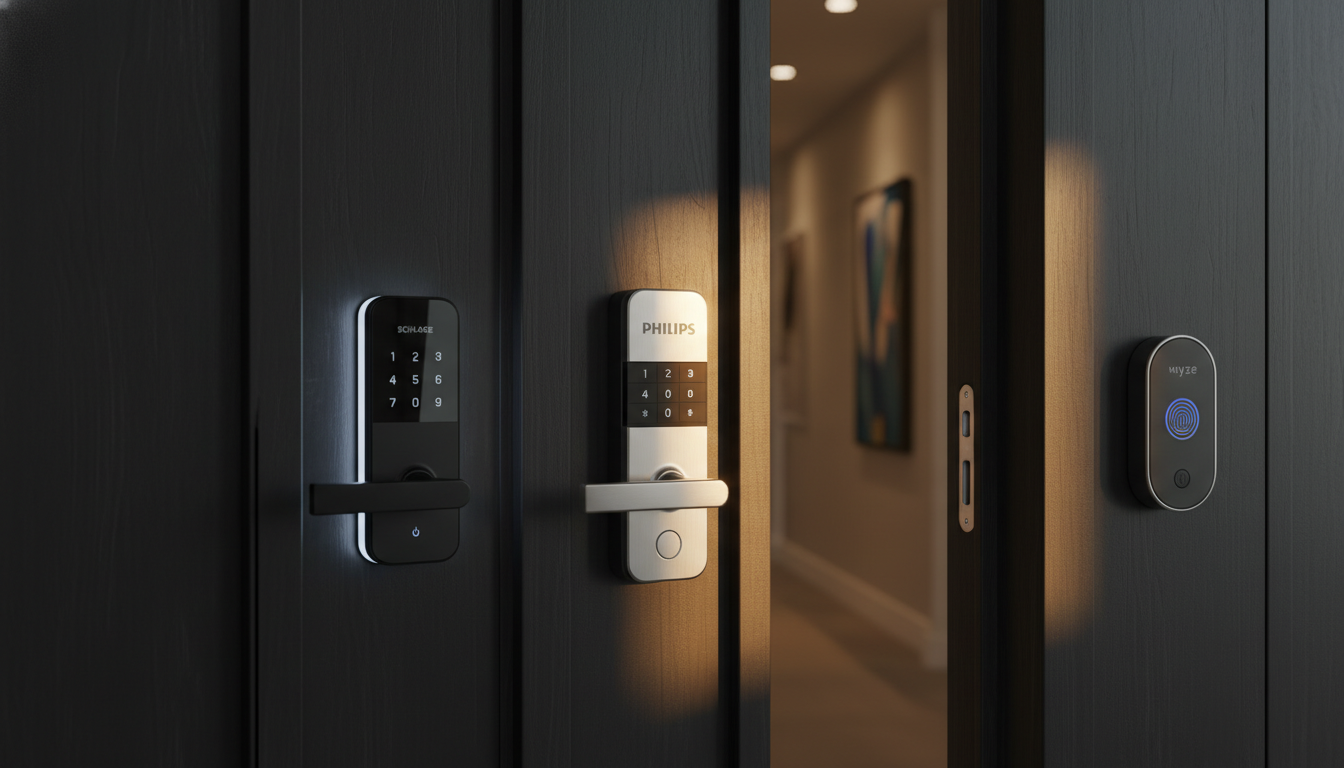
Our selection spans three price tiers. The budget tier includes the Nice Digi ($49.99, 4.5/5 from 1,438 reviews), Brinks ($58.47, 4.3/5 from 141 reviews) and IBLOG Smart Deadbolt ($69.99, a perfect 5.0/5 from 28 reviews). Moving up, the mid‑range Philips Smart Lock with Handle sits at $115.99 with a solid 4.5/5 rating from 417 reviewers and adds built‑in Wi‑Fi, fingerprint access in 0.3 seconds and up to 100 user PINs. The premium tier features the Wyze Palm Lock ($129.98, 4.5/5), YHV Smart Lock ($164.70, 4.0/5) and the Schlage Encode Matte Black ($229.00, 4.4/5), each bringing higher‑end connectivity or security certifications.
Below we break down how these options compare on installation ease, smart‑home integration and overall value, so you can decide which lock fits your door and lifestyle best.
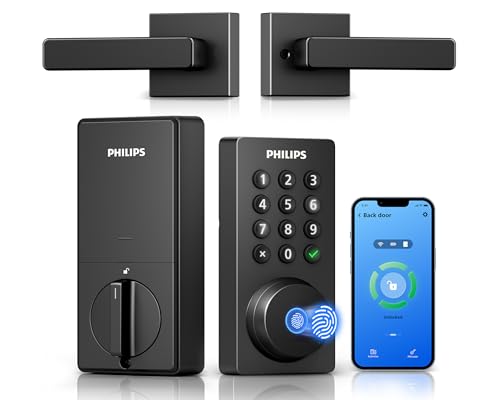
Philips Smart Lock with Handle
Its compact 1.5‑inch height keeps the door profile sleek.
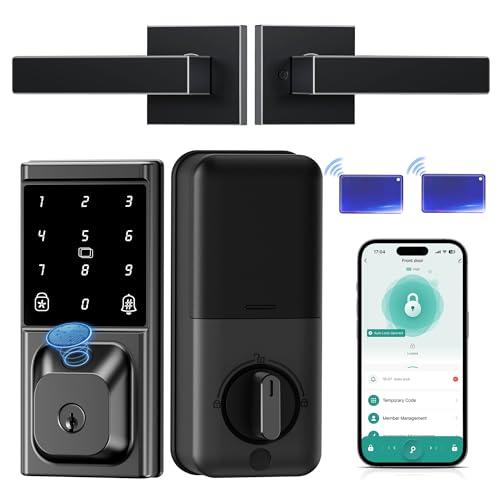
IBLOG Smart Deadbolt
Ideal for budget‑conscious renters, the IBLOG Smart Deadbolt costs $69.99, about $46 less than the Philips mid‑range model.

Schlage Encode Matte Black
Unlike the others, the Schlage Encode adds built‑in Wi‑Fi and Alexa/Google Assistant support, plus a touchscreen keypad, delivering full smart‑home control.
Also considered
TL;DR: The Schlage Encode Matte Black delivers hub‑free Wi‑Fi, Grade AAA security and up to 100 touchscreen codes, though its 3.4‑lb weight makes it heftier than many smart deadbolts.
The lock’s built‑in Wi‑Fi means you skip a separate hub, and the Schlage Home app lets you lock, unlock and monitor access from anywhere. It supports up to 100 unique 6‑digit access codes via a fingerprint‑resistant touchscreen, and it carries an ANSI/BHMA Grade AAA and Commercial Grade 1 rating for strong residential and commercial protection.
At 3.4 pounds, it’s heavier than the Wyze Palm Lock’s 1.9 pounds and the Brinks lock’s 2.92 pounds, though its weight is in the same ballpark as the Nice Digi’s 2.69 pounds. Its 5.0‑inch height also outpaces the Philips Smart Lock with Handle’s 1.5 inches, positioning it as a more substantial deadbolt compared with many of the seven‑product lineup.
Users frequently praise the remote‑access convenience and the peace of mind from temporary access codes, while professional reviewers highlight the Grade AAA rating and the hub‑free Wi‑Fi as standout strengths. The lock runs on four AA batteries with an advertised life of up to 6 months, and it works with Alexa and Google Assistant for voice control. Its operating temperature range of –31 °F to 150.8 °F ensures reliable performance in most climates.
Pros
Cons
Best for: Buyers willing to invest in a proven, high-quality option — the Schlage Encode Matte Black offers Cross Bore Diameter: 2‑1/8" (53.9 mm)
Avoid if: You need a lighter lock, want full functionality without a smartphone app, or have doors that can’t accommodate a heavier deadbolt.
TL;DR: The Nice Digi Smart Lock delivers a quick 5‑minute DIY install, a fast 0.3‑second backlit keypad, IP66 water resistance and AES‑256 encryption for just $49.99, making it a solid entry‑level keyless option.
The lock’s most eye‑catching spec is its ultra‑fast keypad response of 0.3 seconds, paired with a 5‑minute DIY installation that requires no drilling. At a compact 2.7 inches tall, 5.39 inches long and 2.79 inches wide, it fits standard American wooden front doors while staying under 2.69 lb, and its reversible handle adds flexibility for left‑ or right‑handed doors. The unit also offers an auto‑lock window of 5‑99 seconds and a one‑touch lock time of 2 seconds, giving you quick, hands‑free security.
Compared with the six other locks in this roundup, the Nice Digi is lighter than the Brinks lock (2.92 lb) and the Schlage Encode (3.4 lb), but a bit heavier than the Wyze Palm Lock (1.9 lb). Its height of 2.7 inches is considerably shorter than Brinks (5.51 inches) and the Schlage model (5.0 inches), yet taller than the Philips Smart Lock (1.5 inches). In terms of user capacity, Nice Digi supports 20 unique passwords, which is fewer than Brinks’ 50 permanent codes and Philips’ 100 PINs. However, its IP66 rating outperforms Wyze’s IP53 rating, and its auto‑lock timing starts at 5 seconds versus Brinks’ 1‑second minimum, giving you a slightly longer window before the door locks automatically.
Users consistently praise the lock’s “plug‑and‑play” feel – the 5‑minute setup and lack of drilling make it a favorite for renters and DIY‑savvy homeowners. Reviewers also note the responsive keypad and the peace of mind provided by AES‑256 encrypted communication. The main complaints revolve around the need to purchase four AA batteries separately and the absence of any app or Wi‑Fi connectivity, which limits remote management. Professional reviewers highlight the solid build of plastic/metal construction and the useful backlit keypad for night‑time entry.
Pros
Cons
Best for: Budget‑conscious buyers seeking a reliable entry‑level option — the Nice Digi Smart Lock offers Height: 2.7 inches and a compact footprint.
Avoid if: You need app‑based control, Wi‑Fi integration, or biometric fingerprint scanning.
TL;DR: The Wyze Palm Lock offers palm‑vein biometric entry, auto‑lock and IP53 protection in a sleek 1.9‑pound package, but installation takes about 20 minutes and it sits at a mid‑range price.
The standout feature is its palm‑vein recognition, a contactless biometric method that professional reviewers say is harder to spoof than fingerprints. The lock weighs 1.9 pounds and can store up to 50 guest codes with anti‑peep protection, while the built‑in gyroscope handles auto‑lock detection. Its IP53 rating means it can tolerate splashes and dust, and the mechanical key backup is included for peace of mind.
Compared with the other six locks, the Wyze Palm Lock is lighter than the Nice Digi Smart Lock (which weighs about 2.69 pounds) but heavier than the Brinks Keyless Entry Door Lock (2.92 pounds). Installation takes roughly 20 minutes, longer than Nice Digi’s 5‑minute setup but similar to the DIY effort required for the Philips Smart Lock with Handle. Price‑wise it sits above the budget‑friendly Nice Digi and Brinks models, yet below the premium Schlage Encode.
User sentiment highlights the convenience of palm‑vein scanning and the dual‑battery system—main battery lasting about six months and a backup that can keep the lock running for two weeks. However, reviewers note the emergency USB‑C charging cable isn’t bundled, so you’ll need to source one yourself. The lock integrates with Wi‑Fi, Alexa and Google Assistant, and carries BHMA3 certification, indicating it’s been tested for durability against slams and splashes.
Pros
Cons
Best for: Those prioritizing quality and willing to pay for premium performance — the Wyze Palm Lock offers Installation Time: 20 minutes
Avoid if: You need advanced features or professional‑grade performance
TL;DR: The Philips Smart Lock with Handle blends a sleek 1.5‑inch profile, 0.3‑second fingerprint unlock and hub‑free 2.4 GHz Wi‑Fi for $115.99, delivering solid mid‑range value for families and tech‑savvy homeowners.
The lock’s most eye‑catching spec is its ultra‑quick fingerprint scanner: it reads a fingerprint in just 0.3 seconds with a 99 % success rate, and it stores up to 20 fingerprints. Its compact dimensions—1.5 inches high, 6.0 inches long and 2.2 inches wide—fit neatly into most standard door setups while still housing a full keypad, mechanical key slot and a built‑in handle.
When you line it up against the other six contenders, the Philips model sits in a sweet spot. The Wyze Palm Lock is noticeably heavier, and its auto‑lock relies on a gyroscope rather than the adjustable 10‑180 second range Philips offers. IBLOG’s deadbolt boasts a larger fingerprint capacity (100 versus 20) but requires a separate gateway for remote access. YHV’s lock is deeper and taller, while Brinks provides a tighter auto‑lock window of 1‑99 seconds. Nice Digi’s unit is shorter and offers fewer user codes, and the Schlage Encode is the bulkiest of the bunch. In short, Philips balances size, feature set and price better than the pricier Schlage or the more limited Nice Digi.
Users consistently praise the hassle‑free app and the voice‑assistant integration that lets Alexa or Google Assistant lock and unlock the door. Professional reviewers note the convenience of built‑in Wi‑Fi—no hub needed—and the reliable activity logs stored locally. The only recurring gripe is the reliance on eight AA batteries without an emergency backup, which can drain faster under heavy Wi‑Fi use. The ANSI/BHMA Grade 3 rating also shows up in discussions about whether the lock meets higher‑security demands.
Pros
Cons
Best for: Most users seeking a balanced, mainstream option — the Philips Smart Lock with Handle offers Fingerprint Capacity: 20
Avoid if: You need more than 20 fingerprint users, require commercial‑grade security, or cannot rely on battery power alone.
TL;DR: The YHV Smart Lock blends a 5‑method entry system, a built‑in doorbell camera, and IP54 weather‑proofing for $164.70, but its AA‑battery life of roughly 200 unlocks keeps it in the premium‑price bracket.
The standout feature is its multi‑method access: five distinct unlock options—including fingerprint, password, app, physical key, and temporary codes—are all supported. Fingerprint scans finish in just 0.3 seconds with a >99% success rate, and you can store up to 50 fingerprints and 50 passwords, each limited to a 6‑digit code.
Compared with the six other locks in this roundup, the YHV sits at the higher end of the price spectrum, making it pricier than the Wyze Palm Lock and Brinks Keyless Entry Door Lock. Its 3.0‑inch depth also exceeds the Schlage Encode’s 0.9‑inch depth, while the 6.85‑inch height outstrips the Philips Smart Lock with Handle’s 1.5‑inch profile and the Brinks model’s 5.51‑inch height. However, it offers more unlock methods than the Nice Digi Smart Lock, which only provides keypad entry.
Users repeatedly praise the convenience of having a camera and two‑way audio built into the deadbolt, noting that the integrated doorbell lets them see and speak to visitors from the TUYA app. Reviewers also highlight the anti‑peep password feature, which masks extra digits around the 6‑digit code, and the stranger alarm that alerts you to forced entry attempts. The main criticism centers on the limited battery life—about 200 unlocks per set of four AA batteries—and the fact that those batteries aren’t included.
Pros
Cons
Best for: Tech‑savvy homeowners who want a full‑feature deadbolt with fingerprint capacity of 50, built‑in camera, and robust weather resistance.
Avoid if: You need a budget‑friendly lock or only basic keypad functionality without smart‑home integration.
TL;DR: For $58.47, the Brinks Keyless Entry Door Lock gives you an illuminated keypad, 50 permanent codes, weather‑resistant steel construction, and up to 24 months of battery life, all in a DIY package.
The lock’s auto‑lock range spans 1 to 99 seconds and it snaps shut in just 2 seconds when you press the button, making quick entry feel effortless. Its illuminated keypad lets you see the numbers at night, while the PRO‑GUARD anti‑tamper alarm, anti‑pry shield, drill‑resistant keyway and hardened steel anti‑saw pin add layers of residential security. At 5.51 inches tall, 7.87 inches long, 3.54 inches wide and weighing 2.92 lb, the unit is solid enough to stand up to daily use.
Compared with the Nice Digi Smart Lock, Brinks offers more than double the permanent user codes (50 vs. 20) but is slightly heavier than Nice Digi’s 2.69 lb and noticeably taller than its 2.7‑inch height. It also out‑sizes the Wyze Palm Lock, which weighs only 1.9 lb, yet remains lighter than the Schlage Encode’s 3.4 lb body. While the IBLOG Smart Deadbolt includes Bluetooth range of 8–10 meters, Brinks provides no built‑in wireless connectivity, placing it on the simpler, non‑smart end of the spectrum alongside the Philips Smart Lock, which adds app control and fingerprint support.
Professional reviewers highlight the lock’s long battery life—up to 24 months on four AA cells—and the low‑battery indicator that warns you before power runs out. Users appreciate the flexibility of 50 permanent and 10 temporary codes, especially for granting short‑term access to guests or service providers. The weather‑resistant steel build and satin‑nickel finish earn praise for durability, while the DIY installation (no wiring required) keeps the setup straightforward. However, the absence of smart‑home integration means you’ll need to manage access directly on the lock, which some homeowners find limiting.
Technical details round out the picture: the backset adjusts to 2.375 inches, fitting standard doors with a bore hole of 2‑1/8 inches, and the lock accommodates door thicknesses from 1.375 to 1.75 inches. The illuminated keypad, 2‑in‑1 unlock method, and weather‑resistant rating make it a practical upgrade for most front doors without the need for extra wiring or a hub.
Pros
Cons
Best for: Entry‑level buyers or those on a tight budget — the Brinks Keyless Entry Door Lock offers Battery Life: Up to 24 months
TL;DR: The IBLOG Smart Deadbolt offers 100‑fingerprint slots, 0.3‑second recognition, Bluetooth range up to 10 m, and a lightweight 2.26 lb design, all for $69.99, earning a flawless 5‑star rating.
What really sets the IBLOG Smart Deadbolt apart is its generous fingerprint capacity and speed. It stores up to 100 fingerprints and verifies each scan in just 0.3 seconds. The lock also talks to your phone via Bluetooth with a range of 8–10 meters, and its IP54 rating guards against dust and splashes. Five unlocking methods—fingerprint, app, keypad, physical key and fob cards—give you plenty of ways to get in, while anti‑peep technology and an anti‑pry alarm add extra peace of mind.
At 2.26 lb (1025.16 g) the unit is lighter than the Brinks lock (2.92 lb) and the Nice Digi model (2.69 lb), yet it still feels solid compared with the ultra‑light Wyze Palm Lock (1.9 lb). Its height of 159.77 mm makes it taller than Brinks (5.51 in), Nice Digi (2.7 in), Philips (1.5 in) and Schlage Encode (5.0 in), putting it on a similar plane to the YHV Smart Lock (6.85 in) and Wyze’s internal assembly (182 mm). No other lock in this group lists a Bluetooth range, so the IBLOG’s 8–10 m connectivity is a unique advantage. Fingerprint capacity also outstrips Philips (20) and YHV (50), giving you room for guests and family members.
Users consistently praise the keyless experience, noting that the two lever handles make everyday use feel natural and the 0.3‑second fingerprint response eliminates the “wait for the lock” frustration. The flawless 5‑star rating from 28 reviewers underscores the overall satisfaction. However, several reviewers point out that the lock’s smart ecosystem feels incomplete—Wi‑Fi support isn’t listed and the optional G2 Gateway is sold separately, which can add to the total cost.
Installation is marketed as a no‑drill retrofit, and the lock offers an auto‑lock timer that can be set anywhere from 1 to 180 seconds, plus a lockout after five wrong passwords. With an ANSI Grade 3 security rating and an IP54 enclosure, the deadbolt is built to handle the wear and tear of a typical residential door while keeping the interior protected from moisture.
Pros
Cons
Best for: Entry-level buyers or those on a tight budget — the IBLOG Smart Deadbolt offers Fingerprint Capacity: 100
Avoid if: You want the best value-per-dollar in its price range
Breakdown
Philips Smart Lock with Handle
Pros
IBLOG Smart Deadbolt
Pros
Cons
Schlage Encode Matte Black
Pros

Nice Digi Smart Lock
Pros
Based on scoring data and product specs
Personalized picks
Best Overall Pick
Philips Smart Lock with Handle
Best Mid-Range PickBest for: Most users seeking a balanced, mainstream option — the Philips Smart Lock with Handle offers Fingerprint Capacity: 20
IBLOG Smart Deadbolt
Best for: Entry-level buyers or those on a tight budget — the IBLOG Smart Deadbolt offers Fingerprint Capacity: 100
$99.99-$70.00 vs winner
Skip YHV Smart Lock if…
You're on a tight budget or only need basic functionality
Philips Smart Lock with Handle takes the top spot. It earned a solid 4.5 / 5 rating from 417 reviewers, offers AES‑128 encryption, and delivers a 99 % fingerprint recognition rate in just 0.3 seconds. Its auto‑lock can be set anywhere between 10 and 180 seconds, and it fits doors 1‑3/8″ to 2″ thick, meeting ANSI/BHMA Grade 3 standards without needing a hub.
The runner‑up, IBLOG Smart Deadbolt, shines for renters or anyone who wants a hassle‑free install. Its no‑drill mounting means you won’t have to chase a contractor, while Bluetooth reaches 8–10 meters for convenient phone control. The lock supports 100 fingerprint slots, anti‑peep and anti‑pry alarms, and an auto‑lock range of 1–180 seconds, giving solid security without permanent modifications.
For those on a tighter budget, the Nice Digi Smart Lock at $49.99 provides basic keyless entry at an unbeatable price. If you’re willing to spend more for premium features, the Schlage Encode Matte Black at $229.00 remains the most popular high‑end choice, offering extensive smart‑home integration and a reputation for reliability.
Pick the Philips Smart Lock with Handle today and enjoy a sleek, secure, and smart entry solution that outperforms even pricier rivals.
The Philips lock costs $115.99 and adds a fingerprint scanner, voice‑assistant support for Alexa and Google Assistant, and AES‑128 encryption, while the IBLOG deadbolt is $69.99 and lacks voice control. If you value a richer feature set and don’t mind the higher price, the Philips model leads on functionality.
No reviews yet — be the first to share your experience.
Please sign in to leave a review