⚡ Quick Answer
At $49.99 and a 4.5‑star rating from 1,438 reviewers, the Nice Digi Smart Lock packs a lot of value into a compact black housing. It offers true auto‑lock, a 12‑month AA‑battery life, and an IP66‑rated shell that can handle the elements. The backlit keypad makes entry easy in the dark, while the DIY installation means you won’t need to drill into the frame. Coupled with AES‑256 encryption and mechanical key fallback, it delivers a solid security foundation without the premium price tag.
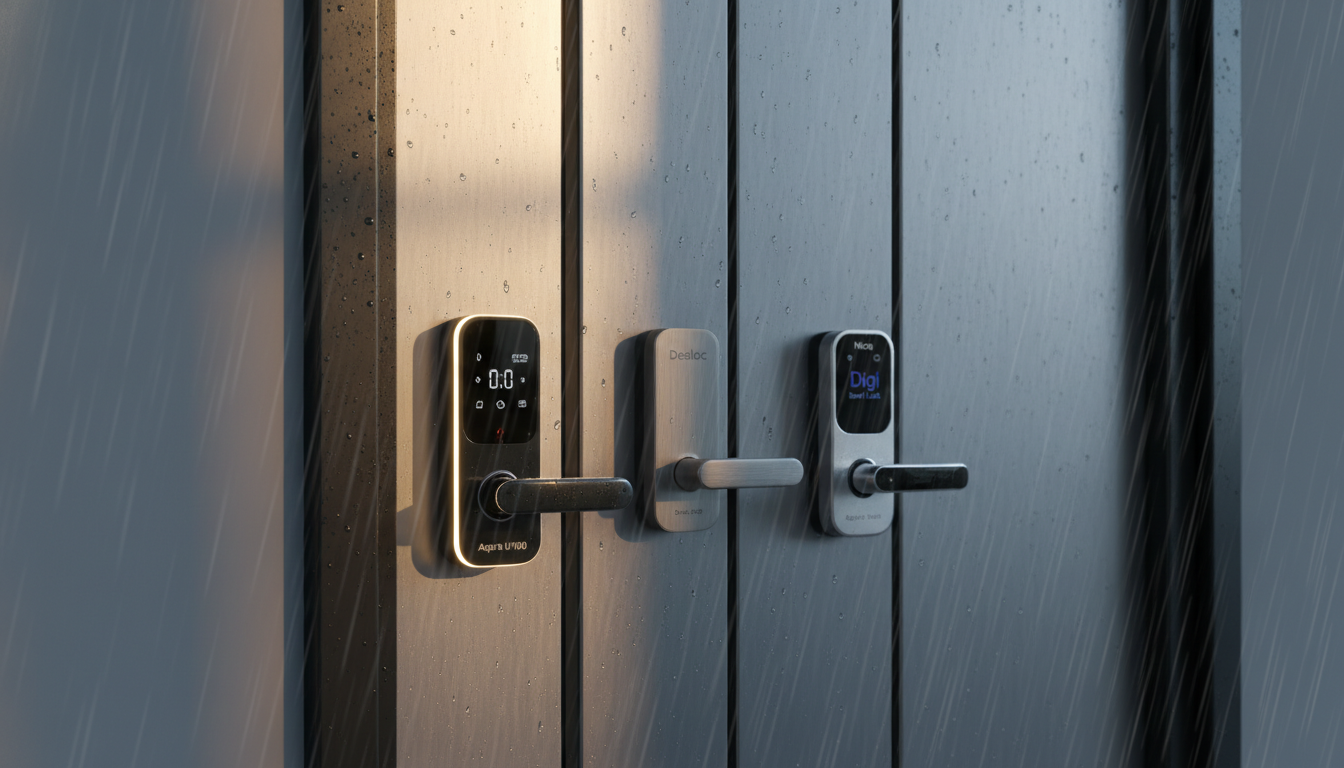
Our roundup compares 10 keyless entry locks across three price tiers. The budget tier (Veise VE012W, Nice Digi, Desloc C110, Wyze Bolt) keeps costs under $50 and still provides essential features like auto‑lock and DIY setup. Mid‑range options (Desloc B200, Wyze Bolt v2) add smart‑home integration and longer Bluetooth ranges. The premium tier (eufy C33, Wyze Palm, Veise VE017G‑H, Aqara U100) pushes the envelope with Wi‑Fi connectivity, higher IP ratings and advanced biometric capabilities, with prices climbing to $139.99.
Read on to see how each lock’s features, installation effort and smart‑home compatibility stack up, and find the model that fits your door, budget and lifestyle best.

Nice Digi Smart Lock
Its compact 2.7‑inch height keeps the door profile sleek, delivering solid value at $49.99.

Desloc B200
Ideal for tech‑savvy homeowners who want fingerprint access and Bluetooth control, it costs about $30 more than the Nice Digi at $79.98.
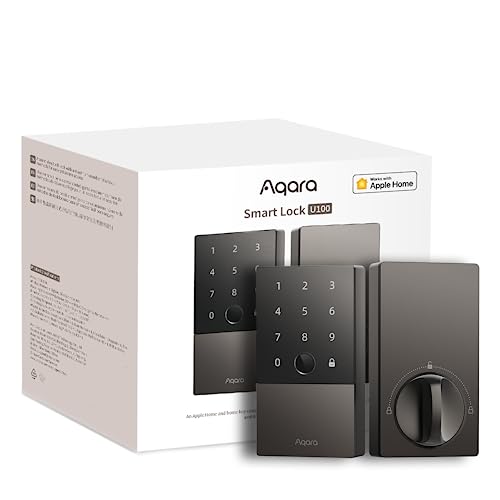
Aqara U100
Stands out with a 65.6‑foot Bluetooth range and BHMA Level 3 security, catering to users needing extensive smart‑home coverage.
Also considered
TL;DR: The Aqara U100 smart lock costs $139.99, offers 98.6% fingerprint accuracy, 8‑month battery life, and full Apple Home, Google Home and Alexa integration, but its premium price and extra hub requirement may deter budget‑focused buyers.
The lock’s standout spec is its fingerprint sensor, which the manufacturer claims hits 98.6% accuracy and stores up to 50 fingerprints. Combined with a matte keypad, NFC, a mechanical key and Apple Home Key support, you have more ways to get in than most of the nine rivals in this roundup.
At $139.99, the U100 is pricier than the Nice Digi Smart Lock ($49.99) and the Desloc C110 ($49.99), yet comparable to the Veise VE017G‑H ($136.99). It also weighs 3.86 pounds, making it heavier than the Wyze Palm Lock (1.9 pounds) and the Nice Digi unit (2.69 pounds) but lighter than the Desloc B200 (4.74 pounds). Its 8‑month battery life matches the eufy C33’s 8‑12 month range, while its Bluetooth range of 65.6 feet exceeds the Desloc B200’s 2 meter limit.
Reviewers consistently praise the lock’s versatility and the loud 100 dB speaker for outdoor alerts. Professional reviewers highlight the reliable auto‑lock and passage modes, as well as the 128‑bit AES encryption that protects fingerprint data. However, users note that full Zigbee functionality and Apple Home Key require an optional Aqara hub, adding extra cost, and the inner plastic panel isn’t weather‑proof, limiting use on fully exposed doors.
Pros
Cons
Best for: Households that need up to 50 biometric users, value deep smart‑home integration, and don’t mind a premium price—plus you’ll enjoy an 8‑month battery life.
Avoid if: You require a fully weather‑proof lock without an extra hub, or you prioritize a lighter, lower‑priced solution.
“HomeKit News praises the U100 for its fingerprint sensor, Apple HomeKey support, auto-locking, and 8-month battery life, noting solid Zigbee 3.0 performance with an optional Aqara hub and IP65 outer panel for weather resistance.”
TL;DR: The Nice Digi Smart Lock delivers quick 5‑minute DIY installation, a fast 0.3‑second backlit keypad, and auto‑lock timing from 5‑99 seconds—all for $49.99.
The lock’s standout feature is its auto‑lock that activates anywhere between 5 and 99 seconds after you close the door, while the backlit keypad registers a press in just 0.3 seconds. It runs on four AA batteries that last about 12 months and is sealed to an IP66 rating, so rain or splashes won’t interfere with operation.
At 2.69 lb, the Nice Digi is heavier than the Veise VE012W (1.68 lb) but lighter than the Desloc B200 (4.74 lb) and roughly matches the Wyze Bolt’s 2.7 lb. Its 5‑minute installation beats the 15‑minute setup of the Wyze Bolt v2 and the 20‑minute install of the Wyze Palm Lock, and it requires no drilling. However, it only supports 20 user codes, which is fewer than the 100‑code capacity of the Desloc C110.
Customers appreciate the hassle‑free mounting and the responsive keypad, noting that the lock feels solid and the backlit keys are easy to use at night. Reviewers also point out that the package doesn’t include the AA batteries, so you’ll need to buy them separately. The lack of Wi‑Fi, app control, or fingerprint scanning means it’s best suited for households that just want reliable keyless entry without a smart‑home hub.
Beyond convenience, the lock uses AES‑256 encryption for secure code storage and offers a reversible handle, making it adaptable to left‑ or right‑hand doors. A mechanical key backup provides peace of mind if the battery dies or you forget the code.
Pros
Cons
Best for: Budget‑conscious buyers seeking a reliable entry‑level option — the Nice Digi Smart Lock offers Installation Time: 5 minutes.
Avoid if: You require app control, Wi‑Fi connectivity, or biometric fingerprint scanning.
TL;DR: The Desloc B200 delivers sub‑0.3‑second fingerprint unlock, a year of AA‑battery power, and DIY installation at a $79.98 price, but you’ll need a separate gateway for remote control.
The lock’s standout spec is its fingerprint recognition speed of less than 0.3 seconds, letting you glide through the door faster than most keyless options. It runs on four AA batteries for up to 12 months and auto‑locks automatically, while the Bluetooth range is listed at 2 meters. At 4.74 pounds, the unit measures 3.23 inches high, 14.37 inches long and 10.22 inches wide, giving it a solid feel without overwhelming a standard door.
Compared with the nine other locks in this roundup, the B200 is heavier than the compact Nice Digi Smart Lock and the Veise VE012W, yet it offers a broader set of unlock methods than many peers that list only a few. Its price sits in the mid‑tier range, making it pricier than the ultra‑budget models but still competitive against higher‑end options that include built‑in Wi‑Fi.
Users consistently praise the lightning‑fast fingerprint response and the convenience of a full‑year battery life, noting that the clear hardware labeling makes DIY installation straightforward. Professional reviewers echo this sentiment, highlighting the lock’s robust construction and the reliability of backup entry methods like IC cards and a USB power port. The most common complaint is the need to purchase the G2 Wi‑Fi Gateway separately for remote access, and the short Bluetooth range can be limiting if you plan to control the lock from farther away. Additionally, owners of mortise or screen/storm‑door setups report compatibility challenges.
Pros
Cons
Best for: Most users looking for a well‑reviewed, reliable mainstream option — the Desloc B200 offers Bluetooth Range: 2 meters.
Avoid if: You need built‑in remote connectivity without extra hardware, or you have mortise, integrated, or screen/storm‑door configurations.
“fast & reliable”
“USB port saves the day”
TL;DR: The Wyze Palm Lock uses palm‑vein biometrics, supports 50 guest codes and auto‑lock, but its $129.98 price makes it a premium choice for tech‑savvy households.
What really sets this lock apart is its palm‑vein recognition, a contactless biometric method that’s harder to spoof than traditional fingerprint scanners. The unit also offers anti‑peep protection for PIN entry, 50 programmable guest codes, and a gyroscope‑driven auto‑lock that engages as soon as the door swings shut. At 1.9 pounds (862 g) it feels solid yet manageable, and Wyze lists the DIY install at about 20 minutes.
In the ten‑product lineup, the Palm Lock sits on the higher‑end of the price spectrum, making it pricier than the Nice Digi Smart Lock and other budget‑focused options. It’s lighter than the Aqara U100 (around 3.86 pounds) and the Desloc B200 (about 4.74 pounds), yet a bit lighter than Wyze’s own Bolt model at 2.7 pounds. Guest‑code capacity also outstrips the Nice Digi’s 20‑code limit, giving families more flexibility.
Reviewers consistently highlight the biometric security as a major win, noting that the palm‑vein scan feels “future‑proof” compared with fingerprint locks. Professional reviewers point out the BHMA3 certification, which means the lock has passed rigorous durability tests. On the downside, users mention that the USB‑C emergency charging cable isn’t included, and the $129.98 price tag can be a hurdle for budget‑conscious shoppers.
Beyond the biometric front, the lock runs on Wi‑Fi, plugs into the Wyze ecosystem, and works with Alexa and Google Assistant. It carries an IP53 rating for splash resistance, a main battery life of six months, and a backup pack that can keep the lock running for two weeks after a power loss. The built‑in millimeter‑wave radar only activates when someone approaches, helping conserve power.
Pros
Cons
Best for: Those prioritizing quality and willing to pay for premium performance — the Wyze Palm Lock offers Installation Time: 20 minutes
Avoid if: You need advanced features or professional‑grade performance
TL;DR: The eufy Smart Lock C33 costs $99.99, offers integrated Wi‑Fi, adaptive fingerprint entry, and a 5.12‑inch height, making it a solid mid‑range option for families and renters.
What really sets the C33 apart is its built‑in Wi‑Fi, which lets you control the deadbolt directly from the eufy app without a separate bridge. The lock measures 7.24 inches long, 6.06 inches wide and 5.12 inches high, and runs on eight AA alkaline batteries that the manufacturer says last 8‑12 months. Those dimensions give it a solid presence on the door while still fitting most standard frames.
Compared with the other nine entries, the C33 sits at a higher price point than the Nice Digi Smart Lock and is taller than the Desloc B200, yet its overall footprint is more compact than the larger Desloc model. It also offers more unlock methods than many peers, including NFC‑card support and a back‑lit anti‑peeping keypad, while still fitting left‑ and right‑hand doors.
Everyday owners praise the adaptive fingerprint sensor for learning the grip pattern of each family member, turning entry into a quick one‑handed motion. Professional reviewers note the 15‑minute, no‑drill install as a big win for renters and short‑term rentals. Users also appreciate real‑time notifications and a clear event history in the app, though a handful of comments mention occasional keypad lag in dim lighting and slower battery drain when the lock is used heavily.
From a technical standpoint, the lock carries a BHMA Grade 3 certification, delivering baseline mechanical security, and an IP53 rating that guards against splashes. Privacy mode adds a red‑light indicator that blocks exterior keypad access, and the auto‑lock timer can be set to count down after each entry.
Pros
Cons
Best for: Those prioritizing quality and willing to pay for premium performance — the eufy Smart Lock C33 offers Height: 5.12 inches
Avoid if: You need the highest security rating or integrated video‑doorbell features.
TL;DR: The Wyze Bolt v2 packs a fast AI fingerprint scanner, built‑in Wi‑Fi and a 50‑code keypad into a 15‑minute install for $79.98, but it runs on eight AA cells and its auto‑lock can engage on an open door.
The standout feature is the AI self‑learning fingerprint scanner that unlocks in just 0.3‑0.5 seconds, paired with a tempered‑glass keypad that holds up to 50 access codes. Hardware encryption keeps your data local, and the lock talks directly to your phone over Wi‑Fi (802.11b/g/n 2.4 GHz) without a hub. At 1134 g (about 2.5 lb) it feels solid, and the 15‑minute installation claim matches many user reports of a quick setup.
Compared with the other nine locks in this roundup, the Wyze Bolt v2 sits at a higher price tier than ultra‑budget options like the Nice Digi Smart Lock, yet it’s lighter than the heavyweight Desloc B200 (around 4.74 lb) and comparable in weight to the Veise VE012W (1.68 lb). Its 16 ft Bluetooth range is modest but sufficient for most door frames, falling short of the 5 m range listed for the older Wyze Bolt model. The lock’s IP53 rating gives it basic weather resistance, a step up from some peers that don’t list any rating.
Everyday owners praise the lock’s reliable fingerprint entry and the fact that you can finish mounting in about 15 minutes. Reviewers also note the 8‑month battery life, though the need for eight AA cells is a recurring complaint, especially when rivals run on four. Professionals highlight the BHMA Grade 2 certification as solid residential protection, but they also warn that the auto‑lock timer works without door‑closed detection, which could lock the door while it’s still ajar.
Pros
Cons
Best for: Most users seeking a balanced, mainstream option — the Wyze Bolt v2 offers Installation Time: 15 minutes
Avoid if: You're shopping on a tight budget — it's priced at $79.98
TL;DR: The Veise VE017G-H Matte Black offers 8‑in‑1 access, fast 0.2‑second fingerprint reads, and a customizable 10–99 second auto‑lock at $136.99, but its premium price and precise borehole requirements may limit budget‑focused buyers.
What really stands out is the lock’s breadth of entry options. With 8‑in‑1 unlock methods—including fingerprint, app, backlit keypad, RFID fobs, eKeys, a mechanical key, web portal, and voice control—you can choose the method that fits your routine. The fingerprint sensor stores up to 50 prints and verifies them in just 0.2 seconds, while the passcode memory holds 250+ codes. Auto‑Lock can be set anywhere from 10 seconds to 99 seconds, and the broader timer range runs from 1 second up to 999 seconds, giving you fine‑grained control over door security.
Compared with the other nine locks in this roundup, the VE017G-H sits at the higher end of the price spectrum, making it pricier than many entry‑level models such as the Nice Digi Smart Lock. Its physical dimensions—12.83 inches long, 9.29 inches wide, and 3.74 inches tall—are also longer than several compact competitors, which can be an advantage for larger deadbolts but may require more clearance. On the durability front, its IP55 rating outperforms options that only reach IP53, offering better protection against dust and splashes.
Users who have installed the Veise lock frequently highlight the convenience of real‑time notifications and remote management through the KK Home app, as well as the built‑in alarm that deters tampering. Professional reviewers point out the lock’s ANSI Grade 3 certification and AES 128‑bit encryption as solid security credentials. However, a recurring theme in consumer feedback is the installation challenge: the lock demands a 2‑1/8 inch borehole and a 3/8 inch handle bore, which can be tricky on older doors. Some owners also note that full smart‑home integration may require an optional Wi‑Fi Gateway G2, adding another cost consideration.
Pros
Cons
Best for: Those prioritizing quality and willing to pay for premium performance — the Veise VE017G-H Matte Black offers Auto‑Lock Customizable Range: 10–99 seconds
Avoid if: You're shopping on a tight budget — it's priced at $136.99 and may require extra hardware for full smart‑home integration.
TL;DR: The Veise VE012W Matte Black is a $49.98 Wi‑Fi smart deadbolt with fingerprint access, IP55 protection, and a lightweight 1.68‑lb design, offering solid value for budget‑focused homeowners.
At $49.98, the VE012W packs a built‑in Wi‑Fi module, a digital keypad and fingerprint scanner, and a BHMA Grade 3 certification into a compact 3.0‑inch depth, 5.1‑inch height and 1.3‑inch width package. Weighing just 1.68 pounds, it meets an IP55 rating and operates from –4 °F to 131 °F, making it suitable for most front‑door environments.
Compared with the other nine locks in this roundup, the Veise is noticeably lighter than the Nice Digi Smart Lock (around 2.69 lb) and the Desloc C110 (about 2.12 lb). It also sits taller than Nice Digi’s 2.7‑inch height, though its depth is similar to many competitors. While several rivals rely on Bluetooth, Veise’s Wi‑Fi connectivity eliminates the need for an external hub, matching Nice Digi’s approach but standing out from the Bluetooth‑only models.
Professional reviewers highlight the convenience of the fingerprint scanner and the hub‑free Wi‑Fi setup, noting that the lock feels solid despite its modest price. Consumer feedback points out that the Wi‑Fi pairing can sometimes require extra troubleshooting, and the requirement for eight AA batteries may raise long‑term replacement costs. Still, the combination of app, voice, PIN, and physical key access offers flexibility for most households.
Technical details reinforce its practicality: the lock fits doors up to 1.5 inches thick, uses a 2.75‑inch backset, and supports unlock methods via the KK Home app, voice assistants (Alexa, Google), fingerprint, PIN code, and a traditional key. Its IP55 rating and wide temperature range further assure durability in varied climates.
Pros
Cons
Best for: Entry-level buyers or those on a tight budget — the Veise VE012W Matte Black offers Depth: 3.0 inches
Avoid if: You need higher‑grade security or a hub‑centric smart‑home ecosystem.
TL;DR: The Wyze Bolt costs $76.98, offers a solid‑metal, IPX5‑rated deadbolt with a backlit anti‑peep keypad, 5 m Bluetooth range and an under‑1‑second fingerprint unlock.
The standout spec is the fingerprint sensor that unlocks in under 1 second, a speed reviewers repeatedly praise for its reliability. Coupled with a backlit keypad that hides extra digits (anti‑peep technology), the lock delivers quick, private entry without a physical key.
At $76.98, the Wyze Bolt sits in the same price tier as the Desloc B200 ($79.98) and Wyze Bolt v2 ($79.98), but it is noticeably cheaper than the $99.99 eufy Smart Lock C33. Its 2.7 lb (1225 g) weight makes it heavier than the Veise VE012W (1.68 lb) and Wyze Palm Lock (1.9 lb), yet comparable to the Nice Digi Smart Lock (2.69 lb). The 5 m Bluetooth range is longer than the 2 m range of the Desloc B200, though still limited to local control.
Users consistently highlight the long battery life—10 to 12 months on four AA cells—as a major convenience, reducing the need for frequent replacements. Professional reviewers also note the solid metal construction and IPX5 waterproof rating as signs of durability for front‑door use. However, the lack of Wi‑Fi, Alexa or Google integration means you can only unlock the door within Bluetooth range, and there’s no physical key backup or tamper alarm for added security.
Pros
Cons
Best for: Entry-level buyers or those on a tight budget — the Wyze Bolt offers Bluetooth Range: 5 m
“under a second”
“can't unlock from anywhere”
TL;DR: The Desloc C110 delivers fast fingerprint access, a full‑year battery life, and BHMA Grade 3 security in a compact 8.09 × 5.91 × 3.98‑inch aluminum body for just $49.99.
What really sets the C110 apart is its combination of speed and durability. The FlashPrint fingerprint algorithm unlocks the door in under 0.3 seconds, while the reinforced lock core and IP54 rating protect against both physical tampering and moisture. With a 12‑month AA‑battery lifespan, 100 PIN slots, 50 fingerprint slots, and auto‑lock enabled, the lock covers the basics without needing an app or Bluetooth hub.
In a lineup that includes the Nice Digi Smart Lock, Veise VE012W, and Wyze Bolt, the C110 sits in the middle of the weight spectrum at roughly 2.12 lb—lighter than Nice Digi’s 2.69 lb and Wyze’s 2.7 lb, but a bit heftier than Veise’s 1.68 lb. Its 8.09‑inch depth also makes it deeper than the Nice Digi’s 5.39‑inch length, while its 4‑inch height exceeds the Nice Digi’s 2.7‑inch profile. Unlike the Veise or Wyze models, the C110 offers no Wi‑Fi or Bluetooth connectivity, so remote locking isn’t an option, but the lack of a required app keeps installation simple and cost low.
Users consistently praise the lock’s “instant” fingerprint response, noting it works even when their hands are wet or gloved—an advantage highlighted by professional reviewers who call the scanner “potentially best in class for 2025.” The included three physical keys add a fallback that many renters appreciate. However, several owners mention the absence of a detailed low‑battery warning as a minor inconvenience, and the no‑app design means you can’t receive remote alerts or lock the door from your phone.
From a technical standpoint, the C110 endures 100,000 lock/unlock cycles and survives a 3,000‑Newton impact test, meeting the BHMA Grade 3 security standard. Its anti‑peep PIN entry and anti‑pry construction further harden the lock against forced entry, while the aluminum alloy body ensures a sturdy feel without excessive bulk.
Pros
Cons
Best for: Buyers in the budget price range seeking the best quality at that price point — the Desloc C110 offers Physical Keys Included: 3
Avoid if: You need powerful performance or professional‑grade features such as remote app control or extensive smart‑home integration
Breakdown
Nice Digi Smart Lock
Pros
Desloc B200
Pros
Aqara U100
Pros
Cons

Desloc C110
Pros
Based on scoring data and product specs
Personalized picks
Best Overall Pick
Aqara U100
Most PopularBest for: Those prioritizing quality and willing to pay for premium performance — the Aqara U100 offers Battery Life: 8 months
Nice Digi Smart Lock
Best for: Budget-conscious buyers seeking a reliable entry-level option — the Nice Digi Smart Lock offers Installation Time: 5 minutes
$62.99-$87.00 vs winner
Skip Veise VE012W Matte Black if…
You need powerful performance or professional-grade features
We’re naming the Nice Digi Smart Lock the clear winner of our keyless entry roundup. At $49.99 it’s the most affordable option, yet it still earns a solid 4.5‑star rating from 1,438 reviewers. It offers true auto‑lock, an IP66 weather‑proof rating and AES‑256 encryption, giving you peace of mind without breaking the bank.
The Desloc B200 lands as the runner‑up and shines when you need a richer set of access methods. It supports fingerprint, PIN, IC card, eKey, app and physical key entry, plus Alexa and Google Assistant integration for voice‑controlled locking. Auto‑lock is built‑in, the Bluetooth range reaches about 6.56 feet and the unit is priced at $79.98.
For shoppers looking at other price tiers, the Desloc B200 serves as the best mid‑range pick, balancing a robust feature list with a $79.98 price tag. If you’re after a premium experience, the Aqara U100 stands out as the most popular choice in the lineup, offering top‑tier smart‑home capabilities at $139.99.
Pick the Nice Digi Smart Lock today and upgrade your door security with confidence.
It costs $49.99 versus $79.98 for the Desloc B200, saving about $30 while offering AES‑256 encryption, a backlit keypad, and auto‑lock, matching the B200’s 12‑month battery life and DIY installation.
No reviews yet — be the first to share your experience.
Please sign in to leave a review