⚡ Quick Answer
The Teeho TE012W lands at $55.99 and carries a 4.4‑star rating from 228 reviewers. It packs a 365‑day battery life, a default 30‑second auto‑lock, and a 921 g (2.03 lb) housing, giving you solid durability without a separate hub. With built‑in Wi‑Fi, a fingerprint scanner that reads up to 20 users in 0.3 seconds, a keypad and voice support for Alexa and Google, the lock offers a premium feature set at a budget price.
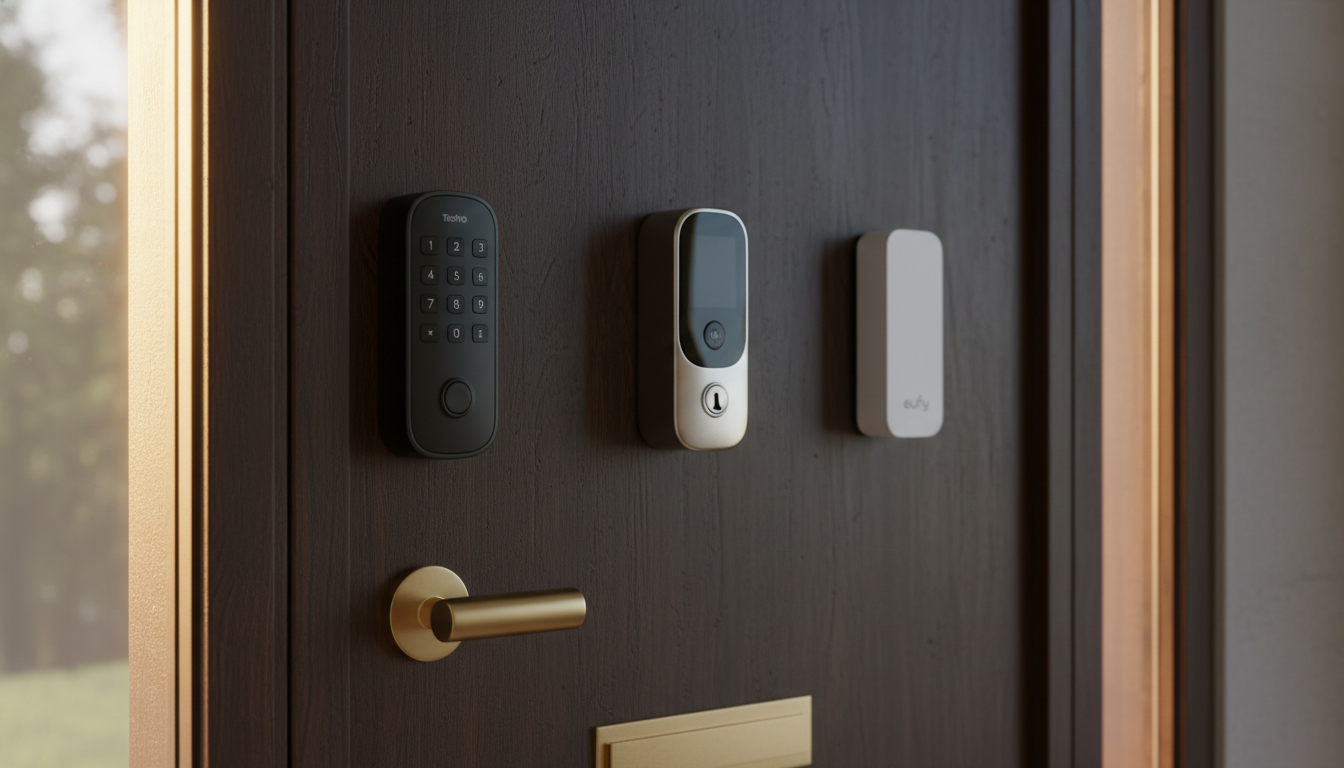
We evaluated eight smart deadbolts, spanning three price tiers. The budget lane includes the Veise VE012W at $49.98 and the Philips Smart Lock at $74.99, both under $80 and rated 4.4 stars. Mid‑range options are the eufy C33 for $99.99 and the Ultraloq Latch 5 at $139.99, each hovering around a 4.1‑star score. Premium models—Yale Assure at $258.66, Schlage Encode at $299.00, and Lockly Visage Zeno at $339.99—push ratings into the 4.5‑star range. Below we break down how each lock’s specs, ratings and price points stack up, so you can see which device aligns with your door, budget and smart‑home needs.

Teeho TE012W
It wins because it includes two backup keys, letting you replace lost keys without extra cost.

Schlage Encode
Ideal for security‑focused homeowners who need up to 100 unique access codes, even though it costs roughly $243 more than the Teeho TE012W.

eufy Smart Lock C33
Its compact 5.12‑inch height fits tighter door jambs that larger locks can’t accommodate, offering a space‑saving option at $99.99.
Also considered
TL;DR: Yale’s Assure Lock in Satin Nickel offers a backlit touchscreen, built‑in Wi‑Fi and Bluetooth, and up to 250 remote user codes, but its premium $258.66 price and battery‑only power may deter budget‑focused buyers.
The lock’s standout feature is its backlit touchscreen keypad paired with an included Wi‑Fi bridge that weighs just 87 g. With Bluetooth 4.0 and 802.11 b/g/n Wi‑Fi, you can lock or unlock from anywhere, and the system supports up to 250 user codes when the network module is active. The unit runs on four AA alkaline batteries for about a year, and it automatically relocks and unlocks based on proximity.
At 4.5 pounds (3402 g), the Yale lock is heavier than the budget‑friendly Teeho TE012W (≈2.03 lb), Veise VE012W (1.68 lb) and Philips Smart Lock (1255 g), but it’s a shade lighter than the Lockly Visage Zeno (≈6.06 lb). It matches the Schlage Encode’s backset range of 60‑70 mm and even exceeds Schlage’s 100‑code limit with its 250‑code capacity. Unlike the eufy Smart Lock C33, which has integrated Wi‑Fi, Yale requires a separate bridge placed within roughly 9 m (30 ft) for reliable remote access.
Users rave about the “key‑free bliss” of entering a PIN on the illuminated keypad and sharing codes with family members. Reviewers frequently note the quick 5‑10 minute installation and the smooth app experience for remote locking, activity logs, and auto‑unlock. On the downside, a few owners report occasional Wi‑Fi hiccups when the bridge sits too far from the lock, and the reliance on batteries means you’ll need to replace them annually. Professionals also point out that the lever style, combined with an ANSI/BHMA Grade 2 rating, isn’t suited for high‑security front doors that demand a heavy‑duty deadbolt.
The lock tolerates humidity up to 95 % and operates from –30 °C to 60 °C outdoors and –15 °C to 70 °C indoors. Its backset is adjustable between 60 mm and 70 mm, and it fits doors 35 mm to 44 mm thick. Yale backs the product with a lifetime limited warranty on finish and mechanical parts and a one‑year warranty on electronics.
Pros
Cons
Best for: Tech‑savvy homeowners and renters who want keyless convenience and smart‑home integration — the Yale Assure Lock Satin Nickel offers Weight: 3402 g
Avoid if: You need a high‑security deadbolt or prioritize top user ratings, as the lever style and 3.9/5 rating may not meet those expectations.
TL;DR: The eufy Smart Lock C33 costs $99.99, offers integrated Wi‑Fi, adaptive fingerprint entry and a 5.12‑inch profile, making keyless access simple for families and renters.
The lock’s standout spec is its built‑in Wi‑Fi, which lets you control the deadbolt remotely without a separate bridge. Its compact dimensions—7.24 in length, 6.06 in width and 5.12 in height—fit most standard doors while staying low‑profile enough to avoid a bulky look. Powered by eight AA alkaline batteries, the manufacturer claims 8‑12 months of operation, and the unit is rated IP53 for splash resistance.
Compared with the other seven locks in this roundup, the C33 sits in the middle of the size spectrum: it’s taller than the Teeho TE012W’s 33 mm height and shorter than the Ultraloq Latch 5’s 7.0‑inch height, while its 5.12‑inch height is just a shade above Veise’s 5.1‑inch model and below Lockly’s 5.3‑inch offering. It’s also more expensive than the budget‑friendly Teeho but less pricey than premium options like Schlage Encode or Yale Assure, giving it a solid mid‑tier value proposition.
Professional reviewers praise the adaptive fingerprint sensor that learns your grip for one‑handed entry, and users repeatedly note the quick app setup and reliable remote notifications. Families like the anti‑peeping back‑lit keypad and the privacy mode that blocks exterior access with a red light. On the downside, the BHMA Grade 3 certification is seen as entry‑level security, and some owners report faster battery drain in high‑traffic homes and occasional keypad lag when lighting is low.
Pros
Cons
Best for: Value-conscious buyers seeking quality at $99.99 — the eufy Smart Lock C33 offers Height: 5.12 inches
Avoid if: You require the highest BHMA security grade or integrated video doorbell functionality
TL;DR: For $49.98, the Veise VE012W Matte Black delivers built‑in Wi‑Fi, fingerprint access and a compact 3.0‑inch depth while staying under 2 pounds, making it a solid budget smart deadbolt.
The lock’s standout spec is its integrated Wi‑Fi, meaning you won’t need a separate hub to control it from the KK Home App, Alexa or Google. At just 1.68 pounds, it’s lightweight enough to handle without a helper, and its 3.0‑inch depth and 5.1‑inch height keep it from protruding too far from the door jamb.
Compared with the seven other locks in this roundup, the Veise is noticeably lighter than the Teeho TE012W (around 2.03 pounds) and the Philips Smart Lock (about 2.77 pounds). Its 3.0‑inch depth is more compact than many peers that list deeper housings, and the 1.3‑inch width keeps the overall profile slim. While some competitors ship with longer battery life claims, Veise relies on eight AA cells, a trade‑off that keeps the unit affordable.
Professional reviewers praise the fingerprint scanner for its quick, reliable response and the IP55 rating plus an operating temperature range from –4 °F to 131 °F for outdoor durability. Users appreciate the variety of access methods—fingerprint, PIN, voice, app and physical key—but several note that the Wi‑Fi setup can require extra troubleshooting, and the lack of a built‑in low‑battery alert means you’ll need to monitor the eight AA batteries yourself.
Pros
Cons
Best for: Entry-level buyers or those on a tight budget — the Veise VE012W Matte Black offers Depth: 3.0 inches
Avoid if: You need powerful performance or professional‑grade features
TL;DR: The Lockly Visage Zeno delivers hands‑free facial recognition under one second, 99‑print fingerprint access, and full Wi‑Fi/Apple Home Key integration, but its premium price and limited sharing codes keep it in the high‑end niche.
What really sets the Zeno apart is its industry‑first facial recognition that unlocks in under 1 second using radar detection and dual infrared sensors. The lock’s exterior measures 6.2 × 2.6 × 1.1 inches and weighs 6.06 lb, giving it a solid, premium feel on the door.
Compared with the other seven keypad locks, the Zeno is noticeably heavier than the Schlage Encode (4.25 lb), Yale Assure (4.5 lb), Ultraloq Latch 5 (5.5 lb), eufy C33 (weight not listed), Philips (2.77 lb), Teeho (2.03 lb), and Veise (1.68 lb). Its 99‑print fingerprint capacity also dwarfs the Ultraloq Latch 5, which only supports up to 2 fingerprints per user, and the lock’s PIN Genie® scrambling touchscreen offers a higher‑security keypad than the backlit touchscreens on Yale and other rivals.
Users consistently praise the Zeno’s lightning‑fast facial and fingerprint recognition, noting it works well even with glasses or in low light. The Lockly Home App, Apple Home Key, Alexa, Google Assistant, and Siri support make remote control a breeze, while the on‑device storage of biometric data reassures privacy‑focused homeowners. However, reviewers flag the limit of 3 eBadges and 3 offline access codes per month as a bottleneck for households that share keys frequently, and the 100‑record access log with a 90‑day retention window feels restrictive for power users.
Technical extras include QR‑code scan‑to‑open, encrypted Bluetooth, and built‑in 2.4 GHz Wi‑Fi, all powered by two rechargeable lithium batteries that charge via a USB‑Type‑C cable. Installation is marketed at 15 minutes, and the lock’s 5‑pin re‑keyable cylinder adds a traditional key fallback for added versatility.
Pros
Cons
Best for: Those prioritizing quality and willing to pay for premium performance — the Lockly Visage Zeno offers Fingerprint Capacity: 99 prints
Avoid if: You're shopping on a tight budget — it's priced at $339.99
TL;DR: The Philips Smart Lock offers hub‑free Wi‑Fi, 0.3‑second fingerprint reads and a solid 4.4‑star rating for $74.99, but its 8‑AA battery requirement and 20‑fingerprint limit keep it from being the absolute best value.
The standout feature is its built‑in 2.4 GHz Wi‑Fi, so you can control the lock directly from the Philips Home Access app without a separate bridge. Inside, the lock recognises fingerprints in just 0.3 seconds, and it supports up to 20 users with a 99% recognition rate. The deadbolt also includes a physical keypad, thumb turn, and voice‑assistant unlock via Alexa or Google Assistant.
At 2.77 lb (1255 g) the Philips unit is heavier than the Teeho TE012W (about 2.03 lb) and the Veise VE012W (1.68 lb), yet lighter than the Ultraloq Latch 5 (5.5 lb) and the Lockly Visage Zeno (6.06 lb). Its depth of 229 mm (9.02 in) and height of 109 mm (4.29 in) place it in the mid‑range of the eight‑product lineup, while the $74.99 price tags it as a budget‑tier option.
Professional reviewers praise the lock’s quick fingerprint response and the convenience of hub‑free Wi‑Fi, noting the AES‑128 encryption and local storage keep data secure. Users appreciate the auto‑lock window of 10‑180 seconds and the ability to set manual, auto, or away‑security modes. However, the lack of an emergency power backup and the need for eight AA batteries are recurring concerns, especially for those who want longer uptime during outages.
Pros
Cons
Best for: Users who need a Wi‑Fi‑enabled lock with fast fingerprint access and are comfortable with a 20‑fingerprint limit.
Avoid if: You want the best value‑per‑dollar in this segment or need emergency power backup.
TL;DR: The Ultraloq Latch 5 packs Wi‑Fi 6, Bluetooth 4.0, 0.3‑second fingerprint unlock and IP65 durability for $139.99, delivering a solid mid‑range smart lock with hub‑free remote access.
The standout spec is the 360° Live Fingerprint ID that opens the door in just 0.3 seconds with 99.8% accuracy, powered by an Edge AI self‑learning algorithm. It also runs on three AA alkaline batteries that the manufacturer says last up to 1 year, and it offers 128‑bit AES encryption plus an IP65 weather‑proof rating.
Compared with the seven other locks in this roundup, the Latch 5 is noticeably heavier than the Veise VE012W Matte Black (1.68 lb) and the Philips Smart Lock (about 2.77 lb), and even heavier than the Yale Assure (4.5 lb). Its adjustable backset of 2‑3/8 or 2‑3/4 inches gives it more installation flexibility than many peers that list a single fixed backset. While the eufy Smart Lock C33 provides Wi‑Fi, it lacks Bluetooth; the Ultraloq adds Bluetooth 4.0 for local control and Wi‑Fi 6 (2.4 GHz) for hub‑free remote access. Its 7.0‑inch height and 6.3‑inch depth also make it larger than the Veise’s 5.1‑inch height and 3.0‑inch depth, and the lock’s IP65 rating isn’t mentioned for the other models.
Reviewers repeatedly praise the convenience of NFC and the ability to unlock the door by tapping a phone, noting that the fast fingerprint response feels “instant.” Professionals highlight the solid zinc‑alloy construction and the built‑in Wi‑Fi gateway that cuts down on extra hardware. Common complaints focus on the Wi‑Fi’s restriction to 2.4 GHz networks and occasional hiccups during app pairing, while some users note that the handle‑style latch doesn’t provide the same level of security as a traditional deadbolt.
Pros
Cons
Best for: Most users seeking a balanced, mainstream option — the Ultraloq Latch 5 offers Backset: 2‑3/8 or 2‑3/4 inches (adjustable)
Avoid if: You need advanced features or professional‑grade performance, such as 5 GHz Wi‑Fi support or deadbolt‑level security on doors thicker than 1‑3/4 inches
“Unlocks in just 0.3 seconds with 99.8% accuracy”
“NFC/WiFi convenient—tap phone to unlock hands-free; remote control without hub; solid battery, notifications, easy install”
TL;DR: The Teeho TE012W delivers Wi‑Fi smart deadbolt features, 0.3‑second fingerprint unlock and a year of battery life for just $55.99, making it a top value in the budget segment.
The lock’s standout spec is its hub‑free 2.4 GHz Wi‑Fi, which lets you manage access through the KK Home App without an extra bridge. It fits doors with a backset of 60‑70 mm and a depth of 130 mm, and the aluminum‑alloy body weighs about 2.03 lb. Fingerprint recognition handles up to 20 users in just 0.3 seconds, while the keypad offers anti‑peeping passcode entry and a backlit display.
Compared with the other seven locks in this roundup, the TE012W is lighter than the Ultraloq Latch 5 (5.5 lb) and shallower than the Philips Smart Lock, which lists a depth of 229 mm. It’s deeper than the Veise VE012W’s 3.0‑inch depth, but its compact 33 mm height and 75 mm width keep it from feeling bulky. While premium models like Yale and Schlage carry higher price tags, the Teeho lands well below them, offering more features than many higher‑priced peers.
Professional reviewers highlight the lock’s fast 0.3‑second fingerprint scan and the long 365‑day battery life as major conveniences. Users also appreciate the IP55 weather rating and AES‑128 encryption for outdoor durability and data security. However, the package does not include the eight AA batteries required for operation, and the lock only supports 2.4 GHz Wi‑Fi, so it won’t connect to 5 GHz networks. Its BHMA Grade 3 certification means it’s intended for residential use rather than commercial properties.
Pros
Cons
Best for: Entry-level buyers or those on a tight budget — the Teeho TE012W offers Backset: 60-70 mm
Avoid if: You need advanced features or professional‑grade performance
TL;DR: The Schlage Encode lever lock packs built‑in Wi‑Fi, 100 programmable codes and a 50 dB alarm into a AAA‑rated, satin‑nickel body for $299, making it a premium choice for secondary doors.
The standout feature is its built‑in Wi‑Fi, which lets you control the lock directly from the Schlage Home app without a separate hub. Coupled with a light‑up touchscreen keypad, the lock also supports up to 100 unique access codes and time‑based scheduling, giving you granular control over who enters and when. The two‑tone forced‑entry alarm sounds at 50 dB, and an adjustable sensitivity slider lets you fine‑tune detection.
At 4.25 pounds, the Encode sits in the middle of the weight spectrum: it’s heavier than the Teeho TE012W (about 2 pounds) and the Philips Smart Lock (≈2.8 pounds), but lighter than the Lockly Visage Zeno (≈6 pounds). Its built‑in Wi‑Fi also sidesteps the need for a separate bridge, something Yale’s model lists as a “Wi‑Fi Bridge” weighing 87 g. In terms of code capacity, 100 unique codes outpace Yale’s 25 standalone codes, giving the Encode a clear advantage for households with many guests.
Users consistently praise the mechanical key backup and the intuitive Schlage Home app, noting that voice commands through Alexa or Google Assistant work without hiccups. Professional reviewers highlight the lock’s “rock‑solid, sturdy build” and the practical intrusion‑detection alarm. The main complaints revolve around the lack of a battery‑life indicator until the AA cells are drained, and the lever design being less suited for primary entry doors. Some owners also report occasional Wi‑Fi hiccups in spots with weak coverage.
Technically, the Encode carries a BHMA AAA rating—the highest tier for security, durability and finish. Encryption is handled by Schlage’s secure technology, and the adjustable backset (60 mm or 70 mm) accommodates most door preparations. The lock also offers auto‑lock with configurable delay, push notifications for every lock event, and fingerprint‑resistant construction.
Pros
Cons
Best for: Those prioritizing quality and willing to pay for premium performance — the Schlage Encode offers Access Code Capacity: 100 unique codes
Avoid if: You're shopping on a tight budget — it's priced at $299.00
Breakdown
Teeho TE012W
Pros
Schlage Encode
Pros
Cons
eufy Smart Lock C33
Pros

Yale Assure Lock Satin Nickel
Pros
Cons
Based on scoring data and product specs
Personalized picks
Best Overall Pick
Teeho TE012W
Best OverallBest for: Entry-level buyers or those on a tight budget — the Teeho TE012W offers Backset: 60-70 mm
Schlage Encode
Best for: Those prioritizing quality and willing to pay for premium performance — the Schlage Encode offers Access Code Capacity: 100 unique codes
$299.00+$243.01 vs winner
Skip Ultraloq Latch 5 if…
You need advanced features or professional-grade performance
The Teeho TE012W earns the top spot with a list price of $55.99, a solid 4.4‑star rating from 228 reviewers, and a battery life that lasts up to 365 days on eight AA cells. It also packs AES‑128 encryption and an IP55 rating, giving you premium‑grade protection at a budget‑friendly price.
The Schlage Encode lands as the runner‑up if you need built‑in Wi‑Fi and detailed access scheduling. It supports 100 unique access codes, lets you set time‑ and date‑specific permissions, and logs every lock event for easy review. With a BHMA AAA rating and a 4.5‑star score from 357 reviews, it offers a high‑end experience for those willing to invest more.
For shoppers looking at other price points, the Veise VE012W Matte Black is the best budget option at $49.98, the eufy Smart Lock C33 provides the strongest mid‑range value at $99.99, and the Lockly Visage Zeno stands out as the premium pick at $339.99.
Choose the Teeho TE012W today and secure your home without breaking the bank.
The Teeho TE012W delivers AES‑128 encryption, an IP55 rating, anti‑peeping passcode entry and a 30‑second default auto‑lock, all for $55.99. Its feature list matches many premium models while staying well under the Schlage’s price, giving you more security per dollar.
No reviews yet — be the first to share your experience.
Please sign in to leave a review