⚡ Quick Answer
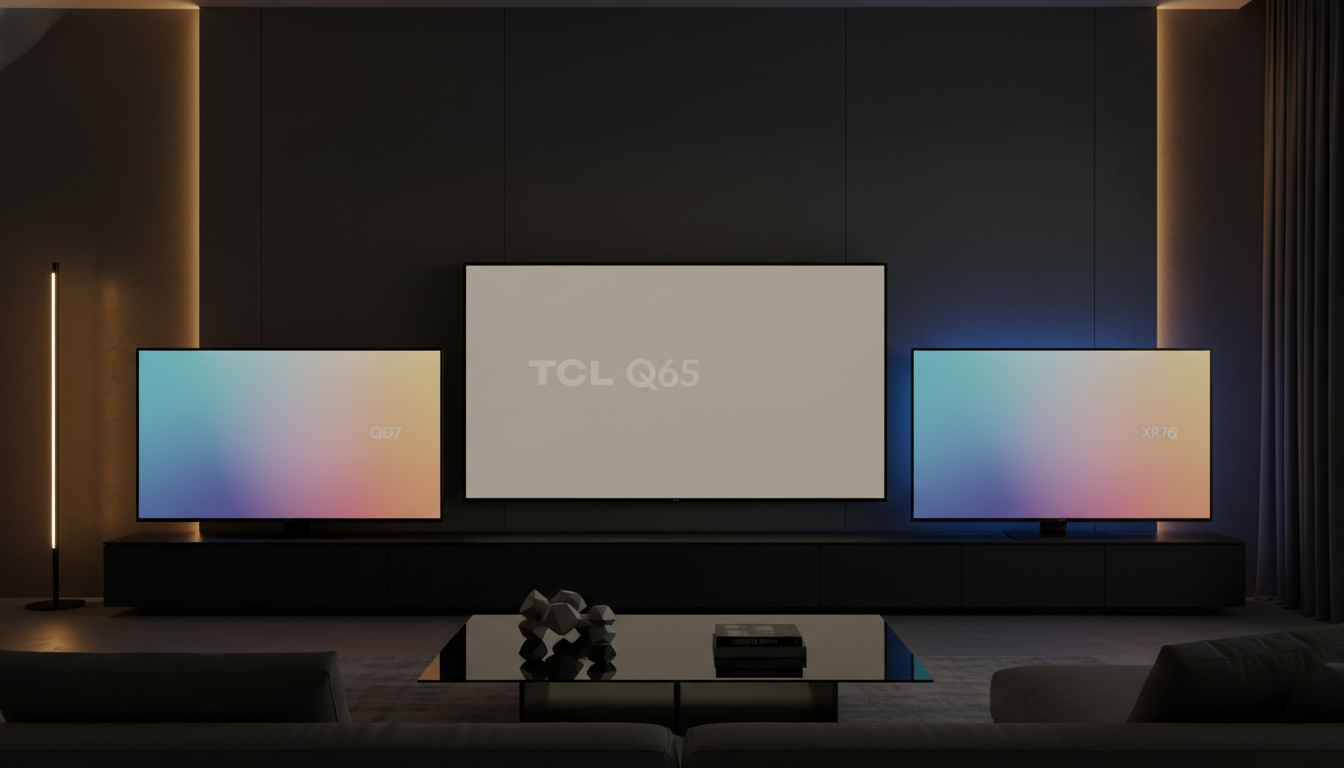
Finding a TV that fills a large living room without breaking the bank used to be a challenge, but today 65‑inch and bigger panels span a wide price spectrum. Eleven LED models were compared, from the $411.99 entry‑level TCL S5 up to the $1,598.00 Sony XR70, giving a price range of $494.90 to $1,598.00 across budget, mid‑range and premium tiers.
For a home‑theater feel, the premium segment offers options like the Samsung QN90F with a 60W speaker output, while the 85‑inch Hisense QD7 brings Mini‑LED full‑array dimming, 600 nits peak brightness and a native 144 Hz panel for smooth gaming at a $797.99 price tag. Families looking for everyday streaming will appreciate the Vizio V Series 65‑inch, which packs Wi‑Fi 6 and Dolby Atmos for $494.90 and holds a solid 4.3‑star rating. Meanwhile, the mid‑range Samsung QN70F balances a slim 25.7 mm depth with up to 144 Hz refresh for bright‑room use.
The sections below break down each model’s picture performance, gaming features, and value, so you can match the size, price tier, and use case that fits your space.

Hisense QD7 85-inch
Its ultra‑thin 4.0‑inch depth lets you mount it close to the wall, delivering a sleek look without sacrificing performance.

Sony XR70 65-inch
Ideal for picture‑quality enthusiasts, it offers a higher‑end experience at about $800 more than the Hisense, reflecting its premium build and performance.

TCL Q65 98-inch
Stands out with a massive 98‑inch panel and a 68.5‑inch stand width, delivering an immersive cinematic experience that the 85‑inch Hisense and 65‑inch Sony can’t match.
Also considered
Score Analysis
Key score advantages vs. runner-up (Sony XR70 65-inch)
Price Range
Hisense QD7 85-inch
$797.96
Sony XR70 65-inch
$1,598.00
TCL Q65 98-inch
$1,297.99

Vizio V Series 65-inch
$464.99

Samsung QN70F 65-inch
$699.99

LG QNED82A 65-inch
$449.99

TCL S5 65-inch
$409.99

Sony S30 65-inch
$648.00

Samsung QN80F 65-inch
$897.99

Samsung QN90F 65-inch
$1,597.99
Sharp AQUOS 65-inch
$850.00
Spec Comparison
TL;DR: The Hisense QD7 85‑inch Mini‑LED TV delivers a bright 600‑nit 4K picture with 144 Hz refresh, but its 20 W two‑channel speakers feel modest for a room‑size screen.
What really sets this model apart is its 85‑inch Full‑Array Local Dimming Mini‑LED panel paired with Quantum Dot technology that features over one billion shades. The screen can hit 600 nits peak brightness and runs at a native 144 Hz refresh rate, while the MediaTek MT9618 processor powers AI‑enhanced upscaling and noise reduction.
In the 11‑product lineup, the Hisense is the only TV that exceeds 80 inches; all peers list a 65‑inch screen. It also carries a higher refresh rate than most competitors, which typically sit at 60 Hz or 100 Hz, and only the Samsung QN70F mentions a comparable 144 Hz ceiling. At 81.8 lb with the stand, it is noticeably heavier than the Sharp (41 lb), Samsung QN70F (≈48 lb), Sony (≈48 lb), LG (≈51 lb) and Vizio (≈40 lb) models.
Professional reviewers highlight the deep blacks and strong contrast that the Mini‑LED and local dimming deliver, and gamers appreciate the Game Mode Pro with VRR and AMD FreeSync Premium Pro. Everyday owners echo the praise for vivid colors and smooth motion, yet many note that the 20 W 2.0‑channel speaker system doesn’t fully exploit Dolby Atmos, and some see haloing around bright objects due to the entry‑level dimming zones.
The TV runs Google TV, offering a broad app library and built‑in Alexa and Apple HomeKit support. Connectivity includes Bluetooth 5.3, Wi‑Fi 802.11ac, two HDMI 2.1 ports, two HDMI 2.0 ports and a USB 2.0 slot, giving plenty of options for consoles and streaming sticks.
Pros
Cons
Best for: Gamers and sports fans who want a large, high‑refresh‑rate screen with vibrant colors.
Avoid if: You need powerful built‑in audio or have limited space for a heavyweight TV.
TL;DR: The Sony XR70 65‑inch Mini LED QLED TV delivers 120 Hz motion, four HDMI 2.1 ports and premium picture processing for $1,598, but its 62.4‑lb weight makes installation a bit tougher.
What really stands out is the Mini LED QLED panel with Sony’s XR Backlight Master Drive, paired with the Cognitive Processor XR. At 65 inches, the screen runs at 3840 × 2160 resolution and a 120 Hz refresh rate, while the four HDMI inputs (all HDMI 2.1) support VRR, ALLM and 4K @ 120 Hz for next‑gen gaming.
In this 11‑product roundup the XR70 sits toward the premium end. Its $1,598 price tag is higher than many competitors, and at 62.4 pounds it’s heavier than the Samsung QN70F (48.1 lb) and the Samsung QN80F (52.2 lb), yet lighter than the massive TCL 98‑inch model (120.15 lb). It also offers more HDMI 2.1 connections than peers that list fewer or no HDMI details, giving you extra flexibility for consoles and streaming devices.
Users consistently praise the vivid HDR performance and the smooth handling of fast action, noting how easy it is to hook up a PlayStation 5. Professional reviewers highlight the XR Backlight Master Drive as delivering Sony’s brightest 4K picture and the Cognitive Processor XR for real‑time optimization. The main complaints revolve around the TV’s substantial 62.4‑lb weight, which can complicate wall‑mounting, and the lack of disclosed peak‑brightness numbers.
Beyond picture quality, the XR70 supports Dolby Atmos, Dolby Audio, DTS:X and DTS‑HD Master Audio, giving cinema‑grade sound without a separate soundbar. The Google TV platform comes pre‑loaded with Netflix, Prime Video, Disney+, YouTube and more, while Apple AirPlay/HomeKit and voice assistants (Google Assistant, Apple Siri) add convenient smart‑home control. The ECO Dashboard lets you monitor energy use in real time.
Pros
Cons
Best for: Those prioritizing quality and willing to pay for premium performance
Avoid if: You're shopping on a tight budget — it's priced at $1,598.00
TL;DR: The TCL Q65 98‑inch QLED TV delivers a massive 98‑inch 4K display with a 120 Hz native refresh rate and rich HDR support, but its 120‑lb weight makes installation a challenge.
The standout spec is the 98‑inch 4K QLED panel paired with a 120 Hz native refresh rate and a variable refresh range of 48‑144 Hz; professional reviewers praise its gaming performance as the best at this size. The TV also uses QLED PRO quantum‑dot technology and supports Dolby Vision, HDR10+, HDR10 and HLG, giving vibrant color and deep contrast.
At 120.2 lbs, this model weighs considerably more than the 65‑inch Samsung QN90F (60.6 lbs) and Samsung QN80F (52.2 lbs), as well as the Sony XR70 (62.4 lbs) and Sharp AQUOS (41 lbs). Its 98‑inch screen dwarfs the 65‑inch units from Samsung, Sony and Sharp, and even exceeds the 85‑inch Hisense QD7. Despite the larger size, the TV offers three HDMI ports (one with eARC) and a built‑in subwoofer with Dolby Atmos, matching or surpassing the audio features of its peers.
User feedback highlights the immersive size and vivid colors, especially for gaming and sports, while noting that the heavy chassis complicates wall‑mounting and that the basic LED backlight can fall short in very bright rooms. Professional reviewers also note occasional motion artifacts in fast‑moving scenes, though the 120 Hz panel generally smooths motion well.
Pros
Cons
Best for: Buyers willing to invest in a proven, high‑quality option
Avoid if: You're on a tight budget or only need basic functionality
“one of the best value 98-inch TVs on the market”
“super positive feedback”
TL;DR: The Vizio V Series 65‑inch delivers a 65‑inch 4K UHD screen with Full Array LED, Dolby Vision HDR, and sub‑10 ms input lag for just $494.90, making it a solid budget option.
The TV’s 65‑inch panel (3840 × 2160) features a Full Array LED backlight and supports Dolby Vision, HDR10+, HDR10 and HLG, giving you vivid colors and strong contrast. Dolby Atmos sound adds a sense of space, while the unit weighs 40.12 lbs and measures 11.95 inches deep, 35.63 inches tall and 57.41 inches wide, fitting comfortably in most living‑room setups.
Compared with other 65‑inch models in this roundup, the Vizio is lighter than the LG QNED82A’s 51.5‑pound chassis and slimmer than the TCL S5’s ultra‑thin 2.87‑inch depth, though its depth is deeper than the TCL’s. Its 60 Hz refresh rate sits below Sony’s 120 Hz panel and Samsung’s up‑to‑144 Hz capability, but the included FreeSync Premium VRR still helps smooth motion in games.
Reviewers consistently praise the sharp 4K picture and the low input lag—under 10 ms—making it a favorite for casual gamers and sports fans. The Wi‑Fi 6 module provides steady streaming, while the VIZIO Voice Remote adds hands‑free control. Some users note that you must have a Vizio account to unlock the full smart platform, and non‑Quantum versions rely on basic upscaling, which can soften detail on lower‑resolution sources.
Pros
Cons
Best for: Budget‑conscious buyers seeking a reliable entry‑level option
Avoid if: You need advanced features or professional‑grade performance
“picture quality, features, and size”
TL;DR: The Samsung QN70F 65‑inch Neo QLED delivers vivid 4K colors, deep blacks, and up to 144 Hz gaming performance for $699.99, though its Tizen UI can be tricky to navigate.
Samsung’s standout feature is the Neo QLED Mini LED panel with Quantum Matrix Slim technology, paired with Pantone‑validated colors and Vision AI that automatically tailors picture and sound. The 65‑inch screen (3840 × 2160) supports Neo Quantum HDR, HDR10+, and HLG, while the refresh rate lists 100 Hz (up to 144 Hz) for fluid motion. At 48.1 pounds, the TV feels solid, and its depth with the stand measures 279.4 mm, underscoring the AirSlim design.
Compared with the other ten models in the roundup, the QN70F sits near the middle of the weight range: it is a shade heavier than Sony’s 47.8‑pound unit and Sharp’s 41.0‑pound TV, but lighter than LG’s 51.5‑pound offering. Its stand depth of 279.4 mm is slimmer than Sony’s 337 mm, giving it a more streamlined profile on a furniture surface. In terms of screen size, it matches the Sony, Sharp, LG, Vizio and TCL models at 65 inches, while the Hisense alternative jumps to 85 inches.
Everyday owners rave about the TV’s vibrant colors, deep blacks and the bright HDR performance that the Mini LED backlight provides. Gamers appreciate the FreeSync Premium Pro support and the ability to push the panel to 144 Hz, noting smoother motion in fast‑action titles. Professional reviewers also highlight the AI‑enhanced 4K upscaling, which sharpens lower‑resolution content, and the battery‑free SolarCell remote that charges from ambient light. The main friction point is the Tizen smart‑TV interface, which several users find unintuitive when hunting for apps or tweaking settings.
On the efficiency side, the TV draws a typical 141.0 W during use and only 0.5 W in standby, translating to an estimated yearly consumption of 518 kWh in the EU. Smart home integration comes built‑in via Zigbee/Thread for Samsung SmartThings, and the platform includes Alexa voice control, Knox security and a USB‑chargeable SolarCell One Remote. The NQ4 AI Gen2 processor powers Vision AI and AI‑upsampling with 20 neural networks, ensuring the picture stays crisp across varied sources.
Pros
Cons
Best for: Most users seeking a balanced, mainstream option
Avoid if: You need advanced features or professional‑grade performance
“Vibrant colors, deep blacks, outstanding sharpness for movies/sports, high brightness/contrast, easy smart features, quick app loading, premium home theater feel, and battery-free solar remote”
TL;DR: The LG 65QNED82A delivers a 65‑inch (1654 mm) 4K QNED picture with 100% color volume, AI‑driven processing and webOS smart features for $496.99, though its edge‑lit panel limits contrast.
LG’s 65QNED82A uses a 65‑inch (1654 mm) 4K QNED display with Dynamic QNED Color that claims 100% color volume, and it’s driven by the α7 AI Processor 4K Gen8. Its edge‑lit panel refreshes at 60 Hz, matching the 3840 × 2160 resolution.
At 51.5 lb, the LG sits heavier than the Vizio V Series (40.12 lb) but lighter than the Sony S30 (47.8 lb) and Samsung QN70F (48.1 lb). Its stand‑depth of 295 mm is a touch deeper than Vizio’s 304 mm, while the height with stand (906 mm) is comparable to the other 65‑inch models. The 60 Hz refresh rate is on par with Vizio but slower than Sony’s 120 Hz and Samsung’s up‑to‑144 Hz options.
Reviewers consistently praise the vivid, accurate colors and the AI‑enhanced sound suite (AI Sound Pro, AI Clear Sound, Dynamic Sound Booster). However, users note that the edge‑lit backlight produces weaker black levels in dark‑room viewing, and the 60 Hz panel feels limiting for fast‑paced gaming.
The TV draws 119 W during operation, translating to about 220 kWh per year, and it supports Wi‑Fi 5, a single USB 2.0 port, and LG’s webOS platform with Gallery Mode and Xbox Game Pass integration. AI Brightness Control and Motion Sensor also come built in.
Pros
Cons
Best for: Entry-level buyers or those on a tight budget
Avoid if: You want the best value‑per‑dollar in its price range
TL;DR: The TCL S5 65‑inch Google TV delivers a 65‑inch 4K panel with HDR PRO+, 120 Hz VRR at 1440p and a slim 2.87‑inch depth for just $411.99, making it a solid budget pick for casual viewing and entry‑level gaming.
The standout feature is the Game Accelerator that enables up to 120 Hz variable‑refresh at 1440p while the native panel runs at 60 Hz, paired with Motion Rate 240 and MEMC for smoother motion. Its HDR PRO+ suite supports Dolby Vision, HDR10+ and HLG, and the peak HDR brightness lists at 290 cd/m². At 65 inches, the TV also packs a thin 2.87‑inch depth and weighs 42.999 pounds, giving it a sleek profile on any wall.
Compared with the other ten models in this roundup, the S5 looks noticeably thinner than the Vizio V Series, which measures 11.95 inches deep, and it’s slightly heavier than the Vizio’s 40.12‑lb unit but lighter than the LG QNED82A’s 51.5 lb frame. Its three HDMI ports (including one eARC) and a single USB port match the connectivity breadth of many peers, while the Vizio lists Wi‑Fi 6 and the Samsung model offers a higher refresh‑rate panel—features the S5 does not provide.
Reviewers appreciate the bright HDR performance in well‑lit rooms and the low input lag that makes 1440p @ 120 Hz gaming feel responsive. Professional reviewers note the motion‑clarity boost from Motion Rate 240, but they also point out the modest 290 cd/m² brightness and the HDMI 2.0 limitation that stops 4K @ 120 Hz gameplay. Users also mention the lack of a built‑in voice assistant, meaning you’ll need an external speaker for Alexa or Google Assistant commands.
Under the hood, the TV runs Google TV with an Alexa‑enabled remote and relies on the AIPQ processor for AI‑driven scene optimization. The VA Direct‑LED panel delivers deep blacks for its class, and the HDR support list (Dolby Vision, HDR10+, HDR10, HLG) ensures most streaming content looks its best without extra hardware.
Pros
Cons
Best for: Shoppers on a tight budget who want the most for their money
Avoid if: You need advanced features or professional‑grade performance
TL;DR: Sony’s S30 65‑inch TV offers Full Array LED brightness, a 120 Hz panel and Google TV for $648, making it a solid large‑screen pick for families who value picture quality over top‑end features.
The standout spec is the Full Array LED backlight paired with a 120 Hz refresh rate, which Sony markets as delivering deeper blacks and smoother motion on its 65‑inch screen. At 47.8 pounds, the unit is solidly built, and it runs Google TV with built‑in Google Assistant and Dolby Atmos sound, plus PS5‑exclusive gaming features.
Compared with the other ten entries, the S30 sits in the middle of the weight range – it’s a shade lighter than Samsung’s QN70F (48.1 lb) and LG’s QNED82A (51.5 lb) but noticeably heavier than Vizio’s V Series (40.12 lb) and Sharp’s AQUOS (41 lb). Its 120 Hz panel also outpaces most rivals that list 60 Hz (LG, Vizio, Sharp) and sits just below Samsung’s up‑to‑144 Hz capability. All of the competitors share the same 65‑inch footprint, so size isn’t a differentiator.
Consumer chatter highlights the vivid picture and the easy‑to‑navigate Google TV interface, with many reviewers praising the deep blacks that Full Array LED provides. Professional reviewers note the strong contrast and peak brightness that this backlight can achieve, even though the model doesn’t list advanced HDR processing like XR Contrast Booster. A recurring complaint is the TV’s heft, which can make wall‑mounting or moving the set a bit of a workout.
Beyond picture performance, the S30 packs Dolby Vision HDR and Dolby Atmos audio, giving movies and games a richer sound‑stage. The inclusion of Google Assistant means voice control’s built in, and PS5 owners can tap into exclusive gaming modes for lower input lag.
Pros
Cons
Best for: Budget-conscious buyers seeking a reliable entry‑level option
Avoid if: You want the best value‑per‑dollar in its price range
TL;DR: The Samsung QN80F 65‑inch Neo QLED delivers vivid 4K HDR, AI‑enhanced upscaling and up to 144 Hz gaming refresh, but its lack of a glare‑free coating and premium price may deter budget‑focused buyers.
The standout spec is Samsung’s Quantum Matrix Technology Core paired with Neo Quantum HDR, which powers a 64.5‑inch 4K panel that can run at a native 120 Hz and push up to 144 Hz for VRR gaming. The NQ4 AI Gen2 processor drives 4K AI Upscaling with 20 neural networks, while Vision AI tailors picture and sound to the room. At 52.2 lb with the stand, the TV balances a solid build with a relatively compact 11‑inch depth.
Compared with the other ten entries, the QN80F sits in the mid‑weight range: it’s heavier than Sharp’s 65‑inch model at 41 lb but lighter than the Hisense 85‑inch QD7, which ships at over 80 lb with its stand. Its 120 Hz base refresh is a step up from the Samsung QN70F’s 100 Hz (up to 144 Hz) and matches the Sony S30’s 120 Hz, while the Hisense QD7 also offers a full 144 Hz range. In size, the QN80F is smaller than the Hisense and TCL 98‑inch units but matches the Sharp and Sony 65‑inch panels.
Professional reviewers praise the ultra‑fine contrast and AI‑driven personalization, noting that the high brightness and Neo Quantum HDR make daytime sports and high‑intensity gaming look punchy. Everyday owners echo the praise for vivid colors and the smooth 144 Hz gaming experience, but many point out that the screen isn’t fully glare‑free, so reflections can be noticeable in very bright rooms. The TV also includes smart‑home features like built‑in Zigbee/Thread, Ambient Mode, Apple AirPlay 2, and Multi‑View for up to two videos at once.
On the efficiency side, the QN80F draws 159 W in typical use and drops to just 0.50 W on standby, translating to an estimated 232 kWh yearly consumption. The Eco Sensor automatically adjusts brightness, helping keep power draw low without sacrificing the HDR punch that reviewers love.
Pros
Cons
Best for: Bright living rooms, daytime sports viewing, high‑intensity gaming, and smart‑home setups that benefit from built‑in Zigbee/Thread.
Avoid if: You need a completely glare‑free screen for dark‑room movie watching or are seeking the absolute highest black‑level performance of OLED panels.
“Amazing TV screen resolution... vivid colors and blacks... love the new AI features and TV with screen saver wallpaper and Widgets.”
“Super clear and sharp... bright and detailed... sound quality... more than enough... surprisingly lightweight.”
TL;DR: The Samsung QN90F 65‑inch Neo QLED delivers brilliant 4K visuals with 720 Mini‑LED zones, 165 Hz gaming refresh, and strong built‑in audio, but it's premium $1,378 price and lack of Dolby Vision keep it out of the ultra‑budget tier.
The standout feature is Samsung’s Quantum Matrix Technology Plus with 720 Mini‑LED dimming zones, paired with the NQ4 AI Gen3 processor and 4K AI Upscaling Pro. On a 65‑inch panel you get native 100 Hz that can boost to 165 Hz, and the TV ships with four HDMI 2.1 ports for next‑gen console connectivity. The TV uses a 60 W 4.2.2‑channel system with Object Tracking Sound+ and Dolby Atmos.
At 60.6 pounds, the QN90F is heavier than the Samsung QN70F (48.1 lb) and the QN80F (52.2 lb) but considerably lighter than the TCL Q65 98‑inch (120.15 lb) and Hisense QD7 85‑inch (81.8 lb). It shares the 65‑inch screen size with the Sony XR70, yet it tips the scales slightly lighter than Sony’s 62.4 lb unit. Compared with the Sharp AQUOS 65‑inch (41 lb), the QN90F is heavier but offers far more advanced Mini‑LED technology and HDMI 2.1 support.
Consumer sentiment highlights the TV’s “breathtaking 4K visuals” and “deep contrast” thanks to the Mini‑LED backlight and Glare Free anti‑reflection coating, which reviewers say makes daytime viewing comfortable. Gamers appreciate the low input lag and 165 Hz refresh, calling it a strong choice for next‑gen consoles. The most common complaints are the lack of Dolby Vision HDR and a typical power draw of 137 W, which can increase electricity costs, especially given the 308.79 kWh annual consumption figure.
Pros
Cons
Best for: Those prioritizing picture quality, gaming performance, and premium audio, and who're willing to invest in a higher‑priced flagship.
Avoid if: You need Dolby Vision HDR, low‑power operation, or a budget‑friendly TV.
“breathtaking 4K visuals, jaw‑dropping contrast (bright highlights/deep blacks even in sports/daytime)”
“Stunning resolution/brightness/contrast, great for high‑demand gaming/movies, reliable Samsung build.”
Breakdown
Hisense QD7 85-inch
Pros
Sony XR70 65-inch
Pros
Cons
TCL Q65 98-inch
Pros
Vizio V Series 65-inch
Pros
Based on scoring data and product specs
Personalized picks
Best Overall Pick
Hisense QD7 85-inch
Best OverallBest for: Most users seeking a balanced, mainstream option
Sony XR70 65-inch
Best for: Those prioritizing quality and willing to pay for premium performance
$1,598.00+$800.04 vs winner
Skip Sharp AQUOS 65-inch if…
Reliability and user satisfaction are your top concerns
The Hisense QD7 85‑inch wins the large‑screen crown thanks to its massive 85‑inch panel, a bright 600‑nit peak output and a 144 Hz variable‑refresh rate that pairs with AMD FreeSync Premium Pro for smooth gaming. At $797.99 it undercuts many bigger rivals, and a 4.1‑star rating from 859 reviewers shows solid buyer confidence.
The Sony XR70 65‑inch sits comfortably as the runner‑up, especially if you need cinema‑grade picture quality in a conventional‑size room. Its Mini‑LED QLED panel with Full Array Local Dimming delivers deep blacks, while a native 120 Hz refresh and Dolby Vision HDR keep movies and sports looking vivid. The 4.4‑star score from 296 reviews reflects its premium positioning.
For tighter budgets, the TCL S5 65‑inch offers the most affordable entry at $411.99, giving you a solid 65‑inch display without breaking the bank. If you want the highest‑end experience without going to the top‑tier Hisense, the Sony XR70 remains the premium pick, combining advanced Mini‑LED tech and strong gaming features.
Pick the Hisense QD7 if you want the biggest, brightest screen for top value, and you’ll be set for movies, games and everyday TV.
Yes. The Hisense QD7 costs $797.99, which is about $800 cheaper than the Sony XR70’s $1,598 price, yet it offers comparable high‑end features such as Mini‑LED full‑array local dimming, Dolby Vision HDR, and a 144 Hz variable refresh rate. For a larger screen and a lower price, it leads on overall value.
No reviews yet — be the first to share your experience.
Please sign in to leave a review