We’ve sifted through 11 lightweight quadcopters that sit under the 249 g FAA registration limit, so you can fly without paperwork and still capture solid footage. Across the lineup you’ll find everything from pocket‑sized starters to premium travel companions, each balancing weight, battery life and camera capability.
Our top pick is the DJI Mini 4K Combo. Priced at $389.00, it carries a 4.5/5 rating from 19,957 reviewers and weighs just 0.54233716452 pounds, keeping it safely under the registration threshold. The drone offers a 31‑minute maximum flight time and true 4K video on a 3‑axis gimbal, making it a reliable choice for beginners and travel vloggers who need long airtime and cinematic quality without a bulky setup.
The roundup also spreads across three price tiers: budget options like the Holy Stone HS110D and DJI Neo give you entry‑level flight for under $200; mid‑range models such as the Holy Stone HS360D and Ruko U11MINI add extra battery life and higher‑resolution sensors; premium picks—including the Potensic ATOM series and DJI Flip Fly More Combo—deliver advanced features for serious creators. Below you’ll find a closer look at each model’s strengths and who they’re best suited for.

DJI Mini 4K Combo
It’s 2250 mAh battery delivers longer flight time, supporting the high‑quality performance that earned it top ratings.

DJI Neo
Ideal for hobbyists who want a reliable, well‑reviewed drone without breaking the bank—at $199 it’s $190 cheaper than the Mini 4K Combo.

Potensic ATOM
Stands out with a 60 W fast‑charging capability, letting you get back in the air quickly—something the DJI models don’t list.
Also considered
Score Analysis
Key score advantages vs. runner-up (DJI Neo)
Price Range
DJI Mini 4K Combo
$389.00
DJI Neo
$199.00
Potensic ATOM
$277.99

DJI Flip Fly More Combo
$779.00

Potensic ATOM SE 3B
$279.99

Holy Stone HS110D
$35.99

Potensic ATOM SE
$198.99
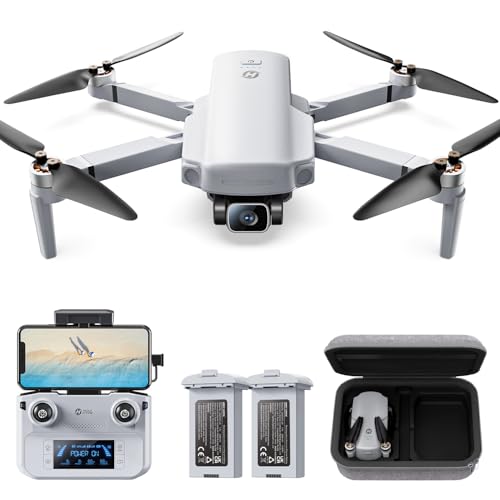
Holy Stone HS360D
$199.49
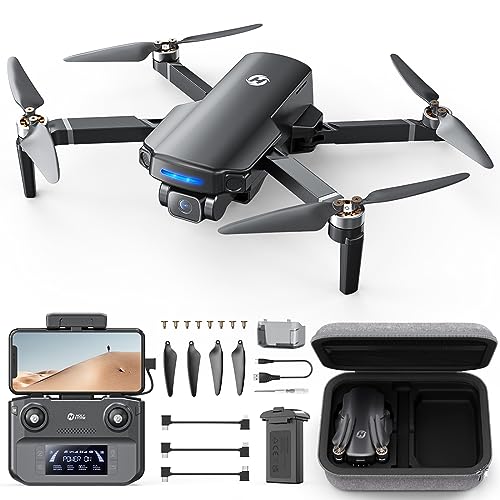
Holy Stone HS360S
$167.99

Ruko U11MINI
$220.99

Holy Stone HS175G
$189.89
Spec Comparison
TL;DR: The DJI Mini 4K Combo delivers true 4K video, a 31‑minute flight, and 10 km O2 transmission in a sub‑250 g package, making it the most capable lightweight drone for beginners and travelers.
The DJI Mini 4K Combo packs a true 4K camera—3840×2160 pixels at up to 30 fps—into a 0.54233716452‑pound airframe. A 3‑axis mechanical gimbal stabilizes its 12 MP 1/2.3‑inch sensor and 83° field of view, delivering smooth cinematic footage. With a 2250 mAh battery the drone can stay aloft for up to 31 minutes on a single charge, and the optional extra batteries extend endurance to 62 or 93 minutes.
At 0.54233716452 pounds the Mini 4K is lighter than the Potensic ATOM (0.54895103238 pounds) and the Ruko U11MINI (0.54674640976 pounds), yet heavier than the ultra‑light Holy Stone HS360D (0.2755778275 pounds) and DJI Neo (0.2976240537 pounds). Its 31‑minute flight time rivals the Potensic ATOM’s 32‑minute claim and exceeds the 20‑minute real‑world figure reported for the Holy Stone. No other peer lists a 10 km FCC transmission range, so DJI’s O2 link gives it a clear advantage for long‑range scouting.
Reviewers consistently praise the beginner‑friendly one‑tap takeoff, GPS Return‑to‑Home and the intuitive QuickShot modes that automate Helix and Dronie shots. Professionals note the reliable 100 Mbps video bitrate and the low‑latency ~200 ms transmission, which keep the live view clear at 720p / 30 fps. The drone also resists winds up to 10.7 m/s (≈38 kph), letting you capture stable footage even on breezy days.
The Mini 4K can climb at 5 m/s, descend at 3.5 m/s, and cruise horizontally at 16 m/s, while the GNSS system maintains ±1.5 m horizontal accuracy. Its ISO range of 100–3200 and focus from 1 m to infinity suit daylight shooting, though the f/2.8 aperture limits low‑light performance. With up to 256 GB microSD support, you’ll never run out of storage, but the lack of internal memory means a card is mandatory.
Pros
Cons
Best for: Beginners, travel vloggers, and social‑media creators who want true 4K in a sub‑250 g, easy‑to‑fly drone.
Avoid if: You need professional‑grade low‑light capability, obstacle avoidance, or a tighter budget.
TL;DR: The DJI Neo is a 135 g, pocket‑sized drone that shoots 4K 30 fps video, offers AI tracking and palm launch, and stays under the FAA’s registration threshold at $199.
Weighing just 0.2976240537 pounds (135 g), the Neo is one of the lightest camera drones on the market, which means you can toss it in a backpack without worrying about FAA registration. It records 4K UHD video at 30 fps and captures 12 MP stills through a f/2.2 1/2‑inch CMOS sensor, while electronic image stabilization helps keep footage steady in moderate wind.
Compared with the other ten entries, the Neo is lighter than the Potensic ATOM SE (0.55 pounds) but a touch heavier than the Holy Stone HS360D (0.2755778275 pounds). Its 48.5 mm height and 130 mm length make it shorter than the HS360D’s folded height of 143 mm and more compact than the Potensic ATOM SE’s 219 mm diagonal. Flight time tops out at 18 minutes, which is shorter than the HS360D’s 40‑minute per‑battery claim, and its 1435 mAh battery is smaller than the ATOM SE’s 2500 mAh pack. On the upside, the Neo’s 10 km maximum transmission range beats the Holy Stone HS360S’s 3048 m range, giving you more freedom to explore.
Reviewers consistently praise the Neo’s “palm‑takeoff” convenience and the eight QuickShot modes that let beginners create cinematic clips without a remote. Tom’s Guide highlighted the ultra‑light portability and 4K video as strong points, while PCMag called out the lack of a mechanical gimbal, noting that electronic stabilization can wobble in breezy conditions. Users love the built‑in 22 GB storage and full‑coverage propeller guards, but many mention the short 18‑minute battery life and that they must buy a dedicated remote separately.
Pros
Cons
Best for: Social‑media creators, beginners, and travelers who want a well‑reviewed, ultra‑light drone that records 4K video without registration hassles.
Avoid if: You need professional‑grade stabilization, longer endurance, or a bundled remote for optimal performance.
TL;DR: The Potensic ATOM delivers 4K video, 12 MP RAW photos and a 3‑axis brushless gimbal in a sub‑249 g foldable frame, offering up to 32 minutes of flight per battery.
The standout spec is the 12 MP Sony CMOS sensor paired with a fixed‑focus lens and a 78° field of view, letting you capture 4K video at up to 30 fps and RAW stills without the weight penalty of larger drones. Professional reviewers highlight its 3‑axis mechanical brushless gimbal, which smooths footage noticeably better than many entry‑level models.
Compared with the other ten contenders, the ATOM sits near the top of the weight range at 0.54895103238 pounds, matching the Holy Stone HS175G and only slightly heavier than the Ruko U11MINI (0.54674640976 pounds) while being heavier than the ultra‑light DJI Neo (0.2976240537 pounds). Its 32‑minute per‑battery flight time mirrors the Ruko U11MINI but trails the Holy Stone HS360D’s 40‑minute claim. The 6 km transmission range exceeds the typical Wi‑Fi limits of many peers, though the DJI Neo and others list no range figures for direct comparison.
User sentiment praises the ATOM’s portability and the intuitive PotensicPro app, which provides responsive live view and a suite of intelligent flight modes such as Pull‑away, Rocket and Follow Me. Reviewers also note the fast 60 W USB‑C charging that refills a single battery in 78 minutes, and the optional Fly More Combo that pushes total flight time to 96 minutes with three batteries. However, several owners point out the fixed‑focus camera can produce softer images at distance, and the lack of obstacle avoidance sensors means you need to fly cautiously in cluttered spaces. The hard‑plastic body sometimes leaves adhesive residue on the gimbal cover, and users have reported occasional Wi‑Fi drops at the edge of the 6 km range.
Pros
Cons
Best for: Buyers willing to invest in a proven, high‑quality option
Avoid if: You need advanced features or professional‑grade performance
“Some users report blurry footage due to stuck AVRBs”
“Users consistently praise the drone’s ease of use, especially for first‑time pilots”
TL;DR: The DJI Flip Fly More Combo packs a 48 MP 1/1.3‑inch sensor, 4K 60 fps video, and 31‑minute flight time in a regulation‑friendly package, but its premium $779 price and limited obstacle avoidance keep it niche.
The standout feature is the 1/1.3‑inch CMOS sensor, which pairs with an f/1.7 aperture to deliver 48 MP stills and 4K 60 fps HDR video with an 82.1° field of view and 4× digital zoom. This combination rivals many larger‑format drones while staying under the 249 g registration threshold.
Compared with the other ten entries, the Flip is noticeably heavier than sub‑250 g models such as the DJI Mini 4K Combo and the Potensic ATOM series, and it sits at the high end of the price spectrum. Its 4.6‑star rating places it among the top‑rated options, and the inclusion of three batteries pushes its usable flight time well beyond the single‑battery offerings from most peers.
Users praise the portable design, the bright 5‑inch 700‑nit controller screen, and the extended 31‑minute flight time per battery, especially when the extra batteries are used. Professional reviewers highlight the image quality from the large sensor, while everyday owners note frustration with the missing touchscreen on the RC 2 controller and the removal of the DJI Fly app from Google Play, which complicates Android setup. The forward‑facing infrared obstacle sensor also draws criticism from pilots who expect full‑surround avoidance.
Additional technical context includes a 3110 mAh aircraft battery (22.3 Wh), a carbon‑fiber propeller guard set, GNSS support for GPS/BeiDou/Galileo, a maximum horizontal speed of 16 m/s, and a 13 km transmission range via OcuSync 4.0. The 3‑axis gimbal offers ±47° roll and ±30° yaw mechanical ranges, ensuring stable footage even in moderate wind up to 10.7 m/s.
Pros
Cons
Best for: Buyers willing to invest in a proven, high‑quality option
Avoid if: You're shopping on a tight budget — it's priced at $779.00
TL;DR: The Potensic ATOM SE 3B delivers 4K video, up to 31 minutes of flight per battery, and a 4 km link, all while staying under the 250 g registration threshold.
What really sets this drone apart is its 4K camera that records at 4608×2592 pixels and up to 30 fps, backed by a 12‑MP 1/3″ CMOS sensor, a wide 118° field of view, and electronic image stabilization. Combined with a 31‑minute maximum flight time per 2500 mAh battery, the ATOM SE 3B can stay airborne long enough to capture detailed aerial footage without sacrificing portability.
Compared with the other ten contenders, the ATOM SE 3B is heavier than the DJI Neo and Holy Stone HS360D, but it offers far longer endurance—31 minutes versus the Neo’s 18 minutes and the HS360D’s 40 minutes per battery, while still delivering a 4 km transmission range that many peers lack. Its 118° FOV is considerably wider than the Potensic ATOM’s 78°, and its video bitrate of 40 Mbps outstrips the Holy Stone HS360D’s more modest specs. Though the Ruko U11MINI boasts a higher‑resolution 48 MP sensor, the ATOM SE 3B provides true 4K video and RAW photo support that the Ruko does not list. Weight‑wise it matches the Holy Stone HS175G and the Potensic ATOM SE, and it's safely under the 250 g regulatory limit.
Users consistently praise the drone’s long flight time and the convenience of three included batteries plus a 60 W parallel charging hub. Professional reviewers highlight the 4K video at 30 fps with RAW capture as a standout feature for a sub‑250 g model. On the flip side, owners note that the camera relies solely on electronic stabilization, which can wobble in windy conditions, and that low‑light performance drops noticeably. Owners also note the charging cycle of up to 1.5 hours can be a patience‑testing step before the next flight.
Beyond the camera, the ATOM SE 3B packs GPS, GLONASS, Galileo and BeiDou for reliable positioning, and offers intelligent flight modes such as Waypoint, Circle, Follow‑Me and Auto Return‑to‑Home. A dual‑antenna PixSync 2.0 link provides a live view at 720p @ 30 fps with 200 ms latency, while a wind resistance of 38 km/h and a max ascent speed of 5 m/s gives it solid handling in moderate breezes. Its foldable dimensions of 88 × 143 × 58 mm make it easy to slip into a backpack for on‑the‑go shooting.
Pros
Cons
Best for: Buyers willing to invest in a proven, high‑quality option
Avoid if: You need advanced features or professional‑grade performance
“Some users report blurry footage due to stuck AVRBs”
“Users consistently praise the drone’s ease of use, especially for first‑time pilots”
TL;DR: The Holy Stone HS110D offers a 1080p camera, dual 1000 mAh batteries for up to 20 minutes of flight, and a sub‑250 g weight for $39.99, making it a budget‑friendly starter drone.
What really stands out is the built‑in 1080 p (1920 × 1080) camera that streams live video at 20 fps and a wide 120° field of view, giving beginners a clear FPV experience. The package includes two 3.7 V, 1000 mAh LiPo batteries, each charging in about 120 minutes and delivering roughly 10 minutes of flight, so you can log up to 20 minutes before needing to recharge.
Compared with the other ten drones in this roundup, the HS110D is one of the lightest at 0.328 lb (149 g), lighter than the HS360S (0.470 lb) and the HS175G (0.549 lb), and only a touch heavier than the DJI Neo (0.298 lb). Its $39.99 price tag is far below the mid‑range peers, but it also offers a shorter total flight time than the HS175G’s 60 minutes and a more modest 100‑meter transmission range versus the HS360S’s 3,048‑meter range.
Users consistently praise how easy the drone is to pick up, especially with features like gesture control, voice commands, and altitude hold that lower the learning curve. Professional reviewers echo the “easy‑to‑fly” sentiment but note the plastic frame can crack on minor bumps and that video can appear jittery, especially in low‑light conditions. The 0 °C–40 °C operating temperature range and LED navigation lights make it usable in most mild outdoor settings.
Pros
Cons
Best for: Beginners and new pilots who want an inexpensive, lightweight drone with basic FPV capabilities.
Avoid if: You need rugged construction, long flight endurance, or professional‑grade video quality.
“Easy to learn and control, especially for first-time users”
“Drone feels fragile — many report broken arms or cracked body after minor crashes”
TL;DR: The Potensic ATOM SE delivers 4K video, up to 31 minutes of flight, and a 4 km transmission range in a sub‑250 g, pocket‑sized package for under $200.
The ATOM SE packs a 12‑MP 1/3" CMOS sensor that records 4K 4608×2592 video at up to 30 fps, with an f/2.2 lens and a generous 118° field of view. Its 2500 mAh Li‑ion battery supplies 18 Wh of energy, giving a manufacturer‑claimed maximum flight time of 31 minutes and a rapid 1.5‑hour fastest charging time via USB‑C. Weighing just 0.55 pounds (under the 249 g EU C0 limit), the drone folds to 88 × 143 × 58 mm, so it's easy to slip into a backpack.
Compared with other sub‑250 g contenders, the ATOM SE is heavier than the DJI Neo (which tips the scales at about 0.30 pounds) but more than doubles its flight endurance of 18 minutes. Its 31‑minute single‑battery runtime sits between the DJI Neo and the Holy Stone HS360D, which advertises 40 minutes per battery. Weight‑wise it matches the Ruko U11MINI (around 0.55 pounds) and the Holy Stone HS175G (also about 0.55 pounds). Where it truly stands out is the 4 km unobstructed transmission range via PixSync 2.0, a distance longer than many peers that list shorter control ranges.
User feedback repeatedly praises the long flight time, the compact folded size, and the inclusion of an extra battery and protective case as great value. Reviewers also note the 4K video with electronic image stabilization (ShakeVanish) as a solid entry‑level offering, though the lack of a mechanical 3‑axis gimbal can let footage wobble in breezy conditions. Reviewers see the 1.5‑hour charging cycle as slower than some competing models, and the mandatory app registration adds a small hurdle before first flight.
Beyond the camera, the ATOM SE supports GPS, GLONASS, Galileo and BeiDou for reliable positioning, plus optical flow and a ToF‑based visual positioning system for indoor stability. Brushless motors drive a top horizontal speed of 16 m/s, ascent speed of 5 m/s, and it can resist winds up to 38 km/h. Intelligent flight modes such as Return‑to‑Home, waypoint, circle and Follow‑Me expand its usability for beginners.
Pros
Cons
Best for: Beginner pilots and hobbyists who want a lightweight, portable drone with 4K video and long flight time.
Avoid if: You want the best value‑per‑dollar in its price range or need a mechanical gimbal for professional‑grade stability.
“Some users report blurry footage due to stuck AVRBs”
“Users consistently praise the drone’s ease of use, especially for first‑time pilots”
TL;DR: The Holy Stone HS360D delivers 4K video, 80 minutes of total flight time and a sub‑250 g weight for registration‑free flying, all for $199.49.
The standout figure for the HS360D is its 80 minutes of total flight time, thanks to two 2000 mAh batteries that each provide up to 40 minutes aloft. Combined with a 4K camera that records at 3840×2160 pixels and 30 fps, the drone gives beginners a high‑resolution video experience while staying under the 249 g FAA registration threshold.
Compared with the other ten entries in this roundup, the HS360D is the lightest option – at 0.2756 lb it undercuts the DJI Neo (≈0.30 lb), the Potensic ATOM SE (≈0.55 lb) and even the larger Holy Stone HS360S (≈0.47 lb). Its total flight time of 80 minutes also exceeds the DJI Neo’s 18‑minute maximum and the HS175G’s 60‑minute total, though the Ruko U11MINI can reach a higher 96‑minute rating. The 6000‑meter transmission range outpaces the HS360S’s 3048‑meter control distance, giving the HS360D a clear advantage for open‑area flights.
Reviewers praise the drone’s ease of launch, the convenience of the included carrying case, and the 80‑minute endurance that lets you capture extended footage without swapping batteries. Professional reviewers note the brushless motors and the upgraded 6 km range as clear improvements over earlier models. The trade‑off is the lack of a mechanical gimbal – the electronic image stabilization can still produce wobble in light wind, and a handful of owners have reported dead batteries straight from the box or an unreliable Return‑to‑Home function.
Pros
Cons
Best for: Beginner pilots, travelers and casual creators who want a lightweight, foldable drone with long endurance and 4K video.
Avoid if: You need professional‑grade stability, plan to fly in windy or obstacle‑dense environments, or rely on rock‑solid Return‑to‑Home performance.
“Easy to learn and control, especially for first-time users”
“Drone feels fragile — many report broken arms or cracked body after minor crashes”
TL;DR: The Holy Stone HS360S offers a foldable, sub‑250 g drone with 4K video, 20‑minute flight time and a 3048‑meter control range for $167.99, making it a solid entry‑level choice.
The HS360S packs a 3840×2160 (4K UHD) camera behind an 85° wide‑angle lens that can tilt up to 90° (0° to –90°), delivering sharp aerial footage despite its digital stabilization. Weighing less than 250 g, it stays under the FAA registration threshold, and its 20‑minute flight time per charge gives you enough room for casual runs. A control range of 3048 meters (10,000 ft) lets you explore sizable spaces while staying connected.
At 0.46958461806 pounds, the HS360S sits heavier than the DJI Neo’s 0.2976240537 pounds but lighter than the Holy Stone HS175G’s 0.54895103238 pounds. Its 20‑minute endurance slots between the DJI Neo’s 18‑minute runtime and the Ruko U11MINI’s 32‑minute per‑battery claim, while the HS360D reaches 40 minutes per battery and the HS175G totals 60 minutes. The 85° field of view is narrower than the HS175G’s 120° and the Potensic ATOM SE’s 118°, giving you a tighter framing but still plenty of scenery.
Reviewers consistently praise the drone’s ease of launch, the 4K video quality, and the portable fold‑able design that slips into a bag. Common complaints focus on occasional battery defects out of the box, occasional hiccups with the GPS return‑to‑home feature, and the lack of a mechanical 3‑axis gimbal, which can make footage a bit shaky. The plastic frame also feels less rugged than premium alternatives, though most users find it adequate for beginner use.
Technically, the HS360S runs brushless motors, offers GPS‑assisted flight, altitude hold, and a one‑key takeoff/landing button. The package includes two intelligent LiPo batteries, each needing 5–7 hours to charge, and the FPV feed works up to 500 meters away on a 5 GHz transmission. The controller’s LED screen shows battery and GPS status, and a built‑in light toggle lets you add visual flair.
Pros
Cons
Best for: Budget-conscious buyers seeking a reliable entry-level option
Avoid if: You want the best value-per-dollar in its price range
“Easy to learn and control, especially for first-time users”
“Drone feels fragile — many report broken arms or cracked body after minor crashes”
TL;DR: The Ruko U11MINI packs a 48 MP camera, 4K 30 fps video and a 3‑axis brushless gimbal into a sub‑250 g frame, giving you FAA‑free flights and up to an hour of real‑world flight time.
The standout spec is the 48 MP (8000 × 6000) photo sensor paired with 4K (3840 × 2160) video at 30 fps, plus a 5× digital zoom and a 3‑axis brushless gimbal with electronic image stabilization. All of that lives in a 248 g chassis that stays under the 249 g FAA exemption limit, and the drone ships with three 2200 mAh batteries.
Compared with the other ten drones in this roundup, the U11MINI is heavier than the Holy Stone HS360D (≈0.28 lb) and the DJI Neo (≈0.30 lb) but about the same weight as the Potensic ATOM SE (≈0.55 lb) and the Holy Stone HS175G (≈0.55 lb). Its 2200 mAh battery capacity tops the Holy Stone HS360D’s 2000 mAh cell and the DJI Neo’s 1435 mAh, though it sits below the Potensic ATOM SE’s 2500 mAh pack. Rated flight time per battery is 32 minutes, which is longer than the DJI Neo’s 18 minutes but shorter than the Holy Stone HS360D’s 40 minutes. The U11MINI’s digital FPV range reaches 6 km (about 20,000 ft), outstretching the Holy Stone HS360S’s 3048 m range.
Users love the pocket‑sized design and the built‑in 5.5‑inch full‑HD screen on the RC3 controller, which removes the need for a smartphone. Reviewers note that the 3‑axis brushless gimbal and EIS deliver smooth footage, and professional outlets highlight the easy setup thanks to the integrated display. On the downside, real‑world flight time drops to about 20 minutes per battery, roughly a quarter less than the rated 32 minutes, and hover stability can drift up to a meter in windy conditions. The lack of RAW photo support and obstacle‑avoidance sensors also shows up in consumer complaints.
Additional technical notes include GPS + GLONASS positioning, barometric altitude hold, optical flow and ToF sensors, Level 5 wind resistance (24 mph / 39 km/h), a sport‑mode speed of 12 m/s, and microSD support up to 256 GB. The drone’s dimensions are 58 mm high, 320 mm long and 192 mm wide, fitting comfortably in a backpack.
Pros
Cons
Best for: Beginner pilots, travelers and content creators who want a lightweight, well‑reviewed drone with solid camera performance.
Avoid if: You're shopping on a tight budget — it's priced at $220.99.
“Perfect for travel — fits in my jacket and I don’t need to register it.”
“The built-in screen on the RC3 controller is a lifesaver — no more phone overheating or app crashes.”
TL;DR: The Holy Stone HS175G is a sub‑250 g GPS drone with a 4K (3076p) EIS camera, 60 minutes of total flight time and a 5 GHz FPV link, but its long charge time and plastic chassis keep it firmly in the budget tier.
The HS175G packs a 4K (3076p) camera with electronic image stabilization and a 90° adjustable tilt, all while weighing just 0.54895103238 pounds. Two fast‑charging LiPo batteries give a combined 60 minutes of flight, and the 5 GHz FPV transmission lets you see the scene in real time.
Compared with the other ten drones in this roundup, the HS175G is heavier than the DJI Neo and the HS360D, and only a shade lighter than the Ruko U11MINI. Its 60‑minute total flight time sits between the 20‑minute runtime of the HS360S and the 80‑minute total offered by the HS360D, giving it a middle‑of‑the‑road endurance profile.
Users consistently praise the stable 4K video and the reliability of GPS‑assisted return‑to‑home, while also noting that charging can take up to five hours and that the accompanying app sometimes struggles on newer smartphones. Professional reviewers note that the sub‑250 g weight means you won’t need FAA registration, which helps casual flyers.
Pros
Cons
Best for: Entry-level buyers or those on a tight budget
Avoid if: You need powerful performance or professional‑grade features
“Easy to learn and control, especially for first-time users”
“Drone feels fragile — many report broken arms or cracked body after minor crashes”
Breakdown
DJI Mini 4K Combo
Pros
DJI Neo
Pros
Potensic ATOM
Pros
DJI Flip Fly More Combo
Pros
Cons
Based on scoring data and product specs
Personalized picks
Best Overall Pick
DJI Mini 4K Combo
Best OverallBest for: Buyers willing to invest in a proven, high-quality option
DJI Neo
Best for: Most users looking for a well-reviewed, reliable mainstream option
$199.00-$190.00 vs winner
Skip Holy Stone HS175G if…
You need powerful performance or professional-grade features
We crown the DJI Mini 4K Combo as the outright winner. It stays under the 249 g limit with a takeoff weight of 246 g and a listed weight of 0.54233716452 pounds, so you don’t need FAA registration. The drone delivers 4K video at 3840 × 2160 pixels, a 3‑axis gimbal, and a 10 km transmission range, while offering up to 31 minutes of flight on a single battery. Its 4.5‑star rating from 19,957 reviewers underscores its reliability.
The runner‑up is the DJI Neo, perfect if you need the lightest, pocket‑sized option for spontaneous shoots. Weighing just 135 g (0.2976240537 pounds), it also avoids registration and adds controller‑free palm takeoff, full‑coverage propeller guards, and 4K video. With 18 minutes of flight time and a 10 km transmission range, it’s ideal for quick outings and travel‑light adventures.
For tighter budgets, the Holy Stone HS110D at $39.99 offers a solid entry‑level experience. If you prefer a mid‑range balance of features and price, the DJI Neo remains the best pick, delivering advanced controls without breaking the bank. And for those who want the most premium package, the DJI Flip Fly More Combo at $779.00 provides top‑tier performance and accessories for professional‑grade projects.
Pick the DJI Mini 4K Combo today and start capturing stunning aerial footage without the hassle of registration.
The DJI Mini 4K Combo offers one‑tap takeoff/landing from its remote and a lightweight 246 g frame, making it very beginner‑friendly. The DJI Neo adds palm‑takeoff/landing and gesture control with an even lighter 135 g body, while the Holy Stone HS110D includes a physical remote, headless mode and built‑in propeller guards for extra confidence indoors. Any of these three can suit a new pilot, but the Mini 4K’s one‑tap feature and longer 31‑minute flight time give it a slight edge.
Please sign in to leave a review
No reviews yet. Be the first to review!
