It might surprise you that the $9.34 HP X3000 G2 shares the top‑tier 4.6‑star rating with the $94.00 Apple Magic Mouse, proving that a sky‑high price tag isn’t the only path to user satisfaction. The HP model offers a 15‑month battery life on a single AA cell, while the Magic Mouse provides up to one month or more on its built‑in 1986 mAh rechargeable pack. Both earn praise despite their wildly different price points.
The review covered 13 wireless mice across three price tiers. The budget camp includes the HP X3000 G2, Tecknet M003, Tecknet FBA_841263, and Logitech M185 Black, all priced under $10‑$15 and delivering long‑lasting batteries. Mid‑range picks—Logitech M170 and HP X3000 G3—balance cost and performance, while the premium lane features the Apple Magic Mouse, Logitech G305 Lightspeed, Logitech M240 Silent, and Redragon M612 PRO, each packing advanced sensors, silent clicks, or multi‑device versatility.
Below is a breakdown of each tier so you can match battery endurance, ergonomics, and ecosystem fit to your daily workflow.

Apple Magic Mouse
Its 1986 mAh battery gives long, reliable use, supporting Apple’s integrated ecosystem and high brand confidence.

HP X3000 G2
Ideal for budget‑conscious users, the HP X3000 G2 delivers 15‑month battery life at roughly $85 less than the Apple Magic Mouse.

Logitech G305 Lightspeed
Stands out with up to 250 hours of performance‑mode battery life, delivering gamer‑grade low‑latency lightspeed connectivity that the Apple and HP models don’t provide.
Also considered
Score Analysis
Key score advantages vs. runner-up (HP X3000 G2)
Price Range
Apple Magic Mouse
$94.00
HP X3000 G2
$14.75
Logitech G305 Lightspeed
$26.99
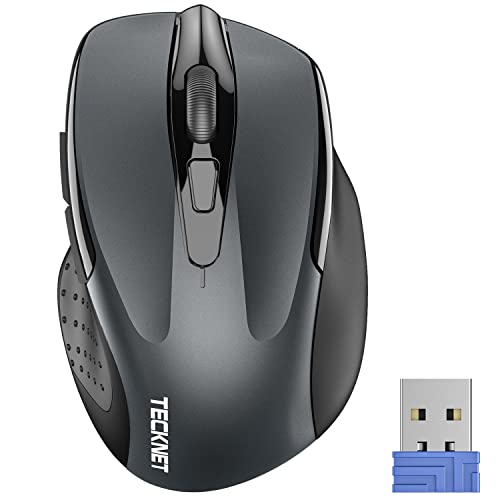
Tecknet M003
$9.99

HP X3000 G3
$18.99

Redragon M612 PRO
$36.99
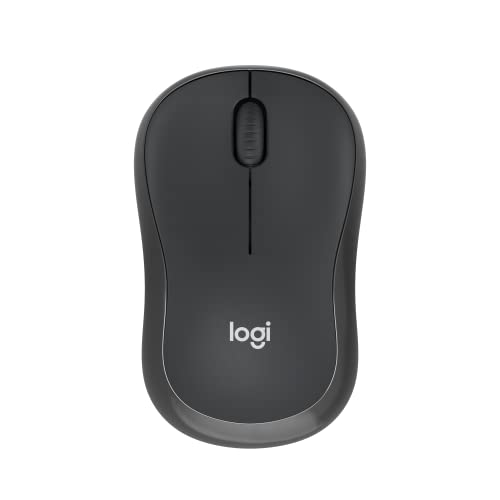
Logitech M240 Silent
$11.50

Logitech M170 Blue Grey
$11.99

Tecknet FBA_841263
$9.99

Logitech M185 Black
$12.99

Razer DeathAdder V2 X
$42.99

Tecknet M003 Small
$9.99

Tecknet Quiet Wireless
$9.98
Spec Comparison
TL;DR: Apple’s Magic Mouse offers a sleek, multi‑touch surface, 1986 mAh rechargeable battery and seamless macOS pairing, but its $94 price and flat design may not suit heavy‑use gamers.
The standout spec is its 1986 mAh battery, which Apple advertises as delivering “up to one month or more” of use – roughly 720 hours of operation before a recharge. Apple includes a woven USB‑C to USB‑C cable for charging, and the mouse connects via Bluetooth 3.0. Its low‑profile, ambidextrous shape houses a full‑touch acrylic top that supports gestures for scrolling and navigation.
At 0.5 lb (227 g), the Magic Mouse is heavier than ultra‑light options like the Logitech G305 (0.21 lb) and the Logitech M170 (0.155 lb), but lighter than the Redragon M612 PRO (0.88 lb). Priced at $94.00, it sits at the premium end of the thirteen‑mouse lineup, while many competitors fall below $30. Its 4.6‑star rating from 21,133 reviews matches the high marks seen on several budget models, indicating strong user approval despite the higher cost.
Reviewers consistently praise the instant Bluetooth pairing and the elegant multi‑touch gestures, calling the experience “smooth” for macOS and iPadOS users. However, the bottom‑mounted charging port forces downtime because the mouse can’t be used while charging, a point that everyday users flag as a major inconvenience. The flat, low‑profile ergonomics also draw criticism for causing hand fatigue during extended sessions, and the smooth sides lack a grip that many prefer for longer work periods.
Technically, the mouse employs laser tracking and PTFE (Teflon) foot material for smooth glide across most desk surfaces, including glass (though with some limitations). Compatibility extends to all modern Macs with Bluetooth and USB‑C, as well as iPad Pro and other iPad models running iPadOS 13.4 or later. The device ships with Apple’s one‑year limited warranty.
Pros
Cons
Best for: Buyers willing to invest in a proven, high‑quality option
Avoid if: You're shopping on a tight budget — it's priced at $94.00
“It just works”
“Classic Apple nonsense, the Magic Mouse has a charger on the bottom… so you can’t use it while charging.”
TL;DR: The HP X3000 G2 delivers roughly 10,800 hours of battery life on a single AA cell, a compact ambidextrous shape, and a plug‑and‑play 2.4 GHz RF link for just $9.34.
What really sets this mouse apart is its long‑lasting power source – the manufacturer lists 15 months of operation, which works out to about 10,800 hours on one AA battery. That endurance, about 10,800 hours, exceeds most budget mice, and it means you won’t be swapping cells every few weeks.
Compared with the other contenders, the X3000 G2 sits in the middle of the pack on battery longevity: the Tecknet Quiet Wireless matches the 15‑month figure, while the Tecknet M003 Small, Tecknet M003 and Tecknet FBA_841263 push it out to 24 months. Its 10 m wireless range is on par with the Logitech M185 and M170, but shorter than the 15 m range advertised by the Tecknet models. At 81.65 g with the battery installed, it’s a touch heavier than the Logitech mice but lighter than the Tecknet M003 and FBA variants, which weigh around 85 g.
Everyday users praise the mouse for its hassle‑free setup – just plug the nano receiver into a USB‑A port and you’re ready to go, no driver install required. Reviewers also note the ambidextrous, contoured body feels comfortable in both hands, making it a solid travel companion. Professional reviewers highlight the broad OS support (Windows 7‑11, macOS, Chrome OS) as a plus for mixed‑platform environments.
On the downside, the sensor runs at a fixed 1600 dpi, so you can’t dial in higher precision for design work or gaming. With only three buttons and no programmable options, power users looking for shortcuts will find it limiting. Some users have reported that the optical sensor struggles on glass surfaces, which is worth keeping in mind if you frequently work on transparent desks.
Pros
Cons
Best for: Budget‑conscious buyers seeking a reliable entry‑level option
Avoid if: You need advanced features or professional‑grade performance
“Lasts forever on one battery — I’ve had mine for over a year and still going.”
“Works perfectly with my MacBook and Windows laptop — no setup needed.”
TL;DR: The Logitech G305 Lightspeed delivers LIGHTSPEED wireless, a HERO 12K sensor and up to 250 hours of battery life in a lightweight 0.21 lb, six‑button design.
The standout spec is the 250‑hour continuous‑play battery life, which comes from a single AA cell and the ultra‑efficient HERO 12K sensor. At 0.21 lb the mouse feels featherlight, yet it still packs six programmable buttons and a DPI range of 200‑12,000 for precise control.
Compared with the other twelve entries, the G305 is heavier than the Logitech M240 Silent (0.1627 lb) and the Logitech M170 (0.1556 lb), but far lighter than the Redragon M612 PRO (0.8818 lb) and comparable to the Razer DeathAdder V2 X (0.23 lb). It also offers more on‑board buttons than the three‑button basics like the M240 Silent, HP X3000 G3 and M185, giving gamers extra flexibility without the bulk of a macro‑heavy mouse.
Users consistently praise the mouse for its marathon‑long battery life and lag‑free LIGHTSPEED connection, noting that it feels “snappy” even in fast‑paced games. Professional reviewers highlight the HERO sensor’s accuracy and the wireless latency that rivals wired rigs. The compact, ambidextrous shape's a hit with travelers and small‑handed gamers, though larger‑handed users often find the size cramped and miss the visual flair of RGB lighting. A few owners mention occasional disconnects and the lack of a battery‑level indicator as minor annoyances.
Technical details round out the picture: a maximum acceleration of 40 g, 400 IPS tracking speed and a fixed 1,000 Hz polling rate ensure responsive cursor movement. The mouse stores up to five DPI presets and button layouts in its onboard memory, so you can switch PCs without re‑configuring in Logitech G HUB.
Pros
Cons
Best for: Small‑handed gamers, students and travelers who want high‑performance wireless gaming without extra bulk.
Avoid if: You have large hands, need extensive macro buttons, or prioritize RGB lighting.
“Perfect for small to medium hands”
“No input lag”
TL;DR: The Tecknet M003 delivers a 700‑hour battery life, 6 programmable buttons, and ergonomic rubber grips at $9.99, making it a solid, low‑maintenance choice for everyday right‑handed users.
This mouse leans on a 700‑hour (24‑month) battery life powered by two AAA cells, so you won’t be swapping batteries often. It talks to your computer over a 2.4 GHz link with a 15 m wireless range and a 125 Hz polling rate, which is adequate for typical office work. The optical sensor offers five DPI levels—from 800 up to 2600 DPI—giving enough flexibility for everyday tasks.
When you line it up against the other 12 entries, the M003’s battery claim mirrors the 24‑month life of the Tecknet M003 Small, and its weight of 0.1873929227 pounds matches the Tecknet FBA_841263. Its 15 m range also matches the Tecknet Quiet Wireless, while the HP X3000 G2 provides only three buttons compared with the M003’s six programmable keys. Even the Logitech M185 is lighter at 0.165625 pounds, but it sacrifices the extra side buttons that many users find handy.
Users consistently praise the rubber side grips for reducing hand fatigue during long sessions, and professional reviewers highlight the ergonomic shape as a comfort advantage. The soft click sounds quiet enough for shared spaces, though a few owners note it isn’t completely silent. A common gripe is the red battery‑indicator LED that sometimes stays lit after a fresh set of cells, and the optical sensor can struggle on glass or dark glossy surfaces. Because it relies on a USB‑A nano receiver stored inside the mouse, it lacks Bluetooth, which can be a drawback for newer laptops that only have USB‑C ports.
Pros
Cons
Best for: Right‑handed office workers, students, and travelers who want a comfortable, long‑lasting wireless mouse without breaking the bank.
Avoid if: You need left‑handed ergonomics, Bluetooth connectivity, or a high‑polling‑rate mouse for competitive gaming.
“Extremely comfortable for long work sessions.”
“Battery lasted over a year with daily use.”
TL;DR: The HP X3000 G3 offers about 15 months (≈10,800 hours) of AA‑battery life, a compact ambidextrous shape, and a 9 m 2.4 GHz range, making it a solid travel‑ready mouse for everyday work.
What really stands out is the battery longevity – HP claims up to 15 months on a single AA cell, which translates to roughly 10,800 hours of use. The mouse also packs a 9 m wireless range and a fixed 1600 DPI optical sensor, all within a 39.1 mm‑high, 94.8 mm‑long, 56.9 mm‑wide silver shell.
Compared with the other twelve contenders, the X3000 G3 sits in the middle of the pack on battery life: it outlasts the Logitech M170 and M185 (12 months) but falls short of the Logitech M240 Silent (18 months) and the Tecknet models (24 months). Its 9 m range is a meter shy of the 10 m range common to the Logitech trio and noticeably less than the 15 m reach of the Tecknet mice. Button count matches the three‑button baseline of most budget options, while its unpackaged weight of 80 g is on par with the lightweight Logitech models.
Users repeatedly praise the mouse’s “set‑and‑forget” battery performance and the convenience of the built‑in receiver compartment for travelers. Professional reviewers highlight the ambidextrous, textured grips as comfortable for long office sessions. On the flip side, critics often call the fixed 1600 DPI too low for gaming or design work, and the bright blue LED can be distracting in dark environments. The lack of Bluetooth means you’ll need a free USB‑A port for the nano receiver.
Pros
Cons
Best for: Students, remote workers, and frequent travelers who want a low‑maintenance, well‑reviewed mouse with long battery life.
Avoid if: You’re shopping on a tight budget – it’s priced at $18.99 – or need high DPI, programmable buttons, or Bluetooth for gaming and design work.
“Lasts forever on one battery — I’ve had mine for over a year and still going.”
“Works perfectly with my MacBook and Windows laptop — no setup needed.”
TL;DR: The Redragon M612 PRO delivers tri‑mode connectivity, up to 200 hours of battery life (RGB off), 9 programmable buttons and RGB lighting for $36.99, but its bulk and software quirks may deter some users.
The mouse packs a 1000 mAh battery that can last up to 200 hours when the RGB lighting is off, and still provides 25 hours with the lighting on. It also offers nine programmable buttons, two side macro buttons, and a rapid‑fire button, all backed by a Pixart PAW3327 sensor (wired) and a PAW3104 sensor (wireless). Redragon’s software controls the 7 dynamic RGB modes, and the device supports Bluetooth 5.0, a 2.4 GHz dongle, or a wired USB‑C connection.
Compared with the other mice in the roundup, the M612 PRO is noticeably heavier than the Logitech G305 Lightspeed (0.21 lb) and the Logitech M240 Silent (0.1627 lb), but it supplies more programmable inputs—nine versus the G305’s six and the M240’s three. Its 200‑hour battery endurance sits just below the G305’s 250‑hour performance mode, yet it still outpaces many budget options that list endurance in months. The Razer DeathAdder V2 X weighs only 0.23 lb, making the Redragon’s 0.8818 lb (400 g) feel more solid but less agile for ultra‑lightweight esports needs.
Users consistently praise the long battery life and the flexibility of switching between wired, wireless, and Bluetooth connections. Professional reviewers highlight the low‑latency PAW3104 sensor and the rare tri‑mode setup at this price tier. On the downside, the Redragon software is often described as unintuitive, and a subset of owners report shell cracking after a few months of use. Linux users also note the lack of an official driver, limiting cross‑platform appeal.
Technically, the mouse reaches up to 12,400 DPI in wired mode and 500–8,000 DPI when wireless, with acceleration figures of 30 G wired and 15 G wireless. The polling rate can be set between 125 Hz and 1,000 Hz, giving you fine‑tuned responsiveness for fast‑paced games. The 1.8 m braided USB‑C cable adds durability for wired sessions, and the 7 RGB lighting modes let you personalize the look without sacrificing performance.
Pros
Cons
Best for: Budget‑conscious gamers and multi‑device users who need wired, wireless, and Bluetooth options, plus extensive button customization.
Avoid if: You require an ultra‑lightweight mouse for esports, rely on Linux drivers, or need the absolute lowest price.
“Amazing battery life”
“Great for the price”
TL;DR: The Logitech M240 Silent offers 90% quieter clicks, up to 18 months of battery life on a single AA, and a compact Bluetooth design for a quiet, portable workspace.
What really stands out is the 90% click‑noise reduction, which lets you work in shared spaces without disturbing colleagues. The mouse also promises up to 18 months of use on a single AA battery—roughly 13,000 hours—so you’ll rarely need to swap cells. At just 0.162701149356 lb (73.8 g), it’s light enough to travel in a laptop bag, and its 10 m Bluetooth range keeps the connection stable across a typical desk.
Compared with the other 12 contenders, the M240 Silent is lighter than the HP X3000 G3’s packaged weight of 150 g, while delivering a longer battery life than the Logitech M170 and M185, both listed at 12 months. Its three‑button layout matches many budget options, but the silent‑click technology and recycled‑plastic construction give it a premium feel that many lower‑priced peers lack. The Bluetooth‑only connectivity also avoids the dongle clutter that some rivals require.
User feedback highlights the mouse’s “remarkably effective” quiet clicks and the hassle‑free Bluetooth pairing, which many reviewers say works in seconds without a dongle. Portability and the slim, ambidextrous shape earn consistent praise. On the downside, a few owners note the absence of forward/back thumb buttons and occasional Bluetooth reconnection hiccups after a computer sleep cycle. The scroll wheel’s ratchet can also be audible, which slightly detracts from the silent experience.
Technical specs round out the package: a DPI range of 400–4000 (nominal 1000 DPI) with 100‑DPI increments lets you adjust sensitivity for different tasks, while the 5 million‑click service life promises durability. Logitech builds the mouse from 48% post‑consumer recycled plastic and gives it a carbon‑neutral certification, aligning with eco‑friendly priorities. Logitech backs it with a 1‑year limited hardware warranty.
Pros
Cons
Best for: Remote workers, students, and professionals who need a quiet, portable mouse with long battery life.
Avoid if: You require extra navigation buttons, high‑DPI gaming performance, or need a mouse that never drops a Bluetooth connection.
“Quiet – not a sound!”
“Connected in seconds with my MacBook Air”
TL;DR: The Logitech M170 offers a lightweight, ambidextrous 10‑meter wireless mouse with a year‑long AA battery, 1000 dpi tracking and solid cross‑platform support, making it a reliable budget pick.
The standout spec is its 12‑month (≈8,760 hours) battery life on a single AA cell, paired with a 10 m 2.4 GHz wireless range that stays connected without lag. At 70.5 g, the mouse feels light in hand, and its 1000 dpi Advanced Optical Tracking sensor handles everyday tasks with ease. The symmetrical shape lets both left‑ and right‑hand users click comfortably, while three programmable buttons keep the layout simple.
Compared with the other 12 contenders, the M170 is lighter than the Logitech M185 (which tips in at 0.165625 lb) and shares the same 12‑month battery life and 10 m range. Its body depth of 97.7 mm is deeper than the M185’s 39 mm, giving a broader palm surface but also a flatter profile than the higher‑DPI Tecknet M003, which offers 2600 dpi and a 24‑month battery. The M170’s 1000 dpi sits below the 1600 dpi of the HP X3000 G3 and the 2600 dpi options, so it won’t satisfy users who need ultra‑precise cursor control.
Everyday users praise the mouse for its plug‑and‑play setup across Windows, macOS, ChromeOS, Linux, iPadOS and Android, noting the reliable connection and the “set‑and‑forget” battery life. Professional reviewers highlight the simplicity of the on/off switch and auto‑sleep mode, as well as the ambidextrous ergonomics that beat many laptop touchpads. However, several commenters mention that the flat, wide shape can feel cramped during long sessions, and the audible clicks lack the silent‑click technology that some rivals include. The M170 also incorporates sustainability, featuring 38 % post‑consumer recycled plastic and a certified carbon‑neutral footprint of 4.05 kg CO₂e.
Pros
Cons
Best for: Most users looking for a well‑reviewed, reliable mainstream option
Avoid if: You need advanced features or professional‑grade performance
“Users consistently report stable wireless performance.”
“The flat, wide shape uncomfortable over time.”
TL;DR: The Tecknet FBA_841263 offers a 24‑month (≈17,280 h) battery, 15 m wireless range and 6 programmable buttons in a compact ergonomic shape for under $10.
This mouse’s headline feature is its ultra‑long battery life – the manufacturer lists 24 months, which works out to roughly 17,280 hours of use on two AAA cells. Combined with a 15 m (49 ft) 2.4 GHz range, it stays connected even across a busy desk. It also provides five DPI steps up to 2600 DPI and six programmable buttons, giving you flexibility for everyday productivity.
Compared with other budget wireless mice in the roundup, the Tecknet outlasts the HP X3000 G2 (15 months battery) and the Logitech M185 (12 months battery). Its 15 m range also exceeds the 10 m range of those two models. While the HP X3000 G2 and Logitech M185 each have three buttons, the Tecknet delivers six, making it more versatile for navigation shortcuts. In weight, it matches the Tecknet M003 (0.187 lb), so you won’t notice a significant difference in hand feel.
Reviewers consistently praise the comfort of the right‑handed ergonomic shape and the rubber side grips, noting that the long battery life removes the hassle of frequent replacements. Professional editors highlight the plug‑and‑play simplicity and the adjustable DPI as strong productivity perks. On the downside, users mention a flashing red LED after battery changes and occasional cursor jitter when the batteries run low. Reviewers also note the lack of silent‑click technology and the exclusive right‑handed design as drawbacks for quiet offices or left‑handed users.
Technically, the mouse connects via a USB‑A nano receiver, supports auto‑sleep mode and an on/off switch to conserve power, and runs on an optical sensor for precise tracking. The five DPI levels (800‑2600) let you fine‑tune cursor speed without software, and the six programmable buttons cover forward/back navigation and side‑click functions out of the box.
Pros
Cons
Best for: Right‑handed office and home‑office workers, students, and travelers who need a reliable, long‑lasting entry‑level wireless mouse.
Avoid if: You need silent clicks, left‑handed ergonomics, or Bluetooth connectivity for modern laptops.
“just works”
“The red LED indicator flashing after battery replacement confuses users”
TL;DR: The Logitech M185 Black delivers a 12‑month battery life, 10 m wireless range, and ambidextrous design for $12.99, making it a solid, budget‑friendly choice for everyday computing.
The standout spec is its year‑long battery life on a single AA cell, which translates to roughly 8,760 hours of use without swapping batteries. Combined with a 10 m 2.4 GHz RF range and a 1000 DPI optical sensor, the mouse offers reliable plug‑and‑play connectivity through a nano USB receiver that stores inside the battery compartment.
Compared with the other 12 mice in this roundup, the M185 shares the same 10 m range and 12‑month battery life as the Logitech M170 Blue Grey, but it weighs a bit more at 0.165625 lb versus 0.155625 lb. It provides fewer buttons (3 vs. 6) and a lower DPI (1000 vs. up to 2600) than the Tecknet M003 Small and Tecknet FBA_841263, which also boast longer 15‑m ranges. The HP X3000 G2 matches the M185’s range but offers a 1600 DPI sensor and a slightly heavier build.
Users consistently praise the mouse’s longevity and instant readiness—you don’t need drivers, and the on/off switch makes power management simple. Reviewers also note that the ambidextrous shape works well for left‑handed users, while the plastic matte finish feels lightweight at 75.2 g. Professional reviewers point out the solid build quality and the convenience of the internal receiver pocket, though they mention the scroll wheel’s light detents can feel imprecise during rapid scrolling.
Pros
Cons
Best for: Most users looking for a well‑reviewed, reliable mainstream option
Avoid if: You need advanced features or professional‑grade performance
TL;DR: At $42.99 the Razer DeathAdder V2 X earns a 4.7‑star rating from over 18,000 reviewers, who praise its comfort and battery life but note its lack of RGB and a heavier feel.
The mouse comes from Razer, a brand known for gaming peripherals, and sits near the top of the price range in this 13‑product roundup, landing at rank #11. Its 4.7‑star average from 18,169 reviews makes it one of the higher‑rated options among its peers.
Reviewers consistently highlight the ergonomic right‑handed shape, calling it comfortable for long sessions and ideal for palm or claw grips. Users praise the dual‑mode wireless capability and the exceptionally long battery life, and they also mention the crisp click feel and smooth PTFE feet positively. On the downside, users miss any RGB lighting, find the mouse heavier than the lightest esports models, and note that the battery compartment can affect balance, especially with smaller AAA cells. Users describe the side edge buttons as small enough to be triggered accidentally.
Given its price and rating, the DeathAdder V2 X positions itself as a solid, mid‑to‑high‑priced choice for gamers who value comfort and endurance over ultra‑lightweight design or flashy lighting. It offers a reliable Razer experience without breaking the bank, though it may not satisfy those seeking the lightest possible mouse or extensive visual customization.
Pros
Cons
Best for: Buyers willing to invest in a proven, high‑quality option
“Perfect shape for palm grip—no hand fatigue even after hours.”
“Battery lasts forever, especially in Bluetooth mode.”
TL;DR: The Tecknet M003 Small delivers a 24‑month (≈700 h) battery life, 6‑button ergonomic design, and 15 m 2.4 GHz range at a $9.99 price, making it a solid budget wireless mouse.
This mouse leans on a 24‑month (≈700 h) battery life and a maximum DPI of 2600, delivering 2600 DPI precision for office work and light gaming. It reports at a typical 125 Hz polling rate and stays connected up to 15 m away, while six programmable buttons let you map common shortcuts.
Compared with the other twelve contenders, the M003 Small matches the regular Tecknet M003 and the Tecknet FBA_841263 in weight (85 g), battery duration and 15 m range, while offering the same six‑button layout. It outlasts the HP X3000 G2, Logitech M185 and M170, which list 15‑month or 12‑month battery lives and a shorter 10 m range, though those models are a few grams lighter. The Quiet Wireless model shares the 15 m range but only reaches 15 months of use, so the M003 Small’s 24‑month claim is notably longer.
Users consistently praise the contoured shape with rubber side grips for comfortable daily use, and many note the hassle‑free plug‑and‑play setup via the USB‑A nano receiver. Professional reviewers also highlight the reliable 2.4 GHz connection and the long battery life. Common complaints mention that the side buttons don’t work on macOS, the need for disposable AAA batteries, and the lack of a USB‑C receiver.
Additional technical notes include a 10‑second auto‑sleep timer, a physical on/off switch on some units, and optical tracking on paper, cloth, resin and glass surfaces. The mouse comes with a two‑year warranty, reinforcing Tecknet’s confidence in durability.
Pros
Cons
Best for: Budget-conscious buyers seeking a reliable entry-level option
Avoid if: You need advanced features or professional‑grade performance
“Extremely comfortable for long work sessions.”
“Battery lasted over a year with daily use.”
TL;DR: The Tecknet Quiet Wireless mouse delivers silent clicks, a 15‑month AA‑battery life, and a 15 m 2.4 GHz range in a compact, budget‑friendly package.
This mouse’s standout spec is its 15‑month battery life on a single AA cell, which translates to months of uninterrupted use without swapping batteries. It also sports a 15 m operating distance on the 2.4 GHz band, ensuring a reliable connection even when the receiver’s tucked away in a laptop bag.
Compared with the other twelve entries, its battery life matches the HP X3000 G2’s 15‑month claim but falls short of the 24‑month life of the Tecknet M003 Small, Tecknet M003, and Tecknet FBA_841263 models. Its 15 m wireless range equals the Tecknet M003 series and exceeds the 10 m range of the Logitech M185 and M170 mice, giving you a little extra freedom on the desk.
Users consistently praise the mouse’s whisper‑quiet clicks and the convenience of a nano receiver stored inside the shell. Reviewers note that the side navigation button doesn’t function on macOS, and the maximum DPI of 1600 may feel modest on ultra‑high‑resolution monitors. Professional reviewers highlight the solid value for students and remote workers, while also flagging the lack of Bluetooth or native USB‑C support as a drawback for newer laptops.
Technical details include a 2.4 GHz wireless connection via a USB‑A nano receiver, three DPI settings (800, 1200, 1600), four programmable buttons, and a silent scroll wheel with tactile feedback. The mouse measures 99.9 mm in length, 57.9 mm in width, and 38.6 mm in height, weighing just 82 g, making it easy to slip into a backpack or laptop sleeve. Power‑saving modes switch to deep sleep after 15 minutes of inactivity, with light and medium sleep thresholds at 3 seconds and 70 seconds respectively, and the product comes with a 36‑month warranty.
Pros
Cons
Best for: Budget‑conscious buyers seeking a reliable entry‑level option
Avoid if: You need high DPI, Bluetooth/USB‑C connectivity, or a functional side button on macOS
“Perfect for my daughter — small hands, loves the pink color!”
“So quiet! I can click during meetings without disturbing anyone.”
Breakdown
Apple Magic Mouse
Cons
HP X3000 G2
Pros
Tecknet M003
Cons
Based on scoring data and product specs
Personalized picks
Best Overall Pick
Apple Magic Mouse
Best OverallBest for: Buyers willing to invest in a proven, high-quality option
HP X3000 G2
Best for: Budget-conscious buyers seeking a reliable entry-level option
$14.75-$79.25 vs winner
Skip Tecknet Quiet Wireless if…
You have limited desk space or need portability
The Apple Magic Mouse wins best overall thanks to its 1986 mAh rechargeable cell that promises up to one month or more of use, its low‑profile ambidextrous design, and a solid 4.6‑star rating from 21,133 reviewers. Priced at $94.00 (list $99.00) and weighing 0.5 lb, it delivers premium comfort without sacrificing desk space.
The HP X3000 G2 lands as runner‑up, ideal for a budget‑friendly office or home desk where you need a mouse that can stay powered for years. Its AA battery provides an advertised 15‑month life, it’s ambidextrous, and it’s available for just $9.34, making it a practical, long‑lasting workhorse.
For tighter budgets, the HP X3000 G2 stands as the top budget pick thanks to its ultra‑low price and long‑lasting AA cell. If you want a step up without breaking the bank, the HP X3000 G3 at $18.99 offers a slightly larger form factor and similar RF reliability, making it the best mid‑range option.
Pick the Apple Magic Mouse now and you'll enjoy month‑plus battery life with premium Apple ergonomics.
The Apple Magic Mouse is designed for modern Macs and iPad models, charging via a USB‑C cable and supporting Bluetooth 3.0. It offers a low‑profile, ambidextrous shape and a rechargeable 1986 mAh battery that lasts up to a month or more on a single charge.
Please sign in to leave a review
No reviews yet. Be the first to review!
