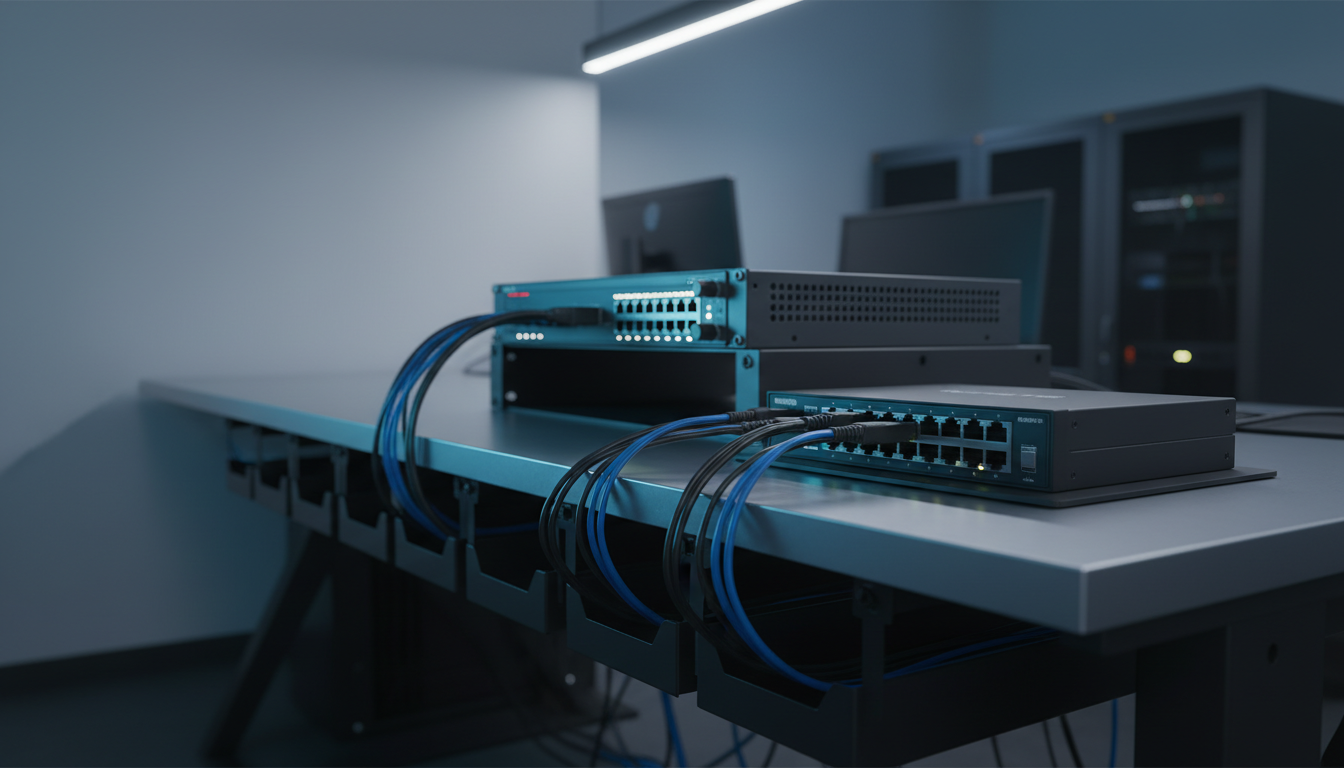
Comparing eight managed switches reveals that the cheapest entry, the Netgear GS308E at $23.99, carries the same 4.7‑star rating as the higher‑priced TP‑Link TL‑SG108E, despite its modest 514‑review count. Both deliver a 16 Gbps switching bandwidth and a fanless, silent design, but the Netgear’s compact 158 × 101 × 29 mm footprint and 500 g weight make it especially easy to tuck into a quiet home office or classroom.
The roundup spans three price tiers: budget options (Netgear GS308E, TP‑Link TL‑SG108E, D‑Link DGS‑1100‑05V2), mid‑range picks (Sodola 8‑Port 5 Gb, MikroTik CSS326‑24G‑2S+RM) and premium contenders (MikroTik CRS328‑24P‑4S+RM, TRENDnet 10‑Port Switch, MikroTik CRS326‑24G‑2S+RM). Prices range from $23.99 up to $475.00, and ratings sit between 4.3 and 4.7 stars, giving you a clear view of value versus performance across the spectrum.
The next section breaks down each tier, highlighting key specs, strengths and any drawbacks so you can match a switch to your specific network needs.

Netgear GS308E
Its compact 101 mm depth keeps your rack tidy while delivering reliable entry‑level performance, earning top value and rating scores.

TP-Link TL-SG108E
Priced at $38.99, the TP‑Link TL‑SG108E provides a solid build—about $15 more than the Netgear budget pick—but it has a higher review count.

MikroTik CRS328-24P-4S+RM
With a 300 mm depth, the MikroTik CRS328‑24P‑4S+RM accommodates advanced PoE and SFP+ modules, delivering the premium feature set audiophiles and network enthusiasts demand—something the smaller budget models can’t match.
Also considered
Score Analysis
Key score advantages vs. runner-up (TP-Link TL-SG108E)
Price Range
Netgear GS308E
$23.99
TP-Link TL-SG108E
$24.99
MikroTik CRS328-24P-4S+RM
$475.00
MikroTik CSS326-24G-2S+RM
$152.43

TRENDnet 10-Port Switch
$199.99

MikroTik CRS326-24G-2S+RM
$188.12

Sodola 8-Port 5gb Managed Switch
$85.99
D-Link DGS-1100-05V2
$26.09
Spec Comparison
TL;DR: The Netgear GS308E delivers 8 Gigabit ports, 16 Gbps non‑blocking switching, silent fanless operation and ultra‑low 3.7 W power draw at a budget‑friendly $23.99 price.
This eight‑port managed switch packs a 16 Gbps switching bandwidth and a 192 kB buffer, giving you full‑duplex gigabit performance on every port. The fanless chassis runs at 0 dBA, and the maximum power consumption is only 3.7 W, making it ideal for an always‑on office desk or a quiet home media rack.
Weighing 500 g, the GS308E is slightly heavier than the D‑Link DGS‑1100‑05V2 (0.5 pounds) but about the same weight as the TP‑Link TL‑SG108E (508 g). Its 29 mm height makes it a bit taller than the TP‑Link’s 25 mm profile, while the D‑Link’s 1.1‑inch height is comparable. Compared with the heavier MikroTik CSS326‑24G‑2S+RM (910 g) and the larger TRENDnet 10‑Port Switch (664 g), the Netgear unit stays compact and easy to mount on a desktop, wall or rack.
Reviewers consistently praise the ultra‑low power draw and the silent operation, noting that the switch “never adds to the noise floor” in small offices or media rooms. The only recurring complaints include the lack of Power over Ethernet and the absence of 10 Gbps uplink ports, which means you’ll need a separate solution if you plan to expand to higher‑speed devices later.
Beyond the basics, the GS308E offers 64 VLANs, IGMP snooping, rate limiting, DHCP snooping and port mirroring, all managed through Netgear’s Easy Smart Managed Essentials software. It lists an MTBF of 1.6 million hours, suggesting a long‑term reliability that matches its 5‑year limited warranty.
Pros
Cons
Best for: Budget-conscious buyers seeking a reliable entry-level option
TL;DR: The TP‑Link TL‑SG108E delivers 8 × 1 Gbps fanless switching with 16 Gbps non‑blocking capacity, 84 % power‑saving efficiency, and basic web‑based management, making it a solid entry‑level smart switch for small offices.
This eight‑port Gigabit switch packs a 16 Gbps switching capacity and a full‑duplex data rate of 2000 Mbps per port, so you won’t hit a bottleneck even when multiple devices stream video or run VoIP calls. The metal, fanless enclosure draws only 2.7 W typical power and claims up to 84 % energy savings, keeping the unit silent and cheap to run.
At 1.12 lb (508 g) the TL‑SG108E is heavier than the D‑Link DGS‑1100‑05V2, that lists 0.5 lb, and comparable to the Netgear GS308E’s 500 g chassis, but far lighter than the MikroTik CRS328‑24P‑4S+RM that tips the scales at over 10 lb. Its 16 Gbps switching fabric matches the Netgear GS308E, yet trails the MikroTik CSS326‑24G‑2S+RM’s 52 Gbps and the TRENDnet 10‑Port Switch’s 80 Gbps, placing it solidly in the mid‑range of the roundup.
Reviewers consistently praise the plug‑and‑play setup and the quiet operation, noting that the built‑in QoS with four queues, DSCP and 802.1p prioritisation keeps latency‑sensitive traffic smooth. Users also like the inclusion of IGMP snooping, port mirroring and cable diagnostics for easy troubleshooting. The main complaints revolve around the need for an external power adapter and the absence of PoE or SFP ports, which limits placement options and uplink flexibility.
Pros
Cons
Best for: Small offices, home offices, or SMBs that need a reliable, silent Gigabit switch with basic smart features.
Avoid if: You want extensive VLANs, PoE or fiber uplinks, or a more value‑driven price compared to similar switches.
TL;DR: The MikroTik CRS328‑24P‑4S+RM is a 1U rackmount switch with 24 PoE‑enabled Gigabit ports, four 10 Gbps SFP+ uplinks, 128 Gbps switching capacity and dual‑boot OS, but carries a premium $475 price.
This model packs 24 PoE‑capable Gigabit Ethernet ports with a total 450 W budget and four 10 Gbps SFP+ uplinks, delivering a non‑blocking 64 Gbps layer‑2 throughput and 128 Gbps switching capacity. The dual‑boot SwOS/RouterOS firmware gives you both simple switching and full routing features, while the 800 MHz ARM CPU and 95.2 Mpps forwarding rate keep traffic moving smoothly.
Compared with the TRENDnet 10‑Port Switch (240 mm depth, 1.46 pounds) and the compact Sodola 8‑Port 5 Gb model (0.88 pounds, 24.9 mm height), the CRS328 is larger and heavier—10.01 pounds, 300 mm deep, 44 mm tall, 443 mm wide—but it also offers far higher capacity, PoE on every port, and 10 Gbps uplinks that the smaller units lack. The MikroTik CRS326‑24G‑2S+RM weighs about 2.0 pounds and forwards 77.37 Mpps, while the CSS326‑24G‑2S+RM provides only 52 Gbps switching capacity; both fall short of the CRS328’s 95.2 Mpps and 128 Gbps capacity. Even the budget‑friendly TP‑Link TL‑SG108E (508 g, 16 Gbps switching) and Netgear GS308E (500 g, 16 Gbps bandwidth) are considerably lighter and less capable.
Customers consistently rate the switch 4.6 stars across 123 reviews, praising the flexible PoE support, the convenience of dual‑boot OS, and the reliable performance in demanding environments. Reviewers also note the solid build quality, which includes an MTBF of roughly 200,000 hours and an operating range of –20 °C to 60 °C. The only recurring complaint is the premium price tag, which some small‑office buyers find steep.
Pros
Cons
Best for: Enterprises and SMBs that need dense PoE provisioning and high‑speed uplinks for cameras, APs, or VoIP phones.
Avoid if: You’re shopping on a tight budget — it’s priced at $475.00
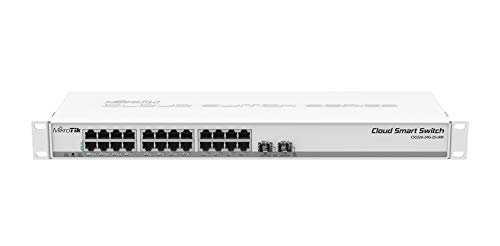
TL;DR: The MikroTik CSS326‑24G‑2S+RM delivers 24 GbE ports, two 10 Gbps SFP+ uplinks, 52 Gbps non‑blocking switching and a low 19 W draw, earning a 4.6‑star rating for solid mid‑range performance.
This 1U rackmount switch packs 24 × 1 Gbps Ethernet ports and 2 × 10 Gbps SFP+ cages, with a 52 Gbps Layer 2 switching capacity and a maximum forwarding rate of 77.4 Mpps. At just 910 g, it's light enough for dense rack installations while drawing only 19 W of power. The device runs MikroTik’s SwOS, offers ACL, broadcast‑storm control, port mirroring and RSTP, and supports up to 4 K VLANs.
Compared with the other seven models, the CSS326 shares identical dimensions (44 mm H × 144 mm W × 443 mm D) with the MikroTik CRS326‑24G‑2S+RM, but it’s deeper and taller than the TRENDnet 10‑Port Switch (240 mm D, 27 mm H) and the Netgear GS308E (101 mm D, 29 mm H). It also outweighs the compact Sodola 8‑Port Switch (400 g) and the TP‑Link TL‑SG108E (508 g), making it a sturdier choice for rack mounting. Its 77.4 Mpps forwarding rate matches the CRS326’s 77.37 Mpps and outpaces the TRENDnet (59.52 Mpps) and TP‑Link (11.9 Mpps). While its 52 Gbps switching capacity exceeds the 16 Gbps offered by TP‑Link and Netgear, it sits below the TRENDnet’s 80 Gbps fabric and the CRS326’s higher L2 capacity of 86.86 Gbps.
Reviewers consistently praise the switch’s wire‑speed performance and its ability to clear bottlenecks thanks to the 10 Gbps SFP+ uplinks. Professionals note the efficient passive‑cooling design and the low power draw, which keeps operating costs down. On the downside, users point out the modest 256 KB of RAM and the 2 MB flash storage, which can limit the number of concurrent features. Reviewers also note the lack of PoE output and the basic SwOS interface as trade‑offs for those needing advanced routing or firewall capabilities.
Additional technical details include an MTBF of 200,000 hours, an operating temperature range of –40 °C to +70 °C, a serial RJ45 console port, and a power input range of 10‑30 V. The switch supports ACL, port isolation, broadcast‑storm control, and up to 4 K VLANs, making it a reliable backbone component for ISPs, data centers, or enterprise networks that need high bandwidth without the complexity of full‑router features.
Pros
Cons
Best for: Buyers in the mid price range seeking the best quality at that price point
Avoid if: You need advanced features or professional‑grade performance
TL;DR: The TRENDnet TEG‑3102WS delivers 10 Gbps SFP+ uplinks, eight 2.5 GbE ports, and an 80 Gbps non‑blocking fabric in a fanless metal case, but it lacks PoE and advanced routing.
What really stands out is the mix of 2.5 GbE and 10 GbSFP+ connectivity. The switch packs eight 2.5GBASE‑T RJ‑45 ports and two 10 Gbps SFP+ slots, all backed by an 80 Gbps switch fabric and a forwarding rate of 59.52 Mpps. With a 1.5 MB RAM buffer, 10 KB jumbo frames, and a MAC table of 16 K entries, it can handle bursty traffic without dropping packets, and the fanless metal housing keeps the unit silent.
Compared with the other seven models, the TRENDnet sits in the middle of the size spectrum. Its depth of 240 mm is shorter than the MikroTik CRS326‑24G‑2S+RM (443 mm) and the MikroTik CSS326‑24G‑2S+RM (443 mm), yet deeper than the ultra‑compact Sodola 8‑Port 5 Gb switch (160 mm). At 1.46 pounds, it's lighter than the MikroTik CRS326‑24G‑2S+RM (2.0 pounds) but it's heavier than the Sodola unit (0.88 pounds). Forwarding performance also outpaces the TP‑Link TL‑SG108E’s 11.9 Mpps and the Netgear GS308E’s modest specs, giving the TRENDnet a clear edge in throughput.
Users consistently praise the fanless design for silent operation and the metal chassis for durability. Reviewers note the static routing feature—supporting up to 32 IPv4/IPv6 entries and inter‑VLAN routing—as useful for small‑to‑medium setups, but they also flag the absence of PoE and the limited routing table as drawbacks for more demanding environments. The manufacturer‑claimed MTBF of 893,944 hours adds confidence for long‑term reliability.
Beyond raw performance, the switch offers a solid feature set: 802.3az power‑saving, LACP, LLDP/LLDP‑MED, QoS, IGMP snooping, VLAN support, and both web GUI and CLI management options. These tools make it a versatile choice for a home lab or a modest office that needs multi‑gigabit uplinks without the complexity of full‑layer‑3 routing.
Pros
Cons
Best for: Small‑to‑medium businesses, home labs, and prosumers who need multi‑gigabit ports and reliable performance without PoE.
Avoid if: You require PoE, extensive dynamic routing, or enterprise‑grade port density.
TL;DR: The MikroTik CRS326‑24G‑2S+RM delivers 24 × 1 Gbps Ethernet ports, two 10 Gbps SFP+ uplinks, 52 Gbps switching capacity and passive cooling in a 1U chassis for $188.12, ideal for dense wired networks.
This 1U rackmount switch packs 24 × 1 Gbps RJ45 ports and 2 × 10 Gbps SFP+ slots, giving you high‑density connectivity and fast fiber uplinks. A dual‑boot RouterOS L5 / SwitchOS lets you toggle between advanced routing and straightforward Layer 2 switching, while the 800 MHz CPU and 512 MB RAM keep the 77.37 Mpps forwarding rate smooth. The device runs fan‑less, relying on passive cooling, and offers a solid 86,855.7 Mbps L2 capacity.
At 2.0 pounds, the CRS326's heavier than compact desktop models like the TP‑Link TL‑SG108E (≈1.12 pounds) or the D‑Link DGS‑1100‑05V2 (≈0.5 pounds), but far lighter than the larger MikroTik CRS328‑24P‑4S+RM, which tips the scales at over 10 pounds. Its 77.37 Mpps forwarding rate sits between the lower‑end TRENDnet 10‑Port Switch (59.52 Mpps) and the higher‑end CRS328 (95.2 Mpps). Switching capacity matches the MikroTik CSS326‑24G‑2S+RM at 52 Gbps, yet falls short of the TRENDnet’s 80 Gbps fabric and the CRS328’s 128 Gbps, positioning it solidly in the mid‑range of the lineup.
Reviewers appreciate the dense port count and the two 10 Gbps uplinks for backbone connections, noting the device feels reliable thanks to a 200,000‑hour MTBF. Reviewers praise the passive cooling for silent operation, but users flag the lack of PoE output and the modest 16 MB flash storage, which can limit complex routing scripts. The 4.4‑star rating reflects a generally positive reception, though some wish for a richer feature set.
Technical highlights include a maximum power draw of 24 W, making it energy‑efficient for a rackmount unit, and a 16 MB flash module for the OS image. The 512 MB RAM provides headroom for VLANs (up to 4K) and QoS, while the 200,000‑hour MTBF underscores long‑term durability for enterprise environments.
Pros
Cons
Best for: Those prioritizing quality and willing to pay for premium performance
Avoid if: You have limited desk space or need portability
TL;DR: The Sodola 8‑Port 5 Gb Managed Switch offers eight 2.5 GbE RJ45 ports, a 10 GbE SFP+ uplink, fanless aluminum construction and web‑based management for $80.99, making it a solid mid‑range choice for small‑office or homelab networks.
It mixes eight 2.5 GbE RJ45 ports with a 10 GbE SFP+ uplink, and a fanless aluminum alloy chassis houses the components, delivering 40 % better heat reduction than steel. At just 0.88 lb (400 g) and a slim 24.9 mm height, it’s easy to mount with the included magnetic pads or rubber feet.
Compared with the other seven switches in this roundup, the Sodola weighs less than the TP‑Link TL‑SG108E (1.12 lb) and far less than the MikroTik units that exceed 2 lb, but it’s heavier than the D‑Link DGS‑1100‑05V2 (0.5 lb). It provides more multi‑gigabit ports than the Netgear GS308E, yet it offers far fewer total ports than the 24‑port MikroTik and TRENDnet models, positioning it as a compact, mid‑tier alternative.
Reviewers consistently highlight the silent, fanless operation and the intuitive web interface, noting low packet loss even at full speeds. Many note the port count feels limited for larger homelabs or small‑office deployments, so users with extensive wiring needs may look to bigger switches.
Technical details include auto‑negotiation, 802.3az Energy Efficient Ethernet, LACP, QoS, VLAN, IGMP snooping and port‑based access control—all managed through a browser‑based UI. The four magnetic mounting pads and rubber feet give flexible installation options on metal surfaces or desks.
Pros
Cons
Best for: Value-conscious buyers seeking quality at $80.99
Avoid if: You have limited desk space or need portability
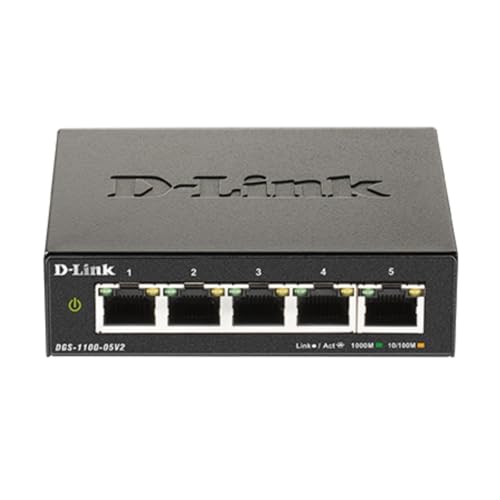
TL;DR: The D-Link DGS-1100-05V2 is a compact 5‑port gigabit smart switch that runs silently, offers essential VLAN and QoS controls, and comes with a lifetime warranty for just $26.09.
This model packs five 10/100/1000BASE‑T ports into a 4.0‑inch long, 3.25‑inch wide chassis that weighs only 0.5 pounds, making it easy to slip onto a desk or mount on a wall. Its fanless design guarantees silent operation, and the Energy Efficient Ethernet (IEEE 802.3az) support helps keep power use low—features that professional reviewers highlighted as key advantages for small‑office environments.
When you line it up against the other seven switches in the roundup, the DGS‑1100‑05V2 is lighter than the MikroTik CRS326‑24G‑2S+RM and CRS328‑24P‑4S+RM, both around 2 pounds, and more compact than the larger 24‑port units that measure over 40 mm in height. It’s also shorter than the Netgear GS308E, which lists a depth of 101 mm, and it offers a fanless experience similar to the TP‑Link TL‑SG108E and Sodola 8‑Port 5Gb models. While its five‑port count is fewer than the 8‑port or 10‑port peers, the DGS‑1100‑05V2’s smart‑managed layer‑2 features give it a richer toolset than many basic unmanaged switches.
User feedback repeatedly praises the intuitive web management interface and the ability to set up VLAN tagging, QoS, and storm control without diving into complex CLI commands. Reviewers note that quiet office spaces or home labs especially appreciate the silent, fanless operation. The lifetime warranty adds confidence for buyers who want a set‑and‑forget solution, and the energy‑saving features align with greener office goals.
Pros
Cons
Best for: Entry-level buyers or those on a tight budget
Avoid if: You need powerful performance or professional‑grade features
Breakdown
Netgear GS308E
Pros
TP-Link TL-SG108E
Pros
Cons
MikroTik CRS328-24P-4S+RM
Pros
Cons
MikroTik CSS326-24G-2S+RM
Pros
Cons
Based on scoring data and product specs
Personalized picks
Best Overall Pick
Netgear GS308E
Best Budget PickBest for: Budget-conscious buyers seeking a reliable entry-level option
TP-Link TL-SG108E
Best for: Budget-conscious buyers seeking a reliable entry-level option
$24.99+$1.00 vs winner
Skip D-Link DGS-1100-05V2 if…
You need powerful performance or professional-grade features
Netgear’s GS308E takes the top spot thanks to its ultra‑quiet 0 dBA operation, fanless design and a solid 5‑year limited warranty—all for just $23.99. It packs eight Gigabit ports, a 16 Gbps switching bandwidth and 192 kB of buffer memory, delivering reliable performance that rivals pricier models. With a 4.7‑star rating from 514 reviewers, it clearly resonates with users looking for a budget‑friendly managed switch.
The TP‑Link TL‑SG108E lands as the runner‑up, ideal if you need advanced QoS and VLAN flexibility for a small office. It supports up to 32 VLANs, offers port‑based QoS with four queues, and includes IGMP snooping and static link aggregation—all while staying fanless and priced at $38.99. Its 4.7‑star rating from 6,384 reviews underscores strong satisfaction for feature‑rich, low‑cost networking.
For those willing to spend a bit more, the MikroTik CSS326‑24G‑2S+RM serves as the best mid‑range choice at $152.43, delivering a full 24‑port Gigabit layout for expanding workstations. MikroTik covers the premium tier with the CRS328‑24P‑4S+RM at $475.00, which adds PoE+ power and four SFP+ uplinks for high‑performance environments.
Pick the Netgear GS308E today and get reliable managed networking without breaking the bank.
The Netgear GS308E costs $23.99 and provides eight Gigabit Ethernet ports, 16 Gbps of switching bandwidth and a 192 kB buffer, making it the most cost‑effective choice for basic managed networking.
No reviews yet — be the first to share your experience.
Please sign in to leave a review
