⚡ Quick Answer
Getting reliable Wi‑Fi in every corner of a home can feel like chasing a moving target, especially when you have a mix of work‑from‑home calls, streaming sessions, and smart‑home gadgets. In this roundup we looked at 6 mesh‑capable routers, spanning a price range from $39.93 for the TP‑Link Archer A6 up to $139.99 for the eero 7, and we examined how each one balances speed, coverage and ease of use.
Our selection covers three clear tiers. On the budget side, the Archer A6 (rated 4.5/5) offers gigabit‑rated wired ports and dual‑band Wi‑Fi 5 at $39.93, while Google Nest Wifi comes in at $46.99 with a solid 4.3/5 rating. Mid‑range choices include the Archer BE230, which pushes a 3.6 Gbps total throughput and a 2.0 GHz quad‑core CPU for $86.98, and the eero 6 at $89.99, delivering an aggregate 1.8 Gbps wireless speed and 1,500 sq ft coverage per node. Premium options include the Archer BE6500, which delivers up to 6.5 Gbps Wi‑Fi 7 speed and 2,400 sq ft coverage for $129.99, and the eero 7, a Wi‑Fi 7‑compatible model with a 1.8 Gbps maximum wireless speed at $139.99.
Below we break down each model’s strengths, potential drawbacks, and the scenarios where they shine, so you can match a router to your home’s layout and internet plan.

TP-Link Archer A6
Its low 46 mm height lets you place it discreetly while still delivering the value and reliability that earned it the best‑budget title.

TP-Link Archer BE230
Ideal for mainstream households that want a well‑reviewed router; at $86.98 it’s about $47 more than the Archer A6, offering extra features for most users.

TP-Link Archer BE6500
Stands out with coverage up to 2,400 sq ft., perfect for larger homes where the Archer A6 and BE230 may fall short, justifying its $129.99 price.
Score Analysis
Key score advantages vs. runner-up (TP-Link Archer BE230)
Price Range
TP-Link Archer A6
$44.99
TP-Link Archer BE230
$87.00
TP-Link Archer BE6500
$139.99

Eero 7
$169.99
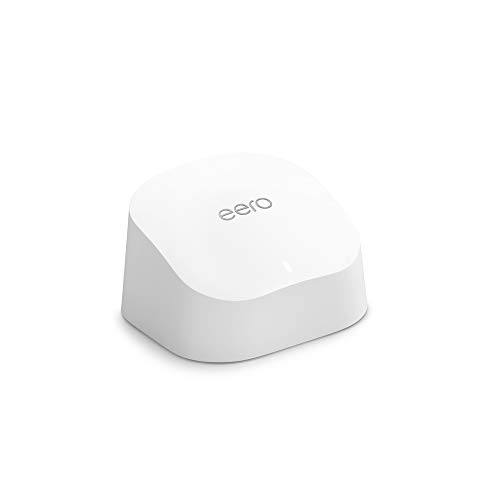
Eero 6
$89.99

Google Nest Wifi
$46.99
Spec Comparison
TL;DR: The TP‑Link Archer A6 delivers AC1200 dual‑band Wi‑Fi with a 1.2 GHz CPU, up to 1000 Mbps wired speed, and a compact 0.71‑lb design for budget‑friendly whole‑home coverage.
The Archer A6’s standout spec is its 1.2 GHz processor paired with five antennas (four external, one internal) that support MU‑MIMO for up to two devices simultaneously. This combination lets the router handle the advertised 867 Mbps on 5 GHz and 300 Mbps on 2.4 GHz while keeping wired throughput at up to 1000 Mbps.
Compared with the other five routers in this roundup, the Archer A6 weighs less than the Google Nest Wifi (0.71 lb vs 1.0 lb) and the TP‑Link Archer BE230 (0.71 lb vs 1.21 lb), but it's a touch heavier than the Eero 6 (0.71 lb vs 0.66 lb). Its wired speed of 1000 Mbps edges out the Eero 6’s 900 Mbps, while the BE230 and BE6500 list faster Wi‑Fi speeds but come with larger footprints and higher price points. The Archer A6’s dimensions (46 mm × 215 mm × 125 mm) keep it unobtrusive on a desk or shelf.
Professional reviewers praise the “blazing‑fast” 802.11ac performance and note that the five‑antenna design provides stable coverage for a three‑bedroom home. Everyday users echo this sentiment, highlighting easy setup and reliable HD streaming, though some mention weaker signal at the far edges of larger houses. The router’s lack of Wi‑Fi 6 features and a MU‑MIMO limit of two devices are common trade‑offs both pros and consumers note.
Pros
Cons
Best for: Budget-conscious buyers seeking a reliable entry‑level option
Avoid if: You need advanced features or professional‑grade performance
TL;DR: The TP‑Link Archer BE230 packs a 2.0 GHz quad‑core CPU, up to 3.6 Gbps total Wi‑Fi 7 speed and 2.5 Gbps Ethernet ports, all for $86.98, making it a solid mid‑range mesh‑ready router.
The standout figure is the 5 GHz band’s 2,882 Mbps peak speed, which together with the 688 Mbps 2.4 GHz channel delivers a combined 3.6 Gbps throughput. A 2.0 GHz quad‑core processor powers those rates, while the unit weighs 1.21 pounds and measures 41 mm × 343 mm × 272 mm.
Compared with the other five routers, the BE230 is heavier than the 0.66‑pound Eero 6 but lighter than the 1.37‑pound Archer BE6500. Its 41 mm height is noticeably shorter than the 130 mm height of the Eero 7, and its footprint is more compact than the larger Archer BE6500’s dimensions.
Users praise the router’s ability to push near‑gigabit speeds within a few feet, which makes 4K/8K streaming and high‑performance gaming feel smooth. Reviewers also note the 2.4 GHz 688 Mbps signal for IoT gadgets, but they point out that the 5 GHz band drops below 200 Mbps past roughly 35 ft, so larger homes may need additional mesh nodes. The lack of a 6 GHz band means true Wi‑Fi 7 devices can’t reach their maximum potential.
Beyond raw speeds, the BE230 supports Multi‑Link Operation to use both bands simultaneously, beamforming to focus signals, and EasyMesh compatibility for whole‑home expansion. Advanced security includes WPA3, HomeShield and a built‑in VPN server/client, and you can control everything via the TP‑Link Tether app or voice assistants like Alexa and Google Assistant.
Pros
Cons
Best for: Gamers, streamers and home‑office users with gigabit internet who need fast close‑range performance and solid IoT support.
Avoid if: You have a large or multi‑story residence without mesh expansion, or you rely on Wi‑Fi 6E/7 devices that need a 6 GHz band.
TL;DR: The TP‑Link Archer BE6500 delivers up to 6.5 Gbps Wi‑Fi 7 speed and 2,400 sq ft coverage, but its lack of a 6 GHz band and premium price make it a solid choice for performance‑focused small‑to‑medium homes.
The standout specification is the 6.5 Gbps total Wi‑Fi throughput, driven by a 5 GHz rate of 5,764 Mbps and a 2.4 GHz rate of 688 Mbps. Combined with six external high‑performance antennas and beamforming, the router can comfortably blanket up to 2,400 sq ft, which reviewers note works well for three‑bedroom setups.
Compared with the other five routers in the roundup, the BE6500 is markedly faster: the Eero 7 tops out at 1.8 Gbps and the Eero 6 also lists 1.8 Gbps, while the Archer BE230 offers a total of 3.6 Gbps. Its 2.5 Gbps WAN and LAN ports outpace the Archer A6’s 1 Gbps wired speed. At 1.37 lb, it's a touch heavier than the Eero 7 (1.34 lb) and noticeably heavier than the Google Nest Wifi (1.0 lb) and Archer A6 (0.71 lb), but the extra mass reflects its richer antenna array and multi‑gig ports.
Professional reviewers praise the router’s Wi‑Fi 7 features—Multi‑Link Operation, 4K‑QAM and Multi‑RUs—along with the six antennas that keep signal strong across a typical home. Users echo this, highlighting reliable 4K/8K streaming and smooth gaming. The main criticisms focus on the absence of a 6 GHz band, which limits full Wi‑Fi 7 potential, and the lack of link aggregation or dual‑WAN, higher‑end models include. Some also mention the premium price relative to the more modestly specced alternatives.
Pros
Cons
Best for: Buyers willing to invest in a proven, high‑quality option
Avoid if: You're on a tight budget or only need basic functionality
TL;DR: The eero 7 delivers Wi‑Fi 7 with up to 1.8 Gbps speed, covers 2,000 sq ft, and weighs 1.34 lb, but its dual‑band design and $139.99 price put it above many budget mesh alternatives.
The standout spec is the Wi‑Fi 7 dual‑band engine that tops out at 1.8 Gbps wireless speed while supporting ISP plans up to 2.5 Gbps. It can handle more than 120 devices and blankets roughly 2,000 sq ft with a single node, all inside a compact 130 mm cube that weighs 1.34 lb.
Compared with the other five routers, the eero 7 is a bit heavier than the 0.66‑lb eero 6 and the 0.71‑lb TP‑Link Archer A6, yet lighter than the 1.37‑lb TP‑Link Archer BE6500. Its 2,000 sq ft coverage falls short of the BE6500’s 2,400 sq ft claim, but exceeds the eero 6’s 1,500 sq ft per node figure. The dual‑band layout also means it lacks the 6 GHz band that some newer tri‑band systems provide.
Users consistently praise the system’s fast, stable Wi‑Fi delivering up to 1.8 Gbps and the built‑in Thread/Zigbee hub that simplifies Alexa‑compatible smart‑home devices. Professional reviewers note the 160 MHz channel support on the 5 GHz band for smooth 4K streaming and gaming. On the downside, several owners report network congestion when many devices share the two bands, and the 2,000 sq ft reach may require extra nodes in larger homes.
Beyond speed, the eero 7 offers two 2.5 GbE Ethernet ports, automatic software updates, and a guest network manager via the eero app. The inclusion of Thread and Zigbee makes it a solid central point for smart‑home ecosystems without needing separate hubs.
Pros
Cons
Best for: Buyers willing to invest in a proven, high‑quality option
Avoid if: You're shopping on a tight budget — it's priced at $139.99
TL;DR: The eero 6 offers dual‑band Wi‑Fi 6 mesh with up to 5,000 sq ft coverage from a three‑node kit, a 1.2 GHz quad‑core CPU and 500 Mbps per node wireless speed, all for $89.99.
The standout spec is its whole‑home reach: each node covers 1,500 sq ft, and a three‑node pack blankets roughly 5,000 sq ft. Under the hood sits a quad‑core 1.2 GHz processor paired with 512 MB of RAM and 4 GB of flash storage, giving the system enough headroom to juggle 75 + devices. Wired performance tops out at 900 Mbps, while each node can deliver up to 500 Mbps over Wi‑Fi 6.
At 0.66 pounds, the eero 6 is lighter than the TP‑Link Archer BE230 (1.21 pounds) and the BE6500 (1.37 pounds), and even lighter than Google Nest Wifi’s 1.0‑pound unit. It also undercuts the Eero 7’s 1.34‑pound weight and is a touch lighter than the Archer A6’s 0.71 pounds. Performance‑wise, its 1.2 GHz CPU matches the Archer A6’s 1.2 GHz processor but trails the BE230’s faster 2.0 GHz quad‑core chip. In terms of reach, the eero 6’s 5,000 sq ft total coverage exceeds the BE6500’s listed 2,400 sq ft, giving it a clear advantage for medium‑sized homes.
Reviewers consistently praise the system’s easy setup and reliable coverage, noting that TrueMesh routing eliminates dead zones in homes up to the advertised 5,000 sq ft. Professional reviewers highlight the Alexa integration and optional Zigbee hub as handy smart‑home touchpoints. The main complaints revolve around the 500 Mbps wireless ceiling, which can feel limiting on gigabit‑plus ISP plans, and the modest two Gigabit Ethernet LAN ports per node, leaving power users wishing for more wired connectivity.
Beyond the core specs, the eero 6 includes Bluetooth 5.0 for low‑energy device pairing, operates comfortably between 0 °C and 40 °C, and tolerates humidity up to 90 % non‑condensing. It's TrueMesh technology dynamically selects the best path for each data packet, and the optional Zigbee hub adds another layer of smart‑home compatibility.
Pros
Cons
Best for: Most users looking for a well‑reviewed, reliable mainstream option
Avoid if: You need gigabit‑plus speeds, tri‑band/6 GHz support, or extensive wired ports for a high‑performance setup
TL;DR: For $46.99, Google Nest Wifi pulls a 4.3‑star rating from over 14 k reviewers, delivering easy‑to‑set‑up whole‑home Wi‑Fi that fits a tight budget.
Google’s Nest Wifi is priced at $46.99 and sits at the bottom of our six‑product lineup with a 4.3‑out of 5 rating based on 14,295 reviews. Its placement reflects a solid but not top‑tier score among the competitors.
Users consistently praise the system’s straightforward app‑driven setup and the convenience of a built‑in Google Assistant speaker in the mesh points. Reviewers note reliable coverage for typical medium‑size homes and appreciate the brand’s reputation for smooth software updates. On the flip side, several owners mention slower speeds than newer mesh options, occasional buffering in tougher‑to‑reach spots, and the need for extra points in very large or thick‑walled houses.
In context, Nest Wifi offers the most affordable entry point in this round while still earning a respectable rating. It’s a good fit if you value simplicity and Google ecosystem integration over top‑tier performance. Expect solid everyday connectivity, but don’t count on the latest Wi‑Fi technologies or extensive wired backhaul capabilities.
Pros
Cons
Best for: Budget-conscious buyers seeking a reliable entry-level option
Breakdown
TP-Link Archer A6
Pros
TP-Link Archer BE230
Pros
TP-Link Archer BE6500
Pros
Eero 7
Pros
Cons
Based on scoring data and product specs
Personalized picks
Best Overall Pick
TP-Link Archer A6
Best Budget PickBest for: Budget-conscious buyers seeking a reliable entry-level option
TP-Link Archer BE230
Best for: Most users looking for a well-reviewed, reliable mainstream option
$87.00+$42.01 vs winner
Skip Google Nest Wifi if…
Reliability and user satisfaction are your top concerns
The TP‑Link Archer A6 earns the winner’s crown thanks to its ultra‑low $39.93 price, a solid 4.5‑star rating from 4,087 reviewers, and coverage described as “medium capacity, suitable for 3‑bedroom houses.” It also delivers 867 Mbps on the 5 GHz band and sports five antennas (four external) for reliable signal distribution.
If you’ve got Wi‑Fi 7 performance needs for gaming, 4K streaming, or a busy smart‑home, the TP‑Link Archer BE230 is the runner‑up. It pushes a total 3.6 Gbps speed, runs on a 2.0 GHz quad‑core processor, and offers a 2.5 Gbps WAN port plus four wireless streams. Its 4.4‑star rating from 19,614 reviews backs up the premium feature set.
For tight budgets the Archer A6 already serves as the best‑value pick. The mid‑range slot stays with the Archer BE230 for its blend of speed and price, while the premium alternative is the Eero 7, priced at $139.99, offering the most feature‑rich system among the contenders.
Choose the Archer A6 now and you’ll get whole‑home mesh coverage without breaking the bank.
The TP‑Link Archer A6 is marketed for medium‑capacity homes and is described as suitable for a 3‑bedroom house, offering dual‑band speeds of up to 867 Mbps on 5 GHz and 300 Mbps on 2.4 GHz. Its compact desktop form factor and five antennas help provide reliable coverage for that size of home.
No reviews yet — be the first to share your experience.
Please sign in to leave a review