
If you assume the priciest headset automatically wins, the data says otherwise – the $499 Meta Quest 3 512GB carries the lowest user rating at 4.5/5, while the $449 Quest 2 256GB scores a solid 4.7/5 and lands as the top‑value pick. We compare five all‑in‑one Meta headsets, spanning a price spread from $249 up to $499, and let the numbers do the talking.
The lineup splits neatly into three price tiers. The budget corner features the Quest 3S models – 128 GB at $249 and 256 GB at $371.78 – both offering a 120 Hz refresh rate and 8 GB RAM on the larger variant. The mid‑range slot includes the Quest 2 128 GB at $399, which offers a 90 Hz display and a 3‑hour gameplay battery. Premium options include the Quest 2 256 GB ($449) with up to 120 Hz support and the Quest 3 512 GB ($499) boasting 8 GB LPDDR5 RAM and experimental 120 Hz performance.
Below we break down each headset’s strengths, drawbacks, and who will get the most out of them.
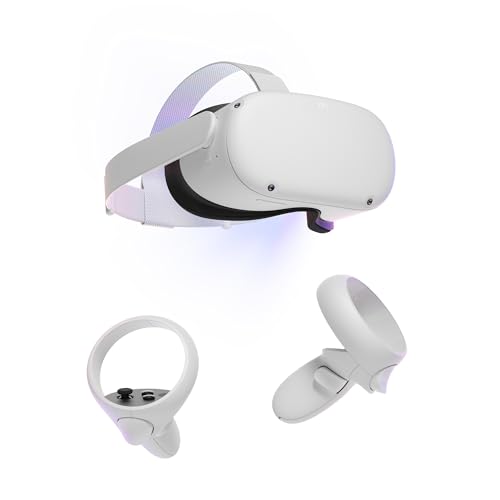
Meta Quest 2 256GB
It's compact 5.0 in box depth keeps storage tidy, supporting the proven 4.7‑star rating and strong brand confidence for a high‑quality VR experience.
Meta Quest 2 128GB
Ideal for mainstream gamers who want a reliable headset, it costs $50 less than the 256 GB model while keeping the same 4.7‑star rating and strong brand confidence.
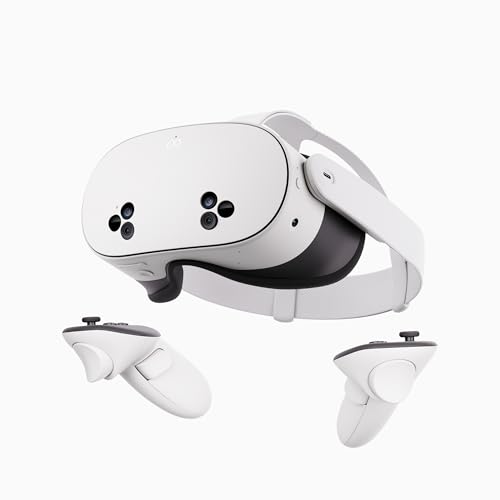
Meta Quest 3S 256GB
Stands out with a 4325 mAh battery delivering up to 2.5 hours of play, offering a fresh power profile for budget‑focused users despite a slightly lower 4.6‑star rating.
Also considered
Score Analysis
Key score advantages vs. runner-up (Meta Quest 2)
Price Range
Meta Quest 2 256GB
$419.00
Meta Quest 2 128GB
$379.00
Meta Quest 3S 256GB
$376.89

Meta Quest 3S 128GB
$249.00

Meta Quest 3 512GB
$499.00
Spec Comparison
TL;DR: The Meta Quest 2 256 GB offers a high‑resolution LCD display, 6 GB RAM and up to 120 Hz refresh in a comfortable 1.83‑pound all‑in‑one headset for $449.00.
What really stands out is the 256 GB of internal storage paired with 6 GB of RAM, letting you install a sizable library without worrying about space. The LCD panel delivers 1832 × 1920 pixels per eye, and you can push the refresh rate up to 120 Hz for smoother motion when the app supports it. The headset itself weighs 1.83 pounds, and the package includes a 3.5 mm headphone jack, built‑in 3D spatial speakers, and a glasses spacer for added comfort.
Compared with the other four models in this roundup, the Quest 2 256 GB sits in the middle of the price tier but is heavier than the ultra‑light Meta Quest 3 512 GB (0.88 pounds) and noticeably lighter than the Meta Quest 3S 256 GB (3.04 pounds). It matches the weight of the Meta Quest 2 128 GB (1.83 pounds) while offering double the storage. Its refresh‑rate ceiling of 120 Hz aligns with the Quest 3S 128 GB, but the Quest 3 512 GB also supports 72‑120 Hz experimental mode. Manufacturer lists battery life at 2–3 hours of active VR use, similar to the Quest 3 512 GB’s maximum of 3 hours on lighter apps and shorter than the Quest 2 128 GB’s 3‑hour gameplay claim.
Reviewers consistently praise the clarity of the 1832 × 1920 display and the convenience of a standalone headset that can also connect to a PC via Oculus Link. Professional reviewers highlight the Snapdragon XR2 platform as “capable” for most casual titles. On the downside, users note the mandatory Meta/Facebook login as a privacy hurdle, and the 2–3 hour battery window can feel limiting for marathon sessions. Reviewers describe the grayscale passthrough as dated compared with newer color‑pass‑through systems.
Pros
Cons
Best for: Buyers willing to invest in a proven, high‑quality option
Avoid if: You're on a tight budget or only need basic functionality
“Easy to set up and use right out of the box”
“Great for fitness apps like Supernatural and Beat Saber”
TL;DR: The Meta Quest 2 128 GB delivers a crisp 1832 × 1920 per‑eye LCD at 90 Hz, 6 GB RAM and 128 GB storage in a lightweight 1.83 pound all‑in‑one headset.
The standout spec is the fast‑switch LCD panel that shows 1832 × 1920 pixels per eye and runs at a smooth 90 Hz refresh, while the Snapdragon XR2 processor and 6 GB of RAM keep most games running fluidly. At 1.83 pounds (830 g) the headset feels light enough for casual sessions, and the built‑in battery gives you about 3 hours of gameplay or 10 hours of video playback.
Compared with the other four headsets in this roundup, the Quest 2 is lighter than the Meta Quest 3S 256 GB (3.04 pounds) and the Meta Quest 3S 128 GB (2.20462262 pounds), but it is heavier than the Meta Quest 3 512 GB (0.881849048 pounds) and the Meta Quest 2 256 GB, which shares the same 1.83 pounds weight yet tips only 503 g. Its 90 Hz refresh rate falls below the 120 Hz of both the Quest 3S 128 GB and the Quest 3 512 GB, and the roughly 3‑hour battery life falls short of the up‑to‑2.5‑hour claim on the Quest 3S 256 GB, though video playback time remains generous.
Users repeatedly praise the quick wireless setup, the freedom of movement, and the massive library of over 500 titles. Professional reviewers note that the high‑resolution LCD reduces the screen‑door effect that older OLED panels suffered from, and the XR2 chip delivers smooth performance in most titles. The most common complaints focus on the limited 3‑hour gameplay battery, the monochrome passthrough cameras that don’t support advanced mixed‑reality, and occasional facial pressure during longer sessions.
Additional technical details include Bluetooth 5.0, Wi‑Fi 6, a USB‑C 3.0 port, two front‑facing monochrome cameras, an integrated beamforming microphone array, built‑in 3D positional audio speakers plus a 3.5 mm headphone jack, and software‑based IPD adjustment from 58 mm to 72 mm. The package comes with two Meta Touch Controllers powered by AA batteries, a power adapter and charging cable.
Pros
Cons
Best for: Most users looking for a well‑reviewed, reliable mainstream option
Avoid if: You need advanced mixed‑reality features, ultra‑long play sessions, or the lightest possible headset
“Easy to set up and use right out of the box”
“Great for fitness apps like Supernatural and Beat Saber”
TL;DR: The Meta Quest 3S 256 GB packs a Snapdragon XR2 Gen 2 processor, 8 GB RAM, 256 GB storage and dual 4 MP RGB passthrough cameras, delivering untethered mixed‑reality for about 2.5 hours on a 4325 mAh battery.
The headset’s standout hardware pairs the Snapdragon XR2 Gen 2 with 8 GB LPDDR5 RAM, giving you smooth, future‑proof performance for modern VR titles. It also offers a generous 256 GB of internal storage, so you can keep a sizable library of games without swapping cards. The two 4 MP RGB cameras enable full‑color passthrough, turning the headset into a true mixed‑reality device.
Compared with the other four headsets in this roundup, the Quest 3S 256 GB is noticeably heavier than the Quest 3 512 GB (under 1 pound) and the Quest 3S 128 GB (about 2.2 pounds), and also heavier than both Quest 2 models, which sit at roughly 1.8 pounds. Its battery life of up to 2.5 hours is shorter than the Quest 2 128 GB’s 3‑hour gameplay window, though the Quest 2 128 GB does list a much longer video‑playback time. On the refresh‑rate front, the Quest 3S reaches a peak of 120 Hz, matching the Quest 3S 128 GB and the Quest 3 512 GB, and beating the Quest 2 128 GB’s 90 Hz ceiling.
Users consistently praise the headset’s responsive Touch Plus controllers and the vivid, full‑color passthrough that makes mixed‑reality experiments feel natural. Reviewers note that the Snapdragon XR2 Gen 2 gives about 90 % of the Quest 3 experience at a lower price point, and the 8 GB of RAM keeps multitasking fluid. Common complaints focus on the modest 2.5‑hour battery life, the Fresnel lenses’ glare and a limited three‑position IPD that can feel restrictive, especially for glasses wearers.
From a technical perspective, the display delivers 20 PPD and 773 PPI on a single fast‑switch LCD, with a 96° × 90° field of view. While Fresnel lenses keep the headset light, they also create a smaller sweet spot and occasional edge blur. Connectivity includes Wi‑Fi 6E and Bluetooth 5.3, ensuring low‑latency wireless streaming and easy pairing with accessories.
Pros
Cons
Best for: Budget‑conscious buyers seeking a reliable entry‑level option
Avoid if: You want the best value‑per‑dollar in its price range
“Easy to set up and use right out of the box”
“Great for fitness apps like Supernatural and Beat Saber”
TL;DR: At $249, the Meta Quest 3S 128 GB delivers 120 Hz, 1832×1920 per‑eye visuals, Snapdragon XR2 Gen 2 power, and mixed‑reality features, though its 2.5‑hour battery and fixed storage limit longer sessions.
The headset’s standout spec is its 120 Hz refresh rate paired with a 1832 × 1920‑pixel‑per‑eye display, giving you ultra‑smooth, high‑resolution visuals that outpace many budget‑friendly headsets' typical 90 Hz panels.
Compared with the other four models in this roundup, the Quest 3S 128 GB is lighter than the 256 GB version (2.2046 lb vs 3.04 lb) and noticeably lighter than the flagship Quest 3 512 GB (0.8818 lb). It shares the same 2.5‑hour battery life as the larger‑capacity Quest 3S, but its storage is half of the 256 GB and a quarter of the 512 GB Quest 3. The refresh rate outpaces the Quest 2 models, which list 90 Hz, and matches the top‑end 120 Hz option of the Quest 3.
Reviewers consistently praise the crisp visuals and the Snapdragon XR2 Gen 2 processor for delivering fluid performance, especially when exploring mixed‑reality scenes or the bundled *Batman: Arkham Shadow*. Users also like the built‑in 3D positional audio and the ability to connect USB‑C or 3.5 mm headphones. Common complaints focus on the short 2.5‑hour battery window and the headset’s headband pressure, which can cause discomfort during longer play sessions.
Under the hood, the device runs on a Qualcomm Snapdragon XR2 Gen 2 chipset with 8 GB of RAM, supports Wi‑Fi 6E, and uses Bluetooth 5.3 for wireless peripherals. Dual RGB passthrough cameras enable full‑color mixed reality, while Fresnel lenses provide the wide 110° × 96° field of view. The two Touch Plus controllers come with wrist straps and rechargeable AA batteries, rounding out a solid all‑in‑one VR experience.
Pros
Cons
Best for: Budget-conscious buyers seeking a reliable entry-level option
Avoid if: You need advanced features or professional‑grade performance
“Easy to set up and use right out of the box”
“Great for fitness apps like Supernatural and Beat Saber”
TL;DR: The Meta Quest 3 512 GB delivers a 2064×2208 per‑eye display, 8 GB RAM and 512 GB of storage in a lightweight 0.88‑lb headset, but its 2–3 hour battery and $499 price keep it in the premium niche.
The standout spec is the massive 512 GB non‑expandable storage paired with 8 GB of LPDDR5 RAM, letting you keep dozens of large VR titles without worrying about space. Under the hood sits a Qualcomm Snapdragon XR2 Gen 2 processor that Meta says provides twice the graphical processing power of the previous generation, and the headset supports an experimental 120 Hz refresh rate on top of the standard 72‑Hz mode. The dual‑LCD panels deliver a crisp 2064×2208 per‑eye resolution, while pancake lenses keep the profile slim.
Compared with the other four headsets in this roundup, the Quest 3 512 GB is noticeably lighter than the Quest 2 256 GB (which weighs about 1.83 lb) and the Quest 3S models (which tip the scales at over 2 lb). It also carries a higher price tag than the Quest 2 variants, positioning it as the premium option. While the Quest 2 128 GB offers a 90 Hz refresh rate, the Quest 3 512 GB adds experimental 120 Hz support and a wider 110° horizontal field of view, giving a slightly broader visual envelope.
Reviewers consistently praise the visual fidelity, calling the graphics “insane” and the mixed‑reality passthrough “next‑level” thanks to full‑color 4 MP RGB cameras and a 110° × 96° field of view. Professional reviewers highlight the pancake lenses for edge‑to‑edge clarity and the doubled graphics horsepower. However, the battery life averages just 2.2 hours and tops out at 3 hours on lighter apps, which users note limits marathon sessions. The stock head strap also tends to create pressure after an hour or two, a common complaint in user feedback.
Pros
Cons
Best for: Buyers willing to invest in a proven, high‑quality option
Avoid if: You're on a tight budget or only need basic functionality
“Easy to set up and use right out of the box”
“Great for fitness apps like Supernatural and Beat Saber”
Breakdown
Meta Quest 2 256GB
Pros
Meta Quest 2 128GB
Pros
Meta Quest 3S 256GB
Pros
Cons
Meta Quest 3S 128GB
Pros
Based on scoring data and product specs
Personalized picks
Best Overall Pick
Meta Quest 2 256GB
Best ValueBest for: Buyers willing to invest in a proven, high-quality option
Meta Quest 2 128GB
Best for: Most users looking for a well-reviewed, reliable mainstream option
$379.00-$40.00 vs winner
Skip Meta Quest 3 512GB if…
You're on a tight budget or only need basic functionality
Meta Quest 2 256 GB takes the top spot as the best‑value all‑in‑one VR headset. It ships with a spacious 256 GB of storage, a 4.7‑star rating from 22,071 reviewers, and a lightweight 1.83 pounds, making it easy to wear for the 2–3 hours of active play the spec lists. The headset also supports refresh rates up to 120 Hz, so you’ll see smoother motion in fast‑paced games.
Coming in second, the Meta Quest 2 128 GB lands as the runner‑up, ideal if you’re looking to stay under $400 while still getting a solid VR experience. It offers the same 4.7‑star rating, Wi‑Fi 6 connectivity, and a 3‑hour gameplay battery life, giving you plenty of juice for a typical session without the extra storage cost.
For other budgets, the Meta Quest 3S 128 GB is the best budget pick at $249 – it gets you into VR at the lowest price point. The Meta Quest 2 128 GB serves as the mid‑range option, balancing cost and performance for most users. If you crave maximum storage and the newest hardware, the Meta Quest 3 512 GB is the premium choice at $499, offering the largest capacity for heavy game libraries.
Pick the Meta Quest 2 256 GB now and enjoy the most bang for your buck in a standalone headset.
The Meta Quest 2 128 GB at $399 provides a solid entry experience with a 128 GB storage capacity, 90 Hz refresh rate and a 3‑hour gameplay battery, all for a lower price than the 256 GB model. It’s a good compromise between cost and performance for newcomers who don’t need the extra storage.
Please sign in to leave a review
No reviews yet. Be the first to review!
