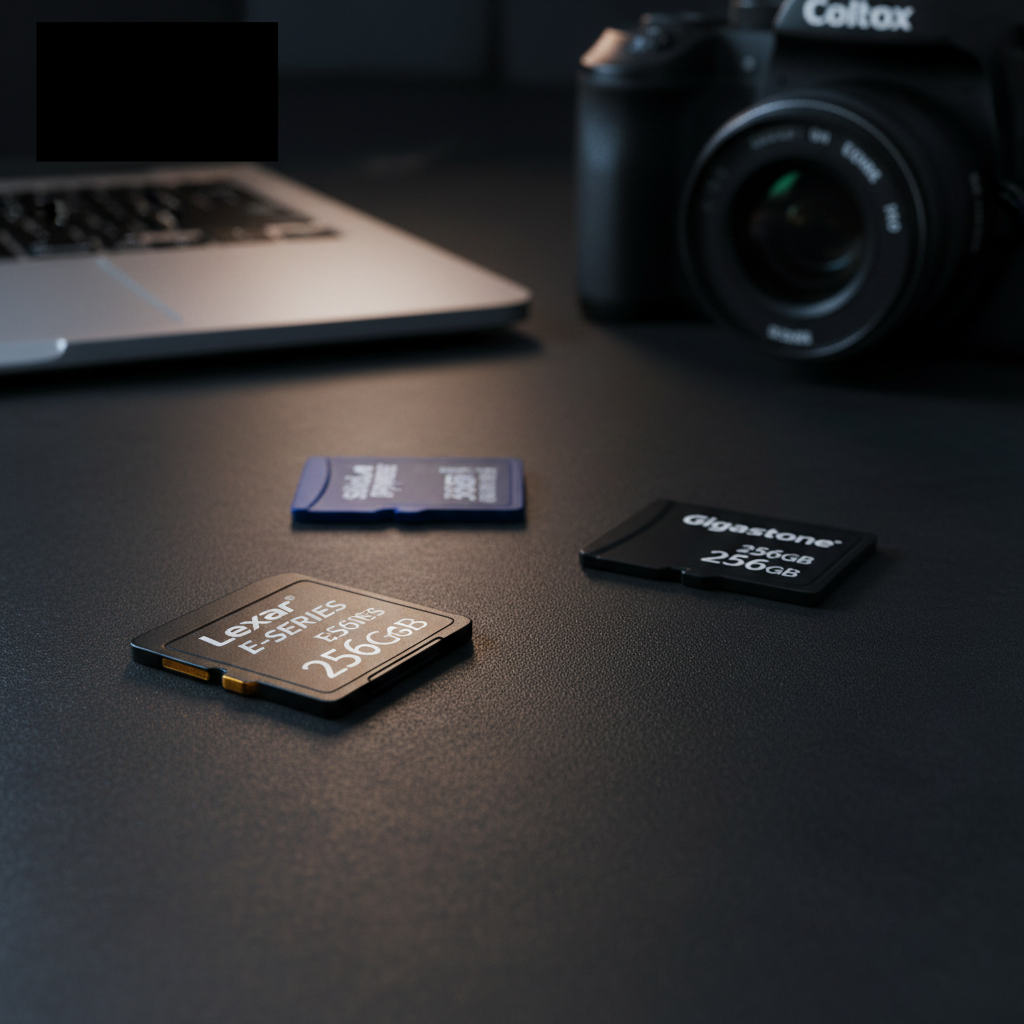
If you need a hefty 256 GB + microSD card for 4K video, gaming, or a massive photo library, you’ve landed among 13 contenders that span from $32.99 up to $169.99. The lineup covers everything from the Lexar E‑Series at $32.99 with a 4.7/5 rating to the high‑capacity Lexar Blue 1TB at $169.99, which also earned a 4.7/5 rating.
To make sense of the choices, we’ve grouped them by price tier. Budget‑friendly picks include the Lexar E‑Series, Silicon Power 256 GB ($34.97), Amazon Basics 256 GB ($50.34) and SanDisk Ultra 256 GB ($52.99), all carrying strong 4.7/5 or 4.6/5 scores. Mid‑range options like Lexar Silver Plus 256 GB ($59.99) and Lexar PLAY 512 GB ($60.82) push read speeds up to 205 MB/s. Premium cards such as Samsung PRO Plus 1TB ($94.99) with 180 MB/s read, Gigastone 256 GB ($79.99), Silicon Power 512 GB ($74.97) and Lexar Blue 1TB ($169.99) deliver read speeds up to 180 MB/s and robust durability features.
Below you’ll find a closer look at each model, so you can match speed, capacity and price to your exact workflow.

Lexar E-Series 256GB
It records up to 12 hours of 4K video (720 minutes), delivering the longest 4K capture time among the contenders.

Gigastone 256GB microSD
Ideal for users who prioritize a proven, high‑quality card and don’t mind paying about $47 more than the Lexar.
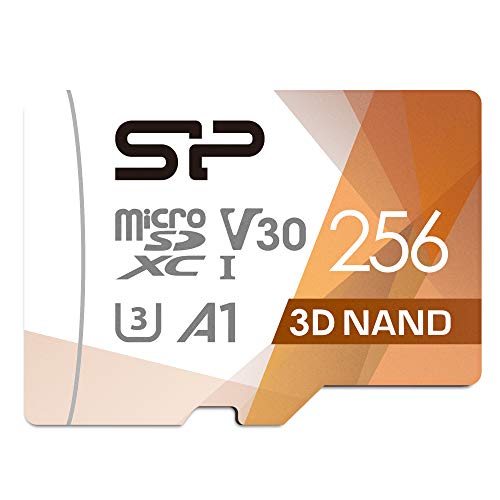
Silicon Power 256GB
Offers a manufacturer‑claimed 10,000 insertion/removal cycles, giving extra durability for frequent swapping, while staying at a similar price to the Lexar.
Also considered
Score Analysis
Key score advantages vs. runner-up (Gigastone 256GB microSD)
Price Range
Lexar E-Series 256GB
$32.99
Gigastone 256GB microSD
$84.99
Silicon Power 256GB
$40.97

Samsung PRO Plus 1TB
$142.99

SanDisk Ultra 256GB microSD
$52.99

Lexar PLAY 512GB
$144.95
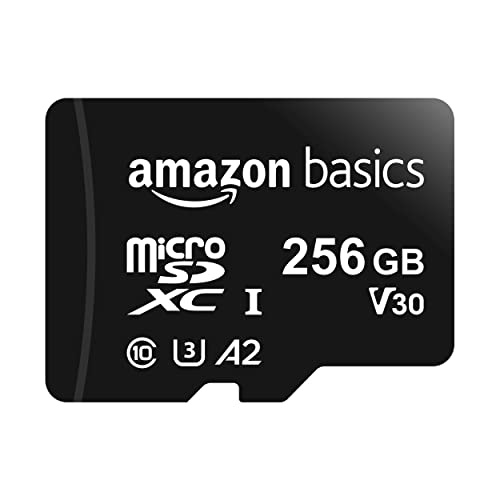
Amazon Basics 256GB Micro SDXC
$49.31

Silicon Power 512GB
$80.97
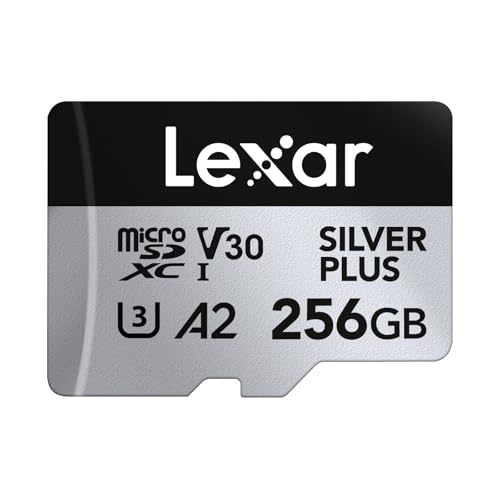
Lexar Silver Plus 256GB
$59.99

Lexar Blue 1TB microSD
$179.99

Western Digital Purple 512GB
$99.99
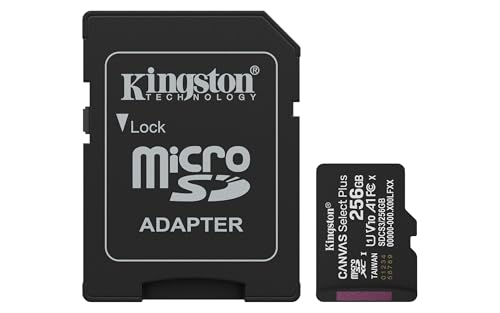
Kingston Canvas Select Plus 256GB SDCS3
$0.00

Western Digital Purple 256GB
$51.39
Spec Comparison
TL;DR: The Lexar E-Series 256 GB microSDXC offers 256 GB of storage, up to 100 MB/s read speed and robust waterproof, shock‑proof durability for just $32.99.
What really stands out is the combination of 256 GB capacity with a maximum read speed of up to 100 MB/s while keeping the card ultra‑thin at 1.02 mm and weighing only 0.20 grams. It also supports up to 39 hours of 1080p video recording or 12 hours of 4K footage, and can hold roughly 75,200 photos or 39,440 songs.
Compared with the other twelve cards in this roundup, the Lexar E‑Series is priced lower than most peers and is noticeably lighter than the Amazon Basics option (0.00199959271634 lb vs 0.000440924524 lb). Its 1.02 mm profile is slimmer than Amazon Basics’ 2.54 mm thickness. While its read speed matches the Silicon Power and Amazon Basics cards at 100 MB/s, the write speed of 30 MB/s trails behind Silicon Power’s 80 MB/s and Amazon Basics’ 90 MB/s, though it edges out the Western Digital Purple’s 24 MB/s.
User feedback highlights the card’s reliable long‑term performance and its shockproof, waterproof (1 meter for 30 minutes) and X‑ray‑proof construction offers peace of mind. Professional reviewers note that the 30 MB/s write speed makes it unsuitable for demanding 4K video capture, a point echoed by users who need higher sustained writes for drone or action‑camera footage. The included SD adapter carries a one‑year limited warranty, while the card itself enjoys a ten‑year limited warranty.
Pros
Cons
Best for: Budget‑conscious buyers seeking a reliable entry‑level microSD card with solid durability.
Avoid if: You need high sustained write speeds for professional 4K video or rely exclusively on UHS‑II performance.
“Users report long-term use without corruption or failure.”
“Fast transfer of large video files, especially with UHS-II and Silver Series cards.”
TL;DR: The Gigastone 256 GB microSD delivers up to 130 MB/s read, 85 MB/s write, a 5‑year warranty and data‑recovery service, and holds a 4.6‑star rating from over 4,600 reviewers.
What sets this card apart is its advertised 130 MB/s maximum read speed combined with a 256 GB microSDXC capacity, UHS‑I U3, V30 and A2 ratings. The card measures just 15 × 11 × 1 mm and weighs only 0.0440924524 pounds, while the full‑size SD adapter adds another 14 g. Gigastone also backs the product with a 5‑year warranty and a free 5‑year data‑recovery service, which many users cite as a confidence booster.
In the 13‑product lineup, the Gigastone sits in the premium price tier at $79.99. It is heavier than the ultra‑light Samsung PRO Plus 1TB (0.0005732018812 pounds) and lighter than the Silicon Power 512 GB model (0.02 pounds). Compared with the Lexar PLAY 512 GB (also 0.02 pounds), Gigastone’s weight is modest, and its dimensions are comparable to other microSD cards in the set.
Everyday users appreciate the card’s plug‑and‑play convenience and its rugged build – it’s shockproof, temperature‑proof, waterproof and X‑ray proof. Reviewers repeatedly praise reliable 4K UHD recording on GoPro and DJI drones, noting the fast 100 MB/s read speed for quick file transfers. The main criticism revolves around the 60 MB/s write speed, which falls short of the advertised 85 MB/s and is slower than some premium competitors. Some users also report occasional hiccups when recording high‑bitrate 2K footage.
Beyond speed, the A2 application performance class means apps launch faster on compatible smartphones, and the V30 video class guarantees a minimum sustained write speed of 30 MB/s, sufficient for most 4K video workflows. The package includes a full‑size SD adapter, a mini protective case and (in some bundles) a USB‑C card reader, giving you flexibility for cameras, consoles and mobile devices.
Pros
Cons
Best for: Buyers willing to invest in a proven, high‑quality option
Avoid if: You're on a tight budget or only need basic functionality
“Users report seamless use with Nintendo Switch, with no lag or loading issues”
“One reviewer noted a discrepancy between advertised and actual specs—listing claimed 150/140 MB/s, but card was labeled 100/90 MB/s”
TL;DR: The Silicon Power 256 GB microSDXC offers 100 MB/s read, 80 MB/s write, A1 app performance and rugged durability at $34.97, making it a solid budget pick for everyday mobile and gaming use.
This card delivers 256 GB of storage with a maximum read speed of up to 100 MB/s and a maximum write speed of up to 80 MB/s. It meets the UHS‑I bus interface, carries a U3 (V30) speed class and an A1 application performance rating, which means it can handle Android app launches and multitasking with at least 1,500 IOPS read and 500 IOPS write.
Compared with the other 12 cards in the roundup, the Silicon Power model sits on the more affordable side of the spectrum and lists a broader set of durability specs than many budget‑focused peers. While premium options such as the Lexar Silver Plus tout higher read/write numbers, this Silicon Power card balances price and performance for users who don’t need top‑tier speeds.
In practice, reviewers praise its fast transfer rates for everyday photo and video files, the included full‑size SD adapter, and its resistance to shock, water, temperature extremes and X‑ray exposure. Common complaints focus on the write speed dropping during long 4K60 or 8K recordings and the lack of A2 optimization, which means it isn’t the best choice for professional cinema‑grade work.
Beyond speed, Silicon Power rates the card for 10,000 insertion/removal cycles; it operates from 0 °C to 70 °C and can be stored between –40 °C and 85 °C. Its tiny 0.3 g weight and 1.0 mm thickness make it easy to slip into smartphones, drones, action cams or a Nintendo Switch, and the one‑year warranty adds a layer of peace of mind.
Pros
Cons
Best for: Budget-conscious buyers seeking a reliable entry-level option
Avoid if: You need advanced features or professional‑grade performance
“Fast transfer speeds—great for Steam Deck and Android phones.”
“Perfect for DJI Osmo Pocket 3—handles 4K smoothly.”
TL;DR: Samsung’s PRO Plus 1TB microSDXC packs a massive 1 TB of storage, 180 MB/s read and 130 MB/s write speeds, plus six‑way rugged protection, making it a top choice for high‑resolution mobile shooting.
The standout spec is the 1 TB capacity combined with a maximum read speed of 180 MB/s and a maximum write speed of 130 MB/s. Coupled with an A2 application performance class, the card handles 4K video capture and mobile gaming smoothly. Its durability suite includes a 5‑meter drop resistance, 15,000 gauss magnetic proof, 72‑hour seawater immersion rating, 10,000 insertion/removal cycles, and a 100 mGy X‑ray tolerance.
When stacked against the other 12 cards in this roundup, the PRO Plus reads faster than the Western Digital Purple (60 MB/s) and Gigastone (130 MB/s) but trails the Lexar PLAY and Lexar Silver Plus, which list 205 MB/s reads. Its write speed also outpaces the Purple and Gigastone, though Lexar’s 140 MB/s write is a shade quicker. At 0.0005732018812 pounds, it’s considerably lighter than the Lexar PLAY (0.02 pounds) and the Western Digital Purple (0.00125 pounds), making it easy to slip into any device.
Reviewers consistently praise the card’s reliable 4K capture and the peace of mind provided by its six‑way protection. The A2 rating earns extra kudos from professional reviewers who note its suitability for mobile gaming and app loading. However, some users report occasional recognition hiccups on older laptops and cameras, and the warranty explicitly excludes continuous‑write scenarios like dashcams, which consumers highlighted in their feedback.
Pros
Cons
Best for: Buyers willing to invest in a proven, high‑quality option
Avoid if: You're on a tight budget or only need basic functionality
“Flawless 4K video recording on smartphones and drones.”
“The card survived a 5‑meter drop without any issues.”
TL;DR: The SanDisk Ultra 256 GB microSDXC offers 150 MB/s read speed, A1 app performance and rugged durability at a mid‑tier price, though its ~30 MB/s write speed limits 4K video work.
The SanDisk Ultra microSDXC packs 256 GB of storage and can pull data at up to 150 MB/s, which makes loading apps and full‑HD video quick. It’s rated Class 10 and U1, and the A1 app performance rating helps Android apps launch faster. The card also survives drops and water, with 500 G shock resistance, 5,000 Gauss magnet protection and a waterproof rating of 1 meter.
Compared with other cards in this roundup, the SanDisk sits in the middle of the weight range – it’s heavier than the ultra‑light Amazon Basics card (0.00199959271634 pounds) but lighter than the Lexar PLAY 512 GB model (0.02 pounds). Its magnet resistance of 5,000 Gauss is solid, though the Lexar Silver Plus lists a higher 15,000 Gauss rating. Shock protection is lower than Lexar Silver Plus’s 1500 G but still above the 500 G baseline of many competitors. In terms of price, it lands near the mid‑tier of the group.
User reviews repeatedly praise the card’s reliability out of the box and the noticeable boost in app responsiveness, echoing professional reviewers who note the 150 MB/s read speed and rugged build. The most common complaint is the modest write speed of around ~30 MB/s, which can feel slow when moving large video files. Reviewers also note the lack of a V30/U3 rating, so the card isn’t suited for 4K video capture.
The card includes a full‑size SD adapter, making it easy to use in laptops or cameras with a standard slot, and the ten‑year manufacturer warranty adds peace of mind for long‑term storage.
Pros
Cons
Best for: Most users looking for a well‑reviewed, reliable mainstream option
Avoid if: You need advanced features or professional‑grade performance
“Users report seamless use with Nintendo Switch, with no lag or loading issues”
“One reviewer noted a discrepancy between advertised and actual specs—listing claimed 150/140 MB/s, but card was labeled 100/90 MB/s”
TL;DR: The Lexar PLAY 512 GB microSD delivers 205 MB/s read, 140 MB/s write, A2 app performance and a massive 512 GB capacity, making it a solid choice for Switch gamers and Android creators.
The headline spec is the 512 GB storage capacity paired with a maximum read speed of 205 MB/s and a maximum write speed of 140 MB/s. It also carries an A2 rating for faster app loading on Android devices and a V30 video class that guarantees at least 30 MB/s sustained write for 4K recording. The card weighs 0.02 lb and includes a full‑size SD adapter.
Compared with the other 12 cards in this roundup, the Lexar PLAY sits above the SanDisk Ultra 256 GB (100 MB/s read, 90 MB/s write) and far ahead of the Western Digital Purple 256 GB (24 MB/s read/write). It matches the Lexar Silver Plus 256 GB’s 205 MB/s read speed but trails its 150 MB/s write speed, while offering double the capacity. In terms of weight, it weighs a bit more than the SanDisk Ultra’s 0.01 lb card but is comparable to the Silicon Power 512 GB’s 0.02 lb. It provides double the capacity of most 256 GB peers and matches the fastest read speed of 205 MB/s, though a few competitors list slightly higher write speeds.
Reviewers consistently praise the card’s seamless fit with the original Nintendo Switch, noting noticeably quicker file transfers and faster app launches on Android phones. Professional reviewers highlight its suitability for extreme‑sports videography thanks to the V30 rating. The main trade‑off is that the advertised 205 MB/s read speed only materialises when you pair the card with a Lexar USB 3.1 reader, and it isn’t compatible with the newer Switch 2. Some users also report write‑speed fluctuations during long 4K recordings.
Pros
Cons
Best for: Original Nintendo Switch gamers needing extra storage and Android content creators who benefit from A2 app performance and V30 video reliability.
Avoid if: You own a Nintendo Switch 2, require sustained 8K video write speeds, or expect top read speeds without an additional Lexar reader.
“Works perfectly with my Switch”
“No corruption issues”
TL;DR: The Amazon Basics 256 GB MicroSDXC delivers 100 MB/s read, 90 MB/s write, A2 app performance and rugged IPX6 protection at a budget‑friendly price.
This card packs 256 GB of storage (about 232 GB usable) into a tiny 2.54 mm × 10.92 mm × 1 mm form factor. It hits a manufacturer‑claimed 100 MB/s read and 90 MB/s write speed, UHS‑I U3, V30 and A2 ratings back it, and it survives drops, magnetic fields and water splashes (IPX6).
Compared with the other 12 cards in this roundup, it reads faster than the Western Digital Purple 256 GB’s 24 MB/s and writes faster than that same model’s 24 MB/s. It’s also lighter than the Western Digital Purple’s 0.0125 lb and the SanDisk Ultra’s 0.01 lb, weighing just 0.00199959271634 lb. However, Lexar’s Silver Plus 256 GB pushes a higher 205 MB/s read and 150 MB/s write, so power users who need the absolute top speed might look elsewhere.
Reviewers consistently praise the card for delivering the advertised capacity and for making Android apps load noticeably quicker thanks to its A2 classification. Users with action cameras, drones or smartphones love the reliable 4K video support (V30) and the peace of mind from its shock‑proof and magnetic‑proof construction. Most users report it won’t work with the Nintendo Switch 2, and some note that the write speed, while solid for everyday use, may limit continuous 4K recording for professional videographers.
Pros
Cons
Best for: Smartphone users, action‑camera enthusiasts and drone pilots who need high capacity, fast transfers and rugged protection without breaking the bank.
Avoid if: You require a card that works with Nintendo Switch 2 or need sustained write speeds above 100 MB/s for professional video production.
“True 128GB capacity”
“Fast and reliable”
TL;DR: The Silicon Power 512 GB microSDXC offers 512 GB of storage, up to 170 MB/s read, 150 MB/s write, and >3,000,000 hours of endurance in a lightweight 0.02‑lb package.
What really sets this card apart is its high‑endurance rating – the manufacturer states more than 3,000,000 hours of continuous recording and a minimum of 10,000 insertions. Those numbers make it a solid choice for dashcams, security cameras, or any device that writes constantly. The card also carries an A2 application performance class, which helps Android apps launch faster, and it meets U3 and V30 standards for reliable 4K video capture.
In the 13‑product roundup, the Silicon Power weighs 0.02 pounds, matching the Lexar PLAY 512 GB and beating the Gigastone 256 GB, which tips the scales at about 0.044 pounds. Its advertised maximum read speed of up to 170 MB/s falls short of the 205 MB/s read speed listed for the Lexar PLAY, but it still outperforms many budget‑oriented cards that sit around 100 MB/s. The 512 GB capacity also exceeds the 256 GB offerings from Gigastone, SanDisk, and Western Digital, giving you twice the space without a bulkier form factor.
Reviewers consistently highlight the card’s durability – it’s water, shock, temperature‑extreme, and X‑ray resistant, and the peace of mind provided by a five‑year limited warranty. Users also appreciate the smooth 4K recording experience, especially on smartphones and action cameras. On the flip side, some buyers note that real‑world speeds can vary between devices, and a few report occasional recognition hiccups on older hardware. Professional reviewers echo the durability praise while noting that the UHS‑I interface caps the absolute ceiling of throughput compared with newer UHS‑II cards.
Pros
Cons
Best for: Content creators needing reliable 4K video storage, Android users who want A2‑optimized app performance, and anyone who values long‑term durability.
Avoid if: You need the absolute fastest UHS‑II speeds or a card compatible with the upcoming Nintendo Switch 2.
“Fast transfer speeds—great for Steam Deck and Android phones.”
“Perfect for DJI Osmo Pocket 3—handles 4K smoothly.”
TL;DR: The Lexar Silver Plus 256 GB microSDXC offers 205 MB/s read, 150 MB/s write, IPX7 waterproofing and a lifetime warranty for $59.99, making it a solid choice for 4K shooters.
This card’s headline spec is its maximum read speed of 205 MB/s, which sits at the top end of UHS‑I performance and comfortably supports 4K UHD video capture. Write speeds reach up to 150 MB/s, and the V30 / A2 rating guarantees a minimum sustained write of 30 MB/s, useful for burst photography and continuous video streams.
Compared with the other twelve entries in the roundup, the Lexar Silver Plus sits in the middle of the price band—priced similarly to the Lexar PLAY 512 GB but offering half the capacity. It’s lighter than the SanDisk Ultra 256 GB, which weighs 0.01 pounds, while still matching the PLAY model’s 205 MB/s read speed. Its shock resistance of 1500 G and magnetic resistance of 15,000 Gauss outclass the SanDisk’s 500 G shock rating and 5,000 Gauss magnetic rating, underscoring its rugged build.
Users repeatedly praise the card’s reliability for 4K recording on drones and action cams, noting that the included Lexar Recovery Tool adds a safety net for accidental deletions. Professional reviewers highlight the strong read performance and the durable IPX7 rating (1 m depth for 30 min). A common complaint is that the UHS‑I bus can’t keep up with the highest‑bitrate 8K workflows, and some owners report that generic card readers don’t always hit the advertised 205 MB/s read speed.
Pros
Cons
Best for: Enthusiast photographers and videographers shooting 4K video on drones, action cameras, or handheld consoles.
Avoid if: You want the best value‑per‑dollar in its price range or need a card that can handle professional 8K workflows.
TL;DR: The Lexar Blue 1TB microSD delivers a massive 1 TB of storage, up to 160 MB/s read speed, and strong durability, but its $169.99 price and 30 MB/s write ceiling make it a premium‑tier choice.
What really sets this card apart is the 1 TB capacity paired with a peak read speed of up to 160 MB/s. The A2 application performance class means apps launch faster on compatible smartphones and the Nintendo Switch, while the V30 video class guarantees smooth 4K UHD recording. Physically, the card measures 15 mm × 11 mm × 1.0 mm and weighs just 0.25 g, making it easy to slip into any microSD slot.
In the context of the 13‑card roundup, the Lexar sits at the higher end of the price spectrum and offers more storage than the 512 GB options from Western Digital Purple and Samsung PRO Plus. It's lighter than the Western Digital Purple 512 GB (0.00125 pounds) but a touch heavier than the Samsung PRO Plus 1TB (0.0005732018812 pounds). Compared with the 256 GB and 512 GB peers, it provides twice the capacity of the Lexar PLAY 512 GB and four times the Gigastone 256 GB, while still delivering a solid feature set.
Reviewers consistently praise the card’s massive capacity and reliable 4K video support, noting that it “feels solid” when dropped from 1.5 m and that the IPX7 waterproof rating adds peace of mind for action‑camera use. However, many users point out that the write speed caps at 30 MB/s, which feels sluggish when transferring large video files or recording high‑bitrate footage. Professional reviewers also flag the UHS‑I interface as a potential bottleneck as newer devices adopt faster UHS‑II or UHS‑III standards.
Beyond speed, the card’s durability suite includes 1.5 m drop protection, 15000 Gauss magnetic resistance, 1500 G shock resistance, 10,000 insertion/removal cycles, and an IPX7 waterproof rating. Lexar backs the card with a 10‑year limited warranty and includes lifetime access to the Lexar Recovery Tool, which can be a lifesaver if data ever gets corrupted.
Pros
Cons
Best for: Buyers willing to invest in a proven, high‑quality option
Avoid if: You need advanced features or professional‑grade performance
“"a game-changer" for storing games on the Nintendo Switch”
“"smooth 4K video recording" on drones and action cameras like GoPro”
TL;DR: The Western Digital Purple 512 GB microSDXC offers 10,000‑hour endurance, 60 MB/s advertised speeds, and surveillance‑grade durability, but its modest transfer rates (around 20 MB/s sustained write) and $99.99 price make it a niche choice.
The standout spec pairs 512 GB capacity with a 10,000‑hour endurance rating, backed by 96‑layer 3D NAND. It advertises maximum read and write speeds of 60 MB/s, while typical sustained speeds sit around 24 MB/s read and 20 MB/s write. The card measures 2.54 mm × 127 mm × 1.0 mm and weighs just 0.00125 pounds, making it compact enough for most camera slots.
Compared with the other twelve cards in this roundup, the Purple’s 60 MB/s peak speed trails the Samsung PRO Plus 1TB’s 180 MB/s read and 130 MB/s write, and also falls behind the Lexar PLAY 512 GB’s 205 MB/s read and 140 MB/s write. It's lighter than the Gigastone 256 GB (0.044 pounds) and the Lexar Silver Plus 256 GB (weight not listed), yet it's heavier than the Samsung PRO Plus 1TB at 0.000573 pounds. Its UHS‑I U1 class (minimum 10 MB/s) aligns with the SanDisk Ultra 256 GB, but its advertised speeds are lower than the higher‑end U3‑class cards.
Users consistently praise the card’s durability—highlighting its shock‑proof, waterproof, temperature‑proof, and X‑ray‑proof construction—and the built‑in card‑health monitoring that alerts you to wear before failure. Professional reviewers note that the 96‑layer NAND improves thermal stability for 24/7 surveillance, while everyday buyers appreciate the smooth fit with popular security cameras. The most common complaint is the gap between the advertised 60 MB/s peak and the real‑world sustained write speed of roughly 20 MB/s, which can limit high‑bitrate 4K streams.
Pros
Cons
Best for: Home or commercial surveillance systems that need high endurance and built‑in health monitoring.
Avoid if: You need high burst speeds for gaming, drones, or action‑camera recording.
TL;DR: Kingston Canvas Select Plus 256 GB microSDXC delivers up to 150 MB/s read/write speeds, A1 app performance, and IPX7 waterproof durability, making it a solid choice for Android phones and casual 4K shooting.
The standout spec is the sequential read and write speed of up to 150 MB/s, paired with a 256 GB capacity that fits the microSDXC format. It carries a Class 10 rating, U3 speed class, and V30 video speed class, ensuring a minimum 30 MB/s sustained write for reliable 4K video capture. The card also supports the A1 app performance class, which promises at least 1,500 read IOPS and 500 write IOPS for smoother Android app loading.
Compared with the other twelve cards in this roundup, the Kingston card is slightly heavier than the Lexar E‑Series (0.20 g) but still lighter than the Amazon Basics (0.9 g) and far lighter than the Western Digital Purple (5.67 g) or SanDisk Ultra (4.5 g). Its dimensions of 15 mm × 11 mm × 1 mm are virtually the same as the Silicon Power card, which also measures 15 mm in height, while the Lexar E‑Series is a touch shorter at 1.02 mm. In speed terms, Kingston’s 150 MB/s read rate sits below the Lexar Silver Plus’s 205 MB/s but ahead of the Silicon Power’s 100 MB/s maximum read speed.
Professional reviewers highlight the card’s “ideal for Android and 4K capture” thanks to its V30 rating and A1 performance, while everyday users appreciate the plug‑and‑play convenience of the included SD adapter. A recurring complaint is that some buyers receive the lower‑performance SDCS2 model, which only reaches 100 MB/s read and 85 MB/s write, leading to confusion. A few users also note occasional 4K stutter on high‑bitrate cameras, though most find the durability—IPX7 waterproof, shock, vibration, and X‑ray resistance—reassuring for active lifestyles.
The card runs on a 3.3 V bus interface and comes pre‑formatted with exFAT, ready for immediate use. Kingston backs it with a lifetime limited warranty, underscoring confidence in its build quality. The combination of up to 150 MB/s speed, sizable capacity, and rugged features makes it a dependable middle‑ground option between entry‑level and premium microSD cards.
Pros
Cons
Best for: Expanding storage on Android smartphones and casual cameras that need reliable 4K capture.
Avoid if: You need advanced features or professional‑grade performance
TL;DR: Western Digital’s Purple 256 GB microSDXC offers 128 TBW endurance, a 1.5 GB/s transfer rate and 24 MB/s read/write speeds, making it a rugged choice for 24/7 surveillance storage.
The card’s standout spec is its 128 TBW endurance and 500 program/erase cycles, which manufacturers tout as ideal for continuous video recording. Coupled with a 1.5 GB/s (12 Gbps) data‑transfer rate and a 3‑year warranty, it survives constant writes in harsh environments.
Compared with the other 12 cards in this roundup, the Purple’s read/write speed of 24 MB/s is slower than the Amazon Basics 256 GB (100 MB/s read, 90 MB/s write) and far below the Lexar Silver Plus 256 GB (205 MB/s read, 150 MB/s write). It also weighs more than the Amazon Basics card (5.67 g vs 0.9 g) and matches the thickness of the SanDisk Ultra (1.02 mm vs 1.0 mm). However, its endurance rating exceeds most consumer‑grade cards, which typically list fewer program/erase cycles.
Users consistently praise the Purple’s reliability in extreme temperatures (‑25 °C to 85 °C) and its resistance to humidity, water, X‑ray and temperature fluctuations. Reviewers note that the card “rarely fails even after months of nonstop recording.” The main complaint is the modest 24 MB/s write speed, which can feel sluggish for high‑bitrate 4K streams, and occasional incompatibility of the health‑monitoring feature with non‑WD cameras.
Professional reviewers highlight the card’s industrial‑grade durability and built‑in health monitoring as differentiators from typical consumer cards. The U1 (Class 1) and Class 10 speed class certification confirm it meets the minimum requirements for continuous video capture, though it isn’t optimized for burst‑mode shooting or action‑camera workloads.
Pros
Cons
Best for: Security system integrators, OEMs, and installers needing a durable microSDXC that can handle nonstop video streams.
Avoid if: You need high‑speed burst performance for action cameras, drones, or devices that demand faster write speeds.
Breakdown
Lexar E-Series 256GB
Pros
Gigastone 256GB microSD
Pros
Silicon Power 256GB
Pros
Samsung PRO Plus 1TB
Pros
Based on scoring data and product specs
Personalized picks
Best Overall Pick
Lexar E-Series 256GB
Best OverallBest for: Budget-conscious buyers seeking a reliable entry-level option
Gigastone 256GB microSD
Best for: Buyers willing to invest in a proven, high-quality option
$84.99+$52.00 vs winner
Skip Western Digital Purple 256GB if…
Reliability and user satisfaction are your top concerns
Lexar E-Series 256GB takes the top spot thanks to its strong 4.7‑star rating from 41,251 reviewers, a read speed of up to 100 MB/s, and a write speed of up to 30 MB/s. The card also promises up to 12 hours of 4K video recording and includes a 10‑year limited warranty on the card plus a 1‑year warranty on the included SD adapter, making it a reliable all‑rounder for smartphones, drones, and action cams.
The Gigastone 256GB microSD earns the runner‑up badge, especially if you need higher write performance for 4K burst shooting. Gigastone advertises a maximum read speed of 130 MB/s and a write speed of 85 MB/s, and the package includes a full‑size SD adapter, a USB‑C card reader, and a mini protective case. Its 5‑year manufacturer warranty and free data‑recovery service add extra peace of mind for demanding users.
For shoppers on a tighter budget, the SanDisk Ultra 256GB microSD offers solid performance at $52.99, making it the best value‑focused choice. If you want a mid‑range option with more storage without breaking the bank, the same SanDisk Ultra remains a sensible pick. For those who need massive capacity, the Lexar Blue 1TB microSD delivers a full terabyte for $169.99, ideal for professional videographers or anyone storing extensive 4K libraries.
Pick the Lexar E‑Series 256GB now and get reliable speed, durability, and warranty coverage for your next storage project.
The Lexar E‑Series 256 GB offers shockproof protection, waterproof rating of 1 meter for 30 minutes, and operates from 0 °C to 70 °C, making it a solid budget choice for outdoor use. While the Gigastone 256 GB also claims waterproof and shockproof features, the Lexar’s lower price gives it a durability‑to‑cost edge.
Please sign in to leave a review
No reviews yet. Be the first to review!
