⚡ Quick Answer
We sifted through six mini drones that pack a 4K Ultra HD camera, sorting them into budget, mid‑range and premium buckets. The most unexpected find? The Oddire Camera Drone, priced at $116.98, tops the crowd with a 4.7 / 5 rating from 514 reviewers—higher than any pricier contender.
On the premium side, DJI’s Mini 4K retails for $209, offers a 31‑minute flight window, a 12 MP sensor and weighs about 0.54 lb, while the Skyrover S1 commands $289 and features a 48 MP camera with up to 40 minutes aloft. Mid‑range choices include Potensic’s ATOM SE at $198.99, delivering 31 minutes of flight and a 118° field of view, and the Karuisrc at $199.99, which adds a built‑in 4.5‑inch screen. The budget tier includes the Holy Stone HS440G for $113.99 (23‑minute flight, 0.34 lb) and the high‑rated Oddire model.
Next, this guide breaks down how each drone’s specs, performance and user feedback stack up, so you can pinpoint the right aerial companion for your needs.

DJI Mini 4K
Its 2250 mAh battery (17.32 Wh) gives longer flight time, underpinning the strong value and high rating.
Oddire Camera Drone
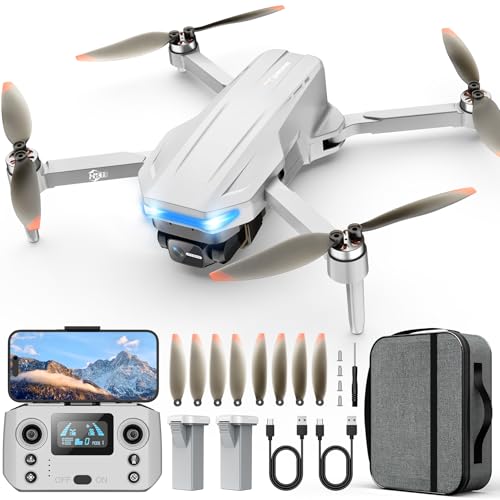
Ideal for budget‑conscious flyers, this drone costs $116.98—roughly $92 less than the DJI Mini 4K—while still earning a 4.7‑star rating.

Holy Stone HS440G
At $113.99 it’s the cheapest option, pairing a 1700 mAh (13.09 Wh) battery with solid brand confidence, making it stand out for tight‑budget shoppers.
Also considered
Score Analysis
Key score advantages vs. runner-up (Oddire Camera Drone)
Price Range
DJI Mini 4K
$209.00
Oddire Camera Drone
$116.97
Holy Stone HS440G
$159.99

Potensic ATOM SE
$198.98

Skyrover S1
$289.00

Karuisrc Drone
$116.99
Spec Comparison
TL;DR: The DJI Mini 4K delivers 4K UHD video, up to 31 minutes of flight, and a 10 km transmission range in a sub‑250 g package, making it a top‑choice for travel‑ready creators.
The standout spec is the 3840×2160 video resolution at up to 30 fps, using a 12 MP 1/2.3‑inch CMOS sensor, a 3‑axis mechanical gimbal and 4× digital zoom. Paired with an 83° field of view and f/2.8 aperture, the drone delivers stable, cinematic footage even in 10.7 m/s wind.
Compared with the five other mini drones in this roundup, the Mini 4K sits in the middle of the weight range—heavier than the Karuisrc (0.45 lb) and Holy Stone (0.34 lb) but lighter than the Skyrover S1 (0.55 lb). Its 2250 mAh battery gives a 31‑minute flight time, matching the Potensic ATOM SE and outlasting the Holy Stone’s 23‑minute claim, though it falls short of the Oddire’s 48‑minute endurance. The 10 km max transmission distance far exceeds the Karuisrc’s ~0.4 km, the Potensic’s 4 km, and the Holy Stone’s 0.5 km, while being just shy of the Skyrover’s 12 km reach.
Users consistently praise the lightweight design for avoiding registration hassles and the long flight time for extended shoots. Professional reviewers note the drone’s reliable stability in 38 km/h winds and the smooth 3‑axis gimbal performance up to 4000 m altitude. The main criticisms focus on the lack of omnidirectional obstacle sensors and the video ceiling at 30 fps without HDR, which can limit more demanding cinematic projects.
Pros
Cons
Best for: Beginners, hobbyists, and casual creators who want a portable, registration‑free drone with solid 4K video and long range.
Avoid if: You need obstacle sensing, HDR or 60 fps video, or are looking for the lowest‑price option.
TL;DR: The Oddire Camera Drone packs an adjustable 4K UHD camera, 48‑minute flight time and a 500 m Wi‑Fi range in a lightweight 249 g foldable frame, but its app link can be flaky.
What really sets this drone apart is the adjustable 4K UHD camera with a 110° field of view and a 4096×3072 photo resolution, paired with a 2048×1088 video stream. The 1800 mAh battery pair delivers up to 48 minutes of flight, which is well above the 23‑minute limit of the Holy Stone HS440G and the 31‑minute limits of both the Potensic ATOM SE and DJI Mini 4K.
At 249 g, the Oddire is heavier than the 154 g Holy Stone HS440G but lighter than the Skyrover S1, which tips the scales at about 820 g. Its 500 m Wi‑Fi transmission matches the Holy Stone’s range, yet falls short of the Potensic’s 4 km and Skyrover’s 12 km distances. Battery capacity sits between the Holy Stone’s 1700 mAh and the Karuisrc’s 2200 mAh, while offering a longer flight duration than any of those rivals. In terms of altitude, the Oddire caps out at 30 m, noticeably lower than the 120 m flight height listed for the Holy Stone and the 120 m ceiling of the Potensic.
Many reviewers love the QR‑code app setup and the included carrying case, which make getting airborne almost effortless. The altitude‑hold feature and 6‑axis gyro give a steady hover that beginners appreciate. Professional reviewers note the abundance of GPS‑enabled modes—auto‑return, waypoint, orbit and follow—at this price point. Users repeatedly point out the same downsides: the Wi‑Fi link is unreliable, often dropping the FPV feed around 100 ft (≈30 m), and the advertised 4K camera frequently streams only 1080P video, falling short of expectations.
Beyond the camera, the drone folds for easy storage, includes extra propellers, and comes with two rechargeable batteries. A visual positioning sensor works alongside the 6‑axis gyro for indoor stability, while gesture and gravity controls add a playful touch for casual flyers.
Pros
Cons
Best for: Budget-conscious buyers seeking a reliable entry-level option
Avoid if: You want the best value‑per‑dollar in its price range
TL;DR: The Holy Stone HS440G packs a 4K camera, GPS‑assisted stability and a foldable sub‑250 g frame into a $113.99 package, but its 23‑minute battery and modest wind resistance keep it firmly in the beginner‑friendly tier.
The standout spec is the 4K camera that records at 3840×2160 @ 25 fps and offers a 120° field of view with a 90° adjustable lens. Weighing just 154 g (0.34 lb), the drone stays under the 250 g registration threshold, which many casual flyers appreciate.
Compared with the five other drones in this roundup, the HS440G is lighter than the Potensic ATOM SE and the DJI Mini 4K, and noticeably lighter than the Oddire’s 249 g chassis. Its 500 m transmission distance matches the Oddire but falls far short of the Skyrover’s 12 km range. Battery capacity sits at 1700 mAh, delivering the manufacturer‑listed 23 minutes of flight—considerably less than the Oddire’s 48‑minute claim and the Potensic’s 31‑minute runtime.
Reviewers consistently praise the drone’s portability, the ease of one‑key takeoff/landing and the GPS + optical flow system that provides stable hover for newcomers. Professional reviewers note the 4K sensor delivers clear footage, while everyday users love the fact that the sub‑250 g weight eliminates the need for FAA registration. The common complaints focus on the lightweight frame’s struggle in breezy conditions and the relatively short battery life, which some feel limits exploration time.
Technical extras include dual‑system positioning (GPS and GLONASS), a 5 GHz transmission band, and a max wind‑speed resistance caps at 3.4 m/s. The drone can climb to 120 m and launch from altitudes up to 3500 m, making it capable enough for most backyard and park flights while staying within a comfortable operating temperature range of 32° to 104 °F.
Pros
Cons
Best for: Beginners and families on a tight budget who want a portable 4K drone without registration hassles.
Avoid if: You need strong wind resistance, extended flight time, or advanced features like obstacle avoidance.
TL;DR: The Potensic ATOM SE delivers 4K video, 31‑minute flights and a 4 km range in a sub‑250 g foldable body, making it a solid, registration‑free choice for casual pilots.
Its standout spec is 4K @ 30 fps video paired with a 12 MP Sony CMOS 1/3" sensor and a wide 118° field of view. A single‑axis gimbal tilts from –90° to +20°, giving you framing while keeping the drone lightweight.
Weighing 0.55 pounds, the ATOM SE is a touch heavier than the DJI Mini 4K but still under the 250 g threshold that exempts it from registration in many regions. Its $198.99 price sits in the mid‑range of this six‑drone set, while the 4 km transmission range outpaces many peers that list shorter control distances.
Reviewers love the pocket‑size folded dimensions (88 × 143 × 58 mm) and the 31‑minute flight time powered by a 3000 mAh (11.1 Wh) brushless motor. The GPS tracking and PixSync 2.0 video feed keep the link stable, though reviewers occasionally note 200 ms latency during fast maneuvers. Professional editors praise the crystal‑clear footage, while everyday users point out occasional app glitches and wish for a 3‑axis gimbal.
Technical highlights include GNSS support for GPS, GLONASS, Galileo and BeiDou, plus SurgeFly modes (Normal, Video, Sport) that let you switch performance on the fly. The drone climbs at 5 m/s, descends at 4 m/s, and reaches a max altitude of 120 m, with a horizontal top speed of 16 m/s.
Pros
Cons
Best for: Beginners, travelers, and intermediate pilots who need a lightweight, registration‑free drone with solid 4K video.
Avoid if: You need professional‑grade stabilization, advanced autonomous features, or a fully 3‑axis gimbal system.
TL;DR: The Skyrover S1 offers a 48 MP Sony sensor with 4K @ 60 fps video, 40 minutes of flight, and a 12 km transmission range, all in a sub‑250 g registration‑free frame.
The standout feature is its 48 MP 1/2‑inch Sony CMOS sensor paired with a 3‑axis mechanical gimbal, delivering crisp 4K video at 60 fps and detailed stills. With an 83° field of view and a 24 mm focal length, the camera rivals many larger‑weight drones while staying under 0.55 lb (249 g) for easy, registration‑free operation. The extended flight envelope—40 minutes per charge and a 12 km transmission range—means you'll capture longer scenes without swapping batteries.
Compared with the other five drones in this roundup, the S1 is slightly heavier than the DJI Mini 4K (0.55 lb vs. 0.54 lb) but offers a substantially longer flight time (40 min vs. 31 min). It shares a similar weight to the Potensic ATOM SE (both around 0.55 lb) while out‑lasting it by a wide margin. The Skyrover’s transmission range dwarfs the Potensic’s 4 km and the Holy Stone’s 0.5 km, giving it a clear advantage for travel creators. Its field of view matches the DJI Mini 4K at 83°, yet the S1’s camera resolution (48 MP) far exceeds the DJI’s 12 MP and the Potensic’s 12 MP.
Reviewers consistently praise the sub‑250 g weight for avoiding registration hassles and applaud the Sony sensor’s clarity, especially in bright conditions. Professional observers note the solid 10 m/s wind‑speed resistance as a confidence‑builder for outdoor shoots. On the downside, users point out that obstacle avoidance only covers a forward sensor, falling short of the 360° coverage higher‑end models provide. The $289 price tag also puts it above several budget‑friendly alternatives, prompting some buyers to weigh the premium specs against the cost.
Pros
Cons
Best for: Beginners, travelers, hikers, and casual creators who need a lightweight, registration‑free drone with strong camera performance.
Avoid if: You’re a professional videographer, need robust all‑around obstacle avoidance, or have a tight budget.
TL;DR: The Karuisrc K600 packs a 4K UHD camera, a 4.5‑inch built‑in screen and GPS‑auto‑return into a 0.4537‑pound frame, offering about 22 minutes of flight for beginners at $199.99.
The standout feature is the 4.5‑inch LCD display that lets you fly without a smartphone, a rarity in this price tier. Coupled with a 4K UHD camera that offers a 120° field of view and anti‑shake stabilization, the drone aims to deliver smooth aerial footage straight from the onboard screen.
Compared with the other five drones, the K600 is lighter than the Potensic ATOM SE (0.55 lb), DJI Mini 4K (0.5423 lb) and Skyrover S1 (0.549 lb), but heavier than the Holy Stone HS440G (0.3395 lb). Its 20‑22 minute flight time falls short of the 31 minutes offered by Potensic and DJI, the 23 minutes of Holy Stone, and the much longer 40‑minute (Skyrover) and 48‑minute (Oddire) runtimes. The 400 m control range is also less than Potensic’s 4 km transmission range and Holy Stone’s 500 m max distance.
Reviewers consistently praise the phone‑free operation, noting that the built‑in screen removes the hassle of juggling a phone and controller. The advanced GPS with auto‑return and waypoint mapping up to 250 m earned positive remarks for added safety and ease of use. Professional reviewers highlighted that the actual flight duration often nudges just above the advertised 20 minutes, and the waypoint feature called “sophisticated” for casual pilots.
The K600 runs on a 2200 mAh brushless motor battery, includes an 8 GB microSD card and supports expansion to 32 GB. Additional modes such as Follow Me, Orbit and three speed settings (including headless mode) round out its feature set, making it a well‑equipped entry‑level drone.
Pros
Cons
Best for: Beginners and casual flyers who want phone‑free operation, GPS‑assisted safety and a solid 4K camera.
Avoid if: You need longer flight time, extended range, or a lower‑priced entry point.
Breakdown
DJI Mini 4K
Pros
Oddire Camera Drone
Pros
Cons
Holy Stone HS440G
Pros
Cons
Potensic ATOM SE
Pros
Based on scoring data and product specs
Personalized picks
Best Overall Pick
DJI Mini 4K
Best ValueBest for: Buyers willing to invest in a proven, high-quality option
Oddire Camera Drone
Best for: Budget-conscious buyers seeking a reliable entry-level option
$116.97-$92.03 vs winner
Skip Karuisrc Drone if…
You need advanced features or professional-grade performance
The DJI Mini 4K takes the top spot thanks to its 4K video at 3840×2160, a 12 MP 1/2.3‑inch sensor and a 3‑axis mechanical gimbal with EIS that keep footage steady. It also offers a 31‑minute flight time on a 2250 mAh battery and a 10 km transmission range, all for $209.00. With a 4.5‑star rating from 20,205 reviews, it balances performance and value better than any other mini drone.
The Oddire Camera Drone lands as the runner‑up, especially if you're after extra airtime on a tighter budget. It delivers a 48‑minute combined flight time thanks to two 1800 mAh batteries, shoots adjustable 4K UHD video with a wide 110° field of view, and comes folded with a carrying case for easy transport—all for $116.98 and a 4.7‑star rating from 514 reviewers.
Pick the DJI Mini 4K now and start capturing crisp 4K aerial footage right away.
The DJI Mini 4K costs $209 versus $116.98 for the Oddire, a difference of about $92. It offers a 3‑axis mechanical gimbal, longer transmission distance (10 km) and a slightly higher flight speed, which many users see as better overall value despite the higher price.
No reviews yet — be the first to share your experience.
Please sign in to leave a review