
⚡ Quick Answer
Choosing the right MMO mouse can feel like navigating a labyrinth of specs and price tags. In this roundup we compare 10 options that pack at least 12 programmable buttons, with prices spanning from $24.29 for the Redragon M908 Impact up to $224.99 for the Razer Naga Pro. The selection splits into three tiers – budget picks like the Razer Basilisk V3 ($36.95) and UtechSmart Venus, mid‑range choices such as the Corsair Scimitar RGB Elite, and premium offerings including the ASUS ROG Spatha X and Razer Naga Pro.
If you’re hunting for raw sensor power, the Corsair Scimitar RGB Elite pushes 18,000 DPI while the Razer Basilisk V3 tops out at 26,000 DPI and carries a 4.6/5 rating from 9,753 reviewers. The UtechSmart Venus and Redragon M908 Impact both have 12 side‑mounted programmable buttons, and the Razer Naga V2 adds a 19‑button thumb grid for complex macros. Review counts range from a modest 350 for the Corsair Scimitar Elite SE to a hefty 23,819 for the UtechSmart Venus, giving a sense of community confidence.
Below we break down each tier, spotlighting ergonomics, sensor performance and button layouts so you can match a mouse to your playstyle and budget.
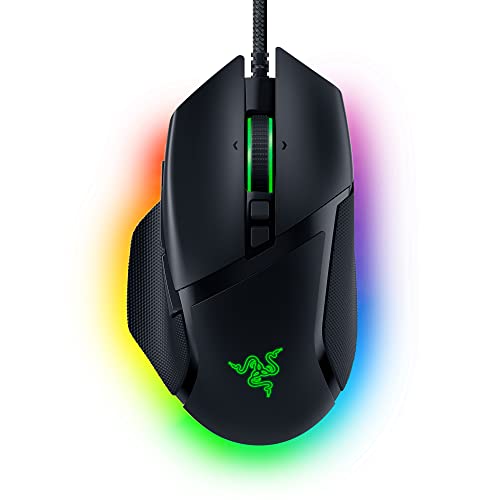
Razer Basilisk V3
Its 62 mm grip width offers comfortable control for budget gamers.

UtechSmart Venus
Ideal for gamers who prioritize a lightweight feel, the Venus serves budget‑focused players and comes in at $25.16, about $11.79 less than the Razer Basilisk V3.
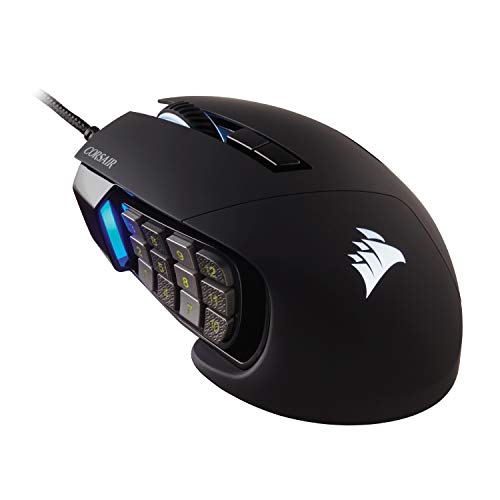
Corsair Scimitar RGB Elite
The 72 mm grip width gives a broader hand fit, setting it apart from the tighter‑styled Razer and UtechSmart options.
Also considered
Score Analysis
Key score advantages vs. runner-up (UtechSmart Venus)
Price Range
Razer Basilisk V3
$36.99
UtechSmart Venus
$32.99
Corsair Scimitar RGB Elite
$89.99

Razer Naga Pro
$244.99

Redragon M908 Impact
$22.49

ASUS ROG Spatha X
$111.99

Redragon M811 Aatrox
$32.99

EVGA X15
Out of Stock

Corsair Scimitar Elite SE
$79.99

Razer Naga V2
$64.98
Spec Comparison
TL;DR: The Razer Basilisk V3 delivers a 26,000‑DPI sensor, 8000 Hz polling, and 11 programmable buttons at $36.95, making it a high‑performance, budget‑friendly wired mouse for MMO enthusiasts.
What really sets the Basilisk V3 apart is its Razer Focus+ optical sensor rated for up to 26,000 DPI and a blazing 8000 Hz polling rate, paired with a 1.38 ms wired latency and 0.2 ms switch actuation. The mouse also sports an 11‑zone Chroma RGB system and a HyperScroll tilt wheel that can switch between notched and free‑spin modes, giving you both flair and flexibility.
Compared with the other nine entries, the Basilisk V3’s 8000 Hz polling outpaces the 1000 Hz used by the Redragon M811 Aatrox, UtechSmart Venus, Redragon M908 Impact, EVGA X15, Corsair Scimitar RGB Elite, and ASUS ROG Spatha X. Its 26,000 DPI also eclipses the 12,400 DPI of the M908 Impact, the 16,000 DPI of the EVGA X15, and the 18,000 DPI of the Corsair Scimitar RGB Elite, though it sits below the 33,000 DPI of the Corsair Scimitar Elite SE. With 11 programmable buttons, it offers fewer side keys than the 15‑button Aatrox or the 18‑button Venus and Impact, but still provides a solid macro layout for MMO play. At 0.2225 pounds (101 g) it’s lighter than the Aatrox (0.4409 lb) and Venus (0.4875 lb) while being a touch heavier than the Razer Naga V2 (0.2094 lb), striking a balance between heft and agility.
Reviewers consistently praise the ergonomic right‑handed shape with a thumb rest, noting it feels comfortable for palm and claw grips on medium‑to‑large hands. The sub‑1 mm lift‑off distance and rapid 0.2 ms actuation highlight ideal precision for MMO targeting, while the dual‑mode scroll wheel gets kudos for smooth navigation. On the downside, users mention the 101 g weight as a bit bulky for fast‑movement FPS scenarios, and the lack of a wireless option limits flexibility for those who prefer cable‑free setups.
The mouse relies on 2nd‑gen Razer Optical Switches rated for 70 million clicks, 100% PTFE feet for low friction, and a 2‑year manufacturer warranty for peace of mind. Its combination of high‑speed polling, expansive DPI range, and programmable layout makes it a compelling choice for MMO enthusiasts on a budget.
Pros
Cons
Best for: Right‑handed gamers with medium‑to‑large hands who want a high‑DPI, high‑polling wired mouse without breaking the bank.
Avoid if: You are left‑handed, have a small hand, or need a lightweight wireless mouse for fast‑paced FPS play.
TL;DR: The UtechSmart Venus offers 18 programmable buttons, a 16400 DPI laser sensor and an 8‑weight tuning system for under $26, but its bulk and 0.49 lb weight may limit portability.
The standout spec is the adjustable weight system: eight 2.4 g removable weights let you fine‑tune the mouse’s feel, while the base weight sits at 0.4875 pounds (221 g). Coupled with a high‑precision Avago laser sensor that reaches 16400 DPI, the Venus can track fast motions with 12000 FPS and a 1000 Hz polling rate.
In the lineup, the Venus is heavier than the Redragon M908 Impact, which weighs 0.3858 pounds, and its 16400 DPI ceiling sits below the Razer Basilisk V3’s 26000 DPI. Its 18 programmable buttons match the Redragon’s count, giving it a clear edge over models with fewer buttons such as the EVGA X15. Priced at $25.16, it lands well below premium options like the Corsair Scimitar RGB Elite.
User sentiment highlights the mouse’s comfortable rubberized top and the convenience of 12 side‑mounted buttons for MMO macro access. Professional reviewers praise the weight‑tuning flexibility and the sensor’s accuracy, yet they note the heft and the “cumbersome” weight‑swap process. The 6 ft braided‑fiber cable with a gold‑plated USB connector adds durability without limiting desk space.
Pros
Cons
Best for: MMO and MOBA players who need extensive side‑button access and want a budget‑friendly wired mouse.
Avoid if: You prefer a lightweight, portable mouse or are left‑handed.
TL;DR: The Corsair Scimitar RGB Elite offers a 17‑button layout with 12 adjustable side keys, an 18,000 DPI sensor, and a 1.8 m braided cable for $59.99, making it a solid mid‑range MMO mouse.
The standout feature is the 12‑button side grid that slides to suit thumb reach, giving you a total of 17 programmable buttons. Coupled with the PixArt PMW3391 optical sensor, the mouse reaches up to 18,000 DPI and reports at a 1000 Hz polling rate, which professional reviewers cite as delivering low wired latency.
At 0.268964 lb, the Scimitar RGB Elite is lighter than the EVGA X15 (0.639 lb) but a bit heavier than the Razer Naga V2 (0.209 lb) and the Corsair Scimitar Elite SE (0.251 lb). Its 18,000 DPI sits below the Elite SE’s 33,000 DPI and the Razer Basilisk V3’s 26,000 DPI, yet it outperforms the EVGA X15’s 16,000 DPI and the Redragon M908 Impact’s 12,400 DPI. The 1.8 m braided cable matches the length of the Redragon M811 Aatrox and UtechSmart Venus, while the EVGA X15’s 2 m cable is longer.
User feedback praises the ergonomic palm shape and the smooth PTFE feet, noting the four‑zone RGB lighting adds flair without being distracting. However, the fixed 122 g weight can feel heavy for claw‑grip or fingertip users, and the lack of a tilt‑scroll wheel limits scrolling versatility. Reviewers also point out that the mouse only supports right‑handed use, making it unsuitable for left‑handed gamers.
Pros
Cons
Best for: Buyers in the mid price range seeking the best quality at that price point
Avoid if: You have limited desk space or need portability
TL;DR: The Razer Naga Pro packs 19+1 programmable buttons, a swappable side‑panel system and up to 20,000 DPI in a wireless design, but its $224.99 price and 117 g weight may deter budget‑focused or ultra‑light FPS gamers.
Its modular side‑panel system stands out: three magnetic plates let you switch between 2‑, 6‑ or 12‑button layouts, giving a total of 19+1 programmable buttons and up to 22 when you add the Hypershift layer. The Focus+ optical sensor reaches a maximum of 20,000 DPI and the mouse can track at 650 IPS, while the 100 hour (2.4 GHz) or 150 hour (Bluetooth) battery life lets you game wireless for days.
Compared with the other nine entries, the Naga Pro offers far more buttons than the ASUS ROG Spatha X’s 12 and the Redragon M811’s 15. Its 20,000 DPI sits above the ASUS’s 19,000 but below the Corsair Scimitar Elite SE’s 33,000 and the Razer Basilisk V3’s 26,000. Tracking speed matches the Basilisk V3 at 650 IPS and outpaces the EVGA X15’s 400 IPS, though it trails the Scimitar Elite SE’s 750 IPS. At 0.257 lb (117 g) the mouse is lighter than the bulkier ASUS (1.9 lb) and the EVGA X15 (0.64 lb), yet it is a bit heavier than the Razer Naga V2 (0.21 lb) and the Basilisk V3 (0.22 lb). Its USB report rate of up to 1000 Hz aligns with the polling rates of most competitors.
Reviewers consistently praise the interchangeable panels and the low click latency that professional testers highlight, noting the sensor’s 99.6 % accuracy. Everyday users love the smooth PTFE feet and the vibrant 16.8 million‑color Razer Chroma lighting. On the downside, people call the 117 g weight “heavy for competitive FPS flick shooting,” and describe the scroll wheel as loose with insufficient tactile feedback. The premium $224.99 price tag also shows up repeatedly as a trade‑off.
Technical context: Razer Optical Mouse Switches can handle 70 million clicks, and the mouse supports four on‑board memory profiles plus an extra slot. Razer advertises wireless latency as 25 % faster than competing wireless mice, and you can choose a report rate of 125, 250, 500 or 1000 Hz. The detachable 1.8 m Speedflex cable (Micro‑USB) adds flexibility for wired play.
Pros
Cons
Best for: Those prioritizing quality and willing to pay for premium performance
Avoid if: You're shopping on a tight budget — it's priced at $224.99
TL;DR: The Redragon M908 Impact packs 18 programmable buttons, a 12,400 DPI Pixart sensor and 1000 Hz polling into a wired mouse that’s light enough for budget MMO setups but feels bulky on smaller hands.
The standout spec is the 18 programmable buttons—including 12 side keys—that let you bind dozens of spells or macros without pausing the action. Coupled with a maximum DPI of 12,400 and a 1000 Hz polling rate, the mouse delivers the low‑latency tracking that MMO players demand.
At about 0.39 lb (175 g), it's lighter than the UtechSmart Venus (≈0.49 lb) yet noticeably heavier than the Razer Basilisk V3 (≈0.22 lb). Its 6 ft (1.83 m) braided cable matches the Venus’s length but out‑stretches the EVGA X15’s 2 m cable and the Corsair Scimitar Elite’s 1.8 m lead. While the button count ties with the Venus, it surpasses the Redragon M811 Aatrox’s 15‑button layout. The 12,400 DPI ceiling falls short of the Basilisk V3’s 26,000 DPI and the Corsair Scimitar Elite SE’s 33,000 DPI, placing it solidly in the mid‑range performance tier.
Reviewers consistently praise the mouse’s “abundance of side buttons” and the “flawless tracking” of its Pixart PAW3327 sensor. The vibrant RGB lighting and five onboard memory profiles receive frequent shout‑outs for adding a personal touch to long gaming sessions. On the downside, many users note the 92 mm width makes the chassis feel “bulky” in small‑hand or fingertip grips, and the side buttons can be overly sensitive, leading to occasional misfires. Professional reviewers also point out the lack of a wireless option compared with higher‑priced MMO competitors.
Beyond the button count, the M908 offers eight 2.4 g weight‑tuning pieces, letting you fine‑tune the 175 g base weight to suit your hand. Acceleration tops out at 30 G, and you can switch among five preset DPI steps (500‑6200) before hitting the 12,400 DPI ceiling. The 16.8‑million‑color RGB engine and gold‑plated USB‑A connector round out a feature set that feels generous for its price point.
Pros
Cons
Best for: MMO gamers who need a high button count and reliable wired performance without breaking the bank.
Avoid if: You have small hands, prefer a lightweight FPS mouse, or require wireless connectivity.
TL;DR: The ASUS ROG Spatha X packs a 19,000 dpi sensor, 12 programmable buttons and a 1000 Hz poll rate into a premium, 1.9‑lb wireless mouse, but its bulk and $126.99 price keep it in the high‑end niche.
A key spec is the 19,000 dpi optical sensor paired with a 1000 Hz polling rate, delivering ultra‑responsive tracking for MMO and MOBA titles. It houses 12 programmable buttons and ROG Micro Switches rated for 70 million clicks, while a magnetic charging dock lets you top up the 67‑hour battery without unplugging.
Weighing 1.9 pounds, the Spatha X is significantly heavier than the Corsair Scimitar Elite SE, the Razer Naga V2 and the Redragon M811 Aatrox, all of which sit under 0.5 pounds. Its price point also sits above most peers, making it a premium choice rather than a budget‑friendly option. However, the build quality and feature set place it ahead of many lighter, cheaper models that offer fewer programmable inputs.
Users with larger hands consistently praise the comfortable palm‑grip feel and the solid matte‑black chassis, noting that the 12 side buttons reach easily during intense raids. Professional reviewers highlight the low click latency and the convenience of USB‑C wired mode alongside the wireless 2.4 GHz RF link. One recurring complaint notes the mouse’s bulk; the 2.54 mm height, 137.0 mm length and 89.0 mm width can make it cumbersome for players with smaller hands or those who favor rapid repositioning.
Pros
Cons
Best for: Buyers willing to invest in a proven, high‑quality option
Avoid if: You're shopping on a tight budget — it's priced at $126.99, and the mouse's less suited for small‑handed users or travelers needing a lightweight solution
“LOVE this mouse... search is over!! Asus NEVER disappoints”
TL;DR: The Redragon M811 Aatrox offers 15 programmable buttons, a 26,000 DPI Pixart PAW3327 sensor and 1000 Hz polling on a 1.80 m braided cable for $39.99, making it a solid budget MMO mouse.
The standout spec is the 15‑button layout, letting you bind dozens of spells and macros without juggling the keyboard. Combined with a maximum DPI of 26,000 and a 1000 Hz polling rate, the mouse tracks fast movements while keeping latency low. Its 1.80 m braided USB cable adds durability and smooth glide across the desk.
Compared with the other nine contenders, the M811 sits in the middle of the button count spectrum—UtechSmart Venus provides 18 total buttons, so the Aatrox offers slightly fewer side keys. Its cable length matches the 1.8 m cable of the Venus, while the Razer Basilisk V3 is lighter at 0.2225 lb versus the Aatrox’s 0.4409 lb. The polling rate aligns with models like the EVGA X15, and the 26,000 DPI ceiling mirrors the Basilisk V3’s maximum, so you’re not losing performance there.
Professional reviewers praise the RGB lighting—16.8 million colors across five backlit modes—and the satisfying actuation of the side buttons. Users echo this, highlighting the extensive macro support and the sturdy braided cable. However, many note the main Huano switches feel stiff and the plastic chassis has a “cheesy” feel, while the PAW3327 sensor feels less snappy than premium alternatives.
Pros
Cons
Best for: Entry-level buyers or those on a tight budget
Avoid if: You want the best value‑per‑dollar in its price range
TL;DR: The EVGA X15 packs 20 programmable buttons, a 16,000 DPI PixArt sensor and RGB lighting into a right‑handed palm‑grip mouse that feels solid at 0.64 lb for about $58.80.
The standout spec is the 20‑button layout, giving MMO players a massive command surface without needing external keypads. It pairs that with a 16,000 DPI PixArt PMW3389 sensor and a 32‑bit Arm Cortex‑M33 processor, which professional reviewers cite as delivering low‑latency clicks when NVIDIA Reflex is enabled.
Compared with the other nine mice in this roundup, the X15 is heavier than the Razer Naga V2 (0.21 lb) but lighter than the ASUS ROG Spatha X (1.9 lb). Its price sits alongside the Corsair Scimitar RGB Elite, while offering more buttons than the Redragon M811 Aatrox’s 15‑button count. The braided 2 m cable is longer than the 1.8 m cable on the Corsair Scimitar Elite SE, though users note it can retain kinks.
User sentiment highlights the ergonomic palm grip and the low‑friction PTFE feet as comfort boosters during long raids. Reviewers praise the durable LK optical switches rated for 70 million clicks, but they also flag the 110 g chassis as a drawback for players who prefer ultra‑light FPS mice. Players frequently complain about sensor overshoot during slow sweeps and occasional scroll‑wheel grit. Polling rate isn’t listed in the specs.
Technical details round out the picture: the mouse measures 42.7 mm in height, 123.5 mm in length and 71.7 mm in width, and it supports RGB lighting across three zones via EVGA UNLEASH RGB software. The combination of a high‑end sensor, 20 programmable buttons and NVIDIA Reflex makes it a suitable option for MMO setups where command density matters more than feather‑weight agility.
Pros
Cons
Best for: MMO gamers who need a high button count, ergonomic palm‑grip comfort for large hands, and low‑latency performance.
Avoid if: You have small or medium hands, prefer ultra‑light FPS mice, or require a wireless solution.
TL;DR: The Corsair Scimitar Elite SE packs a 12‑button side slider, 33,000 DPI MARKSMAN S sensor and up to 500 hours of Bluetooth life, but its 114 g weight and $79.99 price put it in the premium tier.
The standout feature is the adjustable 12‑button side‑panel slider, giving MMO‑type thumb access that can be repositioned for any hand size. Under the hood sits a MARKSMAN S optical sensor delivering a maximum 33,000 DPI and a rapid 750 IPS tracking speed, while the 1,000 Hz polling rate ensures low‑latency input. Corsair also equips the mouse with 100 million‑click‑rated optical switches and 100% PTFE feet for smooth gliding.
Compared with the other nine contenders, the Scimitar Elite SE is pricier than the Razer Naga V2 and the EVGA X15, but it offers a higher DPI than the Razer Basilisk V3 (33,000 DPI vs 26,000 DPI). Its Bluetooth endurance of 500 hours outlasts the Naga V2’s 400‑hour claim, and the 1,000 Hz polling rate matches the EVGA X15’s spec. At 0.2513 lb (114 g), it's heavier than the Naga V2’s 0.2094 lb, yet lighter than the ASUS ROG Spatha X’s 1.9 lb. The mouse’s dimensions—119 mm length, 73 mm width and 43 mm height—make it a “big boy” compared with the more compact Redragon M811 Aatrox.
User sentiment repeatedly praises the extensive programmability, especially the side‑slider’s flexibility, and the long Bluetooth battery life that lets you game for days without recharging. Professional reviewers highlight the sensor’s precision, calling the 33,000 DPI and 750 IPS tracking “phenomenally accurate,” while also noting that the mouse’s size can cause fatigue for smaller hands. The inclusion of Elgato Stream Deck integration and onboard storage for up to three profiles adds extra value for streamers and MMO enthusiasts alike.
Pros
Cons
Best for: Those prioritizing quality and willing to pay for premium performance
Avoid if: You're on a tight budget or only need basic functionality
TL;TD: The Razer Naga V2 packs 20 buttons, a 30,000 DPI sensor and up to 400 hours of Bluetooth battery life into a 0.209 lb right‑handed mouse, ideal for MMO macro‑heavy play.
The standout spec is the 19 programmable side buttons plus the scroll wheel, giving you 20 total inputs that you can bind to complex MMO commands. Razer pairs that with a Focus Pro 30K optical sensor that reaches 30,000 DPI and a 1000 Hz polling rate, while the built‑in AA battery delivers 400 hours of Bluetooth runtime (250 hours on HyperSpeed).
Compared with the nine other mice in this roundup, the Naga V2 is the lightest at 0.209 lb, out‑weighing the Corsair Scimitar RGB Elite (0.269 lb) and the EVGA X15 (0.639 lb). It also offers more programmable inputs than the Redragon M811 Aatrox (15 total) and the UtechSmart Venus (18 total), and its Bluetooth endurance exceeds the wired‑only peers and comes close to the Corsair Scimitar Elite SE’s 500‑hour Bluetooth claim.
Professional reviewers praise the mouse’s solid build, comfortable thumb‑rest shape and the metal HyperScroll wheel that toggles between free‑spin and tactile modes. Users love the marathon‑ready battery life, but many note that the 118 g weight with the AA cell feels heavy for rapid flicks, and the fixed right‑handed layout limits left‑handed gamers.
The Naga V2’s Focus Pro 30K sensor delivers consistent tracking across its 100–30,000 DPI range, while Razer rates the Mechanical Switches Gen‑2 for 60 million clicks. The PTFE mouse feet provide smooth glide, and the LED indicator shows DPI and Bluetooth mode at a glance.
Pros
Cons
Best for: MMO gamers who need a dedicated button grid, long battery endurance and high‑precision tracking.
Avoid if: You prefer a lightweight, ambidextrous mouse or need a device primarily for competitive FPS play.
Breakdown
Razer Basilisk V3
Pros
UtechSmart Venus
Pros
Corsair Scimitar RGB Elite
Pros
Razer Naga Pro
Pros
Cons
Based on scoring data and product specs
Personalized picks
Best Overall Pick
Razer Basilisk V3
Best Budget PickBest for: Budget-conscious buyers seeking a reliable entry-level option
UtechSmart Venus
Best for: Budget-conscious buyers seeking a reliable entry-level option
$32.99-$4.00 vs winner
Skip Razer Naga V2 if…
You're on a tight budget or only need basic functionality
We’re naming the Razer Basilisk V3 the top pick. At $36.95 it delivers a solid 4.6 / 5 rating from 9,753 reviewers, 11 programmable buttons, and a fast 1.38 ms wired latency. Its 0.2225‑pound weight and 26,000 DPI Focus+ sensor give you precision without dragging your hand around the desk.
The runner‑up is the UtechSmart Venus, ideal if you crave a massive button array and on‑the‑fly weight tuning for MMO macro‑heavy play. It offers 18 programmable buttons (12 on the side), eight 2.4 g removable weights, and a respectable 4.4 / 5 rating from 23,819 reviews, all for $25.16.
For those who need alternatives, the mid‑range Corsair Scimitar RGB Elite at $59.99 provides a sturdy build and reliable sensor for a step up in durability, while the premium Razer Naga Pro at $224.99 brings wireless flexibility and a 20‑button side panel for the ultimate MMO setup.
Pick the Razer Basilisk V3 today and lock in a budget‑friendly mouse for your MMO adventures.
The Razer Naga Pro provides up to 22 programmable buttons thanks to its three interchangeable side panels, outpacing the 18‑button UtechSmart Venus and the 17‑button Corsair Scimitar RGB Elite. This high button count makes it ideal for complex MMO macros.
No reviews yet — be the first to share your experience.
Please sign in to leave a review