Finding a screen that eases eye strain without sacrificing visual smoothness can feel like a balancing act. In this roundup we compared 14 monitors that all ship with eye‑care technologies such as TÜV‑certified Flicker‑Free and Low Blue Light modes. The selection spans four price tiers: budget options like the Uperfect MDS‑15608 ($61.96) and Philips 221V8LB ($69.99), mid‑range choices such as the Philips 241V8LB ($89.99) and HP 327S ($119.99), and premium models including the BenQ GW2490T ($139.99) and LG 32U631A‑B ($246.99).
The BenQ GW2490T leads the pack with a 4.6/5 rating from 19,832 reviewers, a 23.8‑inch IPS panel, and a 100 Hz refresh rate that keeps motion fluid during long work sessions. Across the range you’ll also find the Sceptre E275W‑FW100T’s built‑in speakers and a 100 Hz refresh that provides smoother gameplay. The Asus VA279HG features a 120 Hz panel with TÜV‑certified eye‑care features. Budget‑focused buyers can still enjoy a 100 Hz refresh on the Philips 241V8LB and a 250 cd/m² brightness on the Philips 221V8LB.
Below we break down each tier so you can pinpoint the monitor that best matches your eye‑care needs and budget.

BenQ GW2490T
Its 21.0‑inch depth gives a roomy screen footprint while staying compact, supporting the high rating and strong feature set.

Philips 241V8LB
Ideal for home or office users who want solid features at a lower cost, it’s $50 cheaper than the BenQ GW2490T.

Sceptre E275W-FW100T
Stands out with built‑in 4 W speakers and a DisplayPort 1.2 supporting 1080p at 100 Hz, offering audio‑visual convenience the other picks lack.
Also considered
Score Analysis
Key score advantages vs. runner-up (Philips 241V8LB)
Price Range
BenQ GW2490T
$129.99
Philips 241V8LB
$79.99
Sceptre E275W-FW100T
$104.97

HP 327S
$119.99

Asus VA279HG
$139.00

Philips 221V8LB
$69.90

Sceptre E248W-19203R 24-inch
$87.97
LG 32U631A-B
$246.99

Sansui ES-24X5AL
$79.99

Uperfect MDS-15608
$65.99

Asus ZenScreen MB169CK
$79.00
LG 27US500-W
$239.05

Sansui ES-24F2
$79.99
Sansui ES-22X3AH
$81.99
Spec Comparison
TL;DR: The BenQ GW2490T delivers a smooth 100 Hz IPS experience with TÜV‑certified eye‑care tech, a fully adjustable stand, and solid user approval at a $139.99 price point.
The standout spec is its 100 Hz refresh rate paired with a 5 ms response time, which makes scrolling and light gaming feel fluid on the 23.8‑inch IPS panel. Brightness sits at 250 cd/m² and the display covers 99% of the sRGB color gamut, so colors stay accurate while the anti‑glare coating keeps reflections at bay.
Weighing in at 14.10 lbs with the stand, the GW2490T is noticeably heavier than the Asus VA279HG at 8.3 pounds and the Sceptre E275W‑FW100T at 7.21 pounds. Its ergonomic stand offers a full 90° pivot, ±20° swivel and –5° to +20° tilt, giving it more adjustability than many of the other 13 monitors, which list fewer or no movement ranges.
Users consistently praise the monitor’s smooth 100 Hz motion and the comfort of its Brightness Intelligence Gen2, Flicker‑Free and Low Blue Light eye‑care suite. Professional reviewers highlight the TÜV‑Rheinland certification as proof of the eye‑care claims. On the downside, some owners mention a wobbly base if you don’t tighten the stand and note that the built‑in speakers deliver only 2 W per channel, which feels modest for media playback. The HDMI 1.4 ports also limit full‑bandwidth 100 Hz operation for some content.
Pros
Cons
Best for: Buyers willing to invest in a proven, high‑quality option
Avoid if: You're on a tight budget or only need basic functionality
“Base may wobble if not tightened properly”
TL;DR: The Philips 241V8LB offers a 23.8‑inch VA panel with 250 cd/m² brightness, 4000:1 contrast and a 100 Hz refresh rate at $89.99, delivering solid eye‑care features for office and casual gaming.
This monitor’s standout spec is its 100 Hz refresh rate paired with Adaptive‑Sync, which helps keep motion smooth and reduces tearing. The static contrast ratio of 4000:1 gives deep blacks, and a 4 ms (GtG) response time keeps fast scenes crisp. All of that sits behind a 23.8‑inch VA panel that supports 16.7 million colors and full sRGB.
At 6.39 lbs with the stand, the Philips 241V8LB is heavier than the ultra‑light Asus ZenScreen but lighter than the Sansui ES‑24F2, which tips the scales at about 7.70 lbs. Its brightness of 250 cd/m² matches the Sansui ES‑24X5AL and Sceptre E248W, while its 100 Hz refresh outpaces the Sceptre’s 60 Hz but sits alongside the Sansui ES‑22X3AH’s 120 Hz offering. The monitor provides a single HDMI 1.4 port and a VGA input, fewer connectivity options than some rivals that include multiple HDMI ports.
Reviewers consistently praise the 4000:1 static contrast ratio and the eye‑care suite—Flicker‑free, LowBlue and EasyRead modes—making long work sessions easier on the eyes. Users also like the SmartImage presets that switch quickly between office, movie and game profiles. Common complaints revolve around the plastic stand, which feels cheap, the lack of built‑in speakers, and occasional trouble waking the monitor from standby mode.
Pros
Cons
Best for: Home and office users seeking a balance of features and value
TL;DR: The Sceptre E275W-FW100T offers a 27‑inch VA panel with 100 Hz refresh, 1 ms blur‑reduction response, AMD FreeSync and eye‑care features at a modest $129.97 price.
This monitor leans on a 27‑inch VA screen that delivers 100 Hz refresh and a 1 ms blur‑reduction response, while the standard G‑to‑G time sits at 5 ms. It rates brightness at 280 cd/m², and the static contrast ratio hits 3000:1, giving deep blacks for movies and games. The panel covers 100 % of the sRGB color gamut and the unit weighs 7.21 pounds, making it easy to move without sacrificing stability. Built‑in speakers provide 2 × 2 W output, so you can hear audio without a separate soundbar.
At 7.21 pounds, the Sceptre is lighter than the Asus VA279HG (8.3 pounds) and far lighter than the BenQ GW2490T (14.109584768Pounds), yet heavier than the ultra‑portable Asus ZenScreen MB169CK (2.1164377152Pounds). Its 195 mm depth with stand matches the Asus VA279HG’s 195.58 mm but dwarfs the HP 327S’s shallow 35.6 mm footprint. Width‑wise, the 613 mm chassis is a hair narrower than the Asus VA279HG’s 614.68 mm, while sharing the common 100 mm × 100 mm VESA mount pattern used by many rivals.
Reviewers consistently praise the monitor’s affordability and smooth 100 Hz gameplay, noting that the AMD FreeSync pairing eliminates tearing. Users also appreciate the built‑in speakers and the slim bezel that eases multi‑monitor setups. On the downside, several owners point out that the 1080p resolution on a 27‑inch screen yields a low pixel density, making text look softer up close. A few complaints mention a larger‑than‑expected bezel, occasional missing power adapter, and the lack of HDR support.
Beyond the eye‑care basics—Flicker‑Free panel, adjustable Blue Light Shift, and a 3H anti‑glare coating—the monitor adds Auto Dynamic Contrast and a tilt range from –5° to +15°, letting you fine‑tune ergonomics. The 100 % sRGB coverage ensures color accuracy for casual content creation, while the VA panel’s 178° viewing angles keep colors consistent across the room.
Pros
Cons
Best for: Casual and mid‑tier gamers seeking smooth 100 Hz gameplay with FreeSync, as well as home‑office users who value eye‑care features and built‑in audio.
Avoid if: You need professional‑grade color accuracy, higher resolutions for photo/video editing, or competitive‑level response times for esports.
“great value for the price”
“missing power adapter”
TL;DR: The HP 327S delivers a 27‑inch IPS panel with 99% sRGB coverage, 100 Hz refresh and eye‑care features at $119.99, but its lack of VESA mounting and modest built‑in speakers keep it from being a premium choice.
The monitor’s standout spec is its 100 Hz refresh rate combined with a 5 ms (GtG) response time, which makes motion look smoother than the typical 60 Hz office screen. Its IPS panel offers 99% sRGB color gamut and a brightness range of 250–300 nits, delivering vivid colors and a matte anti‑glare coating that reviewers say reduces eye strain during long sessions.
Compared with the other 13 monitors in this roundup, the HP 327S is lighter than the Sceptre E275W‑FW100T (which weighs 7.21 lb) and the Asus VA279HG (8.3 lb). Its stand depth of 35.6 mm is far slimmer than the Sceptre’s 195 mm, making it one of the most space‑efficient options on the list. However, it’s pricier than many entry‑level models and, unlike the Asus VA279HG, it doesn't support VESA mounting, limiting wall‑or‑arm placement.
Users consistently praise the monitor’s sharp, colorful display and the flicker‑free, low‑blue‑light technology certified as HP Eye Ease, noting it feels comfortable for marathon workdays. Many describe the built‑in speakers as tinny, and some call the stand flimsy, which matches expert criticism about its lack of VESA compatibility and the legacy VGA port that can introduce signal degradation.
From a technical standpoint, the 27‑inch (684.7 mm) diagonal fits comfortably on most desks, while the 0.311 mm pixel pitch translates to roughly 81 ppi, delivering crisp Full HD (1920 × 1080) images. The dynamic contrast ratio of 10,000,000:1 and static contrast of 1300:1 help maintain depth in dark scenes, and the monitor’s A+ energy rating (23–28 W typical, 0.5 W sleep) keeps power use modest.
Pros
Cons
Best for: Most users looking for a well‑reviewed, reliable mainstream option
Avoid if: You're shopping on a tight budget — it's priced at $119.99
TL;DR: The Asus VA279HG is a 27‑inch IPS monitor that packs a 120 Hz refresh rate, TÜV‑certified eye‑care features and a solid 4.5‑star rating for comfortable long‑hour use.
This model’s standout spec is the 120 Hz maximum refresh rate on a full‑HD 27‑inch IPS panel, paired with a 1 ms MPRT response time. The screen delivers 300 cd/m² brightness and covers 99% of the sRGB colour gamut, while the anti‑glare surface and 178° viewing angles keep colours consistent from almost any seat.
Compared with the other monitors in the roundup, the VA279HG sits in the middle of the weight range at 8.3 pounds—lighter than the BenQ GW2490T’s 14‑plus‑pound chassis but a bit heavier than the Sceptre E275W‑FW100T’s 7.21 pounds. It also offers fewer connectivity options; it includes one HDMI 1.4 port and a VGA port, whereas the Sceptre model adds a second HDMI 2.0 and a DisplayPort, giving it a richer port selection.
Reviewers consistently praise the TÜV‑certified flicker‑free and low‑blue‑light modes for reducing eye strain during marathon work sessions, and they enjoy the buttery‑smooth 120 Hz experience for casual gaming. The main complaints focus on the 1920 × 1080 resolution stretched over a 27‑inch panel, which many describe as “pixel‑packed” and less crisp than higher‑density screens. Professional reviewers also note the lack of height adjustment and the absence of a DisplayPort, which limits ergonomic fine‑tuning and future‑proofing for demanding gamers.
Additional technical context includes Adaptive‑Sync support that helps eliminate screen tearing, and Energy Star certification that keeps power draw under 15 W during typical use. The monitor ships with an HDMI cable, power cord and a 3‑year warranty, adding value for office and home‑office setups.
Pros
Cons
Best for: Office and home‑office workers who need eye‑comfort during long sessions and casual gamers who appreciate a smooth 120 Hz experience.
Avoid if: You require high‑resolution editing work or competitive‑gaming performance that demands higher pixel density and more extensive port options.
“Users consistently commend the eye comfort features, especially those working long hours or with sensitive eyes.”
“The 120Hz refresh rate is frequently mentioned as a noticeable upgrade from 60Hz, improving both gaming and general UI responsiveness.”
TL;DR: The Philips 221V8LB delivers a 22‑inch VA panel with 100 Hz refresh, 4376:1 measured contrast and 99.8% sRGB coverage at a budget‑friendly $69.99, though its stand offers only tilt.
At the core of this monitor is a 100 Hz refresh rate combined with AMD FreeSync, helping keep motion fluid during casual gaming or scrolling tasks. The VA panel registers a measured contrast ratio of 4376:1, far above the typical 3000:1 rating, and reproduces 99.8% of the sRGB color space, giving deep blacks and fairly accurate colors for everyday work.
Compared with the other 13 contenders, the Philips sits in the middle of the weight range at 5.8 lbs with its stand (heavier than the ultra‑light Uperfect MDS‑15608 at about 2 lbs and the Asus ZenScreen at roughly 2.1 lbs, but lighter than the Sansui ES‑24F2 at 7.7 lbs). Its brightness of 250 cd/m² matches the Sansui ES‑22X3AH and the ES‑24X5AL, yet it outshines the Uperfect’s 220 nits. The 100 Hz panel is faster than the Uperfect’s 60 Hz display and on par with the Sansui ES‑24X5AL’s “up to 100 Hz” claim, while the Sceptre and Sansui ES‑22X3AH offer higher HDMI port counts (two versus Philips’ single HDMI 1.4). Connectivity is otherwise modest, limited to one HDMI 1.4, one VGA and a 3.5 mm audio jack.
Reviewers consistently praise the monitor’s sharp text, smooth motion and eye‑comfort features such as Flicker‑Free technology and LowBlue Mode, making it a comfortable choice for long study sessions or home‑office work. The most common complaints focus on the tilt‑only stand, the tiny on‑screen‑display buttons that make menu navigation fiddly, and the lack of height, swivel or pivot adjustments.
Technically, the 22‑inch class VA panel delivers Full HD (1920 × 1080) resolution at a pixel density of 102 ppi, with a 4 ms gray‑to‑gray response time and anti‑glare coating. Its VESA‑mount compatibility (100 × 100 mm) lets you attach it to a monitor arm for better ergonomics, and the four‑year advance‑replacement warranty adds peace of mind.
Pros
Cons
Best for: Budget‑conscious buyers seeking a reliable entry‑level option
TL;DR: The Sceptre E248W‑19203R delivers a 24‑inch Full HD panel with 99 % sRGB coverage, 75 Hz refresh and built‑in eye‑care, all for under $80, making it a solid budget office monitor.
The monitor’s 24‑inch LED‑backlit LCD shows 1920 × 1080 resolution, 99 % sRGB color gamut and a brightness of 250 cd/m², while the 3 ms response time and 75 Hz refresh rate keep motion looking smooth. Its contrast ratio of 1000:1 and 16.7 million‑color (6‑bit + FRC) panel give good depth for everyday tasks.
Compared with other budget options in this roundup, the Sceptre offers dual HDMI 1.4 ports, which is more than the single‑HDMI setups on the Philips 221V8LB and Philips 241V8LB. Its 250 cd/m² brightness matches the Sansui ES‑22X3AH, but its 75 Hz refresh is lower than Sansui’s 120 Hz model and the 100 Hz peak on the Sansui ES‑24X5AL. Color coverage sits just shy of Sansui’s 100 % sRGB, yet it still exceeds many peers. At 5.77 pounds, it’s slightly lighter than the Philips 221V8LB’s 5.8 pounds, making it easy to place on a desk.
Users consistently praise the vivid colors and the smoother motion compared with typical 60 Hz panels, while professional reviewers highlight the eye‑care suite—Blue Light Shift and flicker‑free technology—as a welcome health feature. Many call the built‑in stereo speakers thin and lacking depth, and the stand only tilts from –5° to +15°, so taller or swivel adjustments require a separate mount. The monitor ships with a 1‑year limited warranty and it's Energy Star certified, adding confidence for budget‑conscious buyers.
Pros
Cons
Best for: Budget‑conscious buyers seeking a reliable entry‑level option
Avoid if: You have limited desk space or need portability
“Terrific monitor”
“Works great for games”
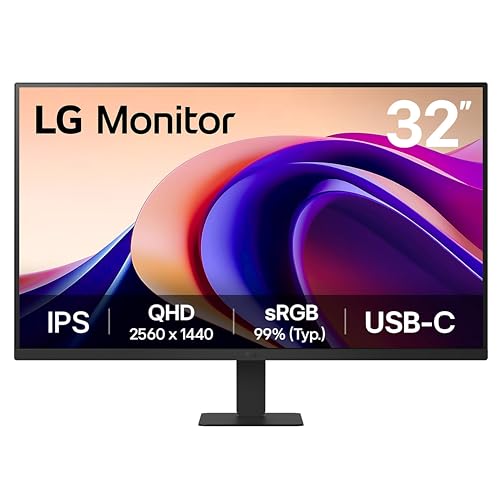
TL;DR: The LG 32U631A‑B is a 32‑inch QHD IPS monitor with 100 Hz refresh, USB‑C Power Delivery and eye‑care features, but its tilt‑only stand and modest gaming specs may limit power users.
At the heart of this model is a 32‑inch IPS panel delivering a 2560 × 1440 resolution and a 100 Hz refresh rate, while a single USB‑C (DP Alt Mode) port supplies 15 W of power delivery for a tidy single‑cable setup.
Compared with the other monitors in the roundup, the LG 32U631A‑B is larger than the 27‑inch LG 27US500‑W and the 24‑inch HP 327S, and it weighs more than the 8.3‑pound Asus VA279HG but less than the 14.11‑pound BenQ GW2490T. It also offers a higher refresh rate than the 60‑Hz panels that lack FreeSync, though its 100 Hz ceiling sits below the 144‑Hz targets of gaming‑focused alternatives.
Consumers consistently award it 4.5 / 5 stars across 3,008 reviews, praising the sharp QHD image, the wide 178° viewing angles, and the Flicker‑Safe and Reader Mode eye‑care technologies. The most common critiques focus on the tilt‑only stand, the absence of a DisplayPort input, and the modest 100 Hz refresh for serious gaming.
The specs list a brightness of 250 nits, a 99% sRGB color gamut, a contrast ratio of 1000:1, and an input lag of roughly 9 ms. The monitor also supports AMD FreeSync from 48 Hz to 100 Hz, which helps smooth frame delivery on compatible graphics cards.
Pros
Cons
Best for: Productivity‑focused users, office workers, students and casual gamers who want a large, sharp QHD display with built‑in eye‑care features.
Avoid if: You're shopping on a tight budget — it's priced at $246.99, and hardcore gamers seeking high‑refresh performance may find it limiting.
TL;DR: The Sansui ES-24X5AL delivers a 23.8‑inch Full HD IPS display with a 100 Hz refresh rate, FreeSync and TÜV‑certified eye‑care at a budget‑friendly $79.99.
What really stands out is the 100 Hz refresh capability paired with a 5 ms (GTG) response time, which keeps motion smooth for casual gaming and scrolling tasks. The panel covers 99.99% of the sRGB color space and reaches 250 nits of brightness, while the 1000:1 contrast ratio and 178° viewing angles ensure consistent color from side‑to‑side.
Compared with the other 13 monitors in this roundup, the ES‑24X5AL’s 75 × 75 mm VESA mount matches the smaller Sansui ES‑24F2 but is more compact than the Sceptre’s 100 × 100 mm pattern. Its brightness of 250 nits is on par with most peers, yet its contrast ratio sits below the Philips 241V8LB’s 4000:1. At 3.64 kg, it's lighter than the Sansui ES‑24F2 (7.70 lb) but heavier than the ultra‑portable Asus ZenScreen MB169CK (2.12 lb). Like several competitors, it omits built‑in speakers, and its tilt‑only stand offers less ergonomic flexibility than models with height or swivel adjustments.
Customer feedback repeatedly highlights the clear Full HD picture and the vibrant IPS colors, with many users noting that the 100 Hz refresh feels noticeably smoother than standard 60 Hz screens. Reviewers also appreciate the tool‑free two‑step stand assembly and the TÜV Rheinland eye‑care certification, which combines low‑blue‑light filtering and anti‑flicker technology. The most common complaints revolve around the lack of built‑in audio and the presence of a VGA port that can’t fully exploit the higher refresh rates.
The monitor’s IPS technology delivers 178° horizontal and vertical viewing angles, while the Low Blue Light and anti‑flicker features aim to reduce eye strain during long work sessions. AMD FreeSync synchronises the display with compatible graphics cards to minimise tearing, and HDR10 support adds a modest boost to dynamic range for media consumption.
Pros
Cons
Best for: Budget‑conscious buyers who want a Full HD IPS monitor with eye‑care features and smooth 100 Hz performance.
Avoid if: You need professional‑grade color accuracy, high‑end gaming above 144 Hz, or built‑in audio.
“This 1080p monitor displays vivid images at a 75Hz refresh rate, and with adaptive Free Sync technology minimize screen tearing...”
TL;DR: The Uperfect MDS-15608 offers a 15.6‑inch Full HD IPS screen with HDR10, FreeSync and eye‑care features for $61.96, weighing just 1.94 lb, making it a cheap, portable dual‑screen option.
The monitor’s 15.6‑inch 1920 × 1080 IPS panel delivers 141.21 PPI and a pixel pitch of 0.18 mm, while the built‑in HDR10 and AMD FreeSync aim to smooth motion despite the 60 Hz refresh rate. Eye‑care comes from low‑blue‑light and flicker‑free tech, and the device runs entirely on a single USB‑C cable that also powers the display.
At 1.94 lb, the Uperfect is markedly lighter than the Philips 221V8LB (4.92 lb without stand) and the Sansui models that tip the scales at over 6 lb. It's only a shade heavier than the Asus ZenScreen MB169CK (2.12 lb) but undercuts its price. Brightness sits at 220 nits, which is lower than the 250‑nits panels found in several Sansui units, and its 72 % sRGB gamut falls short of the 100 %‑plus coverage those rivals claim. The 60 Hz refresh and 30 ms response time run slower than the 120 Hz/5 ms specs of the Sansui ES‑22X3AH, so fast‑action gaming will feel less fluid.
Reviewers appreciate the lightweight design, the convenience of plug‑and‑play USB‑C, and the surprise of HDR10 and FreeSync at this budget tier. Common complaints focus on the modest 220‑nit brightness in well‑lit cafés and the quiet 1 W dual speakers, which many users find insufficient for media playback. Professional reviewers note that the 72 % sRGB coverage makes the monitor unsuitable for color‑critical work.
Pros
Cons
Best for: Budget‑conscious buyers seeking a reliable entry‑level option
Avoid if: You need professional color accuracy, high brightness, or a high‑refresh gaming experience
“Perfect second screen for remote work”
“Easy setup with USB‑C”
TL;DR: The Asus ZenScreen MB169CK is a 15.6‑inch portable Full HD IPS monitor weighing just 2.1164377152 pounds, offering USB‑C plug‑and‑play, TÜV‑certified eye‑care and an anti‑glare screen for on‑the‑go productivity.
This model’s most eye‑catching spec is its ultra‑light chassis at 2.1164377152 pounds combined with a 15.6‑inch IPS panel that delivers Full HD (1920 × 1080) visuals, 250 cd/m² brightness, a 5 ms GTG response time and an 800:1 contrast ratio. It also carries ASUS Ultra‑Low Blue Light and TÜV Rheinland certifications for flicker‑free, low‑blue‑light viewing, plus a 360° detachable kickstand and USB‑C DisplayPort Alt Mode that powers the screen and carries video over a single cable.
When you line it up against the other 13 monitors in this roundup, the ZenScreen is noticeably lighter than the Sansui ES‑24F2 (7.70074681166 pounds) and the Sansui ES‑22X3AH (6.64914182192 pounds). Its 250 cd/m² brightness matches the Philips 241V8LB and the Sansui ES‑24F2, but the 800:1 contrast ratio falls short of Philips 241V8LB’s 4000:1 static contrast and Sansui ES‑24X5AL’s 1000:1. The screen size is smaller than the 23.8‑inch Sansui ES‑24X5AL, yet the portable form factor keeps it comparable in price to many budget‑oriented peers.
Users consistently praise the monitor’s thin profile and the hassle‑free USB‑C connection that eliminates a power brick. The anti‑glare coating and auto‑rotation via DisplayWidget Center earn frequent compliments for comfort during long work sessions. On the flip side, a handful of owners report occasional USB‑C instability with certain Android phones, describe the kickstand as a bit flimsy, and note the lack of built‑in speakers, meaning you’ll need external audio for video calls.
From a technical standpoint, the panel’s 178° horizontal and vertical viewing angles, 262,144‑color depth and 60 Hz refresh rate make it a well‑rounded performer for everyday tasks. The 0.179 mm pixel pitch translates to a typical portable monitor density, while the four low‑blue‑light modes let you dial down eye strain. Power consumption stays modest at 7.64 W max, with sub‑0.5 W draw in power‑saving modes, and the three‑year warranty adds peace of mind.
Pros
Cons
Best for: Mobile professionals, remote workers and students who need a lightweight, well‑reviewed secondary display for travel or cramped workspaces.
Avoid if: You’re a hardcore gamer, color‑critical designer, or need high brightness/HDR for bright outdoor use.
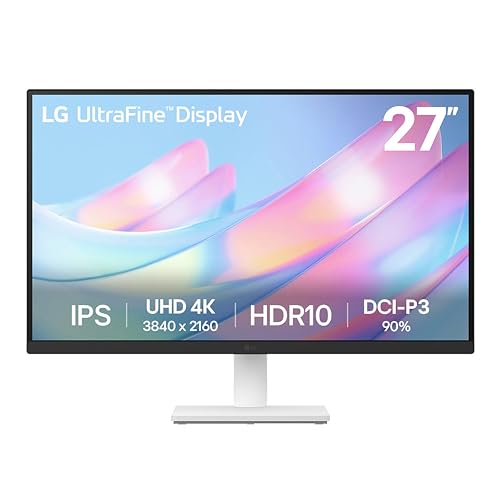
TL;DR: The LG 27US500‑W delivers a 27‑inch 4K IPS panel with 300 cd/m² brightness and built‑in eye‑care features, though its stand offers only tilt adjustment.
At the heart of the monitor is a 27‑inch 3840 × 2160 IPS display that packs 163 ppi (64 ppcm) for crisp detail. The panel reaches a typical brightness of 300 cd/m² and a typical contrast ratio of 1000:1, while HDR10 support adds extra punch for compatible content. A 5 ms (GtG) response time and a 60 Hz refresh rate keep motion smooth for everyday use.
Weighing 12.13 pounds, the LG is heavier than the 8.3‑pound Asus VA279HG but lighter than the 14.33‑pound LG 32U631A‑B. Its depth with stand measures 214.9 mm, which is deeper than the Asus’s 195.58 mm, meaning it occupies a bit more desk space. The only ergonomic tweak is a tilt range of –5° to +15°, so it doesn't have height, swivel or pivot adjustments that some rivals provide.
Users frequently praise the ultra‑sharp 4K picture and the virtually borderless three‑side design that blends well in multi‑monitor setups. Reviewers highlight the accurate colors—90 % DCI‑P3 coverage—and the anti‑glare matte coating (3H hardness) as strong points for creative work. Eye‑comfort features such as Flicker Safe, Reader Mode and Smart Energy Saving reduce strain during long sessions, though the external power adapter is a common complaint, and the 300 cd/m² peak brightness limits HDR performance.
Pros
Cons
Best for: Creative professionals and anyone who values accurate colors, 4K detail and built‑in eye‑care features.
Avoid if: You need high refresh rates for competitive gaming or extensive ergonomic adjustments such as height and swivel.
TL;DR: The Sansui ES-24F2 delivers a 24‑inch Full HD display at 100 Hz with AMD FreeSync and eye‑care features for $79.99, but it lacks built‑in speakers and height adjustment.
The standout spec is its 100 Hz refresh rate paired with AMD FreeSync, which helps keep motion smooth on a 24 in (610 mm) Full HD panel. The monitor also offers low blue‑light, anti‑flicker and anti‑glare eye‑care technologies, and a response time of roughly 4–8 ms.
At $79.99, it sits in the same price band as other budget options like the Sansui ES-24X5AL and the Sceptre E248W‑19203R, yet it provides a 100 Hz refresh rate that some competitors lack. It weighs 7.70 lb, making it heavier than the 5.77 lb Sceptre model and the 6.65 lb Sansui ES‑22X3AH, while its 250‑nit brightness matches those monitors. Its contrast ratio of 3000:1 (VA) or about 1000:1 (IPS) is lower than the Philips 241V8LB's 4000:1 static contrast.
Users frequently praise the smooth motion and vibrant colors on IPS versions, noting the plug‑and‑play setup works well for casual gaming and home‑office tasks. Common complaints focus on the absence of built‑in speakers or a headphone jack, the tilt‑only stand, and the modest 15 W USB‑C power delivery, which limits its usefulness as a single‑cable solution.
Technically, the panel covers sRGB 110% on IPS models and 99.99% on VA variants, with a 178° viewing angle both horizontally and vertically. The monitor includes one HDMI 1.4 port, a VGA port, and optional USB‑C with 15 W PD, plus a 75 mm × 75 mm VESA mount for flexible mounting.
Pros
Cons
Best for: Budget‑conscious buyers seeking a reliable entry‑level option
Avoid if: You have limited desk space or need portability
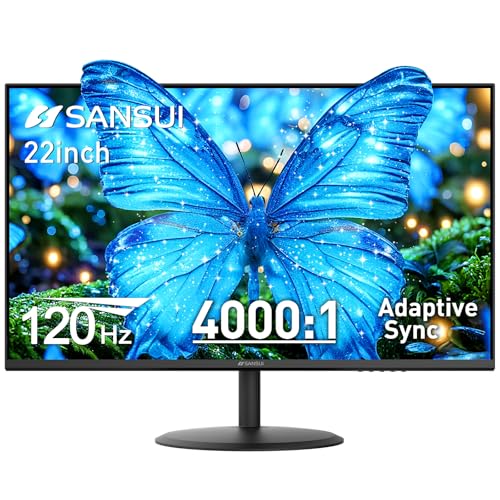
TL;DR: The Sansui ES-22X3AH packs a 22‑inch Full HD VA panel with 120 Hz refresh, 100 % sRGB coverage and eye‑care features at a budget‑friendly price, though it lacks speakers and has limited tilt.
This monitor’s standout spec is its 120 Hz refresh rate on a 22‑inch VA screen, paired with 100 % sRGB color gamut and a 250 cd/m² brightness level. It includes anti‑flicker and Low Blue Light modes, and Adaptive Sync (AMD FreeSync compatible) helps keep motion smooth for casual gaming and scrolling.
At 6.64914182192 pounds, the ES‑22X3AH is heavier than the Sceptre E248W‑19203R (5.77 pounds) but lighter than the Sansui ES‑24F2 (7.70 pounds). It offers two HDMI 1.4 inputs, which exceeds the single HDMI port that several peers offer, though it still lacks a DisplayPort or USB hub that some competitors provide. The 75 × 75 mm VESA mount matches the mounting options of most other models in this roundup.
Users consistently praise the monitor for its smooth, sharp visuals and plug‑and‑play setup, noting that the 120 Hz panel feels unusually fluid for a sub‑24‑inch budget screen. Professional reviewers highlight the accurate colour reproduction and the value of Adaptive Sync at this price point. Common complaints mention corner clouding or backlight bleed in dark scenes, the lack of built‑in speakers, and a tilt range that only reaches –5° to +22°.
Additional technical context includes a 4000:1 contrast ratio, a matte anti‑glare surface, and viewing angles of 178° horizontally and vertically. The stand offers only tilt adjustment, and the monitor runs off an external power adapter. Sansui backs the unit with a 30‑day money‑back guarantee, free replacement warranty and lifetime technical support.
Pros
Cons
Best for: Budget-conscious buyers seeking a reliable entry-level option
Avoid if: You have limited desk space or need portability
“Smooth visuals and sharp colors”
“Great value for the performance”
Breakdown
BenQ GW2490T
Pros
Philips 241V8LB
Pros
Sceptre E275W-FW100T
Pros
HP 327S
Pros
Cons
Based on scoring data and product specs
Personalized picks
Best Overall Pick
BenQ GW2490T
Best OverallBest for: Buyers willing to invest in a proven, high-quality option
Philips 241V8LB
Best for: Home and office users seeking a balance of features and value
$79.99-$50.00 vs winner
Skip Sansui ES-22X3AH if…
You have limited desk space or need portability
BenQ’s GW2490T takes the top spot, thanks to a blend of strong user approval and eye‑care tech. It holds a 4.6‑star rating from 19,832 reviewers, and TÜV Rheinland certifies its Flicker‑Free and Low Blue Light Plus features for reduced eye strain. The IPS panel delivers a full HD 1920 × 1080 image at 100 Hz refresh with a 5 ms response, while the stand offers a –5° to +20° tilt range and a full 90° pivot for flexible positioning.
The runner‑up, Philips 241V8LB, shines when you need high contrast and smoother motion for gaming or office work. Its VA panel provides a static contrast ratio of 4000:1 and a rapid 4 ms (GtG) response, both paired with a 100 Hz refresh rate. Adaptive‑Sync, EasyRead Mode, and Flicker‑free technology further enhance comfort, all for $89.99.
For tighter budgets, the Uperfect MDS‑15608 delivers basic eye‑care functionality at just $61.96, making it the most affordable entry. If you want a solid mid‑range option, the Philips 241V8LB (already highlighted) balances performance and price. For a premium experience, the LG 32U631A‑B offers a larger 32‑inch screen and advanced features at $246.99.
Pick the BenQ GW2490T now and enjoy a monitor that pairs top‑rated eye‑care features with solid performance.
The BenQ GW2490T includes Brightness Intelligence Gen2, Color Weakness Mode, ePaper Mode, Eye Reminder prompts, Eyesafe 2.0 low‑blue‑light certification, Flicker‑Free technology and TÜV Rheinland certification. Philips 241V8LB provides EasyRead mode, LowBlue mode and Flicker‑free technology, but its eye‑care features are less extensive.
Please sign in to leave a review
No reviews yet. Be the first to review!
