If you’ve been hunting for a monitor that can both display crisp visuals and keep your laptop charged, you’re not alone. Ten USB‑C Power Delivery models were compared, spanning everything from a travel‑friendly 15.6‑inch screen at $99.99 to a massive 49‑inch business‑class display priced at $1,108.99. The lineup splits into budget, mid‑range, and premium tiers, so you can match your desk space, performance needs, and wallet without guessing.
On the budget side, the ViewSonic VA1655 offers a lightweight 1.5‑lb chassis and a solid 4.3/5 rating for just $99.99. Mid‑range contenders like the LG 32U631A‑B deliver a roomy 31.5‑inch QHD panel, 100 Hz refresh and 15 W USB‑C charging for $246.99, earning a 4.5/5 score. If you crave top‑end multitasking, Samsung’s 49‑inch Business monitor packs a 90W USB‑C delivery, 120 Hz refresh and a $1,108.99 price tag, backed by a 4.4/5 rating.
The following breakdown covers each model’s strengths, ergonomic features, and how its USB‑C specs fit different workflows, helping you find the perfect dock‑able display for your setup.
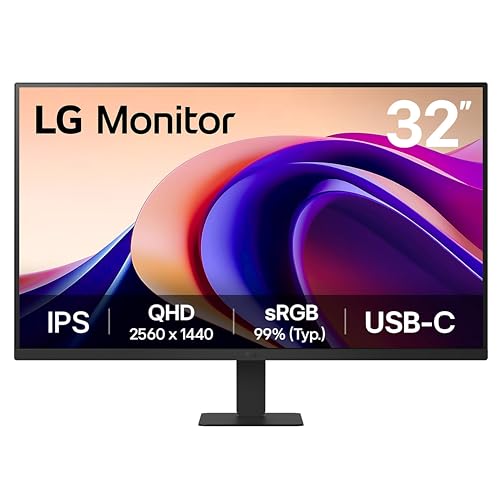
LG 32U631A-B
Offers 15 W USB‑C Power Delivery, letting you charge laptops while working, and it's shallow 9.25 in depth keeps the desk tidy.

BenQ GW2486TC
Ideal for budget‑conscious buyers, this entry‑level monitor comes in at $169.99—about $77 less than the mid‑range LG option.

BenQ MA270U
Stands out with a massive 24.0‑in depth, allowing space for high‑end speakers that cater to audiophiles and enthusiasts seeking premium sound.
Also considered
Score Analysis
Key score advantages vs. runner-up (BenQ GW2486TC)
Price Range
LG 32U631A-B
$246.99
BenQ GW2486TC
$169.99
BenQ MA270U
$499.99

Samsung Business 49-inch
$799.99

Lenovo L27m-30
$224.99

ViewSonic VA1655 15.6-inch
$99.99

Philips 346E2CUAE
$279.99

Asus PA279CRV USB-C
$349.00

Dell S2722DC
$258.00

Innocn 4K USB-C Monitor
$244.99
Spec Comparison
TL;DR: The LG 32U631A-B delivers a 31.5‑inch QHD IPS panel with 100 Hz refresh, 99 % sRGB coverage and 15 W USB‑C power, making it a solid mid‑range choice for office work and casual gaming.
The monitor’s 31.5‑in screen shows a native 2560×1440 resolution on an IPS panel, offering 178° viewing angles and a 0.2727 mm pixel pitch. With a typical brightness of 250 cd/m² and HDR10 support, it aims for accurate colors, thanks to a 99 % sRGB gamut. Dynamic Action Sync pairs the 100 Hz refresh rate and 5 ms response time to keep input lag low for light gaming.
Compared with the nine other monitors in this roundup, the LG delivers a modest 15 W USB‑C power delivery compared with the 65 W that Innocn and Dell models provide. Its typical brightness of 250 cd/m² matches the Lenovo and BenQ GW2486TC units but falls short of the 350 cd/m² of Innocn and Dell, the 300 cd/m² of Philips, and the 350 cd/m² of Asus. The 100 Hz refresh outpaces the 60 Hz of Innocn, Dell, Asus, ViewSonic and the 75 Hz of Lenovo, aligning only with BenQ GW2486TC. At 14.33 lb, the LG is heavier than Dell’s 11.9‑lb unit but lighter than the Asus model at 18.25 lb. Its 31.5‑in size sits between the common 27‑in peers and the larger 34‑in Philips display.
Reviewers frequently praise the monitor’s color accuracy, noting that the 99 % sRGB coverage makes photo and graphic work feel reliable. Users also like the convenience of a single USB‑C cable that carries video and up to 15 W of power, reducing desk clutter. However, the tilt‑only stand receives frequent complaints, as it limits height and swivel adjustments for optimal ergonomics. The 250 cd/m² brightness ceiling can feel dim in bright office lighting, and several owners echo this point.
Pros
Cons
Best for: Office professionals, content creators, and casual gamers who want a well‑reviewed, large QHD display with USB‑C convenience.
Avoid if: You need high brightness for bright rooms, strong USB‑C charging power, or extensive ergonomic adjustments for competitive gaming.
TL;DR: The BenQ GW2486TC delivers a 23.8‑inch IPS panel with 100 Hz refresh, 65 W USB‑C power delivery and extensive ergonomics at a budget‑friendly price.
What really stands out is the 100 Hz refresh rate paired with a 5 ms response time, which keeps motion smooth for office work and light gaming. The monitor also packs a 65 W USB‑C port, which lets you power a laptop and transmit video with a single cable.
Compared with its peers, the GW2486TC refreshes faster than the Lenovo L27m‑30’s 75 Hz and Dell S2722DC’s 75 Hz, and it matches the LG 32U631A‑B’s 100 Hz. Its 250 cd/m² brightness is on par with the Lenovo and ViewSonic models but lower than Dell’s 350 cd/m² and Innocn’s 350 cd/m². At 13.67 lb, it’s lighter than the 17.24 lb Lenovo L27m‑30 yet heavier than the ultra‑light ViewSonic VA1655 (1.5 lb). The 65 W USB‑C delivery equals the power of the Innocn and Dell units, while far exceeding LG’s 15 W provision.
Users consistently praise the single‑cable docking setup and the monitor’s ergonomic flexibility—height adjustment of 130 mm, tilt, swivel and a full +90° pivot. Professional reviewers highlight Brightness Intelligence Gen2 and Coding Mode for eye comfort and readability. The main drawback is the 1920 × 1080 resolution on a 23.8‑inch panel, which feels less sharp than higher‑resolution alternatives, especially at close range.
Technically, the GW2486TC uses an IPS panel covering 99% of the sRGB gamut and a 1300:1 contrast ratio, delivering consistent colors and wide viewing angles (178°/178°). Eye‑care features include Low Blue Light Plus, Flicker‑Free technology and the adaptive Brightness Intelligence Gen2, all back Energy Star 8.0 and TCO 9.0 certifications.
Pros
Cons
Best for: Home‑office workers, developers and hybrid professionals who want a dockable monitor with strong ergonomics without breaking the bank.
Avoid if: You need a high‑resolution panel for detailed design work or a monitor built for competitive gaming performance.
TL;DR: The BenQ MA270U is a 27‑inch 4K Nano Matte monitor with a 90 W USB‑C charge, P3 colour gamut and built‑in speakers, but it carries a premium $499.99 price tag.
BenQ offers a 27‑inch 3840×2160 IPS LED Nano Matte panel delivering 4K clarity and a wide P3 colour gamut, and lists brightness at 500 nits. A single USB‑C cable can provide up to 90 W to a laptop and 15 W to an iPad or iPhone, handling video, data and power all at once.
The MA270U’s depth of 24.0 inches matches the Asus PA279CRV’s 24.1‑inch depth, yet BenQ’s height of 8.6 inches is considerably slimmer than Asus’s 16.07 inches. Its 500‑nit brightness outshines Asus’s typical 350 cd/m², Dell’s 350 cd/m² and Philips’s 300 cd/m². The 90 W USB‑C power delivery also exceeds Dell’s 65 W, LG’s 15 W and the Innocn monitor’s 65 W, giving it a clear edge for charging MacBook Pro or Air models.
Users consistently praise the plug‑and‑play experience with MacBooks, noting the accurate colours and the convenience of a single‑cable setup. Professional reviewers highlight the seamless integration with macOS, especially the iDevice Color Sync that aligns brightness and volume across Apple devices. The main complaints centre on HDMI ports that don’t auto‑sync brightness or colour on older Intel‑based Macs, and the extra step of installing Display Pilot 2 while disabling True Tone.
Pros
Cons
Best for: MacBook Pro and Air users (M1‑M4) who want a colour‑accurate 4K external display with single‑cable USB‑C docking.
Avoid if: You're shopping on a tight budget — it's priced at $499.99.
TL;DR: Samsung’s 49‑inch Business monitor packs a 5120×1440 VA panel, 120 Hz refresh and 90W USB‑C power delivery into a single curved screen, but its size and $1,081.99 price make it a premium‑only choice.
The standout spec is the massive 49‑inch 32:9 VA display with a Dual QHD resolution of 5120×1440 pixels. At a typical 350 cd/m² brightness and a 120 Hz refresh rate, the screen delivers sharp, fluid visuals for multitasking‑heavy workflows. Professional reviewers describe the 1000R/1800R curvature as “very effective,” helping reduce eye strain during long sessions.
At $1,081.99, this monitor is pricier than the BenQ MA270U and the Asus PA279CRV USB‑C, both of which sit well below the $500 mark. It also weighs 32.19 pounds, noticeably heavier than the 18.25‑pound Asus model. However, Samsung compensates with a richer feature set: built‑in speakers, a KVM switch, DeX support, Eye Saver mode and Windows 11 certification—features that are listed in the product data but smaller competitors don’t include.
Consumer sentiment praises the ability to replace two conventional monitors, noting the convenience of a single USB‑C cable that supplies up to 90 W of power. Users also appreciate the reduced neck movement thanks to the curve. On the flip side, the extreme width can overwhelm typical desks, and some reviewers flag potential burn‑in on static UI elements, a known concern with VA panels. Reviewers see the DisplayHDR 400 implementation as modest compared with higher‑end HDR standards.
Pros
Cons
Best for: Those prioritizing quality and willing to pay for premium performance
Avoid if: You're shopping on a tight budget — it's priced at $1081.99
TL;DR: The Lenovo L27m-30 delivers a 27‑inch Full HD IPS panel with 75 Hz refresh, 75 W USB‑C charging and a fully adjustable stand, all at a modest $224.99 price.
The standout spec is its 75 W USB‑C Power Delivery, letting you power a laptop while working on a single cable. Combined with a 75 Hz refresh rate and 4 ms extreme response time, the monitor handles casual gaming and video calls without noticeable lag. Its ergonomic stand offers tilt, swivel, pivot and up to 150 mm of height adjustment, letting you find a comfortable viewing angle for long work sessions.
Compared with peers, the L27m-30 supplies more USB‑C power than the Dell S2722DC and the Innocn 4K USB‑C Monitor, both limited to 65 W. However, its 250 cd/m² brightness falls below Dell’s 350 cd/m² and the Innocn’s up‑to‑400 nits, making it less suited for bright rooms. At 17.24 pounds, it weighs more than Dell’s 11.91‑pound model and the lighter BenQ GW2486TC, which may matter on desk space. Its 2.5 mm bezel gives a near‑edgeless look, similar to other slim designs in the set.
Reviewers consistently praise the stand’s flexibility and the low‑blue‑light, TÜV Rheinland Eye Comfort certification that eases eye strain during marathon sessions. Professional reviewers note the video output appears smooth and stutter‑free, but the Full HD resolution on a 27‑inch panel results in a low pixel density (≈82 PPI), so text and images can look softer than on higher‑resolution rivals.
Pros
Cons
Best for: Entry-level buyers or those on a tight budget
Avoid if: You need advanced features or professional‑grade performance
TL;DR: The ViewSonic VA1655 is a 15.6‑inch portable IPS monitor that packs a 60 W USB‑C power‑delivery hub into a 1.5‑lb, 18 mm thin frame, making it a solid budget‑friendly companion for on‑the‑go productivity.
The standout spec is the 60 W USB‑C Power Delivery, which lets you charge a laptop while driving a 1080p display—all from a single cable. At just 1.5 pounds (680 g) and 18 mm thick, the VA1655 is one of the lightest and thinnest screens in this ten‑product roundup, easily fitting into a backpack or briefcase.
Compared with the larger BenQ GW2486TC and Lenovo L27m‑30, the ViewSonic is significantly lighter and far more portable, though it lacks the 100 Hz refresh of the BenQ and the 75 Hz of the Lenovo. Its 60 W PD sits just below the 65 W offered by Dell S2722DC and Innocn 4K USB‑C Monitor, and far above the 15 W found in the LG 32U631A‑B, giving it a strong middle ground for charging capability.
Users consistently praise the monitor’s easy plug‑and‑play setup, the matte anti‑glare coating, and the included protective sleeve that makes travel hassle‑free. Professional reviewers note the clear text and decent visuals for everyday tasks, but they also point out that brightness drops noticeably off‑center and the color gamut is basic—limitations that matter in bright cafés or for creative work.
Technically, the VA1655 delivers a Full HD 1920 × 1080 panel with 250 cd/m² brightness, a 7 ms response time, and a 170° viewing angle both horizontally and vertically. The dynamic contrast ratio of 50,000,000:1 and a static 800:1 contrast help maintain depth in dark scenes, while the blue‑light filter and flicker‑free technology reduce eye strain during long sessions. Power consumption stays modest at a typical 7.0 W, with eco modes at 5.1 W (conserve) and 6.0 W (optimized), and the LED backlight's rated for 15,000 hours of use.
Pros
Cons
Best for: Budget‑conscious buyers seeking a reliable entry‑level option
Avoid if: You need high‑color‑accuracy for photo or video editing, or require a larger desktop‑oriented screen
TL;DR: The Philips 346E2CUAE offers a 34‑inch 1500R curved VA panel with 3440×1440 resolution, 100 Hz refresh and USB‑C power‑delivery, but its 300 cd/m² brightness and 4 ms response may limit HDR and fast‑action gaming.
This monitor’s most eye‑catching spec is the 34‑inch 1500R curvature combined with a 3440 × 1440 VA panel. At 110 PPI and a pixel pitch of 0.23175 mm, it delivers sharp, immersive visuals, while the 121 % sRGB and 99.5 % NTSC colour gamuts give plenty of colour fidelity for design work.
Compared with the other nine contenders, its 300 cd/m² brightness sits below Dell’s 350 cd/m² and Innocn’s 350 cd/m², yet it’s brighter than LG’s 250 cd/m², Lenovo’s 250 cd/m² and BenQ’s 250 cd/m² panels. The 100 Hz refresh matches LG and BenQ’s 100 Hz models and exceeds Dell’s 75 Hz, Lenovo’s 75 Hz, Asus’s 60 Hz, Innocn’s 60 Hz and ViewSonic’s 60 Hz. Weight‑wise, the Philips without stand is 7.83 kg (≈17.3 lb), lighter than Asus’s 18.25 lb but heavier than Dell’s 11.91 lb. The monitor includes USB‑C power delivery, though the exact wattage isn’t listed; Dell provides 65 W and LG only 15 W, so the Philips likely sits between those figures.
Users repeatedly praise the ultra‑wide real‑estate for multitasking and the convenience of a single USB‑C cable that also powers the monitor. Integrated speakers are a welcome bonus for a desk‑bound setup. On the downside, reviewers note the stand feels hefty during assembly, and the 300 cd/m² peak brightness curtails HDR impact in bright rooms. The 4 ms GtG response can introduce slight ghosting in fast‑moving scenes, and professional reviewers echo this point.
Technically, the panel offers a 3000:1 contrast ratio, AMD FreeSync support and a 1 ms MPRT for smoother motion. Power draw sits at 31.81‑41.6 W when on, with standby at 0.5 W and off at 0.3 W, earning an Energy Efficiency Class F rating. The monitor operates from 0‑40 °C and can handle altitudes up to 12,000 ft, it's suitable for varied work environments.
Pros
Cons
Best for: Professionals who need extensive ultra‑wide screen space and value USB‑C docking convenience.
Avoid if: You demand high‑refresh‑rate gaming above 144 Hz or HDR with higher peak brightness.
TL;DR: The Asus PA279CRV delivers a 27‑inch 4K IPS panel with factory‑calibrated ΔE < 2 color accuracy, 99% DCI‑P3 coverage and a 96 W USB‑C power‑delivery hub, ideal for creators who need precise colors and a single‑cable dock.
This monitor’s standout spec is the 96 W USB‑C Power Delivery, which can both drive a laptop and carry a DisplayPort signal over a single cable. Coupled with a factory‑calibrated ΔE < 2 and 10‑bit 1073.7 million‑color support, it offers color fidelity with ΔE < 2 right out of the box.
Compared with the other nine monitors in the roundup, the PA279CRV is heavier than the Dell S2722DC (11.91 lb) and the Philips 346E2CUAE (0.000625 lb), reflecting its larger stand and built‑in hub. Its HDR peak brightness of 400 cd/m² exceeds the Philips model’s 300 cd/m² and matches the Innocn 4K’s 400 nits claim, while its typical brightness of 350 cd/m² aligns with Dell’s 350 cd/m². The 96 W USB‑C delivery also outpaces Dell’s 65 W and Innocn’s 65 W, giving it a clear edge for laptop charging.
Professional reviewers praise the monitor’s color performance, noting the Calman‑verified ΔE < 2 and 99% DCI‑P3 coverage as ideal for designers and video editors. Users echo this sentiment, highlighting the convenience of a single‑cable dock and the matte anti‑glare surface for long editing sessions. The trade‑off is a 60 Hz refresh rate and 5 ms GTG response, which reviewers say limit its appeal for fast‑motion gaming or high‑dynamic‑range video work.
Pros
Cons
Best for: Creative professionals who need precise color reproduction and a powerful USB‑C dock.
Avoid if: You prioritize high refresh rates for gaming or need a budget‑friendly option.
“perfect for designers, video editors, and colorists due to Adobe certification and wide gamut.”
“high 4K resolution for sharp text and multitasking”
TL;DR: The Dell S2722DC delivers a crisp 27‑inch QHD IPS panel with 99% sRGB coverage and a 65 W USB‑C hub, packing ergonomic adjustability into a 11.91‑pound, mid‑range monitor.
What really sets this monitor apart is the USB‑C port that supplies up to 65 W of power while handling video, data and audio over a single cable. Combined with a 27‑in screen, a 2560 × 1440 resolution and an IPS panel, you’ll get a clear, color‑accurate workspace without a cluttered tangle of cords.
Compared with the nine other monitors in this roundup, the Dell is lighter than the Lenovo L27m-30 at 17.24pounds and the Asus PA279CRV at 18.25Pounds, but heavier than the ultra‑light ViewSonic VA1655 at 1.5pounds. Its 350 cd/m² brightness outshines the LG 32U631A‑B (200–250 cd/m²) and the Philips 346E2CUAE (300 cd/m²), while matching the Innocn 4K USB‑C’s 350 cd/m² typical brightness. Refresh‑rate wise, the 75 Hz panel sits between the 100 Hz of the LG and BenQ GW2486TC and the 60 Hz of the Innocn and Asus models. Only the Innocn 4K USB‑C matches Dell’s 65 W USB‑C power delivery; the LG lags behind at 15 W.
Professional reviewers highlight the single‑cable docking solution as a major convenience for laptop users, noting that the ergonomic stand offers height, tilt, swivel and pivot adjustments plus a VESA‑compatible 100 × 100 mm mount. Everyday owners echo this sentiment, praising the ease of a one‑cable setup and the built‑in Dual 3 W speakers. However, both groups point out that the 75 Hz refresh limit and 4 ms response time fall short for competitive gaming, and the 350 cd/m² brightness may feel modest in very bright rooms.
Beyond the USB‑C hub, the monitor covers 99% of the sRGB color gamut, delivers a 1000:1 contrast ratio and supports AMD FreeSync to smooth out frame tearing. Flicker‑Free technology and Low Blue Light mode help reduce eye strain during long work sessions, and a Kensington lock slot adds a layer of security for shared office environments.
Pros
Cons
Best for: Most users seeking a balanced, mainstream option
Avoid if: You have limited desk space or need portability
TL;DR: The Innocn 27‑inch 4K IPS monitor delivers 3840 × 2160 resolution, HDR400 brightness up to 400 nits, 100 % sRGB coverage and 65 W USB‑C power delivery, all for $244.99.
At the core of the Innocn 27C1U is a 27‑inch IPS panel that hits the full 3840 × 2160 pixel count and offers HDR400 with a peak of 400 nits, while maintaining a typical 350 cd/m² brightness. Factory calibration guarantees a ΔE < 2 and 100 % sRGB coverage, making it a solid choice for colour‑critical work. The monitor also packs a 65 W USB‑C power‑delivery port, letting a single cable handle video, data and laptop charging.
Compared with the other nine monitors in this roundup, the Innocn is lighter than the LG 32U631A‑B (which weighs 14.33 lb) and comparable to the Dell S2722DC (5400 g). Its 66.0 mm depth is slimmer than the Lenovo L27m‑30’s 214.9 mm chassis, yet deeper than the ultra‑thin ViewSonic VA1655 (18 mm). Brightness-wise it matches Dell and Asus at 350 cd/m², and outshines LG, Lenovo and BenQ models that sit at 250 cd/m². The 60 Hz refresh rate trails LG’s 100 Hz and Dell’s and Lenovo’s 75 Hz panels, but matches Asus’s and ViewSonic’s 60 Hz offerings. USB‑C power delivery at 65 W equals Dell’s capability and far exceeds LG’s 15 W.
Reviewers consistently praise the single‑cable USB‑C setup for decluttering desks, and the bright HDR400 panel for vivid editing and office work. However, the fixed 60 Hz refresh rate draws criticism from gamers who want smoother motion, and the lack of built‑in speakers means you’ll need external audio for movies or video calls. Professional reviewers also note the monitor’s thin bezel and solid colour accuracy as strong points for creative tasks.
Pros
Cons
Best for: Entry-level buyers or those on a tight budget
Avoid if: You need powerful performance or professional‑grade features
“The 400 nits brightness is a lot brighter than my previous monitor.”
Breakdown
LG 32U631A-B
Pros
BenQ GW2486TC
Pros
BenQ MA270U
Pros
Cons
Samsung Business 49-inch
Pros
Cons
Based on scoring data and product specs
Personalized picks
Best Overall Pick
LG 32U631A-B
Best Mid-Range PickBest for: Most users looking for a well-reviewed, reliable mainstream option
BenQ GW2486TC
Best for: Budget-conscious buyers seeking a reliable entry-level option
$169.99-$77.00 vs winner
Skip Innocn 4K USB-C Monitor if…
You need powerful performance or professional-grade features
The LG 32U631A‑B takes the top spot thanks to its 31.5‑inch QHD panel (2560 × 1440) and HDR10 support, delivering sharp visuals and vibrant colors with 99% sRGB coverage. Its USB‑C port supplies 15 W of power, letting you run a laptop while keeping the desk tidy, and the monitor earned a solid 4.5‑star rating from 3,009 reviewers and costs $246.99.
The BenQ GW2486TC lands as the runner‑up, especially if you need a compact office screen that can charge a laptop fast. Its USB‑C delivers 65 W of power, enough to keep most ultrabooks running, and the 23.8‑inch IPS display offers a full HD (1920 × 1080) image at a smooth 100 Hz refresh rate. With a 4.6‑star rating from 20,098 reviews and a price of $169.99, it’s a strong choice for productivity‑focused setups.
For tighter budgets, the ViewSonic VA1655 15.6‑inch model stands out at $99.99, providing a portable option that still includes USB‑C docking. If you’re after a premium experience, the Samsung Business 49‑inch monitor commands attention at $1081.99, delivering a large‑format workspace for demanding visual tasks.
Choosing the LG 32U631A‑B gives you the best blend of size, performance, and USB‑C convenience, and you’ll enjoy a streamlined desktop right away.
At $246.99 it offers a large 31.5‑inch 1440p IPS panel, 100 Hz refresh rate and HDR10 support while only needing a 15 W USB‑C power delivery connection, which is enough for tablets or iPhone charging. Compared with other monitors that cost more or provide similar specs, its price‑to‑feature ratio is the strongest.
No reviews yet — be the first to share your experience.
Please sign in to leave a review
