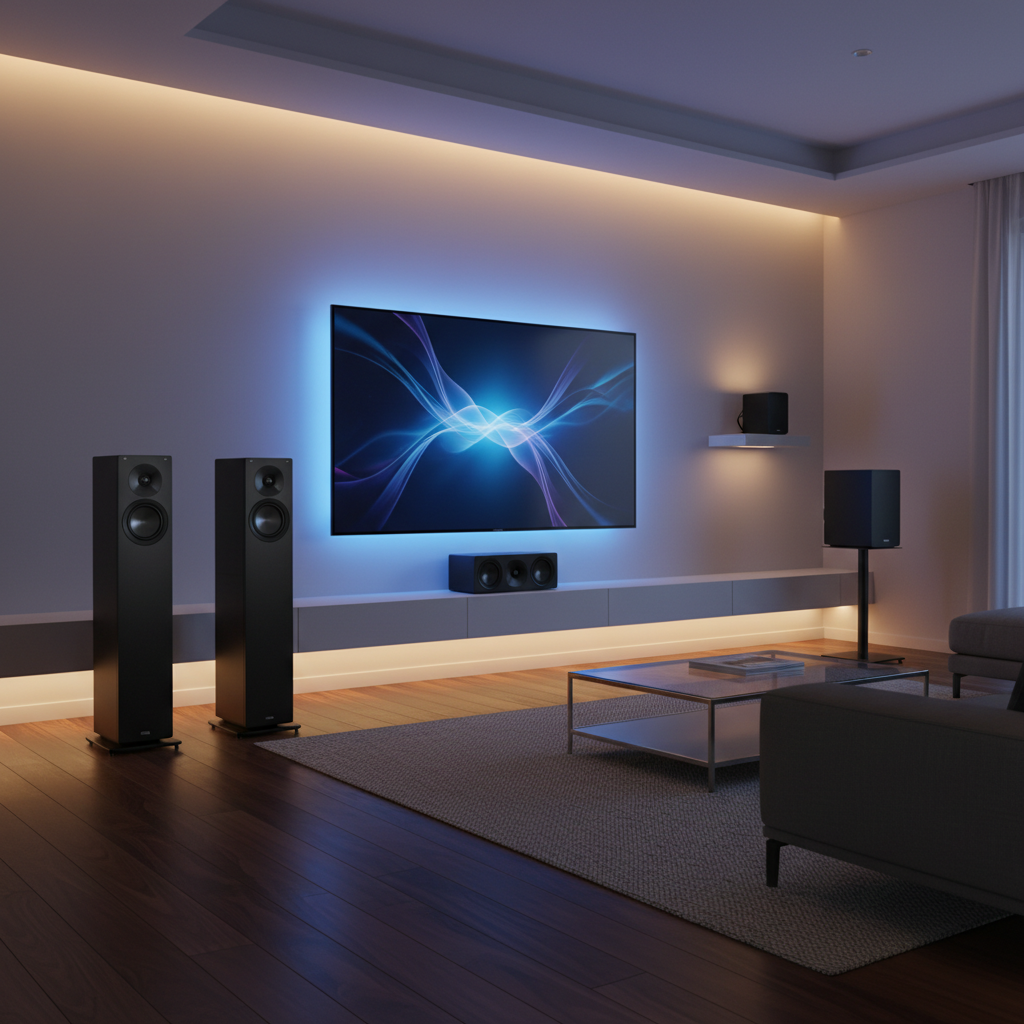
Choosing a multi‑room streaming home‑theater system can feel overwhelming, especially when you’re looking at everything from compact smart speakers to full‑blown AV receivers. In this roundup we evaluated 11 products that span three price tiers: budget options like the Sonos Era 100 at $209.90, mid‑range choices such as the Sonos Beam Gen 2, and premium powerhouses including the Polk Audio 5.1 Home Theater system, which carries a 4.7‑star rating from 11,179 reviews and lists for $861.00. Whether you live in a studio apartment or a dedicated home‑theater room, the list gives you a clear view of what’s available.
If you need a space‑saving starter, the Sonos Era 100 delivers true‑stereo sound and smart‑home integration for a modest price, making it a strong budget pick for small rooms at $209.90. For a balanced, all‑in‑one solution in a medium‑sized living area, the Sonos Beam Gen 2 offers Dolby Atmos support and voice assistants without the bulk of a full speaker set. Power users who crave immersive 5.1 surround will appreciate the Polk Audio bundle’s two T50 floorstanders, T15 bookshelves, T30 center, and PSW10 subwoofer, which carries a 4.7‑star rating and lists for $861.00.
Below we break down each tier, highlight the top performer for different use cases, and help you decide which system fits your home and budget.
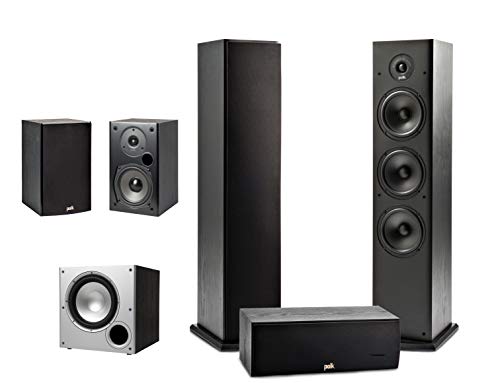
Polk Audio 5.1 Home Theater
It's 100‑watt peak power output delivers room‑filling sound, matching the strong user rating and popularity among mainstream buyers.

Sonos Sub 4
Ideal for audiophiles craving deep bass, the Sonos Sub 4’s 25 Hz low‑frequency response justifies its $38 premium over the Polk Audio mid‑range model.

Sonos Era 100
Stands out with 100 watts of amplification in a compact 177.8 mm depth, delivering solid sound at just $209.90—far cheaper than the other two picks.
Also considered
Score Analysis
Key score advantages vs. runner-up (Sonos Sub 4)
Price Range
Polk Audio 5.1 Home Theater
$1,075.00
Sonos Sub 4
$889.99
Sonos Era 100
$219.00

Sonos Sub Mini
$399.00

Sonos Era 300
$479.00

Denon AVR-X4800H
$2,799.00

Sonos Beam Gen 2 Black
$369.00

Sonos RAYG1US1BLK
$219.00

Denon AVR-X2800H
$1,299.00

Bose 892079-1100
$549.00

Onkyo TX-RZ30
$979.49
Spec Comparison
TL;DR: The Polk Audio 5.1 Home Theater delivers a full surround setup with a 50 W RMS subwoofer, 8 Ω drivers and 4.7‑star ratings, but its price and bulk may limit tight‑budget or space‑constrained rooms.
Polk’s biggest selling point is the complete 5.1 channel bundle that includes two T50 floor‑standing speakers, two T15 bookshelf speakers, a T30 center channel and the PSW10 powered subwoofer. The sub delivers 50 W RMS into 8 Ω, while the speakers range from 89 dB to 91 dB sensitivity, meaning they can fill a small‑to‑medium room (up to 300 sq ft) without demanding a high‑power receiver.
Compared with the other ten entries, this system is pricier than the Sonos Sub Mini and lighter than the Sonos Sub 4, yet it offers far more speakers than single‑sub or soundbar options like the Sonos Beam Gen 2. Its subwoofer depth of 410 mm is deeper than the Sonos Sub 4’s 158 mm, giving it a more substantial footprint while still staying under the weight of the Onkyo TX‑RZ30’s 11.5 kg chassis.
Reviewers consistently praise the crystal‑clear dialogue from the T30 center channel and the immersive surround feel for movies and games. Professional reviewers highlight the Dynamic Balance driver design for low distortion and wide dispersion. The most common complaints focus on the 50 W RMS subwoofer feeling thin in larger spaces and the T50 towers being too tall for compact setups.
Pros
Cons
Best for: Most users looking for a well‑reviewed, reliable mainstream option
Avoid if: You're shopping on a tight budget — it's priced at $861.00
TL;DR: The Sonos Sub 4 drops down to 25 Hz with dual force‑canceling drivers, weighs 26.46 lb, and plugs straight into the Sonos ecosystem for effortless bass‑heavy home theater.
Two force‑canceling drivers facing each other and two Class‑D digital amplifiers deliver a low‑frequency response of 25 Hz. This setup provides deep, distortion‑free bass that most bookshelf speakers can’t reach.
Compared with the other entries in this roundup, the Sub 4 sits at the premium end of the price spectrum, making it pricier than the Polk Audio 5.1 Home Theater and the Bose soundbar system. Its depth of 6.22 in is noticeably shallower than Polk’s listed 410 mm, while its height of 15.83 in exceeds the Bose unit’s 56 mm. The Sub 4 also offers Ethernet (10/100 Mbps) and dual‑band Wi‑Fi, features that many of the peers either lack or list fewer details for.
Users consistently praise the Sub 4 for its tight, clean bass that fills a living‑room without rattling the walls. Professional reviewers note the seamless Trueplay room‑calibration and the convenience of automatic EQ via the Sonos app. The most common complaints revolve around the 26.46‑lb chassis, which makes moving the sub a chore, and the absence of Bluetooth, limiting placement to Wi‑Fi zones.
On the technical side, the Sub 4 runs on a quad‑core 1.5 GHz processor, backed by 256 MB NAND flash and 256 MB SDRAM, ensuring the app‑driven EQ and Trueplay tuning respond quickly. It supports both vertical and horizontal placement, and the included 6‑ft power cable means you won’t need an extra outlet right away.
Pros
Cons
Best for: Those prioritizing quality and willing to pay for premium performance
Avoid if: You're on a tight budget or only need basic functionality
“Outstanding sound—flawless integration with Arc and One SLs”
“Transformed my home theater—bass is so deep and smooth, even at high volumes”
TL;DR: The Sonos Era 100 packs a 100‑watt dual‑tweeter stereo system, Wi‑Fi 6 and Bluetooth 5.0 into a 4.45‑lb, $209.90 speaker that delivers rich sound and easy Sonos integration.
The Era 100’s standout spec is its 100 watts of total amplification powering two 25.4 mm tweeters and a 130.6 mm mid‑woofer that’s 25% larger than previous models, all driven by a processor that’s 47% faster. Trueplay tuning and a far‑field microphone array round out the high‑fidelity, voice‑controlled experience.
Compared with its Sonos siblings, the Era 100 is lighter than the Beam Gen 2 (6.35 lb) and far lighter than the Era 300 (9.85 lb). It sits a touch deeper than the Era 300’s 169 mm depth, but its Wi‑Fi 6 and Bluetooth 5.0 match the Era 300’s connectivity. It’s more expensive than the compact Sonos Ray, yet it offers a richer driver array than the Ray’s single‑speaker design. The Sub Mini and Polk Audio 5.1 system both carry higher power outputs, but the Era 100’s 2.0 stereo channel configuration keeps it a simpler, room‑friendly option.
Reviewers consistently praise the dual‑tweeter layout for delivering true stereo imaging and the larger woofer for deeper bass, especially in smaller rooms. The USB‑C line‑in wins points for legacy device compatibility, while the built‑in Alexa and Sonos Voice get kudos for hands‑free control. On the downside, users miss native Google Assistant support and note that the sub‑bass can feel under‑whelming on bass‑heavy tracks. Because it doesn’t include adapters, you’ll need a separate USB‑C‑to‑3.5 mm cable for analog sources.
Pros
Cons
Best for: Budget‑conscious buyers seeking a reliable entry‑level option
Avoid if: You have limited desk space or need portability
“Best sound I’ve heard from a single compact speaker”
“Trueplay made a noticeable difference in my living room”
TL;DR: The Sonos Sub Mini adds deep 25 Hz bass with 165 W continuous power in a compact sealed cylinder, but its single‑sub limitation and premium price may steer power‑hungry listeners elsewhere.
The Sub Mini’s standout spec is its dual 6″ inward‑facing woofers and a force‑canceling sealed cabinet that delivers low‑frequency response down to 25 Hz while keeping cabinet buzz to a minimum. Two Class‑D digital amplifiers power it, supplying 165 watts of continuous output—enough to fill small‑to‑medium rooms with room‑filling bass.
Compared with the other products in this roundup, the Sub Mini is heavier than the Sonos Era 300 and the Sonos Beam Gen 2, but lighter than the Polk Audio 5.1 Home Theater system (which lists no weight). It offers Ethernet connectivity at 10/100 Mbps, whereas the Beam Gen 2 adds HDMI ARC and the Era 300 includes Bluetooth 5.0. The Sub Mini’s Wi‑Fi operates on both 2.4 GHz and 5 GHz bands, matching the Beam Gen 2’s dual‑band support but it doesn’t have the Bluetooth range that the Era 300 provides.
Users consistently praise the dramatic improvement in bass depth and the sub’s small footprint that slides under furniture. Reviewers note the hassle‑free setup via the Sonos S2 app and the ability to fine‑tune bass, treble, and loudness with Trueplay. Professional reviewers highlight the force‑canceling design as a key factor in reducing vibration. Common complaints focus on the inability to pair multiple subs in a single room and the perception that the bass may fall short in large open‑plan spaces.
Additional technical context includes a 2 m power cable, an operating temperature range from 0 °C to 40 °C, and a 10/100 Mbps Ethernet port that ensures stable wired streaming. The sealed cabinet and Class‑D amplifiers together provide low‑distortion power, while the SonosNet protocol keeps audio sync tight across the Sonos ecosystem.
Pros
Cons
Best for: Small to medium‑sized rooms such as apartments, bedrooms, and home offices; Sonos ecosystem owners who want a compact subwoofer with deep bass.
Avoid if: You want the best value‑per‑dollar in its price range.
“Outstanding sound—flawless integration with Arc and One SLs”
“Transformed my home theater—bass is so deep and smooth, even at high volumes”
TL;DR: The Sonos Era 300 delivers immersive Dolby Atmos and spatial audio with a six‑driver array, Wi‑Fi 6, and Bluetooth 5.0, but its app can feel sluggish and it lacks Google Assistant.
The Era 300’s most eye‑catching spec is its six‑driver configuration: four tweeters (one upward‑firing, two side‑firing, one forward‑firing) and two side‑firing woofers, powered by six Class‑D amplifiers. It supports Dolby Atmos Music and spatial audio, and it pairs over Bluetooth 5.0 with a 10‑meter range. On the network side, it runs Wi‑Fi 6 (2.4 GHz and 5 GHz) and offers AirPlay 2, giving you a modern, high‑bandwidth connection.
Compared with the other speakers in this roundup, the Era 300 sits in the middle of the weight range – it’s heavier than the Sonos Beam Gen 2 (about 6.35 lb) and the Sonos Ray (about 4.30 lb) but lighter than the Sonos Sub Mini (about 13.99 lb). It also includes Bluetooth 5.0, which the Beam Gen 2 does not support for audio input, and its Wi‑Fi 6 is a step up from the Beam’s Wi‑Fi 5. While the Beam offers a broader HDMI‑eARC feature set, the Era 300’s dedicated spatial‑audio support gives it a unique edge for music‑first rooms.
Users consistently rave about the room‑filling, concert‑like sound, with the Sonos app’s Trueplay calibration fine‑tuning the output to each space. However, many note that the Sonos S2 app can feel slow, sometimes crashing, and users have reported Bluetooth pairing failures or occasional Wi‑Fi dropouts. Professional reviewers also point out the absence of Google Assistant or Chromecast support, which can be a deal‑breaker for Android‑centric households.
Beyond the hardware, the Era 300 earns a 4.3 Bluetooth connectivity rating and a perfect 5.0 sound‑quality rating from reviewers. Voice control works through Amazon Alexa and Sonos Voice Control, and the speaker integrates easily with other Sonos devices for multi‑room or surround‑sound setups, expanding to a 7.1.4 Dolby Atmos system when paired with an Arc or Beam.
Pros
Cons
Best for: Audiophiles and Sonos ecosystem owners who want high‑fidelity, immersive Dolby Atmos and spatial audio.
Avoid if: You rely on Google Assistant, need a budget‑friendly speaker, or prefer a plug‑and‑play unit without a dedicated app.
“Best sound I’ve heard from a single compact speaker”
“Trueplay made a noticeable difference in my living room”
TL;DR: The Denon AVR‑X4800H packs 235 W per channel, 9‑channel amplification and full 8K/60 Hz + 4K/120 Hz HDMI 2.1 support, but its premium $2519.00 price and bulky chassis keep it out of budget‑friendly builds.
At the heart of the X4800H is a 9‑channel amp that can deliver 235 W per channel into 6 Ω (1‑ch driven) with a measured THD of just 0.05 %. Coupled with a 32‑bit DAC and support for Dolby Atmos, DTS:X, Auro‑3D and IMAX Enhanced, it handles both high‑resolution music and immersive cinema tracks with ease. The receiver also passes 4K/120 Hz and 8K/60 Hz video on all seven HDMI inputs and two of three outputs, making it future‑proof for the latest consoles and projectors.
Compared with other contenders in this roundup, the X4800H is pricier than the Onkyo TX‑RZ30 and noticeably heavier than the Sonos Beam Gen 2 and the Onkyo unit (which weighs 11.5 kg). Its per‑channel RMS power of 235 W surpasses the Onkyo’s 170 W rating, and the 32‑bit DAC outclasses the Onkyo’s 24‑bit/192 kHz DAC. While the Denon AVR‑X2800H lists a much lighter weight, the X4800H offers four independent subwoofer outputs and 11.4‑channel preamp processing that the smaller models lack.
Reviewers consistently praise the clean, dynamic sound and the convenience of the built‑in HEOS multi‑room system, Audyssey MultEQ XT32 calibration and optional Dirac Live upgrade. However, users note the dated HEOS app interface, the absence of a front‑panel HDMI input and the unit’s substantial size, which can be a challenge in minimalist or space‑constrained rooms.
Pros
Cons
Best for: Buyers willing to invest in a proven, high‑quality option
Avoid if: You're shopping on a tight budget — it's priced at $2519.00
TL;DR: The Sonos Beam Gen 2 Black delivers Dolby Atmos sound, five Class‑D amplifiers and smart‑home voice control in a compact 25.6‑in‑wide bar for $479.99.
What really sets this soundbar apart is its five Class‑D digital amplifiers driving a quartet of full‑range mid‑woofers, a tweeter and three passive radiators. Coupled with Dolby Atmos support via Dolby Digital Plus and Dolby TrueHD over eARC, the Beam can fill a small‑to‑medium room with immersive, three‑dimensional audio. The bar measures 25.6 in × 2.7 in × 3.9 in and weighs 6.35 lbs, making it easy to place beneath a TV without sacrificing power.
Among the eleven products in this roundup, the Beam sits at a mid‑range price point—pricier than the Sonos Ray but less costly than the Bose 892079‑1100. It’s lighter than the Sonos Sub Mini (13.999 lbs) and the Sonos Era 300 (9.854 lbs), yet a bit heavier than the Ray (4.299 lbs) and the Era 100 (4.453 lbs). Feature‑wise, it offers more amplification channels than the Ray’s single driver and includes an Ethernet port that the Era 300 lists as a Wi‑Fi‑only device, giving you a wired networking option that many competitors lack.
Customers repeatedly praise the Beam’s clear dialogue and the Speech Enhancement mode that lifts voices in movies and TV shows. Reviewers also note the convenience of built‑in Alexa, Google Assistant and AirPlay 2, all controlled via capacitive touch. On the downside, users miss a Bluetooth audio input for direct phone streaming, and Trueplay calibration only works on iOS devices, leaving Android owners without that tuning option. Some have reported occasional eARC handshake quirks during initial setup, a minor hiccup compared with the otherwise smooth experience.
From a technical standpoint, the Beam connects via a single HDMI input with ARC/eARC, includes an optical adapter for legacy setups, and runs on Wi‑Fi 5 dual‑band (2.4 GHz and 5 GHz). The far‑field microphone array with beamforming and echo cancellation handles voice commands reliably, while status LEDs keep you informed of connection and mute status. Sonos backs the product with a one‑year warranty and iOS‑only Trueplay tuning for room‑specific sound optimization.
Pros
Cons
Best for: Most users looking for a well‑reviewed, reliable mainstream option
Avoid if: You have limited desk space or need portability
“Love the Sonos Beam... Great quality sound in a small package... I have them on both my big screen TVs.”
“Expensive but worth it”
TL;DR: The Sonos Ray delivers clear 2.0 stereo sound with 4 GB storage, 1 GB RAM, and a 1‑year warranty for $219, making it a compact, budget‑friendly entry‑level soundbar for small rooms.
Four Class‑D digital amplifiers power the Ray, driving two full‑range mid‑woofers and two tweeters to deliver balanced stereo performance in a sleek matte chassis that measures 95 mm deep, 71 mm high and 559 mm wide. It includes an optical digital input with a 1.5 m cable and a 10/100 Mbps Ethernet port, while Wi‑Fi is limited to 802.11b/g/n on the 2.4 GHz band. Internally it runs a quad‑core 1.4 GHz A‑53 CPU, 1 GB SDRAM and 4 GB NV storage.
At roughly 4.30 lb, the Ray is slightly lighter than the Sonos Era 100 and far lighter than the Sonos Era 300, while its price point sits well below those higher‑end models. Unlike the Sonos Beam Gen 2, it lacks HDMI‑ARC and Dolby Atmos support, positioning it as a more affordable, streamlined option for users who don’t need those premium connections.
Professional reviewers praise the Ray’s compact size and clear dialogue, noting that Trueplay tuning tailors the sound to your room. Everyday owners echo this, appreciating the noticeable upgrade over built‑in TV speakers and the smooth integration with the Sonos S2 app and AirPlay 2. The main trade‑offs highlighted by users are the limited bass—often addressed with an optional Sub—and the absence of a built‑in voice assistant or Bluetooth.
Pros
Cons
Best for: Budget-conscious buyers seeking a reliable entry-level option
Avoid if: You have limited desk space or need portability
“Much better than my TV speakers”
“Easy setup with the Sonos app”
TL;DR: The Denon AVR‑X2800H delivers 7.2‑channel, 185 W single‑channel power, 32‑bit/192 kHz audio and full HDMI 2.1 8K/4K120 support, making it a solid high‑end choice for immersive home‑theater setups.
The AVR‑X2800H packs a 7.2‑channel layout powered by high‑current discrete amplifiers that can push 185 W in a single‑channel configuration and 125 W per channel into 6 Ω speakers. Its DAC runs at 32‑bit/192 kHz on every channel, and the unit handles high‑resolution PCM and DSD up to 24‑bit/192 kHz and 5.6 MHz respectively. These specs give you plenty of headroom for demanding Dolby Atmos or DTS:X mixes.
Compared with the Onkyo TX‑RZ30, the Denon is noticeably shallower at 330 mm depth versus the Onkyo’s 533.4 mm, which helps it fit into tighter cabinetry. Its Bluetooth 4.0 is older than the Onkyo’s Bluetooth 5.1, and it lacks front‑panel HDMI 2.1 inputs that some rivals provide. At just 11 g, it is dramatically lighter than the Sonos Beam Gen 2, which weighs over 6 lb, and its footprint (434 mm × 168 mm) is smaller than many competing AV receivers.
Users consistently praise the AVR‑X2800H for its immersive soundstage, reliable HEOS multi‑room streaming, and the inclusion of a phono stage for vinyl enthusiasts. Professional reviewers note the refined high‑frequency response and strong gaming performance thanks to VRR, ALLM and Quick Frame Transport. However, several owners have reported occasional firmware hiccups and Wi‑Fi drops, which can require a manual update.
Beyond the audio engine, the receiver supports 8K/60 Hz and 4K/120 Hz HDMI 2.1 pass‑through, HDR10, Dolby Vision and other dynamic HDR formats. Audyssey MultEQ XT with Dynamic EQ and Dynamic Volume helps tailor the sound to your room, while HEOS, Amazon Alexa, Google Assistant and Siri (via AirPlay 2) give you voice‑controlled streaming across multiple zones.
Pros
Cons
Best for: Buyers willing to invest in a proven, high‑quality option
Avoid if: You're on a tight budget or only need basic functionality
TL;DR: The Bose Smart Soundbar packs five drivers—including two up‑firing units—into a sleek 6.91‑lb chassis, delivering Dolby Atmos and AI‑enhanced dialogue for compact rooms at $549.
What really sets this soundbar apart is the five built‑in speakers, two of which fire upward, and the AI Dialogue Mode that lifts vocal clarity. With a 3.0.2 internal channel layout that upmixes to 5.1.4, Bose’s TrueSpace technology claims to turn any source into an immersive 3‑D experience.
Compared with other contenders, the Bose sits a touch heavier than the Sonos Beam Gen 2 (6.35 lb) but far lighter than the Sonos Sub Mini (14 lb). It also offers a longer Bluetooth range of 9 meters, while the Sonos Era 300 reaches 10 meters. Unlike the Beam, Bose doesn't list an Ethernet port, and it lacks DTS/DTS:X support that some peers include.
Users consistently praise the crystal‑clear dialogue that the AI mode delivers, noting that movie nights feel more conversational. The compact 694 mm width and 56 mm height let it slip under most TVs without a bulky setup. However, several reviewers mention that the bass feels thin without an external sub, and several reviewers report occasional hiccups in the Bose Music app.
The soundbar supports Dolby Atmos, Dolby Digital, Dolby Digital Plus and Dolby TrueHD, and streams via AirPlay 2, Bluetooth, Chromecast built‑in and Spotify Connect. Built‑in Alexa and Voice4Video let you mute the TV, change channels or adjust volume without lifting a remote, while the 3.5 mm subwoofer output gives you the option to add a separate bass module later.
Pros
Cons
Best for: Apartment dwellers or small‑room users who want immersive Dolby Atmos and crystal‑clear dialogue without a massive setup.
Avoid if: Deep‑bass performance or DTS/DTS:X support are essential for your listening habits.
“Dialogue is crystal clear, even in action scenes.”
“Easy to set up with the Bose app.”
TL;DR: The Onkyo TX‑RZ30 delivers 9.2‑channel Class AB power with 100 W per channel, Dirac Live Full‑Bandwidth correction and 8K‑ready HDMI, all for $960.
The standout spec is the 9.2‑channel Class AB discrete amplification delivering a rated 100 W per channel into 8 Ω, while a single channel can reach 170 W into 4 Ω. Coupled with a 0.08 % THD at rated power and an ultra‑wide 5 Hz – 100 kHz frequency response, the receiver promises low‑noise, detailed playback across formats like Dolby Atmos, DTS:X, and DSD.
Compared with the other ten entries, the TX‑RZ30 sits at a premium price point but offers more channels than the Sonos Beam Gen 2 and Bose 892079‑1100, which are limited to stereo or 5.1 configurations. It also includes a full‑bandwidth Dirac Live system that many competitors, such as the Sonos Sub 4 and Sonos Sub Mini, simply don’t provide. In terms of size, its 533.4 mm depth and 457.2 mm width make it deeper than the Polk Audio 5.1 Home Theater’s 410 mm depth, yet it remains comparable to other AV receivers in the list.
Users consistently praise the dramatic sound lift after running Dirac calibration, describing the audio as “crystal clear” and cinema‑like. Professional reviewers note the clean dialogue and low‑distortion performance, while also describing the on‑screen menu as outdated and the remote as cluttered. The built‑in streaming suite (AirPlay 2, Spotify Connect, TIDAL, Amazon Music HD) and dual‑band Wi‑Fi keep the system future‑proof, even if the mobile app feels limited to some.
Pros
Cons
Best for: Buyers willing to invest in a proven, high‑quality option
Avoid if: You're on a tight budget or only need basic functionality
“Night and day improvement in sound quality after Dirac calibration – even my spouse, who isn’t an audiophile, could clearly hear the difference.”
“The remote feels outdated and crowded, making navigation a pain.”
Breakdown
Polk Audio 5.1 Home Theater
Pros
Cons
Sonos Sub 4
Pros
Sonos Era 100
Pros
Sonos Sub Mini
Pros
Cons
Based on scoring data and product specs
Personalized picks
Best Overall Pick
Polk Audio 5.1 Home Theater
Best Mid-Range PickBest for: Most users looking for a well-reviewed, reliable mainstream option
Sonos Sub 4
Best for: Those prioritizing quality and willing to pay for premium performance
$889.99-$185.01 vs winner
Skip Onkyo TX-RZ30 if…
You're on a tight budget or only need basic functionality
Polk Audio’s 5.1 Home Theater system takes the top spot with a solid 4.7 / 5 rating from 11,179 reviewers, a full 5.1‑channel layout, and a 100‑watt peak power output that fills small‑to‑medium rooms (up to about 300 sq ft) with clear, balanced sound.
The Sonos Sub 4 lands as the runner‑up, ideal for anyone who wants a sleek, wireless subwoofer that blends into a Sonos multi‑room setup; it delivers deep bass down to 25 Hz, two Class‑D digital amplifiers power it, and it weighs a manageable 26.46 lb.
If you’re on a tighter budget, the Sonos Era 100 at $209.90 offers a compact wireless speaker that still integrates with the Sonos ecosystem. For those ready to splurge, the Denon AVR‑X4800H at $2,519.00 provides a premium AVR platform for high‑end home‑theater installations.
Pick the Polk Audio 5.1 Home Theater today and enjoy a well‑rounded, room‑filling experience without compromise.
Pick the Sonos Sub 4 if you want automatic room‑EQ, dual Class‑D digital amplifiers, and seamless integration with the Sonos multi‑room app, even though it costs about $38 more than the Polk bundle. Its force‑canceling drivers and Trueplay tuning give deeper, more refined bass that can be fine‑tuned from your phone.
Please sign in to leave a review
No reviews yet. Be the first to review!
