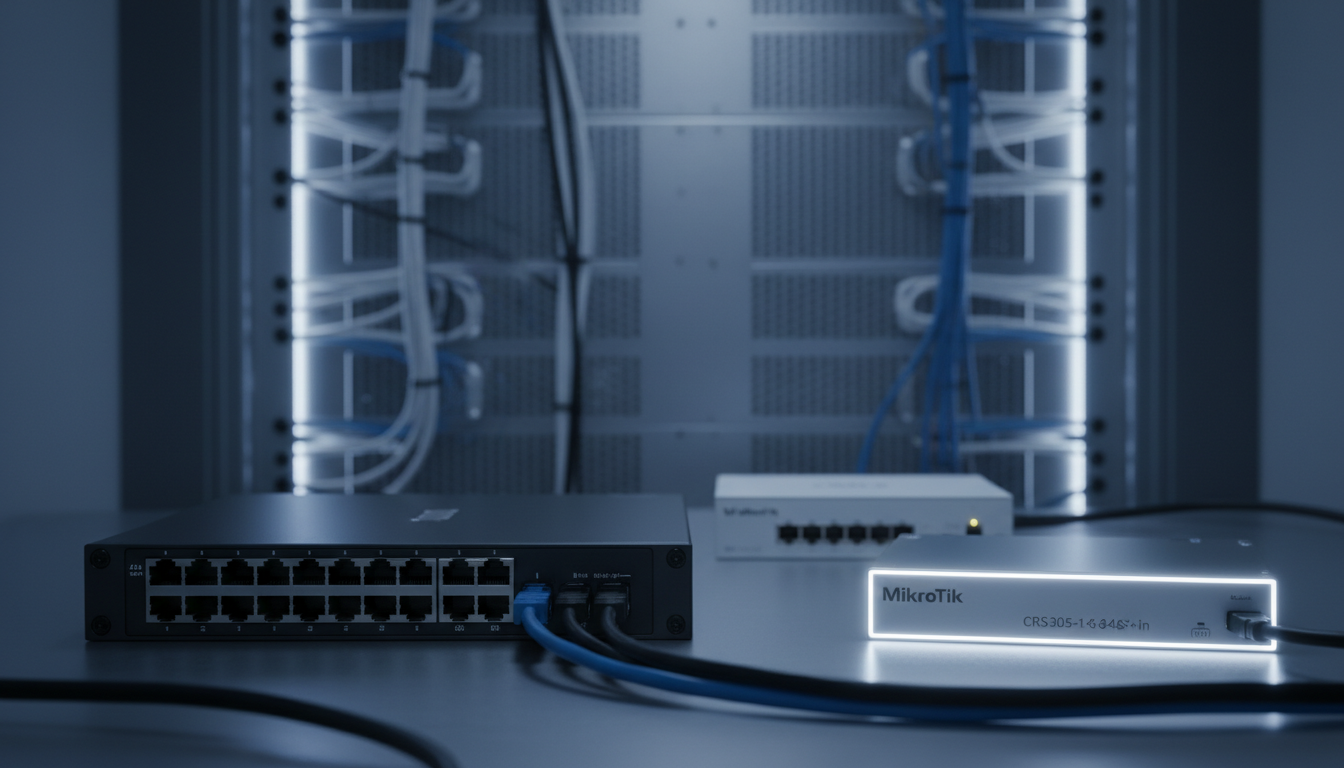
Power over Ethernet hubs let you power cameras, access points and phones without hunting for extra adapters, and the market now spans everything from $12.99 desktop units to a $699.00 rack‑mounted 24‑port monster. The review covered 11 models, examining ratings, port counts and key performance numbers like forwarding rates. The Ubiquiti USW‑PRO‑24‑POE tops the list with a 4.7/5 rating from 171 reviewers and a 65 Mpps forwarding rate, while the Netgear GS308EP impresses budget shoppers with a 4.7/5 rating from over 2,000 users at just $59.99.
The roundup is organized into three price tiers. The budget tier covers the Steamemo Smart Managed Switch, Manhattan Ethernet Switch, TP‑Link TL‑SF1005P and Netgear GS308EP, all priced under $100 and aimed at simple home or small‑office setups. Mid‑range picks include the D‑Link DGS‑1008P Black and Linksys LGS310MPC, offering higher PoE budgets and 4.8/5 or 4.7/5 ratings. Premium choices—Ubiquiti USW‑LITE‑8‑POE, MikroTik CRS305‑1G‑4S+in, Ubiquiti USW‑Lite‑16‑PoE and the USW‑PRO‑24‑POE—bring advanced features, higher forwarding rates and full management tools, with weights ranging up to 8.38 lb.
The next section breaks down how each tier performs in real‑world scenarios, so you'll match the right hub to your network needs.

Ubiquiti USW-PRO-24-POE
Its 442 mm depth provides ample room for PoE management and advanced features.

MikroTik CRS305-1G-4S+in
Ideal for audiophiles and enthusiasts who want premium features at about $150, roughly $549 less than the top pick.

Ubiquiti USW-LITE-8-POE
With a compact 31.7 mm height and 99.6 mm length, you can fit a PoE hub into tight spaces—something larger models can't match.
Also considered
Score Analysis
Key score advantages vs. runner-up (MikroTik CRS305-1G-4S+in)
Price Range
Ubiquiti USW-PRO-24-POE
$699.00
MikroTik CRS305-1G-4S+in
$150.54
Ubiquiti USW-LITE-8-POE
$109.00

Netgear GS308EP
$59.99

D-Link DGS-1008P Black
$60.07

Ubiquiti USW-Lite-16-PoE
$199.00

Steamemo Smart Managed Switch
$12.99

Manhattan Ethernet Switch
$12.99

Linksys LGS310MPC
$99.99

TP-Link TL-SF1005P
$39.99

Zyxel GS1200-8HP
$59.99
Spec Comparison
TL;DR: The Ubiquiti USW‑PRO‑24‑POE packs 24 PoE‑enabled ports, a 400 W budget and Layer 3 routing into a 1U rack unit, but its premium $699 price and 1 GbE‑only ports may limit future‑proofing.
What really sets this switch apart is the 24 PoE ports—16 PoE+ and 8 PoE++—delivering up to 64 W per high‑power port and a total PoE budget of 400 W. Combined with a 1.3‑inch touchscreen for on‑site management, it gives you a full‑featured, rack‑mountable solution in a compact 442 mm depth, 44 mm height, and 285 mm width chassis.
Against the other ten switches in the roundup, the USW‑PRO‑24‑POE pushes a 65 Mpps forwarding rate and 88 Gbps switching capacity, both higher than the 24 Mpps/32 Gbps of the USW‑Lite‑16‑PoE and the 61 Mpps/82 Gbps of the MikroTik CRS305. Its 400 W PoE budget dwarfs the D‑Link DGS‑1008P’s 60 W budget, and the unit weighs about 8.38 lb, noticeably more than the Netgear GS308EP (≈2.43 lb) and D‑Link (≈1.35 lb). The trade‑off brings a higher price point and a fan‑cooled design that some users note as noisy under full load.
Reviewers consistently praise the switch’s professional‑grade PoE power and the integrated Layer 3 routing features—DHCP server, inter‑VLAN routing, and static routes—making it a favorite among AV installers and small‑to‑medium businesses. The 1 GbE‑only RJ45 ports and fan noise represent the most common complaints, especially for those planning to upgrade to multi‑Gigabit Wi‑Fi 6E gear.
Pros
Cons
Best for: Small‑to‑medium businesses, AV installers, and prosumers that need robust PoE++ power and built‑in Layer 3 routing.
Avoid if: You’re targeting large‑scale data‑center environments or need multi‑Gigabit Ethernet ports—plus the $699.00 price may be steep for tight budgets.
TL;DR: The MikroTik CRS305‑1G‑4S+IN packs four 10 Gbps SFP+ ports, 41 Gbps non‑blocking switching and silent fanless cooling into a 141 × 115 × 28 mm chassis for fiber‑centric networks.
What really stands out is the 41 Gbps non‑blocking throughput paired with a 61 Mpps forwarding rate, driven by an 800 MHz ARM CPU and 512 MB of RAM. Four SFP+ slots let you aggregate 10 Gbps links while a single 1 Gbps Ethernet port handles management traffic, all within a 1.0‑pound, fanless case.
Compared with the other ten entries, this switch is lighter than the Ubiquiti USW‑LITE‑8‑POE (1.565 pounds) and narrower than its 163.7 mm width, while its forwarding rate of 61 Mpps dwarfs the 12 Mpps of that same Ubiquiti model and the 11.90 Mpps of the D‑Link DGS‑1008P. Its 82 Gbps switching capacity also eclipses the 16 Gbps of the Ubiquiti USW‑Lite‑8‑POE and the 20 Gbps of the Linksys LGS310MPC, positioning it as one of the most capable layer‑2 devices in the roundup.
Users consistently praise the passive cooling – the unit runs silently, which's a relief in office or studio setups. However, reviewers note that the 800 MHz CPU caps routing throughput at roughly 0.78 Gbps, making the device less suitable as a full‑blown router. The requirement for SFP+ fiber modules only (no copper 10 GbE) also surfaces as a limitation for some installers.
Beyond raw performance, the CRS305‑1G‑4S+IN offers dual‑boot flexibility with RouterOS or SwitchOS, and a PoE‑IN that accepts IEEE 802.3af/at 12‑57 V passive power, giving you redundant power options. Its power draw stays modest at 12 W without attachments and 18 W with them, while an MTBF of about 200,000 hours promises long‑term reliability.
Pros
Cons
Best for: Fiber‑optic aggregation in data‑center or campus environments where silent, space‑saving hardware and high switching capacity are priorities.
Avoid if: You need heavy routing, copper 10 GbE connections, or a larger pool of Ethernet ports for device management.
TL;DR: The Ubiquiti USW‑LITE‑8‑POE delivers fanless, silent operation with 16 Gbps switching capacity, four 30 W PoE+ ports, and a compact white design for small‑business or UniFi setups.
What really stands out is the switch’s 12 Mpps forwarding rate combined with a 16 Gbps non‑blocking throughput, giving you solid Layer 2 performance without a noisy fan. Its eight ports—four of them PoE+—each supply up to 30 W, while the total PoE budget sits at 52 W, enough to power typical UniFi access points.
Compared with the other ten entries in this roundup, the USW‑LITE‑8‑POE weighs only 295 g, undercutting the D‑Link DGS‑1008P (383 g) and the Netgear GS308EP (1100 g). Its forwarding rate of 12 Mpps lands between the D‑Link’s 11.90 Mpps and the Linksys LGS310MPC’s 14.88 Mpps, while its 16 Gbps switching capacity matches the Zyxel GS1200‑8HP and trails the MikroTik CRS305‑1G‑4S+in’s 82 Gbps. The device offers a lower PoE budget (52 W) than the D‑Link’s 60 W and Zyxel’s 68 W, a trade‑off if you plan to run many high‑power devices.
Reviewers consistently praise the fanless, silent operation—ideal for quiet offices or home labs—and the compact, wall‑mountable chassis that fits easily on a desk or behind a monitor. Critics point to the 52 W PoE budget, which can limit the number of power‑hungry devices you'll connect, and note that the switch is Layer 2 only and lacks routing capabilities.
Pros
Cons
Best for: Buyers willing to invest in a proven, high‑quality option
Avoid if: You need advanced features or professional‑grade performance
TL;DR: The Netgear GS308EP delivers eight fanless Gigabit PoE+ ports, a 62 W power budget and a web‑based management interface, making it a reliable, quiet choice for small‑office networking.
What really stands out is the 62 W PoE power budget spread across all eight PoE+ ports, plus a maximum jumbo frame size of 9216 bytes—features usually reserved for higher‑end switches. The unit measures 157.48 mm deep, 27.94 mm high and 101.6 mm wide, and weighs 2.43 lb (1100 g), giving it a sturdy, wall‑mountable footprint.
Compared with the other ten switches in this roundup, the GS308EP is heavier than the Zyxel GS1200‑8HP (1.43 lb) and the D‑Link DGS‑1008P (1.35 lb) but lighter than the Linksys LGS310MPC (3.64 lb). Its depth of 157.48 mm exceeds the shallow profiles of the Zyxel (105 mm), TP‑Link (99.8 mm) and Steamemo models, while its height of 27.94 mm sits between the taller Zyxel (240 mm) and the slimmer TP‑Link (24.9 mm). This makes the Netgear a bit bulkier than most peers, but its fanless chassis keeps noise to a minimum.
User feedback consistently praises the Easy Smart web GUI and mobile app for painless configuration, as well as the silent, fanless operation that’s ideal for noise‑sensitive offices. Reviewers also note the uninterrupted PoE feature, which keeps devices powered during firmware updates. On the downside, several users point out that the price‑to‑value ratio feels tighter than comparable budget switches, and the eight‑port limit can be a bottleneck for larger deployments.
Technically, the switch offers a 4K MAC address table, 192 KB packet buffer and VLAN support (port‑based and 802.1Q), along with advanced QoS traffic prioritization. The external power supply simplifies installation, and the multi‑language interface (English, German, Japanese) adds a touch of flexibility for international users.
Pros
Cons
Best for: Budget-conscious buyers seeking a reliable entry-level option
Avoid if: You want the best value‑per‑dollar in its price range
TL;DR: The D-Link DGS-1008P offers eight Gigabit ports with four PoE‑enabled ports delivering up to 30 W each, all in a compact fanless desktop design for small‑office setups.
This switch packs 8 Gigabit ports, 4 of which support IEEE 802.3af/at PoE at up to 30 W per port and a total PoE budget of 60 W. Its forwarding rate of 11.90 Mpps and a 4 K‑entry MAC address table keep traffic flowing smoothly, while the ultra‑quiet, fanless chassis measures just 150 mm × 98 mm × 28 mm and weighs 383 g.
Compared with the Netgear GS308EP, the D-Link is noticeably lighter (383 g vs 1100 g) and a touch shallower (150 mm vs 157.48 mm), yet both share a fanless design. Zyxel’s GS1200‑8HP offers a larger PoE budget of 68 W, but the D-Link’s per‑port 30 W matches Zyxel’s maximum per‑port power. Its 11.90 Mpps forwarding rate outpaces the TP‑Link TL‑SF1005P’s 0.744 Mpps, though it sits below the Linksys LGS310MPC’s 14.88 Mpps. In terms of size, the D-Link is wider than the Manhattan switch (98 mm vs 47 mm) but remains comparable to the TP‑Link’s 98 mm width.
Professional reviewers highlight the plug‑and‑play installation, noting that you can connect devices and power PoE‑enabled cameras or phones without any configuration. Everyday users praise the silent operation and the compact footprint that fits neatly on a desk. The most common complaints revolve around the limited 60 W total PoE budget and the fact that only half of the ports provide PoE, which can be a constraint for larger surveillance setups. Additionally, the unit relies on an external 54 V / 1.2 A power adapter, which some users find less convenient than an internal supply.
Pros
Cons
Best for: Small home offices, SOHO environments, or entry‑level surveillance systems that need up to four PoE connections.
Avoid if: You need advanced management features, more than four PoE ports, or a higher total PoE power budget for larger enterprise networks.
TL;DR: The Ubiquiti USW‑Lite‑16‑PoE delivers 16 Gbps non‑blocking throughput, eight silent PoE+ ports, and a fanless, wall‑mountable design, but its $199.00 price and modest 45 W PoE budget keep it in the premium niche.
This switch packs 16 Gigabit Ethernet ports into a 200 mm‑deep, 150 mm‑high polycarbonate case, and half of those ports supply 802.3at PoE+ at up to 30 W each. Its 24 Mpps forwarding rate and 32 Gbps switching capacity give you a solid Layer 2 backbone, while the 0.5 MB packet buffer keeps traffic flowing without noticeable lag.
Compared with the other ten entries, the USW‑Lite‑16‑PoE is heavier than the D‑Link DGS‑1008P (1.35 lb) but lighter than the Zyxel GS1200‑8HP (1.43 lb). It offers twice as many ports as the Ubiquiti USW‑LITE‑8‑POE and far more PoE‑capable ports than the MikroTik CRS305‑1G‑4S+in, which only lists four ports total. In price terms it sits above the budget‑friendly D‑Link and Netgear models, placing it in a more premium tier.
Users consistently praise the fanless design for its whisper‑quiet operation—ideal for small offices or network closets. Users describe the UniFi integration as straightforward, and the switch’s full Layer 2 feature set (VLANs, DHCP snooping, LACP, IGMP snooping) earns professional kudos for reliability. Reviewers note the 45 W total PoE budget can feel tight when powering several high‑draw devices, and they see the modest 0.5 MB buffer as a limitation versus enterprise‑grade gear. The unit also runs in temperatures from –15 °C to 40 °C and dissipates 51.2 BTU/h, meeting the needs of most indoor deployments.
Pros
Cons
Best for: Small to medium‑sized businesses or remote offices that need a quiet, fully managed UniFi switch with solid Layer 2 performance.
Avoid if: You have a tight budget, require extensive PoE power, or need Layer 3 routing capabilities.
TL;DR: The Steamemo 5‑Port Gigabit Smart Managed Switch packs a metal case, 1 Gbps throughput and web‑based management for $12.99, making it a budget‑friendly option for small setups that can live without PoE output.
The switch’s most distinctive spec is its compact metal housing measuring 26.9 mm high, 131.8 mm long and 79.8 mm wide, which lets it sit neatly on a desk or be wall‑mounted. Inside, five 10/100/1000BASE‑T RJ45 ports deliver a full 1 Gbps data transfer rate, and the device runs on a standard 120 V AC adapter.
Compared with the other ten contenders, the Steamemo is longer than the Manhattan Ethernet Switch’s 80 mm depth and wider than its 47 mm width, yet it stays slimmer than the Netgear GS308EP’s 101.6 mm width. Its height of 26.9 mm is close to the Netgear’s 27.94 mm and the Linksys LGS310MPC’s 27 mm, placing it solidly in the middle of the size spectrum. At $12.99 it sits at the low‑end of the price range, making it cheaper than most peers that sit in the $30‑$100 bracket.
User sentiment frequently mentions the metal case’s durability and the straightforward configuration via the included web interface. Reviewers note the LED indicators per port as helpful for quick status checks, and professional reviewers praise the VLAN (up to 15 groups) and QoS traffic prioritization as valuable for keeping a small office network congestion‑free. The only PoE feature is a PoE IN port that lets the switch be powered by an upstream PoE source, which many users see as a limitation when they need to power cameras or Wi‑Fi access points directly.
Pros
Cons
Best for: Shoppers on a tight budget who want the most for their money
Avoid if: Reliability and user satisfaction are your top concerns
TL;DR: The Manhattan 5‑port Ethernet Switch packs a fanless, plug‑and‑play design into a tiny 80 mm deep, 22 mm high case, but its 10/100 Mbps ports may limit high‑bandwidth uses.
This switch offers five RJ45 ports that auto‑sense 10/100 Mbps speeds, a 768 kB buffer memory, and support for 2 kB jumbo frames. Its compact dimensions—80 mm depth, 22 mm height, and 47 mm width—make it easy to slip onto a crowded desktop, and the fanless chassis guarantees silent operation.
Compared with the other ten models in the roundup, the Manhattan unit is noticeably shallower than the TP‑Link TL‑SF1005P (99.8 mm depth) and the Netgear GS308EP (157.48 mm depth). Its height of 22 mm also undercuts the Steamemo Smart Managed Switch’s 26.9 mm profile. While many peers carry metal housings, Manhattan’s enclosure material isn’t listed, which some reviewers feel feels less rugged than the metal cases of the Zyxel GS1200‑8HP and D‑Link DGS‑1008P.
Users consistently praise the plug‑and‑play setup: you simply power the unit and connect devices, and the network comes alive without configuration. The fanless design earns extra kudos for keeping a home office or gaming room quiet. On the downside, professional reviewers note that the Fast Ethernet limitation (100 Mbps per port) can become a bottleneck for HD streaming or large file transfers, and the lack of management features makes it unsuitable for complex VLAN or QoS setups.
Technical details include Green Ethernet, which automatically disables idle ports to save power, and Auto MDI‑X for hassle‑free cable type detection. The store‑and‑forward switching architecture, combined with the 768 kB buffer, helps prevent packet loss in typical home‑office traffic. The device operates from 0 °C to 40 °C and it’s covered by a three‑year manufacturer warranty, adding peace of mind for budget‑conscious buyers.
Pros
Cons
Best for: Entry-level buyers or those on a tight budget
Avoid if: You want the best value-per-dollar in its price range
“Small, powerful and reliable... hassle‑free”
“Expands your network in an instant”
TL;DR: The Linksys LGS310MPC offers eight PoE+ ports with a 110 W budget, two Gigabit SFP uplinks, and 20 Gbps switching capacity in a compact desktop or wall‑mount chassis, earning a 4.8‑star rating.
What really stands out is the 110 W PoE+ budget spread across eight ports, letting you power IP cameras, access points or VoIP phones without extra adapters. The switch also adds two Gigabit SFP uplink ports, a forwarding rate of 14.88 Mpps and a 20 Gbps switching capacity, all housed in a 3.637627323‑pound (636 g) black enclosure that can sit on a desk or be wall‑mounted.
Compared with the other ten entries, the LGS310MPC is heavier than the Ubiquiti USW‑LITE‑8‑POE (1.565 lb) and the D‑Link DGS‑1008P (1.35 lb), yet its forwarding rate of 14.88 Mpps exceeds the 12 Mpps of Ubiquiti and the 11.90 Mpps of D‑Link. Only the MikroTik CRS305‑1G‑4S+in tops that at 61 Mpps. Its 20 Gbps switching capacity outpaces the 16 Gbps found in both Ubiquiti and Zyxel models, though it sits below MikroTik’s 82 Gbps. The 110 W PoE budget also dwarfs the 60 W budget of D‑Link, the 62 W of Netgear, and the 68 W of Zyxel, giving you more headroom for power‑hungry devices.
Professional reviewers point out the strong PoE budget as a major advantage for small‑office surveillance setups, and the TAA compliance makes the unit suitable for government installations. Users like the compact form factor and the web interface plus CLI for management. The main complaints focus on the limited eight‑port count, which can feel restrictive as a network grows, and the absence of 10 Gbps uplink options that larger enterprises might expect.
Beyond PoE, the switch supports Layer 3 static routing, 256 MB of memory, 256 active VLANs out of a 4096‑VLAN range, and features like ACLs, DHCP snooping and port mirroring, providing these capabilities for a mid‑range managed switch.
Pros
Cons
Best for: Small offices, SMBs, or government environments that need a compact PoE+ switch to power 4‑8 devices.
Avoid if: You need advanced routing protocols, more than eight ports, or 10 Gbps uplink capability.
TL;DR: The TP‑Link TL‑SF1005P's a compact 5‑port unmanaged Fast‑Ethernet switch with four PoE+ ports delivering up to 30 W each, a 67 W total budget, and fanless silent operation.
This model packs four PoE+ ports that can each supply 30 W, giving a total PoE power budget of 67 W, and it supports an Extend Mode that reaches 250 m (though speed drops to 10 Mbps). Its 768 KB buffer memory and a forwarding rate of 0.744 Mpps back the 1 Gbps switching capacity, while the fanless metal case stays quiet.
At just 0.53 lb, the TL‑SF1005P's noticeably lighter than the Netgear GS308EP, Zyxel GS1200‑8HP, and D‑Link DGS‑1008P, which weigh over a pound each. Its 67 W PoE budget also exceeds the 62 W of Netgear and the 60 W of D‑Link, and sits just shy of Zyxel’s 68 W, making it one of the higher‑budget options in this group.
Reviewers consistently praise the plug‑and‑play setup, the silent fanless design, and the sturdy metal enclosure that fits easily on a wall or desk. The most common complaints focus on the Fast‑Ethernet 10/100 Mbps limitation, which can bottleneck bandwidth‑hungry devices, and the modest five‑port count that may feel restrictive as a network grows. Professionals also note the inconvenience of an external power brick compared with internally powered switches.
Pros
Cons
Best for: Small offices, home offices, and surveillance installations that need up to four PoE+ devices.
Avoid if: You need Gigabit Ethernet, more than five ports, or an internally powered switch for larger or high‑bandwidth environments.
“reliable for small offices/surveillance”
TL;DR: The Zyxel GS1200-8HP is a fanless 8‑port Gigabit switch with four PoE+ ports (30 W each) and a 68 W total PoE budget, priced at $59.99 and backed by a limited lifetime warranty.
The standout spec is its PoE capability: four IEEE 802.3af/at ports can each supply up to 30 W, while the switch’s overall PoE budget is listed at 68 W. It also offers a 16 Gbps switching capacity and a fanless metal housing that keeps the unit silent in a small office or home‑office environment. You manage it through a web GUI, and the device carries a limited lifetime warranty for peace of mind.
Among the 11 products in the roundup, the Zyxel matches the Netgear GS308EP’s price but weighs less than Netgear’s 2.43‑pound unit and a touch more than the ultra‑light TP‑Link TL‑SF1005P (0.53 lb). Its 4.4‑star rating from 50 reviews trails the 4.7‑star scores of both Netgear and D‑Link, and the PoE budget of 68 W edges out Netgear’s 62 W and D‑Link’s 60 W total budgets. Compared with the compact Manhattan Ethernet Switch, the Zyxel is taller (240 mm vs. 22 mm) and wider (26 mm vs. 47 mm), reflecting its richer feature set.
Reviewers appreciate the silent, fanless metal case and the ability to power up to four IP cameras or Wi‑Fi access points without external adapters. However, they note that the 68 W budget means you can’t run all four ports at the full 30 W simultaneously, effectively delivering around 60 W usable power across the four ports. The switch also supports Energy Efficient Ethernet (802.3az), ACLs, VLANs, QoS, and link aggregation on up to two ports, making it a solid choice for small‑office deployments that need basic Layer 2 management.
Pros
Cons
Best for: Entry‑level buyers or those on a tight budget
Avoid if: Reliability and user satisfaction are your top concerns
Breakdown
Ubiquiti USW-PRO-24-POE
Pros
Cons
MikroTik CRS305-1G-4S+in
Pros
Ubiquiti USW-LITE-8-POE
Pros
Netgear GS308EP
Pros
Cons
Based on scoring data and product specs
Personalized picks
Best Overall Pick
Ubiquiti USW-PRO-24-POE
Best OverallBest for: Audiophiles and enthusiasts seeking premium sound quality and advanced features
MikroTik CRS305-1G-4S+in
Best for: Audiophiles and enthusiasts seeking premium sound quality and advanced features
$150.54-$548.46 vs winner
Skip Zyxel GS1200-8HP if…
Reliability and user satisfaction are your top concerns
Ubiquiti’s USW‑PRO‑24‑POE takes the top spot thanks to its strong PoE capacity and high‑speed backbone. It delivers 24 PoE ports (16 PoE+ and 8 PoE++) with a total PoE budget of 400 W, while handling a non‑blocking throughput of 44 Gbps and a forwarding rate of 65 Mpps. At 4.7 / 5 stars from 171 reviewers, it also packs a solid 1‑year warranty for peace of mind.
The MikroTik CRS305‑1G‑4S+in earns runner‑up honors for anyone who needs a compact, silent solution with flexible fiber options. Its fan‑less design fits into a 141 × 115 × 28 mm chassis, and four 10 Gbps SFP+ slots let you connect high‑speed links without clutter. With a low power draw of just 12‑18 W, it’s ideal for small offices or home labs where space and noise matter.
On a tighter budget, the Steamemo Smart Managed Switch stands out as the most affordable pick at $12.99, offering basic managed features for entry‑level setups. If you can stretch a bit further, the D‑Link DGS‑1008P Black at $60.07 provides eight PoE‑enabled ports, making it a solid mid‑range choice for growing workspaces.
Pick the Ubiquiti USW‑PRO‑24‑POE for a future‑proof, high‑performance PoE hub that covers demanding networking needs.
If you need a compact, fan‑less switch with 10 Gbps fiber ports and want to stay well under $200, the MikroTik CRS305‑1G‑4S+in at $150.54 is a strong value compared to the $699 USW‑PRO‑24‑POE. It’s ideal for small deployments where space, silent operation, and lower power draw (12‑18 W) matter more than the larger PoE budget and rack‑mount form factor of the Ubiquiti model.
No reviews yet — be the first to share your experience.
Please sign in to leave a review
