⚡ Quick Answer
Night‑vision cameras have become essential for keeping an eye on homes after dark, and this roundup pits 12 models against each other across budget, mid‑range and premium tiers. The Wyze Cam v4 catches attention with its $35.97 price, a 4.4‑star rating from 12,299 reviewers, a 115.8° field of view and a solid 20 fps frame rate. Its 99 dB siren and color night‑vision capability give it a surprisingly powerful low‑light presence for a wired indoor/outdoor unit.
On the budget side you’ll find options like the Zmodo Mini Pro at $19.99 and the Amcrest ASH21 at the same price, both offering 1080p video and IR night vision. Mid‑range picks such as the Tapo C120 ($29.99) and Tapo C500 ($33.99) deliver 2K or 1080p resolution with 360° coverage. Premium contenders—including the Tapo C520WS ($56.99) and Reolink Lumus ($59.99)—push resolution to 2K or 4MP and add features like color night vision and higher frame rates.
Below we break down each camera’s specs, performance highlights and ideal use cases so you can decide which night‑vision companion fits your space and budget.

Wyze Cam v4
Its 99 dB siren delivers loud alerts, making it a solid all‑round choice for home and office security.

Tapo C520WS
Ideal for audiophiles and tech enthusiasts craving premium sound and features; it’s about $21 pricier than the Wyze Cam v4.

Reolink E1
Offers a 4 MP sensor with an 87.5° view at $25.49, delivering budget‑friendly detail that the wider‑angle rivals lack.
Also considered
TL;DR: The Reolink E1 delivers 4 MP indoor pan‑tilt video, AI detection and two‑way audio for $25.49, making it a solid budget pick despite a limited 2.4 GHz Wi‑Fi band.
The camera’s standout spec is its 4 MP sensor (2560×1440) paired with an 87.5° field of view and a 355° pan range, letting you sweep most of a room without blind spots. Its F1.6 aperture helps gather light, and night vision is built in, so low‑light corners stay visible.
At $25.49, the E1 sits above the $19.99 Amcrest ASH21 but below the $33.99 Tapo C500, positioning it in the mid‑budget tier. It weighs 0.44 lb—heavier than the 0.22‑lb Tapo C120 yet lighter than the 0.79‑lb Tapo C500—so mounting on a wall or ceiling feels sturdy without being cumbersome. Like the Vision Well CG6S, it offers two‑way audio, but unlike many peers it relies on a corded power source instead of a battery.
Professional reviewers highlight the camera’s high‑resolution detail and reliable AI alerts for people, pets and baby cries, noting that auto‑tracking keeps the subject centered. Users appreciate the tap‑to‑disable privacy mode that physically turns the lens away. The downside noted by reviewers is the single‑band 2.4 GHz Wi‑Fi, which can be a bottleneck in crowded networks.
Technically, the E1 runs on Wi‑Fi 6, supports up to 512 GB microSD for local storage, and allows up to 10 invited users while four people can view live streams at once. It’s an indoor‑only unit, so you’ll need a different model for outdoor coverage, but its compact 2.99‑in depth, 4.21‑in height and 2.76‑in width let it blend into a nursery or living‑room shelf.
Pros
Cons
Best for: Entry-level buyers or those on a tight budget — the Reolink E1 offers Field of View: 87.5 degrees
Avoid if: You want the best value-per-dollar in its price range
TL;DR: The Wyze Cam v4 delivers 2.5K video, color night vision and a 99 dB siren at a modest $35.97, making it a standout budget choice for indoor‑outdoor security.
What sets this camera apart is its 2.5K QHD video resolution (2560 × 1440) captured at 20 FPS in daylight and 15 FPS at night, paired with a 115.8° diagonal field of view. The color night‑vision system, driven by four 850 nm IR LEDs and a 72‑lumens spotlight, keeps scenes vivid after dark. A 99 dB siren adds a deterrent that’s noticeably louder than many competitors.
In the twelve‑camera lineup, the Wyze Cam v4 is lighter than the Tapo C500 (0.79 lb) but heavier than the Tapo C120 (0.22 lb). Its Wi‑Fi 6 (802.11ax) connectivity is newer than the older 2.4 GHz radios listed for most rivals, and its 20 m extended range exceeds the 33 ft night‑vision range reported for the Vision Well CG6S. While its $35.97 price sits above the $19.99 Amcrest ASH21, it offers a higher‑resolution sensor and more advanced AI features.
Users consistently praise the crystal‑clear 2.5K footage and the reliable color night vision, noting that the camera “captures detail even in low light” and that the siren “shouts loudly enough to scare off intruders.” Professional reviewers highlight the Edge AI’s on‑device detection and Smart Focus tracking, calling the camera “the new king of budget security cameras.” The unit is IP65‑rated for rain resistance, includes motion‑activated spotlight LEDs, and supports up to 512 GB microSD for local storage, all powered by a 1.8 m AC cable.
Pros
Cons
Best for: Home and office users seeking a balance of features and value — the Wyze Cam v4 offers Siren Volume: 99 dB
Avoid if: You're shopping on a tight budget — it's priced at $35.97
“crystal-clear 2.5K daytime/night video”
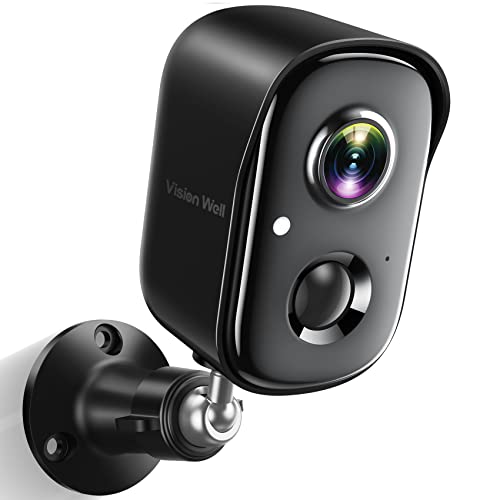
TL;DR: For $29.99, the Vision Well CG6S delivers 2K video, a full 360° pan and a 33‑ft color night‑vision range, making it a solid budget pick for outdoor monitoring.
The standout spec is its 33 ft (10.06 m) night‑vision range combined with color/infrared vision, letting you see details even in total darkness. Pair that with a 360° pan rotation and a 2K video resolution, and the camera captures a wide, high‑definition view without blind spots.
Compared with the other eleven cameras, the CG6S matches the Amcrest ASH21’s 33‑ft night‑vision reach while exceeding the Zmodo Mini Pro’s 8‑meter range. Its 360° pan mirrors the Tapo C500’s full‑circle capability and tops the Reolink E1’s 355° pan. Priced similarly to the Tapo C120, the Vision Well sits a notch below the Tapo C120’s 4.4‑star rating, earning a solid 4.2‑star score from 13,396 reviewers.
Users praise the AI‑powered motion detection for filtering people, pets, vehicles and packages, which cuts down on false alerts. Professional reviewers also note the wire‑free design as a hassle‑free installation win. However, many mention that the motion sensor can be sluggish, occasionally missing quick gestures, and that Wi‑Fi drops and occasional app glitches disrupt monitoring.
Beyond the optics, the camera is IP65‑rated for weather resistance, runs on a rechargeable battery lasting 1‑5 months, and offers two‑way audio with a built‑in speaker and microphone. You get free 3‑day cloud storage plus an SD‑card slot for local backup, and alerts include a siren and push notifications, all over a 2.4 GHz 802.11n Wi‑Fi connection.
Pros
Cons
Best for: Value‑conscious buyers seeking quality at $29.99 — the Vision Well CG6S offers Night Vision Range: 33ft
TL;DR: The Tapo C500 delivers a 98‑ft infrared night‑vision range, full 360° horizontal pan and 114° tilt, backed by AI person detection and two‑way audio, all for $33.99.
The camera’s standout spec is its 98 ft (29.87 m) night‑vision range, powered by 850 nm IR LEDs, which lets you see clearly in complete darkness. It streams at 1080p with a 15 fps frame rate, and its 3.83 mm lens (f/2.4) captures a 3 MP image (2304 × 1296 px). The motorized pan‑tilt unit sweeps a full 360° horizontally and 114° vertically, giving you virtually wall‑to‑wall coverage from a single spot.
Compared with the other eleven cameras, the C500 is heavier than the Wyze Cam v4 (0.49 lb vs 0.79 lb) but offers a dramatically wider horizontal view—360° versus Wyze’s 98.5°—and a longer night‑vision reach than Wyze’s 20 m extended range. It also costs more than the Vision Well CG6S, which sits at a lower price point, though the C500 packs AI person detection and two‑way audio that the Vision Well model does not list.
Customers repeatedly mention the straightforward setup and the sharp video quality, noting that the camera works well for monitoring pets and babies. Professional reviewers highlight the clear 360° coverage and reliable motion alerts, while many users point out occasional app glitches and a tracking feature that feels a bit clunky. The lack of 5 GHz Wi‑Fi support is also noted, as the unit only operates on a 2.4 GHz network with a 150 Mbps wireless rate.
Pros
Cons
Best for: Most users looking for a well‑reviewed, reliable mainstream option — the Tapo C500 offers Night Vision Range: 98 ft
Avoid if: You're shopping on a tight budget — it's priced at $33.99
TL;DR: The YI 2K offers crisp 2K video, AI person/vehicle/animal detection, and 5‑meter night vision at a budget‑friendly $18.99, though advanced features require a subscription and it only supports 2.4 GHz Wi‑Fi.
The camera’s standout spec is its 2K resolution (2304 × 1296) paired with a fast f/1.4 all‑glass lens, delivering detailed images across a 111.2° diagonal view. Eight 940 nm infrared LEDs give a night‑vision range of 5 meters, and the sensor records at 20 fps in 1280 × 720 mode. At just 0.48 pounds, the unit feels light enough to mount anywhere without a noticeable bulk.
Compared with the other eleven cameras, the YI 2K is lighter than the Amcrest ASH21 (0.53 pounds) and slimmer than the Tapo C500, which tips the scales at about 0.79 pounds. Its depth of 3.1 inches exceeds the Zmodo Mini Pro’s listed depth of 30 mm, giving a sturdier presence on a shelf. Night‑vision reach of 5 meters falls short of Amcrest’s 10‑meter claim and Vision Well’s 33‑foot range, but matches the Zmodo Mini Pro’s 8‑meter spec. The 20 fps frame rate aligns with the Tapo C120, while the Reolink E1 runs at a higher 30 fps but lacks the YI’s AI detection.
Reviewers consistently praise the sharp 2K clarity and the AI’s ability to differentiate people, vehicles, and animals, which cuts down on false alerts. Users also note the two‑way audio works well for quick intercom‑style chats. Professional reviewers highlight the reliable 940 nm night‑vision system, and many find the plug‑in setup straightforward. On the downside, the AI features and multi‑camera live view sit behind a recurring YI Cloud subscription, and the camera only connects to 2.4 GHz Wi‑Fi, limiting placement in congested networks.
Beyond the core imaging specs, the YI 2K supports Adaptive Stream to adjust bitrate on the fly, offers cloud loop recording (subscription required), and accepts microSD cards from 8 GB to 32 GB for local storage. Alexa and Google Assistant compatibility let you pull the feed into existing smart‑home routines, even though deeper ecosystem integrations are limited.
Pros
Cons
Best for: Entry‑level buyers or those on a tight budget — the YI 2K offers Night Vision Range: 5 meters
Avoid if: You need advanced features or professional‑grade performance
“Quality output, easy outdoor install despite indoor design, good two-way audio, and motion detection as a Ring alternative”
TL;DR: For $49.99 the YI Pro delivers 2K video at 20 fps, 107° view, AI‑driven detection and 9 m night‑vision, making it a solid indoor camera for families on a modest budget.
The camera’s standout spec is its 2K resolution (2304 × 1296) running at up to 20 fps, paired with a fast F1.4 aperture and a 107° field of view. Eight 940 nm IR LEDs give a night‑vision reach of 9 m, while AI detection can differentiate people, vehicles, animals and sound events. Two‑way audio is built in, and a 128 GB microSD slot lets you store footage locally.
At 120 g, the YI Pro is lighter than the Tapo C520WS (0.882 lb) and the Foscam R4S (531 g), though a bit heavier than the Wyze Cam v4 (0.49 lb). Its 9 m night‑vision range is shorter than the Tapo C520WS (up to 98 ft), the Wyze Cam v4 (up to 20 m) and the Vision Well CG6S (33 ft). Frame‑rate-wise it matches the Wyze Cam’s 20 fps daytime performance, and its 107° view aligns with Reolink Lumus’s horizontal field of view.
Users consistently praise the sharp 2K picture and the ease of setup through the YI Home app. The AI detection is frequently called accurate, and the two‑way audio gets good marks for clarity. Professional reviewers highlight the 2K clarity as a standout for indoor monitoring, but note the lack of 5 GHz Wi‑Fi and the subscription needed for full AI features. Some owners report occasional Wi‑Fi instability on crowded 2.4 GHz networks, and the fixed plug‑in power limits placement options.
Beyond video, the camera supports cloud storage (subscription required), operates from 0 °C to 50 °C, and integrates with Alexa and Google Assistant. Power comes via a micro‑USB port at 5 V / 1 A, and the device includes built‑in microphone and speaker for two‑way talk.
Pros
Cons
Best for: Those prioritizing quality and willing to pay for premium performance — the YI Pro offers Night Vision Range: 9 m
Avoid if: Reliability and user satisfaction are your top concerns
“quality output, easy install”
“best Ring alternative”
TL;DR: The Tapo C120 delivers 2K video, 150° field of view and color night vision for $29.99, backed by free AI detection and a 96 dB siren, but it needs a wired outlet.
The standout spec is its 150° field of view paired with 12× digital zoom, letting you cover a wide area without sacrificing detail. It records at 2K (4 MP) resolution at 20 fps, and its starlight color night vision mixes visible‑light and invisible IR to keep scenes bright after dark.
Compared with the other eleven cameras, the C120 sits at the lower‑end of the price range while offering a wider view than the Reolink E1’s 87.5° and a sharper resolution than the Amcrest ASH21’s 2 MP sensor. It’s lighter than the Tapo C500 (which weighs about 0.79 lb) and heavier than the Zmodo Mini Pro, which is notably feather‑light. Its IP66 rating puts it on par with the Vision Well CG6S for weatherproofing, yet it provides a higher‑resolution 2K feed that the CG6S’s 2K spec alone can’t guarantee.
Users consistently praise the camera’s razor‑sharp 2K clarity and vibrant color night vision, noting that AI detection reliably flags people, pets and vehicles without a subscription. Reviewers highlight the magnetic base as a quick‑mount solution for both indoor corners and outdoor eaves. Professional outlets have called out the “crystal‑clear 1440p video quality” and the “spot‑on” AI alerts. The main trade‑off is the wired power requirement, which limits placement to spots near an outlet, and the fact that a microSD card for local storage must be bought separately.
Technical details reinforce its value: an IP66 rating protects it from rain and dust, dual spotlights illuminate the scene, and a 96 dB siren can deter intruders. The 3 m Type‑C cable gives you flexible routing, and you can expand storage with a microSD card up to 512 GB. Two‑way audio with built‑in noise cancellation lets you speak through the camera, while motion detection and customizable activity zones keep alerts relevant.
Pros
Cons
Best for: Budget‑conscious homeowners and renters who want a well‑reviewed, weather‑proof camera with sharp 2K video and AI alerts — the Tapo C120 offers a 96 dB siren.
Avoid if: You need battery‑powered flexibility or a professional‑grade system with higher‑end specs.
“details were razor sharp... AI did a solid job”
“person/pet/vehicle detection spot on... love flexibility of storage”
TL;DR: The Reolink Lumus delivers 4 MP 2K video, color‑enhanced night vision and AI detection at 0.406 lb, but its USB‑wired power and $59.99 price put it in the premium tier.
What really stands out is the 2560 × 1440 (4 MP) sensor paired with an f/2 aperture and a 2.8 mm lens, giving crisp detail both day and night. The camera adds color night vision thanks to two 1.6 W spotlights (6500 K) that illuminate the scene while six 0.8 W infrared LEDs cover up to 10 m (33 ft) in total darkness.
Compared with the other eleven cameras, the Lumus is lighter than the Tapo C520WS (0.88 lb) and the Tapo C500 (0.79 lb), and even a bit lighter than the Wyze Cam v4 (0.49 lb). Its 107° horizontal field of view is wider than the Wyze’s 98.5° but narrower than the 360° view of the Tapo C500. Night‑vision range sits below the Wyze’s 20 m and the Tapo C520WS’s 98 ft, while its resolution matches the Foscam R4S’s 4 MP output.
Professional reviewers praise the sharp 2K video and the effective color night vision that “illuminates scenes in low light.” Users appreciate the AI‑powered person, vehicle and animal detection that reduces false alerts, and the two‑way audio for quick communication. The main complaints focus on the need for a wired USB power source, which limits placement flexibility, and occasional Wi‑Fi hiccups in weak signal areas.
Pros
Cons
Best for: Those prioritizing quality and willing to pay for premium performance — the Reolink Lumus offers Resolution: 2560 × 1440 (4 MP, 2K Quad HD).
Avoid if: You're shopping on a tight budget — it's priced at $59.99.
TL;DR: The Tapo C520WS delivers 2K video, 360° pan‑tilt coverage and color night vision up to 98 ft for $56.99, but its wired power cord keeps it from being a truly flexible outdoor camera.
The standout spec is its 2560×1440 (2K) resolution combined with a 12× digital zoom and a full 360° pan plus 140.7° tilt range, letting you sweep a large area without blind spots. Its starlight color night vision reaches up to 98 ft, so you can see details in darkness without relying on infrared.
Compared with the other eleven cameras, the C520WS is heavier than the Reolink Lumus (0.40625 lb) but lighter than the Foscam R4S, which lists a weight of 531 g. Its night‑vision reach outstrips the Wyze Cam v4’s 20 m range and the Vision Well CG6S’s 33 ft, while the YI Pro only manages 9 m. The price sits above the budget‑oriented Wyze Cam v4 and Vision Well CG6S, yet it offers a richer feature set than the YI Pro’s basic specs.
Reviewers consistently praise the crystal‑clear 2K video and the ease of controlling pan and tilt from the app. The free AI detection that distinguishes people, pets and vehicles, along with activity zones, is highlighted as a major convenience. Users also note the full‑color night vision as a game‑changer for identifying details after dark. The most common complaints revolve around the hard‑wired power requirement, which limits placement options, and occasional Wi‑Fi drops in larger outdoor areas.
Technical extras include dual‑band Wi‑Fi with dual antennas for a stable connection, two‑way audio with noise cancellation, and a siren that reaches 91–96 dB at a 4‑inch distance. Cloud storage is supported, and a microSD slot accepts cards up to 512 GB for local recordings. The camera is IP66 rated, meaning it can withstand rain and dust.
Pros
Cons
Best for: Homeowners who need wide‑area outdoor surveillance and want Night Vision Range: Up to 98 ft, with AI‑driven alerts and color night vision.
Avoid if: You need a battery‑or solar‑powered camera, are renting and cannot run a hardwired power line, or are looking for the lowest‑price option.
TL;DR: For $19.99, the Amcrest ASH21 delivers 1080p video at 30 fps, 33 ft (10 m) night vision, AI‑based human/pet detection and two‑way audio, making it a solid budget indoor monitor.
The standout spec is its 33 feet (10 meters) IR night‑vision range, which outpaces many rivals in this 12‑camera set. Coupled with a 2 MP CMOS sensor that records full‑HD 1080p at 30 fps, the picture stays clear even after dark. The built‑in hardware ASIC runs edge AI for human and pet detection, so you get fewer false alerts without a subscription.
Compared with peers, the ASH21’s night‑vision distance beats the YI 2K’s 5 meters and matches the Vision Well CG6S’s 33 ft claim, while its 90°‑93° field of view is narrower than Zmodo Mini Pro’s 130° but wider than Reolink E1’s 87.5°. At 0.53 pounds, it’s heavier than the ultra‑light Zmodo Mini Pro (0.000625 pounds) yet lighter than Tapo C500 (0.79 pounds). Its pan range of 350° and tilt range of 90° give more coverage than the YI 2K’s fixed view, though it lacks the 360° sweep of the Tapo C500.
Users consistently praise the AI detection and auto‑tracking, noting that pet movements are flagged accurately without spamming alerts. Reviewers also highlight the crisp 1080p video and reliable two‑way talk, which many find handy for baby or pet monitoring. On the downside, several owners report occasional app lag on congested 2.4 GHz networks and note that the camera only supports 2.4 GHz Wi‑Fi, making it unsuitable for homes that rely on 5 GHz only. The microSD card needed for local storage isn’t included, so an extra purchase is required to reach the 256 GB maximum.
Pros
Cons
Best for: Entry-level buyers or those on a tight budget — the Amcrest ASH21 offers Night Vision Range: 33 feet (10 meters)
Avoid if: Reliability and user satisfaction are your top concerns
“Great for pet/baby monitoring—AI tracks movement accurately without cloud fees.”
“Night vision and two-way audio work perfectly; app sharing easy for family.”
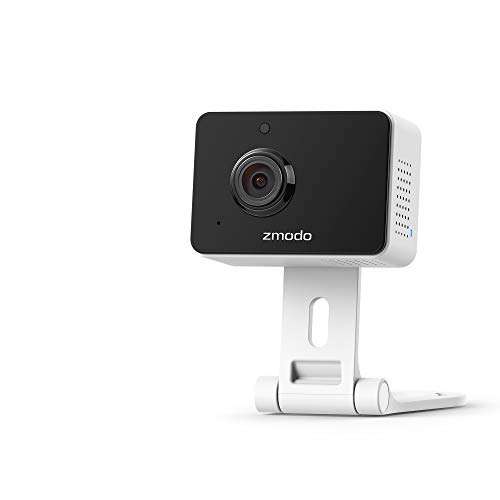
TL;DR: The Zmodo Mini Pro delivers 1080p video, a 130° view and 8‑meter infrared night vision for just $19.99, making it a solid budget pick for small‑room indoor monitoring.
The standout spec is its 130° wide‑angle lens paired with 1080p HD resolution at 25 fps, which gives you a clear picture across most indoor spaces. At only 66 g and a compact 60 × 42 × 30 mm body, it’s one of the lightest cameras in the lineup, easily fitting into tight corners or on a wall‑mount without crowding the room.
Compared with its peers, the Zmodo Mini Pro is lighter than the Amcrest ASH21 and offers a noticeably wider field of view than the YI 2K, Reolink E1 and Amcrest models, though the Tapo C120 provides an even broader 150° view. Its infrared night‑vision range of 8 meters falls short of the Amcrest’s 10‑meter reach but exceeds the YI 2K’s 5‑meter capability. All of the listed competitors use 2.4 GHz Wi‑Fi only, so Zmodo’s connectivity is on par with the rest of the field.
Users consistently praise the sharp 1080p footage and the ease of setting up the camera through the mobile app, especially for pet or baby monitoring. Professional reviewers note the reliable AI‑powered motion alerts that can differentiate people, pets and vehicles, while also highlighting the convenient two‑way audio for real‑time conversation. However, several owners mention occasional false alerts and the lack of customizable motion‑zone grids, which can be a nuisance in busy households.
Beyond the basics, the Mini Pro includes a one‑month free cloud‑storage trial, bank‑level encryption for data security, and seamless integration with Alexa and Google Assistant. Power is supplied via a USB‑C cord (DC 5 V / 1 A), meaning the camera stays on continuously but offers no battery backup for power outages.
Pros
Cons
Best for: Budget‑conscious buyers seeking a reliable entry‑level option — the Zmodo Mini Pro offers Night Vision Range: 8 meters
Avoid if: You need battery backup or must monitor a large area that exceeds the 8‑meter night‑vision range
TL;DR: The Foscam R4S delivers 4 MP video at 25 fps, 33 ft infrared night vision and AI‑driven alerts, but its indoor‑only design and $63.35 price put it above many budget rivals.
The standout spec is its 4 MP (2560 × 1440) sensor paired with a smooth 25 fps output, which keeps motion clear even in low light. Thirteen IR LEDs push the night‑vision range out to 33 ft (≈10,060 mm), letting you see a full‑room view after dark without losing detail.
Compared with the other eleven cameras, the R4S is heavier at 531 g, so it feels bulkier than the Wyze Cam v4’s 0.49‑pound body and the YI Pro’s feather‑light 120 g chassis. Its price tag also sits above the Vision Well CG6S and the Tapo C520WS, making it a premium‑tier option in this lineup. However, it matches the Vision Well’s 33‑ft night range and outperforms the YI Pro’s 9 m reach, while offering a wider 105° horizontal field of view than the Wyze’s 98.5°.
Users repeatedly praise the stable dual‑band Wi‑Fi connection and the clear two‑way audio with noise reduction, noting it works well for monitoring pets or a baby’s room. Reviewers also highlight the AI human and sound detection, which cuts down on false alerts caused by pets. The downsides that surface in feedback are the indoor‑only limitation—despite an IP67 rating, the camera isn’t built for outdoor placement—and the need for a constant power outlet, which restricts flexible mounting.
Beyond the core imaging specs, the R4S runs on 5 V, draws 1.5 A and consumes 6 W, fitting comfortably into standard power adapters. Voice‑assistant support for Alexa and Google Assistant lets you pull live feeds with a simple command, while micro‑SD and cloud storage options give you backup flexibility.
Pros
Cons
Best for: Those prioritizing quality and willing to pay for premium performance — the Foscam R4S offers Night Vision Range: 33 ft (≈10,060 mm).
Breakdown
Wyze Cam v4
Pros
Cons
Tapo C520WS
Pros
Cons
Reolink E1
Pros
Cons

Reolink Lumus
Pros
Cons
Based on scoring data and product specs
Personalized picks
Best Overall Pick
Wyze Cam v4
Best OverallBest for: Home and office users seeking a balance of features and value — the Wyze Cam v4 offers Siren Volume: 99 dB
Tapo C520WS
Best for: Audiophiles and enthusiasts seeking premium sound quality and advanced features — the Tapo C520WS offers Night Vision Range: Up to 98 ft
$49.96+$13.99 vs winner
Skip YI 2K if…
You need advanced features or professional-grade performance
The Wyze Cam v4 takes the top spot with a blend of high‑resolution video, wide‑angle coverage and solid durability. It records in 2.5K resolution at 20 fps, offers a 115.8° field of view and delivers true color night vision thanks to its four 850 nm IR LEDs. Its IP65 rating lets you place it outdoors, while Wi‑Fi 6 ensures a stable connection, all for just $35.97.
The Tapo C520WS lands as the runner‑up, ideal if you need full‑room coverage and pan‑tilt tracking. It provides 360° pan with a 30 m color night‑vision range, 30 fps video at 2K resolution, and a 12 × digital zoom, all housed in an IP66‑rated shell for $56.99.
For tighter budgets, the YI 2K stands out as the best value option at $18.99, offering reliable night‑vision basics without the premium price tag. If you’re willing to spend more for advanced features, the Foscam R4S serves as the premium alternative at $63.35, rounding out the high‑end of the market.
Choose the Wyze Cam v4 now for dependable night‑vision performance that won’t break the bank.
Wyze Cam v4 offers color night vision, 2.5K video resolution and Wi‑Fi 6 connectivity while staying under $36. It also includes motion detection, two‑way audio, cloud storage and an IP65 rating, giving it a feature set that rivals pricier models.
No reviews yet — be the first to share your experience.
Please sign in to leave a review