⚡ Quick Answer
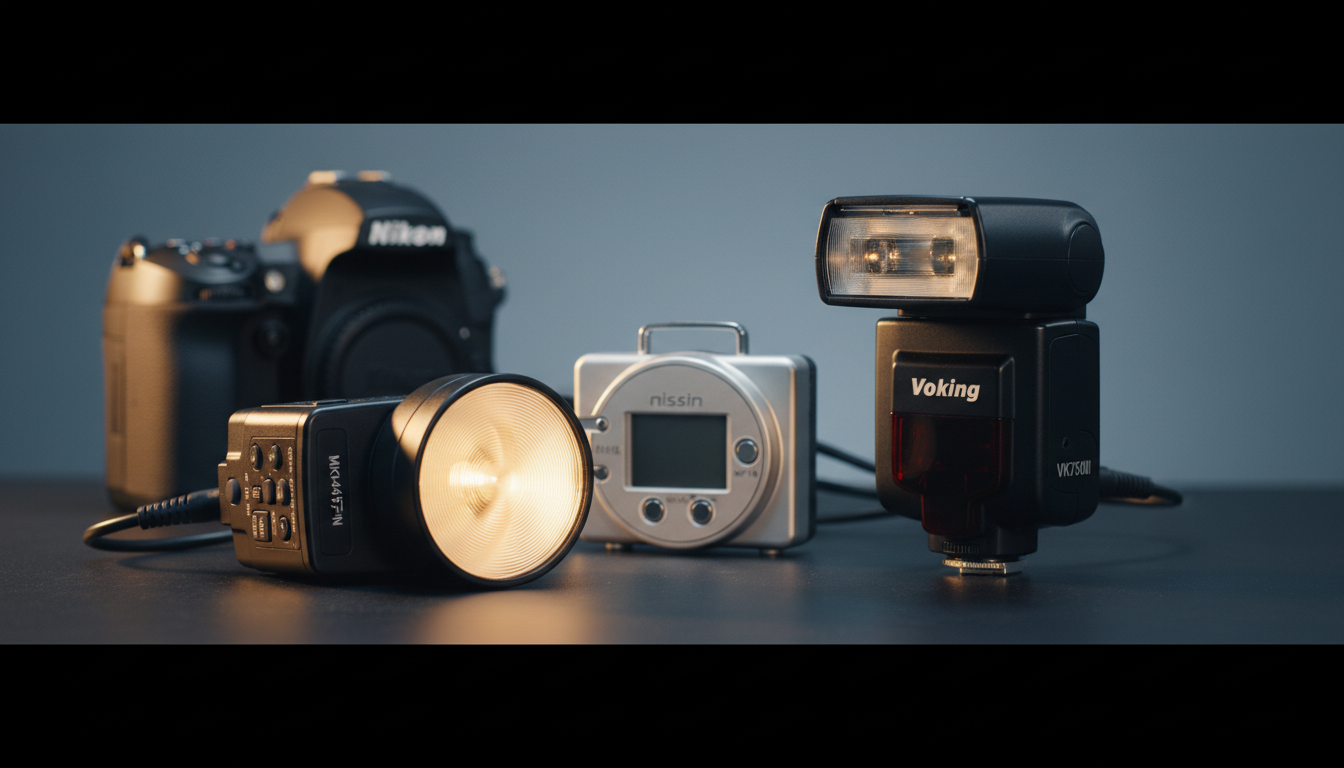
Six Nikon‑compatible flashes were compared, spanning everything from a $59.99 compact speedlite to a $363.18 professional macro ring flash. Ratings range from 3.0/5 for the Neewer Q120 up to 4.4/5 for the Voking VK750II and Meike MK430N, giving you a clear sense of how users feel about each model’s performance and reliability.
For shooters who need precise, shadow‑free lighting on tiny subjects, the macro‑focused options like the Meke MK‑14EXT‑N (46 ft guide number at ISO 100) and the Nissin MF18 (16.2 m guide number) shine. If you’re after a versatile on‑camera fill flash that won’t break the bank, the budget‑tier Voking VK750II and Meike MK430N deliver solid guide numbers (58 m and 36 m respectively) and wireless range of up to 25 m indoors. When you want a high‑output, portable strobe with advanced features such as high‑speed sync, the premium‑tier Neewer Q120 and Nissin MF18 provide the extra power and modeling lights you’d expect.
Below is a breakdown of each flash’s strengths, weaknesses, and ideal scenarios to help match the right tool to your shooting style.
Meke MK-14EXT-N
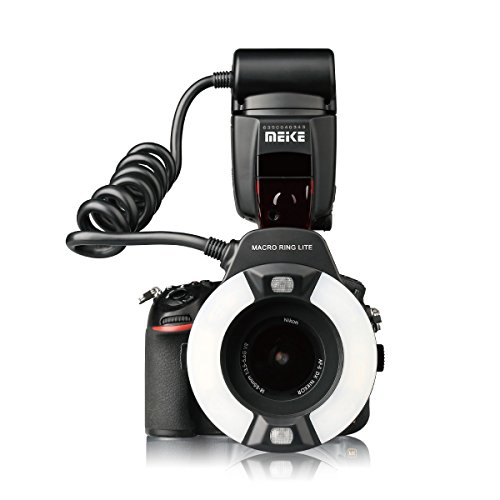
At 398 g, the Meke MK-14EXT-N balances portability with strong AF‑assist LEDs covering roughly 40°‑45° and 20 s on‑time, offering solid features for its $79.99 price.

Nissin MF18
The Nissin MF18, built for pros who demand premium performance, justifies its $363.18 price—about $283 higher than the Meke—offering larger dimensions for robust handling.

Voking VK750II
The Voking VK750II stands out with a compact 57 mm length, making it ideal for tight shooting setups, while its $59.99 price undercuts the others and still earns a 4.4‑star rating.
Also considered
Score Analysis
Key score advantages vs. runner-up (Nissin MF18)
Price Range
Meke MK-14EXT-N
$79.99
Nissin MF18
$366.70
Voking VK750II
$59.99

Meike MK430N
$59.99
Yongnuo YN968N II
$135.00

Neewer Q120
$169.99
Spec Comparison
TL;DR: The Meke MK-14EXT-N offers a 46‑ft (14 m) guide number, dual‑tube ratio control and LED AF‑assist for Nikon DSLRs at $79.99, but its brightness and lack of wireless may limit some macro work.
The standout spec is its 46 ft / 14 m guide number at ISO 100, paired with an 80° coverage angle and a fast 1/320 s sync speed. It provides eight power levels (1/128 to 1/1) with 27 fine‑tuning steps, and you can set the dual‑tube ratio from 8:1 to 1:8 in half‑stop increments, giving you precise control over shadow and contrast in close‑up shots.
Compared with the other five flashes in this roundup, the MK‑14EXT‑N is heavier than the Meike MK430N (275 g) but lighter than the Neewer Q120 (671 g). Its 46 ft guide number outpaces the Meike MK430N’s 36 ft but sits below the Voking VK750II’s 58 m rating. Recycle time is competitive: the MK‑14EXT‑N recycles in 0.1–5 s (about 3 s typical), faster than the Meike’s ~4 s and on par with Voking’s 3 s and Yongnuo’s ~3 s.
Users love the even, shadow‑free illumination for jewelry, product and dental photography, noting the dual‑tube ratio as a unique macro advantage. Professional reviewers praise the reliable i‑TTL performance and the ability to reach f/16+ at ISO 100 with the 46 ft GN. However, many mention that the flash can be overly bright for delicate macro scenes, often requiring neutral‑density filters or careful power dialing. The lack of wireless or radio triggering also appears as a common drawback for photographers who need off‑camera setups.
Technical details include an IGBT circuit design, LED AF‑assist lamps covering roughly 40° top/bottom and 45° left/right with about 20 s on‑time, and an external power socket for optional AC power. The flash runs on four AA cells (alkaline or Ni‑MH) and supports an external power source, giving flexibility for longer shoots.
Pros
Cons
Best for: Value-conscious buyers seeking quality at $79.99
Avoid if: You prefer products with extensive real‑world feedback and proven track records
“praises the MK-14EXT's flexibility in TTL/Manual/A:B modes, brightness for stopping down to f/16 at ISO 100/1/250s, and side power programming, calling it useful for macro control but noting the jury is "out" after brief testing—potentially too bright without adjustments.”
TL;DR: The Nissin MF18 delivers a 16.2 m guide‑number macro ring flash with dual independent tubes, TTL master control and high‑speed sync, but its wireless is master‑only and it sits at a premium price.
The standout spec of the MF18 is its guide number of 16.2 m (53 ft) at ISO 100, which provides the power needed for close‑up work such as dental or jewelry photography. It pairs that power with dual independent flash tubes (A/B) and fine macro power steps from 1/128 to 1/1024, giving you precise control over lighting ratios. The unit also offers high‑speed sync up to 1/8000 s and both first‑ and rear‑curtain sync, all managed through a color LCD interface.
Compared with the five other flashes in this roundup, the MF18 is heavier than the Meike MK430N (275 g) and lighter than the Neewer Q120 (671 g). Its 0.98 lb (446 g) build feels solid, and its dimensions (152.4 mm × 254 mm × 203.2 mm) are larger than the compact Yongnuo YN968N II (92 mm × 222 mm × 101 mm) but still manageable on a Nikon hot shoe. While the Neewer and Meike units list wireless ranges of 100 m and 20‑25 m indoor respectively, the MF18 can only act as a TTL master on four channels and three groups, so it can’t serve as a remote slave in multi‑flash setups.
User feedback praises the flash’s “very well‑made” construction and the intuitive hot‑shoe controller that delivers repeatable macro lighting. Professionals highlight the “high accuracy” of the fine macro power steps, and everyday shooters appreciate the built‑in memory function that stores settings per mode. The downside noted by reviewers is the limited wireless capability—master‑only—and the lack of user overrides in full automatic TTL mode, which can make quick adjustments feel cumbersome.
Pros
Cons
Best for: Professionals or serious hobbyists who need high‑power, precise macro lighting and are willing to invest in a premium flash.
Avoid if: You need a wireless slave unit for multi‑flash setups or prefer a fully automatic system without manual tweaking.
“very satisfactory results”
TL;DR: The Voking VK750II delivers a strong 58 m guide number, 18‑180 mm zoom and full TTL support at $59.99, but its bulkier body and lack of high‑speed sync keep it in the budget‑friendly niche.
The standout spec is its guide number of 58 m (ISO 100, 105 mm), which outshines many entry‑level Nikon flashes. Coupled with an 18‑180 mm zoom range, the unit can cover wide‑angle fill as well as tight‑spot lighting without swapping accessories. It also offers TTL, manual and strobe modes, plus front/rear curtain sync for creative motion shots.
Compared with its peers, the VK750II’s 58 m guide number tops the Meike MK430N’s 36 m and the Nissin MF18’s 16.2 m. Its 3 s recycle time matches the Yongnuo YN968N II and beats the Meike’s roughly 4 s, giving you a quicker shooting rhythm. Wireless trigger distance of 20‑25 m indoor and 10‑15 m outdoor mirrors the Meike’s range but falls short of the Neewer Q120’s 100 m radio reach.
Reviewers consistently praise the flash’s reliable i‑TTL output and the intuitive LCD menus, noting that most users need only modest exposure compensation for bounce lighting. Professional voices also flag the bulkier 200 mm height as less portable than Nikon’s native SB‑700, and the absence of high‑speed sync limits fast‑action work. Still, everyday shooters appreciate the dust‑ and water‑resistant housing, the 0‑90° vertical and 0‑270° horizontal head rotation, and the built‑in overheat protection that shuts down the unit when it's too hot.
Pros
Cons
Best for: Entry-level buyers or those on a tight budget
Avoid if: You want the best value‑per‑dollar in its price range
TL;DR: The Meike MK‑430N delivers a 36 m guide number, 25 m indoor wireless range and a lightweight 275 g body for under $60, making it a solid starter flash for Nikon and Canon DSLRs.
The flash delivers a standout GN 36 (ISO 100, 105 mm) and a 5600 K color temperature, giving you reliable exposure control in typical indoor settings. It recycles in approximately 4 seconds and runs on four AA batteries, providing a flash count between 100 and 1500 shots depending on the cells you use. Its head swivels vertically from 0‑90° and horizontally from 0‑270°, while the built‑in LCD lets you adjust 22 power levels from 1/128 to 1/1.
Compared with the other five flashes in this roundup, the Meike sits in the middle of the power spectrum. The Voking VK750II pushes a higher guide number of 58 m and recycles a second faster, but it shares the same 20‑25 m indoor wireless range. The Meke MK‑14EXT‑N’s guide number is only about 14 m, and it weighs more at 398 g, so the Meike feels lighter and more powerful. Yongnuo’s YN968N II recycles in roughly 3 seconds but is considerably heavier, while Neewer’s Q120 and Nissin’s MF18 both exceed 600 g and offer lower or comparable guide numbers, making the Meike the lightest option with a respectable GN.
Reviewers consistently praise the flash’s compact size and affordability, noting that the 275 g weight makes it easy to carry on location. Users also like the versatile swivel head and the LCD interface for quick adjustments. The most common criticisms focus on the modest GN 36, which can feel limiting in larger venues, and the 4‑second recycle time that may slow down fast‑moving shoots. Professional reviewers flag the mixed information about high‑speed sync support, so you may need to verify HSS compatibility before relying on it for high‑speed action.
Pros
Cons
Best for: Entry‑level buyers or those on a tight budget
Avoid if: You need powerful performance or professional‑grade features
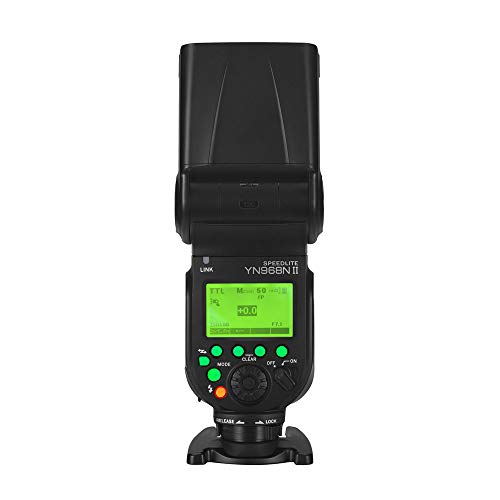
TL;DR: The Yongnuo YN968N II delivers Nikon‑compatible TTL with a GN60 guide number, 1/8000 s high‑speed sync and a 300‑lux LED modeling light for $150.00, but its plastic build and noisy zoom motor may bother quiet shooters.
What really sets the YN968N II apart is its high‑speed sync capability of 1/8000 s paired with a GN60 (ISO 100, 105 mm) guide number, letting you freeze fast action even in bright light. It also packs a built‑in LED modeling light that puts out 300 lux at 1 m, which many reviewers appreciate for shaping light on‑the‑fly. The flash head tilts, and the zoom range spans 20‑105 mm, covering most typical focal lengths.
Compared with the other five flashes in this roundup, the Yongnuo sits in the middle of the price spectrum—pricier than the Meike MK430N and Voking VK750II, but less expensive than the Nissin MF18. It weighs 1.3889 lb, making it heavier than the Meike (275 g) and Meke (398 g) units, yet lighter than the Neewer Q120 (1.7969 lb). Its wireless system offers 7 channels on YN‑622 and 16 on YN‑560 plus five groups, a breadth most competitors don’t list.
Users frequently praise the flash’s reliable TTL performance and the convenience of the LED modeling light for events and portrait work. Professional reviewers note that its output matches Nikon’s higher‑end SB‑900/800 series at a fraction of the price. However, the zoom motor’s noise—averaging 24 dB and peaking at 55 dB—gets called intrusive in quiet environments, and the switches are overly sensitive, leading to accidental changes. The plastic, glossy housing is lightweight but can scratch easily, which some owners find less durable than metal‑cased rivals.
Pros
Cons
Best for: Most users seeking a balanced, mainstream option
Avoid if: You're shopping on a tight budget — it's priced at $150.00
“worked fine at events”
“great Nikon substitute”
TL;DR: The Neewer Q120 offers a 120 Ws pocket‑size strobe with 2.4 GHz TTL wireless up to 100 m, but its higher price and modest 3‑star rating may steer pros toward cheaper alternatives.
The built‑in 120 Ws flash output, paired with a 3 W LED modeling light that offers ten brightness levels, stands out, letting you preview illumination without firing the strobe. A 3000 mAh lithium battery powers the unit, which runs completely cordless, and its 8.62 dBm wireless transmitter reaches up to 100 m, which’s useful for on‑location work where cable runs are impractical.
When you compare it with the other five flashes in this roundup, the Q120 sits at the premium end of the price spectrum and weighs more than most – the Yongnuo YN968N II, Meke MK‑14EXT‑N, Meike MK430N, and Nissin MF18 all weigh less than a pound, while the Q120 comes in at 1.796875 pounds (671 g). Its wireless range of 100 m exceeds the indoor‑only ranges listed for several peers, but the 120 Ws output is lower than the 58 m guide‑number unit from Voking and far below the studio‑grade power of the Nissin MF18.
People who’ve tried the Q120 appreciate its compact, pocket‑sized design and the convenience of app‑controlled TTL wireless, noting that the 2.4 GHz system works reliably for event shooting and travel. However, the three‑star average from three reviews hints at mixed satisfaction, with some buyers mentioning concerns about battery longevity on long shoots and the limited output for larger subjects. Professional reviewers highlight the high‑speed sync capability of 1/8000 s, which can freeze fast motion, but also point out that 120 Ws may fall short for high‑key studio setups.
Pros
Cons
Best for: Traveling photographers, event shooters, and beginners who need a lightweight, battery‑run flash with reliable wireless control.
Avoid if: You need studio‑grade power, prioritize proven reliability, or are sensitive to higher price and mixed user ratings.
Breakdown
Meke MK-14EXT-N
Pros
Nissin MF18
Pros
Voking VK750II
Pros
Cons
Meike MK430N
Pros
Based on scoring data and product specs
Personalized picks
Best Overall Pick
Meke MK-14EXT-N
Best OverallBest for: Value-conscious buyers seeking quality at $79.99
Nissin MF18
Best for: Those prioritizing quality and willing to pay for premium performance
$366.70+$286.71 vs winner
Skip Neewer Q120 if…
Reliability and user satisfaction are your top concerns
The Meke MK-14EXT-N takes the top spot thanks to its solid 46 ft / 14 m guide number at ISO 100, a fast 1/320 s max sync speed, and a flexible 8‑level power range with 27 fine‑tuning steps. It runs on four AA cells for up to 800 flashes per charge, weighs just 398 g, and holds a 4.2‑star rating from 311 reviewers, all for $79.99.
The runner‑up is the Nissin MF18, which shines when you need high‑speed sync and macro lighting. It offers up to 1/8000 s sync, an 80 × 80° illumination angle from its dual‑tube macro ring flash, and a 16.2 m guide number, making it ideal for close‑up work and fast‑action shoots. It carries a 4.0‑star rating from 216 reviews and is priced at $363.18.
For tighter budgets, the Meike MK430N at $59.99 delivers reliable basic flash performance at a friendly price. If you’re willing to stretch for premium features, the Nissin MF18 remains the top high‑end choice with its advanced high‑speed sync and macro capabilities.
Pick the Meke MK-14EXT-N today for the best Nikon‑compatible flash experience.
The Yongnuo YN968N II lists a guide number of GN60 (ISO 100, 105 mm), which is the highest among the options. It is followed by the Voking VK750II at 58 m, the Meike MK430N at 36 m, the Nissin MF18 at 16.2 m, and the Meke MK‑14EXT‑N at 14 m.
No reviews yet — be the first to share your experience.
Please sign in to leave a review