⚡ Quick Answer
When you need a cordless sander that feels almost weightless in the hand yet still punches out a 14,000 RPM no‑load speed, the Milwaukee M12 Fuel Orbital Detail Sander stands out. At $125.99 it carries a 4.8/5 rating from 422 reviewers, and its 0.59 kg brushless motor delivers the kind of power‑to‑weight ratio you’d expect from a tool that costs twice as much. The 1.5 mm orbit and rectangular hook‑and‑loop pad let you reach tight corners without sacrificing a smooth, stain‑grade finish.
Our roundup compares 10 models across three price tiers. The budget lane includes Milwaukee, SKIL, Metabo HPT and the $49.07 WQV, while the mid‑range segment features the Worx WX823L and Bosch GSS18V‑40N. Premium options stretch up to the $649 Festool ETS EC150, offering integrated dust ports and a 400 W motor. Across the board you’ll see differences in vibration reduction, dust‑collection methods and pad sizes, giving you a clear view of what each price point delivers.
Read on to see how each sander measures up in ergonomics, runtime and overall value, and discover which tool aligns with your workshop needs.

Milwaukee M12 Fuel Orbital Detail Sander
Its compact 4.5‑inch height keeps it easy to maneuver in tight spots.

Worx WX823L
Ideal for users who want a reliable mainstream sander, and at $24 more than the Milwaukee it still offers solid performance.

SKIL SR660302
Stands out with a larger 3.0 mm orbit and comes with sandpaper, plus a canister dust collector, making it a handy, all‑in‑one option for budget projects.
Also considered
TL;DR: The Worx WX823L delivers a brushless 20 V cordless orbital sander with a 5‑inch pad, 5 speed settings, and up to 10,000 OPM, all for a solid $149.99 price.
What really stands out is the brushless motor’s efficiency claims – 25 % more power and 50 % longer runtime than comparable brushed units. Coupled with a 4.0 Ah battery and a 2 A charger, the sander can keep going through a typical DIY project without frequent pauses. The 5‑inch sanding pad, hooked‑and‑loop attachment, and 1‑ton clamping pressure give you a large, secure sanding surface that’s easy to swap.
Compared with the other nine tools in this roundup, the Worx is heavier than the Milwaukee M12 Fuel (which tips the scales at about 1 lb) but still lighter than the SKIL SR660302’s 5.25 lb heft. Its max speed of 10,000 OPM sits below Milwaukee’s 14,000 OPM and the Metabo HPT’s 11,000 OPM range, yet it matches the Bosch GSS18V‑40N’s upper limit of 10,000 OPM. With five preset speed settings, it offers a middle ground between Milwaukee’s four settings and the six‑setting options on Metabo HPT and SKIL.
Users consistently praise the cordless convenience and the quick paper‑change mechanism, noting that the built‑in dust‑bag system keeps the work area cleaner. Professional reviewers highlight the vibration‑reduction design and low‑profile shape as comfort‑boosting features for extended sanding sessions. The included sandpaper grits (150, 120, 80) also get positive mentions for getting smooth finishes on wood without needing extra accessories.
Pros
Cons
Best for: Most users looking for a well‑reviewed, reliable mainstream option — the Worx WX823L offers Speed Settings: 5
TL;DR: The Milwaukee M12 Fuel Orbital Detail Sander packs a brushless 12 V motor, 14,000 OPM max speed and a feather‑light 1 lb design, delivering professional‑grade detail sanding at a modest $125.99 price.
What really sets this sander apart is its 14,000 OPM maximum speed under load combined with four preset speed settings, letting you dial in the exact aggressiveness you need. Weighing just 1.0 pound (bare tool 1.3 lb, with battery 1.7 lb) and featuring an ergonomic handle, it stays comfortable in the hand during long detail jobs. The POWERSTATE™ brushless motor and 1.5 mm orbit deliver material removal that reviewers say is twice as fast as hand sanding.
Compared with the nine other sanders in this roundup, the Milwaukee is markedly lighter than the Metabo HPT SV1813DAQ4 (2.6 lb) and the SKIL SR660302 (over 5 lb), and even lighter than the Worx WX823L (2.65 lb). Its pad size—3.5 × 2.5 in—is smaller than the 5‑in pads on Metabo, SKIL and Bosch models, which makes it ideal for tight‑spot work but less efficient on broad surfaces. Unlike the WQV Brushless Random Orbital Sander, which includes a dust‑collector bag, this Milwaukee tool has no built‑in dust collection.
Professional reviewers praise the variable‑speed trigger for feather‑level control and note the built‑in LED light helps see the work area in dim spots. The REDLINK PLUS intelligence provides overload, heat and over‑discharge protection, and the five‑year limited warranty adds confidence for job‑site use. Users consistently highlight the tool’s portability and speed, while also pointing out the need for a separate dust‑extraction setup and the limitation of the small sanding pad for large flat jobs.
Pros
Cons
Best for: Professional carpenters, remodelers and general contractors who need precise detail sanding; the Milwaukee M12 Fuel Orbital Detail Sander offers Speed Settings: 4 preset settings.
Avoid if: You require integrated dust extraction, a larger sanding pad for big surfaces, or a fully bundled battery‑included solution.
TL;DR: The Festool ETS EC150 delivers professional‑grade sanding with a 400 W brushless motor, 6‑inch pad and 13.12 ft cable, but its heavy build and $649 price place it in the premium tier.
At the heart of the ETS EC150 is a brushless EC‑TEC motor that draws 400 watts and spins the eccentric mechanism between 6,000 – 10,000 RPM. The 6‑inch (150 mm) sanding pad and 0.2 in (5 mm) stroke give you a wide contact area for fine finish work, while the 13.12 ft (4 m) cord lets you reach across a typical workshop without a drop‑cord. The tool weighs 3.53 lb (1.6 kg) in hand, and the fully loaded package comes in at 8.16 lb (3.70 kg).
Compared with the nine other sanders in this roundup, the Festool feels substantially heavier than the lightweight cordless options such as the Milwaukee M12 Fuel (about 1.3 lb bare) and the Bosch GSS12V‑32N (under 1 lb). Its 6‑inch pad also dwarfs the 32 mm pads on the Bosch models and the 5‑inch pads on the Worx and Metabo HPT units. While the corded design grants unlimited runtime, it does limit mobility against battery‑powered rivals. Pricing-wise, the ETS EC150 sits well above the sub‑$200 models, positioning it as a premium investment.
Professional reviewers praise the ETS EC150’s ergonomic balance and the Vibration Control System, noting that the reduced vibration cuts user fatigue during long sanding sessions. The integrated pad brake with a carbide tip and the MULTI‑JETSTREAM dust extraction system (with automatic suction detection) are repeatedly highlighted for delivering a clean work surface and consistent performance. Consumer sentiment echoes these points, with users appreciating the steady speed control and low‑vibration feel; no recurring complaints appear in the available data.
Additional technical touches include a stepless pre‑selection speed dial that holds constant speed under load, three pad hardness levels, and a hook‑and‑loop pad attachment for quick changes. The ergonomic, compact shape (4.5 in height) makes it easy to maneuver into tight corners and overhead positions, reinforcing its reputation as a finish‑carpenter’s tool.
Pros
Cons
Best for: Those prioritizing quality and willing to pay for premium performance — the Festool ETS EC150 offers Cable Length: 13.12 ft (4 m).
Avoid if: You're shopping on a tight budget — it's priced at $649.00.
TL;DR: The SKIL SR660302 delivers 7,000–11,000 OPM random orbital sanding with a 5‑inch pad, a 2.0 Ah 20 V brushless motor, and a micro‑filtration canister, all for under $110.
What really sets this sander apart is its 7,000–11,000 OPM no‑load speed paired with a 5‑inch hook‑and‑loop sanding pad. The brushless 20 V motor draws 2 A and runs off a 2.0 Ah PWRCore battery, giving you the power to remove material quickly while keeping the tool’s runtime respectable for a cordless unit.
In the lineup, the SKIL weighs about 5.25 lb, which makes it noticeably heavier than the Milwaukee M12 Fuel (around 1 lb bare) and the Metabo HPT model (about 2.6 lb). Its orbit diameter is 3.0 mm, larger than Milwaukee’s 1.5 mm but comparable to the 3 mm found on several competitors. Speed‑wise, the SKIL tops out at 11,000 OPM, a bit lower than Milwaukee’s 14,000 OPM range, yet still faster than the 6,000 OPM of the Bosch GSS12V‑32N.
Reviewers love the brushless motor’s efficiency and the micro‑filtration dust canister that keeps workspaces cleaner. Professionals note the smooth, swirl‑free finish on wood, while DIYers appreciate the six variable‑speed settings for fine‑tuning. A common gripe is the full‑kit weight of roughly 6.5 lb, which can cause fatigue during prolonged, precision‑focused sanding.
Pros
Cons
Best for: Entry‑level buyers or those on a tight budget — the SKIL SR660302 offers No‑Load Speed: 7,000–11,000 OPM
Avoid if: You need advanced features or professional‑grade performance, especially ultra‑precision detailing work.
“Catches a ton of dust”
“Super smooth finishes”
TL;DR: The Metabo HPT SV1813DAQ4 delivers a brushless 18V cordless orbital sander with a 7,000–11,000 OPM speed range, 5‑inch pad, and a lightweight 2.6 lb design, all for about $110.
What really stands out is the no‑load speed range of 7,000–11,000 OPM paired with six variable speed settings, giving you enough control to tackle paint, wood, or metal without a separate electronic controller. The tool’s 3 mm (≈1/8 in) orbit diameter and 5‑inch hook‑and‑loop pad keep the sanding action smooth, while the built‑in dust bag with 1‑3/8 in port and vacuum adapters helps keep your workspace clean.
Compared with the other nine sanders in this roundup, the Metabo sits in the middle of the weight spectrum: it’s lighter than the bulkier SKIL model that weighs over five pounds, but heavier than the ultra‑light Milwaukee M12 Fuel that feels almost weightless in one hand. Its 5‑inch pad size matches most competitors, and the six‑step speed dial offers as many adjustments as the SKIL’s six‑setting system while providing a more tactile feel than the Milwaukee’s four‑preset range.
Users consistently applaud the dust‑collection performance, calling it “best‑in‑class” for a cordless sander. The rubberized soft grip and ergonomic handheld design make extended use feel comfortable, especially at the listed 2.6 lb weight. Professional reviewers also note the efficiency of the DC brushless motor, which contributes to longer runtime and tool life. The main complaints revolve around noticeable vibration during long sessions and the lack of electronic speed control, meaning you’ll need to adjust the dial manually for each material.
Additional technical details include an 18V battery platform compatible with Metabo HPT’s MultiVolt 18V/36V line, a sealed dust‑resistant switch, and a five‑year warranty that underscores the brand’s confidence in durability. The dust port’s 1‑3/8 in size works with common vacuum adapters, making cleanup straightforward whether you’re sanding a small cabinet or a larger floor panel.
Pros
Cons
Best for: Entry-level buyers or those on a tight budget — the Metabo HPT SV1813DAQ4 offers No-Load Speed: 7,000–11,000 OPM
Avoid if: You need advanced features or professional‑grade performance
TL;DR: The Bosch GSS18V-40N packs a brushless 18 V motor, 6,000‑10,000 OPM variable speed and a lightweight 2.4 lb frame into a compact 8.9″ × 5.2″ × 4.3″ body, but you’ll need to buy a battery and charger separately.
What really sets this sander apart is its brushless 18 V motor paired with a selectable speed range of 6,000‑10,000 OPM. The motor’s efficiency lets you work for longer periods without the heat or vibration you’d expect from a brushed design. At just 2.4 lb, the tool feels light enough for overhead work, and the top‑mounted insulated grip keeps your hand close to the workpiece for better control.
Compared with the nine other sanders in this roundup, the Bosch lands in the middle of the weight spectrum: it’s heavier than the Milwaukee M12 Fuel Detail Sander (about 1 lb) but lighter than the SKIL SR660302 (around 5.25 lb). Its weight is almost identical to the Metabo SXA18LTX125BL at roughly 2.43 lb, and it nudges out the Worx WX823L’s 2.65 lb. Speed‑wise, the Milwaukee model tops out at 14,000 OPM, while the Metabo HPT SV1813DAQ4 sits between 7,000‑11,000 OPM, placing the Bosch’s 6,000‑10,000 OPM range squarely in the middle of the pack.
Professional reviewers highlight the brushless motor’s “corded‑like power” and the ergonomic top‑handle that “keeps the hand close to the workpiece for maximum control.” Users also appreciate the built‑in dust bag and the optional vacuum hose interface, which keep work areas cleaner. The hook‑and‑loop backing pad makes swapping sanding sheets quick, and the soft‑start feature helps prevent gouging on delicate finishes.
Beyond the motor, the sander includes a constant‑speed mode, interchangeable sanding plates and a selector dial for precise speed tweaks. The 3.2 × 5.1‑inch pad is ideal for finishing furniture or cabinets, though it may feel small when tackling larger panels. As a bare‑tool offering, you’ll need to source an 18 V battery and charger separately, which adds to the overall cost.
Pros
Cons
Best for: Most users seeking a balanced, mainstream option — the Bosch GSS18V-40N offers Dimensions: 8.9" L × 5.2" W × 4.3" H
Avoid if: You need a complete kit with battery and charger included, or you regularly sand large surfaces that require a bigger pad.
TL;DR: The Metabo SXA18LTX125BL packs a brushless 18 V motor, a 125 mm (5 in) sanding pad and 4,000–8,000 RPM no‑load speed into a 2.43 lb, compact tool, but it arrives without a battery.
The standout spec is the 125 mm backing pad paired with a brushless motor that delivers a no‑load speed range of 4,000–8,000 RPM. At 5.59 in tall, 6.97 in long and 4.92 in wide, the sander feels solid yet manageable, weighing just 2.43 lb. Variable speed control via a thumb wheel lets you dial in the exact RPM for delicate finish work, while the integrated dust‑extraction port helps keep the work area clean.
Compared with the other nine contenders, the Metabo sits in the middle of the weight spectrum: it’s lighter than the Bosch GSS18V‑40N’s 4.06 lb body but heavier than Milwaukee’s 1.0 lb detail sander. Its 6.97 in length also makes it more compact than Bosch’s 8.9 in model, giving you better maneuverability in tight spaces while still offering a larger 125 mm pad than many 5‑in competitors.
Professional reviewers highlight the brushless motor’s durability and the practical edge bumper that protects the pad during aggressive sanding. Users appreciate the on‑tool battery‑level indicator and the smooth thumb‑wheel speed adjustment. The main trade‑off noted in consumer feedback is that the unit ships as a bare tool, so you’ll need to buy a compatible 18 V battery and charger separately, and vibration data isn’t disclosed.
Pros
Cons
Best for: Those prioritizing quality and willing to pay for premium performance — the Metabo SXA18LTX125BL offers No‑Load Speed: 4,000–8,000 RPM
Avoid if: You're on a tight budget or only need basic functionality
TL;DR: The WQV Brushless Random Orbital Sander packs a 24,000 RPM brushless motor, a 125 mm pad and six speed settings into a 2.5 lb tool for $49.07, but its modest 3.6‑star rating signals mixed user satisfaction.
The standout spec is the 24,000 RPM maximum speed driven by a brushless motor, which promises rapid material removal on wood, metal, plastic and even rust. Coupled with a 125 mm (≈4.9 in) hook‑and‑loop pad, the sander offers a generous sanding surface for a palm‑sized tool. Six variable speed settings let you dial in the right aggressiveness for finishing work or heavy‑duty polishing.
At roughly 2.5 lb, the WQV sits between the ultra‑light Milwaukee M12 Fuel (about 1 lb bare) and the heftier SKIL model (around 5.25 lb). It’s also lighter than the Metabo HPT (2.6 lb) and comparable to the Bosch GSS18V‑40N (2.4 lb). While its $49.07 price tag undercuts many competitors, the Milwaukee sander’s reputation for power‑to‑weight efficiency and dust‑extraction design still makes it the market favorite, even though it carries a higher price.
Customer feedback is sparse; the product has only ten reviews and a 3.6‑out‑of‑5 rating, indicating that owners are not uniformly enthusiastic. The tool does not include a battery, relying on Makita 18 V packs (compatibility noted but not supplied). On the plus side, it features an integrated dust‑collector bag, which helps keep workspaces cleaner. The manufacturer does not list voltage, warranty or orbit diameter, so those details remain unknown.
Pros
Cons
Best for: Entry-level buyers or those on a tight budget — the WQV Brushless Random Orbital Sander offers Speed Settings: 6
Avoid if: Reliability and user satisfaction are your top concerns
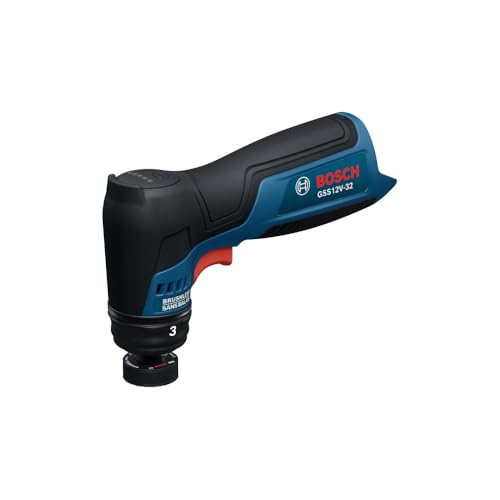
TL;DR: The Bosch GSS12V-32N packs a brushless 12 V motor, 3 mm orbit and a 32 mm pad into a 1.1‑lb cordless sander that excels at precise spot work but carries a premium price.
This sander’s standout feature is its brushless motor that delivers up to 8,000 rpm and an orbital stroke rate of 6,000‑16,000 opm, all while running on a 12.0 V battery platform. The 32 mm sanding pad and 3 mm orbit make it ideal for tight‑area detail sanding, and the variable‑speed trigger lets you dial in the exact aggressiveness you need.
Compared with the nine other tools in the roundup, the GSS12V‑32N is among the lightest at 1.1 lb, noticeably lighter than the heavy Festool ETS EC150 and the Metabo SXA18LTX125BL. Its pad size is much smaller than the 5‑inch or 125‑mm pads found on most competitors, which limits it to spot sanding rather than large‑area work. The 3 mm orbit sits between Milwaukee’s 1.5 mm orbit (smaller) and the 5 mm orbit of the Bosch GEX12V‑32N, offering a middle ground in motion size. Speed‑wise, its 3,000‑8,000 rpm range matches the lower end of the Bosch GEX12V‑32N and falls short of the higher 14,000 opm capability of the Milwaukee M12 Fuel.
Professional reviewers highlight the tool’s low vibration and ergonomic palm grip, noting that the brushless motor feels smooth even during extended use. Everyday users echo this, praising the quiet operation and the convenience of the auto‑shut‑off timer for repetitive sanding passes. The main criticisms focus on the tiny 32 mm pad, which restricts the sander to detail jobs, and the fact that the unit ships without a battery, meaning you’ll need to purchase a Bosch 12 V pack separately for any meaningful runtime.
Pros
Cons
Best for: Those prioritizing quality and willing to pay for premium performance — the Bosch GSS12V-32N offers No-Load Speed: 3000-8000 rpm
Avoid if: You're on a tight budget or only need basic functionality
TL;DR: The Bosch GEX12V-32N packs a 5 mm orbit and up to 8,000 RPM in a 1.1‑lb cordless body, delivering precise detail sanding at a premium $469 price.
The standout spec is its 5 mm random orbit paired with a brushless 12 V motor that can spin up to 8,000 RPM. At just 1.1 lbs, the tool feels ultra‑light, and the palm‑grip handle keeps fatigue low during extended spot‑sanding sessions.
Compared with the nine peers, the GEX12V’s orbit is larger than the Milwaukee M12 Fuel’s 1.5 mm and the SKIL SR660302’s 3.0 mm, giving it a higher material‑removal rate for detail work. Its 32 mm pad matches the Bosch GSS12V‑32N but is far smaller than the 6‑inch pad on the Festool ETS EC150, confirming its focus on tight‑area sanding. Speed-wise, the variable‑speed trigger reaches the same 8,000 RPM ceiling found in the Metabo SXA18LTX125BL and the upper range of the Bosch GSS12V‑32N, while its 1.1‑lb weight sits just above the 0.97‑lb Bosch GSS12V‑32N and slightly heavier than the Milwaukee’s 1.0‑lb listing.
User feedback repeatedly praises the smooth, low‑vibration feel and the tool’s balance, noting that the palm grip and vibration‑reduction design make it easy to maneuver into cramped spots. The same reviews flag the short runtime on low‑capacity batteries and the 32 mm pad’s limitation to detail work, while the absence of an integrated dust‑extraction system is also mentioned.
Technically, the sander runs on Bosch’s 12 V GBA battery platform, offers tool‑free pad swaps between adhesive and hook‑and‑loop pads, and supports wet or dry sanding modes. Bosch backs the unit with a three‑year limited warranty, reinforcing confidence in its durability.
Pros
Cons
Best for: Professionals and hobbyists needing precise spot sanding and portable power — the Bosch GEX12V-32N 4 inch offers Weight: 1.1 lbs
“Feels balanced with center of gravity at pad”
“Good runtime efficiency (~10.5 min on 2 Ah)”
Breakdown
Milwaukee M12 Fuel Orbital Detail Sander
Pros
Worx WX823L
Pros
SKIL SR660302
Pros

Metabo SXA18LTX125BL
Pros
Based on scoring data and product specs
Personalized picks
Best Overall Pick
Milwaukee M12 Fuel Orbital Detail Sander
Best OverallBest for: Entry-level buyers or those on a tight budget — the Milwaukee M12 Fuel Orbital Detail Sander offers Speed Settings: 4 preset settings
Worx WX823L
Best for: Most users looking for a well-reviewed, reliable mainstream option — the Worx WX823L offers Speed Settings: 5
$133.22+$4.22 vs winner
Skip WQV Brushless Random Orbital Sander if…
Reliability and user satisfaction are your top concerns
Milwaukee’s M12 Fuel Orbital Detail Sander takes the top spot with a 4.8‑star rating from 422 reviewers, a feather‑light 0.59 kg body and a blistering 14,000 RPM no‑load speed. Its brushless motor, variable‑speed trigger and ergonomic handle keep fatigue low, while the built‑in vibration‑reduction system and a solid 5‑year warranty give you confidence for long‑term use.
The runner‑up, the Worx WX823L, shines when you need a tool that runs longer and manages dust on the job. It comes with a bag‑style dust‑collection system, includes sandpaper right out of the box, and weighs 1.2 kg. Its 10,000 RPM no‑load speed and a generous 125 mm sanding pad make it a capable choice for larger surfaces or projects where a built‑in dust bag is essential.
For tighter budgets, the WQV Brushless Random Orbital Sander delivers the lowest entry price at $49.07, making it the best value pick. In the mid‑range segment, the Worx WX823L (also our runner‑up) offers solid performance and dust management for $149.99. If premium features and maximum power are your priority, the Festool ETS EC150 stands out at $649.00 as the top‑tier option.
Pick the Milwaukee M12 Fuel Orbital Detail Sander for the most capable, lightweight, and reliable cordless sander on the market today.
Milwaukee delivers a no‑load speed of 14,000 RPM, which tops the Worx WX823L’s 10,000 RPM and the SKIL SR660302’s 11,000 RPM. That high speed gives it a strong power‑to‑weight feel while staying under $130.
No reviews yet — be the first to share your experience.
Please sign in to leave a review