⚡ Quick Answer
When you need a lantern that slips into a pocket yet still powers a phone and lights a tent, the Lepro Mini Rechargeable Lantern checks a lot of boxes. It delivers 310 lumens across five modes, runs about five hours on its 3000 mAh battery, and survives a splash thanks to an IPX4 rating—all for $23.99 and a solid 4.7‑star rating from nearly 8 000 reviewers. At just 176 g and with a magnetic base plus hanging hook, it feels like a tiny multi‑tool for solo campers, hikers or anyone who wants a reliable emergency light without bulk.
Our roundup compares 11 lanterns that span three price tiers. The budget tier (Kizen Solar, Consciot, Glocusent, Lepro Mini) starts at $14.99, the mid‑range tier (Lepro 1000LM, Durapower) offers higher outputs like 2000 lumens, and the premium tier (AlpsWolf, Goal Zero, Coleman 700L, Coleman 1000L Deluxe) tops out at $44.99 with features such as propane fuel or ultra‑long runtimes up to 70 hours. Ratings range from 4.4 to 4.8 stars, and lumens vary from a modest 65 to a powerful 2000.
Read on to see how each model balances brightness, battery life, durability and price, and discover which lantern fits your next outdoor adventure.
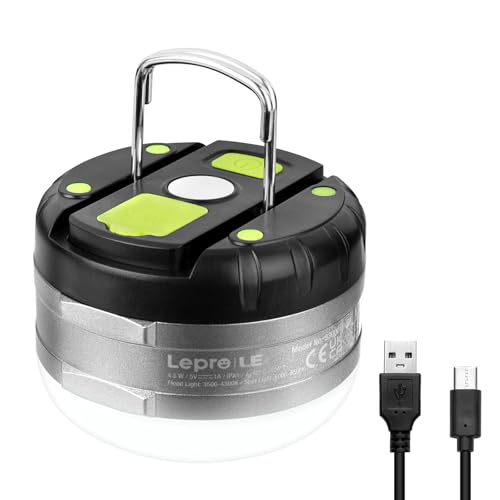
Lepro Mini Rechargeable Lantern
Its 3000 mAh battery capacity delivers up to 5 hours of light, giving solid runtime for most outdoor trips.

Lepro 1000LM Rechargeable Lantern
Perfect for campers who need brighter illumination, its 4400 mAh battery and 1000‑lumens output cost $1.60 more than the Mini.

Glocusent 135 LED
Its IP68 waterproof rating lets you submerge the lantern, a durability level the other two models don’t provide.
Also considered
TL;DR: The Lepro 1000LM Rechargeable Lantern delivers 1000 lumens of 360° light, runs up to 25 hours on warm white, and packs a 4400 mAh battery for $25.59.
The standout spec is its 1000 lm maximum output combined with a dimmable LED array, letting you brighten a campsite or backyard instantly. Its 4400 mAh rechargeable battery gives up to 25 hours of warm‑white light, 18 hours on daylight mode, and 12 hours at full combined brightness, so you can leave it on through multiple evenings without a recharge.
Compared with the other ten lanterns in this roundup, the Lepro sits at a mid‑range price point—higher than the ultra‑budget Glocusent 135 LED but lower than the premium Durapower LED Camping Lantern. It offers more lumens than the Glocusent and the Lepro Mini, though the Durapower’s 2000 lm output is double. In terms of weight, it’s heavier than the lightweight Lepro Mini (which weighs 0.39 lb) yet lighter than the bulkier Durapower model (which exceeds a kilogram). Its IP44 rating gives it better rain resistance than the Energizer Weatheready Folding, which only lists basic protection.
Reviewers consistently praise the lantern’s brightness and the ability to run for “four or more days” on low warm‑white settings, confirming the long runtime claim. Professional reviewers note the durable plastic/PC housing and the 360° beam as ideal for campgrounds and emergency kits. The most common complaint is the 1.3 lb weight, which some ultralight hikers find cumbersome, especially when the D‑battery option adds bulk.
Additional technical notes include a 360° beam angle for uniform illumination, color temperature ranging from 3000 K to 6000 K for warm to daylight tones, and four lighting modes (daylight, warm, combined, strobe). The lantern operates from –25 °C to 40 °C and draws 2 A at 5 V, consuming about 10 W when at full power. A USB‑C port and included cable make recharging straightforward, and the top handle plus bottom hook give flexible mounting options.
Pros
Cons
Best for: Most users looking for a well‑reviewed, reliable mainstream option — the Lepro 1000LM Rechargeable Lantern offers Battery Capacity: 4400 mAh
Avoid if: You have limited desk space or need portability
TL;DR: The Lepro Mini Rechargeable Lantern packs 310 lumens, a 3000 mAh battery and five lighting modes into a 0.39 lb, IPX4‑rated shell that also charges your phone.
At just 0.39 lb (176 g) and measuring 70 mm × 63 mm × 70 mm, this lantern is one of the most compact options in the lineup. It delivers up to 310 lumens at a neutral 4700 K color temperature, runs for 300 minutes (5 hours) on full brightness, and offers a low‑power stretch of 570 minutes. The built‑in 3000 mAh power bank supplies 5 V / 1 A via a tethered USB‑A cable, turning the lantern into an emergency charger.
Compared with its peers, the Mini is lighter than the Lepro 1000LM (about 1.21 lb) and the Durapower LED Camping Lantern, yet only marginally heavier than the Kizen Solar Lantern (0.399 lb). Its battery capacity of 3000 mAh falls short of the Glocusent 135 LED’s 5000 mAh pack, but still outperforms the Energizer Weatheready Folding’s D‑cell setup in terms of rechargeability. The five‑mode selector, magnetic base and hanging hook give it more mounting flexibility than the single‑mode designs of several competitors.
Reviewers consistently praise the lantern’s pocket‑size build and the convenience of its power‑bank feature. Professional reviewers note the solid aluminum‑plastic housing and the clear battery‑level indicator. The most common complaint is the relatively short high‑bright runtime, and a few users report that the actual lumen output feels dimmer than the 310 lm specification.
Pros
Cons
Best for: Most users looking for a well‑reviewed, reliable mainstream option — the Lepro Mini Rechargeable Lantern offers Battery Capacity: 3000 mAh
Avoid if: You need advanced features or professional‑grade performance
TL;DR: The Consciot LED Camping Lantern delivers 1000 lumens of 360° illumination, up to 12 hours of run time, and IPX4 resistance, all for $15.65, making it a bright, budget‑friendly choice for campers.
The standout spec is its 1000‑lumens output, which the manufacturer equates to a 75‑watt incandescent bulb. Coupled with a full‑circle 360° beam angle, the lantern can light an entire tent or campsite. It runs on three D‑cell batteries for up to 12 hours, and the top handle plus bottom hook let you hang it or carry it with ease. The ABS‑plastic housing houses a removable cap, and the device offers 4 preset modes plus stepless dimming from 5 % to 100 %.
Compared with the other ten lanterns in this roundup, the Consciot is heavier than the ultra‑light Kizen Solar Lantern (0.399 lb) and the Lepro Mini (0.388 lb), but lighter than the Energizer Weatheready Folding (1.19 lb) and the Lepro 1000LM (1.21 lb). Its 1000‑lumens brightness outshines the Kizen’s 65‑lumens high setting and the Energizer’s 500‑lumens output, while matching the Lepro 1000LM’s lumen rating. Height‑wise, it sits at 7.28 in, shorter than the Energizer’s 9.25 in and just a touch under the Lepro 1000LM’s 7.80 in. The 360° beam angle is shared with the Glocusent 135 LED and the Lepro 1000LM, giving it comparable coverage.
Reviewers consistently applaud the lantern’s “super bright” illumination and the convenience of stepless dimming. Professional reviewers note the IPX4 rating as a solid guarantee against rain or splashes, and they highlight the removable cap that lets you turn the unit into a focused flashlight. Common complaints revolve around the fact that three D‑cell batteries are not included, adding to the initial cost, and the base can be stiff to twist open the first time. Some users also mention that the weight makes it less ideal for ultra‑light backpacking.
Pros
Cons
Best for: Budget-conscious buyers seeking a reliable entry-level option — the Consciot LED Camping Lantern offers Battery Life: Up to 12 hours
Avoid if: You need advanced features or professional‑grade performance
“Insanely bright for size—lights up entire tent”
“Love the dimming and modes; strobe great for signaling”
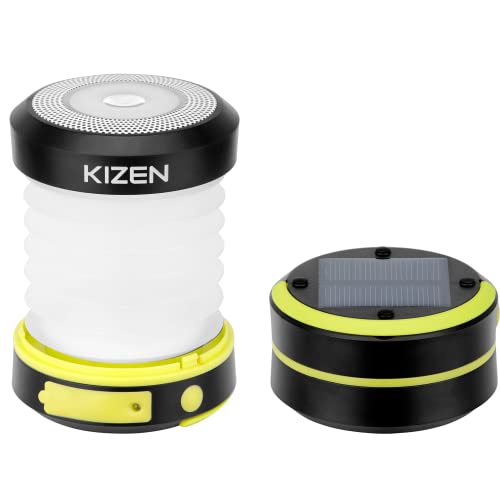
TL;DR: The Kizen Solar Lantern Yellow delivers up to 10 hours of light on a single charge, collapses to a pocket‑size 8.5 cm unit, and stays affordable for solo campers.
What really sets this lantern apart is its 600‑minute (10 hour) high‑mode runtime and the flexibility of three power sources—solar panels, USB recharge, and a 3 × AAA backup. At just 0.399 lb (181 g), the collapsible plastic housing fits easily into a daypack, and the built‑in hanging loop lets you suspend it from a branch or tent pole.
Compared with the other ten lanterns in this roundup, the Kizen is markedly lighter than the Consciot (1.08 lb) and the Energizer Weatheready (1.19 lb), and only a shade heavier than the Lepro Mini (0.388 lb). Its price point is lower than the Lepro Mini and the higher‑output Glocusent, making it a budget‑friendly choice. Brightness, however, is modest: 65 lumens at high setting versus 1,000 lumens on the Consciot and 500 lumens on the Energizer, so it won’t light a large group campsite as effectively as those models.
Backers praise the lantern’s ultra‑portable design and the peace of mind that comes from having solar, USB, and battery options in one unit. Reviewers frequently note the reliable 10‑hour runtime for solo hikes and emergency kits. The most common criticism is that 65 lumens feels dim in open spaces, and solar charging can be sluggish when the sun is blocked—users recommend pairing it with the AAA backup for cloudy days.
When folded, the lantern measures about 3.35 × 3.35 × 4.7 inches, making it easy to stash in a pocket or attach to a backpack strap. Its water‑resistant plastic housing and SOS mode add extra safety for night‑time adventures, while the hanging capability means you can set it up without a flat surface.
Pros
Cons
Best for: Budget-conscious buyers seeking a reliable entry-level option — the Kizen Solar Lantern Yellow offers Height: 8.5 cm
Avoid if: You need high illumination for large group campsites
“Perfect for backpacking—fits in my pocket”
“Saved us during hurricane; charged phone too.”
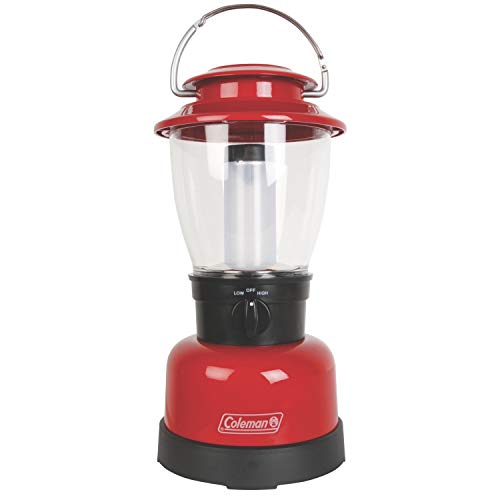
TL;DR: The Coleman 700L delivers 700 lumens of 360° light, lasts up to 70 hours on low, and packs a splash‑proof, impact‑resistant design in a compact 6‑inch lantern.
The lantern’s standout spec is its 700‑lumen high mode, dropping to 140 lumens on low, with a 360° illumination pattern that reaches 12 meters (high) and 8 meters (low). Powered by four D‑cell alkaline batteries, it can run for 30 hours on high and a remarkable 70 hours on low, while its IPX4 rating protects it from splashes.
At 1.38 lb, the 700L sits between the ultra‑light Goal Zero Crush Light Chroma (far lighter) and the bulkier Coleman 1000L Deluxe (heavier). It’s also heavier than the Lepro Mini Rechargeable Lantern and the Lepro 1000LM, but those models trade off some brightness for a lighter package.
Reviewers consistently praise the lantern’s bright output and rugged build—its impact‑resistant plastic housing and integrated carry handle make campsite placement easy. The main complaints focus on the need for four bulky D‑cell batteries, which add weight, and the relatively short high‑mode runtime compared with the extended low‑mode endurance.
The device uses a lifetime LED that never needs replacement, and its two lighting modes (high/low) keep control simple. The splash‑proof IPX4 rating and impact‑resistant plastic give confidence in wet or rough conditions, while the 3‑year limited warranty backs the build quality.
Pros
Cons
Best for: Buyers willing to invest in a proven, high‑quality option — the Coleman 700L offers Battery Life: 30 hours (high), 70 hours (low).
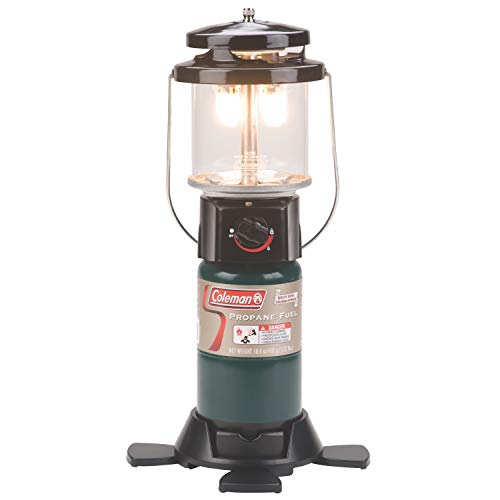
TL;DR: The Coleman 1000L Deluxe delivers 1000 lumens of bright, 23‑meter throw light with a sturdy metal/glass build, but its match‑lit ignition and premium price make it a serious investment for group camping.
What really sets this lantern apart is its 1000 lumens output paired with a 23‑meter light throw, thanks to the PerfectFlow™ pressure‑control regulator that keeps the flame steady even at altitude. At 11.4 inches tall and 2.7 lb, it’s built around a high‑temperature glass globe and a porcelain‑coated two‑tier ventilator that resists corrosion.
Compared with the other ten lanterns in this roundup, the Coleman sits on the heavier end – it outweighs the Lepro Mini’s 0.39 lb and the Lepro 1000LM’s 1.21 lb, and it’s bulkier than the Goal Zero Crush Light’s 100 mm height. It also carries a higher price tag than the sub‑$30 battery‑powered options, making it pricier than the Lepro Mini and the Goal Zero model, but it offers far more lumens than those LED competitors.
Users consistently applaud the lantern’s ability to flood a campsite with bright, even light and to run up to 13 hours on low mode, which many reviewers cite as ideal for overnight stays. The collapsible footed base and bail handle earn extra kudos for easy placement and transport. On the downside, the manual match‑lit ignition draws criticism in windy conditions, and several owners note that the included mantles can be fragile and may need replacement after heavy use.
From a technical standpoint, the lantern runs on a 16.4 oz propane cylinder and features an adjustable knob for precise brightness control. Its metal/glass housing, combined with the porcelain‑coated ventilator, gives it durability for rugged camping trips. Coleman backs the unit with a three‑year limited warranty, reflecting confidence in its long‑term performance.
Pros
Cons
Best for: Buyers willing to invest in a proven, high‑quality option — the Coleman 1000L Deluxe offers Height: 11.4 inches.
Avoid if: You're shopping on a tight budget — it's priced at $44.99.
“Casts light up to 23 meters—lights up the whole campsite”
“13 hours on low is perfect for overnight”
TL;DR: The Goal Zero Crush Light Chroma packs a collapsible 10‑LED design, 60‑lumens output and up to 35 hours of low‑mode runtime into a 3.2‑oz, IPX4‑rated lantern that’s perfect for ultralight backpacking.
The lantern’s standout spec is its ultra‑light weight of 3.2 oz (91 g) and a collapsible form factor that folds down to just 0.6 in (15 mm) thick, making it one of the most packable lights on the market. It runs on a 500 mAh lithium‑polymer battery, delivering up to 35 hours of illumination on the lowest setting, and can be recharged via USB or a tiny 0.12 W solar panel in about 2.5 hours.
Compared with the other ten lanterns in this roundup, the Crush Light Chroma is noticeably lighter than the Lepro Mini and far more compact than the bulkier AlpsWolf and Coleman models. While its 60‑lumens peak output trails the 2000‑lumens claim of the Durapower LED Camping Lantern, the Goal Zero still offers more color‑changing options than many peers, featuring six color modes plus a multi‑color fade. Its IPX4 rating also gives it an edge over models that lack any water‑resistance rating.
Reviewers consistently praise the lantern’s feather‑weight build and the fun of its color cycles for campsite ambience. Professional reviewers note the impressive low‑mode runtime, but both experts and everyday users flag the modest 60‑lumens maximum brightness as a limitation for larger group settings. The high‑mode runtime of roughly 180 minutes (about three hours) is also mentioned as a trade‑off when you need brighter light.
Pros
Cons
Best for: Buyers willing to invest in a proven, high-quality option — the Goal Zero Crush Light Chroma offers Battery Capacity: 500 mAh
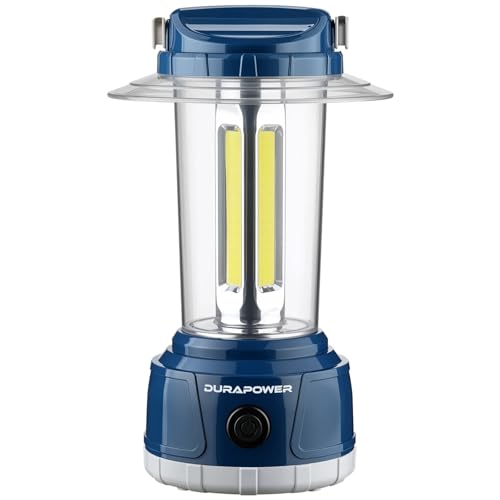
TL;DR: The Durapower LED Camping Lantern packs 2000 lumens, a 4000 mAh rechargeable battery and 20 hours of runtime into a compact, IP44‑rated unit for $31.44.
At the heart of this lantern is its 2000‑lumen output and a full 360° beam, giving you bright, omnidirectional illumination for tent camping or emergency use. Five selectable light modes let you dial the output to suit the situation, while the built‑in 4000 mAh power bank can charge small devices via USB. The rechargeable battery promises up to 20 hours of continuous light on a single charge, and the IP44 rating protects against splashes.
Compared with the other ten lanterns in this roundup, the Durapower sits at a slightly higher price point than the Lepro Mini but undercuts the AlpsWolf model, which shares the same 4000 mAh capacity but only reaches a 12‑hour low‑mode runtime. Its battery life also exceeds the Lepro Mini’s roughly 5‑hour claim (300 minutes) and outlasts the Goal Zero’s modest 500 mAh pack. While the Coleman 700L can claim 30 hours on high, it relies on replaceable D‑cells, whereas Durapower offers a rechargeable solution with a built‑in power bank.
Reviewers consistently praise the lantern’s “incredible brightness” and the convenience of the power‑bank feature, noting it shines well in large outdoor areas and during power outages. Professional reviewers highlight the long runtime and 360° coverage as strong points. The most common complaint is the slow recharge time, which some users say delays readiness after a night of use. Additionally, the lantern lacks a solar charging option, limiting its appeal for off‑grid adventures that require continuous power replenishment.
Beyond brightness, the lantern’s dual slip‑proof handles make hanging or carrying easy, and the IP44 rating offers reasonable protection against rain or splashes. Durapower backs the unit with a one‑year warranty, giving peace of mind for occasional outdoor mishaps.
Pros
Cons
Best for: Most users looking for a well‑reviewed, reliable mainstream option — the Durapower LED Camping Lantern offers Battery Capacity: 4000 mAh
TL;DR: The Glocusent 135 LED lantern packs a 1500‑lumen output, 200‑hour low‑mode runtime and IP68 durability into a 0.66‑lb, USB‑C‑charged package for reliable outdoor illumination.
What really sets this lantern apart is its 1500‑lumen maximum brightness and 200‑square‑foot coverage, thanks to 135 evenly spaced LEDs. The unit runs up to 200 hours on its 5000 mAh rechargeable battery, and it survives a 40‑inch drop test, all while staying under a compact 3.43 × 3.43 × 7.28‑inch footprint.
Compared with the other ten lanterns in this roundup, the Glocusent sits in the middle of the weight range – lighter than the Energizer Weatheready Folding at 1.19 lb, but heavier than the ultra‑light Lepro Mini at 0.39 lb. Its 5000 mAh capacity outpaces the Lepro Mini’s 3000 mAh and matches the higher‑end Durapower’s 4000 mAh, while its IP68 rating exceeds the Lepro 1000LM’s IP44 and the Kizen Solar’s lack of an official rating.
Reviewers consistently praise the lantern’s brightness, noting that the 1500‑lumen output easily lights large tents and campsite areas. Professional reviewers highlight the “incredible 200‑hour runtime on the lowest setting” as a major convenience for multi‑day trips. The main complaint centers on the emergency mode, which delivers 1200 lumens for only a 3‑minute burst, and a few users mention that the weight feels a bit hefty for backpacking compared with the slimmer Lepro Mini.
Beyond raw output, the Glocusent offers five brightness levels, three color temperatures (3000K, 4000K, 6000K) and a 360‑degree omnidirectional beam, giving you flexible lighting for everything from reading maps to signaling. A rubber handle makes hanging or carrying simple, and the USB‑C port not only recharges the lantern in 3.5 hours but also lets you charge a phone in a pinch.
Pros
Cons
Best for: Budget-conscious buyers seeking a reliable entry-level option — the Glocusent 135 LED offers Battery Capacity: 5000 mAh
Avoid if: You want the best value‑per‑dollar in its price range
TL;DR: The Energizer Weatheready Folding lantern delivers 500‑lumens of bright, uniform light, offers up to 120 hours of low‑mode runtime, and folds into a compact 9.25‑inch package for budget‑friendly outdoor use.
This lantern’s standout spec is its 500‑lumen LED output, which users describe as bright and evenly spread across a 360‑degree field. The housing is made of plastic and carries an IPX4 rating, so light rain won’t stop it from working. A built‑in glow‑in‑the‑dark switch and an integrated easy‑grip handle make night‑time operation straightforward, while the USB port lets you charge a phone or other small device while the lantern runs on four D batteries.
At 1.19 lb, the Weatheready is heavier than the ultra‑light Lepro Mini (0.39 lb) and the Kizen Solar Lantern (0.40 lb), but it still feels manageable compared with bulkier options like the Durapower LED Camping Lantern, whose weight isn’t listed. Its price point sits alongside the Consciot LED Camping Lantern, yet the Weatheready provides a longer low‑mode battery life of 120 hours versus the Consciot’s 12‑hour claim. Unlike many rechargeable competitors, it relies on disposable D cells, which some users see as a convenience for emergency kits where recharging isn’t possible.
Professional reviewers praise the lantern’s uniform illumination and the impressive 120‑hour low‑mode runtime, noting it as ideal for power‑outage scenarios. Everyday buyers echo this sentiment, highlighting the bright output and the convenience of the foldable design that collapses for easy storage in a car trunk or backpack. The most common criticism points to the need to purchase four D batteries separately and the moderate 15‑30‑hour runtime when the high mode is selected, which some campers find limiting for extended trips.
Pros
Cons
Best for: Budget-conscious buyers seeking a reliable entry-level option — the Energizer Weatheready Folding offers Battery Life: 15-30 hours (High), 120 hours (Low)
TL;DR: The AlpsWolf Camping Lantern Green delivers 1000 lumens of 360° illumination, a 4000 mAh rechargeable battery that lasts up to 12 hours on low mode, and a built‑in power‑bank, all for $32.99.
What really stands out is the combination of brightness and endurance. At 1000 lumens the lantern lights a large campsite, while the 4000 mAh lithium‑ion cell provides up to 12 hours of low‑mode runtime and can charge phones via its USB‑C power‑bank port. The unit is rated IPX4, so a sudden rain shower won’t short it out, and the hook handle lets you hang it from a tree or tent pole.
Compared with the Durapower LED Camping Lantern, the AlpsWolf shares the same 4000 mAh battery but offers half the lumens (1000 lm vs 2000 lm) and one fewer light mode (4 vs 5). It is also more compact—its depth is 89 mm (3.5 in) versus Durapower’s 6.7 in—making it easier to pack. The Lepro 1000LM Rechargeable Lantern matches the 1000‑lumens output but tips the scales at about 1.3 lb (590 g), noticeably lighter than AlpsWolf’s 2.23 lb (1010 g). The ultra‑light Lepro Mini is far smaller and lighter, yet its 310‑lumens output and 3000 mAh battery are modest by comparison. In price terms, the AlpsWolf sits a bit higher than the Lepro Mini and the Goal Zero Crush Light, but it’s in the same ballpark as the Durapower and Coleman 700L models.
Users consistently praise the lantern’s ability to illuminate a whole tent and keep smartphones alive during power outages. Professional reviewers note the reliable emergency performance and the rain‑proof IPX4 rating as key strengths. The most common criticism is the weight—at 2.23 lb the lantern feels bulkier than ultralight options—and the high‑mode runtime, which drops to just 5‑6 hours. Those who need a long‑lasting, bright source for a family campsite will find the trade‑off acceptable.
Pros
Cons
Best for: Those prioritizing quality and willing to pay for premium performance — the AlpsWolf Camping Lantern Green offers Battery Capacity: 4000 mAh
Avoid if: You're shopping on a tight budget — it's priced at $32.99
“Super bright and lights up a big area”
“lasts for hours on 4000mAh battery”
Breakdown
Lepro Mini Rechargeable Lantern
Pros
Lepro 1000LM Rechargeable Lantern
Pros
Glocusent 135 LED
Pros
Cons

Consciot LED Camping Lantern
Pros
Based on scoring data and product specs
Personalized picks
Best Overall Pick
Lepro Mini Rechargeable Lantern
Best Mid-Range PickBest for: Most users looking for a well-reviewed, reliable mainstream option — the Lepro Mini Rechargeable Lantern offers Battery Capacity: 3000 mAh
Lepro 1000LM Rechargeable Lantern
Best for: Most users looking for a well-reviewed, reliable mainstream option — the Lepro 1000LM Rechargeable Lantern offers Battery Capacity: 4400 mAh
$31.99+$5.00 vs winner
Skip AlpsWolf Camping Lantern Green if…
You're shopping on a tight budget — it's priced at $32.99
The Lepro Mini Rechargeable Lantern takes the top spot thanks to its solid 310‑lumens output, a five‑hour battery runtime from a 3000 mAh rechargeable pack, and an IPX4 rating that keeps it safe from splashes. Its five light modes and magnetic‑base mounting give you flexible lighting without adding bulk, and at just 176 g it’s light enough to toss in any backpack.
The runner‑up, the Lepro 1000LM Rechargeable Lantern, shines when you need serious illumination and endurance – it delivers a bright 1000 lumens and can run up to 25 hours on a single charge. Its IP44 protection and four distinct modes (daylight, warm, combined and strobe) make it a reliable choice for extended campsite stays or night‑time repairs.
Looking for a tighter budget? The Kizen Solar Lantern Yellow at $14.99 offers the most affordable solar‑powered option for occasional trips. If premium features are your priority, the Coleman 1000L Deluxe at $44.99 provides the highest‑end build and output among the higher‑priced choices.
Pick the Lepro Mini Rechargeable Lantern for compact power that won’t break the bank and enjoy reliable light on every outdoor adventure.
The Lepro 1000LM Rechargeable Lantern is rated for 25 hours of use, while the Lepro Mini Rechargeable Lantern lasts about 5 hours. Other models like the Glocusent 135 LED reach up to 200 hours but at a higher price and larger size.
No reviews yet — be the first to share your experience.
Please sign in to leave a review