⚡ Quick Answer
We compared 11 personal‑style countertop blenders, spanning a price range from $29.99 for the Magic Bullet Portable up to $179.99 for the Ninja BL642. The lineup splits into three tiers: budget models like the NutriBullet Personal ($57.99) and Hamilton Beach MultiBlend ($50.45); mid‑range options such as the NutriBullet Pro ($69.95) and Cuisinart CPB‑300 ($85.00); and premium powerhouses including the Ninja BL642 (1200 W motor, 72 oz pitcher, 4.7/5 rating) and Ninja BN751 (1200 W operating, 72 oz total‑crushing pitcher, 4.7/5 rating).
If you need a single‑serve solution that fits in a backpack, the Magic Bullet Portable’s 16 oz capacity and 15‑plus battery cycles make it a travel‑friendly pick. For a countertop companion that can crush ice for family‑size smoothies, the Ninja BL642’s 1200 W motor and three to‑go cups provide flexibility. Meanwhile, the NutriBullet Pro’s 900 W motor and dual 32 oz/24 oz cups deliver sub‑minute blends for health‑focused users.
Below we’ll break down each model’s strengths, so you’ll match the blender that fits your kitchen space, budget, and blending habits.

Ninja BL642
Its 30‑in cord length lets you place the blender anywhere on the countertop without hunting for an outlet.
NutriBullet Pro
Ideal for budget‑conscious cooks, it comes in at $69.95—about $110 less than the Ninja BL642.

Ninja BN751
With a slimmer 6.75‑in depth, it nests into tighter kitchen nooks, a space advantage the other two bulkier models lack.
Score Analysis
Key score advantages vs. runner-up (NutriBullet Pro)
Price Range
Ninja BL642
$179.99
NutriBullet Pro
$69.95
Ninja BN751
$119.99
NutriBullet Personal Blender Gray
$57.99

Magic Bullet Portable Blender
$29.99

KitchenAid K150
$159.87

Beast Mini Blender Plus
$129.00

Hamilton Beach MultiBlend
$50.45

Cuisinart CPB-300 Black
$85.00

Black+Decker Quiet Blender
$51.65

Cuisinart CPB-380
$126.17
Spec Comparison
TL;DR: The Ninja BL642 blends with a 1200 W motor, Auto‑iQ programs and a 72‑oz family pitcher, but its 10.1‑lb heft and lack of smart features may limit portability.
The standout spec is the 1200 W motor paired with Auto‑iQ intelligent programs that pulse, blend and pause automatically. With three touch‑pad speeds and a dedicated pulse button, you can run the 72 oz pitcher for big batches or grab one of the three personal cups (18‑32 oz) for a single‑serve smoothie.
Compared with the other ten contenders, the BL642 is noticeably heavier than the KitchenAid K150 (7.0 lbs) and the Cuisinart CPB‑380 (6.5 lbs), yet its motor outpaces the KitchenAid’s 650 W and the Cuisinart’s 500 W units. It matches the Ninja BN751’s 1200 W output but offers a larger pitcher than the BN751’s 72 oz capacity and a higher maximum liquid capacity of 64 oz. The NutriBullet Pro runs at 900 W, still below the BL642’s power level.
Users rave about the ice‑crushing strength, calling the smoothies “restaurant‑quality” and praising the one‑button operation. Professional reviewers note the quieter performance relative to other 1200 W Ninja models. On the flip side, the 10.1‑lb weight can make countertop moves cumbersome, and a few owners mention occasional chunks when blending fibrous greens. The unit also lacks any app or voice integration, so you can’t use smart‑home shortcuts.
The blender sits on a 30‑in cord, fits within a 7.0‑in depth, 10.0‑in width and 17.5‑in height footprint, and houses a BPA‑free, dishwasher‑safe plastic jar. The stainless‑steel Pro Extractor blades detach for easy cleaning, and the package includes a 75‑recipe cookbook to get you started.
Pros
Cons
Best for: Buyers willing to invest in a proven, high‑quality option
Avoid if: You're on a tight budget or only need basic functionality
“makes the smoothest smoothies I've ever had... like magic”
“doesn’t blend smoothly at all”
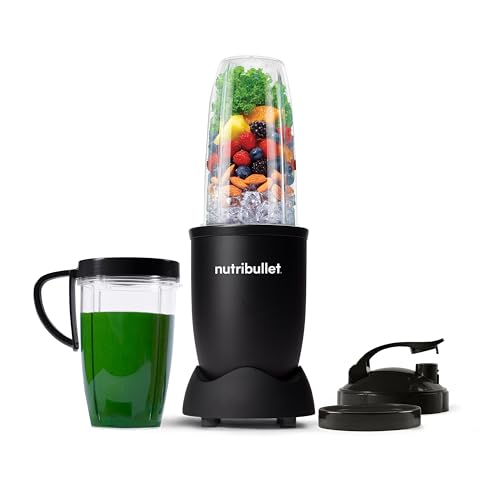
TL;DR: The NutriBullet Pro packs a 900 W motor and 20400 rpm speed into a compact 2100 g base, delivering sub‑minute smoothies with two BPA‑free Tritan cups.
The standout spec is its 900 W motor that spins up to 20400 rpm, paired with a built‑in 1‑minute timer to keep blending consistent. The 900 ml primary cup and 700 ml secondary cup give you enough volume for single‑serve smoothies or protein shakes.
At $69.95, it sits above the $57.99 NutriBullet Personal Blender but below higher‑priced options in the lineup. Its 749 mm power cord out‑reaches the 610 mm cord of the Black+Decker Quiet Blender, and the 900 W motor outpaces the 600 W of the NutriBullet Personal Blender and the 350 W Cuisinart CPB‑300.
Professional reviewers praise its ability to pulverize fibrous ingredients quickly, while many users love the stainless‑steel extractor blade and the dishwasher‑safe Tritan cups. The single‑speed operation, however, draws criticism from those who want more control for chunky recipes like salsa.
Pros
Cons
Best for: Health‑conscious individuals who need a fast, well‑reviewed blender for daily smoothies and shakes.
Avoid if: You require variable speed control, want a lightweight travel blender, or need to blend chunky foods like salsa.
TL;DR: The Ninja BN751 blends with a 1400 W peak motor, holds 72 oz in its pitcher, and scores 4.7 / 5 stars, but its 8.44‑lb weight and 17.5‑in height demand countertop space.
The standout spec is the 1400 W peak motor paired with a 72 oz (2129 ml) total‑crushing pitcher, letting you tackle large batches of smoothies or soups without a hitch. Its 24 oz personal cups add flexibility for on‑the‑go drinks, and the 3 Auto‑iQ programs plus 4 manual speeds give you control over texture.
Compared with the other contenders, the BN751 is heavier than the Cuisinart CPB‑380’s 6.5‑lb build but lighter than the Beast Mini Blender Plus at 9.15 lb and the Ninja BL642 at 10.1 lb. Its 30‑in cord is shorter than the CPB‑380’s 36‑in lead, yet still includes cord storage. Capacity-wise, the 72‑oz pitcher dwarfs the CPB‑380’s 32‑oz jar and the NutriBullet Pro’s 900 ml cup, while its 24‑oz cup sits between the NutriBullet’s 900 ml and the CPB‑300’s 32‑oz jar.
Everyday users praise the sturdy construction, easy‑to‑clean dishwasher‑safe pitcher, and the strong smoothie results in the personal cups. Professional reviewers note the motor’s superiority over older Ninja models and commend the Auto‑iQ flexibility, though they point out the limited three preset programs. The unit’s footprint—6.75 in deep, 9.0 in wide, and 17.5 in tall—can dominate a small kitchen counter.
Additional technical context includes a 12.5 A draw at 120 V, stainless‑steel detachable blades, and a pulse control function. The package comes with a recipe inspiration guide, instruction book, and quick‑start guide, all backed by a 1‑year limited warranty.
Pros
Cons
Best for: Most users looking for a well‑reviewed, reliable mainstream option
Avoid if: You're shopping on a tight budget — it's priced at $119.99
“great quality and value”
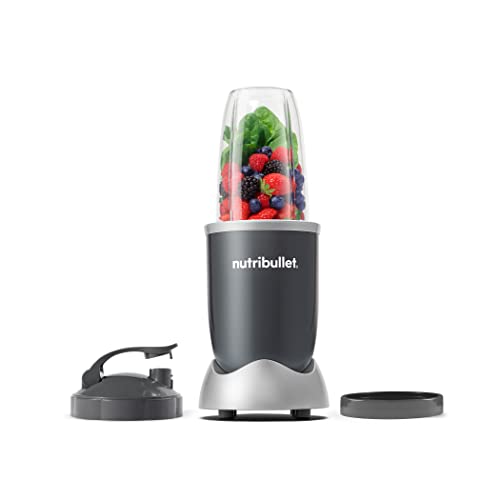
TL;DR: The NutriBullet Personal Blender packs a 600 W motor into a 5.08‑lb, compact base with 18‑oz and 24‑oz BPA‑free cups, ideal for quick solo smoothies but limited to single‑serve batches.
The standout spec is its 600 W motor paired with stainless‑steel cyclonic extractor blades, which reviewers say can crush ice and nuts in under a minute. It comes with two BPA‑free Tritan cups—an 18 oz (500 ml) short cup and a 24 oz (700 ml) tall cup—so you can blend and drink from the same container.
Compared with the other ten blenders in this roundup, the NutriBullet is heavier than the Magic Bullet Portable Blender (about 1.9 lb) but considerably lighter than the Ninja BN751 (8.44 lb). Its cord length of roughly 29.5 in is longer than the Black+Decker Quiet Blender’s 610 mm cord, giving you more reach on a countertop. While the Hamilton Beach MultiBlend tips the scales at 3.53 lb, the NutriBullet’s 5.08 lb still feels solid without being cumbersome.
Users love how fast the 600 W motor extracts nutrients, noting “quick smoothie preparation” and “easy, portable cup design.” Professional reviewers also highlight the motor’s power for single‑serve drinks. Common complaints include occasional lid leaks, blade wear after months of use, and a higher noise level than higher‑end models. Reviewers praise the single‑speed operation for its simplicity, though it can limit texture control for those who prefer thicker or finer blends.
Additional technical notes: the base runs on 220‑240 V (50/60 Hz) and it's dishwasher safe, making cleanup a breeze. NutriBullet offers a one‑year limited warranty, and the gray finish blends into most kitchen décor.
Pros
Cons
Best for: Solo users, travelers, and budget‑conscious smoothie lovers who need a quick, reliable single‑serve blender.
Avoid if: You need large‑batch capacity, multi‑speed control, or a quieter motor for shared spaces.
“Easy to use and makes quick fruit smoothies”
TL;DR: The Magic Bullet Portable Blender is a lightweight, battery‑powered single‑serve blender that fits in a bag, blends up to 16 oz in a 60‑second cycle, and costs under $30.
The standout spec is its portability: at just 1.90 lb and measuring 270 mm tall by 84 mm wide, it slips into backpacks or gym lockers with ease. Its 16 oz (473 ml) jar holds a full single‑serve smoothie, while the 12 oz (355 ml) effective capacity ensures the motor can finish a blend within the built‑in 60‑second cycle.
Compared with the other ten contenders, this model is markedly lighter than the Hamilton Beach MultiBlend (3.53 lb) and the Black+Decker Quiet Blender (about 3 lb), and far lighter than the NutriBullet Pro (around 4.6 lb) or Ninja BN751 (over 8 lb). It also lands at the low end of the price spectrum, making it a budget‑friendly alternative to the larger countertop units that carry higher price tags and bigger footprints.
User feedback praises the one‑button operation and the flip‑and‑sip leak‑proof lid for on‑the‑go convenience. Professional reviewers note the quiet, sturdy construction and the smooth texture when blending fibrous fruits in the 12 oz effective jar. The common complaints focus on the limited power: the single speed and 60‑second cycle struggle with ice or nut butter, and the battery’s 15+ cycles (plus only 2‑3 extra when low) require frequent recharging for heavy daily use. The non‑detachable blade also makes thorough cleaning harder, and the unit isn’t dishwasher‑safe.
Technical details add context: an LED indicator warns when the battery is low, and the included infuser basket lets you add ingredients mid‑blend. The single‑speed, single‑button design eliminates a learning curve, but also caps versatility for thicker recipes like soups or hummus.
Pros
Cons
Best for: Busy commuters, travelers, and budget‑conscious smoothie lovers who need a lightweight, single‑serve blender.
Avoid if: You require powerful blending for ice‑heavy drinks, nut butter, or thick soups, or need a unit that can handle frequent daily use without recharging.
TL;DR: The KitchenAid K150 offers a 650 W motor, 48‑oz ribbed jar and fast ice‑crush in a compact 7‑lb package, making it a solid choice for solo smoothie lovers despite its premium price.
Its standout spec is its 650 W motor paired with a 0.9 hp peak output, driving three variable speeds plus an ice‑crush preset, pulse and a cleaning cycle. The asymmetric stainless‑steel blades and ribbed 48‑oz (1.4 L) jar create a strong vortex, and it crushes a half‑tray of ice—in other words up to six cubes—in under 10 seconds.
At 7 lb, the K150 is lighter than Ninja’s BL642 (10.1 lb) and Ninja BN751 (8.44 lb) but heavier than Cuisinart’s CPB‑380 (6.5 lb) and CPB‑300 (6.55 lb). Its 650 W power sits between Cuisinart’s 500 W motor and the 1,200 W found in the Ninja models, while exceeding the 350 W of the CPB‑300 and the 900 W of the NutriBullet Pro. Dimensionally, the 8.5‑in depth is deeper than Ninja BN751’s 6.75 in but shallower than Cuisinart CPB‑380’s 10.5 in; the 14.8‑in height is shorter than the 17.5‑in tall Ninja units yet taller than the 13.88‑in Cuisinart CPB‑380; and the 7.1‑in width is narrower than the Ninja BL642’s 10.0 in width while comparable to Cuisinart CPB‑380’s 7.5 in.
Professional reviewers praise the durable construction and the die‑cast metal dial for precise speed selection, noting that the ribbed jar produces a smooth puree with minimal residue. Consumers echo the fast ice‑crushing performance, calling it “bar‑quality” and love the compact footprint for small kitchens. A common trade‑off is the six‑cube ice limit, which can require multiple runs for larger parties, and a slower spin on very thick or small batches that sometimes needs a spatula to finish.
Additional technical touches include KitchenAid’s Intelli‑Speed adaptive control and Soft Start technology, both designed to reduce splatter and maintain consistent blending pressure. The built‑in cleaning cycle simplifies maintenance, and dishwasher‑safe jar makes cleanup easy.
Pros
Cons
Best for: Buyers willing to invest in a proven, high-quality option
Avoid if: You're on a tight budget or only need basic functionality
TL;DR: The Beast Mini Blender Plus packs a 600 W motor and three Tritan jars into a 9.15‑lb base, delivering smooth single‑serve blends while staying compact enough for tight countertops.
Reviewers say its 600 W motor paired with an 18,500 RPM blade speed handles frozen fruit and ice without stalling. Its three BPA‑free Tritan jars – 640 mL, 529 mL and 415 mL – feature a 12‑ribbed design that promotes turbulence for smoother results.
Compared with the other ten contenders, the Beast is heavier than the Cuisinart CPB‑380 Hurricane (6.5 lb) and KitchenAid K150 (7.0 lb) but lighter than the Ninja BL642 (10.1 lb). Its 1000 mm cord is longer than the typical 30‑in cords on the Ninja BN751 and Ninja BL642, giving you more reach on a crowded kitchen counter. The 105 mm depth makes it shallower than most peers, so it fits easily under appliances that the bulkier Cuisinart CPB‑300 or Ninja BN751 might crowd out.
User sentiment repeatedly praises the quiet operation and the convenience of the single‑button interface. Professional reviewers highlight the solid build quality and the safety interlock that prevents the motor from starting without a jar attached. However, users note the single fixed speed can over‑blend delicate ingredients, and the 640 mL main jar limits batch size for anyone needing more than a single serving.
Pros
Cons
Best for: Buyers willing to invest in a proven, high‑quality option
Avoid if: You're on a tight budget or only need basic functionality
“most powerful mini blender, excelling at smoothies, dressings, and tough ingredients like veggies.”
“Powerful for size, makes silky smoothies quickly without clumps.”
TL;DR: The Hamilton Beach MultiBlend offers a 650 W motor, four BPA‑free Tritan jars—including a travel size—and dishwasher‑safe parts for $50.45, making it a solid budget blender for daily smoothies.
The MultiBlend’s 650 W peak power handles ice and frozen fruit, while the 32 oz main jar (946 ml) gives enough room for single‑serve smoothies. It also includes an 8 oz grinder jar and two 16 oz travel jars, all made from shatterproof Tritan plastic. At 3.53 lbs the unit stays light enough for countertop storage, with a compact footprint of 6.14 in depth, 12.0 in height and 5.08 in width.
Compared with other models in this roundup, its 32 oz jar is smaller than the Black+Decker Quiet Blender’s 48 oz capacity, but the 650 W motor sits between the NutriBullet’s 600 W and Black+Decker’s 1000 W output. It's heavier than the Magic Bullet Portable’s 1.90 lb body yet lighter than the Ninja BN751’s 8.44 lb build, placing it solidly in the middle of the weight range. With only two speed settings, it offers fewer program options than the Cuisinart CPB‑300’s three‑speed touchpad.
Professional reviewers note the quiet, cETLus‑certified base cuts early‑morning noise, and users repeatedly praise the convenience of multiple jars for travel and grinding. However, common complaints mention that the limited speed settings can make fine‑tuning textures harder, the Tritan jars may scratch over time, and some users report motor strain when processing very tough ingredients for extended periods.
Pros
Cons
Best for: Entry‑level buyers or those on a tight budget
Avoid if: You need powerful performance or professional‑grade features
“650W peak power for smoothies, salsas, nuts, and cheese”
“perfect for daily shakes without waking family”
TL;DR: The Cuisinart CPB-300 offers a 350‑W motor, interchangeable blades and multiple jar sizes in a compact 6.55‑lb design, making it a solid solo blender for small kitchens and travel.
The CPB-300 packs a 350 W motor behind an electronic touchpad with three speed settings (high, low, pulse) and LED indicator lights. Its interchangeable stainless‑steel blade assemblies let you switch between blending and grinding, and the system includes a 960 ml jar, a 240 ml chopping cup, and four 480 ml travel cups. All of this fits inside a footprint of H 210 mm × L 130 mm × W 150 mm, while the overall unit measures H 254 mm × W 400 mm × L 257 mm.
At 6.55 lb, the blender is heavier than the 3.53‑lb Hamilton Beach MultiBlend but still lighter than the 8.44‑lb Ninja BN751, whose height of 17.5 in dwarfs the CPB‑300’s 210 mm stature. It sits at a higher price point than many entry‑level options like the NutriBullet Personal Blender, yet it ships with more accessories and a safety‑focused design. While the NutriBullet Pro lists a max speed of 20,400 rpm, the CPB‑300’s three‑step speed control offers less granular adjustment.
Reviewers appreciate the interchangeable blades and the variety of jar sizes, noting the convenience of the travel cups for on‑the‑go smoothies. They also frequently highlight the safety interlock, auto‑stop feature, and slip‑proof feet as reassuring details. However, users also point out that the limited three‑speed range can make precise texture control tricky, and the lack of a dedicated smoothie program means thick, icy drinks may require extra effort.
Beyond the basics, the blender includes overload protection that shuts off the motor if it overheats, and the LED touchpad clearly signals the active speed. The BPA‑free, shatter‑resistant jar's dishwasher‑safe, adding to its ease of maintenance.
Pros
Cons
Best for: Individuals with limited kitchen space, travelers, and casual users who need a compact, well‑reviewed blender.
Avoid if: You require high‑performance blending of large batches, heavy ice crushing, or advanced speed control for professional‑grade smoothies.
TL;DR: The Black+Decker Quiet Blender packs a 48 oz glass jar, 1000 W peak power and six speed settings into a 1361 g, noise‑reduced unit that’s ideal for quiet, everyday smoothies.
What sets this blender apart is its Quiet Technology, which the manufacturer claims reduces operating noise, combined with a 1000 W peak‑power motor and a 6‑tip stainless‑steel serrated blade that promises fast vortex blending. The unit also offers a sizable 48 oz Cyclone glass jar plus a 24 oz Tritan personal jar that fits directly onto the power base.
Compared with other solo countertop blenders in the roundup, the Black+Decker is lighter than the Hamilton Beach model (which weighs about 1600 g) and considerably lighter than the NutriBullet Pro (2100 g). Its 1000 W peak power outstrips the 650 W of the Hamilton Beach and the 600 W of the NutriBullet, while still falling short of the Ninja’s 1200 W. The depth measures 229 mm, deeper than the Magic Bullet’s 270 mm height, while its 411 mm height is shorter than the Ninja’s 445 mm.
Users consistently highlight the blender’s quiet operation and the convenience of the detachable personal jar for on‑the‑go shakes. Professional reviewers note the digital controls with three manual speeds, three smart functions and a pulse mode as a user‑friendly feature. The main drawback is weaker ice‑crushing performance compared with higher‑powered rivals, and the appliance’s modest height may limit tall‑glass blending.
The device also includes digital controls with three speeds, three smart pre‑programmed functions and a pulse button, all housed in a stainless‑steel and plastic body. The 610 mm cord gives decent reach, and the two‑year limited warranty adds peace of mind.
Pros
Cons
Best for: Entry-level buyers or those on a tight budget
Avoid if: You want the best value‑per‑dollar in its price range or need heavy‑ice crushing performance
TL;DR: The Cuisinart CPB-380 Hurricane packs a 500 W motor, 32‑oz BPA‑free jar and interchangeable blades into a compact 6.5‑lb base, ideal for single‑serve smoothies but pricey for casual use.
The standout spec is its 500 W motor paired with a 1+ HP peak rating, delivering strong ice‑crushing power for a personal‑size 32 fl oz (946 ml) Tritan jar. Two removable, self‑aligning blades let you switch between blending and chopping, and the accessories lock securely into the heavy‑duty base.
Compared with the other ten contenders, the Hurricane is lighter than the Beast Mini Blender Plus (9.15 lb) and the Ninja BL642 (10.1 lb), but a touch heavier than the Ninja BN751 (8.44 lb). Its 36‑in cord sits between the Beast Mini’s 1000 mm cord and the Ninja’s 30‑in cord. The 32‑oz jar out‑sizes the Ninja’s 24‑oz cup yet remains smaller than KitchenAid’s 48‑oz jar, giving you a middle ground for single‑serve portions. In the capacity department, the Hurricane also includes an 8‑oz chopper cup and two 16‑oz travel cups, a broader accessory set than many peers.
Users consistently praise the motor’s ability to pulverize ice and produce smooth protein shakes, noting the compact footprint fits easily on a countertop. Professional reviewers highlight the interchangeable blades and thermal reset protection as practical conveniences. However, several reviewers report the motor can overheat and emit a hot smell after about 40 seconds of continuous blending, especially with tough greens or thick smoothies. Reviewers also note that the high‑speed operation sounds noticeably noisy.
Beyond power, the Hurricane includes a thermal resettable protection device to guard against overheating, a dishwasher‑safe BPA‑free Tritan jar, and a three‑year limited warranty covering motor and parts. The rotary dial offers Low, High and Pulse settings, keeping control simple for everyday use.
Pros
Cons
Best for: Individuals or small households seeking a compact, feature‑rich blender for single‑serve smoothies and on‑the‑go convenience.
Avoid if: You need a budget‑friendly option, plan to blend large volumes, or require consistently smooth thick‑green drinks.
“Excellent for smoothies/protein shakes (effortless ice crushing, purees soups)”
“Doesn't fully blend hard nuts/seeds (chunks remain)”
Breakdown
Ninja BL642
Pros
NutriBullet Pro
Pros
Ninja BN751
Pros
Cons
NutriBullet Personal Blender Gray
Pros
Based on scoring data and product specs
Personalized picks
Best Overall Pick
Ninja BL642
Best ValueBest for: Buyers willing to invest in a proven, high-quality option
NutriBullet Pro
Best for: Most users looking for a well-reviewed, reliable mainstream option
$69.95-$110.04 vs winner
Skip Cuisinart CPB-380 if…
You're on a tight budget or only need basic functionality
The Ninja BL642 takes the top spot as the best personal/solo countertop blender. It delivers a powerful 1200 W motor, a generous 72 oz pitcher and three speed settings, all wrapped in a sleek black design. With a 4.7‑star rating from 7,771 reviewers and a list price of $179.99, it provides solid performance without breaking the bank.
The NutriBullet Pro lands as the runner‑up, perfect if you need a compact, single‑speed blender for quick on‑the‑go smoothies. Its 900 W motor spins up to 20,400 rpm, and the included 32 oz cup lets you blend a full serving in under a minute. Priced at $69.95 and backed by a 4.5‑star rating from 23,979 users, it’s a solid value for small‑kitchen setups.
For tighter budgets, the Magic Bullet Portable Blender at $29.99 offers a lightweight, portable solution for occasional blending. If you’re willing to spend a bit more for premium features, the KitchenAid K150 at $159.87 provides a higher‑end build and the “Best Premium Pick” label for those who prioritize durability and brand prestige.
Pick the Ninja BL642 today and enjoy reliable blending power for every solo culinary adventure.
The Ninja BL642 offers three speeds plus Auto‑iQ programs that pulse, blend, and pause automatically, while the NutriBullet Pro has a single‑speed cyclonic action. The Ninja also includes a 72‑oz pitcher and three to‑go cup sizes, giving far more flexibility than the NutriBullet’s 32‑oz and 24‑oz cups, though it costs about $110 more.
No reviews yet — be the first to share your experience.
Please sign in to leave a review
Also considered
$69.95