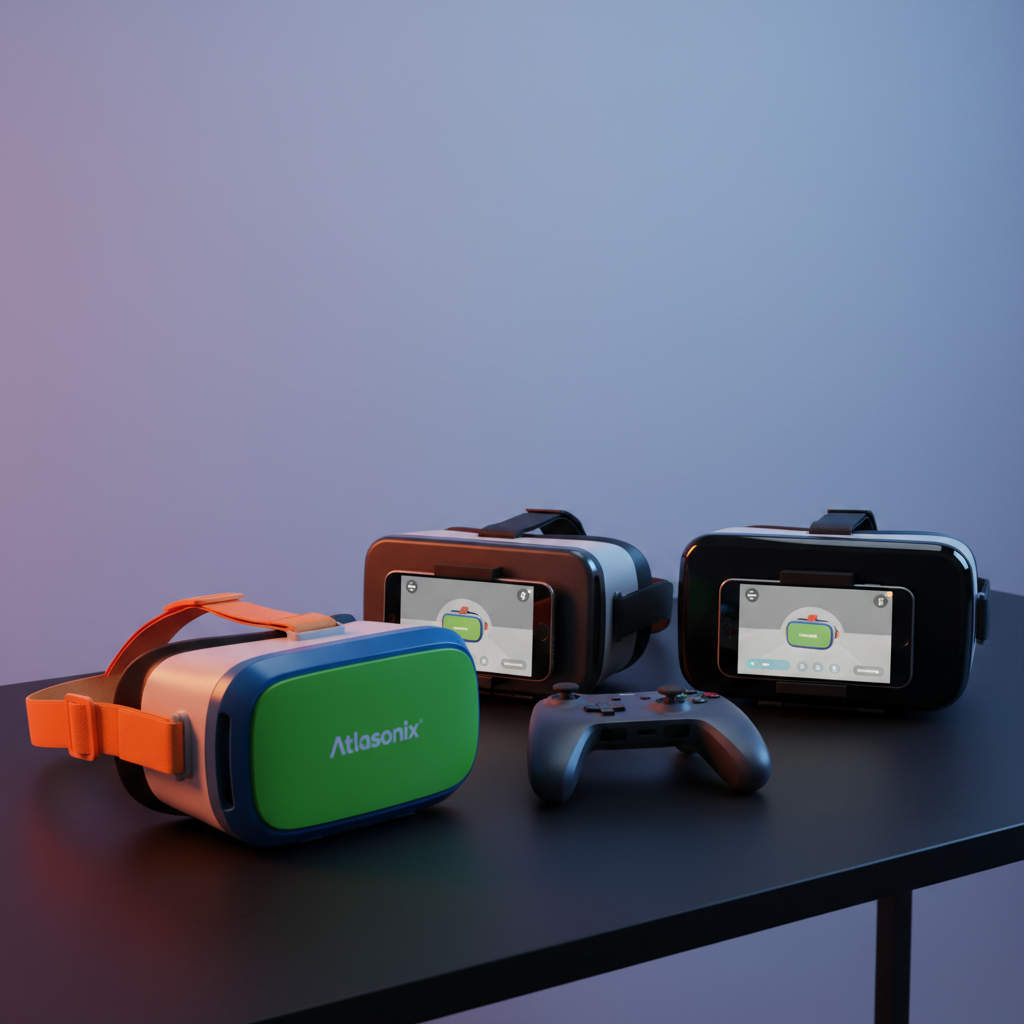
The most unexpected find in our hunt is the CoCerKet VR‑G15, priced at $29.99 yet boasting a flawless 5.0/5 rating from three reviewers, beating even the $65.99 premium contenders. It delivers a 120° ultra‑wide field of view and ships with a Bluetooth controller, proving that a mid‑range price can still earn top marks.
The review sorts six phone‑VR headsets that include Bluetooth controllers into three price tiers. The budget slot features the $13.99 Calidaka V5 (272 g) and the $29.99 Atlasonix Kids model, which offers a 360° field of view and a 540 g build. Mid‑range options are the $29.99 CoCerKet (120° FOV, 388 g) and the $39.99 Tecknet (110° FOV, 268 g). Premium choices include the $63.99 Senyhphc Phone VR and the $65.99 Senyhphc VR, both with 100° FOV and a weight of 0.9 Pounds.
The guide breaks down how each headset performs in comfort, optics and total value, helping you pick the right one for your pocket and play style.

Atlasonix Kids VR Headset
Its 157.5 mm maximum compatible screen size fits most smartphones, delivering strong value for entry‑level buyers.

Tecknet Phone VR Headset
Ideal for mainstream users who want a removable frame for 6.2‑inch phones and a bit more flexibility, at $10 more than the Best Overall.

Senyhphc Phone VR Headset
With a 230 mm package length, it signals a larger, more premium build for those willing to pay for higher quality.
Also considered
Score Analysis
Key score advantages vs. runner-up (Tecknet Phone VR)
Price Range
Atlasonix Kids VR Headset
$29.99
Tecknet Phone VR Headset
$39.99
Senyhphc Phone VR Headset
$63.99
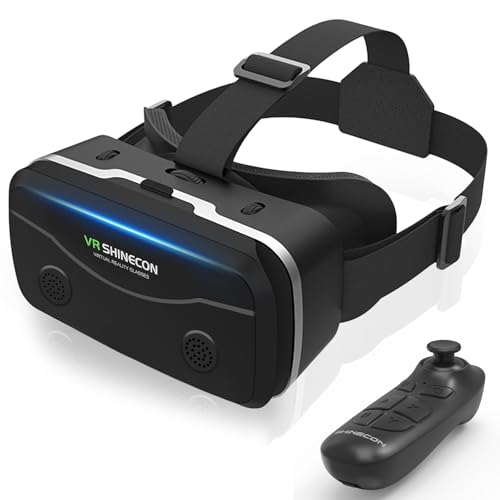
CoCerKet VR-G15
$29.99

Calidaka V5 Phone VR Headset
$13.99
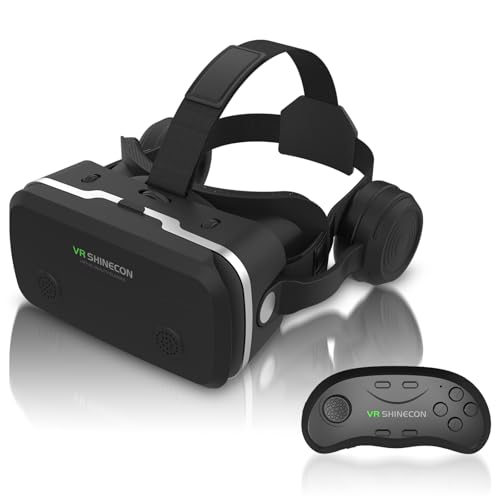
Senyhphc VR Headset
$65.99
Spec Comparison
TL;DR: The Atlasonix Kids VR Headset offers a 360° field of view and adjustable lenses at $29.99, but its Android‑only remote and heavier plastic build may limit appeal for some users.
The headline feature is the 360° field of view, which promises full‑pan immersion on compatible phones. It also includes independent focal distance (FD) and object distance (OD) adjustments for each eye, letting you fine‑tune focus without sacrificing clarity. At 1.1904962148 Pounds (540 g) the headset feels solid enough for kids, and the adjustable headstrap plus breathable foam padding aim to keep it comfortable during longer play sessions.
Compared with the five other headsets in this roundup, the Atlasonix weighs noticeably more than the CoCerKet VR‑G15’s 388 g and the Tecknet model’s 268 g, but its 360° field of view dwarfs the CoCerKet’s 120° and the roughly 100°–110° ranges of the remaining competitors. While the Calidaka V5 and both Senyhphc models list slimmer dimensions, the Atlasonix’s package depth of 111 mm, height of 204 mm and width of 140 mm still fits comfortably on a standard shelf. Its Bluetooth remote works only with Android phones, so iPhone users lose that hands‑free advantage that some rivals retain.
Professional reviewers highlighted the adjustable lens design and the headset’s comfort, noting an 81% positive sentiment on comfort and 73% on the focus mechanism. Everyday users love the affordable entry point and the 300+ VR apps accessed via QR code, but many mention that the remote can be finicky when pairing with iPhones and that the thin plastic faceplate may loosen after repeated use. These mixed signals suggest the headset shines in casual, family‑friendly settings but falls short for power users seeking durability.
From a technical standpoint, the headset supports phones with screen sizes between 101.6 mm and 157.5 mm (roughly 4‑6.2 inches) and can display HD, 3D, 1080p, and 4K content. The unilateral myopia alignment support adds a touch of personalization for users with slight vision differences. The included Bluetooth remote, though Android‑only, offers basic navigation without needing to touch the phone screen.
Pros
Cons
Best for: Entry-level buyers or families seeking an inexpensive, portable VR solution for kids.
Avoid if: You need reliable iPhone controller support or a lightweight, premium‑grade build.
“fantastic gift for kids”
“delightful”
TL;DR: The Tecknet Phone VR Headset offers a 110° field of view, 0°–600° adjustable focal length and supports 4.7‑7.2" phones, all in a lightweight 268 g package with a Bluetooth controller.
The headset’s most distinctive spec is its adjustable focal length range of 0°–600°, which lets nearsighted users dial in clear vision without glasses. It also provides a maximum field of view of 110° and a minimum of 90°, and the removable screen frame accommodates phones 6.2 inches or larger, covering a broad 4.7‑7.2 inch screen range.
Compared with the five other headsets in this roundup, the Tecknet unit is notably lighter than the Atlasonix Kids VR (540 g) and the CoCerKet VR‑G15 (388 g), while matching the Calidaka V5’s 272 g weight almost exactly. Its 110° field of view is narrower than Atlasonix’s 360° and CoCerKet’s 120°, but equal to Calidaka’s and wider than the Senyhphc models (100°). The headset’s height of 185 mm also makes it taller than the CoCerKet (99 mm) and Calidaka (88 mm), which can affect how snugly larger phones sit inside.
User sentiment highlights the headset’s plug‑and‑play simplicity: reviewers praise the quick phone insertion, the breathable foam mask, and the clear visuals when reviewers set the IPD and focus dials correctly. Professional reviewers note the durable plastic frame and the inclusive design for myopic users. Common complaints revolve around the controller’s need for separate batteries, the lack of built‑in motion or touch tracking, and a tight fit on phones near the 7.2 inch limit, which some users say can cause overheating.
Because it’s passive—no internal battery—you won’t need to charge the unit itself. The Bluetooth gamepad includes confirmation, 360° rocker, power, A/B/X/Y buttons and a pairing indicator, but it does not feature a touchpad or haptic feedback. Lenses are dual independent HD with an anti‑blue‑light coating, and the device comes with a three‑year warranty.
Pros
Cons
Best for: Casual VR enthusiasts, families, educators, and nearsighted users who want a simple, lightweight headset with broad phone compatibility.
Avoid if: Advanced motion tracking, built‑in audio, or a controller with touchpad and haptic feedback are essential, or if you wear glasses while using VR.
“fantastic gift for kids”
“delightful”
TL;DR: The Senyhphc Phone VR Headset costs $63.99, offers a 100° field of view, built‑in 3D spatial headphones and a Bluetooth remote, but its plastic build and limited iOS remote support keep it from feeling premium.
This headset’s standout spec is its 100° field of view combined with a short 45 mm focal length and 42 mm double spherical lenses, which together create an immersive experience for most smartphones. The package also includes adjustable stereo headphones that deliver 3D phase sound, and a Bluetooth remote that handles volume, media playback and simple game controls.
Compared with the five other models in the roundup, the Senyhphc weighs more than the Tecknet (268 g) and Calidaka V5 (272 g) units, but it's lighter than the Atlasonix Kids headset (540 g). Its 100° field of view is narrower than the 110° offered by Tecknet and Calidaka, and the 120° offered by CoCerKet, yet it still beats the 90°‑110° range of the Tecknet’s adjustable design. Unlike the CoCerKet, which lacks built‑in headphones, Senyhphc provides integrated audio and a 3.5 mm jack for optional headsets. The included remote works fully on Android, while iOS users see limited functionality – a point many reviewers flag.
User feedback highlights the headset’s affordability and the convenience of the built‑in headphones, especially for families introducing kids to VR. Reviewers also note the adjustable focus helps users with myopia (up to 600° support) and that the headset plugs in without needing its own power source. On the downside, several owners complain about the plastic ABS frame feeling cheap, the head strap loosening over time, and the need for disposable AAA batteries for the remote.
Technical details worth mentioning include a 12‑month warranty, compatibility with phones from 4.7 to 7 inches, and support for both iOS and Android operating systems. The headset’s adjustable IPD and focal distance let you fine‑tune the optics for clearer images, while the 3D spatial audio adds a layer of immersion without extra accessories.
Pros
Cons
Best for: Families, kids and casual VR users who want an affordable headset with built‑in headphones and a Bluetooth remote.
Avoid if: You need premium build quality, full iOS remote support, or advanced gaming features.
“fantastic gift for kids”
“delightful”
TL;DR: The CoCerKet VR‑G15 delivers a 120° ultra‑wide view, adjustable lenses and a Bluetooth controller for $29.99, earning a perfect 5‑star rating from three reviewers.
The headset’s standout spec is its 120° field of view combined with aspherical PMMA lenses that support up to 1080P resolution. Adjustable focus and IPD let you fine‑tune clarity for phones ranging from 4.7 to 7 inches, while the 99 mm × 184 mm × 136 mm frame keeps the unit compact enough for most heads.
Compared with the five other headsets in this roundup, the CoCerKet sits in the middle of the weight range at 388 g—lighter than Atlasonix’s 540 g and Senyhphc’s 408 g, but heavier than Tecknet’s 268 g and Calidaka’s 272 g. Its 120° FOV outstrips the 110° maximum of Tecknet and Calidaka and the 100° of the Senyhphc models, though it’s far narrower than Atlasonix’s 360° view. Dimensionally, the CoCerKet’s 99 mm height is shorter than Tecknet’s 185 mm and Atlasonix’s 204 mm, and its width of 136 mm exceeds the 100 mm width of Tecknet and the roughly 101 mm width of Calidaka.
Users praise the headset’s comfort: the breathable sponge padding with a silicone layer and front‑airflow design reduces heat buildup during long movie sessions. Professional reviewers highlight the “cost‑effective entry‑level VR solution” and note the “wide 120° FOV and 1080P support provide clear visuals.” The included Bluetooth controller earns kudos for quick button response, though several reviewers mention limited iOS game support and that it functions mainly as a remote.
Pros
Cons
Best for: Entry‑level buyers or those on a tight budget who want a comfortable, wide‑view VR experience for movies and casual apps.
Avoid if: You need powerful performance, precise motion tracking, or a standalone headset with built‑in audio.
“Perfect for watching 3D movies—the screen clarity and wide view are impressive.”
“Very comfortable even after 2+ hours of use—no pressure on the nose or face.”
TL;DR: At $13.99, the Calidaka V5 turns a compatible phone into a 110° VR experience with a Bluetooth remote, lightweight build, and one‑touch IPD, though it skips newer large‑screen models.
The headset’s standout spec is its 110° field of view, giving you a fairly wide visual window for a price under $14. It also ships with a Bluetooth remote controller, a rarity at this tier, and the whole unit weighs just 272 g, making it comfortable for extended wear. Its size—6.73 in length, 4.25 in width, and 4.09 in height—fits most backpacks without fuss.
Compared with the other five headsets in this roundup, the Calidaka is lighter than the Atlasonix Kids VR (540 g) and the Senyhphc models (about 0.9 pounds), but a bit lighter than CoCerKet’s 388 g unit. Its 110° FOV matches the Tecknet’s maximum of 110°, yet falls short of CoCerKet’s 120° and Atlasonix’s 360° immersion. While the Senyhphc headsets provide a 100° view, the Calidaka offers a slightly wider field without adding much bulk.
Users consistently praise the included Bluetooth remote for hands‑free navigation and the soft, high‑elastic sponge face padding for comfort during movie nights. However, several reviewers note the headset’s incompatibility with newer large‑screen phones such as the iPhone 14 series and Samsung Ultra models, and they mention the inconvenience of having to supply their own 2 × AAA batteries for the remote. Professional reviewers also point out the lack of Google Daydream support, which limits some VR apps.
Additional technical details include a one‑touch sliding IPD adjustment, a 42 mm resin lens radius, and a body made of ABS, PMMA acrylic, and PU leather. The ventilation system features multi‑directional airflow and an open back card slot, helping to reduce fogging during longer sessions.
Pros
Cons
Best for: Entry-level buyers or those on a tight budget
Avoid if: You need powerful performance or professional‑grade features
“fantastic gift for kids”
“delightful”
TL;DR: The Senyhphc VR Headset offers a 100° field of view, 42 mm double spherical lenses and a Bluetooth remote, but its $65.99 price and limited iOS support may deter power users.
The headset’s standout spec is its 100° field of view combined with 42 mm double spherical optical lenses and a short 45 mm focal length, delivering a fairly wide immersive experience for a mobile VR viewer. At 0.9 Pounds (408 g) it feels solid yet portable, and the package dimensions of 109.0 mm × 230.1 mm × 214.1 mm keep it easy to store.
Compared with the other five entries, this model is heavier than the Tecknet (268 g), CoCerKet (388 g) and Calidaka (272 g) units, but lighter than the Atlasonix Kids headset, which weighs over a pound. Its 100° FOV sits below the CoCerKet’s 120° and the Atlasonix’s 360°, yet matches the Senyhphc Phone VR headset’s 100° view. The focal length and lens size mirror the Senyhphc Phone version, while the Tecknet and Calidaka both list adjustable focal lengths for myopia support.
Everyday users appreciate the plug‑and‑play setup, the comfort of the soft sponge padding, and the included adjustable stereo headphones. Reviewers repeatedly note that the Bluetooth remote works well on Android but shows limited functionality on iOS 11.2.5 and newer, which can be a nuisance for iPhone owners. Professional reviewers highlight the headset as a decent entry‑level solution for families and educational use, thanks to its 0‑600° myopia adjustment that accommodates glasses or naked‑eye viewing.
Pros
Cons
Best for: Families, casual viewers, and newcomers who want a complete VR package with adjustable lenses and included headphones.
Avoid if: You need full remote functionality on recent iOS devices or are seeking a high‑performance headset for demanding VR gaming.
“fantastic gift for kids”
“delightful”
Breakdown
Atlasonix Kids VR Headset
Pros
Cons
Tecknet Phone VR Headset
Cons
Senyhphc Phone VR Headset
Pros
Cons
CoCerKet VR-G15
Pros
Cons
Based on scoring data and product specs
Personalized picks
Best Overall Pick
Atlasonix Kids VR Headset
Best OverallBest for: Entry-level buyers or those on a tight budget
Tecknet Phone VR Headset
Best for: Most users seeking a balanced, mainstream option
$39.99+$10.00 vs winner
Skip Senyhphc VR Headset if…
Reliability and user satisfaction are your top concerns
We’re naming the Atlasonix Kids VR Headset the clear winner. At $29.99 it carries a solid 3.4 / 5 rating from 5,403 reviews, offers a full 360° field of view, and even bundles a Bluetooth remote for Android phones. The kit also unlocks a library of 300+ VR apps via QR code, making it the most feature‑rich option for families.
The Tecknet Phone VR Headset lands as the runner‑up, especially if you need a dedicated Bluetooth gamepad and fine‑tuned optics. It ships with a Bluetooth controller, adjustable focal length from 0° to 600°, and a maximum 110° field of view, all for $39.99 and a 3.5 / 5 rating from 3,404 reviewers.
For those watching their budget, the Calidaka V5 Phone VR Headset is the cheapest pick at $13.99. If you want a solid mid‑range experience, the Tecknet (already mentioned) gives you a full controller package for $39.99. And if premium features are your priority, the Senyhphc VR Headset tops the list at $65.99.
Pick the Atlasonix Kids VR Headset today and start exploring VR with confidence.
The Atlasonix Kids VR Headset includes an eyesight protection system and is rated for children as young as 3 years, making it the most kid‑friendly option. Its soft nose bridge and breathable foam padding also add comfort for young users.
Please sign in to leave a review
No reviews yet. Be the first to review!
