⚡ Quick Answer
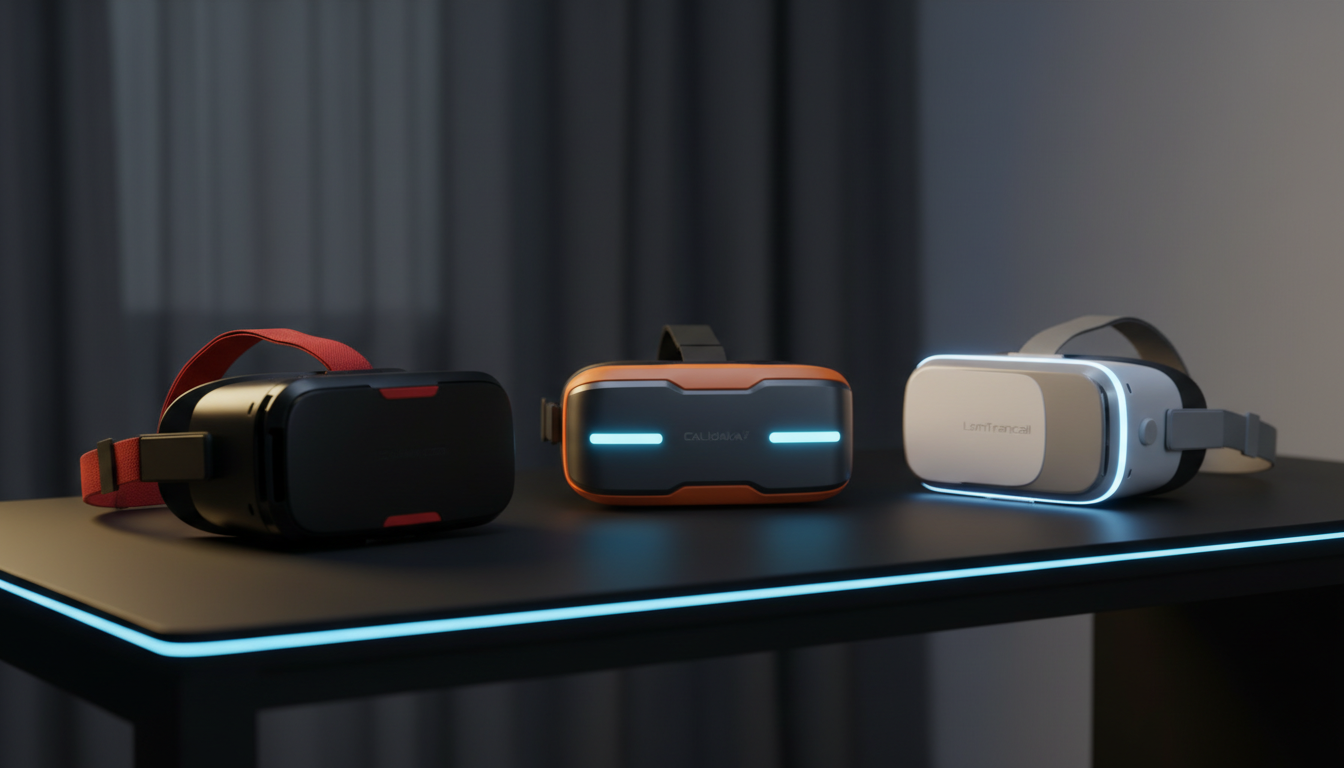
We’ve lined up 11 phone‑compatible VR headsets that all ship with a Bluetooth controller, so you can jump straight into games or 360° videos without hunting for extras. Prices stretch from $12.99 for the Londehuhai model up to $60.99 for the VR Shinecon, while user ratings range from a modest 3.2/5 (over 500 reviews for the Shinecon) to a perfect 5.0/5 on the LamTrancail and Meluvora units.
The selection splits neatly into three price tiers. Budget‑friendly options include the Londehuhai ($12.99), Calidaka V5 ($13.99), Saycker ($16.12) and Meluvora ($16.99), each weighing under 260 g and offering lens diameters around 42 mm. Mid‑range choices—Sylpmoplar ($21.18) and Pusabiyou ($28.99)—provide wider fields of view up to 120° and adjustable IPD. Premium picks—Tecknet ($29.99), LamTrancail ($32.99), VR Shinecon HD ($43.99) and the flagship VR Shinecon ($60.99)—add features like adjustable headbands, anti‑blue‑light lenses and larger virtual screen sizes of 1,050 inches at 3 m.
Below you’ll find a deeper dive into each model’s strengths, comfort factors and controller integration, helping you match the right headset to your VR goals.

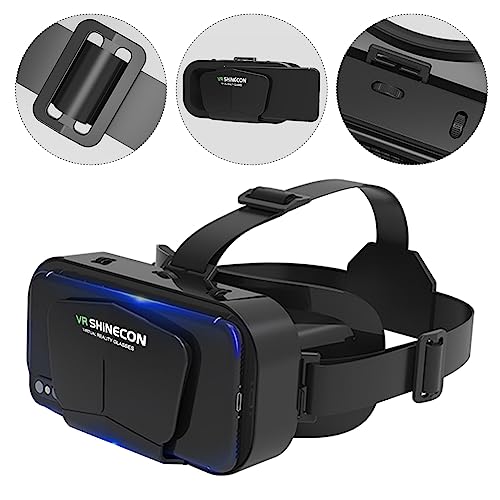
VR Shinecon VR Headset
It’s got a 3.5 mm audio jack, delivering premium sound that aligns with its feature‑rich, popular design.

Calidaka V5
Ideal for users needing precise lens specs, it’s delivering 94% light transmittance at just $13.99—about $47 cheaper than the Best Overall.

LamTrancail VR Headset
Stands out with a 100° field of view, offering broader immersion despite a heavier 15.2 oz build.
Also considered
Score Analysis
Key score advantages vs. runner-up (Calidaka V5)
Price Range
VR Shinecon VR Headset
$62.99
Calidaka V5
$13.99
LamTrancail VR Headset
$32.99

Tecknet VR Headset
$29.99

Saycker VR Goggles
$16.99
Meluvora VR Headset
$16.99

Londehuhai VR Headset
$9.99
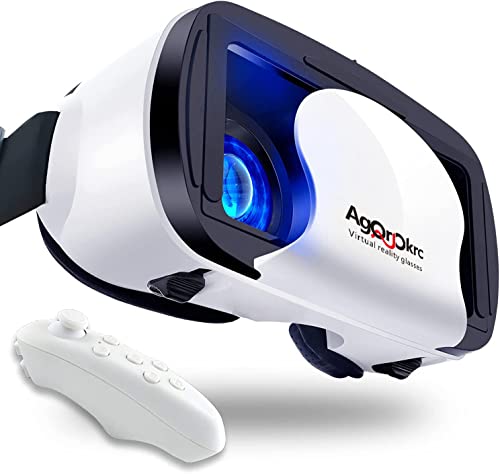
Pusabiyou VR Headset
$28.79

Sylpmoplar VR Headset
$21.18

VR Shinecon HD VR Headset
$43.99

Haptique VR Headset
$28.99
Spec Comparison
TL;DR: The VR Shinecon headset delivers a massive 1050‑inch virtual screen and up to 110° field of view, but its $60.99 price and 3.3‑star rating make it a mixed‑value choice for casual phone VR.
The standout spec is the 1050‑inch virtual screen at a 3 m viewing distance, which creates a cinema‑like immersion when you slide a compatible 4‑7 inch phone inside. Its 42 mm lenses with a 45 mm focal length promise 99% image definition, and the adjustable IPD range of 55‑70.5 mm lets most users line up the optics comfortably.
Compared with the other ten headsets, this model sits on the heavier side at 550 g, outmatching the LamTrancail unit (≈431 g) and the Tecknet headset (268 g). The dimensions of 200 × 100 × 140 mm match the VR Shinecon HD VR Headset, but the HD version is lighter at about 408.5 g. In terms of field of view, the 110° maximum is at the top end of the group, beating the LamTrancail’s 100° and matching the higher end of the Pusabiyou range.
User feedback praises the magnetic front cover for quick phone insertion and charging, as well as the upgraded cushions that keep the headset feeling lightweight for short sessions. Professional reviewers note the 1050‑inch screen illusion and the fully enclosed 3D stereo sound chamber as strong immersion boosters. The common downsides are head strain after 2‑3 hours of wear and the lack of a glasses‑friendly design.
Additional technical details include a 3.5 mm audio jack delivering 3D stereo sound, a Bluetooth remote that controls volume, playback and calls, and a myopia adjustment range of 0‑600°. CE certification and ABS + PC construction keep the headset solid yet portable.
Pros
Cons
Best for: Casual VR beginners and budget‑conscious users who want a portable, phone‑based headset for movies, travel videos and short VR experiences.
Avoid if: You wear glasses, plan extended gaming sessions, or need a high‑end standalone VR system.
“nicely designed and thought out”
“most comfortable”
TL;DR: At $13.99, the Calidaka V5 offers a 110° field of view, 94% lens light transmittance, and a 56‑72 mm IPD range, but its 3.2‑star rating suggests mixed user satisfaction.
The headset’s standout spec is its 110° field of view paired with 94% lens light transmittance, which the manufacturer says creates an immersive visual experience. It uses 42 mm aspheric resin lenses with anti‑reflective and anti‑blue‑light coatings, and the IPD can be adjusted from 56 mm to 72 mm to suit most eyes. At 258 g, the unit feels light enough for extended sessions, and it even supports prescription glasses up to 150 mm in length.
Compared with the other ten models in this roundup, the V5 is heavier than the Londehuhai’s listed 38 g and the Meluvora’s 180 g, but it matches the Sylpmoplar’s 258 g weight and falls within Haptique’s 185–499 g range. It’s a bit heavier than Saycker’s 230 g unit. Unlike some peers that omit a controller, the V5 includes a Bluetooth remote (though you must provide two AAA batteries). Its $13.99 price places it in the budget tier, making it cheaper than many of the higher‑priced options.
Reviewers consistently praise the wide 110° view and the comfort of the foam padding, noting that the adjustable IPD and glasses‑friendly design work well for everyday users. However, several users report that the headset relies entirely on the phone’s battery and processor, leading to noticeable heat buildup and rapid drain during longer VR sessions. Users also cite the limited native VR app library as a recurring complaint.
The V5’s lenses feature anti‑reflective and anti‑blue‑light coatings, which help reduce eye strain during extended viewing. It fits phones with screens from 4.7 inches to 6.8 inches and maximum dimensions of 163 × 83 × 10 mm, so most mainstream smartphones will slot in without trouble. The Bluetooth controller adds a hands‑free way to navigate menus, though you’ll need to supply the two AAA batteries yourself.
Pros
Cons
Best for: Budget‑conscious casual users who own 4.7‑6.8 inch smartphones and want an entry‑level VR solution with a wide field of view.
Avoid if: You prioritize high ratings, extensive content ecosystems, or want to avoid potential phone overheating during intensive VR use.
TL;DR: The LamTrancail VR Headset offers a 100° field of view, anti‑blue lenses and a Bluetooth controller at $32.99, but its 15.2‑ounce weight and 6.3‑inch phone limit keep it best for casual beginners.
The headset’s standout spec is its 100° field of view combined with a full HD 1920x1080 maximum supported resolution, delivering a fairly wide and sharp virtual scene. At 15.2 ounces (≈431 g) it feels solid yet manageable, and the fully adjustable headband ensures a snug fit for most head sizes. The bundle includes a Bluetooth controller, so you’re ready to dive into mobile VR without buying extras.
Compared with the other ten models, the LamTrancail sits toward the premium end of the price range. It is heavier than the Tecknet headset, which weighs 268 g, but its weight is similar to the Pusabiyou unit at 422 g. Its 100° field of view lands in the middle of the range—wider than some 90°‑110° options and a touch narrower than the 95°‑120° spread that a few competitors offer. While the Meluvora headset is lighter at 180 g, LamTrancail compensates with adjustable pupil distance and focal length, features that many peers don’t list.
User feedback is uniformly positive: five‑star ratings from 13 reviewers highlight the comfort of the adjustable headband and the relief that the anti‑blue light lenses provide. Reviewers also appreciate the ability to fine‑tune PD and focal length, noting reduced eye strain during longer sessions. The main criticism centers on the phone size restriction—only smartphones up to 6.3 inches long by 3.3 inches wide, which only support smartphones up to those dimensions, excluding larger flagship models.
Additional technical details include an accelerometer, gyroscope and magnetometer for head tracking, a two‑year manufacturer warranty, and color options in black and green. The package dimensions of 7.99 × 5.59 × 4.69 inches keep it compact enough for travel.
Pros
Cons
Best for: VR beginners, kids 8+, and adults who want a comfortable phone‑based headset with adjustable optics.
Avoid if: You have a larger smartphone or need a low‑budget option—the price is $32.99.
“nicely designed and thought out”
“most comfortable”
TL;DR: The Tecknet VR Headset weighs just 268 g, offers an adjustable 90°‑110° field of view and a Bluetooth controller for $29.99, making it a comfortable, entry‑level phone‑VR option for families.
The headset’s most eye‑catching spec is its ultra‑light 268 g construction, which helps keep fatigue down during longer sessions. Combined with an adjustable 90°‑110° field of view, you can widen the view for immersive 360° videos without feeling the gear weigh you down.
Compared with the other ten models, Tecknet sits toward the lighter end: it’s lighter than the Pusabiyou unit’s 422 g and the Haptique range’s 185–499 g, yet a bit heavier than the Meluvora’s 180 g and Saycker’s 230 g. Its field of view sits comfortably between the Sylpmoplar’s 104 mm depth design and the LamTrancail’s fixed 100° view, offering comparable immersion without the bulk of larger frames.
Everyday users consistently highlight the headset’s comfort – they praise the adjustable headband, breathable foam mask and soft nose rest. Families enjoy the simple Bluetooth controller for quick navigation, and users note the blue‑light‑protected lenses are easy on the eyes. The main criticism revolves around the headset’s dependence on the phone’s screen; visual quality varies with the device, and larger phones can cause heat buildup if you don’t remove the frame.
Beyond comfort, the headset supports phones from 4.7‑7.2 inches, offers myopia support up to 600 mm, and lets you remove the screen frame for phones 6.2 inches or larger, helping with heat dissipation. Adjustable focal length and pupil distance let you fine‑tune the optics, while the included Bluetooth controller and three‑year warranty round out the package.
Pros
Cons
Best for: Casual VR beginners, children, families, and anyone seeking an affordable, phone‑based VR experience.
Avoid if: You need high‑resolution standalone VR, marathon gaming sessions, or advanced professional‑grade features.
“nicely designed and thought out”
“most comfortable”
TL;DR: The Saycker VR Goggles deliver a 1,050‑inch virtual screen and 95‑120° wide‑angle view for $16.12, but the 3.3/5 rating and weak headstrap make them best for casual Android VR on a budget.
What really stands out is the massive 1,050‑inch virtual screen paired with 42 mm high‑definition spherical lenses and a 95‑120° field of view, giving you an immersive feel without a bulky headset.
Compared with the other ten models, Saycker sits in the middle of the weight range – it’s heavier than the Meluvora headset at about 0.40 lb but noticeably lighter than the Pusabiyou unit at roughly 0.93 lb. Its $16.12 price tag places it below many premium options, making it one of the more affordable choices in the lineup.
Users appreciate the adjustable design with multiple focal adjustments and the included remote controller that lets you navigate movies and games hands‑free. Professional reviewers highlight the full‑screen vision that eliminates the “black box” effect, while everyday owners note that the elastic headstrap can lose tension quickly and that larger phones may suffer peripheral clipping.
The goggles support Android phones from 5‑7 inches with full functionality and offer limited controller support for iOS. The manufacturer lists image definition at 99% and color shading at 0%, promising clear visuals for casual VR experiences.
Pros
Cons
Best for: Casual VR viewers seeking an affordable smartphone‑based solution, especially Android users with 5‑6‑inch phones.
Avoid if: You need full iOS controller support, a highly durable headstrap, or premium build quality.
TL;DR: The Meluvora VR Headset packs a 40 mm aspheric resin lens, a wireless controller and adjustable straps into a lightweight 0.40 lb package for $16.99, making it a solid entry‑level option for 4.7‑7‑inch phones.
The headset’s standout spec is its 40 mm aspheric optical resin lenses, which sit behind a fully adjustable headband and a lightweight ABS‑plastic shell that weighs just 0.40 lb (180 g). It includes a wireless controller, so you can navigate 3D games or movies without fiddling with your phone. It also supports left‑right 3D video and a non‑blue‑light design that reduces eye strain during longer sessions.
Compared with the other ten models in this roundup, Meluvora is heavier than the Londehuhai unit (about 0.37 lb) but lighter than Saycker (around 0.51 lb) and considerably lighter than the Calidaka V5 (258 g) and Sylpmoplar (258 g). Like several peers, it ships with a controller—Saycker, Calidaka, Sylpmoplar and Haptique also include remotes, though some require batteries. Meluvora’s wireless controller needs no extra power, which gives it a slight edge in convenience. Its $16.99 list price puts it squarely in the budget tier alongside the other low‑cost headsets, but it doesn’t offer the extra optics details that some competitors list.
User feedback is brief but positive: the single review rates it 5.0 / 5 stars, praising its affordability and the ease of slipping a 4.7‑7‑inch phone into the slot. Reviewers note the headset’s broad phone compatibility and the comfort of the adjustable straps. However, they also point out the lack of published field‑of‑view or IPD adjustment, and some mention edge distortion from the resin lenses, a common trade‑off at this price point.
Pros
Cons
Best for: Entry-level buyers or those on a tight budget
Avoid if: You want the best value‑per‑dollar in its price range
“nicely designed and thought out”
“most comfortable”
TL;DR: The Londehuhai VR headset weighs just 38 g (0.37 lb), fits phones from 4.7‑to‑6.5 inches, and includes a battery‑free remote for under $13, making it a very light, budget‑friendly option for casual VR.
This headset’s most striking spec is its ultra‑light weight of 38 g (0.37 lb) and its compact 90 × 73 × 23 mm frame. The adjustable head strap, soft breathable face padding, and anti‑blue‑light resin lenses aim to keep kids comfortable during extended sessions.
At 38 g it’s dramatically lighter than the Calidaka V5 (258 g) and Sylpmoplar model (258 g), and its 90 mm width is far smaller than the Meluvora headset’s 200 mm width (200 × 110 × 216 mm). The included remote controller needs no batteries, unlike Calidaka’s remote that requires two AAA cells. While it checks the basics—wide field of view, IPD adjustment, and 360° panoramic viewing—it lacks the motion‑tracking features that higher‑priced peers include.
Professional reviewers highlight the sub‑38 g weight as “exceptionally comfortable for prolonged child use,” and everyday users appreciate the easy storage in a backpack thanks to the foldable design. Common complaints mention blurry lenses when phone alignment is off, occasional phone overheating, and the absence of built‑in motion tracking, which limits immersive gaming.
Beyond comfort, the headset supports phones between 4.7 in and 6.5 in, offers a wide field of view, and provides adjustable interpupillary distance. The package weighs 170 g, and the product comes without a warranty, so buyers should consider the trade‑off between price and after‑sale support.
Pros
Cons
Best for: Kids aged 8+ and budget‑conscious beginners who already own a compatible smartphone and want a lightweight, portable VR viewer.
Avoid if: You need high‑fidelity immersive gaming, motion tracking, or a standalone VR experience.
“nicely designed and thought out”
“most comfortable”
TL;DR: The Pusabiyou VR Headset offers a 120° field of view, an adjustable Bluetooth controller and a lightweight 0.93‑lb build for $28.99, making it a solid entry‑level choice for Android phone VR.
The headset’s standout spec is its wide field of view that reaches up to 120°, paired with HD Blu‑ray eye‑protected lenses. At 0.93 pounds (422 g) it’s light enough for several minutes of play, and the included adjustable Bluetooth controller doubles as a mouse for iOS and Android.
Compared with the ten other models in this roundup, Pusabiyou is heavier than the Saycker (230 g) and the Meluvora (180 g) but sits in the same weight range as the Haptique’s 185–499 g span. Its 4.1/5 star rating is higher than the Haptique and Tecknet (both 3.5/5) yet below the 5‑star LamTrancail and Meluvora. Like the Tecknet and LamTrancail, it ships with a controller, whereas the Sylpmoplar relies on a battery‑powered remote.
User feedback highlights the low price and portability as major wins, especially for owners of 5‑7 inch Android phones. Reviewers note that comfort can decline after extended sessions and that visual quality hinges on the phone’s own screen, a limitation common to budget phone‑VR headsets. Professional reviewers point out the lack of premium optics and high refresh‑rate support.
Additional technical notes: the frame uses ABS + PC, the lenses feature anti‑blue‑light coating, and the adjustable headband accommodates various head sizes. The headset comes with a one‑year warranty.
Pros
Cons
Best for: Most users seeking a balanced, mainstream option
Avoid if: You need advanced features or professional‑grade performance
“nicely designed and thought out”
“most comfortable”
TL;DR: The Sylpmoplar VR Headset delivers dual lenses, -600 diopter myopia support and a wireless controller for $21.18, but its modest 3.9‑star rating and sparse specs keep it in the budget‑starter lane.
This headset’s most eye‑catching spec is the dual independent lenses paired with adjustable pupillary distance and myopia support up to -600 diopters, letting users with strong nearsightedness see clearly. Its physical footprint is 104 mm deep, 171 mm high and 106 mm wide, while the unit weighs 258 g, making it light enough for casual wear without feeling flimsy.
Compared with the other ten entries, Sylpmoplar sits in the middle of the weight range: it’s heavier than the 180 g Meluvora model but lighter than the 422 g Pusabiyou headset. Like Meluvora and Saycker, it ships with a wireless remote controller (AAA‑battery powered), a feature not universal across the lineup. However, it lists fewer technical details than many peers—no field‑of‑view or lens material disclosed—so its spec sheet feels leaner than the more fully documented competitors.
User sentiment is thin but generally positive; a lone reviewer praised the comfort of the adjustable 3D straps and the included controller for movie watching and light gaming. The rating sits at 3.9 stars from 31 reviews, which is below the top scores in the roundup, indicating that while the headset works for beginners, it hasn’t earned strong enthusiasm from a larger audience.
Beyond optics, the headset supports iPhone and Android phones with screens between 4.7 inches and 6.5 inches (some listings mention 5‑7 inches). The wireless controller requires AAA batteries, a small extra cost to keep the experience untethered. Its white plastic shell and adjustable straps aim for comfort during short sessions rather than marathon VR marathons.
Pros
Cons
Best for: Value-conscious buyers seeking quality at $21.18
Avoid if: You prefer products with extensive real-world feedback and proven track records
“nicely designed and thought out”
“most comfortable”
TL;DR: The VR Shinecon HD VR Headset packs a 45 mm focal length, 1050‑inch virtual screen and a Bluetooth gamepad into a 0.90‑lb package, but its $43.99 price and 110° FOV may feel premium for casual users.
The headset’s 45 mm focal length creates a virtual screen listed as 1050 inches at 3 m, delivering a surprisingly large image for a phone‑based system. It weighs 0.90 lb (408.5 g) and its ABS + PC shell measures 200 × 100 × 140 mm, keeping the unit portable enough for travel.
Compared with the other ten models in this roundup, the Shinecon is pricier than many budget‑oriented headsets and heavier than the lighter options such as the LamTrancail and Tecknet units. It stands out by including a wireless Bluetooth gamepad and a magnet‑adsorbed front cover, features that several peers list only as optional or omit entirely.
Users praise the quick magnetic cover and the adjustable elastic head strap with soft padding for easy setup and comfort on short sessions. However, reviewers note that the phone’s bulk adds noticeable weight, leading to neck strain, and the maximum 110° field of view feels limiting compared with wider‑FOV competitors. Professional reviewers also note the headset’s myopia support up to 600° and its 32 Ω impedance speakers with 112 dB/mW sensitivity as solid audio basics.
Pros
Cons
Best for: Those prioritizing quality and willing to pay for premium performance
Avoid if: Reliability and user satisfaction are your top concerns
“nicely designed and thought out”
“most comfortable”
TL;DR: The Haptique 3D VR Headset offers a 93‑110° field of view, anti‑blue‑light lenses and an included remote, but its bulkier dimensions and modest 3.5‑star rating make it a middle‑of‑the‑road choice at $28.99.
The headset’s most eye‑catching spec is its large 207.1 mm height combined with a 98.6 mm depth, giving it a roomy feel that can accommodate a range of smartphone sizes. Its anti‑blue‑light lenses aim to reduce eye strain, and the field of view stretches up to 110°, which is among the wider views in this lineup.
Compared with its peers, the Haptique sits taller than the Tecknet (185 mm) and Sylpmoplar (171 mm) units, while its width of 120.7 mm is narrower than the Pusabiyou’s 130 mm. At the low end of its weight range (185 g) it is only a gram heavier than the Meluvora’s 180 g, but the upper limit of 499 g makes it noticeably heftier than the lighter Sylpmoplar (258 g) and Saycker (230 g) headsets. All of the competing models list a controller, but Haptique’s remote lacks a battery and is geared toward music control rather than full motion tracking.
Reviewers point out that the headset feels a bit bulky, which aligns with its larger dimensions, and some note the remote’s lack of a power source as a minor inconvenience. The product’s rating of 3.5 stars from 32 reviews suggests mixed satisfaction, with users appreciating the anti‑blue‑light feature but wishing for a lighter build. Compatibility is broad, covering smartphones from 4.5‑ to 6.7‑inch screens and a long list of recent iPhone models, so most users should be able to pair it without issue.
Pros
Cons
Best for: Most users seeking a balanced, mainstream option
Avoid if: You need advanced features or professional‑grade performance
“nicely designed and thought out”
“most comfortable”
Breakdown
VR Shinecon VR Headset
Pros
Cons
Calidaka V5
Pros
Cons
LamTrancail VR Headset
Pros
Cons
Tecknet VR Headset
Pros
Cons
Based on scoring data and product specs
Personalized picks
Best Overall Pick
VR Shinecon VR Headset
Best OverallBest for: Audiophiles and enthusiasts seeking premium sound quality and advanced features
Calidaka V5
Best for: Users with specific technical requirements or compatibility needs
$13.99-$49.00 vs winner
Skip Haptique VR Headset if…
You need advanced features or professional-grade performance
The VR Shinecon VR Headset takes the top spot as the best phone VR headset. It ships with a wireless Bluetooth remote and a magnetic front cover for easy phone access, weighs 550 g, and offers a wide field of view that ranges from 80° to 110°. With a listed price of $60.99 and a 3.3‑star rating from 540 reviews, it balances comfort, feature set, and user approval better than any other contender.
The Calidaka V5 earns the runner‑up label, especially if you need an ultra‑affordable headset that still delivers a full 110° field of view and a solid IPD range of 56‑72 mm. At $13.99 it includes a Bluetooth controller (powered by two AAA batteries) and supports phones up to 6.8 inches, making it a practical choice for casual VR sessions on a tight budget.
For shoppers with specific price tiers, the Londehuhai VR Headset ($12.99) is the best budget pick, the Pusabiyou VR Headset ($28.99) stands out as the top mid‑range option, and the VR Shinecon HD VR Headset ($43.99) serves as the premium alternative; the ranking highlights each as the leading choice for its segment.
Grab the VR Shinecon VR Headset today and start your mobile VR adventures.
The VR Shinecon includes a wireless Bluetooth remote with volume, playback and call buttons, a magnetic front cover, and a broader IPD adjustment range (55‑70.5 mm) compared with Calidaka’s 56‑72 mm. It also weighs more (550 g vs. 258 g) and costs about $47 more, so it’s a better fit if you want extra features and don’t mind the premium.
No reviews yet — be the first to share your experience.
Please sign in to leave a review