⚡ Quick Answer
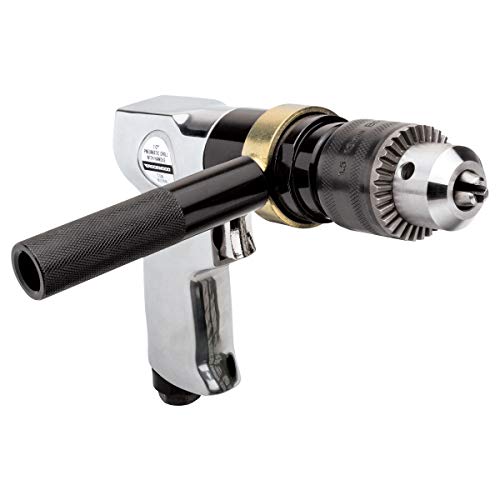
The budget‑friendly Walfront Air Drill catches the eye with a $43.98 price tag and a solid 4.5‑star rating from 28 reviewers. Its steel housing and keyless 0.375‑inch chuck feel sturdy, while an adjustable valve lets you dial in the 100 psi operating pressure you need. At a blistering 22,000 RPM free speed and a lightweight 1.83 lb body, it offers the kind of high‑speed precision you’d expect from a much pricier tool, making it a compelling option for hobbyists and light‑industrial tasks.
Our roundup compares seven pneumatic drills, spanning three price tiers. The budget tier includes the Walfront, Buachois ($39.49) and Rockwood models, each under $50 and geared toward occasional users. The mid‑range slot is occupied by the Upwood at $59.90, offering a reversible keyed chuck and a modest 1,800 RPM speed. Premium choices—Chicago Pneumatic, Ingersoll Rand and JET—run between $151 and $163, delivering features like reversible angle heads, aluminum housings and torque ratings up to 4.4 N·m.
Below we break down how each drill measures up on speed, airflow demand and ergonomics, so you can pinpoint the tool that fits your shop or garage without guessing.

Walfront Air Drill
Offers a 3/8‑inch chuck capacity at a low $43.98 price, delivering solid value for entry‑level users.

Chicago Pneumatic CP879C
Ideal for pros who need reversible operation and higher torque, it costs about $108 more than the Walfront budget option.

Upwood Air Drill
Features variable speed control and a compact 6.5‑inch length, giving a tighter fit for tight spaces the larger models lack.
Also considered
TL;DR: The Chicago Pneumatic CP879C offers a 3/8‑in keyed chuck, 2000 RPM speed and 4.4 Nm torque in a compact angle‑head design, delivering professional ergonomics at a mid‑range price.
The CP879C’s standout feature is its angle‑head handle combined with a 3/8 in keyed chuck, letting you reach tight automotive and industrial spots without sacrificing a 2000 RPM free speed. At 3.21 lbs, it balances durability with manageable heft, while a 4.4 Nm stall torque provides enough bite for most screw‑driving tasks.
Compared with the other six drills, the CP879C sits heavier than the ultra‑light Walfront Air Drill (1.83 lb) but lighter than the JET JAT‑601 (3.75 lb). Its 2000 RPM matches the Ingersoll Rand 7802RA, yet it falls short of Walfront’s 22,000 RPM, positioning it as a solid mid‑speed workhorse. The bottom‑exhaust design and composite‑over‑sleeve housing give it a quieter, cleaner operation than many bulkier straight‑drill models.
Professional reviewers praise the compact angle head for “excellent access in tight spaces” and note the rubber‑grip handle reduces fatigue during prolonged use. Users also appreciate the reversible trigger for forward/reverse drilling. The main trade‑offs are the modest 4.4 Nm torque, which can limit heavy‑duty hole drilling, and the 21.2 CFM air consumption that may demand a robust compressor. At 80.6 dB sound pressure, it’s reasonably quiet for a shop environment.
Pros
Cons
Best for: Those prioritizing quality and willing to pay for premium performance — the Chicago Pneumatic CP879C offers Chuck Capacity: 3/8 in / 10 mm
Avoid if: You're on a tight budget or only need basic functionality, or you require high torque for large‑hole drilling
TL;DR: The Jet JAT-601 delivers a sturdy aluminum body, 0.5‑inch keyed chuck and low 4 CFM air draw at $162.99, offering professional feel for a premium price.
What really stands out is the combination of a 0.5‑inch keyed chuck and a modest 4 CFM air consumption, meaning the drill runs efficiently without over‑taxing your compressor. The tool also offers reversible operation and variable‑speed control, letting you dial in the right speed for fasteners of different sizes. At 800 RPM free speed and 0.5 HP output, it provides steady torque for most MRO tasks while staying under the 90 PSI operating pressure typical for shop air systems.
Compared with the six other drills in this roundup, the JET is heavier than the Ingersoll Rand 7802RA, Chicago Pneumatic CP879C, Upwood, Walfront and Buachois models, which all sit under 3 lbs. Its free speed of 800 RPM is slower than the Ingersoll Rand (2000 RPM) and Upwood (1,800 RPM) units, but a bit faster than the Rockwood (700 RPM) model. The 0.5‑inch chuck is larger than the 3/8‑inch chucks on most rivals, giving you more bite on larger bits. While its sound power sits at 101 dB, the Chicago Pneumatic and Rockwood drills sit in the low‑90 dB range, making the Jet noticeably louder.
Reviewers appreciate the low 4 CFM draw because it eases compressor load, and they note the 3.75‑lb net weight helps reduce fatigue during extended use. The aluminum housing and sealed ball bearings earn praise for durability. On the downside, users point out the keyed chuck requires a separate chuck key for bit changes, which can slow workflow, and the 101 dB sound level often calls for hearing protection in tight spaces.
Additional technical details include a pistol‑grip handle for better control, a 1/4‑inch air inlet and a 3/8‑inch hose ID, and a 2‑year warranty that backs the build quality. The drill’s 0.5 HP motor and 90 PSI operating pressure align with typical shop standards, while the variable‑speed dial gives you fine control over drilling speed.
Pros
Cons
Best for: Those prioritizing quality and willing to pay for premium performance — the JET JAT-601 offers Free Speed: 800 RPM
Avoid if: You need a keyless chuck for rapid bit swaps or are sensitive to high decibel levels without adequate hearing protection.
TL;DR: The Rockwood 1/2" pneumatic drill packs a large keyed chuck, metal housing and variable speed into a 3.08‑lb tool for under $50, delivering industrial‑grade power at a budget price.
At the heart of the Rockwood is its 1/2" (13 mm) keyed chuck, the largest capacity in this seven‑model lineup. The metal housing keeps the tool rugged enough for workshop use, while a side handle with an ergonomic grip helps you stay comfortable during long drilling sessions. Variable‑speed throttle and reversible rotation let you start holes precisely and switch direction without swapping tools.
Compared with the peers, the Rockwood sits in the mid‑weight range at 3.08 lb—heavier than the 1.83‑lb Walfront and the 2.0‑lb Upwood, but lighter than the 3.75‑lb JET and the 3.21‑lb Chicago Pneumatic. Its free speed of 700 RPM is modest next to Walfront’s 22 000 RPM, Upwood’s 1 800 RPM, and Buachois’s 1 700 RPM, though it matches the slower JET’s 800 RPM. Where it truly stands out is chuck size: the Rockwood’s 0.5‑inch capacity exceeds the 3/8‑inch chucks found on Walfront, Upwood, Buachois, and the other competitors.
Professional reviewers note the ergonomic side handle reduces operator fatigue, and users appreciate the variable‑speed throttle for precise hole‑starting. The keyed chuck is praised for holding bits securely, and the reversible function adds versatility. No recurring complaints appear in the available feedback, suggesting the tool meets expectations for its price tier.
Under the hood, the drill runs on a 5‑vane ball‑bearing air motor paired with planetary gear reduction, delivering 7 CFM of air consumption at 90 PSI operating pressure. The inlet thread is a 1/4" FNPT, matching common shop air supplies, and the keyed chuck ensures reliable bit retention during heavy‑duty drilling.
Pros
Cons
Best for: Shoppers on a tight budget who want the most for their money — the Rockwood Air Drill offers Chuck Capacity: 1/2" (13mm)
TL;DR: The Ingersoll Rand 7802RA packs a 2000 RPM, 0.5 HP motor into a lightweight 2.91‑lb aluminum body, delivering quiet, reversible drilling for professional use.
What really sets this drill apart is its 2000 RPM free speed paired with a keyed 3/8 in chuck, all housed in an aluminum pistol‑grip design that weighs just 2.91 lb. The variable throttle lets you dial in speed for delicate work, while the built‑in Quiet Technology keeps noise levels low, a benefit noted by professional reviewers.
Compared with the six other drills in this roundup, the 7802RA sits in the middle of the weight range – lighter than the JET JAT‑601 (3.75 lb) and Chicago Pneumatic CP879C (3.21 lb), but heavier than the Walfront Air Drill (1.83 lb) and Upwood Air Drill (2.0 lb). Its 2000 RPM spin is far faster than JET’s 800 RPM and Rockwood’s 700 RPM, yet it doesn’t reach the ultra‑high 22 000 RPM of the Walfront. In terms of air consumption, it draws an average 4 CFM, matching the JET and Buachois models, while the load rating of 26 CFM is higher than most peers.
User sentiment highlights the drill’s “lightweight aluminum housing” as a fatigue‑reducer during long jobs, and the Quiet Technology is repeatedly praised for keeping shop noise down. Reviewers also commend the quick‑release reverse lever for easy direction changes. The main trade‑off is the need for a minimum operating pressure of 90 PSI and a 3/8 in hose, which can be a hurdle for low‑pressure compressor setups.
Pros
Cons
Best for: Those prioritizing quality and willing to pay for premium performance — the Ingersoll Rand 7802RA offers Chuck Size: 3/8 in
Avoid if: You need advanced features or professional‑grade performance
TL;DR: The Walfront Air Drill packs a 22,000 rpm free speed into a 1.83‑lb steel body with a 0.38‑in chuck, making high‑speed precision work affordable and comfortable.
The standout spec is the 22,000 rpm free speed, which dwarfs the 1,700 rpm of the Buachois and the 700 rpm of the Rockwood model. Weighing just 1.83 lb, it feels light enough for one‑handed operation, and its 0.38‑in (3/8 in) keyless chuck lets you swap bits quickly. The 0.25‑in air inlet and adjustable inlet valve give you fine control over airflow without extra accessories.
Compared with the six other drills in this roundup, the Walfront is the lightest of the three that list weight in pounds (Buachois is about 2.31 lb, Rockwood 3.08 lb). Its overall length of 8.46 in is roughly the same as Rockwood’s 212 mm but a touch longer than Buachois’s 160 mm. Height-wise, at 1.97 in it’s significantly shorter than both Buachois (195 mm) and Rockwood (193 mm), giving it a compact profile for tight workspaces. Free‑speed-wise, it outpaces every peer: Upwood runs at 1,800 rpm, Ingersoll Rand at 2,000 rpm, and JET at 800 rpm, making the Walfront the clear speed leader. Its chuck capacity matches Buachois (3/8 in) but is smaller than Rockwood’s 1/2 in, so it’s best suited for medium‑sized bits.
User reviews consistently praise the drill’s “high‑speed performance” and “lightweight, ergonomic design” for tasks like engraving and polishing. Reviewers also note the built‑in pressure‑plate safety switch and the straight‑handle layout as helpful for one‑handed use. The main trade‑off mentioned is the need for a compressor delivering 6‑8 kg/cm² (≈85‑114 psi), which can limit portability, and the lack of a reversible drive for tougher jobs.
Pros
Cons
Best for: Entry-level buyers or those on a tight budget — the Walfront Air Drill offers Chuck Capacity: 3/8 inch (10 mm)
Avoid if: You need powerful performance or professional‑grade features
TL;DR: The Upwood Air Drill packs a 3/8‑inch keyed chuck, 1,800 RPM speed and low 4 CFM air draw into a 6.5‑inch, 2.7‑lb body, making it a compact, budget‑friendly choice for light‑to‑medium pneumatic work.
The standout spec is its 1,800 RPM free speed combined with a variable‑speed trigger, giving you enough bite for automotive and woodworking tasks while staying under a modest 4 CFM air consumption at 90 PSI. At just 6.5 inches long and weighing 2.7 lb, the drill feels light enough to maneuver with one hand, and the keyed 3/8‑inch chuck handles most standard bits.
Compared with the other six drills in this roundup, the Upwood sits in the middle of the speed spectrum—faster than the Rockwood’s 700 RPM but far slower than the Walfront’s 22,000 RPM. It’s heavier than the Walfront’s 1.83‑lb unit yet lighter than the Rockwood’s 3.08‑lb model, and its air draw (4 CFM) matches the Buachois and JET drills while using less than the Rockwood’s 7 CFM.
Professional reviewers note the drill’s compact size and low air demand as real benefits for DIY garages and small workshops. The 18 user reviews average 3.9 stars, pointing to a generally acceptable experience but also highlighting that the tool is best suited for light‑to‑medium duties rather than heavy‑duty production work. The lack of torque specifications reinforces this limitation.
Pros
Cons
Best for: Most users seeking a balanced, mainstream option — the Upwood Air Drill offers Chuck Size: 3/8 inch
Avoid if: Reliability and user satisfaction are your top concerns
TL;DR: The Buachois 3/8‑inch pneumatic drill packs a 1700 RPM free speed, lightweight 2.31 lb build and variable‑speed control for DIY tasks, though its trigger can feel overly sensitive.
What really stands out is the 1700 RPM free speed paired with a 3/8‑inch keyed chuck, giving you enough bite for light‑to‑medium drilling while keeping the tool compact at 6.3 inches long and just 2.31 lb heavy. The composite housing and pistol‑style handle make it comfortable for extended use, and the reversible motor adds flexibility for screw‑driving or removal.
Compared with the six other drills in this roundup, the Buachois sits in the middle of the speed spectrum: it outpaces the Rockwood’s 700 RPM but trails the Upwood’s 1,800 RPM and the Walfront’s high‑velocity 22,000 RPM. In terms of weight, it is lighter than the Rockwood (3.08 lb) and the Chicago CP879C (about 3.21 lb), yet heavier than the Walfront’s 1.83 lb unit. Its air demand of 4 CFM is modest, especially against the Rockwood’s 7 CFM, making it friendly to smaller shop compressors.
Users consistently praise the drill’s high speed and feather‑light feel, noting that it “drills through soft metal quickly” and that the pistol grip reduces fatigue on a garage bench. However, several reviewers call out the hair‑trigger style, saying it “jumps too easily” and that the variable‑speed lever feels less smooth than expected. Professional reviewers also point out the lack of torque data, which limits confidence for heavy‑duty jobs.
From a technical standpoint, the tool runs on a standard 1/4‑inch NPT air inlet and pairs with a 3/8‑inch hose, fitting most portable compressors. Its built‑in muffler and handle‑mounted exhaust help keep noise down, while the keyed chuck accepts a wide range of bits for versatile applications.
Pros
Cons
Best for: Entry‑level buyers or those on a tight budget — the Buachois Pneumatic Drill offers Free Speed: 1700 RPM
Avoid if: You want the best value‑per‑dollar in its price range or need a drill for heavy‑duty industrial work
“does everything an electric drill can do, but seems able to do it faster”
“decent air tool worth adding for occasional high-speed needs”
Breakdown
Walfront Air Drill
Pros
Chicago Pneumatic CP879C
Pros
Upwood Air Drill
Pros
Cons

Ingersoll Rand 7802RA
Pros
Based on scoring data and product specs
Personalized picks
Best Overall Pick
Walfront Air Drill
Best Budget PickBest for: Entry-level buyers or those on a tight budget — the Walfront Air Drill offers Chuck Capacity: 3/8 inch (10 mm)
Chicago Pneumatic CP879C
Best for: Those prioritizing quality and willing to pay for premium performance — the Chicago Pneumatic CP879C offers Chuck Capacity: 3/8 in / 10 mm
$163.08+$126.38 vs winner
Skip JET JAT-601 if…
You need advanced features or professional-grade performance
The Walfront Air Drill takes the top spot. It spins at 22000 rpm, weighs just 1.83 lb, and carries a 4.5‑star rating from 28 reviewers—all for a list price of $43.98. Its steel housing and keyless 3/8‑inch chuck give you solid durability without breaking the bank.
The Chicago Pneumatic CP879C lands as the runner‑up, especially if you need a reversible tool for heavier‑duty projects. It’s built with an aluminum/composite housing, offers true reversibility, and delivers 4.4 N·m of torque at a modest 90 PSI operating pressure. At 21.2 CFM air consumption it handles demanding jobs while staying manageable at 3.21 lb.
Pick the Walfront Air Drill for a budget‑friendly, high‑speed solution that outperforms pricier rivals.
The Walfront costs $43.98 versus $151.51 for the Chicago model, saving over $100 while still offering a 22,000 RPM free speed and a steel housing, which is a higher speed than Chicago’s 2,000 RPM and a comparable 3/8‑inch chuck capacity. Its lighter weight of 1.83 lb also makes one‑handed use easier.
No reviews yet — be the first to share your experience.
Please sign in to leave a review