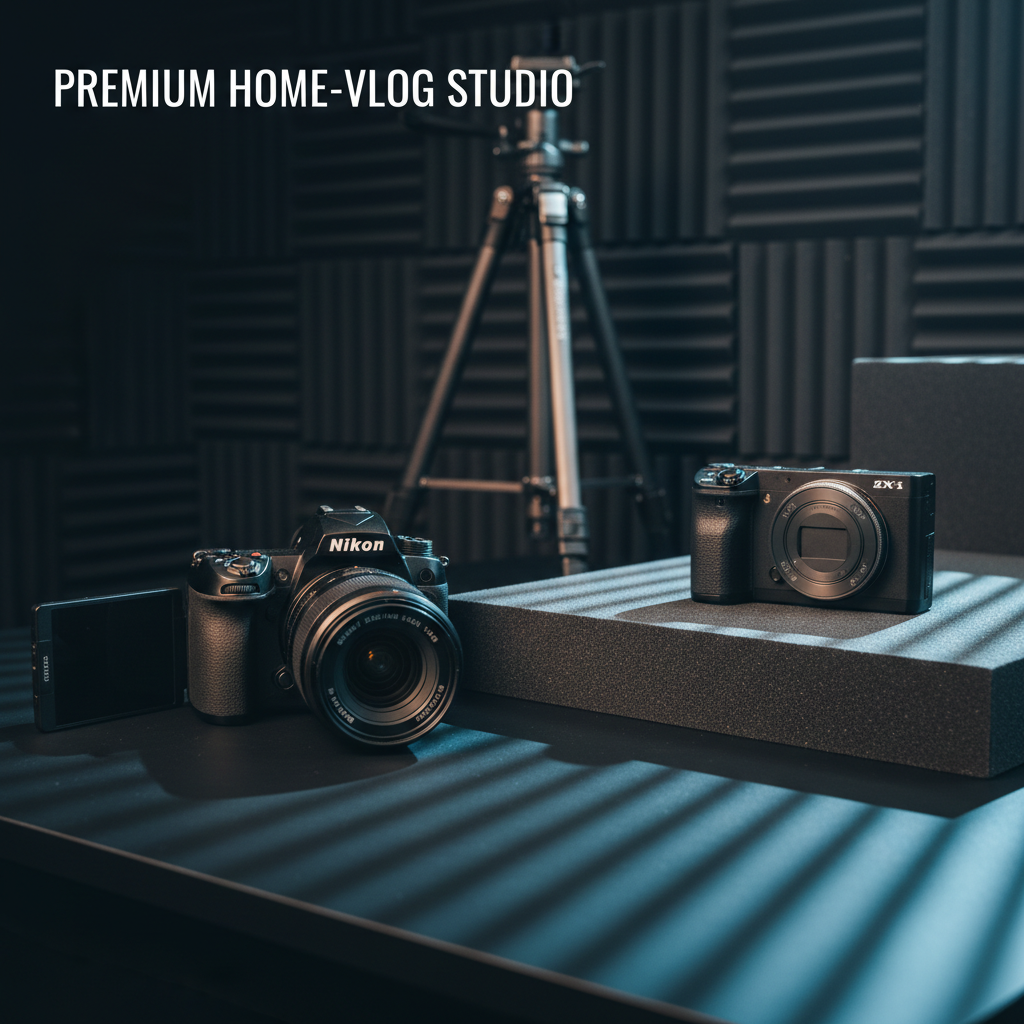
The most affordable camera in this lineup that actually has a rating – the Duluvulu DC101 at $58.97 – still earns a solid 4.2 / 5 from 2,419 reviewers. That score sits just a hair below the premium Sony ZV‑1, which commands $898 and a 4.4 / 5 rating from 2,320 fans. The gap between budget and premium isn’t as wide as the price tags suggest, especially when you consider features like the DC101’s 16× digital zoom and 4K video versus the ZV‑1’s 1‑inch 20.1 MP sensor and side‑articulating 3.0‑inch touchscreen.
The guide groups ten point‑and‑shoot cameras that all sport flip‑out screens into three price tiers. The budget tier (Zeoupt CV21, Kasukani DC13, Duluvulu DC101) offers sub‑$100 options, the mid‑range tier (Vjianger W08, Kodak PIXPRO C1, Panasonic Lumix ZS70) lands between $60 and $600, and the premium tier (Nikon P950, Sony ZV‑1, Nikon P1100) starts around $846 and climbs past $1,000.
The following breakdown highlights each model’s strengths, helping you pick the right flip‑out camera for your vlog.

Nikon COOLPIX P1100
Offers about 1 hour 10 minutes of video recording on a single charge, giving you plenty of runtime for extended vlogs.

Panasonic Lumix ZS70
Ideal for budget‑conscious vloggers who still want solid performance, it comes in at $600—about $447 cheaper than the Nikon P1100, making it a strong mainstream choice.
Sony ZV-1
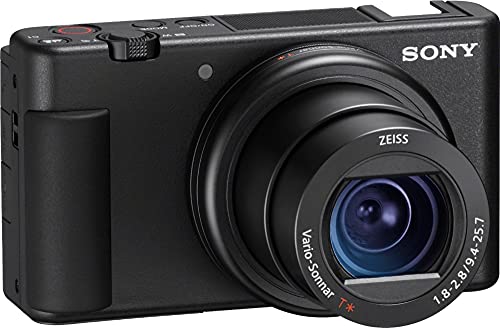
Stands out with 65 minutes of standard‑mode 4K video recording, plus built‑in BLE Bluetooth, giving creators high‑resolution capture and easy wireless connectivity not listed for the others.
Also considered
Score Analysis
Key score advantages vs. runner-up (Panasonic Lumix ZS70)
Price Range
Nikon COOLPIX P1100
$1,046.95
Panasonic Lumix ZS70
$600.00
Sony ZV-1
$898.00

Nikon COOLPIX P950
$746.95
Kodak PIXPRO C1
$99.00

Fujifilm X70
-$0.01

Duluvulu DC101
$58.97

Zeoupt CV21
$29.99

Kasukani DC13
$43.99

Vjianger W08
$59.99
Spec Comparison
TL;DR: The Nikon COOLPIX P1100 delivers an unmatched 125× optical zoom, 4K video, and 4‑stop VR in a sturdy bridge body, but its premium $1046.95 price and large 3.11‑pound weight suit serious creators.
The standout feature is the 125× optical zoom (24–3000 mm equivalent) paired with a 16.0 MP back‑illuminated 1/2.3‑inch CMOS sensor and Dual Detect Optical VR that provides up to 4.0 stops of shake reduction. The camera also records 4K UHD video at 30 p and includes a 3.2‑in vari‑angle LCD (8.1 cm) with five brightness‑adjustment levels, plus a 0.39‑in OLED EVF for precise framing.
At 3.11 pounds, the P1100 is significantly heavier than the Sony ZV‑1, which tips the scales at about 0.65 pounds, and it sits deeper than the Nikon COOLPIX P950 (147 mm vs. 142.24 mm). Video battery life is roughly 1 hour 10 minutes, a shade shorter than the P950’s reported 1 hour 20 minutes, though both charge in about three hours. The P1100’s optical zoom far outstrips the ZV‑1’s specs, giving vloggers far more reach without swapping lenses.
Reviewers consistently praise the extreme zoom for wildlife and moon shots, noting that the 4‑stop VR keeps handheld images sharp even at the longest focal lengths. Users also appreciate the flip‑out screen for framing selfies and the included ML‑L7 Bluetooth remote, which adds flexibility for vlogging. The EXPEED image‑processing engine and 5‑level LCD brightness control help maintain image quality in bright outdoor conditions.
Pros
Cons
Best for: Those prioritizing quality and willing to pay for premium performance
Avoid if: You're shopping on a tight budget — it's priced at $1046.95
TL;DR: The Panasonic Lumix ZS70 offers a pocket‑friendly 30x optical zoom, 4K video, and a 180° tilting 3‑inch touchscreen, but its small sensor and lack of mic input keep it from pro‑level use.
The standout spec is its 30x optical zoom (24‑720 mm equivalent) paired with a 20.3 MP MOS sensor, letting you capture distant subjects without swapping lenses. It records 4K UHD video at 3840×2160 px and 29.97 fps, and the 3.0‑inch rear LCD tilts a full 180° for selfie‑style framing. A 5‑axis Hybrid O.I.S. and a 1.166 million‑dot EVF (0.2‑inch size) help keep shots steady and composable.
At $600, it’s pricier than the Sony ZV‑1 but still lighter than the Nikon COOLPIX P950, weighing in at 0.71 pounds. Its 30x optical zoom dwarfs the 4x digital zoom of the Kodak PIXPRO C1 and the 16x digital zoom of the Vjianger W08, giving it a clear advantage for travel‑range shooting.
Users rave about the 30x zoom range, the 5‑axis stabilization, and the selfie‑friendly 180° screen, noting that USB‑charging on the go is a real convenience. Professional reviewers point out the 4K video quality and innovative 4K Photo modes, while common complaints focus on low‑light performance from the 1/2.3" sensor, the modest 0.2‑inch EVF without an eyecup, and the absence of an external microphone input.
Technical highlights include 49 contrast‑detect/hybrid DFD focus points, up to 30 fps electronic burst shooting at 8 MP, and roughly 380 shots per charge when using the rear LCD. The camera also offers full 100% EVF coverage and a range of creative exposure modes, making it a versatile tool for everyday shooting.
Pros
Cons
Best for: Travel vloggers and selfie enthusiasts who want a powerful zoom and 4K video in a pocketable package.
Avoid if: You need professional low‑light capability, external audio inputs, or a tight budget — it's priced at $600.00.
TL;DR: The Sony ZV‑1 packs a 1‑inch 20.1 MP sensor, ZEISS 24‑70 mm f/1.8‑2.8 lens and a 3.0‑inch side‑flip touchscreen into a 0.64815905028‑lb body, delivering vlog‑ready video and sharp stills.
What really sets the ZV‑1 apart is its 1‑inch stacked Exmor RS CMOS sensor with 20.1 megapixels and a fast ZEISS Vario‑Sonnar T* 24–70 mm lens that opens to f/1.8 at the wide end. The camera also sports a 3.0‑inch side‑articulating touchscreen, which flips to the right for easy self‑framing, and a dedicated Bokeh button that toggles between f/1.8 and f/5.6.
At 0.64815905028 pounds (294 g), the ZV‑1 is considerably lighter than the Nikon COOLPIX P950 (2.20462262 lb) and the bulkier P1100 (3.11 lb), yet it sits a bit above the ultra‑light Kodak PIXPRO C1 (0.247 lb). Its 3.0‑inch screen is marginally smaller than the Panasonic Lumix ZS70’s 3.2‑inch LCD, but the ZV‑1 still offers a higher‑resolution 921,600‑dot display. Sensor‑wise, the ZV‑1’s 20.1 MP outmatches the Nikon P950’s 16.0 MP and Kodak’s 13.12 MP, and it trails only the Lumix’s 20.3 MP by a hair. Sony lists the 4K battery‑recording time at 65 minutes, which is shorter than the Nikon P950’s roughly 1 hour 20 minutes and the Kodak’s 1.5‑hour 1080/30 fps claim, but still adequate for typical vlog sessions.
Reviewers consistently praise the camera’s Real‑time Eye AF and AI‑based tracking, noting that the autofocus locks on faces and eyes with reliable focus. The built‑in directional 3‑capsule mic, paired with the detachable windscreen, captures clear voice audio, a point highlighted by both everyday users and professional reviewers. However, users also flag the lack of an interchangeable‑lens system as a limitation for future growth, and several mention that extended 4K recording can trigger overheating, cutting sessions to around five minutes. The absence of a headphone jack means you can’t monitor audio in‑camera, which some creators find inconvenient.
The ZV‑1 adds several vlog‑friendly tools: an optical SteadyShot system that promises up to 8× improvement in 4K and up to 11× in HD, a built‑in ND filter for smoother exposure in bright light, and ten preset LUTs for quick color grading. Video bitrate tops out at 100 Mbps, and the camera supports 4K 30 fps as well as Full HD 120 fps slow‑motion capture. Bluetooth Low Energy (BLE 4.1) enables easy wireless pairing, while the USB‑C port handles charging and data transfer.
Pros
Cons
Best for: Buyers willing to invest in a proven, high‑quality option
Avoid if: You need advanced features or professional‑grade performance
TL;DR: The Nikon COOLPIX P950 packs an 83× optical zoom, 4K video and a high‑resolution OLED viewfinder into a solid‑handed bridge camera, but its small sensor and 2‑pound body keep it from being a lightweight travel option.
The standout specification is the 83× optical zoom, covering a 24–2000 mm 35 mm‑equivalent range, with a maximum aperture of f/2.8 at the wide end and f/6.5 at full tele. It also records 4K UHD video at 30 p and includes a 3.5 mm external‑mic jack for better audio. The OLED electronic viewfinder offers 2,359,000 dots on a 0.39‑inch screen, and the rear vari‑angle LCD measures 3.2 inches.
Compared with the other nine cameras, the P950 is heavier than the Sony ZV‑1 (0.64815905028 pounds) and the Panasonic ZS70 (0.71 pounds), yet lighter than the Nikon COOLPIX P1100 (3.11 pounds). Its 3.2‑inch monitor matches the Panasonic’s size but is larger than the Sony’s 3.0‑inch side‑articulating screen. In terms of zoom, the P950’s 83× optical reach far exceeds the Sony’s and Kodak’s modest digital zooms, while the P1100 offers a longer dynamic fine zoom (250×) but at a higher weight and price point.
Users consistently praise the ability to capture distant wildlife, birds and even the moon without swapping lenses, and they appreciate the manual controls available for 4K video. Professional reviewers highlight the dual‑detect Optical VR that delivers up to 5.5 stops of shake reduction. However, the 1/2.3‑inch sensor frequently gets mentioned as a source of noise at higher ISO settings, and the 2.20462262‑pound body feels bulky for extended handheld shooting. Battery life delivers roughly 290 still shots and about 1 hour 20 minutes of video recording, which some users find limiting for all‑day outings.
Technical context adds that the camera’s macro capability reaches as close as 1 cm, and the focus range extends from 0.5 m (wide) to infinity, with a tele focus minimum of 5.0 m. The lens construction comprises 16 elements in 12 groups, including 5 ED and 1 super‑ED glass element, helping maintain image quality across the extreme zoom range.
Pros
Cons
Best for: Buyers willing to invest in a proven, high‑quality option
Avoid if: You need advanced features or professional‑grade performance
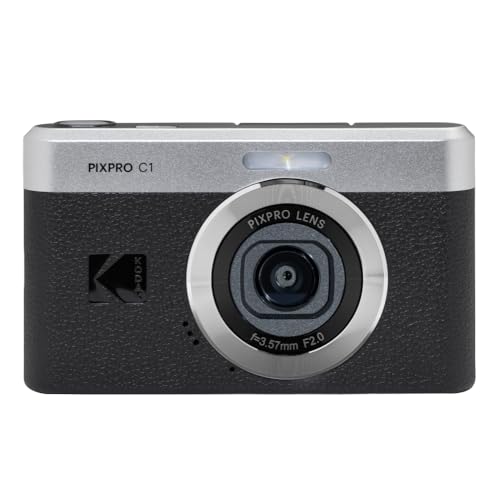
TL;DR: The Kodak PIXPRO C1 packs a 13‑MP BSI sensor, f/2.0 lens and a 2.8‑inch 180° flip‑up screen into a 115 g pocket‑friendly body for $99, making it a solid entry‑level vlog camera.
One of the standout features is the 180° upward‑tilting 2.8‑inch LCD, which lets you frame yourself easily for selfies or vlog shots. The camera uses a 13.12 MP 1/3‑inch BSI CMOS sensor paired with a fixed f/2.0 26 mm equivalent lens, delivering bright images in everyday lighting. Powered by a built‑in 700 mAh Li‑ion battery, it offers about 200 still shots or roughly 1.5 hours of Full HD video at 1080 p/30 fps, all for the listed price of $99.00.
Compared with the other nine cameras in this roundup, the C1’s 4× digital zoom is modest; the Vjianger W08, Duluvulu DC101, and Kasukani DC13 all list 16× digital zoom. Its 700 mAh battery is also smaller than the 3000 mAh pack in the Vjianger and the 2000 mAh pack in the Kasukani. The 2.8‑inch screen is a bit smaller than the Sony ZV‑1’s 3.0‑inch side‑articulating display, but the flip‑up design is unique among the group. At 115 g, the C1 is lighter than the Nikon COOLPIX P950 and considerably lighter than the Panasonic Lumix ZS70, making it truly pocket‑ready.
Everyday users appreciate how the pocketable size and flip‑up screen make quick selfies and travel snaps effortless, and professional reviewers praise the f/2.0 lens for portrait‑type shots. However, multiple reviewers note the lack of image stabilization, which can make handheld video appear shaky, especially in low‑light situations. The absence of Wi‑Fi or Bluetooth also means you’ll need to transfer files via the microSD card rather than wirelessly.
The camera’s electronic shutter ranges from 1/10,000 sec to 2 sec, and it supports ISO 100‑1600, giving you flexibility in varied lighting. With a 4× digital zoom and 5‑element lens construction, you can get close‑up framing, though image quality will degrade as you zoom. The built‑in flash offers auto, forced, and off modes, and the standard 1/4″ tripod mount lets you set it up for static shots.
Charging the built‑in 700 mAh battery via USB‑C takes about 2.5 hours, letting you get back to shooting quickly. Video recording supports Full HD at 60 fps or 30 fps, and the camera records in MOV format with mono audio. You can expand storage with a microSD or microSDHC card up to 32 GB, as the model has no internal memory. A standard 1/4″ tripod socket adds flexibility for steady shots on a tripod or selfie stick.
Pros
Cons
Best for: Casual photographers, vloggers and social‑media creators who prioritize a tiny, retro‑looking camera with a flip‑up screen.
Avoid if: You need advanced features like image stabilization, optical zoom, wireless connectivity or higher low‑light performance for serious photography or professional video work.
“Perfect for travel and daily memories — small and easy to carry.”
“Love the flip screen for selfies — makes vlogging so easy.”
TL;DR: The Fujifilm X70 packs a 16.3 MP APS‑C sensor, a 3.0‑inch 1,040k‑dot tilting touchscreen and 77‑point hybrid AF into a compact metal body, delivering high‑quality stills and 1080p video for vloggers who value image quality over built‑in viewfinder.
The standout feature is the 3.0‑inch touchscreen that flips up 180° and down 45°, letting you frame yourself while vlogging. The LCD’s 1,040k‑dot resolution ensures sharp previews, and the hybrid contrast‑detect/phase‑detect AF system offers 77 continuous AF points, giving quick focus on moving subjects. Combined with an f/2.8 28 mm equivalent lens, the X70 delivers bright, wide‑angle shots in a pocketable form.
Compared with the other nine cameras, the X70’s battery rating of roughly 330 shots per charge sits between the Panasonic ZS70’s rear‑LCD estimate of about 380 shots and the modest endurance of the Zeoupt CV21, which lists 80 minutes per battery. Its 3.0‑inch screen matches the Sony ZV‑1’s 3.0‑inch side‑articulating display, but unlike the Sony, the X70’s screen lacks auto‑brightness, users often note. At 340 g with battery, it's a touch heavier than the Sony ZV‑1 (around 0.65 pounds) but comparable to the Panasonic ZS70 (about 0.71 pounds). The built‑in flash’s guide number of 5.5 m at ISO 100 provides modest fill light, while the lack of a viewfinder mirrors many compact peers.
Professional reviewers praise the X70’s “high image quality and dynamic range” from its X‑Trans sensor and the tactile, all‑metal construction that feels “comparable to Leica.” Users echo this, highlighting the vivid color rendering from Fujifilm’s film simulation modes. The most common complaints focus on the LCD’s readability in direct sunlight and the absence of weather sealing, which limits use in harsh conditions. Reviewers note the battery life of around 330 shots is modest for all‑day shooting.
Pros
Cons
Best for: Vloggers and street shooters who prioritize image quality and a flip‑out screen in a compact, metal‑built camera.
“exquisitely well made”
“perfect street camera”
TL;DR: The Duluvulu DC101 delivers 4K video, a 48 MP interpolated sensor and a 180° flip screen for under $60, making it a solid starter kit for budget‑friendly vloggers.
The standout spec is its 4K video capability at 4096 × 2160 pixels, paired with a max photo resolution of 48 MP (interpolated from an 8 MP CMOS sensor). A 180° flip IPS LCD (3.0 in) lets you frame yourself easily, while a 16X digital zoom and 75° field of view provide ample reach for casual shoots.
At $58.97, the DC101’s a few dollars cheaper than the Vjianger W08, which lists $59.99, yet it ships with two rechargeable lithium‑ion batteries and a 32 GB SD card—extras the Vjianger only mentions as battery count. Its 16X digital zoom matches the Vjianger’s 16× but far exceeds the Kodak PIXPRO C1’s 4× zoom. Weighing 0.59 lbs, Duluvulu is lighter than both Vjianger (≈0.88 lbs) and Zeoupt CV21 (≈0.68 lbs), though a bit heavier than Kodak’s 0.247 lb body.
Reviewers love the ease of use and the value of the included starter kit, noting the flip screen makes solo recording painless and the image quality feels sharper than most smartphones. However, users consistently point out noisy grain in dim lighting, a noticeable drop in sharpness when using the digital zoom, and the basic anti‑shake struggling with rapid movement. Professionals also flag the AVI file format as bulky for editing.
Technical details reinforce its beginner‑friendly design: the camera offers ±3.0 EV exposure compensation, a fixed F/3.2 aperture, and digital anti‑shake. It supports HDMI output, a hot shoe for external mics or lights, and USB‑type‑C connectivity for webcam mode. Video options span 4K, 2.7K, 1080p, 720p and VGA, all saved as AVI files.
Pros
Cons
Best for: Entry-level buyers or those on a tight budget
Avoid if: You need powerful performance or professional‑grade features
“Perfect for my 13-year-old daughter’s YouTube channel.”
“The flip screen makes vlogging so easy.”
TL;DR: The Zeoupt CV21 delivers 4K video, a 270° flip screen and 18× digital zoom for just $39.99, making it a budget‑friendly starter for vloggers who don’t need optical zoom.
The CV21’s headline feature is its ability to record 4K UHD video at 3840×2160 pixels and 30 fps, while still offering a 64 MP interpolated still resolution. Its 5.04 mm (max) to 18 mm (min) focal range pairs with an 18× digital zoom, and the f/2.4 aperture gives a modest depth‑of‑field for casual shooting. The 2.8‑inch LED screen flips a full 270°, letting you see yourself clearly while vlogging.
Compared with the other nine cameras in this roundup, the CV21’s 18× digital zoom tops the 16× zoom found in the Kasukani DC13, Duluvulu DC101 and Vjianger W08, though it still lacks the optical zoom that larger models like the Nikon COOLPIX P950 provide. At 308 g, it is lighter than the Kasukani DC13 (360 g) and the Vjianger W08 (around 400 g), yet a bit heavier than the ultra‑light Kodak PIXPRO C1 (about 112 g). Battery life of 80 minutes per charge (160 minutes total with two batteries) matches the Nikon’s roughly 80‑minute video run‑time, but falls short of the Vjianger’s 150‑minute per‑battery endurance.
User feedback praises the flip‑out screen and the all‑in‑one bundle, which includes two batteries, a USB‑C charging cable, a 64 GB SD card and a carrying bag. Reviewers also note the convenient Bluetooth 5.0 connection and that you can use the camera as a 4K webcam via USB‑C. On the downside, the lack of optical zoom and reliance on 18× digital zoom cause noticeable softness when you zoom in, and the interpolated 64 MP resolution often appears overstated. Low‑light scenes show noise and grain, and both everyday users and professional reviewers repeatedly mention this.
Pros
Cons
Best for: Beginners, teens and budget‑conscious vloggers who want 4K video and a flip screen without breaking the bank.
Avoid if: You need professional‑grade performance, strong low‑light capability, or optical zoom for wildlife or sports shooting.
“everything you need in one box”
“Easy to use for teens and first‑time camera owners”
TL;DR: The Kasukani DC13 delivers 56 MP photos, 4K video and a 3.0‑inch 180° flip screen for $42.99, making it a budget‑friendly starter for vloggers who value portability.
The camera’s headline spec is its 56 MP effective still resolution, which tops the 44 MP interpolated output of the Duluvulu DC101 and far exceeds the 13.12 MP of the Kodak PIXPRO C1. Coupled with a 16× optical zoom, you’ll capture distant subjects without the quality loss that comes with digital zoom alone.
At 360 g, the DC13 is lighter than the Nikon COOLPIX P950 but heavier than the ultra‑light Kodak PIXPRO C1, placing it in a comfortable middle ground for handheld shooting. Its 2000 mAh rechargeable battery outstrips the 700 mAh cell in the Kodak and sits between the 1025 mAh of the Panasonic Lumix ZS70 and the 3000 mAh pack in the Vjianger W08, giving you several hours of intermittent use.
Users consistently praise the 3.0‑inch 180° flip LCD for framing selfies and vlog shots, and professional reviewers note the camera’s accurate colour reproduction and crisp 4K Ultra HD (3840 × 2160) video at 30 FPS. The built‑in microphone and optional external mic add audio flexibility, while the included 32 GB SD card lets you start shooting straight out of the box.
Pros
Cons
Best for: Beginners, teens and casual creators who need a simple, portable camera for vlogging, travel or everyday snapshots on a tight budget.
Avoid if: You need advanced manual controls, optical stabilization, or professional‑grade low‑light performance.
“Perfect for YouTube vlogs — the flip screen makes framing so easy.”
“No image stabilization — videos get shaky when walking.”
TL;DR: The Vjianger W08 packs a 64 MP interpolated sensor, 4K 30fps video and a 180° flip‑out 3.0‑inch touchscreen for $59.99, making it a budget‑friendly starter for vloggers.
The headline spec is the 64 MP interpolated photo resolution paired with a native 48 MP 1/2.5‑inch CMOS sensor, letting you capture highly detailed stills without breaking the bank. Video tops out at 4K 30fps, and the 180° articulating 3.0‑inch IPS LCD makes it easy to frame yourself while recording. Power isn’t an afterthought either – the camera ships with two 3000 mAh Li‑ion batteries that each deliver about 150 minutes of shooting time.
Compared with the nine other cameras in this roundup, the W08 sits at the lower‑end of the price spectrum while still offering a full‑frame‑style 16× digital zoom, which matches the zoom capability of several peers. It lacks an optical zoom system that some competitors list, and it also forgoes an HDMI output that higher‑priced models provide. Still, its Wi‑Fi connectivity and 3.5 mm external‑mic jack give it more versatility than a few budget alternatives that omit those ports.
Reviewers appreciate the ease of use, especially the included 32 GB microSD card, Type‑C charging cable, camera bag and lanyard that get you shooting right out of the box. The flip screen and built‑in Wi‑Fi are repeatedly praised for making solo vlogging a breeze. On the downside, users note that the digital zoom becomes noticeably soft past 10×, and the fixed f/3.5 aperture limits low‑light performance. Reviewers describe the built‑in microphone as muffled, so many vloggers plan to attach an external mic via the 3.5 mm jack.
From a technical standpoint, the sensor’s ISO range of 80–51200 provides decent flexibility in varied lighting, while the autofocus system offers auto, manual, continuous and face‑detection modes. The camera records 1080p 60fps and 720p 120fps slow‑motion clips, and it supports time‑lapse and loop recording for creative content. All of this fits into a body that weighs 0.881849048 pounds, making it portable enough for travel without feeling flimsy.
Pros
Cons
Best for: Value-conscious buyers seeking quality at $59.99
Avoid if: You need professional low‑light performance, optical zoom, HDMI monitoring, or advanced audio recording capabilities
“Perfect for YouTube beginners”
“Surprisingly detailed photos”
Breakdown
Nikon COOLPIX P1100
Pros
Cons
Panasonic Lumix ZS70
Cons
Sony ZV-1
Pros
Nikon COOLPIX P950
Pros
Based on scoring data and product specs
Personalized picks
Best Overall Pick
Nikon COOLPIX P1100
Best OverallBest for: Those prioritizing quality and willing to pay for premium performance
Panasonic Lumix ZS70
Best for: Most users seeking a balanced, mainstream option
$600.00-$446.95 vs winner
Skip Vjianger W08 if…
You have limited desk space or need portability
The Nikon COOLPIX P1100 takes the top spot thanks to its massive 125× optical zoom, a bright 8.1 cm (3.2 in.) vari‑angle LCD, and 4.0‑stop Dual Detect Optical VR that keeps footage steady. Its 16.0 MP back‑illuminated sensor delivers detailed stills, while the battery can capture roughly 260 shots per charge. With a 4.4‑star rating from 126 reviewers, it offers the most versatile kit for serious vloggers.
The Panasonic Lumix ZS70 lands as the runner‑up, ideal if you need a lightweight travel companion that still packs a punch. Weighing just 0.71 lb, it offers a 30× optical zoom and a 180° tilting touchscreen that’s perfect for self‑recording. It records 4K UHD (3840×2160) video, benefits from 5‑Axis Hybrid O.I.S., and its battery delivers about 250 EVF shots or 380 LCD shots—great for long shooting days at a $600 price point.
For tighter budgets, the Zeoupt CV21 stands out as the ultra‑affordable option at $39.99, giving newcomers a low‑cost entry into vlogging. The Panasonic Lumix ZS70 also serves as the best mid‑range choice, balancing price and performance without sacrificing the flip‑out screen.
Pick the Nikon COOLPIX P1100 now and lock in the most capable flip‑out camera for your vlogging needs.
The Nikon COOLPIX P1100 provides a massive 125× optical zoom covering a 24–3000 mm 35 mm‑equivalent range, while the Panasonic Lumix ZS70 tops out at 30× optical zoom (24–720 mm equivalent). For vloggers who need extreme reach—such as wildlife or travel shots—the P1100’s zoom is far more versatile.
Please sign in to leave a review
No reviews yet. Be the first to review!
