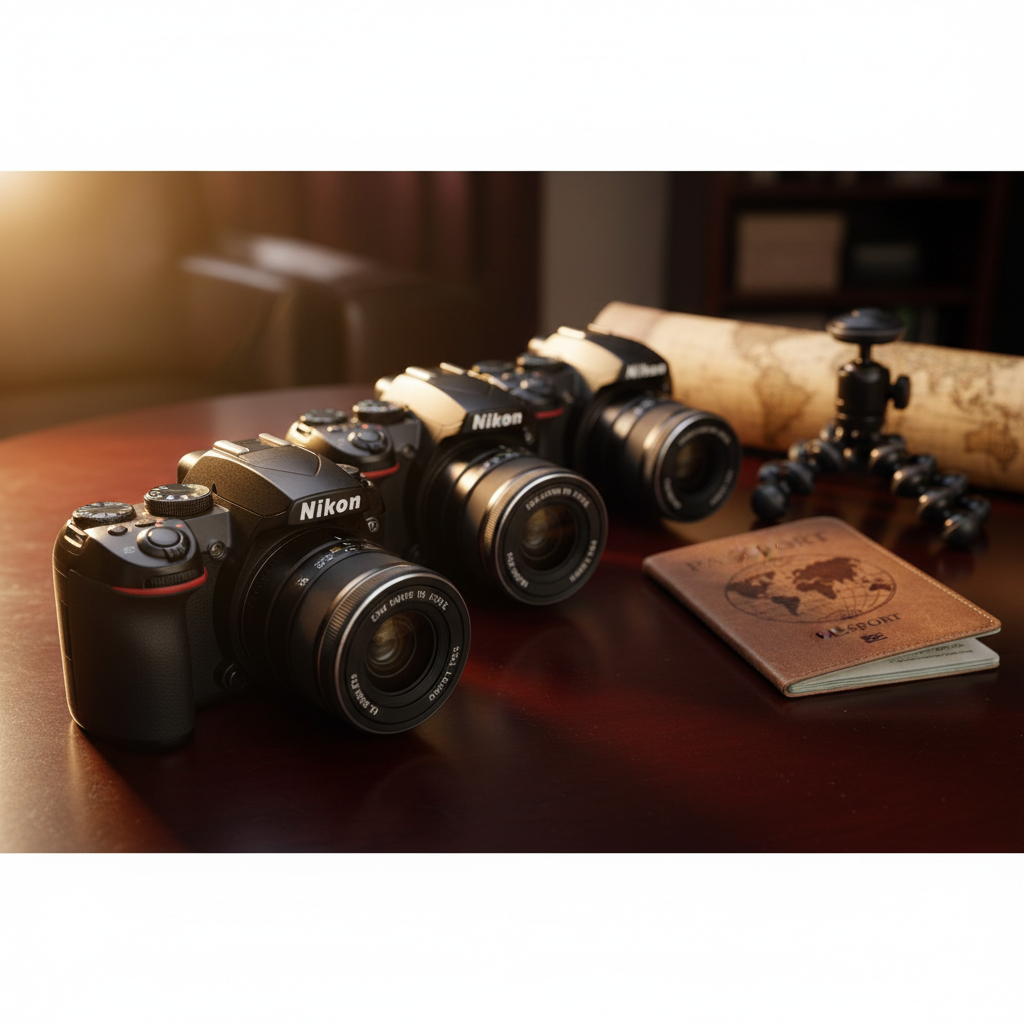
The clear winner among 11 point‑and‑shoot cameras with high optical zoom is the Nikon COOLPIX P500. At a list price of $119.00 it delivers a solid 4.3/5 rating from 403 reviewers, and its 1.09 Pounds body feels sturdy enough for travel without weighing you down. Its 12.1 MP sensor and 3.0‑inch LCD give you the flexibility to frame distant subjects while keeping the camera compact enough for a backpack.
The lineup spans every budget tier. The budget segment includes the Nikon COOLPIX P500, Kodak AZ405‑WH and Canon PowerShot SX520 HS, all priced under $250 and offering respectable zoom ranges for casual shooters. Mid‑range options—Panasonic DC‑FZ80DK and Canon SX30 IS—bring extra features like 4K video and more AF points at a moderate price. The premium tier showcases the Nikon COOLPIX P950, Nikon COOLPIX P1100 and Canon PowerShot SX740 HS, each commanding higher price points but rewarding you with extreme zoom reach and advanced video capabilities.
Below you’ll find a detailed look at each model’s strengths, so you can match the right zoom‑power to your shooting style.

Nikon COOLPIX P500
Its 1100 mAh battery provides solid endurance for entry‑level shooters, supporting many shots before recharging.

Nikon COOLPIX P950
Serious hobbyists who need extended zoom will find it priced at $846.95, roughly $728 more than the $119.00 P500.

Nikon COOLPIX P1100
Delivers about 260 still shots per charge and 1 hour 10 minutes of video, outlasting the P500 and P950 for longer shooting sessions.
Also considered
Score Analysis
Key score advantages vs. runner-up (Nikon COOLPIX P950)
Price Range
Nikon COOLPIX P500
$119.00
Nikon COOLPIX P950
$746.95
Nikon COOLPIX P1100
$1,046.95

Panasonic DC-FZ80DK
$497.99
Kodak AZ405-WH
$249.00

Canon Cameras US Point and Shoot Digital Camera
$649.00
Canon SX30 IS
$518.00

Sony H400
$561.06
Canon PowerShot SX520 HS
$488.00

PANASONIC LUMIX 4K Point and Shoot Camera
-$0.01
Canon PowerShot SX740 HS Digital Camera
$1,099.99
Spec Comparison
TL;DR: The Nikon COOLPIX P500 delivers a massive 36× optical zoom, 5‑way vibration reduction and a 3‑inch vari‑angle LCD for just $119, making it a solid budget bridge camera for long‑reach shooting.
The standout feature is the 36× optical zoom (22.5–810 mm equivalent) paired with a 5‑way VR sensor‑shift system, which helps keep images sharp even at the longest focal length. Under the hood sits a 12.1 MP backside‑illuminated 1/2.3‑inch CMOS sensor, and the camera can shoot up to 5 fps at full resolution, giving you enough speed for casual action shots.
Compared with the other ten cameras in this roundup, the P500 is lighter than the Panasonic DC‑FZ80DK (which weighs 1.41 lb) but heavier than the Kodak AZ405 (about 0.96 lb). Its 1100 mAh rechargeable battery also out‑lasts the Panasonic’s 895 mAh pack, though it can’t match the AA‑powered Kodak in raw capacity. The 3‑inch LCD with 921,000‑dot resolution offers a clearer view than the Sony H400’s 2.95‑inch screen, and the electronic viewfinder’s 230,000‑dot display sits comfortably between the lower‑resolution EVFs of the other models.
Reviewers consistently praise the P500’s zoom reach and the effectiveness of its vibration reduction, noting that the camera feels responsive with minimal shutter lag. Professional reviewers highlight the fast 5 fps burst and the flexible vari‑angle LCD for shooting from odd angles. On the downside, users report that image quality softens at the extreme end of the zoom range and that high‑ISO performance is limited by the small sensor. Manufacturers list battery life at roughly 220 shots per charge, which some find modest for all‑day outings.
Pros
Cons
Best for: Entry-level buyers or those on a tight budget
Avoid if: You need advanced features or professional‑grade performance
TL;DR: The Nikon COOLPIX P950 packs an industry‑leading 83× optical zoom, 4K video, and a high‑resolution OLED EVF into a 2.20462262‑lb body, but its small sensor and bulk may limit low‑light work.
The standout spec is the 83× optical zoom, covering a 24–2000 mm 35 mm‑equivalent range, which dwarfs the 40× zoom found in several peers. Its OLED electronic viewfinder offers 2,359,000 dots of resolution, giving a clear view even at full telephoto.
At 2.20462262 pounds, the P950 is heavier than the Canon US Point‑and‑Shoot (0.60625 lb) and the Canon SX30 IS (1.32 lb), yet lighter than the Nikon P1100 (3.11 lb). Its price of $846.95 puts it in the premium tier, making it pricier than many entry‑level bridge cameras but still competitive within its class.
Reviewers praise the extreme reach and the 4K UHD video capability, noting the dual‑detect Optical VR that delivers up to 5.5 stops of shake reduction. Users, however, frequently mention the 1/2.3‑inch sensor limiting dynamic range and adding noticeable noise at higher ISOs, and they point out the bulkiness of a camera that weighs over 2 lb and measures 142.24 mm deep.
The camera records stills at 16.0 MP (4608 × 3456) and can capture video for roughly 1 hour 20 minutes on a full charge. Its macro mode works down to 1 cm, and the focus range starts at 0.5 m (wide) and 5.0 m (tele), giving flexibility for close‑up and distant subjects alike.
Pros
Cons
Best for: Buyers willing to invest in a proven, high‑quality option
Avoid if: You need advanced features or professional‑grade performance
TL;DR: The Nikon COOLPIX P1100 packs a massive 125× optical zoom, 16 MP sensor, 4K video and a high‑resolution EVF, but its premium price and heft make it best for dedicated zoom enthusiasts.
The standout feature of the P1100 is its 125× optical zoom, covering a 24–3000 mm 35 mm‑equivalent range, and it pairs with a 16.0 MP back‑illuminated CMOS sensor and Dual Detect Optical VR that delivers up to 4.0 stops of shake reduction. An OLED electronic viewfinder with ≈2,359k‑dot resolution and ~99% frame coverage lets you compose shots precisely, while the vari‑angle 8.1 cm (3.2 in.) LCD offers ≈921k‑dot clarity for live‑view shooting.
Compared with the other ten cameras in this roundup, the P1100 weighs 3.11 pounds, making it bulkier than the Canon SX30 IS (1.32 pounds) or the Panasonic DC‑FZ80DK (1.41 pounds). Its zoom outstrips the Canon PowerShot SX740 HS (80× combined) and the Nikon COOLPIX P950 (45× optical), and its stabilization (4.0 stops) edges out the SX740’s 3.5‑stop OIS. Battery life of ≈260 shots per charge is on par with the SX740’s 265‑shot rating, though the P950 offers slightly longer video runtime. The price tag of $1046.95 places the P1100 in the premium tier, above most peers.
Reviewers consistently highlight the “unmatched 125× zoom” for wildlife, moon, and distant subjects, noting that the dual‑detect VR keeps images sharp even at the longest focal lengths. The 4K UHD video capability and the ability to attach an external microphone also earn praise from creators who want high‑quality footage. Users appreciate the customizable control ring and bird‑watching mode for quick focus adjustments, but several mention that the camera’s weight and price require a commitment to the super‑zoom niche.
Under the hood, the P1100 runs Nikon’s EXPEED image‑processing engine, supports RAW (NRW) capture, and offers creative modes like multiple‑exposure Lighten and Time‑Lapse. Connectivity includes Bluetooth 5.2, Wi‑Fi with SnapBridge, a USB‑C port, and clean HDMI output, giving you flexible ways to transfer and stream content. Charging takes about ≈3 hours via USB or an optional AC adapter, and the battery (EN‑EL20a) provides roughly 1 hour 10 minutes of video recording.
Pros
Cons
Best for: Those prioritizing quality and willing to pay for premium performance
Avoid if: You need advanced features or professional‑grade performance
TL;DR: The Panasonic DC‑FZ80DK offers a 60× optical zoom, 4K video and a high‑resolution EVF at a sub‑$500 price, earning 4.3‑star ratings from nearly 4 k reviewers.
What really sets this camera apart is its 60× optical zoom covering a 20–1200 mm equivalent focal range, paired with 4K UHD video recording at 30 fps and a 4K Photo mode that pulls 8 MP stills straight from video. The 1/2.3"-type MOS sensor delivers 18.1 MP effective resolution, while the OLED electronic viewfinder packs a 2,360k‑dot resolution, giving you a clear preview even in bright light.
Compared with the other ten entries, the DC‑FZ80DK is heavier than the Canon PowerShot SX520 HS (0.97 lb vs 1.41 lb) but lighter than the Nikon COOLPIX P950 (over 2 lb). Its 60× zoom outstrips the 40× optical zoom found in the Canon point‑and‑shoot model, though its 18.1 MP sensor is a touch lower than that model’s 20.3 MP. Unlike many peers, it includes a built‑in OLED EVF with 2,360k‑dot resolution, a feature the Nikon COOLPIX P500 and Kodak AZ405 lack.
Everyday users rave about its 60× zoom reach and the ability to capture 4K video without breaking the bank, describing the camera as “gift‑ready” and comfortable to hold. Professional reviewers highlight the 60× zoom as a standout feature, but they also note the small 1/2.3" sensor can struggle in low‑light situations. Common complaints mention a steep menu hierarchy, a noisy flash button, and the absence of Wi‑Fi or Bluetooth for quick sharing.
Under the hood, the camera runs on a 895 mAh battery that provides about 90 minutes of continuous shooting, and a USB‑C port lets you recharge on the go. The aperture range of f/2.8–f/5.9 and a minimum focusing distance of just 1 cm let you get close to subjects, while the 10 fps continuous‑shoot mode helps capture fast action. Users report the flash button as noisy.
Pros
Cons
Best for: Most users looking for a well‑reviewed, reliable mainstream option
Avoid if: You need advanced features or professional‑grade performance
“Given as a gift, he loves it”
“It feels good in the hand and the zoom range is outstanding”
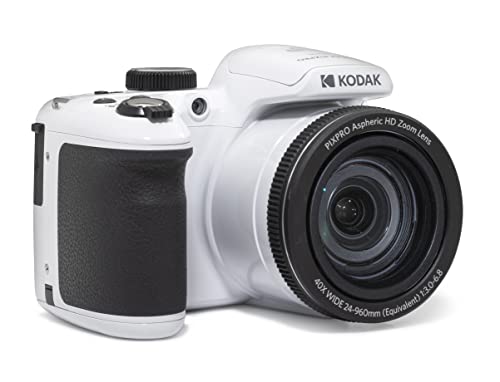
TL;DR: The Kodak AZ405‑WH packs a 40× optical zoom, a 20.68 MP sensor and AA‑battery power into a lightweight 0.96‑lb body with a 3.0‑inch LCD, making it a solid entry‑level superzoom.
Its headline feature is the 40× optical zoom, spanning 24 mm to 960 mm in 35 mm‑equivalent terms, paired with a 20.68 MP BSI‑CMOS sensor. A 3.0‑inch fixed TFT LCD delivers 460,000 dots, and the device runs on four AA batteries, letting you swap cells on the go without hunting for a charger.
Compared with the other ten models in this roundup, the AZ405‑WH is lighter than the Nikon COOLPIX P500 (494 g) and the Canon PowerShot SX520 HS (441 g), yet it offers a higher megapixel count than Nikon’s 12.1 MP and Canon’s 16.0 MP sensors. Its 3.0‑inch screen matches the size of Nikon’s and Canon’s displays and is a touch larger than Sony’s 2.95‑inch panel. While many competitors rely on built‑in rechargeable packs, Kodak’s use of AA cells gives it a portability edge for travel or outdoor shoots.
Reviewers consistently praise the 40× zoom reach and the built‑in Optical Image Stabilization that helps keep shots steady at the telephoto end. The camera also includes face, smile, blink and pet detection, plus a 180° panorama mode that many casual users find fun. On the downside, professional observers note occasional video‑recording inconsistencies and point out that the camera only records Full HD (1080 p) video in a Motion JPEG codec, which produces larger files. The lack of an electronic viewfinder and the all‑plastic construction also draw criticism, especially in bright sunlight or demanding environments.
Pros
Cons
Best for: Entry‑level buyers or those on a tight budget who want a long‑reach zoom without the hassle of proprietary batteries.
Avoid if: You want the best value‑per‑dollar in its price range, need 4K video, or require a rugged body with a viewfinder.
TL;DR: The Canon Cameras US Point‑and‑Shoot Digital Camera packs a 40× optical zoom, 20.3 MP sensor and 4K video into a lightweight 0.60625‑lb body for travel‑ready shooting.
This model’s headline feature is its 40× optical zoom, reaching a 960 mm 35 mm‑equivalent focal length while keeping the lens at a modest 172 mm actual length. The 20.3 MP 1/2.3″ CMOS sensor pairs with a DIGIC 8 processor, delivering 4K UHD video at 29.97 fps and a 3.0‑inch tilt‑type LCD that flips up 180° for selfies or vlogging.
At 0.60625 pounds, the camera is noticeably lighter than the Canon SX30 IS (1.32 lb), Panasonic DC‑FZ80DK (1.41 lb), Canon SX520 HS (0.97 lb), Nikon COOLPIX P950 (2.20 lb), Nikon COOLPIX P1100 (3.11 lb) and Kodak AZ405 (0.96 lb). Its depth of 40.64 mm also makes it slimmer than the SX30 IS (107.7 mm) and the other peers, meaning it tucks easily into a pocket or small travel bag.
Reviewers praise the extreme zoom and the sharpness of its 4K video, especially when the camera’s Optical Image Stabilizer and Zoom Framing Assist engage. Users also like the built‑in Wi‑Fi and Bluetooth for quick sharing via the Canon Camera Connect app. However, the small 1/2.3″ sensor can introduce noise above ISO 800, and the lack of a viewfinder means you rely on the LCD, which can be hard to read in bright sunlight. Manufacturer lists battery life at 265 shots, so extended shooting—particularly with Wi‑Fi or 4K video—may require a spare battery.
In practice, the camera offers up to 10 fps continuous shooting (up to 10 frames with AF lock) and a minimum focus distance of just 1 cm, useful for close‑up details. Optical Image Stabilization helps keep handheld shots steady at the long end of the zoom range, and the ISO range of 100–3200 (expanded) provides flexibility in varied lighting, though low‑light performance remains limited by the sensor size.
Pros
Cons
Best for: Most users seeking a balanced, mainstream option
Avoid if: You're shopping on a tight budget — it's priced at $659.00
TL;DR: The Canon PowerShot SX30 IS packs a 35× optical zoom, 14.1 MP CCD sensor, and a fully articulating LCD, all for $518, but its 720p video and lack of RAW keep it from being a pro‑level bridge.
The standout feature is its 35× optical zoom, covering a 24–840 mm equivalent range, paired with lens‑shift optical image stabilization that claims up to 4.5 stops of shake reduction. The camera weighs 1.32 Pounds and can shoot about 400 frames on the EVF before the battery runs out and requires a recharge, while the LCD offers 230,000 dots on a 2.7‑inch screen.
Compared with its peers, the SX30 IS is heavier than the Panasonic DC‑FZ80DK (1.41 pounds) and the Canon SX520 HS (0.97 Pounds), but lighter than the Nikon COOLPIX P950 (2.20462262 Pounds). Its 35× zoom stops short of the Panasonic’s 20–1200 mm equivalent reach, yet it provides more zoom than the Canon point‑and‑shoot (weight 0.60625 Pounds) and the Nikon COOLPIX P500 (1.09 Pounds). The SX30’s 14.1 MP sensor falls short of the SX520’s 16.0 MP and the Panasonic’s 18.1 MP, while the Kodak AZ405 delivers full HD video (1080/30 fps) versus the SX30’s 720p limit.
Reviewers consistently praise the camera’s color accuracy and the manual control layout that feels DSLR‑like, especially the hot shoe compatibility for external flashes. However, users frequently note the absence of RAW support, the modest 202,000‑dot EVF, and the low‑resolution LCD as drawbacks. The 720p video ceiling and lack of any wireless connectivity (no Wi‑Fi or Bluetooth) also limit its appeal for on‑the‑go sharing.
The SX30 houses a 1/2.3‑inch CCD sensor (6.17 mm × 4.55 mm) delivering 14.1 MP images at a maximum of 4320 × 3240 pixels. Its lens construction includes double‑sided aspherical and ultra‑high‑refractive‑index UD glass elements, and a 67 mm filter thread (via adapter) adds flexibility for creative filters. Continuous shooting tops out at 3.6 fps, and the camera records 720p HD video at 30 fps with built‑in stereo sound.
Pros
Cons
Best for: Value-conscious buyers seeking quality at $518.00
Avoid if: You need advanced features or professional‑grade performance
TL;DR: The Sony DSC‑H400 delivers a massive 63× optical zoom, a 20.1 MP Super HAD CCD sensor and a built‑in EVF, making distant subjects reachable without a interchangeable‑lens system.
The standout spec is the 63× optical zoom (24.5–1550 mm equivalent) paired with Optical SteadyShot, which helps keep images sharp even at the telephoto end. The camera also sports a 20.1 MP Super HAD CCD sensor and Sony’s BIONZ processor, delivering detailed stills on a 2.95‑in LCD (460,800 dots) and a 0.2‑in electronic viewfinder (201,000 dots).
Compared with peers, the H400 is heavier than the Nikon COOLPIX P500 (494 g) and the Kodak AZ405 (436 g), but it offers a longer zoom reach than the Nikon’s 12.1 MP sensor and the Panasonic LUMIX 4K’s 18.1 MP offering. Its battery life of up to 300 shots or 150 minutes of playback exceeds the Panasonic LUMIX’s approximate 340‑shot claim and matches the Kodak’s 300‑shot figure, giving you more shooting time on a single charge.
Reviewers appreciate the camera’s simplicity and the ability to capture distant wildlife or sports subjects without lugging a heavy lens. They frequently praise the long zoom and steady‑shot system, while they commonly complain about the lack of RAW support, missing Wi‑Fi/Bluetooth and only VGA‑level video (720p equivalent). Professional reviewers note the EVF’s 201 k‑dot resolution as a helpful framing aid in bright conditions.
Technically, the H400 uses a 1/2.3‑inch (7.76 mm) Super HAD CCD sensor and a 55 mm filter thread, allowing standard filters for creative effects. The camera’s flash reaches up to 12.4 m on the wide end at ISO 3200, and the continuous shooting speed is 0.71 fps for up to 100 frames, suitable for casual shooting.
Pros
Cons
Best for: Casual shooters and travelers who need a powerful zoom for wildlife or sports without the complexity of interchangeable lenses.
TL;DR: The Canon PowerShot SX520 HS packs a 42× optical zoom (24‑1008 mm) and a 16 MP back‑illuminated sensor into a lightweight 0.97‑lb body, making it a solid budget bridge camera for everyday travel and distant subjects.
The standout spec is the 42× optical zoom, spanning 24 mm wide‑angle to a 1008 mm telephoto reach. Coupled with a 16.0 MP 1/2.3‑inch back‑illuminated CMOS sensor and the DIGIC 4+ image processor, the camera delivers detailed 1080p Full HD video and still images with 16 MP resolution for its class. Its 5‑axis Enhanced Dynamic Image Stabilization (≈2.5‑stop compensation) helps keep those long‑range shots steady.
Compared with the other ten cameras in this roundup, the SX520 HS is lighter than the Panasonic DC‑FZ80 (1.41 lb), Canon SX30 IS (1.32 lb), Nikon COOLPIX P950 (2.20 lb) and Nikon COOLPIX P500 (1.09 lb). Its 3.0‑inch LCD is larger than the Canon SX30’s 2.7‑inch screen and matches the Nikon P500’s display size. While its 42× optical zoom is impressive, the Panasonic model offers a longer 20–1200 mm equivalent range, and the Nikon P950 reaches a greater 1000 mm‑plus focal length, so the SX520 sits in the middle of the zoom spectrum. Battery life delivers roughly 210 CIPA shots (or 290 in Eco mode) and about 300 minutes of playback, which is comparable to the Nikon P500’s 494 g body but offers more shots per charge than the Kodak AZ405’s 300‑shot estimate.
User feedback highlights the camera’s ease of use and the satisfaction of capturing far‑away subjects without a DSLR. Reviewers appreciate the dedicated movie button and the Zoom Framing Assist that simplifies telephoto tracking. Common criticisms point to weaker low‑light performance and a bulkier grip that can feel hefty during extended handheld shooting. Professional reviewers note the solid build and reliable autofocus, yet they caution that the sensor’s high‑sensitivity gains fall short compared with newer models.
Pros
Cons
Best for: Entry-level buyers or those on a tight budget
Avoid if: You need advanced features or professional‑grade performance
TL;DR: The Panasonic LUMIX ZS60 packs a 30× LEICA optical zoom, 18.1 MP sensor and 4K video in a 281‑gram, pocket‑sized body, delivering travel‑ready versatility with an electronic viewfinder.
The standout spec is the 30× LEICA DC Vario‑Elmar lens that reaches a 24–720 mm (35 mm‑equivalent) focal range, paired with an 18.1 MP MOS sensor and 4K video at 3840 × 2160 p 30 fps. An electronic viewfinder shows 1.166 million dots, while the 3.0‑inch LCD offers 1.04 million dots, giving you clear framing even in bright sunlight.
Compared with the other ten cameras in this roundup, the ZS60 weighs only 281 g, making it notably lighter. Its 64 mm depth is shallower than the Sony H400’s 122 mm, so it slips more easily into a small travel bag. Though several peers list a 3.0‑inch screen, the ZS60 adds a higher‑resolution EVF that many users find essential for bright‑day shooting.
Reviewers love the camera’s portability and the ability to capture distant subjects without swapping lenses. The 5‑Axis Hybrid O.I.S. helps keep footage steady, and the 4K PHOTO mode (8 MP stills at 30 fps) lets you extract high‑resolution frames after the fact. On the downside, the 1/2.3‑inch sensor can struggle in low‑light, leading to softer images at high ISO, and the battery delivers roughly 340 shots per charge—shorter than some competitors when using Wi‑Fi or 4K video. Users also mention that enabling RAW can be fiddly, and the lack of Bluetooth or GPS limits connectivity options.
Pros
Cons
Best for: Travelers who want a pocket‑sized camera with a massive zoom range and 4K video capability.
Avoid if: You need professional‑grade low‑light performance, advanced connectivity like Bluetooth or GPS, or a larger sensor for maximum image quality.
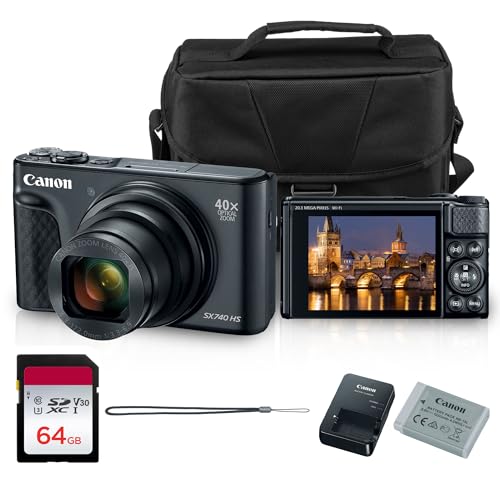
TL;DR: The Canon PowerShot SX740 HS packs a 40× optical zoom, 4K video and a flip‑up screen into a 2.73pounds pocket‑sized body, but its price and low‑light performance may deter pros.
The standout specification is the 40× optical zoom (24–960 mm equivalent) that stretches to an 80× combined zoom of up to 1920 mm. Coupled with a 4K UHD video recorder (30 minutes limit) and a 5‑axis OIS system effective up to 3.5 stops, the camera promises reach and stability in a truly compact form.
At 2.73pounds, the SX740 HS weighs more than the ultra‑light Canon US Point and Shoot (around 0.6 pounds) and the Panasonic DC‑FZ80DK (about 1.41 pounds), yet it’s noticeably lighter than the Nikon COOLPIX P1100 (over 3 pounds). Its 265‑shot battery life matches the Canon US Point and Shoot and edges out the Nikon P1100’s roughly 260‑shot claim, giving you a full day of shooting on a single charge.
Everyday users praise the 180° upward‑tilting 3.0‑inch LCD for selfies and vlogging, and they love the Wi‑Fi/Bluetooth connectivity for quick sharing. Professional reviewers highlight the DIGIC 8 processor and the high‑speed 10.0 fps burst (up to 59 shots) as useful for action moments. However, many note a noticeable shutter lag of up to one second in auto mode, softer detail at the extreme zoom end, and higher noise in low‑light scenes. The lack of RAW support also limits post‑processing flexibility.
Pros
Cons
Best for: Travel photographers and casual shooters who need a pocketable superzoom with 4K video.
Avoid if: You require professional low‑light performance, RAW workflow, or a touchscreen interface.
Breakdown
Nikon COOLPIX P500
Pros
Nikon COOLPIX P950
Pros
Nikon COOLPIX P1100
Pros
Cons
Panasonic DC-FZ80DK
Pros
Based on scoring data and product specs
Personalized picks
Best Overall Pick
Nikon COOLPIX P500
Best OverallBest for: Entry-level buyers or those on a tight budget
Nikon COOLPIX P950
Best for: Buyers willing to invest in a proven, high-quality option
$746.95+$627.95 vs winner
Skip Canon PowerShot SX740 HS Digital Camera if…
Reliability and user satisfaction are your top concerns
The winner of our high‑zoom point‑and‑shoot roundup is the Nikon COOLPIX P500. It delivers a solid 36× optical zoom (22.5–810 mm equivalent) while keeping the camera lightweight at just 1.09 lb and it's priced at $119.00. Its 12.1 MP BSI CMOS sensor and 5‑shot‑per‑second burst speed make it versatile for everyday shooting, and users have given it a 4.3‑star rating across 403 reviews.
The runner‑up, the Nikon COOLPIX P950, shines when you need extreme reach – it packs an 83× optical zoom (24–2000 mm equivalent) and even a 166× Dynamic Fine Zoom for distant subjects like wildlife or the moon. It also records 4K UHD video and offers a longer battery life of roughly 290 shots, making it ideal for serious telephoto enthusiasts.
For shoppers on a tighter budget, the Kodak AZ405‑WH stands out as the most affordable option at $229.20. If you want a well‑rounded mid‑range camera, the Panasonic DC‑FZ80DK is a popular choice at $497.99, balancing features and price. And for those willing to invest in premium performance, the Canon PowerShot SX740 HS leads the pack at $1,099.99, delivering top‑tier specs for demanding users.
Pick the Nikon COOLPIX P500 today for the best value in high‑zoom point‑and‑shoot photography.
The Nikon COOLPIX P1100 provides the highest optical zoom at 125×, reaching an equivalent focal length of 24–3000 mm, making it ideal for extreme telephoto work.
Please sign in to leave a review
No reviews yet. Be the first to review!
