⚡ Quick Answer
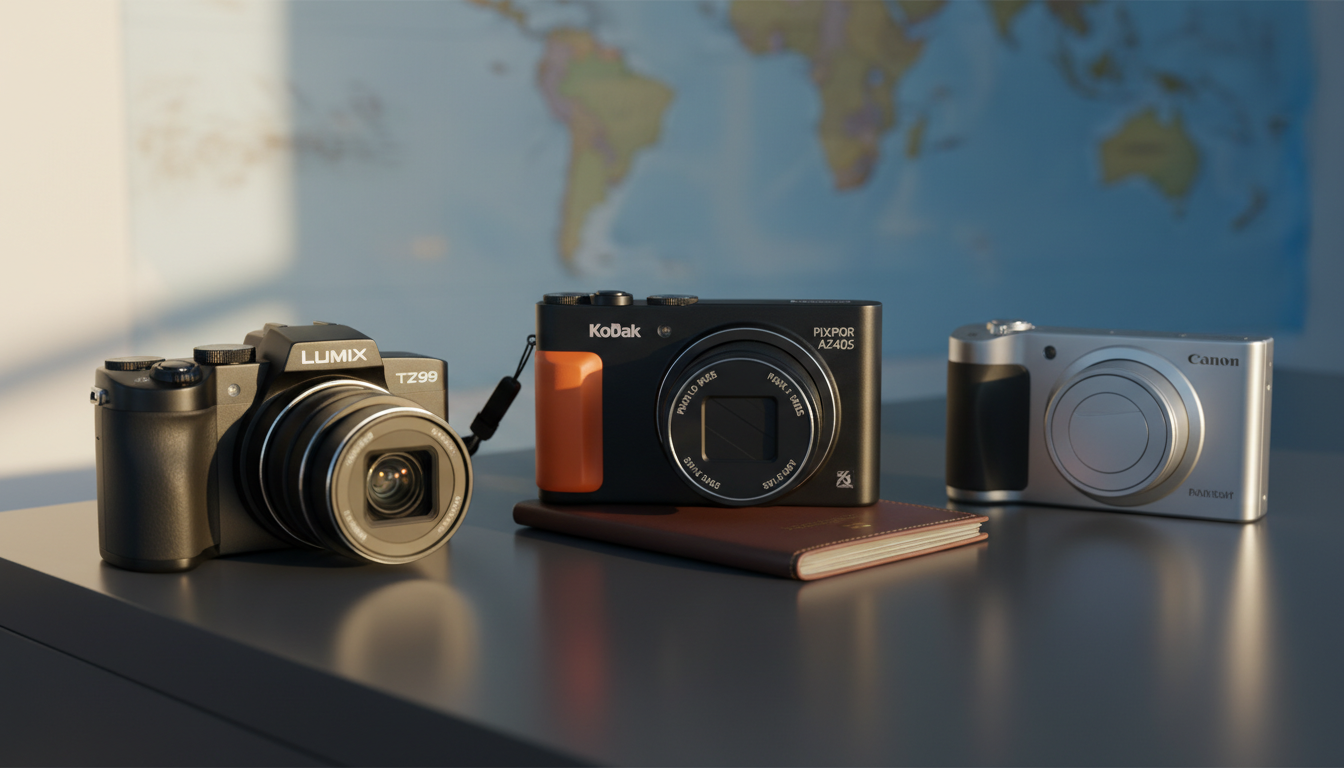
We compared six point‑and‑shoot cameras that all push 20× optical zoom or more, and one model immediately catches the eye with a 4.2‑star rating, a 30× Leica optical zoom, and a lightweight 322 g body that fits comfortably in a pocket. Priced at $589.20, it balances travel‑ready size with fast 10 fps burst shooting, making it a strong candidate for anyone who wants serious reach without lugging a DSLR.
The lineup spans three price tiers. On the budget end, the Kodak PIXPRO AZ405 ($249.00) and Sony DSC‑WX300 ($298.00) offer solid 20×‑30× zoom ranges for casual shooters. Mid‑range options include the Panasonic LUMIX FZ80 ($487.99) with a 60× optical zoom and the aforementioned compact Panasonic model costs $589.20. Premium choices are the Canon Point and Shoot Camera Silver ($649.00) and the Canon PowerShot SX740 HS ($1,099.99), both delivering 40×‑160× combined zoom and higher‑resolution sensors.
Below you’ll find a closer look at each camera’s strengths, key specifications, and who they’re best suited for, so you can pick the right zoom companion for your next adventure.

Panasonic LUMIX TZ99
Its 1025 mAh battery delivers longer shooting sessions, a balance many users appreciate.
Kodak PIXPRO AZ405
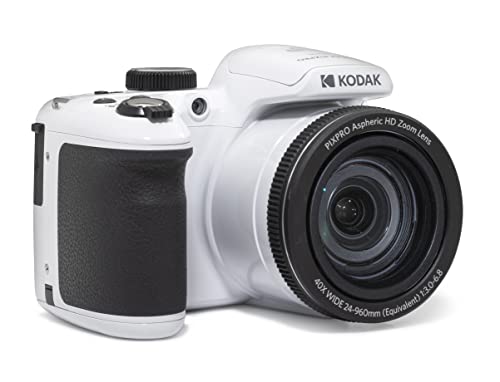
Ideal for budget‑conscious shoppers, this camera costs $249, about $340 less than the Panasonic, delivering solid value without sacrificing core functionality.

Canon Point and Shoot Camera Silver
Stands out with a maximum ISO of 3200, enabling clearer low‑light shots that the Panasonic and Kodak models don’t explicitly offer.
Also considered
Score Analysis
Key score advantages vs. runner-up (Kodak PIXPRO AZ405)
Price Range
Panasonic LUMIX TZ99
$634.95
Kodak PIXPRO AZ405
$249.00
Canon Point and Shoot Camera Silver
$671.60

Panasonic LUMIX FZ80
$447.99

Sony DSC-WX300
$298.00
Canon PowerShot SX740 HS
$1,099.99
Spec Comparison
TL;DR: The Panasonic LUMIX TZ99 packs a 20.3 MP sensor, 4K video, and 5‑Axis Hybrid O.I.S. into a 322 g, pocket‑friendly body with a 3.0‑inch tilting touchscreen.
What really stands out is the ability to record 4K video at 30 p, the camera’s highest native resolution. Coupled with a 1,840,000‑dot OLED viewfinder and a 1,840,000‑dot tilting touchscreen LCD, you’ve got a clear view for framing even in bright conditions. The camera also offers up to 10 fps burst shooting in AF‑S mode, letting you capture fast action when the moment arrives.
At roughly 0.71 lb (322 g), the TZ99 is lighter than the Panasonic FZ80 (1.41 lb) and far lighter than the Canon PowerShot SX740 HS (2.73 lb), yet a touch heavier than the Sony DSC‑WX300 (0.37 lb). Its depth of 43.1 mm and width of 67.8 mm keep it comfortably pocket‑sized, putting it in the same size class as many travel‑oriented point‑and‑shoots while offering a more premium build than the budget‑friendly Kodak PIXPRO AZ405.
Reviewers consistently praise the camera’s portability and the long zoom reach, noting that the 24‑720 mm (4:3) equivalent focal range lets you capture distant subjects without a bulky DSLR. Professional voices highlight the 5‑Axis Hybrid O.I.S. for steady handheld shots, especially in video mode. On the flip side, users mention that the 1/2.3‑inch sensor can struggle in low‑light scenes, and the battery delivers between 280‑380 shots per charge, which may require a spare on longer outings.
Pros
Cons
Best for: Travelers, casual shooters, and vloggers who want a pocket‑sized camera with solid video and stabilization.
Avoid if: You need professional‑grade low‑light performance or interchangeable lenses.
TL;DR: The Kodak PIXPRO AZ405 packs a 40× optical zoom, 20 MP sensor, and AA‑battery power into a lightweight 436 g body, delivering travel‑ready versatility at a budget‑friendly price.
The standout spec is the 40× optical zoom, covering a 24–960 mm equivalent focal range (4.3–172 mm actual) that lets you capture distant subjects without a heavy tripod. It pairs this reach with a 20 MP 1/2.3‑inch BSI‑CMOS sensor, a 3‑in LCD that renders 460K dots, and full‑HD video at 1920×1080 px 30 fps.
Compared with the other five cameras in this roundup, the AZ405 is heavier than the Sony DSC‑WX300 (0.37 lb) but lighter than the Panasonic LUMIX FZ80 (1.41 lb) and far lighter than the Canon PowerShot SX740 HS (2.73 lb). Its optical zoom sits between the Panasonic FZ80’s 60× and the Canon Point‑and‑Shoot Silver’s unspecified zoom, giving it more reach than the Sony and Canon Silver while staying below the extreme zooms of the Panasonic and Canon models.
Users appreciate the massive zoom and the convenience of AA batteries, noting that the camera feels “travel‑ready” and easy to operate in auto modes. Professional reviewers highlight the effective optical image stabilization that helps keep shots sharp at full zoom, but they also point out that the small 1/2.3‑inch sensor can produce noise and softness in low‑light scenes. Common complaints mention lag when zoomed in, a plasticky feel, and a limited battery life that typically yields around 200‑300 shots per AA set.
Additional technical context includes an ISO range of 100–3200, a maximum aperture that varies from f/3.0 at the wide end to f/6.8 at full telephoto, and a 4× digital zoom that supplements the optical reach. The camera stores 67 MB internally and supports SD cards up to 512 GB, while the built‑in flash offers several modes such as pop‑up, fill‑in, and slow sync.
Pros
Cons
Best for: Shoppers on a tight budget who want the most for their money
Avoid if: You need advanced features or professional‑grade performance
“jack-of-all-trades travel option”
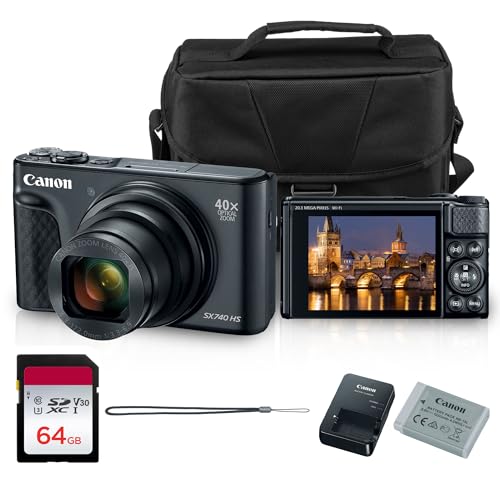
TL;DR: The Canon PowerShot SX740 HS packs a 40× optical zoom, 4K video and a 3.0‑inch tilt screen into a 275 g, pocket‑friendly body, making it a strong travel companion despite modest low‑light performance.
The standout spec is the 40× optical zoom paired with a 20.3 MP 1/2.3‑inch sensor and 4K video at 29.97 fps, with Canon’s DIGIC 8 processor driving them. The camera weighs just 275 g and features a 3.0‑inch TFT‑LCD that tilts 180° upward, it's handy for selfies and vlogging.
Compared with the other five cameras in this roundup, the SX740 HS is lighter than the Panasonic LUMIX TZ99 (0.71 lb) and far lighter than the Panasonic LUMIX FZ80 (1.41 lb) and Kodak PIXPRO AZ405 (0.96 lb). It is a bit heavier than the Sony DSC‑WX300 (0.37 lb) but still more portable than the higher‑priced Canon SX740 HS peer that tips the scales at 299 g. Its 40× optical zoom is lower than the FZ80’s 60× zoom, yet it outpaces the zoom ranges other rivals list.
Reviewers consistently praise the extreme reach, noting that the 40× zoom “rivals a full‑frame 300 mm lens” for travel photography, and they applaud the crisp 4K footage recorded in daylight. Professional observers also highlight the optical image stabilization and zoom‑framing assist as useful tools for steady, well‑composed shots. On the downside, users report grainy results in low‑light scenes, and both experts and everyday shooters miss a slow‑motion mode and a panorama feature.
Pros
Cons
Best for: Travelers, beginners and casual vloggers who want a pocket‑sized super‑zoom with solid daytime photo and video quality.
Avoid if: You need strong low‑light performance, slow‑motion video, or advanced features like panorama shooting.
TL;DR: The Panasonic LUMIX FZ80 packs a 60× optical zoom, 18.1 MP sensor and 4K video into a 616 g bridge camera, offering strong reach but a heavier, low‑light‑limited package.
The headline feature is its 60× optical zoom, covering a 20‑1200 mm 35 mm‑equivalent range, paired with an 18.1 MP 1/2.3‑inch MOS sensor. That combination lets you capture distant wildlife or sports action without swapping lenses, and the 10 fps continuous‑shoot mode helps you seize fast moments.
Compared with the five other cameras in this roundup, the FZ80 is the heaviest at 616 g, noticeably heavier than the 322 g Panasonic TZ99, the 275 g Canon Point‑and‑Shoot, the 166 g Sony WX300, the 436 g Kodak AZ405 and the 299 g Canon SX740. All rivals share a 3.0‑in rear screen, so the FZ80’s display size isn’t a differentiator. Manufacturers don’t list optical‑zoom specs for the other models, though the Canon Silver advertises a 160× combined zoom that relies on digital magnification, whereas the FZ80’s 60× is purely optical.
Professional reviewers praise the upgraded 2360k‑dot EVF with 0.74× magnification, which makes framing at the long end of the zoom much clearer. The camera also offers 4K video, 4K Photo and Post‑Focus modes, giving entry‑level creators flexible content‑creation tools. Users love the extreme reach and the convenience of a fixed touchscreen, but many note that the small 1/2.3‑inch sensor can produce noticeable noise above ISO 3200, and the lack of a tilting screen limits self‑recording angles.
Pros
Cons
Best for: Beginners, travelers, wildlife enthusiasts, and sports‑watching parents who want a single camera with 60× optical zoom and 4K video.
Avoid if: You need low‑light capability beyond ISO 3200, a lightweight travel‑ready body, or a tilting screen for vlog‑style shooting.
TL;DR: The Sony DSC‑WX300 packs an 18 MP sensor, 20× optical zoom and built‑in Wi‑Fi into a 166 g pocket‑friendly body, but its small sensor and fixed LCD limit low‑light performance.
The camera’s standout spec is its 20× optical zoom lens (25–500 mm equivalent) paired with an 18 MP Exmor R sensor, delivering versatile telephoto reach while staying under a thumb‑sized footprint. Its 3.0‑inch LCD shows 460,000 dots, and the rechargeable NP‑BX1 battery provides up to 250 minutes of shooting time. You also get 10 fps continuous shooting for fast action.
Compared with the five other cameras in this roundup, the WX300 is the lightest at 166 g (about 0.37 lb), making it easier to slip into a pocket than the Kodak (436 g), Panasonic FZ80 (616 g), Panasonic TZ99 (322 g), Canon Silver (275 g) or Canon SX740 (299 g). Its optical zoom is lower than the Panasonic models’ 60× and 120× combined zooms and the Canon’s 160× combined zoom, but it still outpaces the Kodak’s 4× digital zoom. Screen size matches the 3‑inch displays that most peers use.
Professional reviewers note the combination of 18 MP and 20× zoom as a strong point for everyday shooting, while users praise the camera’s portability and Wi‑Fi sharing. Common complaints focus on the small 1/2.3‑inch sensor, which can introduce noise in dim settings, and the fixed LCD that limits shooting from high or low angles. Users also note the lack of GPS and a mono speaker in their feedback.
Pros
Cons
Best for: Entry‑level buyers or those on a tight budget
Avoid if: Reliability and user satisfaction are your top concerns
TL;DR: The Canon PowerShot SX740 HS packs a 40x optical zoom, 20.3 MP sensor and 5‑axis stabilization into a 299 g ultracompact body, but its premium $1,099 price may limit budget‑conscious buyers.
The SX740 HS offers a 40x optical zoom covering 24‑960 mm (35 mm equivalent) and a 20.3 MP BSI‑CMOS sensor. Paired with 5‑axis optical image stabilization, it can capture sharp handheld shots even at full zoom. Its 3.0‑inch tilting LCD shows 921,600 dots, and the camera records 4K UHD video plus a dedicated 4K time‑lapse mode.
At 299 g, it weighs a bit more than the 275 g Canon Point and Shoot Silver but less than the Panasonic FZ80’s 616 g body. Its depth of 39.9 mm is slightly slimmer than the Canon Silver’s 40.64 mm and the Panasonic TZ99’s 43.1 mm. While its 40x optical zoom is lower than the Panasonic FZ80’s 60x optical zoom, it still delivers a strong reach, especially when paired with the 80x ZoomPlus digital extension, surpassing the 160x combined zoom of the Canon Silver in pure optical terms. Continuous shooting at 10 fps matches the Panasonic FZ80 and Sony WX300, giving it solid action capability.
Everyday users love the pocket‑friendly size and the flip‑up screen for quick selfies and wireless sharing via Wi‑Fi or Bluetooth. Professional reviewers note the detailed stills from the 20.3 MP sensor, yet many point out that noise becomes noticeable above ISO 800—a limitation of the 1/2.3‑inch sensor. The lack of an electronic viewfinder and touchscreen also draws criticism from those who want precise composition at full zoom.
Additional technical touches include a minimum focus distance of just 1 cm, a DIGIC 8 processor that drives the 10 fps burst, Zoom Framing Assist for automatic subject framing, a digital tele‑converter offering 1.6x and 2x magnification, and RAW + JPEG simultaneous recording for flexible post‑processing.
Pros
Cons
Best for: Those prioritizing quality and willing to pay for premium performance
Avoid if: You're shopping on a tight budget — it's priced at $1099.99
Breakdown
Panasonic LUMIX TZ99
Pros
Kodak PIXPRO AZ405
Pros
Canon Point and Shoot Camera Silver
Pros
Panasonic LUMIX FZ80
Pros
Cons
Based on scoring data and product specs
Personalized picks
Best Overall Pick
Panasonic LUMIX TZ99
Best OverallBest for: Most users seeking a balanced, mainstream option
Kodak PIXPRO AZ405
Best for: Shoppers on a tight budget who want the most for their money
$249.00-$385.95 vs winner
Skip Canon PowerShot SX740 HS if…
You're shopping on a tight budget — it's priced at $1099.99
Panasonic’s LUMIX TZ99 takes the top spot with a 20.3‑MP 1/2.3‑inch MOS sensor, 5‑Axis Hybrid O.I.S. for steady shots, and 4K 30p video capture. Its 10 fps burst rate and 60× digital zoom give you fast, versatile shooting, while the compact 322 g body keeps it portable enough for everyday carry.
The Kodak PIXPRO AZ405 lands as runner‑up, ideal if you need an affordable travel companion that still delivers serious reach. Its 40× optical zoom translates to a 24‑960 mm equivalent range, and the 20‑MP sensor paired with a 4.1/5 rating from 1,423 reviewers shows solid image quality for the price of $249.00.
Choose the Panasonic LUMIX TZ99 now for the best point‑and‑shoot experience with high optical zoom.
The Panasonic LUMIX TZ99 combines a compact 67.8 mm × 112 mm body with a lightweight 322 g design, 5‑axis hybrid O.I.S., and a 20.3 MP 1/2.3‑inch sensor, making it easy to carry while still delivering a 24‑720 mm (≈30×) focal‑length range. Its tilting touchscreen and OLED viewfinder also help compose shots on the go.
No reviews yet — be the first to share your experience.
Please sign in to leave a review