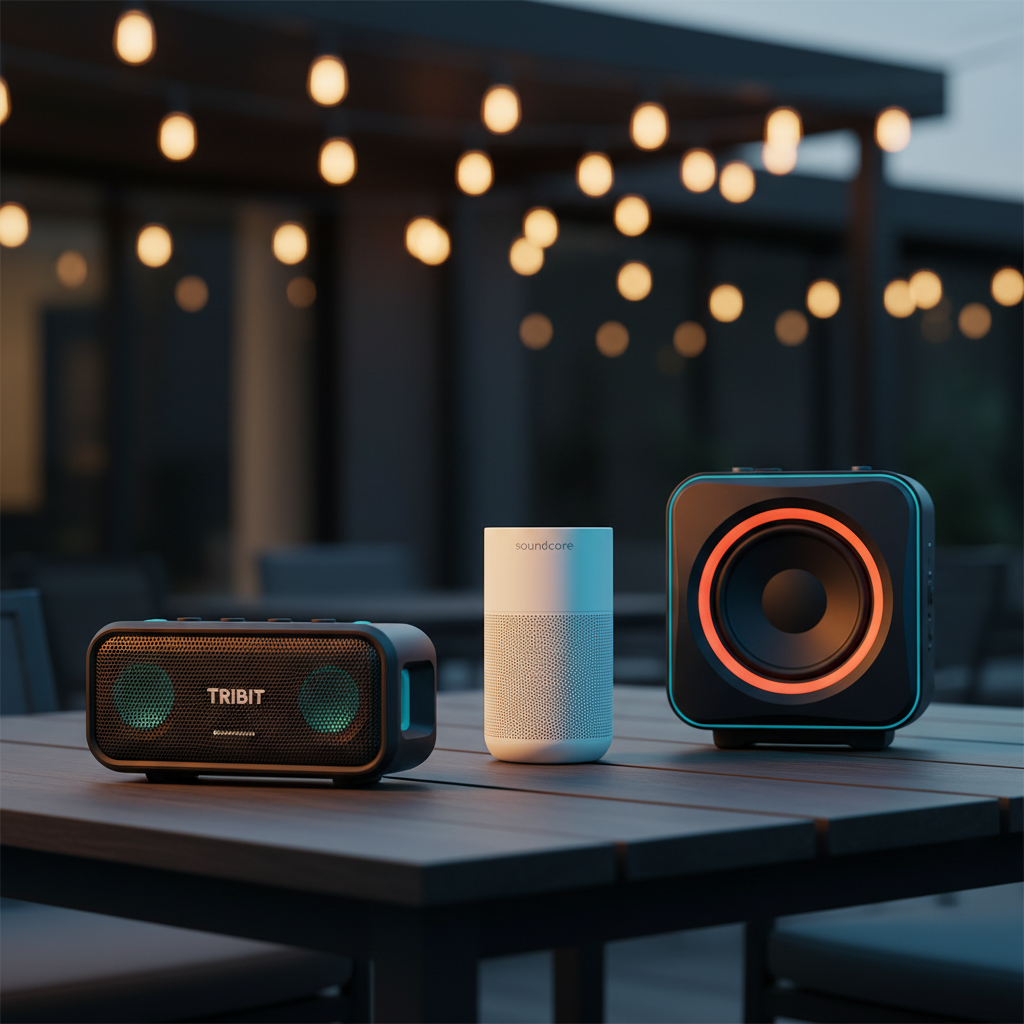
If you’re hunting for the best portable Bluetooth speaker with Bluetooth 5.3, the Tribit XSound Go steals the show. At $34.99 it packs a 4.6‑star rating from 33,917 reviewers, 24 hours of claimed battery life, and a lightweight 0.84 pound chassis. Its dual 40 mm drivers and 30 meter wireless range give solid sound for a budget‑friendly package, making it a safe bet for trips, showers or casual backyard listening.
Our roundup compares 14 models, spanning three price tiers. The budget lane includes the Lenrue FA02 at $9.49 and the Ortizan X8 Pro at $29.99, alongside the XSound Go and Tribit StormBox Micro 2. Mid‑range options like the Soundcore Motion 300 ($79.99) and Tribit StormBox 2 add stronger drivers and extra features while staying under $100. Premium picks such as the Soundcore Boom 2 Plus ($189.99) and Tribit StormBox Blast ($159.99) push power past 100 W and feature premium LED lighting.
Below you’ll find a quick look at each tier’s standout features, so you can match the speaker to your lifestyle, whether you need a pocket‑size companion for a hike or a high‑output unit for a backyard party.

Tribit XSound Go
Dual 40 mm dynamic drivers deliver clear highs up to 20 kHz, offering strong audio performance at a mid‑range price.

Soundcore Motion 300
Ideal for active listeners who need a louder, 48 mm driver for outdoor workouts, and it’s about $45 above the Tribit XSound Go.
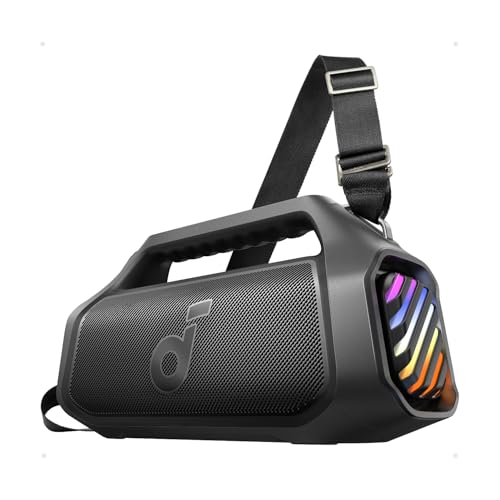
Soundcore Boom 2 Plus
Stands out with a peak 140 W output (100 W standard) and BassUp 2.0, delivering concert‑level volume that the other two can't match.
Also considered
Score Analysis
Key score advantages vs. runner-up (Soundcore Motion 300)
Price Range
Tribit XSound Go
$29.98
Soundcore Motion 300
$79.99
Soundcore Boom 2 Plus
$179.99

Tribit StormBox 2
$79.85

Lenrue FA02
$9.99

Ortizan X8 Pro
$29.99

Tribit StormBox Blast
$169.99
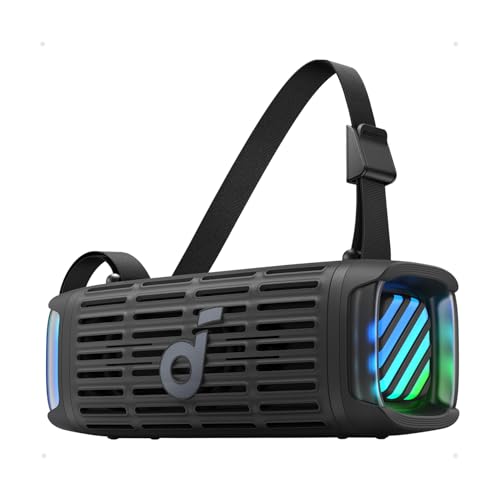
Soundcore Boom 3i
$74.99

Soundcore Motion X600 Portable Bluetooth Speaker, Hi-Res Spatial Audio
$159.99

Tribit StormBox Micro 2
$69.99

Hzdydk i12
$5.99

Miatone BOOMPRO
$39.99
JVC SPSG1BT
$21.61
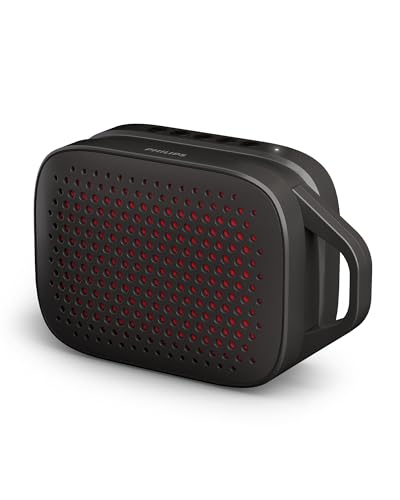
Philips S1209
$20.13
Spec Comparison
TL;DR: The Tribit XSound Go packs Bluetooth 5.3, IPX7 waterproofing, a 4000 mAh battery for up to 24 hours of play, and dual 40 mm drivers in a feather‑light 0.84‑lb package.
Bluetooth 5.3 gives you a reliable connection with up to 30 m (100 ft) of open‑space range, while the 4000 mAh battery promises up to 24 hours of continuous music and a 5‑hour USB‑C charge. It carries an IPX7 rating, so you can submerge it without worry, and its two 40 mm dynamic drivers, paired with a passive bass radiator and XBass technology, cover a frequency span from 70 Hz to 20 kHz with a signal‑to‑noise ratio of ≥80 dB.
At 0.84 lb the XSound Go is lighter than the Ortizan X8 Pro and the Miatone BOOMPRO, yet heavier than the JVC SPSG1BT and Philips S1209, which sit under 0.55 lb. Its 4000 mAh battery outpaces the Ortizan’s 2600 mAh cell but sits below the BOOMPRO’s 5000 mAh pack. In terms of playtime, 24 hours matches the BOOMPRO’s 1440‑minute claim and exceeds the Philips S1209’s 12‑hour runtime, while the Bluetooth range of 30 m beats the Ortizan’s 20 m and the JVC’s 10 m reach.
Reviewers consistently applaud the speaker’s durability, waterproof rating, and all‑day battery life—great for showers, beach trips, or backpacking. Reviews highlight clean mids and a decent soundstage for its size, but they also point out thin bass, a muffled speakerphone, and modest maximum volume that may struggle in noisy outdoor settings.
Beyond the basics, the XSound Go includes a built‑in microphone, a 3.5 mm aux input, physical control buttons, and a handy lanyard, making it easy to clip onto a bag or bike. The compact 20 mm height and width, combined with a 40 mm depth, let it slip into tight spaces without sacrificing the stereo pairing (TWS) capability.
Pros
Cons
Best for: Outdoor enthusiasts, travelers, and shower users who want a waterproof, long‑lasting speaker that’s easy to carry.
Avoid if: You need booming bass or party‑level loudness for large gatherings.
“Lasts all day at the beach — I used it for 18 hours straight and still had battery.”
“Perfect for the shower — sounds great and survived full submersion.”
TL;DR: The Soundcore Motion 300 packs 30 W of stereo sound, LDAC Hi‑Res streaming and IPX7 waterproofing into a 1.71‑lb, 13‑hour battery‑powered speaker for under $80, earning 4.6 stars from over 3 000 reviewers.
The standout spec is its 30 W total output, which dual 15 W full‑range 48 mm drivers and a 100 mm passive radiator deliver, giving loud and clear audio for a speaker that weighs only 1.71 lb (776 g). It also supports LDAC for Hi‑Res Bluetooth streaming and carries an IPX7 rating, meaning you can dunk it in up to 1 m of water for half an hour without worry.
Compared with the other 13 entries, the Motion 300 is heavier than the Tribit StormBox 2, StormBox Micro 2, Miatone BOOMPRO, Tribit XSound Go and Ortizan X8 Pro, yet lighter than the Soundcore Boom 3i. Its 13‑hour battery life sits below the 24‑hour claims of the StormBox 2, Boom 3i, Miatone BOOMPRO, XSound Go and X8 Pro, but exceeds the 12‑hour runtime of the StormBox Micro 2. On the connectivity side, its 100‑meter Bluetooth 5.3 range outstrips the 45‑meter range of the StormBox 2 and the 30‑meter limits of most rivals, giving you the longest wireless reach in the group.
Reviewers consistently praise the Motion 300 for its punchy volume, clear mids and the convenience of a built‑in microphone for speakerphone calls. The Soundcore app adds a 9‑band EQ and a SmartTune gyro sensor that auto‑adjusts the sound profile when the unit is upright, flat or hanging. However, users note that the BassUp button can thin or distort bass when cranked up, and the lack of an AUX jack means wired playback isn’t possible. The absence of an IP6X dust rating also leaves the speaker vulnerable in sandy or dusty environments, and some note occasional LDAC drop‑outs in crowded Bluetooth zones.
The device charges via USB‑C at 15 W (5 V / 3 A) and reaches full charge in about 4 hours, while the 3350 mAh battery sustains up to 13 hours of playback. Soundcore backs the speaker with an 18‑month warranty, reinforcing its durability claim.
Pros
Cons
Best for: Outdoor enthusiasts, hikers, beachgoers, travelers, shower users, and anyone who wants a rugged speaker with Hi‑Res Bluetooth streaming.
Avoid if: You need dust‑proof protection, rely on a wired AUX connection, or are looking for the longest possible battery life.
“Loud and clear sound for such a small speaker.”
“Love the waterproof feature—use it in the shower daily.”
TL;DR: The Soundcore Boom 2 Plus delivers 140 W peak power, 20 hour battery life, IPX7 waterproofing, and PartyCast sync for up to 100 speakers, but its 8.38‑lb bulk makes it a premium‑priced party staple.
At the heart of the Boom 2 Plus, it delivers a 140 W peak output (BassUp 2.0) and a steady 100 W standard output, driven by two 4.5‑inch woofers and two 1‑inch tweeters. The dual passive radiators add extra low‑end punch, and the built‑in 12,000 mAh battery fuels up to 20 hours of standard playback. A 30 W fast‑charge system refills the pack in about 3 hours, while a 10 W USB‑C power‑bank output can keep your phone alive.
Compared with the other speakers in this roundup, the Boom 2 Plus sits on the heavier side at 8.38 lb—lighter than the 12.01‑lb Tribit StormBox Blast but considerably bulkier than the sub‑pound Soundcore Motion 300 and the 1.83‑lb Soundcore Boom 3i. Its 20‑hour runtime outlasts the Motion X600’s 12‑hour battery (720 minutes) but falls short of the 24‑hour endurance claimed by the Tribit StormBox 2. Bluetooth 5.3 gives it the same modern connectivity as the Motion X600 and StormBox 2, and the maximum 100‑meter range matches the Boom 3i’s reach while the typical 10‑meter range aligns with the Motion X600.
Professional reviewers praise the speaker’s “powerful sound with full bass” and the customizable 9‑band EQ in the Soundcore app, while everyday users love the vibrant RGB lighting that syncs to music and the rugged IPX7 waterproof, floatable design. The most common complaints focus on the plastic enclosure feeling less premium, the passive radiators rattling at max volume, and the added weight making it less suited for backpacking.
Pros
Cons
Best for: Buyers willing to invest in a proven, high‑quality option
Avoid if: You're shopping on a tight budget — it's priced at $189.99
“Gets incredibly loud and the bass is deep and punchy”
“At max volume, the sides vibrate and buzz — not distortion, but annoying”
TL;DR: The Tribit StormBox 2 packs 34 W of peak power, 24 hours of playtime and IPX7 waterproofing into a 1.28‑lb, Bluetooth 5.3 speaker that shines in outdoor parties and daily commutes.
What really sets the StormBox 2 apart is its combination of a 48 mm driver, dual 2 × 17 W amplifiers and two passive radiators, delivering a claimed 34 W peak output and 75 dB signal‑to‑noise ratio. The speaker runs on a 5200 mAh battery that the manufacturer says lasts for 24 hours, and a 4‑hour charge via the USB‑C port (5 V, 2 A) gets you back to full power. Bluetooth 5.3 gives a 45‑meter wireless range, and the built‑in 7‑band EQ lets you tweak the sound from the Tribit app.
Compared with the other 13 speakers in this roundup, the StormBox 2 lands in the middle of the weight spectrum: it’s lighter than the Soundcore Motion 300 (1.71 lb) and the Soundcore Boom 3i (1.83 lb), but a touch heavier than the Tribit StormBox Micro 2 (1.0 lb) and the Tribit XSound Go (0.84 lb). Its 24‑hour battery life outstrips the Motion 300’s 13‑hour claim and the Boom 3i’s 16‑hour runtime, while matching the Miatone BOOMPRO’s 1440 minutes of playtime. The 45‑meter Bluetooth range beats the Micro 2’s 30‑meter range but falls short of the Boom 3i’s 100‑meter reach. In terms of output power, the StormBox 2’s 34 W peak sits above the Motion 300’s 30 W total and below the Boom 3i’s 50 W, giving it a solid mid‑range position.
Reviewers consistently applaud the StormBox 2’s “big‑sound” vibe, especially the XBass technology that pumps out deep, room‑filling bass for its size. The IPX7 rating, which lets the unit survive a 1‑meter submersion for 30 minutes, earns high marks from campers and beachgoers. Professional reviewers note the clear, natural voice reproduction on calls and the handy 7‑band EQ, though they also point out that the XBass can dominate mids at high volume and that treble may soften when you listen from the sides. The speaker doesn’t support aptX or LDAC, and audiophile‑focused users mention this limitation.
Pros
Cons
Best for: Most users looking for a well‑reviewed, reliable mainstream option
Avoid if: You're shopping on a tight budget — it's priced at $69.99
“Sounds much bigger than it looks”
“Battery lasts all day, even at high volume”
TL;DR: The Lenrue FA02 packs 30 W of sound, Bluetooth 5.3 and RGB lighting for just $9.49, earning a 4.5‑star rating from 681 reviewers.
This tiny cylinder delivers a 30 W output and supports Bluetooth 5.3, TWS stereo pairing and up to 32 GB of TF‑card music. At 0.57099725858 pounds (about 9 oz) and measuring 37 mm × 37 mm × 115 mm, it’s one of the most compact options in the lineup while still offering a backlit logo and beat‑responsive RGB LEDs.
Compared with the other speakers in our roundup, the FA02 is markedly cheaper than the Hzdydk i12 and Philips S1209, and it’s lighter than the Ortizan X8 Pro (1.29 lb), Tribit XSound Go (0.84 lb) and Miatone BOOMPRO (1.1 lb). Its height of 115 mm makes it shorter than the Ortizan X8 Pro’s 188 mm chassis, though the Philips S1209 sits at a lower 79 mm. Since the FA02 lacks a water‑resistance certification, keep it dry.
Reviewers consistently praise the speaker’s loud, clear sound for its size and love the party‑ready RGB light show that syncs to the beat. Professional reviewers note the reliable TWS implementation and the value‑for‑money price point. The main complaints revolve around the plastic housing that feels inexpensive, the lack of waterproofing, and the fact that you can’t fully turn off the LEDs, which also shortens the 6–12 hour battery life when they’re active.
Pros
Cons
Best for: Budget‑conscious buyers seeking a reliable entry‑level option
Avoid if: You need a rugged, waterproof speaker or a premium‑build audio device
“Sounds amazing for its size”
“Perfect for bike rides and picnics”
TL;DR: The Ortizan X8 Pro packs a 44 mm driver, 30‑hour battery and IPX7 waterproofing into a rugged, RGB‑lit speaker for under $30.
The X8 Pro’s standout spec is its 44 mm driver paired with dual passive radiators and a 30 W RMS output, delivering clear mids and pronounced bass for a speaker at this price point. Its 2600 mAh battery promises up to 30 hours of playback, and the Bluetooth 5.3 module reaches a 20 m (66 ft) range, which professional reviewers note provides a stable connection.
Compared with the other 13 entries, the X8 Pro is heavier than the Tribit XSound Go, JVC SPSG1BT, Philips S1209, Lenrue FA02 and even the Miatone BOOMPRO, but that extra mass comes with a longer battery life—30 hours versus 24 hours or less on most rivals. Its Bluetooth range sits between the shorter 10 m reach of the JVC model and the longer 30 m ranges of the Tribit and Miatone speakers. While the price of $29.99 places it in the budget tier, it offers more specs than many competitors, such as an EQ selector with three modes and a built‑in microphone for hands‑free calls.
User sentiment highlights the loud, clear sound and party‑ready RGB lighting, with many praising the waterproof IPX7 rating that lets the unit survive submersion up to 1 m for 30 minutes. Professional reviewers also commend the upgraded Bluetooth 5.3 signal for reliable pairing, though they flag occasional TWS disconnections and note that the LED lights can't be dimmed. The long battery life shines during moderate use, but listeners report quicker drain when you crank the volume.
Pros
Cons
Best for: Outdoor enthusiasts, party hosts, and travelers who want a rugged, waterproof speaker with long battery life on a budget.
Avoid if: You need app‑based EQ customization, dimmable lighting, or consistently high‑volume playback without rapid battery drain.
“Loud and clear sound with great bass”
“Lights are amazing and sync with music”
TL;DR: The Tribit StormBox Blast delivers 140 W peak power, 30 hours of playback and IPX7 waterproofing, but its 12.01 lb chassis makes it a heavyweight for true on‑the‑go use.
What really sets the StormBox Blast apart is its 140 W peak output paired with dual 4.2 in woofers, dual passive radiators and a 5‑band custom EQ, giving it the loudest, bass‑heavy presence in this portable lineup. The speaker also packs a massive 30‑hour battery, runs on nine Li‑ion cells, and can charge external devices via its USB‑C port.
At $159.99, it sits at the same price point as the Soundcore Motion X600, yet it outweighs every other model in the roundup – the next heaviest, the Soundcore Boom 2 Plus, weighs 8.38 lb, while the Tribit StormBox 2 and Micro 2 weigh under 2 lb each. Its Bluetooth 5.3 connectivity matches the StormBox 2 and Motion X600, but the connectivity range of 150 feet exceeds the 45‑meter range of the StormBox 2 and the 10‑meter range of the Motion X600.
Reviewers consistently praise the speaker’s party‑ready volume and deep bass, noting the IPX7 rating lets it survive poolside drops. Professional reviewers also highlight the vibrant 32‑LED light show that you control via the Tribit app. The downsides that keep popping up are the 12.01 lb weight, which makes backpacking impractical, and the SBC‑only Bluetooth codec that limits audio fidelity. Users also miss a built‑in microphone for calls.
Pros
Cons
Best for: Buyers willing to invest in a proven, high‑output speaker for outdoor parties, backyard BBQs, or poolside gatherings.
Avoid if: You're on a tight budget, need a lightweight backpacking companion, or require speakerphone and high‑resolution Bluetooth audio.
“Sounds much bigger than it looks”
“Battery lasts all day, even at high volume”
TL;DR: The Soundcore Boom 3i packs a rugged IP68‑rated, 50 W mono speaker with 16 hours of playtime, 100 m Bluetooth range, and safety‑focused features like an emergency alarm and floating design, all for $89.99.
The standout spec is the 50 W total output (40W woofer + 10W tweeter) combined with a 96 dB maximum SPL, delivering loud, room‑filling sound while the IP68 rating lets it survive submersion to 1.5 meters for 30 minutes and even float upright in water. The built‑in emergency alarm (100 m range) and voice‑amplifier function add a layer of safety that few portable speakers offer.
At 1.8298367746pounds, the Boom 3i is a bit heavier than the Tribit StormBox Micro 2 (1.0pounds) but only slightly heavier than the Soundcore Motion 300 (1.71pounds). Its 50 W output outpaces the Motion 300’s 30 W and the Tribit Micro 2’s 9 W, while the 100‑meter Bluetooth range exceeds the 45‑meter range of the Tribit StormBox 2 and the 30‑meter ranges of several rivals. Battery life sits at 16 hours, longer than the Motion 300’s 13 hours but shorter than the StormBox 2’s 24 hours, and the 2400 mAh battery recharges in 3.2‑4 hours.
Reviewers love the speaker’s adventure‑ready durability: the floating capability, drop resistance of 1 meter, and the emergency alarm receive frequent praise. Users also appreciate the nine‑band EQ and can control the LED light show via the Soundcore app. On the downside, the mono driver configuration limits stereo depth, and many note that the bass can become overly boomy with mids that sound harsh at higher volumes. The lack of a 3.5 mm auxiliary input means you’re tied to Bluetooth for source playback.
Pros
Cons
Best for: Outdoor adventurers, beach‑or‑pool users, and anyone who values rugged durability, floating capability, and built‑in safety features.
Avoid if: You need high‑fidelity stereo sound, prefer wired connections, or are looking for the lowest‑price option.
“Gets incredibly loud and the bass is deep and punchy”
“At max volume, the sides vibrate and buzz — not distortion, but annoying”
TL;DR: The Soundcore Motion X600 packs a 50 W, 5‑driver stereo system with LDAC hi‑res support, 12 hours of playtime and IPX7 waterproofing for $159.99.
What really sets the Motion X600 apart is its five drivers delivering a total of 50 W output and native LDAC support (up to 990 kbps). Coupled with Bluetooth 5.3 and a dedicated spatial‑audio button, the speaker promises high‑resolution, immersive sound in a compact, metal‑aluminum chassis.
Compared with the other 13 speakers in this roundup, the X600 is lighter than the Tribit StormBox Blast (12.01 lb) but heavier than the Soundcore Boom 3i (1.83 lb). Its 12‑hour battery life sits between the StormBox Blast’s 30‑hour endurance and the StormBox Micro 2’s 12‑hour claim. While its 50 W output is respectable, the Blast’s peak power of 140 W is higher. The X600 shares Bluetooth 5.3 with the StormBox 2 and StormBox Blast, ensuring a modern wireless link.
Users consistently praise the speaker’s rich bass, clear highs and the flexibility of the 9‑band app EQ. Professional reviewers note the powerful audio and the value of LDAC streaming, while also calling out the stiff hardware buttons and the noticeable drop in battery life when you use LDAC or play at high volume. In practice, the 6‑hour charge time and the 5.18‑lb weight make it a solid choice for home or patio use, but less ideal for ultra‑light backpacking.
The X600 also offers IPX7 water resistance, allowing submersion up to 1 m for 30 minutes, and supports True Wireless Stereo pairing for multi‑speaker setups. An 18‑month warranty rounds out the package.
Pros
Cons
Best for: Buyers willing to invest in a proven, high‑quality option
Avoid if: You're shopping on a tight budget — it's priced at $159.99
“Loud and clear sound for such a small speaker.”
“Love the waterproof feature—use it in the shower daily.”
TL;DR: The Tribit StormBox Micro 2 packs a waterproof, 9 W speaker into a 9.8 × 9.8 × 4.3 cm shell, offers 12 hours of playtime and Bluetooth 5.3 connectivity, and earns a solid 4.5‑star rating.
The standout spec is its 9 W power output, which reviewers say delivers a surprisingly loud, bass‑forward sound despite the speaker’s tiny 98.3 mm square footprint. Its IP67 rating means it can survive rain, splashes, and even brief submersion, while the integrated tear‑resistant rubber strap lets you clip it to a backpack or bike frame.
At 1.0 pound, the Micro 2 is lighter than the Tribit StormBox 2 and Ortizan X8 Pro, but a bit heavier than the Tribit XSound Go. Its 12‑hour battery life falls short of the 24‑hour runtimes of the StormBox 2, XSound Go, and Miatone BOOMPRO, and matches the 13‑hour life of the Soundcore Motion 300. Bluetooth range is 30 meters, equal to the Miatone BOOMPRO and XSound Go, yet shorter than the StormBox 2’s 45 meters and far below the Soundcore Boom 3i’s 100 meters.
Professional reviewers praise the Micro 2’s loud, bassy output and the convenience of USB‑C fast charging in just 3.5 hours. Users love the ruggedness and strap for outdoor adventures, but many note that the 12‑hour runtime feels limited for all‑day festivals and that the bass can distort when cranked to maximum volume. The lack of a 3.5 mm aux input or app‑based EQ also means you can’t fine‑tune the sound.
Pros
Cons
Best for: Outdoor enthusiasts and travelers who need a rugged, waterproof speaker with strong sound in a pocket‑sized package.
Avoid if: You require all‑day battery endurance or extensive EQ/app control for fine‑tuning the audio.
“Sounds much bigger than it looks”
“Battery lasts all day, even at high volume”
TL;DR: The Hzdydk i12 delivers a 24‑hour battery life, IPX7 waterproofing and magnetic mounting for just $7.99, making it a tiny, budget‑friendly Bluetooth 5.3 speaker with eye‑catching RGB lighting.
The standout spec is the all‑day battery: the i12 can play for up to 24 hours on a single charge and only needs 3 hours to refill, which is unusually long for a speaker that measures just 35.56 mm × 55.88 mm × 30.48 mm. Its Bluetooth 5.3 connection promises a stable link, and the IPX7 rating means you can toss it into the shower without worry.
Compared with the other 13 speakers in this roundup, the i12 is the most affordable option. It offers a longer playtime than the Lenrue FA02 (6–12 hours) and Philips S1209 (12 hours), and it matches the Tribit XSound Go’s 24‑hour claim while falling short of Ortizan X8 Pro’s 30‑hour endurance. Battery life also exceeds the JVC SPSG1BT’s 15 hours. In terms of Bluetooth version, it shares the 5.3 standard with Philips, JVC, Ortizan, Tribit and Miatone, putting it on equal footing for connectivity. The speaker’s tiny footprint makes it lighter and more compact than the bulkier Ortizan X8 Pro and Miatone BOOMPRO, though those models provide higher output power.
User feedback highlights the bright RGB lighting and the magnetic base as fun, practical features—people love snapping the speaker onto a metal bike frame or using it as a phone stand for video calls. However, reviewers also note the lack of an official rating and the very low review count, which makes it harder to gauge long‑term reliability. The one‑year warranty offers some peace of mind despite the sparse review data.
Pros
Cons
Best for: Shoppers on a tight budget who want the most for their money
Avoid if: You've limited desk space or need portability
TL;DR: The Miatone BOOMPRO packs a 36 W stereo output, IPX7 waterproofing and a 24‑hour battery into a 1.1‑pound, Bluetooth 5.3 speaker that shines with RGB lighting.
The BOOMPRO’s standout spec is its 36 W maximum output, which doubles to 72 W when you pair two units in TWS mode. A dynamic driver with dual passive radiators covers the full 20 Hz‑20 kHz range, while an 80 dB signal‑to‑noise ratio keeps the sound clear even at higher volumes. The speaker runs on a 5000 mAh battery that delivers 1440 minutes (24 hours) of playback and recharges in 180 minutes (3 hours) via USB‑C. Bluetooth 5.3 offers a 30‑meter range, and the IPX7 rating guarantees submersion to 1 meter for 30 minutes.
Compared with its peers, the BOOMPRO is a bit heavier than the Tribit XSound Go (0.84 lb) but lighter than the Ortizan X8 Pro (about 1.29 lb). Its 5000 mAh battery outpaces the XSound Go’s 4000 mAh pack, and it reaches a full charge in 3 hours versus the XSound Go’s 5‑hour charge time. Bluetooth range matches the XSound Go’s 30 meters, while many other speakers in the lineup list shorter ranges. The IPX7 waterproof rating is also a step up from several competitors that lack a listed water‑resistance spec.
Users consistently praise the BOOMPRO’s loud, clear audio and the vibrant RGB lighting that adds a party vibe to outdoor gatherings. Professional reviewers note the 36 W output stands out for a speaker under 8 inches in diameter. However, several owners report that enabling the lights or cranking the volume reduces real‑world battery life to roughly 12‑16 hours, and the TWS pairing can be finicky. The lack of a 3.5 mm aux jack or a companion app also limits flexibility for audiophiles who prefer wired connections or custom EQ settings.
Pros
Cons
Best for: Outdoor enthusiasts, campers, and beachgoers who want a waterproof, long‑lasting speaker with eye‑catching RGB lighting.
Avoid if: You need pristine, distortion‑free bass at high volumes, a wired 3.5 mm input, or an app‑based EQ for fine‑tuned sound.
“Loud and clear sound for the size — perfect for camping and beach trips.”
“Battery doesn’t last 24 hours if you use the lights and play at high volume — more like 12–16 hours.”
TL;DR: The JVC SPSG1BT offers a 35 mm driver, 15‑hour battery life and Bluetooth 5.3 in a feather‑light 0.24 kg package for just $21.15.
The standout spec is its 15‑hour battery life paired with a quick 2‑hour USB‑C charge, meaning you’ll enjoy a full day of music after a short plug‑in. Its 35 mm driver and 4 Ω impedance deliver a balanced sound that fits the speaker’s compact 2.55 × 2.55 × 3.14‑inch frame.
Compared with the other 13 speakers in this roundup, the JVC is lighter than the Ortizan X8 Pro, Philips S1209, Lenrue FA02, Tribit XSound Go and Miatone BOOMPRO, and it matches the Bluetooth 5.3 connectivity that several peers offer. Its 15‑hour playtime exceeds the Philips S1209’s 12 hours and Lenrue’s 6‑12 hour range, though it falls short of the Ortizan’s 30‑hour and Tribit’s 24‑hour claims. The 10‑meter Bluetooth range is shorter than the 20‑meter range of Philips and the 20‑meter range listed for Ortizan, but still adequate for typical tabletop or on‑the‑go use.
Professional reviewers note the forward‑thinking USB‑C port and the TWS stereo pairing as strong value‑adds for an entry‑level speaker. Everyday users praise the ultra‑portable size, long battery endurance and the ease of touch controls, while common complaints focus on the lack of an IP rating, a plastic‑heavy feel and modest volume that won’t fill large rooms.
Pros
Cons
Best for: Entry-level buyers or those on a tight budget
Avoid if: You need advanced features or professional‑grade performance
“Perfect size for travel — I clip it to my backpack.”
“Battery lasts longer than my phone!”
TL;DR: The Philips S1209 delivers 12 hours of playback, Bluetooth 5.3 connectivity and IPX4 splash resistance in a feather‑light, strap‑ready package for under $16.
The standout spec is its 12‑hour battery life, which lets you stream music all day without hunting for a charger. Coupled with a maximum output of 10 W and a frequency response up to 18 kHz, the speaker manages a surprisingly full sound for its 46 mm depth, 79 mm height and 123 mm width. Its Bluetooth 5.3 module reaches 20 meters, matching the range of the Ortizan X8 Pro while exceeding the 10‑meter reach of the JVC SPSG1BT.
In price and size, the S1209 sits at the low end of the 14‑speaker lineup. It weighs 0.54895103238 pounds, so it's lighter than the Lenrue FA02 (0.57099725858 pounds) and the Ortizan X8 Pro (1.2897042327 pounds). Its $15.19 price tag also undercuts most of the other models, which range from just under $8 to nearly $40.
User feedback repeatedly praises the speaker’s punchy bass and clear mids, noting that the sound feels balanced despite the modest driver size. Professional reviewers echo this sentiment, highlighting the clear vocal reproduction and the convenience of the built‑in carry strap. However, several owners report distortion when you crank the volume up, especially on bass‑heavy tracks, and they miss a 3.5 mm aux input for wired sources. Reviewers describe the plastic housing as budget‑oriented, which aligns with the product’s entry‑level positioning.
Pros
Cons
Best for: Entry‑level buyers or those on a tight budget
Avoid if: You need powerful performance or professional‑grade features
“Great sound for the size—bass is surprisingly strong.”
“Perfect for travel and outdoor use—lightweight and the strap is super handy.”
Breakdown
Tribit XSound Go
Pros
Soundcore Motion 300
Pros
Soundcore Boom 2 Plus
Pros
Cons
Tribit StormBox 2
Pros
Cons
Based on scoring data and product specs
Personalized picks
Best Overall Pick
Tribit XSound Go
Best Mid-Range PickBest for: Most users looking for a well-reviewed, reliable mainstream option
Soundcore Motion 300
Best for: Buyers willing to invest in a proven, high-quality option
$79.99+$50.01 vs winner
Skip Philips S1209 if…
You need powerful performance or professional-grade features
Tribit’s XSound Go takes the top spot thanks to its solid 4.6‑star rating from 33,917 reviewers, Bluetooth 5.3 connectivity, and a 24‑hour battery life that keeps the party going all day. At just $34.99 it also offers IPX7 water resistance, so you can toss it in a pool without worry.
The runner‑up, Soundcore Motion 300, shines when you need high‑resolution streaming and a long‑range link – it supports LDAC for Hi‑Res audio and offers a 100‑meter wireless range. Priced at $79.99, its 30 W output and IPX7 rating make it a strong choice for outdoor gatherings or backyard movie nights.
Pick the Tribit XSound Go today and enjoy reliable Bluetooth 5.3 sound without compromise.
Both the Tribit XSound Go and the Soundcore Motion 300 carry an IPX7 rating, meaning they can be submerged up to 1 m for 30 minutes, so they’ll survive splashes and brief immersion. The XSound Go edges out on endurance with a 24‑hour battery life versus the Motion 300’s 13 hours, making it the better choice for all‑day outdoor use.
Please sign in to leave a review
No reviews yet. Be the first to review!
