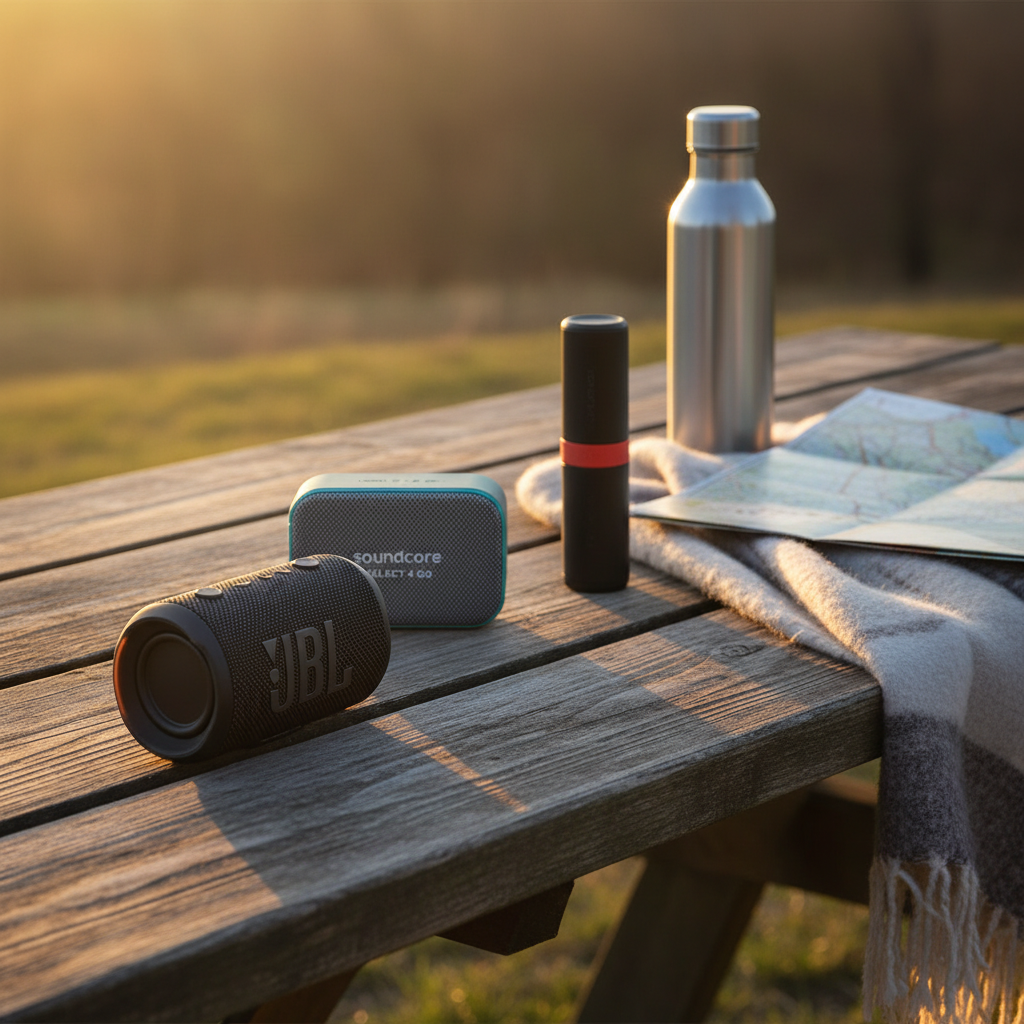
The $24.99 Soundcore Select 4 Go – the cheapest speaker in this list – carries a solid 4.6‑star rating from over 9,000 reviewers and still manages a respectable 20‑hour battery life. Meanwhile, the JBL Charge 6, priced at $199.95, pushes the envelope with 28 hours of playtime, a 4.7‑star rating, and a built‑in 4 722 mAh powerbank for charging your phone on the go.
The review covered 13 portable Bluetooth speakers across three price tiers. The budget tier (Soundcore Select 4 Go, Anker Soundcore 2, Tribit XSound Go, Cambridge Soundworks OontZ Ultra) delivers solid ratings and long runtimes without breaking the bank. Mid‑range options (Soundcore Anker 3 and Cambridge Soundworks OontZ Ultra 2‑Pack) add extra power and features like larger drivers or stereo pairing. Premium picks (Beats Pill, Sony SRSULT30B.UC, Soundcore Boom 2 Plus, JBL Charge 6) bring higher output, rugged IP ratings, and fast‑charging capabilities for heavy‑duty use.
The following sections break down each model’s strengths, battery performance, and ideal listening scenarios so you’ll match the right speaker to your lifestyle.

JBL Charge 6
Its 28‑hour battery life (4722 mAh) lets you enjoy marathon listening without needing to recharge.

Soundcore Select 4 Go
Ideal for budget‑conscious listeners, it delivers solid sound for just $24.99—about $175 cheaper than the JBL Charge 6.

Soundcore Anker 3
Stands out with a 16 W output and 4 Ω impedance, offering punchier audio for users who want stronger volume without the premium price tag.
Also considered
Score Analysis
Key score advantages vs. runner-up (Soundcore Select 4)
Price Range
JBL Charge 6
$159.95
Soundcore Select 4 Go
$24.99
Soundcore Anker 3
$59.99

Beats Pill
$99.95

Tribit XSound Go
$29.98
Soundcore Boom 2 Plus
$179.99

Sony SRSULT30B.UC
$144.95
Cambridge Soundworks OontZ Ultra
$39.99
Anker Soundcore 2
$29.99

Cambridge Soundworks OontZ Ultra 2-Pack
$69.99

Bose SoundLink Max Black
$349.00

Doss SoundBox
$31.99

Cambridge Soundworks OontZ Angle 3
$44.99
Spec Comparison
TL;DR: The JBL Charge 6 delivers 45 W of balanced sound, an IP68‑rated rugged build, and a best‑in‑class 28‑hour battery, all for $199.95, earning a 4.7‑star rating from nearly 4 K reviewers.
What really sets the Charge 6 apart is its marathon‑length battery. JBL lists up to 28 hours of playback, plus a 4‑hour Playtime Boost, and a fast‑charging option that adds 150 minutes of music after just 10 minutes on the charger. The built‑in 4722 mAh powerbank means you can also top up phones or tablets while the party keeps going.
When you line it up against the other twelve speakers, the Charge 6’s endurance wins hands down—its 28‑hour run time exceeds the 24‑hour life most rivals claim and the 20‑hour life of the OontZ models. It’s heavier than the Beats Pill (2.13 lb) and Sony SRSULT30B (2.69 lb) but dramatically lighter than the heavyweight Soundcore Boom 2 Plus (8.38 lb). Even so, it’s bulkier than ultra‑compact options like the OontZ Angle 3 (1.6 lb) or the Soundcore Anker 3 (0.82 lb).
Users consistently praise the deep, punchy bass and the speaker’s ability to survive beach trips, pool days, and rugged camping outings. Reviewers note the removable carrying strap and the IP68 rating—waterproof to 1.5 meters for 30 minutes and dust‑proof—plus a 1‑meter drop resistance onto concrete. The trade‑off is that the USB‑C charging cable isn’t included and the JBL Portable app handles lossless audio and firmware updates, which some find fiddly.
On the technical side, the Charge 6 packs a 45 W output, a 20 kHz frequency response, and an 80 dB signal‑to‑noise ratio, with AI Sound Boost enhancing performance. Its dimensions are 94 mm deep, 229 mm wide, and 99 mm high, and it weighs 2.18 lb (990 g). The speaker’s construction uses post‑consumer recycled plastic and a fabric grille, and it ships with a removable strap, quick‑start guide, safety sheet, and warranty card.
Pros
Cons
Best for: Buyers willing to invest in a proven, high-quality option
Avoid if: You're on a tight budget or only need basic functionality
“The bass is deep and punchy — sounds much bigger than it looks.”
“Used it at the beach and pool — survived sand, water, and drops with no issues.”
TL;DR: For $24.99 the Soundcore Select 4 Go gives IP67 waterproofing, a 20‑hour battery, 30 m Bluetooth range and a 45 mm driver, all in a lightweight 0.58125‑lb package.
The speaker’s IP67 rating means it can be dropped in water up to 1 meter deep for 30 minutes and it will float, a rare feature at this price. Its 2400 mAh battery promises up to 20 hours of playback, while the 30 m Bluetooth range (Bluetooth 5.4) keeps the connection stable around the house or campsite. A single 45 mm dynamic driver delivers 5 W of mono sound with 200 ms audio latency, and the Soundcore app adds a 9‑band EQ, Bass Boost and TWS pairing for stereo setups.
Weighing just 0.58125 lb, the Select 4 Go beats every other speaker in the roundup—from the 0.91‑lb Anker Soundcore 2 to the 1.6‑lb OontZ Angle 3. It packs a 2400 mAh battery, smaller than the 5,200 mAh in the Anker Soundcore 2 and the 4,000 mAh in the Tribit XSound Go, yet it still reaches the 20‑hour runtime claimed by the Doss SoundBox and the OontZ Ultra. Its 30‑meter Bluetooth range outpaces the 20‑meter range of the Soundcore 2 and the 10‑meter range of the Soundcore Anker 3, putting it on par with the Tribit and OontZ models. The speaker delivers 5 W output, lower than the 12‑16 W many peers offer, reflecting its mono driver design.
Reviewers love the ruggedness: users repeatedly note the floatable design and the long‑lasting battery as perfect for showers, hikes and poolside use. Professional reviewers also highlight the detailed 9‑band EQ as a surprising plus for a budget speaker. On the downside, several owners report that the rubber feet can detach over time, and the physical buttons lack backlighting, making them hard to locate in low light. The mono output also means you won’t get full stereo separation without TWS pairing.
Pros
Cons
Best for: Budget-conscious buyers seeking a reliable entry-level option
Avoid if: You need advanced features or professional‑grade performance
TL;DR: The Soundcore Anker 3 costs $59.99, delivers 16 W of stereo sound, and promises up to 24 hours of playtime on a single 6,700 mAh charge.
What really stands out is the combination of a 6,700 mAh battery and a 4‑hour USB‑C charging time, which translates to a manufacturer‑claimed 24 hours of continuous playback. At 0.82 pounds (372 g) it’s light enough to carry around, yet it still packs 16 W of total output power and a 4 Ω impedance, giving a punchy sound for its size. The speaker also supports the Soundcore app, BassUp technology and custom EQ, so you can tweak the tone without needing external gear.
Compared with the other entries in this roundup, the Anker 3 is lighter than the Cambridge Soundworks OontZ Angle 3 (1.6 lb) and the Doss SoundBox (1.23 lb), but a bit heavier than the Tribit XSound Go (0.84 lb). Its 24‑hour playtime matches the Tribit’s claim and exceeds the OontZ Ultra’s 20‑hour limit. In terms of power, the Anker 3’s 16 W tops the OontZ speakers’ 14 W output and the Anker Soundcore 2’s 12 W. However, its Bluetooth range of 10 m is shorter than the OontZ Ultra’s 30.5 m and the Tribit’s 30 m, which may matter if you like to sit farther from the source.
Users consistently praise the IPX7 waterproof rating and the long battery life, noting that the speaker survives beach days and camping trips without a hitch. Professional reviewers highlight the reliable Bluetooth 5.0 connection and the extra bass punch from BassUp. A common complaint is that the sound may distort at maximum volume, especially on bass‑heavy tracks. Keep that trade‑off in mind if you plan to crank the speaker for large gatherings.
Pros
Cons
Best for: Most users looking for a well‑reviewed, reliable mainstream option
Avoid if: You have limited desk space or need portability
“Great sound for the price”
“Battery lasts forever”
TL;DR: The Beats Pill packs a custom racetrack woofer, 28% motor‑force boost and IP67 protection into a 2.13‑pound speaker that delivers 24 hours of playback and a 10‑minute quick‑charge.
The standout feature is the 28% motor‑force increase paired with a 20° upward tilt, which Beats says pushes 90% more air from the woofer for deeper bass in a compact 71 mm × 71 mm × 218 mm package. At 2.13 pounds (680 g), it feels solid yet portable enough to slip into a backpack or clip onto its removable lanyard.
Compared with the other 12 speakers in this roundup, the Pill is lighter than Sony’s SRS‑ULT30B (2.69 pounds) but heavier than Cambridge Soundworks’ OontZ Ultra 2‑Pack (about 1.06 pounds). Its 24‑hour battery life matches Sony’s but falls a few hours short of JBL’s 28‑hour claim. The 10‑minute Fast Fuel charge time mirrors Sony’s quick‑charge spec, giving you two hours of playback after a brief boost.
Everyday users rave about the Pill’s loud, clear sound and all‑day battery, especially for outdoor activities where the IP67 rating protects against dust and water. Professional reviewers highlight the detailed layered audio you get when using the USB‑C high‑resolution mode, while many note the tiny back buttons can be fiddly and the lack of any EQ controls limits sound tweaking. The speaker also supports automatic device switching, reverse charging, and Apple Find My integration, adding convenience for travelers.
Pros
Cons
Best for: Urban commuters, students and travelers who need a lightweight, durable speaker with long battery life and solid bass.
Avoid if: You’re on a tight budget, need extensive EQ control, or want a speaker that can link into larger multi‑speaker setups.
“Loud and clear sound for such a small speaker”
“Battery lasts all day, even at high volume”
TL;DR: The Tribit XSound Go delivers up to 24 hours of playtime, IPX7 waterproof protection, and Bluetooth 5.3 in a lightweight 0.84‑lb package, making it a solid budget pick for on‑the‑go listening.
One of the most notable specs is the claimed 24‑hour battery life powered by a 4000 mAh cell, paired with a 5‑hour charging time. The speaker also has an IPX7 rating, meaning you can fully submerge it for short periods, and it uses Bluetooth 5.3 for a stable connection.
At 0.84 lb (381 g) it’s lighter than the Doss SoundBox’s 1.23 lb and only a shade heavier than the Soundcore Select 4 Go’s 0.58125 lb, yet it packs a larger 4000 mAh battery than Doss’s 2200 mAh and sits just below the Anker Soundcore 2’s 5,200 mAh. Its 24‑hour playtime matches the Soundcore 2 and exceeds the OontZ Ultra’s 1200‑minute claim. The 30 m open‑space Bluetooth range lines up with the Soundcore 2’s 20 m real‑world range and beats the Doss SoundBox’s 10 m range.
Users consistently praise the durability of the ABS‑plastic body, the convenience of the built‑in lanyard, and the all‑day battery life for trips to the beach or the shower. Professional reviewers also note the strong audio output for its size, but they've pointed out thin bass, modest maximum volume, and a speakerphone that sounds muffled. If you plan to stream bass‑heavy genres or need a speaker that can dominate a noisy patio, those limitations become noticeable.
Technically, the XSound Go houses two 40 mm dynamic drivers plus a passive bass radiator, delivering a frequency response from 70 Hz to 20 kHz and a signal‑to‑noise ratio of ≥80 dB. Physical buttons control playback, and the USB‑C port handles charging with the included cable. A 12‑month warranty rounds out the package.
Pros
Cons
Best for: Outdoor enthusiasts, travelers, and shower users who need a lightweight, waterproof speaker with long battery life.
Avoid if: You need deep bass, high outdoor volume, or the absolute best value‑per‑dollar in this segment.
“Lasts all day at the beach — I used it for 18 hours straight and still had battery.”
“Perfect for the shower — sounds great and survived full submersion.”
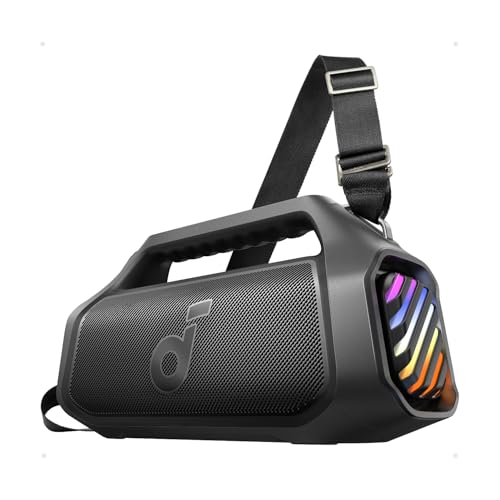
TL;DR: The Soundcore Boom 2 Plus delivers a 140 W peak output, IPX7 waterproofing and up to 20 hours of playback for $189.99, but its 8.38 lb body makes it a bulky party speaker.
At the core of the Boom 2 Plus features a 140 W peak output with BassUp 2.0, backed by two 4.5‑inch woofers, two 1‑inch tweeters and two passive radiators, creating a bass‑heavy soundstage. The unit also packs a 12,000 mAh battery that fuels up to 20 hours of standard playback and fast‑charges with 30 W power in about 3 hours.
Weighing 8.38 lb, it is considerably heavier than the JBL Charge 6 (2.18 lb) and the Sony SRSULT30B.UC (2.69 lb), yet its battery capacity far exceeds JBL’s 4,722 mAh and Sony’s 24‑hour runtime. The Boom 2 Plus carries an IPX7 waterproof rating and floats, while Sony adds an IP67 dust‑proof rating that the Boom 2 Plus doesn't list.
Everyday owners rave about the speaker’s loud, deep bass and the dual RGB LEDs that sync to the music, a point professional reviewers echo as they praise the powerful sound and the customizable 9‑band EQ in the Soundcore app. On the downside, several users report that the passive radiators can rattle at maximum volume and that the hard‑plastic enclosure feels less premium than metal‑cased rivals.
Bluetooth 5.3 gives a typical 10‑meter range, and PartyCast 2.0 lets you sync up to 100+ speakers for massive audio coverage. A built‑in power bank supplies 10 W output, and the 30 W fast‑charge system refills the battery in roughly 3 hours, keeping the party going.
Pros
Cons
Best for: Buyers willing to invest in a proven, high‑quality option
Avoid if: You're on a tight budget or only need basic functionality
“Gets incredibly loud and the bass is deep and punchy”
“At max volume, the sides vibrate and buzz — not distortion, but annoying”
TL;DR: Sony’s SRSULT30B.UC packs a rugged IP67‑rated body, 24‑hour battery life and a 10‑minute quick‑charge that delivers up to two hours of play, but its 2.69‑pound weight makes it less pocket‑friendly.
The standout spec pairs 24‑hour battery life with a 10‑minute charging time, and its quick‑charge mode adds up to 120 minutes of playback. That endurance, combined with an IP67 dust‑proof and waterproof rating, lets you leave the speaker on a beach or trail without worrying about rain or sand.
At 2.69 Pounds, the Sony sits heavier than the Beats Pill (2.13 Pounds) and the JBL Charge 6 (2.18 Pounds), but far lighter than the Soundcore Boom 2 Plus (8.38 Pounds). Its battery life matches the Beats Pill, Soundcore Boom 2 Plus, and Soundcore Anker 3, and exceeds the Cambridge OontZ Ultra 2‑Pack and OontZ Angle 3, which list 20‑hour runtimes. The 10‑minute fast‑charge is on par with Beats Pill and JBL Charge 6, giving it a competitive edge in rapid‑recharge scenarios.
User feedback highlights two downsides: the lack of a wired AUX input and the speaker’s heft, which some hikers say limits true portability. A few owners also note that battery capacity may degrade after extended use.
Pros
Cons
Best for: Buyers willing to invest in a proven, high‑quality option
Avoid if: You're on a tight budget or only need basic functionality
“Bass is incredible for the size”
“Survived pool drops and beach sand”
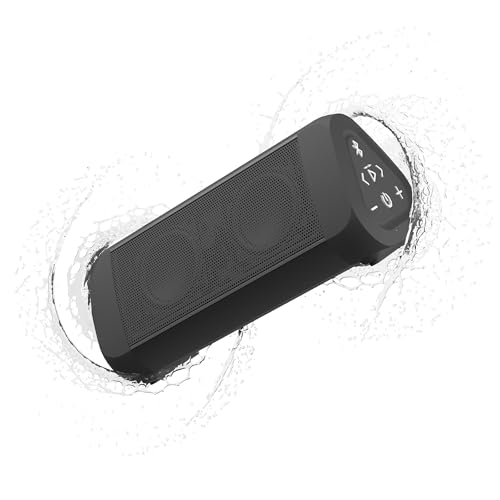
TL;DR: The Cambridge Soundworks OontZ Ultra delivers 14 W stereo sound, IPX7 waterproof protection, up to 20 hours of playback and a 30 m Bluetooth range for $39.99, all in a 1.0582188576pounds, compact package.
The speaker’s most eye‑catching spec is its 14 W output paired with an IPX7 rating, meaning you can fully submerge it for up to 30 minutes without worry. The manufacturer lists the battery at 1200 minutes, which users report translates to roughly 20 hours of continuous music, and the spec notes the Bluetooth range as 30480 mm (about 30 m), giving you plenty of freedom to move around.
At $39.99 it sits in the same price tier as many budget‑friendly options, but it’s lighter than the Cambridge Soundworks OontZ Angle 3 (1.6pounds) and a bit heavier than the Tribit XSound Go (0.84pounds). Its 1200‑minute battery life outlasts the Doss SoundBox’s claimed 20‑hour runtime, while its Bluetooth range exceeds the 10 m range of the Soundcore Anker 3.
Reviewers consistently praise the Ultra’s loud, clear audio and the peace of mind that the IPX7 rating provides for poolside or beach use. Professional reviewers highlight the 100‑ft (≈30 m) Bluetooth range and the “rich full bass” that belies its size. The most common complaints revolve around the long 1200‑minute charging time and the lack of a battery‑level indicator, with occasional stereo‑pairing hiccups noted by owners.
Pros
Cons
Best for: Outdoor enthusiasts, beachgoers, hikers, campers, pool parties, and travelers who need a lightweight.
Avoid if: You need fast charging, a premium metal or rubberized build, dust‑proof protection, or a built‑in battery level indicator.
“louder and clearer than expected for its size.”
“Played music all day at a beach party and still had charge.”
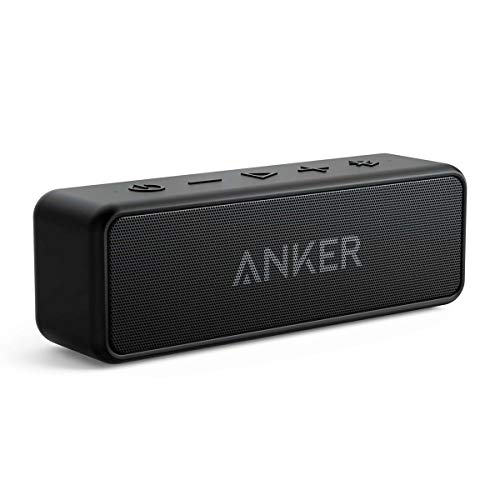
TL;DR: The Anker Soundcore 2 delivers 24 hours of playback from a 5,200 mAh battery, packs a waterproof IPX7 shell and BassUp boost, all in a 0.91‑lb, budget‑friendly package.
The standout spec is the 24‑hour battery life powered by a 5,200 mAh Li‑ion cell, letting you stream music all day without a recharge. Coupled with a 12 W output from two 6 W full‑range drivers, it offers clear mids and a noticeable bass lift thanks to BassUp technology. Its IPX7 rating lets it survive a full submersion for 30 minutes, making it suitable for poolside or camping trips.
Compared with its peers, the Soundcore 2 is lighter than the Doss SoundBox (0.91 lb vs 1.23 lb) and only a shade heavier than the Tribit XSound Go (0.84 lb). Its 5,200 mAh battery outpaces Doss’s 2,200 mAh and Tribit’s 4,000 mAh cells, while matching Tribit’s 24‑hour claim. The 20 m Bluetooth range also exceeds Doss’s 10‑meter range, though it’s shorter than the 30‑meter range listed for the Tribit and Soundcore Select 4 Go. In price terms it sits below the Doss and Tribit models, offering good value.
Users consistently praise the speaker’s long‑lasting battery and rugged waterproof design, noting that the BassUp boost makes low‑end notes feel punchier than expected at this price point. Professional reviewers highlight the ease of pairing two units for stereo sound and the handy 3.5 mm AUX input for wired sources. The most common complaints revolve around audible distortion when cranking the volume to maximum and the reliance on a Micro‑USB charging cable, which feels dated against newer USB‑C options. There’s also no companion app for EQ tweaks, which some listeners miss.
Pros
Cons
Best for: Budget-conscious buyers seeking a reliable entry-level option
Avoid if: Audiophiles demanding deep, high‑fidelity bass or those who need USB‑C fast charging
“Excellent sound quality for its size and price.”
“One user noted the build feels smaller or downgraded compared to previous models.”
TL;DR: The Cambridge Soundworks OontZ Ultra 2‑Pack delivers 14 W per speaker, IPX7 waterproof protection and up to 20 hours of playback, but it charges slowly and needs the OontZ app for true stereo.
Each Ultra speaker packs a 14‑watt dynamic driver behind a 165 mm (6.5 in) woofer, giving you clear, distortion‑free sound in a compact 71 mm‑high, 71 mm‑wide package that weighs just 1.0582188576 pounds. The IPX7 rating lets you submerge the units to 1 meter for 30 minutes, making them pool‑side ready. With Bluetooth 5.0 and a 30.5‑meter range, you can keep the source device in another room without dropping the connection.
Compared with other contenders in this roundup, the Ultra is heavier than the Soundcore Anker 3 (0.82 pounds) but noticeably lighter than the OontZ Angle 3 (1.6 pounds). Its 20‑hour battery life matches the Doss SoundBox and falls short of the Anker 3’s 24‑hour claim and the Tribit XSound Go’s 24‑hour claim. The trade‑off is a much longer charging time—20 hours versus the Anker 3’s 4‑hour charge and the Tribit’s 5‑hour charge. On the upside, its Bluetooth range of 30.5 meters outstrips the Anker 3’s 10‑meter range and is on par with the Tribit’s 30‑meter range.
Reviewers love the Ultra’s strong waterproofing and the “rich, distortion‑free” audio that holds up at outdoor gatherings. Professional reviewers also note the advanced antenna design that sustains the 100‑ft (≈30 m) Bluetooth reach. The main pain points are the 20‑hour charge cycle and the need to use the OontZ app for true stereo pairing, which some users find glitchy. The speakers also only pair with 4th‑generation Angle 3 Ultra models, limiting cross‑brand flexibility.
Pros
Cons
Best for: Outdoor enthusiasts and pool‑side parties who need a rugged, waterproof speaker with solid battery life and decent range.
Avoid if: You need rapid charging, universal compatibility with older speaker generations, or a visual volume indicator.
“louder and clearer than expected for its size.”
“Played music all day at a beach party and still had charge.”
TL;DR: The Bose SoundLink Max delivers deep, room‑filling sound, IP67 waterproof protection and up to 20 hours of playback, but its $399 price and lack of a microphone make it a premium‑tier choice.
The speaker packs a 20‑hour lithium‑ion battery and a 5‑hour USB‑C charging time, letting you keep the music going from sunrise to sunset. Its silicone‑wrapped steel cabinet meets an IP67 rating, floats up to 1 meter deep for 30 minutes, and includes a detachable rope handle for easy transport. Dimensions are 12.0 cm (height) × 26.5 cm (width) × 10.5 cm (depth), and it weighs 2.13 kg.
Compared with the other 12 entries, the SoundLink Max’s 20‑hour runtime matches the Cambridge Soundworks OontZ Ultra 2‑Pack but falls short of the JBL Charge 6’s 28 hours and the Sony SRSULT30B.UC’s 24 hours. Its Bluetooth range of 9 meters is shorter than Cambridge’s 30.5 meters yet similar to the Soundcore Anker 3’s 10 meters. At 2.13 kg, it's heavier than the Beats Pill (680 g) and the Soundcore Anker 3 (0.82 lb), placing it toward the premium, sturdier end of the lineup.
Professional reviewers praise the loud, expansive stereo output and the rugged build, noting the 3‑band EQ and Snapdragon Sound as useful tuning tools. Everyday users echo the praise for clear mids, crisp highs and the convenience of USB‑C charge‑out, while repeatedly calling out the missing microphone and the lack of backlit controls. The rubberized finish also tends to attract dust, a point many owners mention.
Under the hood, the speaker supports SBC, AAC and aptX Adaptive codecs over Bluetooth 5.3, can remember up to eight paired devices, and offers stereo/party mode, Bose SimpleSync and Google Fast Pair. The built‑in 3.5 mm aux input adds wired flexibility, and the detachable rope handle (with an optional shoulder strap) makes it ready for outdoor gatherings.
Pros
Cons
Best for: Buyers willing to invest in a proven, high‑quality option
Avoid if: You're shopping on a tight budget — it's priced at $399.00
TL;DR: The DOSS SoundBox delivers 12 W of clear, bass‑rich sound in a compact, IPX5‑rated 1.23‑lb speaker, but its real‑world battery lasts around 9–10 hours despite a 20‑hour claim.
The SoundBox packs a 12 W output from two 1.5‑inch drivers and a 2.6‑inch passive radiator, backed by Dolby Digital 2.0 stereo and a frequency response of 100 Hz – 18 kHz. Its plastic body with a metal grille measures 68.6 mm × 167.6 mm × 73.7 mm and weighs 1.23 pounds, while the built‑in 2200 mAh Li‑Ion battery is marketed for up to 20 hours of playback.
At 1.23 pounds, the SoundBox is heavier than the Tribit XSound Go (0.84 lb) and Anker Soundcore 2 (0.91 lb) but lighter than the larger OontZ Angle 3 (1.6 lb). Its 2200 mAh battery is smaller than the 4000 mAh cells in the Tribit and the 5,200 mAh pack in the Soundcore 2, which helps explain why reviewers see real‑world playtime of only 9–10 hours. The 10 m Bluetooth range also sits at the low end of the group, matching the Soundcore Anker 3 but falling short of the 30 m ranges that Tribit, Soundcore Select 4 Go, and the OontZ models list.
Professional reviewers praise the speaker’s “strong bass and clarity across genres,” and users often note that the sound punches above its price. However, many consider the advertised 20‑hour battery life overstated, with many users reporting roughly half that duration. Users report the micro‑USB charging port bends easily, and you can't turn off the built‑in voice prompts, which can be irritating in quiet settings.
Pros
Cons
Best for: Budget-conscious buyers seeking a reliable entry-level option
Avoid if: Reliability and user satisfaction are your top concerns
“Great bass for the price”
“Perfect for travel and parties”
TL;DR: The Cambridge Soundworks OontZ Angle 3 offers 14 W of sound, IPX7 waterproofing and up to 20 hours of playtime, all for $44.99, making it a solid all‑day outdoor speaker.
The standout feature is its IPX7 rating, letting you submerge the speaker up to 1 meter for 30 minutes without damage. Pair that with a 14‑W output and dual precision acoustic drivers, and you get clear, loud audio that survives rain, a beach splash, or a shower.
Compared with the other speakers in this roundup, the Angle 3 is heavier than the OontZ Ultra’s 1.0582188576 pounds and the Tribit XSound Go’s 0.84 pounds, but lighter than the Doss SoundBox’s 1.23 pounds. Its 14 W output matches the OontZ Ultra and exceeds the Soundcore Select 4 Go’s 5 W, though it falls short of the Soundcore Anker 3’s 16 W. Battery life at up to 20 hours equals the Doss SoundBox and Soundcore Select 4 Go, but is lower than the 24‑hour claims of Tribit XSound Go, Anker Soundcore 2 and Soundcore Anker 3. Wireless range of up to 100 ft (30.5 m) lines up with Tribit’s 30 m and Soundcore Select 4 Go’s 30 m, and comfortably exceeds the 10 m range of Doss and Soundcore Anker 3.
Users repeatedly praise the speaker’s loud, clear sound and its ability to keep playing through a full day of outdoor activities. Reviewers note the dual‑pairing capability as a fun way to create true stereo, though the setup may confuse users. Professional reviewers also point out the bright front LED as a minor annoyance, and the lack of a companion app means you can’t fine‑tune the EQ.
Additional technical details include Bluetooth 5.0, a USB‑C charging port, a proprietary passive bass radiator, and a built‑in microphone for hands‑free calls. The compact dimensions—4.0 in high, 5.0 in long and 8.0 in wide—make it easy to slip into the included carry case with aluminum carabiner.
Pros
Cons
Best for: Outdoor enthusiasts, beach‑goers, hikers, and anyone who wants a rugged, long‑battery speaker that can survive a splash or submersion.
Avoid if: You need app‑based EQ, a built‑in power bank, or a lighter speaker for ultra‑portable desk use.
“louder and clearer than expected for its size.”
“Played music all day at a beach party and still had charge.”
Breakdown
JBL Charge 6
Pros
Soundcore Select 4 Go
Pros
Beats Pill
Pros
Based on scoring data and product specs
Personalized picks
Best Overall Pick
JBL Charge 6
Best ValueBest for: Buyers willing to invest in a proven, high-quality option
Soundcore Select 4 Go
Best for: Budget-conscious buyers seeking a reliable entry-level option
$24.99-$134.96 vs winner
Skip Cambridge Soundworks OontZ Angle 3 if…
You have limited desk space or need portability
The JBL Charge 6 ranks first with a 28‑hour battery life, an IP68 water‑and‑dust rating, and a solid 4.7‑star rating from 3,924 reviewers. Its 4,722 mAh built‑in powerbank and a 10‑minute fast‑charge that gives 150 minutes of playback make it a reliable companion for long outings.
Soundcore’s Select 4 Go lands as the runner‑up, perfect if you need a feather‑light, budget‑friendly speaker for casual trips to the park or dorm room. Weighing just 0.58125 pounds, it still offers 20 hours of playtime, an IP67 rating for splashes, and a $24.99 price tag that won’t break the bank.
For other budgets, consider these options:
Grab the JBL Charge 6 now and enjoy uninterrupted music wherever you go.
The JBL Charge 6 is listed with a battery life of 28 hours, giving it the longest runtime of any model here. Its 4722 mAh battery also supports fast charging, providing 150 minutes of playback after just 10 minutes on the charger.
Please sign in to leave a review
No reviews yet. Be the first to review!
